Agro-Technology

-
Select format
-
- Publisher:
- Cambridge University Press
- Publication date:
- 05 June 2012
- 14 July 2011
- ISBN:
- 9780511977541
- 9780521117975
- 9780521133753
- Dimensions:
- (247 x 174 mm)
- Weight & Pages:
- 0.61kg, 258 Pages
- Dimensions:
- (247 x 174 mm)
- Weight & Pages:
- 0.52kg, 258 Pages
- Subjects:
- Philosophy of Science, Philosophy
You may already have access via personal or institutional login- Subjects:
- Philosophy of Science, Philosophy
Show more authors 
You may already have access via personal or institutional login
Book description
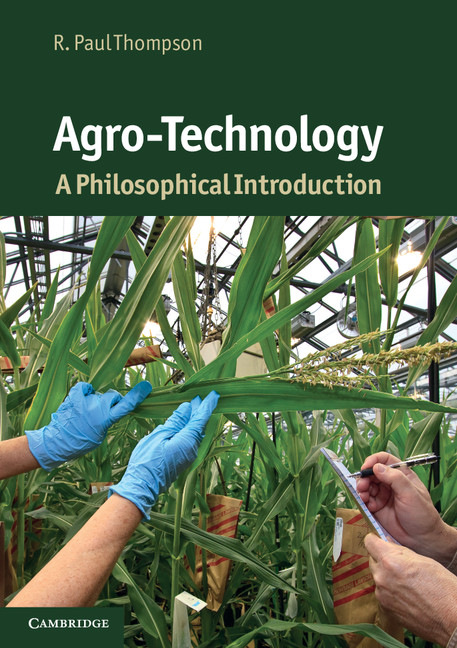
Humans have been modifying plants and animals for millennia. The dawn of molecular genetics, however, has kindled intense public scrutiny and controversy. Crops, and the food products which include them, have dominated molecular modification in agriculture. Organisations have made unsubstantiated claims and scare mongering is common. In this textbook Paul Thompson presents a clear account of the significant issues - identifying harms and benefits, analysing and managing risk - which lie beneath the cacophony of public controversy. His comprehensive analysis looks especially at genetically modified organisms, and includes an explanation of the scientific background, an analysis of ideological objections, a discussion of legal and ethical concerns, a suggested alternative - organic agriculture - and an examination of the controversy's impact on sub-Saharan African countries. His book will be of interest to students and other readers in philosophy, biology, biotechnology and public policy.
Reviews
'Thompson brings his considerable knowledge of biology, biochemistry and molecular biology, and his prowess at keen philosophical analysis, to bear on a biological process and system essential to human life - agriculture.'
Source: Metascience
'… examines in detail the scientific background of genetically modified organisms (GMOs), and makes an analysis of ideological objections, legal, and ethical concerns. The scientific explanation and clear style make this accessible to readers from any disciplinary background … This book will be of interest to researchers investigating these issues, as well as students and other readers in philosophy, biology, biotechnology, and public policy.'
Source: The Quarterly Review of Biology
Contents
Contents
Metrics
Altmetric attention score
Full text views
Full text views helpTotal number of HTML views: 0
Total number of PDF views: 0 *
 Loading metrics...
* Views captured on Cambridge Core between #date#. This data will be updated every 24 hours.
Usage data cannot currently be displayed.
Accessibility standard: Unknown
Why this information is here
This section outlines the accessibility features of this content - including support for screen readers, full keyboard navigation and high-contrast display options. This may not be relevant for you.
Accessibility Information
Accessibility compliance for the PDF of this book is currently unknown and may be updated in the future.