
Skip to main content Accessibility help
×
  • Cited by 2
    • Show more authors
    • You may already have access via personal or institutional login
    • Select format
    • Publisher:
      Cambridge University Press
      Publication date:
      13 July 2023
      27 July 2023
      ISBN:
      9781009085786
      9781316514665
      9781009088060
      Dimensions:
      (229 x 152 mm)
      Weight & Pages:
      0.63kg, 346 Pages
      Dimensions:
      (229 x 152 mm)
      Weight & Pages:
      0.561kg, 346 Pages
    You may already have access via personal or institutional login
  • Selected: Digital
    Add to cart View cart Buy from Cambridge.org

    Book description

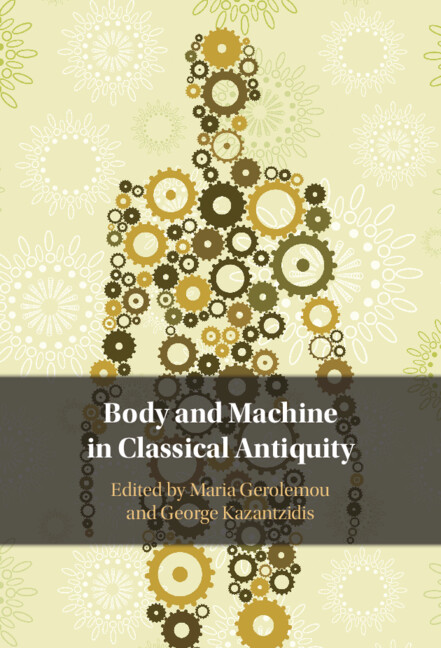
    This innovative and wide-ranging volume is the first systematic exploration of the multifaceted relationship between human bodies and machines in classical antiquity. It examines the conception of the body and bodily processes in mechanical terms in ancient medical writings, and looks into how artificial bodies and automata were equally configured in human terms; it also investigates how this knowledge applied to the treatment of the disabled and the diseased in the ancient world. The volume examines the pre-history of what develops, at a later stage, and more specifically during the early modern period, into the full science of iatromechanics in the context of which the human body was treated as a machine and medical treatments were devised accordingly. The volume facilitates future dialogue between scholars working on different areas, from classics, history and archaeology to history of science, philosophy and technology.

    Reviews

    ‘… an interesting and important collection of twelve essays that trace the development of explanations of the human body that appeal to machines and other technological artefacts.’

    Douglas R. Campbell Source: Metascience

    ‘… the expansive topical range and quality of scholarship ensures that this volume will be of interest to scholars of many kinds, both those interested in narrow excavation and close reading of classical sources and those interested in broader conceptual questions about technology, humanity, and the future of both.’

    Philip D. Bunn Source: Bryn Mawr Classical Review

    ‘This is a very original collection of essays that shows how cross-disciplinary thinking - which is now believed to be a creation of the present-day world, science, and research - was already a productive instrument for investigation in classical antiquity. The point is not the anteriority, but the originality of the ancient thinking and the productivity of a type of thinking that crosses the borders of traditional ways of working. In this way, antiquity created an interesting model for the understanding of the human machine that allowed for efficacious applications. This is the merit of this book, to bring this to light in a compelling case, as well written as documented and, more than anything, pleasant to read.’

    Alain Touwaide Source: Doody's Reviews

    Refine List

    Actions for selected content:

    Select all | Deselect all
    • View selected items
    • Export citations
    • Download PDF (zip)
    • Save to Kindle
    • Save to Dropbox
    • Save to Google Drive

    Save Search

    You can save your searches here and later view and run them again in "My saved searches".

    Please provide a title, maximum of 40 characters.
    ×

    Contents

    Metrics

    Altmetric attention score

    Full text views

    Total number of HTML views: 0
    Total number of PDF views: 0 *
    Loading metrics...

    Book summary page views

    Total views: 0 *
    Loading metrics...

    * Views captured on Cambridge Core between #date#. This data will be updated every 24 hours.

    Usage data cannot currently be displayed.

    Accessibility standard: Unknown

    Why this information is here

    This section outlines the accessibility features of this content - including support for screen readers, full keyboard navigation and high-contrast display options. This may not be relevant for you.

    Accessibility Information

    Accessibility compliance for the HTML of this book is currently unknown and may be updated in the future.
