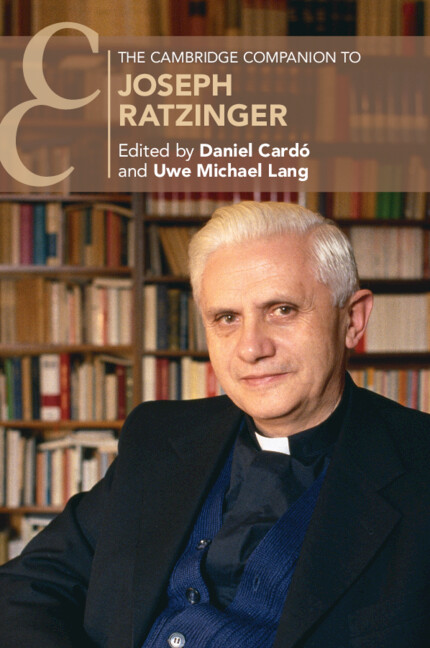

Among the most important modern Catholic thinkers, Joseph Ratzinger, later Pope Benedict XVI, fundamentally shaped Christian theology in the 20th and early 21st centuries. His collaborations and debates with figures such as Henri de Lubac, Karl Rahner, Jean Daniélou, Hans Küng, Hans Urs von Balthasar, and Jürgen Habermas reflect the key role he has played in the development of Christian life and doctrine. The Cambridge Companion to Joseph Ratzinger conveys the depth and breadth of his significant legacy to contemporary Catholic theology and culture. With contributions from an international team of scholars, the volume assesses Ratzinger's theological synthesis in response to contemporary challenges that Christianity faces. It surveys the major themes and topics that Ratzinger explored, and highlights aspects of the ideas that he developed in his engagement with a wide variety of intellectual and religious currents. Collectively, the essays in this volume demonstrate how Ratzinger's epochal contributions to Christian thought will reverberate for generations to come.
‘A highly useful introduction to his ideas and writings on numerous theological subjects, The Companion is recommended for seminary libraries.’
Hans C. Rasmussen Source: Catholic Library World
‘Cardó and Lang’s Cambridge Companion is truly a gift … an outstanding volume.’
Joshua Penduck Source: The Global Anglican
‘An international team of scholars has produced academically solid yet readable essays on a large variety of subjects that leave the reader with an initial but reliable grasp not only of what Ratzinger’s theology was all about, but also of its consistency and depth. Another purpose of this book is to bolster Ratzinger’s place among the most significant Catholic theologians of his era. I have no problem with the claim that Ratzinger was a profound and even brilliant figure who made lasting contributions to his field.’
Dennis Doyle Source: The Journal of Theological Studies
‘Given its rich scope and highly informative content, this Companion will serve as an indispensable tool for scholars, students, and all readers who are interested in the ongoing assessment and appropriation process of the outstanding legacy of this German theologian, who, in all likelihood will become a future classic as one of the towering figures of the Western theological tradition.’
Beáta Tóth Source: Irish Theological Quarterly
Loading metrics...
* Views captured on Cambridge Core between #date#. This data will be updated every 24 hours.
Usage data cannot currently be displayed.
This section outlines the accessibility features of this content - including support for screen readers, full keyboard navigation and high-contrast display options. This may not be relevant for you.
Accessibility compliance for the HTML of this book is currently unknown and may be updated in the future.
