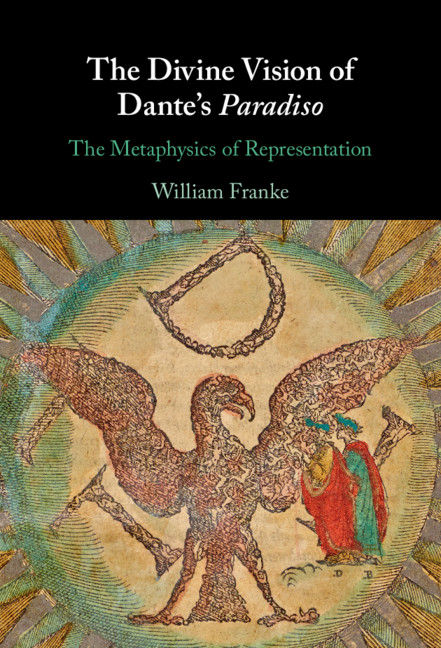

In Canto XVIII of Paradiso, Dante sees thirty-five letters of Scripture - LOVE JUSTICE, YOU WHO RULE THE EARTH - 'painted' one after the other in the sky. It is an epiphany that encapsulates the Paradiso, staging its ultimate goal - the divine vision. This book offers a fresh, intensive reading of this extraordinary passage at the heart of the third canticle of the Divine Comedy. While adapting in novel ways the methods of the traditional lectura Dantis, William Franke meditates independently on the philosophical, theological, political, ethical, and aesthetic ideas that Dante's text so provocatively projects into a multiplicity of disciplinary contexts. This book demands that we question not only what Dante may have meant by his representations, but also what they mean for us today in the broad horizon of our intellectual traditions and cultural heritage.
Winner, 2021 Hermes Award: A Book of the Year in Phenomenological Hermeneutics
'This is a brilliant and enjoyable book. With sharp interdisciplinary acumen, Franke provides lucid and creative readings that offer original and fruitful perspectives on Dante’s Commedia, highlighting its relevance for contemporary studies in theology, philosophy and literature. The Divine Vision of Dante’s Paradiso compellingly shows how Dante’s bold and experimental writing can, even for us today, vivify in striking ways reflection on truth and its mediation.'
Vittorio Montemaggi - King’s College London
'This book possesses the outstanding qualities one has come to expect from Franke’s scholarship: broad and deep mastery of the Western philosophical and theological traditions; attentive, nuanced, and fecund literary analysis; a crystal-clear, jargon-free, economical, elegant, and at times lyrical prose; a searching and intelligent devotion to groundbreaking inquiry. In Franke’s view, Dante’s longed-for vision of God is nothing other than his vision of Letters – of Writing that, in keeping with the doctrine of Incarnation, both is and is not God. Such Writing is not human but is revelation: it shows God visibly, yet at the same time it is not God’s essence as the Absolute and the Infinite.'
Gregory B. Stone - Louisiana State University
‘Franke seeks to interpret Dante’s vision of writing in ways that make it available to philosophical analysis and speculative contemplation, methods aesthetic and spiritual at the same time. Such connections offer important resources for philosophical and theological reflections that resonate 'in the excruciating dilemmas of [the] present cultural predicament' ... Highly recommended.’
D. Pesta Source: Choice Connect
Loading metrics...
* Views captured on Cambridge Core between #date#. This data will be updated every 24 hours.
Usage data cannot currently be displayed.
This section outlines the accessibility features of this content - including support for screen readers, full keyboard navigation and high-contrast display options. This may not be relevant for you.
Accessibility compliance for the HTML of this book is currently unknown and may be updated in the future.
