
Skip to main content Accessibility help
×
  • Cited by 6
    • Show more authors
    • You may already have access via personal or institutional login
    • Select format
    • Publisher:
      Cambridge University Press
      Publication date:
      05 May 2022
      19 May 2022
      ISBN:
      9781108593045
      9781108473309
      9781108461283
      Dimensions:
      (229 x 152 mm)
      Weight & Pages:
      0.62kg, 320 Pages
      Dimensions:
      (229 x 152 mm)
      Weight & Pages:
      0.48kg, 320 Pages
    You may already have access via personal or institutional login
  • Selected: Digital
    Add to cart View cart Buy from Cambridge.org

    Book description

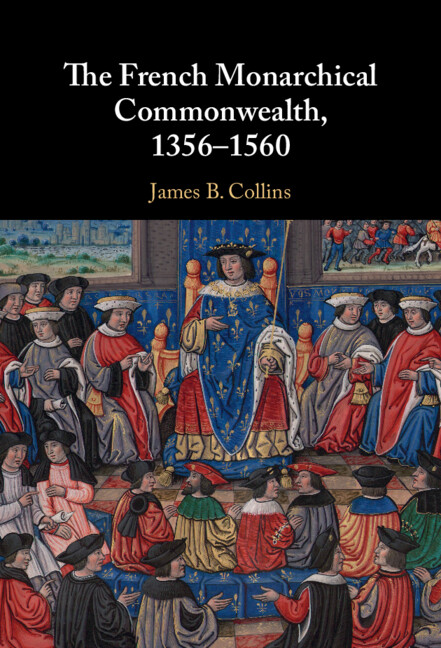
    How does authority become power? How does power justify itself to achieve its ends? For over two hundred years, the Valois kings relied on a complex mixture of ideologies, ruling a monarchical commonwealth with a coherent theory of shared governance. Forged in the Hundred Years War, this commonwealth built on the defense of the public good (bien public) came undone both practically and theoretically during the Wars of Religion. Just as certain kings sought to expand the royal prerogative, so, too, elites fought to preserve their control over local government. Using town archives from more than twenty cities to complement traditional sources of political theory, The French Monarchical Commonwealth, 1356–1560 establishes the relationship between seemingly theoretical constructs, like the Salic Law, and the reality of everyday politics.

    Reviews

    ‘Subjects of the king of France acted as if they were citizens of a 'monarchical commonwealth' from the middle of the fourteenth century until the Wars of Religion. In this marvelous and novel work, James B. Collins recovers an underappreciated political discourse in competition with 'the monarchical one' and proposes that 'this commonwealth discourse was, in fact, France’s primary language of politics' during this period … This is a great and ambitious book from a senior scholar that causes us to look with new eyes upon late medieval and early modern France.’

    Tyler Lange Source: Journal of Modern History

    Refine List

    Actions for selected content:

    Select all | Deselect all
    • View selected items
    • Export citations
    • Download PDF (zip)
    • Save to Kindle
    • Save to Dropbox
    • Save to Google Drive

    Save Search

    You can save your searches here and later view and run them again in "My saved searches".

    Please provide a title, maximum of 40 characters.
    ×

    Contents

    Metrics

    Altmetric attention score

    Full text views

    Total number of HTML views: 0
    Total number of PDF views: 0 *
    Loading metrics...

    Book summary page views

    Total views: 0 *
    Loading metrics...

    * Views captured on Cambridge Core between #date#. This data will be updated every 24 hours.

    Usage data cannot currently be displayed.

    Accessibility standard: Unknown

    Why this information is here

    This section outlines the accessibility features of this content - including support for screen readers, full keyboard navigation and high-contrast display options. This may not be relevant for you.

    Accessibility Information

    Accessibility compliance for the HTML of this book is currently unknown and may be updated in the future.
