The Grammar Network

-
Select format
-
- Publisher:
- Cambridge University Press
- Publication date:
- 12 August 2019
- 15 August 2019
- ISBN:
- 9781108671040
- 9781108498814
- 9781108712767
- Dimensions:
- (228 x 152 mm)
- Weight & Pages:
- 0.56kg, 306 Pages
- Dimensions:
- (229 x 152 mm)
- Weight & Pages:
- 0.46kg, 308 Pages
- Subjects:
- Grammar and Syntax, Psychology, Cognition, Language and Linguistics
You may already have access via personal or institutional login- Subjects:
- Grammar and Syntax, Psychology, Cognition, Language and Linguistics
Show more authors 
You may already have access via personal or institutional login
Book description
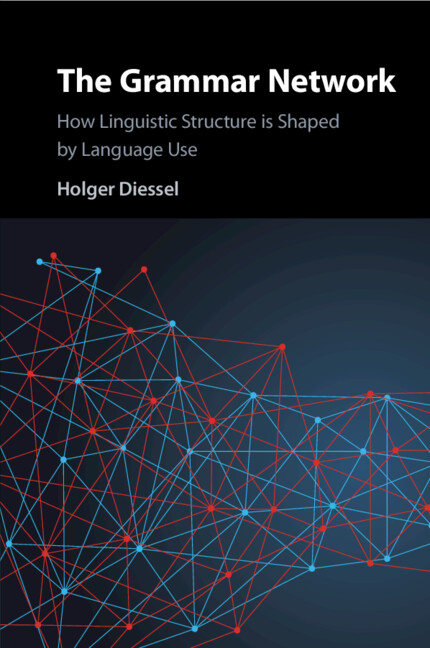
Cognitive linguists and psychologists have often argued that language is best understood as an association network; however while the network view of language has had a significant impact on the study of morphology and lexical semantics, it is only recently that researchers have taken an explicit network approach to the study of syntax. This innovative study presents a dynamic network model of grammar in which all aspects of linguistic structure, including core concepts of syntax (e.g. phrase structure, word classes, grammatical relations), are analyzed in terms of associative connections between different types of linguistic elements. These associations are shaped by domain-general learning processes that are operative in language use and sensitive to frequency of occurrence. Drawing on research from usage-based linguistics and cognitive psychology, the book provides an overview of frequency effects in grammar and analyzes these effects within the framework of a dynamic network model.
Reviews
‘… well worth reading.’
Tore Nesset Source: Linguistics Issues
Contents
Contents
Metrics
Altmetric attention score
Full text views
Full text views helpTotal number of HTML views: 0
Total number of PDF views: 0 *
 Loading metrics...
* Views captured on Cambridge Core between #date#. This data will be updated every 24 hours.
Usage data cannot currently be displayed.
Accessibility standard: Unknown
Why this information is here
This section outlines the accessibility features of this content - including support for screen readers, full keyboard navigation and high-contrast display options. This may not be relevant for you.
Accessibility Information
Accessibility compliance for the HTML of this book is currently unknown and may be updated in the future.