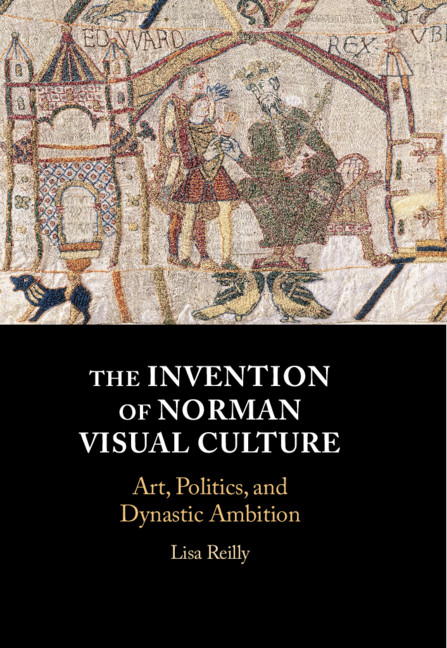

In this book, Lisa Reilly establishes a new interpretive paradigm for the eleventh and twelfth-century art and architecture of the Norman world in France, England, and Sicily. Traditionally, scholars have considered iconic works like the Cappella Palatina and the Bayeux Embroidery in a geographically piecemeal fashion that prevents us from seeing their full significance. Here, Reilly examines these works individually and within the larger context of a connected Norman world. Just as Rollo founded the Normandy 'of different nationalities', the Normans created a visual culture that relied on an assemblage of forms. To the modern eye, these works are perceived as culturally diverse. As Reilly demonstrates, the multiple sources for Norman visual culture served to expand their meaning. Norman artworks represented the cultural mix of each locale, and the triumph of Norman rule, not just as a military victory but as a legitimate succession, and often as the return of true Christian rule.
‘It is ambitious in its scope, and an easy, stimulating read.’
Caroline Bruzelius Source: Journal of the Society of Architectural Historians
Loading metrics...
* Views captured on Cambridge Core between #date#. This data will be updated every 24 hours.
Usage data cannot currently be displayed.
This section outlines the accessibility features of this content - including support for screen readers, full keyboard navigation and high-contrast display options. This may not be relevant for you.
Accessibility compliance for the HTML of this book is currently unknown and may be updated in the future.
