
Skip to main content Accessibility help
×
  • Cited by 54
    • Show more authors
    • You may already have access via personal or institutional login
    • Select format
    • Publisher:
      Cambridge University Press
      Publication date:
      05 September 2012
      13 August 2012
      ISBN:
      9781139176026
      9781107024779
      9781107529793
      Dimensions:
      (228 x 152 mm)
      Weight & Pages:
      0.51kg, 256 Pages
      Dimensions:
      (229 x 152 mm)
      Weight & Pages:
      0.4kg, 256 Pages
    You may already have access via personal or institutional login
  • Selected: Digital
    Add to cart View cart Buy from Cambridge.org

    Book description

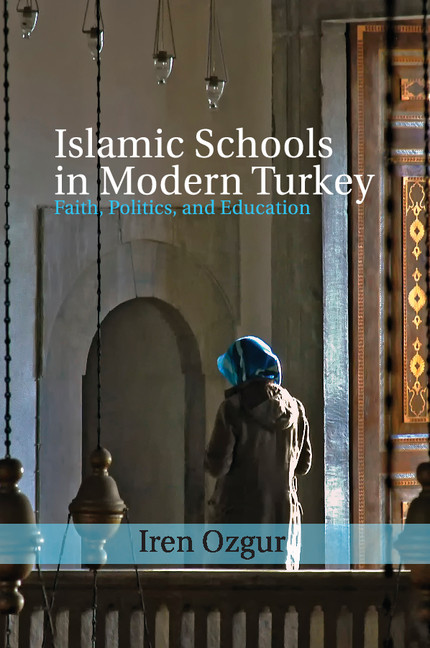
    In recent years, the Islamization of Turkish politics and public life has been the subject of much debate in Turkey and the West. This book makes an important contribution to those debates by focusing on a group of religious schools, known as Imam-Hatip schools, founded a year after the Turkish Republic, in 1924. At the outset, the main purpose of Imam-Hatip schools was to train religious functionaries. However, in the ensuing years, the curriculum, function and social status of the schools have changed dramatically. Through ethnographic and textual analysis, the book explores how Imam-Hatip school education shapes the political socialization of the schools' students, those students' attitudes and behaviours and the political and civic activities of their graduates. By mapping the schools' connections to Islamist politicians and civic leaders, the book sheds light on the significant, yet often overlooked, role that the schools and their communities play in Turkey's Islamization at the high political and grassroots levels.

    Reviews

    'Islamic Schools in Modern Turkey provides a rich ethnography on an institution that evidently plays a central role in shaping the Islamic movement in Turkey and provides an important venue for discussions over the movement’s interaction with(in)the secular state. The author’s very attempt to understand imam hatips produces an extensive scholarly contribution.'

    Source: Turkish Review

    '… an invaluable source book, one that we will all be quoting and citing in the coming years …'

    Ayşe Öncü Source: Bustan: The Middle East Book Review

    Refine List

    Actions for selected content:

    Select all | Deselect all
    • View selected items
    • Export citations
    • Download PDF (zip)
    • Save to Kindle
    • Save to Dropbox
    • Save to Google Drive

    Save Search

    You can save your searches here and later view and run them again in "My saved searches".

    Please provide a title, maximum of 40 characters.
    ×

    Contents

    Bibliography

    Interviews1

    Aktay, Yasin, March 18, 19, 2007
    Alayoğlu, Nihat, March 27, 2007
    Ateş, Aslan, March 2, 2007
    Aycan, İrfan, April 3, 2006 and March 6, 2007
    Ayhan, Halis, May 2, 2007
    Çoşkun, Ahmet Hakan, January 12, 14, 19, 22, and 26, 2007
    Er, Nevzat, April 24, 2007
    İslamoğlu, Mustafa, May 11, 2007
    Kaplan, Yusuf, March 28, 2007
    Kara, İsmail, March 28 and April 4, 2007
    Kara, Yusuf, April 21, 2007
    Karaman, Hayrettin, February 9, 12, 13, 14, 2007
    Kayadibi, Fahri, November 31, 2006
    Kışla, İsrafil, January 17 and January 30, 2007
    Kıyıklık, Feyzullah, March 7, 2007
    Öner, Fatih, December 15, 2006
    Sadıkoğlu, Necmi, May 11, 2007
    Sula, Yusuf Ziyaettin, January 9, 2007
    Tok, Erdoğan, May 14, 2007
    Tülün, Yusuf, April, 30, 2007
    Yüksel, Emrullah, December 19, 2005
    Zengin, Mahmut, January 13, 2007

    Journals and Newspapers

    • Aksiyon

    • Akşam

    • Aktüel Bakış

    • Altınoluk

    • Anatolian Agency

    • Anka

    • Anlayış

    • Bilgi ve Hikmet

    • Birikim

    • Business Day

    • Cumhuriyet

    • Değerler Eğitimi Dergisi

    • Economist

    • Ensar Bülteni

    • Freedom in the World

    • Gerçek Hayat

    • Girişim

    • Haksöz

    • Hürriyet

    • İmam Hatipli Nesil

    • İnsani Yardım

    • International Herald Tribune

    • İSAM Bülteni

    • Jerusalem Post

    • Köprü

    • Kur’ani Mücahede

    • Milli Gazete

    • Milliyet

    • Nesil

    • Newsweek

    • New York Times

    • Radikal

    • Referans

    • Resmi Gazete

    • Sabah

    • Star

    • Takvim

    • Tempo

    • Tercüman

    • Tezkire

    • Time

    • Today’s Zaman

    • Turkish Daily News

    • Umran

    • Vakit

    • Vatan

    • Yeni Asya

    • Yeni Soluk

    • Yeni Şafak

    • Zaman

    Monographs

    Abbas, Abdulhalim, Ashab-i Kiram: Altın Nesil, trans. Hayrettin Karaman (Istanbul: Timaş Yayınları, 2003).
    Akad, Mehmet, 1982 Anayasası ve Anayasa Mahkemesi Kararları (Istanbul: DER Yayınları, 2007).
    Akbıyık, Nur, Dünya Ordularında Din Subaylığı Raporu (Istanbul: ÖNDER, 2006).
    Akın, Kenan, Milli Nizam’dan 28 Şubat’a Olay Adam: Erbakan (Istanbul: Birey, 2000).
    Akpınar, Hakan, 28 Şubat Postmodern Darbenin Öyküsü (Ankara: Ümit Yayıncılık, 2001).
    Aktaş, Cihan, Bir Hayat Tarzı Eleştirisi: İslamcılık (Istanbul: Kapı Yayınları, 2007).
    Aktaş, Ümit, İslami Hareketin Vasıfları (Istanbul: Bengisu, 1996).
    Aktay, Yasin, Türk Dininin Sosyolojik İmkanı (Istanbul: İletişim Yayınları, 1999).
    Alpak, Cenk, Eyüp Sultan ve Türbesi (Istanbul: Refioğlu Yayınları, 1989).
    An-Na‘im, Abdullahi Ahmed, Islam and the Secular State: Negotiating the Future of Shari‘a (Cambridge: Harvard University Press, 2008).
    Apple, Michael W., Official Knowledge: Democratic Education in a Conservative Age (New York: Routledge, 1993).
    Apple, Michael W., Education and Power (Boston: Routledge & Kegan Paul, 1982).
    Apple, Michael W. and Landon E. Beyer, eds., The Curriculum: Problems, Politics, and Possibilities (Albany: State University of New York Press, 1998).
    Arat, Necla, Susmayan Yazılar: Eğitim, Laiklik, Kadın ve Siyaset Üzerine (Istanbul: Say Yayınları, 1997).
    Asad, Muhammad, Yolların Ayrılış Noktasında İslam, trans. Hayrettin Karaman (Istanbul: İz Yayıncılık, 2001).
    Asad, Talal, Formations of the Secular: Christianity, Islam, Modernity (Stanford: Stanford University Press, 2003).
    Aslan, Ednan, ed., Islamic Education in Europe (Wien: Böhlau Verlag, 2009).
    Atay, Hüseyin, Osmanlılarda Yüksek Din Eğitimi: Medrese Programları, İcazetnameler, Islahat Hareketleri (Istanbul: Dergah Yayınları, 1983).
    Ateş, Toktamış, et al. eds., Barış Köprüleri: Dünyaya Açılan Türk Okulları (Istanbul: Da Yayıncılık, 2005).
    Ayhan, Halis, Türkiye’de Din Eğitimi (Istanbul: DEM Yayınları, 2004).
    Ayhan, Halis, Kuruluşunun 43. Yılında İmam-Hatip Liseleri (Istanbul: Ensar Neşriyat, 1995).
    Azzam, Abdurrahman, Rasul-i Ekrem’in Örnek Ahlakı, trans. Hayrettin Karaman, (Istanbul: Yağmur Yayınları, 1971).
    Baker, Colin, Attitudes and Language (Philadelphia: Multilingual Matters, 1992).
    Balcı, Bayram and Ali Berktay, Orta Asya’da İslam Misyonerleri: Fethullah Gülen Okulları (Istanbul: İletişim Yayınları, 2005).
    Ballar, Suat, ed., Türk Dernekler Hukuku (Istanbul: Beta, 1991).
    Baloğlu, Zekai, Türkiye’de Eğitim: Sorunlar ve Değişime Yapısal Uyum Önerileri (Istanbul: TÜSİAD, 1990).
    Baran, Zeyno, Torn Country: Turkey between Secularism and Islamism (Stanford: Hoover Press, 2010).
    Barnard, Alan and Jonathan Spencer, eds., Encyclopedia of Social and Cultural Anthropology (London: Routledge, 2005).
    Başkurt, İrfan, Din Eğitimi Açısından Kur’an Öğretimi ve Yaz Kur’an Kursları (Istanbul: DEM Yayınları, 2007).
    Bayat, Asef, Life as Politics: How Ordinary People Change the Middle East (Stanford: Stanford University Press, 2010).
    Bayat, Asef, Making Islam Democratic: Social Movements and the Post-Islamist Turn (Stanford: Stanford University Press, 2007).
    Bayramoğlu, Ali, 28 Şubat: Bir Müdahelenin Güncesi (Istanbul: Birey, 2001).
    Bayramoğlu, Ali, 28 Şubat: Postmodern Bir Darbenin Sosyal ve Siyasal Analizi (Istanbul: Birey, 2007).
    Bektaş, Arsev, Demokratikleşme Sürecinde Liderler Oligarşisi: CHP ve AP 1961–1980 (Istanbul: Bağlam, 1993).
    Belediyesi, Güngören, Önce Eğitim (Istanbul: 2007).
    Belediyesi, Sarıyer, Faaliyet Raporu 2006 (Istanbul: 2006).
    Berk, Bekir, Nurculuk Davası (Istanbul: Hikmet Gazetecilik, 1971).
    Berkes, Niyazi, Türkiye’de Çağdaşlaşma (Istanbul: Doğu-Batı Yayınları, 1978).
    Berkes, Niyazi, The Development of Secularism in Turkey (New York: Routledge, 1998).
    Berleant, Arnold, Aesthetics and Environment: Variations on a Theme (Burlington: Ashgate, 2005).
    Bilgin, Beyza, Eğitim Bilimi ve Din Eğitimi (Ankara: Yeni Çizgi, 1995).
    Bochner, Arthur P. and Carolyn Ellis, Ethnographically Speaking: Autoethnography, Literature, and Aesthetics (Walnut Creek: AltaMira Press, 2002).
    Bourdieu, Pierre, Outline of a Theory of Practice (Cambridge: Cambridge University Press, 1977).
    Bourdieu, Pierre and Jean-Claude Passeron, Reproduction in Education, Society, and Culture (London: Sage, 1977).
    Bowles, Samuel and Herbert Gintis, Schooling in Capitalist America: Educational Reform and the Contradictions of Economic Life (New York: Basic Books, 1976).
    Boyle, Helen, Qur’anic Schools: Agents of Preservation and Change (New York: Routledge, 2004).
    Buetow, Harold A., The Catholic School: Its Roots, Identity, and Future (New York: Crossroad, 1988).
    Bulaç, Ali, Din, Kent, and Cemaat: Fethullah Gülen Gerçeği (Istanbul: Ufuk Kitaplari, 2008).
    Bülendoğlu, Arif, Necip Fazıl Kısakürek (Istanbul: Bindir Yayınları, 1968).
    Cady, Linell E. and Elizabeth Shakman Hurd, eds., Comparative Secularisms in a Global Age (New York: Palgrave Macmillan, 2010).
    Carroll, Jill, A Dialogue of Civilizations: Gülen’s Islamic Ideals and Humanistic Discourse (New Jersey: The Light, Inc. 2007).
    Cebeci, Suat, Din Eğitimi Bilimi ve Türkiye’de Din Eğitimi (Ankara: Akçağ Yayınları, 1996).
    Cemal, Hasan, 12 Eylül Günlüğü: Tank Sesiyle Uyanmak (Ankara: Bilgi Yayınevi, 1986).
    Cevizoğlu, Hulki, Nurculuk: Dünü Bugünü (Istanbul: Beyaz Yayınları, 1999).
    Chabchoub, Ahmed, Ecole et Modernité: en Tunisie et dans les Pays Arabes (Paris: L’Harmattan, 2000).
    Cizre, Ümit, ed., Secular and Islamic Politics in Turkey: the Making of the Justice and Development Party (London: Routledge, 2008).
    Çınar, Alev, Modernity, Islam, and Secularism in Turkey (Minneapolis: University of Minnesota Press, 2005).
    Cleveland, William, A Brief History of the Modern Middle East (Colorado: Westview Press, 2004).
    Coleman, James and Thomas Hoffer, Public and Private High Schools: The Impact of Communities (New York: Basic Books, 1987).
    Coote, Jeremy and Anthony Shelton, Anthropology, Art, and Aesthetics (New York: Oxford University Press, 1992).
    Crook, Nigel, ed., The Transmission of Knowledge in South Asia: Essays on Education, Religion, History, and Politics (New York: Oxford University Press, 1996).
    Çakır, Ruşen, Ayet ve Slogan (Istanbul: Metis, 1990).
    Çakır, Ruşen and İrfan Bozan, Ne Şeriat Ne Demokrasi: Refah Partisini Anlamak (Istanbul: Metis, 1994).
    Çakır, Ruşen and İrfan Bozan, İmam-Hatip Liseleri Efsaneler ve Gerçekler (Istanbul: TESEV Yayınları, 2004).
    Çakır, Ruşen and İrfan Bozan, Sivil, Şeffaf ve Demokratik Bir Diyanet İşleri Başkanlığı Mümkün mü? (Istanbul: TESEV Yayınları, 2005).
    Çakır, Ruşen and Fehmi Çalmuk, Recep Tayyip Erdoğan: Bir Dönüşüm Öyküsü (Istanbul: Metis, 2001).
    Çalmuk, Fehmi, Bir Erbakan Hikayesi: Selamünaleyküm Komutanım (Ankara: Kim Yayınları, 2000).
    Çalmuk, Fehmi, Kod Adı İHL: Bir İmam-Hatip Hikayesi (Ankara: Merdiven Yayın, 2004).
    Çarkoğlu, Ali and Barry Rubin, eds., Religion and Politics in Turkey (London: Routledge, 2006).
    Çarkoğlu, Ali and Binnaz Toprak, Türkiye’de Din, Toplum, ve Siyaset (Istanbul: TESEV Yayınları, 2000).
    Çarkoğlu, Ali and Binnaz Toprak, Değişen Türkiye’de Din, Toplum ve Siyaset (Istanbul: TESEV Yayınları, 2007).
    Çarkoğlu, Ali and Ersin Kalaycıoğlu, Turkish Democracy Today: Elections, Protest, and Stability in an Islamic Society (London: I.B. Tauris, 2007).
    Çarkoğlu, Ali and Ersin Kalaycıoğlu, The Rising Tide of Conservatism in Turkey (New York: MacMillan, 2009).
    Çam, Esat, Siyaset Bilimine Giriş (Istanbul: DER Yayınları, 1975).
    Çelebi, Halis, İslami Hareket ve Özeleştiri Üzerine (Kayseri: Rey Yayıncılık, 1996).
    Çınar, Alev, Modernity, Islam, and Secularism in Turkey: Bodies, Places, and Time (Minneapolis: University of Minnesota Press, 2005).
    Dağı, İhsan, Kimlik, Söylem ve Siyaset: Doğu-Batı Ayrımında Refah Partisi Geleneği (Ankara: İmge Kitapevi, 1998).
    Dalamanlı, Lütfü, Faruk Kazanci, and Muharrem Kazanci, eds., İlmi ve Kazai İçtihatlarla Açıklamalı Türk Medeni Kanunu: 1–81 (Istanbul: Kazancı Kitap Ticaret, 1991).
    Daun, Holger and Geoffrey Walford, eds., Educational Strategies among Muslims in the Context of Globalization: Some National Case Studies (Leiden: Brill, 2004).
    de Certeau, Michel, The Practice of Everyday Life (Berkeley: University of California Press, 1984).
    Deming, William E., Some Theory of Sampling (New York: Dover, 1984), 24–30.
    Demir, İlhan, Yeni Vakıfların Temel Kitabı (Ankara: Hukuki Araştırmalar Derneği Yayınları, 1998).
    Demir, Rahime, ed., A’dan Z’ye Temel İslami Bilgiler Ansiklopedisi (Ankara: Bilge Yayıncılık, 2006).
    Demirel, Emin, Hizbullah (Istanbul: IQ Kültür Sanat Yayincilik, 2001).
    Dennis, Jack, Political Socialization Research: A Bibliography (California: Sage Publications, 1973).
    DeWalt, Kathleen M. and Billie R. DeWalt, Participant Observation: A Guide for Fieldworkers (California: AltaMira Press, 2002).
    Dilligil, Turhan, Erbakancılık ve Erbakan (Ankara: Arkadaş-Adaş, 1994).
    Dinçer, Nahid, 1913’ten Günümüze İmam-Hatip Okulları Meselesi (Istanbul: Şule Yayınları, 1998).
    Çakır, Ruşen and İrfan Bozan, Directorate General of Press and Information, The Constitution of the Republic of Turkey (Ankara: Prime Ministry, 1982).
    Duman, İlker Hasan, 1982 Anayasasında İnsan Haklarına Saygılı Devlet (Istanbul: İnkılap Kitapevi, 1997).
    Eaton, Joseph, Influencing the Youth Culture: A Study of Youth Organizations in Israel (California: Sage Publications, 1970).
    Eberly, Don E., America’s Promise: Civil Society and the Renewal of American Culture (Lanham: Rowman & Littlefield Publishers, 1998).
    Ekinci, Tarık Ziya, Türkiye’de Demokrasi ve İnsan Hakları (Istanbul: Cem Yayınevi, 2004).
    Eligür, Banu, The Mobilization of Political Islam in Turkey (Cambridge: Cambridge University Press, 2010).
    Elias, Norbert, The Civilizing Process: Sociogenetic and Psychogenetic Investigations (Oxford: Blackwell Publishers, 2000).
    Emerson, Robert, Rachel I. Fretz, and Linda L. Shaw, Writing Ethnographic Notes (Chicago: University of Chicago Press, 1995).
    Epstein, Joyce L., School, Family, and Community Partnerships (Boulder: Westview Press, 2001).
    Erbakan, Necmettin, Milli Görüş (Istanbul: Dergah Yayınları, 1975).
    Erbakan, Necmettin, Refah Partisi Savunması (Istanbul: Fast Yayıncılık, 1997).
    Erder, Necat, Türkiye’de Siyasi Partilerin Yandaş/Seçmen Profili (Istanbul: TÜSES, 2002).
    Erdoğan, İrfan, Yeni Bir Binyıla Doğru Türk Eğitim Sistemi: Sorunlar ve Çözümler (Istanbul: Sistem Yayıncılık, 2002).
    Ergil, Doğu, Secularism in Turkey: Past and Present (Ankara: Foreign Policy Institute, 1987).
    Ergin, Mehmet, Dünden Bugüne Necmettin Erbakan (Istanbul: Akis Kitap, 2006).
    Erişirgil, Mehmet Emin, İslamcı Bir Şairin Romanı: Mehmet Akif (Ankara: Türkiye İş Bankası Kültür Yayınları, 2007).
    Ersoy, Mehmet Akif, Safahat (Istanbul: İnkılap Kitapevi, 1966).
    Evren, Kenan, 12 Eylül’den Önce ve Sonra (Istanbul: Milliyet Kitapları, 1997).
    Faraç, Mehmet, Hizbullah’ın Kanlı Yolculuğu (Istanbul: Günizi Yayincilik, 2001).
    Feld, Steven, Sound and Sentiment: Birds, Weeping, Poetics, and Song in Kaluli Expression (Philadelphia: University of Pennsylvania Press, 1982).
    Feyizoğlu, Turan, Türkiye’de Gençlik Hareketleri Tarihi (Istanbul: Belge Yayınları, 1993).
    Fortna, Benjamin, Imperial Classroom: Islam, the State, and Education in the Late Ottoman Empire (Oxford: Oxford University Press, 2002).
    Foucault, Michel, Power/ Knowledge: Selected Interviews and Other Writings 1972–1977 (New York: Pantheon Books, 1980).
    Freire, Paulo, Pedagogy of the Oppressed (New York: Continuum, 2000).
    Fuller, Steve, The Intellectual: The Positive Power of Negative Thinking (Thriplow: Icon Books, 2005).
    Furedi, Frank, Where Have All the Intellectuals Gone? Confronting 21st Century Philistinism (London: Continuum, 2004).
    Gazalcı, Mustafa, Eğitime Dinci Çember (Ankara: Bilgi Yayinevi, 2008).
    Garcia, Richard A., Political Ideology: A Comparative Study of Three Chicano Youth Organizations (San Francisco: R and E Research Associates, 1977).
    Gibson, James, Social Networks and Civil Society in the Processes of Democratization (Glasgow: University of Strathclyde, 1998).
    Gill, Graeme, The Dynamics of Democratization: Elites, Civil Society, and the Transition Process (New York: St. Martin’s Press, 2000).
    Giroux, Henry A., Teachers as Intellectuals: Toward a Critical Pedagogy of Learning (Connecticut: Bergin & Garvey, 1988).
    Giroux, Henry A., Theory and Resistance in Education: A Pedagogy for the Opposition (Massachusetts: Bergin & Garvey, 1983).
    Gökaçtı, Mehmet Ali, Türkiye’de Din Eğitimi ve İmam-Hatipler (Istanbul: İletişim Yayınları, 2005).
    Göle, Nilüfer, Modern Mahrem: Medeniyet ve Örtünme (Istanbul: Metis, 1991).
    Göle, Nilüfer, The Forbidden Modern: Civilization and Veiling (Ann Arbor: The University of Michigan Press, 1996).
    Grusec, Joan E. and Paul D. Hastings, eds., Handbook of Socialization: Theory and Research (New York: Guilford Press, 2007).
    Gülen, Fethullah, Ruhumuzun Heykelini Dikerken (Izmir: Nil Yayınları, 1998).
    Gülen, Fethullah, Küçük Dünyam (Istanbul: AD Yayıncılık, 1995).
    Gündem, Mehmet, Fethullah Gülen’le 11 Gün: Sorularla Bir Hareketin Analizi (Istanbul: Alfa Yayınları, 2005).
    Gündüz, Şinasi and Cafer S. Yaran, Change and Essence: Dialectical Relations between Change and Continuity in the Turkish Intellectual Tradition (Washington: Council for Research in Values and Philosophy, 2005).
    Gür, Metin, Şeriat ve Refah (Istanbul: Çağdaş Yayınları, 1997).
    Hale, William, Turkish Politics and the Military (London: Routledge, 1994).
    Hanioğlu, Şükrü, A Brief History of the Late Ottoman Empire (Princeton: Princeton University Press, 2008).
    Hargreaves, David H., ed., The Challenge for the Comprehensive School: Culture, Curriculum, and Community (London: Routledge, 1982).
    Hefner, Robert W. and Muhammad Qasim Zaman, eds., Schooling Islam: The Culture and Politics of Modern Muslim Education (Princeton: Princeton University Press, 2007).
    Herzfeld, Michael, The Body Impolitic: Artisans and Artifice in the Global Hierarchy of Value (Chicago: University of Chicago Press, 2004).
    Howe, Marvine, Turkey Today: A Nation Divided over Islam’s Revival (Boulder: Westview Press, 2000).
    Höke, Engin, 1960’lardan 1980’e Gençlik ve Mücadelesi (Istanbul: Simge Yayınevi, 1989).
    Husain, S. M. Azizuddin, ed., Madrasa Education in India: Eleventh to Twenty-First Century (Delhi: Kanishka, 2005).
    Hyman, Herbert H., Political Socialization: A Study in the Psychology of Political Behavior (New York: Free Press, 1969).
    Ichilov, Orit, ed., Political Socialization, Citizenship Education, and Democracy (New York: Teachers College Press, 1990).
    İlhan, Ayşegül, Dünya Hastanelerinde Din Hizmetleri (Istanbul: ÖNDER, 2007).
    İmamoğlu, Vahit, Mehmet Akif ve İnanan İnsan (Istanbul: Ravza Yayınları, 1996).
    İnalcık, Halil and Donald Quataert, eds., An Economic and Social History of the Ottoman Empire 1300–1914 (Cambridge: Cambridge University Press, 1994).
    Kafesoğlu, İbrahim, Türk-İslam Sentezi (Istanbul: Aydınlar Ocağı, 1985).
    Khan, Shamus Rahman, Privilege: The Making of an Adolescent Elite at St. Paul’s School (Princeton, NJ: Princeton University Press, 2011).
    Kaplan, Sam, The Pedagogical State: Education and the Politics of National Culture in post-1980 Turkey (Stanford: Stanford University Press, 2006).
    Kara, İsmail, Türkiye’de İslamcılık Düşüncesi (Istanbul: Risale Yayınları, 1986).
    Kara, İsmail, Şeyh Efendinin Rüyasındaki Türkiye (Istanbul: Kitabevi Yayınları, 1998).
    Karakoç, Sezai, Mehmet Akif (Istanbul: Yağmur Yayınevi, 1968).
    Karaman, Hayrettin, Bir Varmış Bir Yokmuş: Hayatım ve Hatıratım, vol 1–3, (Istanbul: İz Yayıncılık, 2008).
    Karaman, Hayrettin, Hayatımızdaki İslam, vol 1–2, (Istanbul: İz Yayıncılık, 2006).
    Karaman, Hayrettin, İslam Işığında Günün Meseleleri (Istanbul: İz Yayıncılık, 2006).
    Karaman, Hayrettin, Laik Düzende Dini Yaşamak, vol 4, (Istanbul: İz Yayıncılık, 2006).
    Karaman, Hayrettin, Türkiye’de İslamlaşma ve Önündeki Engeller (Istanbul: Ensar Neşriyat, 2004).
    Karaman, Hayrettin, Laik Düzende Dini Yaşamak, vol 1–3, (Istanbul: İz Yayıncılık, 2002).
    Karaman, Hayrettin, İmam-Hatiplilik Şuuru (Istanbul: Ensar Neşriyat, 1997).
    Karaman, Hayrettin, İslam’da İnsan Hakları (Istanbul: Ensar Neşriyat, 1996).
    Karaman, Hayrettin, İslam Hukukunda İctihad (Ankara: Diyanet İşleri, 1975)
    Karaman, Hayrettin, Hadis Usulü (Istanbul: Said Matbaası, 1965).
    Karaman, Hayrettin, Fıkıh Usulü (Istanbul: İrfan Yayınevi, 1964).
    Karaman, Hayrettin and Bekir Topaloğlu, Arapça Okuma ve Eski Metinler (Istanbul: Ensar Neşriyat, 1985).
    Karaman, Hayrettin and Bekir Topaloğlu, Arapça Sarf ve Nahiv (Istanbul: Kubbealtı Neşriyat, 1964).
    Karpat, Kemal, Turkey’s Politics: The Transition to a Multi-Party System (Princeton: Princeton University Press, 1959).
    Kazamias, Andreas M., Education and the Quest for Modernity in Turkey (Chicago: University of Chicago Press, 1966).
    Keane, John, ed., Civil Society and the State: New European Perspectives (New York: Verso, 1988).
    Keyman, Fuat and Ali Yaşar Sarıbay, eds., Küreselleşme, Sivil Toplum ve İslam (Ankara: Vadi Yayınları, 1998).
    Kneller, George F., Educational Anthropology: An Introduction (New York: Wiley, 1965).
    Kocabaş, Süleyman, Refahyol Hükümeti Sonunun Perde Arkası: Türkiye’nin Sendromları (Istanbul: Vatan Yayınları, 1997).
    Korkud, Refik, Adalet Partisi: Fikirler ve Portreler (Istanbul: Adalet Partisi Genel Merkezi, 1962).
    Koru, Fehmi, Türkiye’de Laiklik ve Fikir Özgürlüğü (Istanbul: Beyan Yayınları, 1991).
    Köklügiller, Ahmet, ed., Laiklik: Nedir, Ne Değildir? (Istanbul: IQ Kültür Sanat Yayıncılık, 2008).
    Kramer, Heinz, A Changing Turkey: The Challenge to Europe and the United States (Washington: Brookings Institution Press, 2000).
    Kuru, Ahmet, Secularism and State Policies Toward Religion (Cambridge University Press: Cambridge, 2009).
    Laçin, Şükrü, Türkiye’de Devlet ve Demokrasi (Istanbul: Peri Yayınları, 2002).
    Leichter, Hope Jensen, The Family as Educator (New York: Teachers College Press, 1975).
    Levinson, Bradley A. and Kathryn M. Borman, Schooling the Symbolic Animal: Social and Cultural Dimensions of Education (Lanham: Rowman & Littlefield Publishers, 2000).
    Lewis, Bernard, The Emergence of Modern Turkey (London: Oxford University Press, 1961).
    Lindquist, Harry, Education: Readings in the Processes of Cultural Transmission (Boston: Houghton Mifflin, 1970).
    Lukens-Bull, Ronald, A Peaceful Jihad: Negotiating Identity and Modernity in Muslim Java (New York: Palgrave Macmillan, 2005).
    Lynch, Kathleen, The Hidden Curriculum: A Reproduction in Education (London: Falmer Press, 1989).
    Mardin, Şerif, Religion, Society, and Modernity in Turkey (Syracuse: Syracuse University Press, 2006).
    Mardin, Şerif, Religion and Social Change in Modern Turkey: The Case of Bediüzzaman Said Nursi (Albany: State University of New York, 1989).
    Mason, Andrew, Community, Solidarity, and Belonging: Levels of Community and their Normative Significance (Cambridge: Cambridge University Press, 2000).
    McMahon, Sean H., Social Control and Public Intellect: The Legacy of Edward A. Ross (New Jersey: Transaction Publishers, 1999).
    McNeill, Patrick and Steve Chapman, Research Methods (London: Routledge, 2007).
    Mehmedoğlu, Yurdagül, Tanzimat Sonrasında Okullarda Din Eğitimi (Istanbul: Marmara Üniversitesi İlahiyat Fakültesi Vakfı Yayınları, 2001).
    Mercan, Faruk, Fethullah Gülen (Istanbul: Doğan Kitap, 2008).
    Messick, Brinkley, The Calligraphic State: Textual Domination and History in a Muslim Society (Berkeley: The University of California Press, 1992).
    Metiner, Mehmet, Yemyeşil Şeriat Bembeyaz Demokrasi (Istanbul: Doğan Kitapçılık, 2004).
    Milli Eğitim Bakanlığı, İmam-Hatip Lisesi Meslek Dersleri Öğretim Programları (Ankara: MEB Basımevi, 2004).
    Mısıroğlu, Kadir, Necip Fazıl’a Dair (Istanbul: Sebil Yayınevi, 1993).
    Mutlu, İsmail, Sorularla Bediüzzaman Said Nursi (Istanbul: Mutlu Yayıncılık, 1995).
    MÜSİAD, Forum Fuar 2006 (Istanbul: MÜSİAD, 2007).
    MÜSİAD, MÜSİAD (Istanbul: MÜSİAD, 2005).
    Nar, Cemal, İslamlaşma Bilinci (Kahramanmaraş: Ukde Yayınları, 1996).
    Nasr, Vali, Forces of Fortune: The Rise of the New Muslim Middle Class and What it Will Mean for Our World (New York: Free Press, 2009).
    Navaro-Yashin, Yael, Faces of the State: Secularism and Public Life in Turkey (Princeton: Princeton University Press, 2002).
    Nayyar, A.H. and A. Salim, The Subtle Subversion: The State of Curricula and Textbooks in Pakistan (Islamabad: Sustainable Development Policy Institute, 2003).
    Norton, Augustus Richard, ed., Civil Society in the Middle East (Leiden: Brill, 1995).
    Nohl, Arnd-Michael, ed., Education in Turkey (Münster: Waxmann, 2008).
    Nursi, Said-i, Risale-i Nur (Istanbul: Nesil Yayınları, 1996).
    Oruç, Zülküf, Bir Ögrenci Hareketi Olarak Milli Türk Talebe Birliği (Istanbul: Pınar Yayınları, 2005).
    Overly, Norman V., ed., The Unstudied Curriculum: Its Impact on Children (Washington, DC: Association for Supervision and Curriculum Development, 1970).
    Öcal, Mustafa, İmam-Hatip Liseleri ve İlköğretim Okulları (Istanbul: Ensar Neşriyat, 1994).
    Özdalga, Elizabeth, The Veiling Issue: Official Secularism and Popular Islam in Modern Turkey (Richmond: Curzon Press, 1998).
    Özden, Yekta Güngör, Türkiye Atatürk’tür, Atatürk Türkiye’dir (Istanbul: Cem Ofset, 2001).
    Öznal, Erdoğan, Meslek Lisesi Mezunlarına Üniversite Seçme Sınavında Uygulanan Düşük Katsayı (Ankara: YÖK, 2003).
    Özoğlu, Hakan, From Caliphate to Secular State: Power Struggle in the Early Turkish Republic (Santa Barbara: Praeger, 2011).
    Özüdoğru, Şükrü, Kuruluşundan Bugüne Türkiye’de İmam-Hatip Liseleri ve Konya İmam-Hatip Lisesi (Konya: Konya İmam-Hatip Lisesi, 1991).
    Özyürek, Esra, The Nostalgia for the Modern: State Secularism and Everyday Politics in Turkey (Durham: Duke University Press, 2006).
    Pamuk, Muhammed, Yasaklı Umut: Recep Tayyip Erdoğan (Istanbul: Birey, 2001).
    Parlakışık, Ahmet, Türkiye’de Laiklik İdeolojisi (Istanbul: Objektif Yayınları, 1993).
    Peköz, Mustafa, Türkiye’de Politik İslamın Gelişimi ve MNP-FP Gerçeği (Istanbul: Gün Yayıncılık, 2001).
    Pollack, Kenneth M., A Path Out of the Desert: A Grand Strategy for America in the Middle East (New York: Random House, 2008).
    Pope, Nicole and Hugh Pope, Turkey Unveiled: Atatürk and After (London: John Murray, 1997).
    Prado, Tania Palentia, Towards a New Role for Civil Society in the Democratization of Guatemala (Montreal: International Centre for Human Rights and Democratic Development, 1996).
    Ran, Zbigniew, ed., The Emergence of Civil Society in Eastern Europe and the Soviet Union (Boulder: Westview Press, 1991).
    Reed-Danahay, Deborah, Locating Bourdieu (Bloomington: Indiana University Press, 2005).
    Ridgeon, Lloyd, ed., Religion and Politics in Modern Iran: A Reader (London: I.B. Tauris, 2005).
    Rosenfeld, Gerry, Shut Those Thick Lips! A Study of Slum School Failure (Illinois: Waveland Press, 1983).
    Sağlam, Vedat, Eğitim, Siyaset, ve Din (Istanbul: İnsan Yayınları, 1996).
    Sakallıoğlu, Ümit Cizre, AP-Ordu İlişkileri: Bir İkilemin Anatomisi (Istanbul: İletişim Yayınları, 1993).
    Saktanber, Ayşe, Living Islam: Women, Religion, and the Politicization of Culture in Turkey (London: I.B. Tauris, 2002).
    Sanders, Mavis, Building School-Community Partnerships (California: Corwin Press, 2006).
    Sandhu, Angie, Intellectuals and the People (New York: Palgrave Macmillan, 2007).
    Saqib, Ghulam Nabi, Modernization of Muslim Education in Egypt, Pakistan, and Turkey: A Comparative Study (Lahore: Islamic Book Service, 1983).
    Sarıbay, Ali Yaşar, Türkiye’de Modernleşme, Din ve Parti Politikası: MSP Örnek Olayı (Istanbul: Alan Yayıncılık, 1985).
    Savaş, Vural, İrtica ve Bölücülüğe Karşı Militan Demokrasi (Ankara: Bilgi Yayınevi, 2000).
    Saygılı, Şeref, et al., Eğitim ve Sürdürülebilir Büyüme: Türkiye Deneyimi, Riskler ve Fırsatlar (Istanbul: TÜSİAD, 2006).
    Schwedler, Jillian, ed., Toward a Civil Society in the Middle East? A Primer (Boulder: Lynne Rienner Publishers, 1995).
    Scott, John, Social Network Analysis: A Handbook (London: Sage Publications, 2000).
    Selçuk, Sami, Laiklik (Istanbul: Uygarlık Yayınları, 1994).
    Serter, Nur, Dinde Siyasal İslam Tekeli (Istanbul: Sarmal Yayınevi, 1997).
    Shadid, Anthony, The Legacy of the Prophet: Despots, Democrats, and the New Politics of Islam (Boulder: Westview Press, 2002).
    Shankland, David, Islam and Society in Turkey (Huntingdon: Eothen, 1999).
    Sigel, Roberta, ed., Political Socialization: Its Role in the Political Process (Philadelphia: American Academy of Political and Social Science, 1965).
    Sikand, Yoginder, Bastions of the Believers: Madrasas and Islamic Education in India (Delhi: Penguin, 2005).
    Snyder, Benson R., The Hidden Curriculum (New York: Knopf, 1971).
    Somel, Selçuk Akşin, The Modernization of Public Education in the Ottoman Empire: 1839–1908 (Leiden: Brill, 2001).
    Soros, George, Underwriting Democracy: Encouraging Free Enterprise and Democratic Reform among the Soviets and in Eastern Europe (New York: Public Affairs, 1991).
    Starrett, Gregory, Putting Islam to Work: Education, Politics, and Religious Transformation in Egypt (Berkeley: University of California Press, 1998).
    Stout, Daniel A. and Judith Mitchell Buddenbaum, Religion and Popular Culture: Studies on the Interaction of Worldviews (Iowa: Iowa State University Press, 2001).
    Şen, Serdar, AKP Milli Görüşçü mü? Parti Progranlarında Milli Görüş (Istanbul: Nokta Kitap, 2004).
    Tanör, Bülent, 1982 Anayasasına Göre Türk Anayasa Hukuku (Istanbul: YKY, 2002).
    Tanör, Bülent, İki Anayasa: 1961 ve 1982 (Istanbul: Beta, 1986).
    Tarih Vakfı, Non-Governmental Organizations Directory 2006 (Istanbul: Türkiye Ekonomik ve Toplumsal Tarih Vakfı, 2005).
    Taylor, Charles, A Secular Age (Cambridge: Belknap Harvard University Press, 2007).
    Turkey, The Constitution of the Turkish Republic (Ankara: YYK, 1982).
    Timuroğlu, Vecihi, 12 Eylül’ün Eğitim ve Kültür Politikası: Türk-İslam Sentezi (Ankara: Başak Yayınları, 1991).
    Tismaneau, Vladimir, ed., In Search of Civil Society: Independent Peace Movements in the Soviet Bloc (New York: Routledge, 1990).
    Topaloğlu, Bekir, Nesillerin El Kitabı (Istanbul: Ensar Neşriyat, 2007).
    Tunaya, Tarık Zafer, İslamcılık Akımı (Istanbul: Bilgi Üniversitesi Yayınları, 2003).
    Turam, Berna, Between Islam and the State: The Politics of Engagement (Stanford: Stanford University Press, 2007).
    Türkdoğan, Orhan, Ulus-Devlet Düşünürü Ziya Gökalp (Istanbul: IQ Kültür Sanat Yayıncılık, 2005).
    Uyguner, Muzaffer, ed., Mehmet Akif: 1873–1936 (Ankara: Bilgi Yayıncılık, 1991).
    Ülken, Hilmi Ziya, Ziya Gökalp (Istanbul: Türkiye İş Bankası Kültür Yayınları, 2007).
    Ünsür, Ahmet, Kuruluşundan Günümüze İmam-Hatip Liseleri (Istanbul: Ensar Neşriyat, 2005).
    Van Deth, Jan W., ed., Private Groups and Public Life: Social Participation, Voluntary Associations, and Political Involvement in Representative Democracies (London: Routledge, 1997).
    Vertigans, Stephen, Islamic Roots and Resurgence in Turkey: Understanding and Explaining the Muslim Resurgence (Westport: Praeger, 2003).
    Wallen, Norman E. and Jack R. Fraenkel, Educational Research: A Guide to the Process (New Jersey: Lawrence Erlbaum, 2000).
    Wasserman, Stanley and Katherine Faust, Social Network Analysis: Methods and Applications (Cambridge: Cambridge University Press, 1994).
    Watt, Montgomery, Muslim Intellectual: A Study of Al-Ghazali (Edinburgh: Edinburgh University Press, 1963).
    Weber, Eugen, Peasants into Frenchmen: The Modernization of Rural France 1870–1914 (Stanford: Stanford University Press, 1976).
    White, Jenny, Islamist Mobilization in Turkey: a Study in Vernacular Politics (Seattle: University of Washington Press, 2002).
    Willis, Paul, Learning to Labor: How Working Class Kids Get Working Class Jobs (New York: Columbia University Press, 1981).
    Wolff, Janet, Aesthetics and the Sociology of Art (Ann Arbor: University of Michigan Press, 1993).
    Yağcızeybek, Süleyman, Mesleki -Teknik Eğitimin Sorunları ve Çözüm Önerileri (Istanbul: MÜSİAD, 2008).
    Yahya, Harun, Yaratılış Atlası (Istanbul: Araştırma Yayıncılık, 2007).
    Yakuboğlu, Kenan, Osmanlı Medrese Eğitimi ve Felsefesi (Istanbul: Gökkubbe, 2006).
    Yalçın, Soner, Hangi Erbakan? (Ankara: Başak Yayınları, 1994).
    Yasa Yayın Kurulu, Türkiye Cumhuriyeti Anayasası, (Ankara: Yasa Yayinlari, 1982).
    Yavuz, Hakan, ed., The Emergence of a New Turkey (Utah: University of Utah Press, 2006).
    Yavuz, HakanIslamic Political Identity in Turkey (London: Oxford University Press, 2003).
    Yavuz, Hakan and John L. Esposito, eds., Turkish Islam and the Secular State: The Gülen Movement (Syracuse: Syracuse University Press, 2003).
    Yerasimos, Stefanos, et al. eds., Civil Society in the Grip of Nationalism: Studies on Political Culture in Contemporary Turkey (Istanbul: Ergon, 2000).
    Yetiş, Kazım, Mehmet Akif’in Sanat-Edebiyet ve Fikir Dünyasından Çizgiler (Ankara: Atatürk Kültür, Dil ve Tarih Yüksek Kurumu, 1992).
    Yılmaz, Hakan, Beceriler, Yeterlilikler, ve Mesleki Eğitim: Finansman Yapısı ve Politika Önerileri (Istanbul: TÜRKONFED, 2007).
    Yılmaz, Tanzer Sülker, Türkiye’de Gençlik Hareketleri: Araştırma (Istanbul: Toplumsal Dönüşüm Yayınları, 1997).
    Yılmaz, Turan, Tayyip: Kasımpaşa’dan Siyasetin Ön Saflarına (Ankara: Ümit Yayıncılık, 2001).
    Yücekök, Ahmet, İlter Turan, and Mehmet S. Altan, eds., Tanzimattan Günümüze İstanbul’da Sivil Toplum Kuruluşları (Istanbul: Türkiye Ekonomik ve Toplumsal Tarih Vakfı, 1998).
    Zaki, Moheb, Civil Society and Democratization in Egypt (Cairo: Ibn Khaldoun Center, 1995).
    Zevkliler, Aydın and Ayşe Havutçu, Yeni Medeni Kanuna Göre Medeni Hukuk: Temel Bilgiler (Ankara: Seçkin Yayınevi, 2005).
    Zou, Yali and Enrique T. Trueba, Ethnography and Schools: Qualitative Approaches to the Study of Education (Lantam: Rowman & Littlefield Publishers, 2002).
    Zuckerman, Alan, ed., The Social Logic of Politics: Personal Networks as Contexts for Political Behavior (Philadelphia: Temple University Press, 2005).
    Zürcher, Erik J., Turkey: A Modern History (London: I.B. Tauris, 1993).

    Unpublished Theses

    Herrera, Linda Ann, The Sanctity of the School: New Islamic Education and Modern Egypt, PhD Thesis, Columbia University, 2000.
    Onay, Nevzat, Son Senelerde Neşredilen İslami Dergiler Üzerine Bir Araştırma, MA Thesis, Ankara University, 1981.
    Pak, Soon-Yong, At the Crossroads of Secularism and Islamism, PhD Thesis, University of Wisconsin-Madison, 2002.
    Pohl, Florian, Religious Education and Secularization: Indonesia’s Pesantren Tradition and Civil Society, PhD Thesis, Temple University, 2006.
    Safi, İsmail, Türkiye’de Muhafazakarlığın Düşünsel – Siyasal Temelleri ve ‘Muhafazakar Demokrat’ Kimlik Arayışları, PhD Thesis, Ankara University, 2005.
    Sarfati, Yusuf, The Rise of Religious Parties in Israel and Turkey: A Comparative Study, PhD Thesis, Ohio State University, 2009.
    Sarpkaya, Ruhi, Atatürk’ün Eğitim Politikasında Tevhid-i Tedrisatın Yeri ve 1950 Sonrası Uygulamaların Sonuçları, MA Thesis, Dokuz Eylül University, 1998.
    Starrett, Gregory, Our Children and Our Youth: Religious Education and Political Authority in Mubarak’s Egypt, PhD Thesis, Stanford University, 1991.
    Tarhan, Mehmet, Religious Education in Turkey: A Socio-Historical Study of the Imam-Hatip Schools, PhD Thesis, Temple University, 1996.
    Walton, Jeremy, Horizons and Histories of Liberal Piety: Civil Islam and Secularism in Contemporary Turkey, PhD Thesis, University of Chicago, 2009.

    Book Sections

    Acar, Feride and Ayşe Ayata, “Discipline, Success and Stability: The Reproduction of Gender and Class in Turkish Secondary Education,” in Fragments of Culture: The Everyday of Modern Turkey, eds. Deniz Kandiyoti and Ayşe Saktanber (New Brunswick: Rutgers University Press, 2002), 90–111.
    Agai, Bekim, “Islam and Education in Secular Turkey: State Policies and the Emergence of the Fethullah Gülen Group,” in Schooling Islam: The Culture and Politics of Modern Muslim Education, eds. RobertW. Hefner and Muhammad Qasim Zaman (Princeton: Princeton University Press, 2007), 149–171.
    Akpınar, Aylin, “The Making of a Good Citizen and Conscious Muslim through Public Education,” in Education in ‘Multicultural’ Societies: Turkish and Swedish Perspectives, et al. eds. Marie Carlson (Istanbul: Swedish Research Institute in Turkey, 2007), 161–178.
    Akşit, Bahattin, “Islamic Education in Turkey: Medrese Refom in the Late Ottoman Times and Imam-Hatip Schools in the Republic,” in Islam in Modern Turkey: Religion, Politics, and Literature in a Secular State, ed. Richard Tapper (London: I. B. Tauris, 1991), 145–70.
    Akşit, Bahattin and Mustafa Kemal Coşkun, “Türkiye’nin Modernleşmesi Bağlamında İmam-Hatip Okulları,” in İslamcılık, ed. Yasin Aktay (Istanbul: İletişim, 2004), 394–410.
    Akşit, Bahattin, Ayşe Serdar, and Bahar Tabakoğlu, eds., “İslami Eğilimli Sivil Toplum Kuruluşları,” in İslamcılık, ed. Yasin Aktay (Istanbul: İletişim, 2004), 664–681.
    Aktay, Yasin, “Hayreddin Karaman,” in İslamcılık, ed. Yasin Aktay (Istanbul: İletişim, 2004), 348–373.
    Aktay, Yasin, “Sunuş,” in İslamcılık, ed. Yasin Aktay (Istanbul: İletişim, 2004), 13–25.
    Alkan, Turan, “The National Salvation Party in Turkey,” in Islam and Politics in the Modern Middle East, eds. Metin Heper and Raphael Israeli (London: Croom Helm, 1984), 79–102.
    Allan, Graham, “Community,” in Sociology: Key Concepts, ed. John Scott (London: Routledge, 2006), 35–38.
    Althusser, Louis, “Ideology and Ideological State Apparatuses,” in The Norton Anthology of Theory and Criticism, ed. Vincent B. Leitch (New York: W.W. Norton& Company, 2001), 1483–1509.
    Ansay, Tuğrul, “Legal Persons, Societies, and Business Associations,” in Introduction to Turkish Law, eds. Tuğrul Ansay and Don Wallace (The Netherlands: Kluwer Law International, 2005), 97–110.
    Ashraf, Syed Ali, “The Religious Approach to Religious Education,” in Priorities in Religious Education, ed. Brenda Watson (London: Falmer Press, 1992), 81–91.
    Aslandoğan, Yüksel and Muhammed Çetin, “Gülen’s Educational Paradigm in Thought and Practice,” in Muslim Citizens of the Globalized World (New Jersey: The Light, Inc., 2007), 34–61.
    Ayata, Sencer, “Traditional Sufi Orders on the Periphery: Kadiri and Nakşibendi Islam in Konya and Trabzon,” in Islam in Modern Turkey: Religion, Politics and Literature in a Secular State, ed. Richard Tapper (London: I.B. Tauris, 1991), 223–253.
    Aydın, Ertan and İbrahim Dalmış, “The Social Bases of the Justice and Development Party,” in Secular and Islamic Politics in Turkey, ed. Ümit Cizre (Abingdon: Routledge, 2008), 201–222.
    Azra, Azyumardi, Dina Afrianty, and Robert Hefner, “Pesantren and Madrasa: Muslim Schools and National Ideals in Indonesia,” in Schooling Islam, eds. Robert Hefner and Muhammad Qasim Zaman (Princeton: 2006), 172–198.
    Beck, P. A., “The Role of Agents in Political Socialization,” in Handbook of Political Socialization: Theory and Research, ed. S. A. Renshon (New York: Free Press, 1977), 114–141.
    Berkey, Jonathan, “Madrasas Medieval and Modern: Politics, Education, and the Problem of Muslim Identity,” in Schooling Islam: The Culture and Politics of Modern Muslim Education, eds. Robert W. Hefner and Muhammad Qasim Zaman (Princeton, NJ: Princeton University Press, 2007), 40–60.
    Bruinessen, Martin van, “Traditionalist and Islamist Pesantrens in Contemporary Indonesia,” in The Madrasa in Asia: Political Activism and Transnational Linkages, eds. Farish A. Noor, Yoginder Sikand, and Martin van Bruinessen (Amsterdam: University of Amsterdam Press, 2008), 217–246.
    Bulaç, Ali, “İslam’in Üç Siyaset Tarzı veya İslamcıların Üç Nesli,” in İslamcılık, ed. Yasin Aktay (Istanbul: İletişim Yayıncılık, 2004), 48–67.
    Çınar, Menderes, “The Justice and the Development Party and the Kemalist Establishment,” in Secular and Islamic Politics in Turkey, ed. Ümit Cizre (London: Routledge, 2008), 109–131.
    Çınar, Menderes and Burhanettin Duran, “The Specific Evolution of Political Islam in Turkey and its ‘Difference’,” in Secular and Islamic Politics in Turkey, ed. Ümit Cizre (London: Routledge, 2008), 17–40.
    Doğan, Burhanettin, “Islamist Redefinition(s) of European and Islamic Identities in Turkey,” in Turkey and European Integration: Accession Prospects and Issues, eds. Mehmet Uğur and Nergis Canefe (London: Routledge, 2004), 125–146.
    Eberly, Don E., “The Meaning, Origins, and Applications of Civil Society,” in The Essential Civil Society Reader: Classic Essays in the American Civil Society, ed. Don E. Eberly (Lanham: Rowman & Littlefield, 2000), 3–32.
    Esposito, John, “Islam and Secularism in the Twenty-First Century,” in Islam and Secularism in the Middle East, eds. John Esposito and Azzam Tamimi (New York: New York University Press, 2000), 1–12.
    Gaffney, Patrick D., “Authority and the Mosque in Upper Egypt: The Islamic Preacher as Image and Actor,” in Arab Society: Class, Gender, Power, and Development, eds. N.S. Hopkins and Saad Eddin Ibrahim (Cairo: American University in Cairo Press, 1997), 551–574.
    Gökalp, Ziya, “Asker Duası,” in Ziya Gökalp Külliyatı 1 – Şiirler ve Halk Masalları, ed. Fevziye Abdullah Tansel (Ankara: Türk Tarih Kurumu Basımevi, 1952), 63.
    Göle, Nilüfer, “Toward an Automization of Politics and Civil Society in Turkey,” in Politics in the Third Turkish Republic, eds. Metin Heper and Ahmet Evin (Boulder: Westview, 1994), 213–222.
    Hefner, Robert W., “Introduction,” in Schooling Islam: The Culture and Politics of Modern Muslim Education (Princeton: Princeton University Press 2007), 5.
    Herrera, Linda, “Islamization and Education: Between Politics, Profit, and Pluralism,” in Cultures of Arab Schooling: Critical Ethnographies from Egypt, eds. Linda Herrera and Carlos Alberto Torres (Albany: The State University of New York, 2006), 25–52.
    Hill, Dave, “The National Curriculum, the Hidden Curriculum and Equality,” in Schooling and Equality: Fact, Concept, and Policy, eds. Dave Hill and Mike Cole (London: Kogan Page, 2001), 95–116.
    Kamalkhani, Zahra, “Gendered Islam and Female Preachers in Contemporary Iran,” in Discourse on Gender: Gendered Discourse in the Middle East, ed. Boaz Shoshan (Westport: Praeger, 2000), 29–36.
    Kentel, Ferhat, “1990’ların Islami Düşünce Dergileri ve Yeni Müslüman Entellektüeller,” in İslamcılık, ed. Yasin Aktay (Istanbul: İletişim, 2004), 721–798.
    Khilnani, Sunil, “The Development of Civil Society,” in Civil Society: History and Possibilities, eds. Sudipta Kaviraj and Sunil Khilnani (Cambridge: Cambridge University Press, 2001), 11–32.
    Kneller, George, “Education and Cultural Change,” in Basic Readings in the Sociology of Education, ed. D.F. Swift (London: Routledge, 1970), 248–259.
    Kroissenbrunner, Sabine, “Turkish Imams in Vienna,” in Intercultural Relations and Religious Authorities: Muslims in the European Union, eds. W.A.R. Shadid and P. S. van Koningsveld (Leuven: Peeters, 2002), 181–207.
    Lindenberg, Siegwart, “James Coleman,” in The Blackwell Companion to Major Social Theorists, ed. George Ritzer (Massachusetts: Blackwell, 2000), 513–544.
    Mardin, Şerif, “Cultural Change and the Intellectual: A Study of the Effects of Secularization in Modern Turkey,” Cultural Transitions in the Middle East, ed. Şerif Mardin (Leiden: Brill, 1994), 189–213.
    Mardin, Şerif, “The Nakşibendi Order in Turkish History,” in Islam in Modern Turkey: Religion, Politics, and Literature in a Secular State, ed. Richard Tapper (London: I.B. Tauris, 1991), 121–142.
    Meeker, Michael, “The Muslim Intellectual and His Audience: A New Configuration of Writer and Reader among Believers in the Republic of Turkey,” in Cultural Transitions in the Middle East, ed. Şerif Mardin (Leiden: Brill, 1994), 153–188.
    Meeker, Michael, “Türkiye Cumhuriyeti’nde Yeni Müslüman Aydınlar,” in Çağdaş Türkiye’de İslam, ed. Richard Tapper (Istanbul: Sarmal Yayınevi, 1993), 261–299.
    Michel, Thomas, “Fethullah Gülen as Educator,” in Turkish Islam and the Secular State: The Gülen Movement, eds. Hakan Yavuz and John Esposito (Syracuse: Syracuse University Press, 2003), 69–84.
    Narlı, Nilüfer, “The Türban: The Symbol of Radicalism, Islamic Identity, Piety, or Modernity,” in Islam et Laïcité: Approches Globales et Régionales, ed. Michel Bozdemir (Paris: Harmattan, 1996), 361–382.
    Onay, Ahmet, “İmam-Hatip Liselerindeki Din Eğitimi ve Dindarlık Yansımaları,” in İmam-Hatip Liselerinde Eğitim ve Öğretim, ed. Mahmut Zengin (Istanbul: DEM Yayınları, 2005), 97–112.
    Öcal, Mustafa, “Türk Hukuk Mevzuatında Din Eğitim ve Öğretiminin Yeri ve Uygulama Biçimi,” in Avrupa Birliği Sürecinde Dini Kurumlar ve Din Eğitimi (Istanbul: Ensar Neşriyat, 2007), 511–559.
    Özbudun, Ergun, “Constitutional Law,” in Introduction to Turkish Law, eds. Tuğrul Ansay and Don Wallace (Frederick: Aspen Publishers, 2005), 19–33.
    Özbudun, Ergun, “Constitution Making and Democratic Consolidation in Turkey,” in Institutions and Democratic Statecraft, et al. eds. Metin Heper (Boulder: Westview, 1998), 227–244.
    Özbudun, Ergun, “Islam and Politics in Modern Turkey: The Case of the National Salvation Party,” in The Islamic Impulse, ed. Barbara F. Stowasser (London: Croom Helm, 1987), 142–156.
    Powell, Larry, “Political Socialization: The Development of Political Attitudes,” in Political Campaign Communication: Inside and Out, eds. Larry Powell and Joseph Cowart (Boston: Allyn and Bacon, 2003), 19–34.
    Rahman, Tariq, “Madrasas: The Potential for Violence in Pakistan?,” in Madrasas in South Asia: Teaching Terror?, ed. Jamal Malik (London: Routledge, 2008), 61–84.
    Saktanber, Ayşe, “Performance, Politics, and Visceral Transformation: Post-Islamist Youth in Turkey,” in Being Young and Muslim: New Cultural Politics in the Global South and North, eds. Asef Bayat and Linda Herrera (Oxford: Oxford University Press, 2010), 259–271.
    Sayarı, Sabri, “Islam and International Relations in Turkey,” in Cultural Transitions in the Middle East, ed. Şerif Mardin (Leiden: Brill, 1994), 214–224.
    Simon, Bernd, Birgit Aufderheide, and Claudia Kampmeier, “The Social Psychology of Minority-Majority Relations,” in Self and Social Identity, eds. Marilynn Brewer and Miles Hewstone (Massachusetts: Blackwell, 2004), 303–323.
    Sluka, Jeffrey A., “Reflections on Managing Danger in Fieldwork: Dangerous Anthropology in Belfast,” in Ethnographic Fieldwork: An Anthropological Reader, eds. Antonius C. G. M. Robben and Jeffrey A. Sluka (Oxford: Blackwell Publishing, 2007), 259–270.
    Torab, Azam, “The Politicization of Women’s Religious Circles in Post-Revolutionary Iran,” in Women, Religion, and Culture in Iran, eds. Sarah Ansari and Vanessa Martin (Richmond: Curson, 2002), 143–168.
    White, Jenny, “Islam and Politics in Contemporary Turkey,” in The Cambridge History of Turkey: Turkey in the Modern World, ed. Reşat Kasaba (Cambridge: Cambridge University Press, 2008), 357–380.
    White, Jenny, “The Islamist Paradox,” in Fragments of Culture: The Everyday of Modern Turkey, eds. Deniz KandiyotiandAyşe Saktanber (New Brunswick: Rutgers University Press, 2002), 191–217.
    White, Jenny, “The End of Islamism? Turkey’s Muslimhood Model,” in Remaking Muslim Politics: Pluralism, Contestation, Democratization, ed. Robert Heffner (Princeton: Princeton University Press, 2005), 87–111.
    Wilcox, Kathleen, “Ethnography as Methodology and Its Application to the Study of Schooling: A Review,” in Doing the Ethnography of Schooling: Educational Anthropology in Action, ed. George D. Spindler (New York: Holt, Rinehart, and Winston, 1982), 456–488.
    Yıldız, Ahmet, “Problematizing the Intellectual and Political Vestiges: From ‘Welfare’ to ‘Justice and Development’,” in Secular and Islamic Politics in Turkey, ed. Ümit Cizre (Abingdon: Routledge, 2008), 41–61.
    Yükleyen, Ahmet, “Sufism and Islamic Groups in Contemporary Turkey,” in The Cambridge History of Turkey: Turkey in the Modern World, ed. Reşat Kasaba (Cambridge: Cambridge University Press, 2008), 381–387.
    Zaman, Muhammad Qasim, “Tradition and Authority in Deobandi Madrasas in South Asia,” in Schooling Islam: The Culture and Politics of Modern Muslims (Princeton: Princeton University Press, 2007), 61–86.

    Journal Articles

    Adam, Hüdaverdi, “The Profile of Imam-Hatip Schools in Contemporary Turkey,” Akademik Araştırmalar Dergisi 19 (2003–2004): 163–182.
    Agai, Bekim, “Fethullah Gülen and His Movement’s Islamic Ethic of Education,” Middle East Critique 11.1 (2002): 27–47.
    Agrama, Hussein Ali, “Secularism, Sovereignty, Indeterminacy: Is Egypt a Secular or Religious State,” Comparative Studies in Society and History 52.3 (2010): 495–523.
    Ahmad, Feroz, “The Islamic Assertion in Turkey: Pressures and State Response,” Arab Studies Quarterly 4.1–2 (1982): 94–109.
    Ahmad, Feroz, “Politics and Islam in Modern Turkey,” Middle Eastern Studies 27.1 (1991): 3–21.
    Ahmad, Iftikhar, “Islam, Democracy, and Citizenship Education: An Examination of the Social Studies Curriculum in Pakistan,” Current Issues in Comparative Education 7.1 (2004): 1–11.
    Akşit, Bahattin, “İmam-Hatip and Other Secondary Schools in the Context of Political Cultural Modernization of Turkey,” Journal of Human Sciences 5.1 (1986): 25–41.
    Altan, Mehmet, “Kemalizm Ordunun Resmi İdeolojisidir,” Türkiye Günlüğü 28 (1994): 61–64.
    Anyon, Jean, “Social Class and the Hidden Curriculum of Work,” Journal of Education 162.1 (1980): 67–92.
    Aras, Bülent, “Turkish Islam’s Moderate Face,” Middle East Quarterly 5.3 (1998): 23–29.
    Ashraf, Syed Ali, “The Role of Religious Education in Curriculum Designing,” International Journal of Research and Method in Education 16.1 (1993): 15–18.
    Atkinson, Rowland and John Flint, “Accessing Hidden and Hard-to-Reach Populations: Snowball Research Techniques,” Social Research Update 33 (2001) available at: http://sru.soc.surrey.ac.uk/SRU33.html, last accessed October 2008.
    Ayalon, Hanna and Abraham Yogev, “The Alternative Worldview of State Religious High Schools in Israel,” Comparative Education Review 40.1 (1996): 7–27.
    Ayan, Sezer, “Siyasi Yapılanma Sürecinde 1961 ve 1982 Anayasası,” C.Ü. İktisadi ve İdari Bilimler Dergisi 8.2 (2007): 1–24.
    Ayata, Sencer, “Patronage, Party, and State: The Politicization of Islam in Turkey,” The Middle East Journal 50.1 (1996): 41–57.
    Balcı, Bayram, “Fethullah Gülen’s Missionary Schools in Central Asia and their Role in the Spreading of Turkism and Islam,” Religion, State, and Society 31.2 (2003): 151–177.
    Bano, Masooda, “Beyond Politics: The Reality of a Deobandi Madrasa in Pakistan,” Journal of Islamic Studies 18:1 (2007): 43–68.
    Basow, S.A. and K.G. Howe, “Role Model Influence,” Psychology of Women Quarterly 4 (1980): 558–572.
    Bearman, P., et el., “Madhhab,” Encyclopedia of Islam, eds. P. Bearman et al. (The Netherlands: 2008).
    Bosworth, C. E., “al-Khulafa al Rashidun,” Encyclopedia of Islam, eds. P. Bearman et al. (The Netherlands: 2008).
    Broadfoot, Tricia, “Reproduction in Education, Society, and Culture,” Comparative Education 14.1 (1978): 75–82.
    Brown, B. Bradford, “The Extent and Effects of Peer Pressure among High School Students,” Journal of Youth and Adolescence 11.2 (1982): 121–133.
    Bruinessen, Martin van, “Turkey’s Death Squads,” Middle East Report 199 (1996): 20–23.
    Buğra, Ayşe, “Class, Culture, and State: An Analysis of Interest Representation by Two Turkish Business Associations,” International Journal of Middle East Studies 30.4 (1998): 521–539.
    Bulaç, Ali, “İmam-Hatip Okulu’na Nasıl Gittim?,” İzlenim 38 (1996): 24–25.
    Burns, Allan F., “On The Ethnographic Process in Anthropology and Education,” Anthropology & Education Quarterly 7.3 (1976): 25–33.
    Christlieb, Pablo Fernandez, “Political Psychology and Social Aesthetics,” Political Psychology 22.2 (2001): 357–366.
    Cizre, Ümit, “Turkey 2002: Kemalism, Islamism, and Politics in the Light of the February 28 Process,” The South Atlantic Quarterly 102. 2/3 (2003): 323.
    Clarke, David F., “The Negotiated Syllabus: What is it and How is it Likely to Work,” Applied Linguistics 12.1 (1991): 13–28.
    Collins, C., “Turkey Orders Sermons on Women’s Rights,” Chicago Tribune, May 9, 2004.
    Connor, Michael, “Peer Relations and Peer Pressure,” Educational Psychology in Practice 9.4 (1994): 207–215.
    Cook, Bradley James, “Egypt’s National Education Debate,” Comparative Education 36.4 (2000): 477–490.
    Correa, Hector, “The Psychological and Social Variables Determining Education,” Socio-Economic Planning Sciences 2.4 (1969): 439–454.
    Cullingford, Cedric and Jenny Morrison, “Peer Group Pressure within and outside Schools,” British Educational Research Journal 23.1 (1997): 61–80.
    Çakmak, Diren, “Pro-Islamic Public Education in Turkey: The Imam-Hatip Schools,” Middle Eastern Studies 45.5 (2009): 825–846.
    Çetinsaya, Gökhan, “Rethinking Nationalism and Islam: Some Preliminary Notes on the Roots of Turkish-Islamic Synthesis in Modern Turkish Political Thought,” The Muslim World 89.3–4 (1999): 350–376.
    Çınar, A., “İmam-Hatip Dergisi,” İmam-Hatipli Nesil 5 (1996): 25.
    Dağı, İhsan, “Turkey’s AKP in Power,” Journal of Democracy 19.3 (2008): 25–30.
    Dağı, İhsan, “Rethinking Human Rights, Democracy, and the West: Post-Islamist Intellectuals in Turkey,” Critique 13.2 (2004): 135–151.
    Da Silva, Tomaz Tadeu, “Distribution of Knowledge and Social Reproduction in a Brazilian Urban Setting,” British Journal of Sociology of Education 9.1 (1988): 55–79.
    Davies, James C., “The Family’s Role in Political Socialization,” The ANNALS of the American Academy of Political and Social Science 361.1 (1965): 10–19.
    Demirel, Tanel, “The Turkish Military’s Decision to Intervene: 12 September 1980,” Armed Forces and Society 29.2 (2003): 253–280.
    Diktaş, Mehtap, “Özlenen Nesil,” İmam-Hatipli Nesil, 1 (December 1995): 18.
    Doğan, Erhan, “The Historical and Discursive Roots of the Justice and Development Party’s EU Stance,” Turkish Studies 6.3 (2005): 421–437.
    Dorian, J., “Higher Education in Turkey,” Times Higher Education Supplement 1277 (1997): 6.
    Dreeben, Robert, “The Contribution of Schooling to the Learning of Norms,” Harvard Educational Review 37.2 (1967): 211–237.
    Eickelman, Dale F. and Jon W. Anderson, “Print, Islam, and the Prospects for Civic Pluralism,” Journal of Islamic Studies 8.1 (1997): 43–62.
    El-Moudder, Abderrahmane, “The Idea of the Caliphate between Moroccans and Ottomans: Political and Symbolic Stakes in the 16th and 17th Century Maghrib,” Studia Islamica 82 (1995): 103–112.
    Epstein, Joyce L., “School, Family, Community Partnerships: Caring for Children We Care,” Phi Delta Kappa 76.9 (1995): 701–712.
    Erdoğan, Recep Tayyip, “İmam-Hatiplilerin Kalitesinden Eminim,” İzlenim 38 (1996): 7.
    Fend, H., “Educational Institutions and Society,” in International Encyclopedia of the Social and Behavioral Sciences, eds. Neil J. Smelser and Paul B. Baltes (New York: Elsevier, 2001).
    Fortna, Benjamin, “Islamic Morality in Late Ottoman ‘Secular’ Schools,” International Journal of Middle Eastern Studies 32 (2000): 369–393.
    Gaffney, Patrick D., “The Changing Voices of Islam: The Emergence of Professional Preachers in Contemporary Egypt,” The Muslim World 81.1 (1991): 27–47.
    Gardet, L., “Ilm al-Kalam,” Encyclopedia of Islam, eds. P. Bearman et al. (The Netherlands: 2008).
    Ghosh, Bobby, “Erdoğan’s Moment,” Time, December 12, 2011, 38–43.
    Giroux, Henry, “Ideology and Agency in the Process of Schooling,” Journal of Education 165.1 (1983): 12–34.
    Giroux, Henry A. and Roger Simon, “Curriculum Study and Cultural Politics,” Journal of Education 166.3 (1984): 226–238.
    Goodlad, J. I., “Curriculum as a Field of Educational Study,” International Encyclopedia of the Social and Behavioral Sciences, eds. Neil J. Smelser and Paul B. Baltes (New York: Elsevier, 2001), 3187–3191.
    Goodman, Roger, “Education: Anthropological Aspects,” International Encyclopedia of the Social and Behavioral Sciences, eds. Neil J. Smelser and Paul B. Baltes (New York: Elsevier, 2001), 4192–4196.
    Gordon, Liz, “Paul Willis: Education, Cultural Production and Social Reproduction,” British Journal of Sociology of Education 5.2 (1984): 105–115.
    Göle, Nilüfer, “Islam in Public: New Visibilities and New Imaginaries,” Public Culture 14.1 (2002): 174.
    Graham, William A., “Traditionalism in Islam: An Essay in Interpretation,” Journal of Interdisciplinary History 23.3 (1993): 495–522.
    Güngör, Fethi, “Düzenlemeler, Sivil Toplumun Önünü Tıkayıcı ve Hareket Alanını Kısıtlayıcı Nitelikler Taşımaktadır,” TGTV Gönüllü Bülteni 1 (2002): 16–20.
    Günlü, Ramazan, “AKP ve Eğitimin Siyasal Sosyolojisi,” Mülkiye 3.252 (2006): 237–257.
    Hackett, Gail, “The Relationship of Role Model Influences to the Career Salience and Educational and Career Plans of College Women,” Journal of Vocational Behavior 35.2 (1989): 164–180.
    Hallinan, Maureen T. and Richard A. Williams, “Students’ Characteristics and the Peer-Influence Process,” Sociology of Education 63 (1990): 122–132.
    Halstead, Mark, “An Islamic Concept of Education,” Comparative Education 40.4 (2004): 517–529.
    Hanioğlu, Şükrü, “Garbcılar: Their Attitudes toward Religion and Their Impact on the Official Ideology of the Turkish Republic,” Studia Islamica 86 (1997): 133–158.
    Hanks, Michael, “Youth, Voluntary Associations and Political Socialization,” Social Forces 60.1 (1981): 211–223.
    Hawting, G. R., “Umayyads,” Encyclopedia of Islam, eds. P. Bearman et al. (The Netherlands: 2008).
    Heffening, W., “Hanafiyya,” Encyclopedia of Islam, eds. P. Bearman et al. (The Netherlands: 2008).
    Henkel, Heiko, “The Location of Islam: Inhabiting Istanbul in a Muslim Way,” American Ethnologist 34.1 (2007): 57–70.
    Heper, Metin and Şule Toktaş, “Islam, Modernity, and Democracy in Contemporary Turkey: The Case of Recep Tayyip Erdoğan,” The Muslim World 93 (2003): 157–185.
    Humphreys, R. S., et al., “Tarika,” Encyclopedia of Islam, eds. P. Bearman et al. (The Netherlands: 2008).
    Janowitz, Morris, “Sociological Theory and Social Control,” American Journal of Sociology 81.1 (1975): 82–108.
    Jennings, M. Kent and Richard G. Niemi, “The Transmission of Political Values from Parent to Child,” The American Political Science Review 62.1 (1968): 169–84.
    Kadıoğlu, Ayşe, “Civil Society, Islam, and Democracy in Turkey,” The Muslim World 95.1 (2005): 23–41.
    Kadıoğlu, Ayşe, “Republican Epistemology and Islamic Discourses in Turkey in the 1990s,” The Muslim World 84.1 (1998): 1–21.
    Kanra, Bora, “Democracy, Islam, and Dialogue: The Case of Turkey,” Government and Opposition 40.4 (2005): 515–539.
    Karaca, Yusuf, “İmam-Hatipli Günler,” İzlenim 38 (1996): 17–20.
    Karakaş, Cemal, “Turkey: Islam and Laicism between the Interests of State, Politics, and Society,” PRIF Reports, 78 (2007): 1–41.
    Kaymakcan, Recep, “Learning Our Religion is Our Duty,” Muslim Education Quarterly 15.1 (1997): 60–70.
    Kedem, Peri and Mordechai Bar-Lev, “Does Political Socialization in Adolescence Have a Lasting Influence?,” Political Psychology 10.3 (1989): 391–416.
    Kennedy, Chris and Judith Kennedy, “Teacher Attitudes and Change Implementation,” System 24.3 (1996): 351–360.
    Kılıçbay, Barış and Muta Binark, “Consumer Culture, Islam, and the Politics of Lifestyle,” European Journal of Communication 17.4 (2002): 495–511.
    Kinzer, Stephen, “A Triumphant Turkey?,” New York Review of Books 58.13 (2011): 37–40.
    Koçak, Kıvanç, “Kasımpaşalı Haylaz: Merkez Sağda Yeni Umut,” Birikim 147 (2001): 53–59.
    Kuru, Ahmet, “Passive and Assertive Secularism: Historical Conditions, Ideological Struggles, and State Policies toward Religion,” World Politics 59.4 (2007): 568–594.
    Landau, Jacob M., “The National Salvation Party in Turkey,” Asian and African Studies 11.1 (1976): 1–56.
    LeCompte, Margaret, “Learning to Work: The Hidden Curriculum of the Classroom,” Anthropology and Education Quarterly 9.1 (1978): 22–37.
    LeCompte, Margaret and Judith Preissle Goetz, “Problems of Reliability and Validity in Ethnographic Research,” Review of Educational Research 52.1 (1982): 31–60.
    Levin, Martin L., “Social Climates and Political Socialization,” The Public Opinion Quarterly 25.4 (1961): 596–606.
    Lewis, Bernard, “Abbasids,” Encyclopedia of Islam, eds. P. Bearman et al. (The Netherlands: 2008).
    Lewis, Jeff, “Spiritual Education as the Cultivation of Qualities of the Heart and Mind,” Oxford Review of Education 26.2 (2000): 263–282.
    Lukens-Bull, Robert, “Two Sides of the Same Coin: Modernity and Tradition in Islamic Education in Indonesia,” Anthropology and Education Quarterly 32.3 (2001): 350–372.
    MacDougall, David, “Social Aesthetics and the Doon School,” Visual Anthropology Review 15.1 (1999): 3–20.
    Mahmood, Saba, “Religious Reason and Secular Affect: An Incommensurable Divide,” Critical Inquiry 35 (Summer 2009): 836–862.
    Mahmood, Saba, “Secularism, Hermeneutics, and Empire: The Politics of Islamic Reformation,” Public Culture 18.2 (2006): 323–347.
    Martin, Jane R., “What Should We Do with a Hidden Curriculum When We Find One?,” Curriculum Inquiry 6.2 (1976): 135–151.
    Massialas, Byron G., “Hidden Curriculum in the Classroom,” International Encyclopedia of the Social and Behavioral Sciences, eds. Neil J. Smelser and Paul B. Baltes (New York: Elsevier, 2001), 6683–6685.
    Mecham, R. Quinn, “From the Ashes of Virtue, A Promise of Light,” Third World Quarterly 25.2 (2004): 339–358.
    Moroney, Siobhan, “Latin, Greek, and the American Schoolboy,” The Classical Journal 96.3 (2001): 295–307.
    Nalbant, Şehri, “İmam-Hatiplim,” İmam-Hatip Nesli 8 (December 1996): 13.
    Otyakmaz, Hikmet Hayati, “Muhtaç Olduğumuz İslam Nesli,” İmam-Hatipli Nesil, 7 (November 1996): 22.
    Öcal, Mustafa, “From the Past to the Present: Imam and Preacher Schools in Turkey – An Ongoing Quarrel,” Religious Education 102.2 (2007): 191–205.
    Öcal, Mustafa, “İHL Mezunlarının Yüksek Öğrenime Yönelme Nedenleri,” İzlenim 38 (1996): 28–31.
    Özbudun, Ergun, “Democratization Reforms in Turkey,” Turkish Studies 8.2 (2007): 179–196.
    Özdalga, Elizabeth, “Secularizing Trends in Fethullah Gülen’s Movement: Impasse or Opportunity for Further Renewal?,” Critique: Critical Middle Eastern Studies 12.1 (2003): 61–73.
    Özdalga, Elizabeth, “Education in the Name of ‘Order and Progress’,” The Muslim World 89.3–4 (1999): 414–438.
    Özdemir, Şuayip, “Din Eğitiminde Ailenin Rolü,” Din Eğitimi Araştırmaları Dergisi 9 (2002): 113–132.
    Öztürk, Nazif, “Vakıflarda Yaşanan Son Gelişmeler,” TGTV Gönüllü Bülteni 1 (2002): 10–13.
    Pacis, Defencor, “Tarikat and Cemaat in Modern Day Turkey,” The Defense Analyses Institute 6 (September 2000): 477–494.
    Paçacı, Mehmet and Yasin Aktay, “75 Years of Higher Religious Education in Modern Turkey,” The Muslim World 89.3–4 (1999): 389–413.
    Pak, Soon-Yong, “Cultural Politics and Vocational Religious Education: The Case of Turkey,” Comparative Education 40.3 (2004): 321–341.
    Pak, Soon-Yong, “Articulating the Boundary between Secularism and Islamism: The Imam-Hatip schools of Turkey,” Anthropology and Education Quarterly 35.3 (2004): 324–344.
    Paret, R., “ʿUmra,” Encyclopaedia of Islam, eds. P. Bearman et al. (The Netherlands: 2008).
    Pearce, Jenny, “Civil Society, the Market and Democracy in Latin America,” Democratization 4.2 (1997): 57–83.
    Pedersen, J., et al., “Madrasa,” Encyclopedia of Islam, eds. P. Bearman et al. (The Netherlands: 2008).
    Pedersen, J., “Khatib,” Encyclopaedia of Islam, eds. P. Bearman et al. (The Netherlands: 2008).
    Phelan, Patricia, “Students’ Multiple Worlds: Negotiating the Boundaries of Family, Peer, and School Cultures,” Anthropology and Education Quarterly 22.3 (1991): 224–250.
    Pınar, Neslihan, “Davet Ama Nasıl?,” Yeni Soluk 1.3 (1993): 12.
    Prokop, Michaela, “Saudi Arabia: The Politics of Education,” International Affairs 79.1 (2003): 77–89.
    Rabinowitz, Dan, “Community Studies: Anthropological,” International Encyclopedia of Social and Behavioral Sciences, eds. Neil J. Smelser and Paul B. Baltes (New York: 2004): 2387–2389.
    Reed, Howard A., “Turkey’s New Imam-Hatip Schools,” Die Welt des Islams 4.2–3 (1955): 150–163.
    Ringer, Monica, “Education in the Middle East: Introduction,” Comparative Studies of South Asia, Africa, and the Middle East 21. 1&2 (2001): 3–4.
    Rogers, Linda J. and Beth Blue Swadener, “Reframing the ‘Field’,” Anthropology & Education Quarterly 30.4 (1999): 436–440.
    Rutz, Henry, “The Rise and Demise of Imam-Hatip Schools: Discourses of Islamic Belonging and Denial in the Construction of Turkish Civic Culture,” PoLAR 22.2 (1991): 93–103.
    Saffari, Said, “The Legitimation of the Clergy’s Right to Rule in the Iranian Constitution of 1979,” British Journal of Middle Eastern Studies 20.1 (1993): 64–82.
    Sakallıoğlu, Ümit Cizre, “Parameters and Strategies of Islam-State Interaction in Republican Turkey,” International Journal of Middle East Studies 28.2 (1996): 231–251.
    Sakallıoğlu, Ümit Cizre, “Kemalizm, Hyper-Nationalism, and Islam in Turkey,” History of European Ideas 18.2 (1994): 255–270.
    Sanders, Mavis, “The Role of ‘Community’ in Comprehensive School, Family, and Community Partnership Programs,” The Elementary School Journal 102.1 (2001): 19–34.
    Schacht, J. and D.B. MacDonald, “Idj2tihad,” Encyclopedia of Islam, eds. P. Bearman et al. (The Netherlands: 2008).
    Schiffman, Eitan, “The Shas School System in Israel,” Nationalism and Ethnic Politics 11 (2005): 89–124.
    Schneewind, K.A., “Socialization and Education: Theoretical Perspectives,” International Encyclopedia of the Social and Behavioral Sciences, eds. Neil J. Smelser and Paul B. Baltes (New York: Elsevier, 2001), 14507–14513.
    Scott, D., “Curriculum Theory,” International Encyclopedia of the Social and Behavioral Sciences, eds. Neil J. Smelser and Paul B. Baltes (New York: Elsevier, 2001), 3195–3198.
    Shirley, Dennis, “A Critical Review and Appropriation of Pierre Bourdieu’s Analysis of Social and Cultural Reproduction,” Journal of Education 168.2 (1986): 96–112.
    Shokeid, M., “Fieldwork in Social and Cultural Anthropology,” International Encyclopedia of the Social and Behavioral Sciences, eds. Neil J. Smelser and Paul B. Baltes (New York: 2001), 5628–5632.
    Silverstein, Brian, “Islamist Critique in Modern Turkey: Hermeneutics, Tradition, Genealogy,” Comparative Studies in Society and History 47.1 (2005): 134–160.
    Skelton, Alan, “Studying Hidden Curricula: Developing a Perspective in the Light of Postmodern Insights,” Curriculum Studies 5.2 (1997): 177–193.
    Smith, Thomas W., “Between Allah and Atatürk: Liberal Islam in Turkey,” The International Journal of Human Rights 9.3 (2005): 307–325.
    Sontag, Deborah, “The Erdoğan Experiment,” The New York Times Magazine, May 11, 2003, 42–47.
    Starrett, Gregory, “The Margins of Print: Children’s Religious Literature in Egypt,” The Journal of the Royal Anthropological Institute 2.1 (1996): 117–139.
    Stoeltje, Beverly J., Christie L. Fox and Stephen Olbrys, “The Self in ‘Fieldwork’: A Methodological Concern,” The Journal of American Folklore 112.444 (1999): 158–182.
    Şimsek, Sefa, “The Transformation of Civil Society in Turkey: From Quantity to Quality,” Turkish Studies 5.3 (2004): 46–74.
    Şişman, Ahmet, “Özel İmam-Hatip Liseleri Açılabilir,” İzlenim 38 (1996): 32–39.
    Tachau, Frank and Metin Heper, “The State, Politics, and the Military in Turkey,” Comparative Politics 16.1 (1983): 17–33.
    Takim, Liyakat, “Law: The Four Sunni Schools of Law,” Encyclopedia of Women and Islamic Cultures, ed. Suad Joseph (The Netherlands: 2008).
    Vajda, G., “Idjaza,” Encyclopaedia of Islam, eds. P. Bearman et al. (The Netherlands: 2008).
    Vallance, Elizabeth, “Hiding the Hidden Curriculum,” Curriculum Theory Network 4.1 (1973–1974): 5–21.
    Vryhof, Steven C., “Schools as Communities of Meaning,” Journal of Education 185.1 (2004): 59–65.
    Waltz, Susan, “Another View of Feminine Networks,” International Journal of Middle Eastern Studies 22.1 (1990): 21–36.
    Wensinck, A.J., “Tarawih,” Encyclopaedia of Islam, eds. P. Bearman et al. (The Netherlands: 2008).
    Wright, Richard and Michael Stein, “Snowball Sampling,” Encyclopedia of Social Measurement (New York: Elsevier, 2005), 495–500.
    Yavuz, Hakan, “Is There a Turkish Islam? The Emergence of Convergence and Consensus,” Journal of Muslim Minority Affairs 24.2 (2004): 213–232.
    Yavuz, Hakan, “Political Islam and the Welfare (Refah) Party in Turkey,” Comparative Politics 30.1 (1997): 63–82.
    Yıldız, Ahmet, “Politico-Religious Discourse of Political Islam in Turkey: The Parties of National Outlook,” The Muslim World 93.2 (2003): 187–209.
    Yıldız, Zeynep and Hatice Demirtaş, “İmam-Hatip Lisesi Öğretmenleri II. Kişisel Gelişim Zirvesi,” Ensar Bülteni 36 (2006): 4–6.
    Yusuf, Imtiyaz, “Imam,” Encyclopaedia of the Qurʾan, ed. Jane Dammen McAuliffe (The Netherlands: Brill, 2008).
    Zaman, Muhammad Qasim, “Religious Education and the Rhetoric of Reform: The Madrasa in British India and Pakistan,” Society for Comparative Study of Society and History 41 (1999): 294–323.
    Zeghal, Malika, “Religion and Politics in Egypt: The Ulema of Al-Azhar, Radical Islam, and the State,” International Journal of Middle East Studies, 31.3 (1999): 371–399.
    Zine, Jasmin, “Muslim Youth in Canadian Schools,” Anthropology and Education Quarterly 32.4 (2001): 399–423.
    Zysow, A., “Zakāt,” Encyclopaedia of Islam, eds. P. Bearman et al. (The Netherlands: 2008).

    Internet Sources

    Ahmad, Mumtaz, “Madrassa Education in Pakistan and Bangladesh,” available at: http://globalwebpost.com/farooqm/study_res/bangladesh/mumtaz_madrassah.pdf, last accessed March 2011.
    Çelik, Hüseyin, “Bediüzzaman Said Nursi and the Ideal of Islamic Unity,” available at: www.nur.org/en/nurcenter/nurlibrary/Bediuzzaman_and_the_Ideal_of_Islamic_Unity_195, last accessed September 2008.
    Dağı, İhsan, “Islamic Elite in Turkey and the West: A Rapprochement via the EU Integration Process,” available at: www.ccis.aau.dk/GetAsset.action?contentId=2158460&assetId=2371384, last accessed February 2009.
    Hüseyinoğlu, Şükrü, “İslami Mücadeleden Bağımsız ‘İnsani Yardım,’ Sadra Şifa Değildir,” available at: www.islamvehayat.com/763_Islami-mucadeleden-bagimsiz-%E2%80%9Cinsani-yardim%E2%80%9D,-sadra-sifa-degildir.html, last accessed December 2008.
    Karakaş, Cemal, “Turkey: Islam and Laicism Between the Interests of State, Politics, and Society,” available at: www.hsfk.de/downloads/prif78.pdf, last accessed January 2009.
    Özçelik, Mustafa, “Mehmet Akif’in Düşünce Dünyası,” available at: www.ayvakti.net, last accessed October 2008.
    Öztürk, Muhsin and Rahime Sezgin, “28 Şubat Nedeniyle Kapalıyız,” Aksiyon 8.413 (2002) available at: www.aksiyon.com.tr/detaylar.do?load=detay&link=11203, last accessed July 2009.
    Peköz, Mustafa, “Siyasal İslamın Örgütlenme Merkezi: Diyanet İşleri Başkanlığı,” available at: www.sendika.org/yazi.php?yazi_no=8365, last accessed January 2008.
    Shmuelevitz, Aryeh, “Turkey’s Experiment in Islamist Government: 1996–1997,” available at: www.dayan.org/dataandanalysis.htm, last accessed October 2008.
    Tansel, AysitandFatma Bircan, “Effect of Private Tutoring on University Entrance Examination Performance in Turkey,” available at: www.ssrn.com/abstract=721925, last accessed October 2008.
    Tansel, Aysit “Private Tutoring Expenditures in Turkey,” available at: www.ssrn.com/abstract=560028, last accessed October 2008.

    Television Programs

    CNN Türk, Tarafsız Bölge, October 17, 2006
    NTV, Lider Portreleri: Recep Tayyip Erdoğan, August 14, 2007
    NTV, Yakın Plan, September 2007

    1 This list includes only interlocutors who were willing to be named.

    Metrics

    Altmetric attention score

    Full text views

    Total number of HTML views: 0
    Total number of PDF views: 0 *
    Loading metrics...

    Book summary page views

    Total views: 0 *
    Loading metrics...

    * Views captured on Cambridge Core between #date#. This data will be updated every 24 hours.

    Usage data cannot currently be displayed.

    Accessibility standard: Unknown

    Why this information is here

    This section outlines the accessibility features of this content - including support for screen readers, full keyboard navigation and high-contrast display options. This may not be relevant for you.

    Accessibility Information

    Accessibility compliance for the HTML of this book is currently unknown and may be updated in the future.
