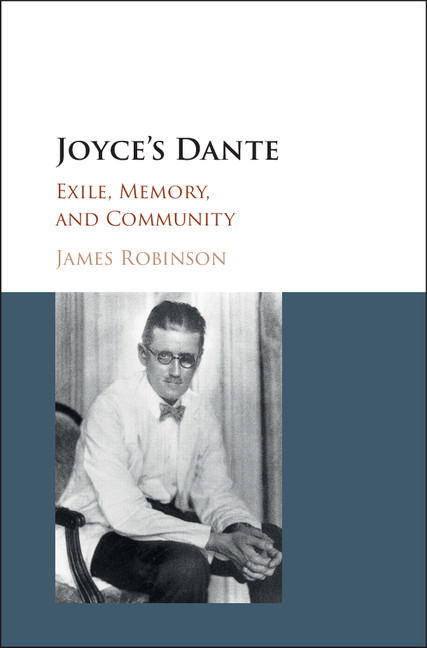
Joyce's Dante

-
Select format
-
- Publisher:
- Cambridge University Press
- Publication date:
- 13 October 2016
- 14 October 2016
- ISBN:
- 9781316711682
- 9781107167414
- Dimensions:
- (229 x 152 mm)
- Weight & Pages:
- 0.5kg, 242 Pages
- Dimensions:
- Weight & Pages:
You may already have access via personal or institutional login
Show more authors 
You may already have access via personal or institutional login
Book description
Joyce's engagement with Dante is a crucial component of all of his work. This title reconsiders the responses to Dante in Joyce's work from A Portrait of the Artist as a Young Man to Finnegans Wake. It presents that encounter as an historically complex and contextually determined interaction reflecting the contested development of Dante's reputation, readership and textuality throughout the nineteenth century. This process produced a 'Dante with a difference', a uniquely creative and unorthodox construction of the poet which informed Joyce's lifelong engagement with such works as the Vita Nuova and the Commedia. Tracing the movement through Joyce's writing on exile as a mode of alienation and charting his growing interest in ideas of community, Joyce's Dante shows how awareness of his changing reading of Dante can alter our understanding of one of the Irish writer's lasting thematic preoccupations.
Reviews
'Such writing catches the spirit of Joyce’s enterprise lucidly. Robinson does not produce definitive evidence that Joyce knew about the misreading of ‘Violetta’ as ‘Nuvoletta’, but it is exactly the kind of messy creative mistake that Joyce relished throughout his work.'
Matthew Creasy Source: Translation and Literature
'… Robinson delivers another virtuoso demonstration of the power of his technique in deploying exhaustive philological retention of textual archives.'
William Franke Source: James Joyce Quarterly
Contents
Contents
Metrics
Altmetric attention score
Full text views
Full text views helpTotal number of HTML views: 0
Total number of PDF views: 0 *
 Loading metrics...
* Views captured on Cambridge Core between #date#. This data will be updated every 24 hours.
Usage data cannot currently be displayed.
Accessibility standard: Unknown
Why this information is here
This section outlines the accessibility features of this content - including support for screen readers, full keyboard navigation and high-contrast display options. This may not be relevant for you.
Accessibility Information
Accessibility compliance for the HTML of this book is currently unknown and may be updated in the future.