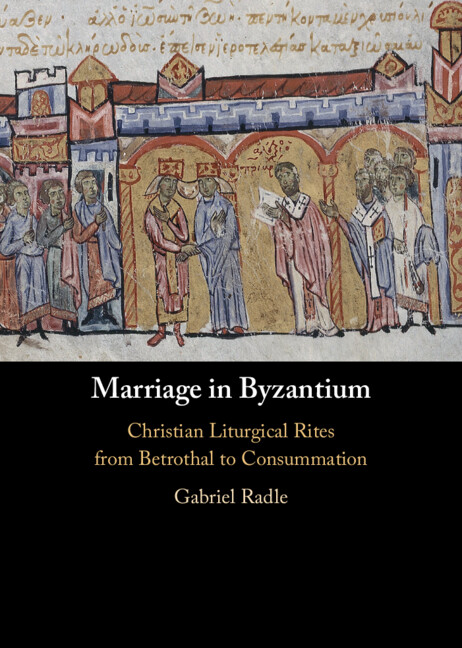

Across cultures, weddings have historically represented some of the most important and extravagant celebrations. This is the first comprehensive study of marriage rituals in the Eastern Mediterranean world of Byzantine Christianity. Using a large corpus of unedited liturgical manuscripts as well as other evidence from jewelry and law to visual representations and theological treatises, Gabriel Radle reconstructs the ceremonies used by the Byzantines to formalize the marriage process, from betrothal to rites of consummation. He showcases the meanings behind rituals of kinship formation and sexual relations and explores how the practice of Byzantine Christianity crossed fluid borders between the church and the domestic sphere. The book situates the development of Byzantine Christian marriage traditions alongside those of other religious communities and, in placing liturgical manuscripts at the heart of this study, paves new methodological paths for the use of ritual sources in the writing of Byzantine history.
Winner, 2025 Book Prize, Ecclesiastical History Society
‘‘Marriage in Byzantium’ is a study of the highest quality, and it should remain required reading for anyone interested in Byzantine or medieval marriage, family, liturgical studies and many others for years to come.’
Nathan Leidholm Source: Journal of Medieval History
‘This is an excellent collection. The chapters are more than the sum of their (already very impressive) parts. Collectively, they show the renaissance of interest in constitutional history; they highlight its scope, ambition and relevance. Law and Constitutional Change shows that constitutional history no longer resembles what it looked like and what functions it provided in its 19th century heyday. It is no longer one top-down story of progress designed to stabilise and romanticise the status quo. In the hands of the authors of the chapters published here, constitutional history is a number of stories, a plethora of perspectives, that helps shed a light on issues of power, questioning what we know about our constitutional past and by implication our constitutional present. This is a must-read collection whose open access status means that its chapters should find their way to many a reading list, hopefully to inspire the constitutional historians of the future.’
Shaun Tougher Source: Byzantine and Modern Greek Studies
Loading metrics...
* Views captured on Cambridge Core between #date#. This data will be updated every 24 hours.
Usage data cannot currently be displayed.
This section outlines the accessibility features of this content - including support for screen readers, full keyboard navigation and high-contrast display options. This may not be relevant for you.
Accessibility compliance for the PDF of this book is currently unknown and may be updated in the future.
