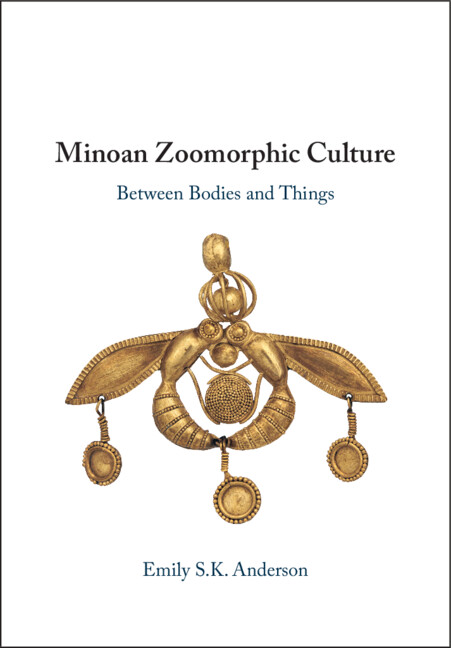

Since the earliest era of archaeological discovery on Crete, vivid renderings of animals have been celebrated as defining elements of Minoan culture. Animals were crafted in a rich range of substances and media in the broad Minoan world, from tiny seal-stones to life-size frescoes. In this study, Emily Anderson fundamentally rethinks the status of these zoomorphic objects. Setting aside their traditional classification as 'representations' or signs, she recognizes them as distinctively real embodiments of animals in the world. These fabricated animals-engaged with in quiet tombs, bustling harbors, and monumental palatial halls-contributed in unique ways to Bronze Age Aegean sociocultural life and affected the status of animals within people's lived experience. Some gave new substance and contour to familiar biological species, while many exotic and fantastical beasts gained physical reality only in these fabricated embodiments. As real presences, the creatures that the Minoans crafted artfully toyed with expectation and realized new dimensions within and between animalian identities.
‘… brings together a huge amount of detailed information on these many beautiful objects and images. Anderson combines various perspectives to deliver new ideas on how one can study ‘animalian things’ in order to understand how the Minoans interacted, shaped and populated their own lives with animals and fantastic creatures alike.’
Marion Uckelmann Source: Antiquity
Loading metrics...
* Views captured on Cambridge Core between #date#. This data will be updated every 24 hours.
Usage data cannot currently be displayed.
This section outlines the accessibility features of this content - including support for screen readers, full keyboard navigation and high-contrast display options. This may not be relevant for you.
Accessibility compliance for the HTML of this book is currently unknown and may be updated in the future.
