Recovery Resilience Program Facilitator's Guide
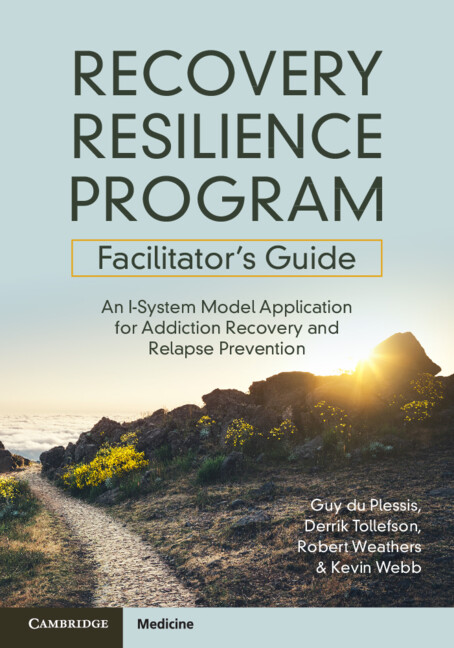

-
Select format
-
- Publisher:
- Cambridge University Press
- Publication date:
- 27 October 2026
- 14 May 2026
- ISBN:
- 9781009378734
- 9781009378741
- Dimensions:
- Weight & Pages:
- Dimensions:
- (254 x 178 mm)
- Weight & Pages:
- 0.665kg, 316 Pages
You may already have access via personal or institutional login
Show more authors 
You may already have access via personal or institutional login
Book description
A manual for those working with addicted populations (from lay counsellors to psychiatrists) for delivering the evidence-based Recovery Resilience Program (RRP). RRP is a person-centered, strength and resiliency-based relapse prevention and recovery-oriented intervention that works in synergy with other models, especially 12-Step programs. Presenting practices that enhance 'recovery resilience' – an individual's capacity to effectively apply coping and self-regulation skills in dealing with cravings, triggers, stress, and high-risk situations without reverting to substance use. The program helps individuals to enhance and use their recovery capital at any stage of recovery, and ultimately reach recovery and life goals. It effortlessly integrates with other evidence-based relapse programs, from the original cognitive-behavioral approaches to the newer mindfulness-based and metacognitive approaches. Written by clinicians who have worked with addicts and their families for many decades, the program is easy-to-implement and very little preparation is necessary with handouts and PowerPoints included in each session.
Contents
Contents
Metrics
Full text views
Full text views helpTotal number of HTML views: 0
Total number of PDF views: 0 *
 Loading metrics...
* Views captured on Cambridge Core between #date#. This data will be updated every 24 hours.
Usage data cannot currently be displayed.
Accessibility standard: Missing or limited accessibility features
Why this information is here
This section outlines the accessibility features of this content - including support for screen readers, full keyboard navigation and high-contrast display options. This may not be relevant for you.
Accessibility Information
The PDF of this book is known to have missing or limited accessibility features. We may be reviewing its accessibility for future improvement, but final compliance is not yet assured and may be subject to legal exceptions. If you have any questions, please contact accessibility@cambridge.org.
Content Navigation
Table of contents navigation
Allows you to navigate directly to chapters, sections, or non‐text items through a linked table of contents, reducing the need for extensive scrolling.
Index navigation
Provides an interactive index, letting you go straight to where a term or subject appears in the text without manual searching.