Regulating Assisted Reproductive Technologies

-
Select format
-
- Publisher:
- Cambridge University Press
- Publication date:
- 02 November 2018
- 22 November 2018
- ISBN:
- 9781316675823
- 9781107160569
- 9781316613627
- Dimensions:
- (228 x 152 mm)
- Weight & Pages:
- 0.6kg, 302 Pages
- Dimensions:
- (229 x 152 mm)
- Weight & Pages:
- 0.442kg, 304 Pages
You may already have access via personal or institutional login
Show more authors 
You may already have access via personal or institutional login
Book description
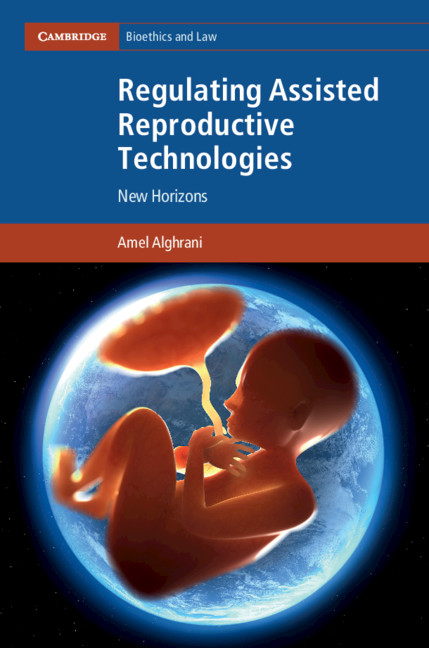
Reproductive science continues to revolutionise reproduction and propel us further into uncharted territories. The revolution signalled by the birth of Louise Brown after IVF in 1978, prompted governments across Europe and beyond into regulatory action. Forty years on, there are now dramatic and controversial developments in new reproductive technologies. Technologies such as uterus transplantation that may enable unisex gestation and babies gestated by dad; or artificial wombs that will completely divorce reproduction from the human body and allow babies to be gestated by machines, usher in a different set of legal, ethical and social questions to those that arose from IVF. This book revisits the regulation of assisted reproduction and advances the debate on from the now much-discussed issues that arose from IVF, offering a critical analysis of the regulatory challenges raised by new reproductive technologies on the horizon.
Contents
Contents
Metrics
Altmetric attention score
Full text views
Full text views helpTotal number of HTML views: 0
Total number of PDF views: 0 *
 Loading metrics...
* Views captured on Cambridge Core between #date#. This data will be updated every 24 hours.
Usage data cannot currently be displayed.
Accessibility standard: Unknown
Why this information is here
This section outlines the accessibility features of this content - including support for screen readers, full keyboard navigation and high-contrast display options. This may not be relevant for you.
Accessibility Information
Accessibility compliance for the HTML of this book is currently unknown and may be updated in the future.