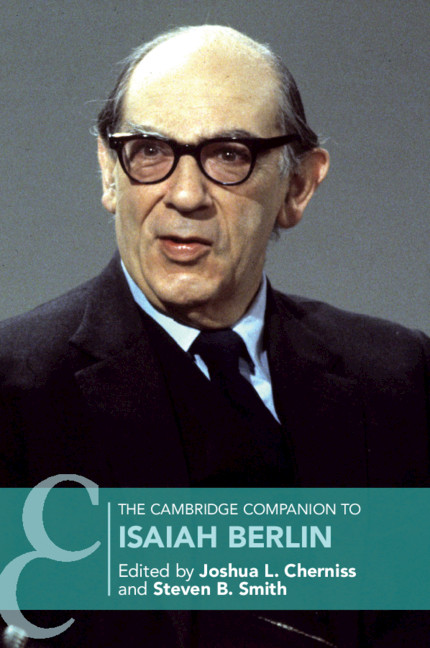

Isaiah Berlin (1909–1997) was a central figure in twentieth-century political thought. This volume highlights Berlin's significance for contemporary readers, covering not only his writings on liberty and liberalism, the Enlightenment and Romanticism, Russian thinkers and pluralism, but also the implications of his thought for political theory, history, and the social sciences, as well as the ethical challenges confronting political actors, and the nature and importance of practical judgment for politics and scholarship. His name and work are inseparable from the revival of political philosophy and the analysis of political extremism and defense of democratic liberalism following World War II. Berlin was primarily an essayist who spoke through commentary on other authors and, while his own commitments and allegiances are clear enough, much in his thought remains controversial. Berlin's work constitutes an unsystematic and incomplete, but nevertheless sweeping and profound, defense of political, ethical, and intellectual humanism in an anti-humanistic age.
'… the two opening pieces on Berlin the man, one by Amos Oz, who died in December, and the other by Hardy and Joshua Cherniss, are superb, two of the best essays ever written about him. … The book captures the range of Berlin’s work, from his early writings as an analytic philosopher and on Karl Marx in the 1930s to his essays on Russian thinkers, the Enlightenment, Counter-Enlightenment and Romanticism, from nationalism to pluralism and liberalism.'
David Herman Source: New Statesman
Loading metrics...
* Views captured on Cambridge Core between #date#. This data will be updated every 24 hours.
Usage data cannot currently be displayed.
This section outlines the accessibility features of this content - including support for screen readers, full keyboard navigation and high-contrast display options. This may not be relevant for you.
Accessibility compliance for the HTML of this book is currently unknown and may be updated in the future.
