The Theology of Debt in Late Medieval English Literature
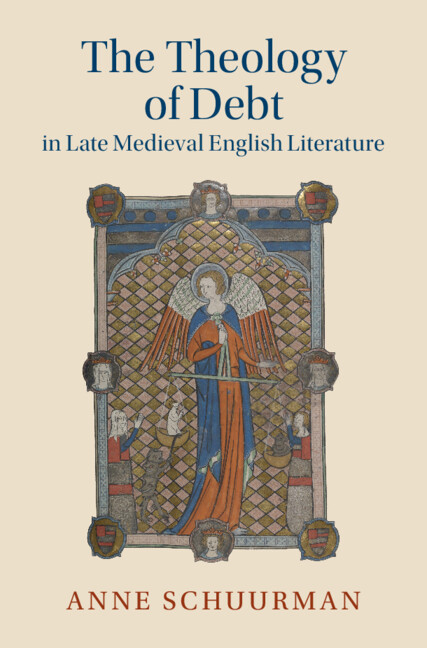

-
Select format
-
- Publisher:
- Cambridge University Press
- Publication date:
- 04 January 2024
- 18 January 2024
- ISBN:
- 9781009385947
- 9781009385954
- Creative Commons:
-
This content is Open Access and distributed under the terms of the Creative Commons Attribution licence CC-BY-NC 4.0.


https://creativecommons.org/creativelicenses - Dimensions:
- (229 x 152 mm)
- Weight & Pages:
- 0.558kg, 268 Pages
- Dimensions:
- Weight & Pages:
- Subjects:
- Literature, Anglo Saxon and Medieval Literature
- Series:
- Cambridge Studies in Medieval Literature (124)
Open AccessYou have digital access to this book- Subjects:
- Literature, Anglo Saxon and Medieval Literature
- Series:
- Cambridge Studies in Medieval Literature (124)
Show more authors 
You have digital access to this book
Book description
Exploring debt's permutations in Middle English texts, Anne Schuurman makes the bold claim that the capitalist spirit has its roots in Christian penitential theology. Her argument challenges the longstanding belief that faith and theological doctrine in the Middle Ages were inimical to the development of market economies, showing that the same idea of debt is in fact intrinsic to both. The double penitential-financial meaning of debt, and the spiritual paradoxes it creates, is a linchpin of scholastic and vernacular theology, and of the imaginative literature of late medieval England. Focusing on the doubleness of debt, this book traces the dynamic by which the Christian ascetic ideal, in its rejection of material profit and wealth acquisition, ends up producing precisely what it condemns. This title is part of the Flip it Open Programme and may also be available Open Access. Check our website Cambridge Core for details.
Reviews
‘Western theology tends to posit a deep cleavage between spirituality and economics; at most, economic practice might offer a metaphoric model for spiritual relations, but spirituality is fundamentally separate from business, and never the twain shall meet. This book gets off to a bracing start by taking issue with the ‘separate spheres’ thesis just articulated. … Thinking of this kind refreshes our understanding of both discourses - religious faith and economic credit - as intimately related and inherently beyond rational grasp. Theology is deeply economic and economic theory is irrational. Belief is the core of both.’
James Simpson Source: The Yearbook of Langland Studies
Contents
Full book PDFContents
-
The Theology of Debt in Late Medieval English Literature
pp i-i -
-
- You have access
- Open access
- HTML
- Export citation
-
-
Cambridge Studies in Medieval Literature - Series page
pp ii-ii -
-
- You have access
- Open access
- HTML
- Export citation
-
-
The Theology of Debt in Late Medieval English Literature - Title page
pp iii-iii -
-
- You have access
- Open access
- HTML
- Export citation
-
-
Copyright page
pp iv-iv -
-
- You have access
- Open access
- HTML
- Export citation
-
-
Dedication
pp v-vi -
-
- You have access
- Open access
- HTML
- Export citation
-
-
Contents
pp vii-vii -
-
- You have access
- Open access
- HTML
- Export citation
-
-
Acknowledgements
pp viii-viii -
-
- You have access
- Open access
- HTML
- Export citation
-
-
Abbreviations
pp ix-x -
-
- You have access
- Open access
- HTML
- Export citation
-
-
Introduction
pp 1-24 - Middle English Debt and the Spirit of Capitalism
-
-
- You have access
- Open access
- HTML
- Export citation
-
-
Chapter 1 - Counterfeit Money
pp 25-49 - Debt and Form in the Middle English Charter Lyrics
-
-
- You have access
- Open access
- HTML
- Export citation
-
-
Chapter 2 - Secret Debts
pp 50-81 - Credit and Faith in the Spendthrift Knight Romances
-
-
- You have access
- Open access
- HTML
- Export citation
-
-
Chapter 4 - “What is ynogh to mene”
pp 112-135 - Measuring Debt in Langland’s Piers Plowman
-
-
- You have access
- Open access
- HTML
- Export citation
-
-
Chapter 5 - Piers Plowman and the Inappropriable
pp 136-171 -
-
- You have access
- Open access
- HTML
- Export citation
-
-
Epilogue
pp 172-176 -
-
- You have access
- Open access
- HTML
- Export citation
-
-
Notes
pp 177-223 -
-
- You have access
- Open access
- HTML
- Export citation
-
-
Bibliography
pp 224-247 -
-
- You have access
- Open access
- HTML
- Export citation
-
-
Index
pp 248-252 -
-
- You have access
- Open access
- HTML
- Export citation
-
-
Cambridge Studies in Medieval Literature - Series page
pp 253-258 -
-
- You have access
- Open access
- HTML
- Export citation
-
Metrics
Altmetric attention score
Full text views
Full text views helpTotal number of HTML views: 0
Total number of PDF views: 0 *
 Loading metrics...
* Views captured on Cambridge Core between #date#. This data will be updated every 24 hours.
Usage data cannot currently be displayed.
Accessibility standard: Unknown
Why this information is here
This section outlines the accessibility features of this content - including support for screen readers, full keyboard navigation and high-contrast display options. This may not be relevant for you.
Accessibility Information
Accessibility compliance for the HTML of this book is currently unknown and may be updated in the future.