Virgil's Ascanius
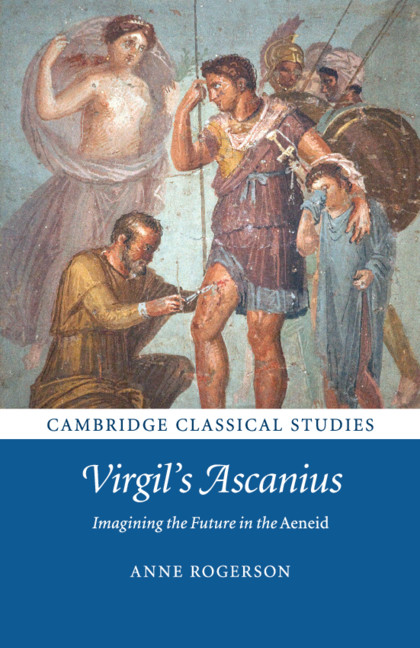

-
Select format
-
- Publisher:
- Cambridge University Press
- Publication date:
- 02 March 2017
- 20 January 2017
- ISBN:
- 9781316335840
- 9781107115392
- 9781107535695
- Dimensions:
- (216 x 138 mm)
- Weight & Pages:
- 0.42kg, 246 Pages
- Dimensions:
- (216 x 140 mm)
- Weight & Pages:
- 0.3kg, 246 Pages
- Series:
- Cambridge Classical Studies
Show more authors 
You may already have access via personal or institutional login
Book description
Ascanius is the most prominent child hero in Virgil's Aeneid. He accompanies his father from Troy to Italy and is present from the first book of the epic to the last; he is destined to found the city of Alba Longa and the Julian family to which Caesar and Augustus both belonged; and he hunts, fights, makes speeches, and even makes a joke. In this first book-length study of Virgil's Ascanius, Anne Rogerson demonstrates the importance of this character not just to the Augustan family tree but to the texture and the meaning of the Aeneid. As a figure of prophecy and a symbol both of hopes for the future and of present uncertainties, Ascanius is a fusion of epic and dynastic desires. Compelling close readings of the representation and reception of this understudied character throughout the Aeneid expose the unexpectedly childish qualities of Virgil's heroic epic.
Reviews
'This fine and stimulating book discusses multivalent and slippery prophecies, significant names and their etymologies, and especially the importance of variant and inconsistent versions of myth.'
James J. O’Hara Source: Bryn Mawr Classical Review
Contents
Contents
Metrics
Altmetric attention score
Full text views
Full text views helpTotal number of HTML views: 0
Total number of PDF views: 0 *
 Loading metrics...
* Views captured on Cambridge Core between #date#. This data will be updated every 24 hours.
Usage data cannot currently be displayed.
Accessibility standard: Unknown
Why this information is here
This section outlines the accessibility features of this content - including support for screen readers, full keyboard navigation and high-contrast display options. This may not be relevant for you.
Accessibility Information
Accessibility compliance for the HTML of this book is currently unknown and may be updated in the future.