To save content items to your account,
please confirm that you agree to abide by our usage policies.
If this is the first time you use this feature, you will be asked to authorise Cambridge Core to connect with your account.
Find out more about saving content to .
To save content items to your Kindle, first ensure no-reply@cambridge.org
is added to your Approved Personal Document E-mail List under your Personal Document Settings
on the Manage Your Content and Devices page of your Amazon account. Then enter the ‘name’ part
of your Kindle email address below.
Find out more about saving to your Kindle.
Note you can select to save to either the @free.kindle.com or @kindle.com variations.
‘@free.kindle.com’ emails are free but can only be saved to your device when it is connected to wi-fi.
‘@kindle.com’ emails can be delivered even when you are not connected to wi-fi, but note that service fees apply.
The development of satellite mega-constellations promises substantial benefits but also exacerbates environmental risks, including primarily the proliferation of space debris, interference with astronomy, and effects on the atmosphere. This article explains the critical role of environmental impact assessments (EIAs) in ensuring the sustainable development of mega-constellations and argues that EIAs should be regarded as part of existing international space law. On the one hand, heightened environmental risks from space activities render EIAs increasingly relevant, if not indispensable, for implementing the obligations under Article IX of the Outer Space Treaty. On the other hand, while Article III of the Treaty enables the application of general international law on EIAs to outer space, its scope is constrained to activities that are likely to cause a significant adverse impact. The analysis also addresses the operationalization of EIAs with regard to mega-constellations by identifying the responsible state, assessing the significance of environmental impacts, articulating minimum standards, and developing appropriate mechanisms.
From the World Bank’s ‘Climate-Smart Mining’ initiative or ‘Resilient and Inclusive Supply-Chain Enhancement’ program to the IMF’s ‘Energy Transition Strategies’, international development institutions have plenty to say about the role of the supply chain in securing critical minerals for green energy technologies.1 This article forms part of a bigger project that examines how the form of the supply chain, in the context of the contemporary energy transition, entrenches the patterns of distribution and accumulation that we often associate with the fossil fuel economy. In this way, I argue that the supply chain contributes to suppressing alternative legal forms of decarbonization.2 Multiple international legal practices and modes of thought are involved in this suppression. In this article, I offer an account of how logistics, as a practice, discipline of supply chain management, and form of governance or jurisdiction contribute to foreclosing possibilities for alternative forms of decarbonization in ways that both implicate international law and point to possibilities for contestation.
With the Directive on Corporate Sustainability Due Diligence, the European Union strives to address the negative externalities of companies that arise in the global economy. The new Directive follows the example of national lawmakers by requiring large companies operating in their own jurisdiction to manage adverse impacts on human rights and the environment. These due diligence laws affect companies beyond European borders by cascading due diligence standards down transnational ownership ties and value chains. They are shifting gears in the complex engine of the global economy and have considerable impacts on stakeholders in third countries. These extraterritorial implications raise the question of what limits international law places on relevant unilateral legislation. This article assesses the Directive against the law of jurisdiction and international comity arguing that unilateral due diligence laws are an appropriate way to address transnational sustainability challenges, provided lawmakers take adequate precautions.
This article argues that the global Business and Human Rights movement demonstrates a push towards a human-rights type of sustainable corporation, reconciling economic development and human rights. It explains the necessity for and significance of a definition of a sustainable corporation at the intersection of traditional international human rights and sustainable development instruments. It argues, inter alia, that an internationally recognised definition of a sustainable corporation can settle fundamental questions and create a minimal framework for meaningful discourse on corporate accountability for human rights, climate change and the environment. It identifies difficulties of defining a sustainable corporation such as the integration problem. It suggests ‘direct human rights obligation’ as a minimally sufficient normative criterion for the definitional correctness of a sustainable corporation. The suggested definition of sustainable corporation requires taking a normative position which makes the term ‘essentially contested’ resulting in discursive and behavioural norm contestation in the search for definitional determinacy and consensus within the divide between international and domestic law.
The corporate responsibility to reduce greenhouse gas (GHG) emissions is seen increasingly as having a legal dimension, grounded in human rights, due diligence laws, and tort law. Corporate climate strategies often rely on carbon credits to offset emissions, but available credits typically fail to deliver real reductions. This raises doubts about their suitability for meeting responsibilities to reduce emissions.
This article examines the issue through the lens of due diligence, a key concept in defining corporate obligations. Due diligence demands that firms prioritize preventive and effective action to address the climate impacts of their business activities. Available carbon credits meet neither condition; accordingly, they are, as a rule, unsuitable for fulfilling a corporate duty to reduce GHG emissions.
The article also evaluates exceptions suggested in guidance documents, particularly the use of credits for offsetting residual and Scope 3 emissions. It concludes that these exceptions are difficult to justify from a due diligence standpoint, given the limited effectiveness of credits.
The gated community is a unique site of social reproduction which has proliferated across India. Elite families are reproduced at the individual, household level but also at the communal level in service-rich private enclaves. These households rely heavily on specialised reproductive labourers who are deprived of worker status because they work in the private domain. Homeowners’ associations or resident welfare associations (RWAs) meanwhile regulate reproductive labour through surveillance and wage fixing and by regulating entry and exit. Despite their public function, RWAs claim no responsibility for worker welfare due to privity of contract and the exclusion of ‘domestic service’ from labour laws. We examine India’s new labour codes, establishment laws and constitutional law to pin responsibility on RWAs as public bodies for ensuring the fundamental rights and welfare of these workers.
The European legislator has included the fulfilment service provider (FSP) in European product safety legislation as a new responsible economic operator (EO) in e-commerce for instances where no other EO is based in the European Union. As a matter of coherency, this adjusted personal scope of product safety law will likely be mirrored in a revised product liability directive. This article explores to what extent the aims and expectations of European legislator with respect to these legal changes (law in the books) align with the perceptions of FSPs and legal advisors in the field (law in action). This is done by means of a legal analysis of the goals and envisioned effects of these changes as well as a semi-structured interview study on how FSPs and legal advisors in the field perceive this new role, responsibility, and liability. The findings provide indications that product safety law currently in force might not (yet) lead to the desired effects. The findings also make us question the extent to which victim compensation is actually improved by the proposed adjustment of the personal scope of the product liability directive.
While divestments and decisions to exit commercial fossil fuel ventures are not new, the imperatives of the energy transition are catalysing such moves at a global industry-wide level, as oil companies position themselves for the future. The international normative framework for business and human rights provides clear guidance on how responsible divestment from fossil fuels should occur; however, in the absence of intergovernmental coordination and regulation, individual business divestment decisions create severe human rights risks. The case of Shell’s divestment from onshore Niger Delta oil production illustrates business and human rights issues relevant to the energy transition.
This study explores how corporate social responsibility and risk management intersect in the fashion industry, aiming to promote sustainability. It emphasizes the importance of integrating responsible practices into business strategies to mitigate risks and enhance long-term profitability. By focusing on a multinational fashion supply chain, the study examines real-world examples to highlight the challenges and opportunities in balancing brand image with ethical supply chain management. The findings provide insights into how companies can safeguard their reputation, manage complex supply chains, and contribute positively to sustainability goals in the fashion sector.
Technical summary
This paper investigates the relationship between corporate social responsibility (CSR) and risk management within the fashion industry. It conducts an in-depth case study of a prominent multinational fashion supply chain, analyzing 11 suppliers through interviews, observations, and internal documents. The study underscores that integrating CSR principles into risk management strategies helps mitigate supply chain risks and capitalize on business opportunities. It addresses gaps in existing literature by presenting empirical evidence of CSR-driven transformations in the sector, rather than merely documenting unsustainable practices. The study contributes by offering practical insights for fashion businesses aiming to achieve long-term success through sustainable practices. Key implications include the necessity for strategic integration of CSR into operational frameworks to protect corporate image, manage risks effectively, and foster sustainable growth in the competitive fashion marketplace.
Social media summary
From risk management to sustainable success: how corporate social responsibility shapes the future of fashion.
The beef industry is facing increasing pressure to adopt sustainable practices, driven by environmental, economic, and social concerns. Designing effective policies that satisfy industry demands while aligning with public interests is a complex challenge. Using a nationally representative survey of 3,001 U.S. residents, we employ a best–worst scaling approach to assess preferences for nine beef sustainability policies. Results reveal consumers prioritize affordability of beef products and welfare of cattle as most important sustainability policies. Conversely, policies addressing greenhouse gas emissions from cattle production are least important, with less than 6% of respondents preferring them.
Scenarios compatible with the Paris agreement's temperature goal of 1.5 °C involve carbon dioxide removal measures – measures that actively remove CO2 from the atmosphere – on a massive scale. Such large-scale implementations raise significant ethical problems. Van Vuuren et al. (2018), as well as the current IPCC scenarios, show that reduction in energy and or food demand could reduce the need for such activities. There is some reluctance to discuss such societal changes. However, we argue that policy measures enabling societal changes are not necessarily ethically problematic. Therefore, they should be discussed alongside techno-optimistic approaches in any kind of discussions about how to respond to climate change.
Technical summary
The 1.5 °C goal has given impetus to carbon dioxide removal (CDR) measures, such as bioenergy combined with carbon capture and storage, or afforestation. However, land-based CDR options compete with food production and biodiversity protection. Van Vuuren et al. (2018) looked at alternative pathways including lifestyle changes, low-population projections, or non-CO2 greenhouse gas mitigation, to reach the 1.5 °C temperature objective. Underlined by the recently published IPCC AR6 WGIII report, they show that demand-side management measures are likely to reduce the need for CDR. Yet, policy measures entailed in these scenarios could be associated with ethical problems themselves. In this paper, we therefore investigate ethical implications of four alternative pathways as proposed by Van Vuuren et al. (2018). We find that emission reduction options such as lifestyle changes and reducing population, which are typically perceived as ethically problematic, might be less so on further inspection. In contrast, options associated with less societal transformation and more techno-optimistic approaches turn out to be in need of further scrutiny. The vast majority of emission reduction options considered are not intrinsically ethically problematic; rather everything rests on the precise implementation. Explicitly addressing ethical considerations when developing, advancing, and using integrated assessment scenarios could reignite debates about previously overlooked topics and thereby support necessary societal discourse.
Social media summary
Policy measures enabling societal changes are not necessarily as ethically problematic as commonly presumed and reduce the need for large-scale CDR.
Introduced in 2020, the notion of living artefacts encompasses biodesign outcomes that maintain the vitality of organisms such as fungi, algae, bacteria, and plants in the use of everyday artefacts, enabling new functions, interactions, and expressions within our daily lives. This paper situates living artefacts at the intersection of the sustainability discourse and more-than-human ontologies, illuminating the unprecedented opportunities that living artefacts present for regenerative ecologies. These ecologies are characterized by a fundamental inclination toward mutualism, creativity, and coevolution. In regenerative ecologies, the human-nature relationship transcends the binary distinction and it manifests as a single autopoietic system in which the constituent members collaboratively engage in the creation, transformation, and evolution of shared habitats. The paper outlines five pillars, supplemented by guiding questions and two illustrative cases, to aid designers in unlocking, articulating, and critically evaluating the potential of living artefacts for regenerative ecologies.
The fate of plastics and packaging are intimately connected; plastics revolutionised the world of packaging, and today, packaging is plastics’ biggest market. However, as awareness of plastics’ negative human and environmental impacts grows, policymakers, civil society and industry are seeking alternatives to plastic packaging as a pathway to reducing plastics production, waste and pollution. The shortcomings of recycling, lightweighting and material substitution strategies has turned attention to source reduction strategies up the waste hierarchy. These strategies transform products, business models and supply chains to prevent packaging altogether or accommodate reusable packaging systems. As these are radical changes from business-as-usual, widespread industry uptake has not been forthcoming. This review highlights three categories of current and potential approaches to incentivising businesses to adopt plastic-free packaging systems based on reduction and reuse: persuasion, legislation and enabling measures. Predominant persuasive approaches based on voluntarism are not delivering desired results under current policy settings and could be more successful if combined with legislative reform to level the economic playing field between single-use and reuse. Additionally, enabling measures that fill practical and infrastructural system-level gaps could help to accelerate and coordinate uptake of effective and efficient unpackaged or reusable packaging systems.
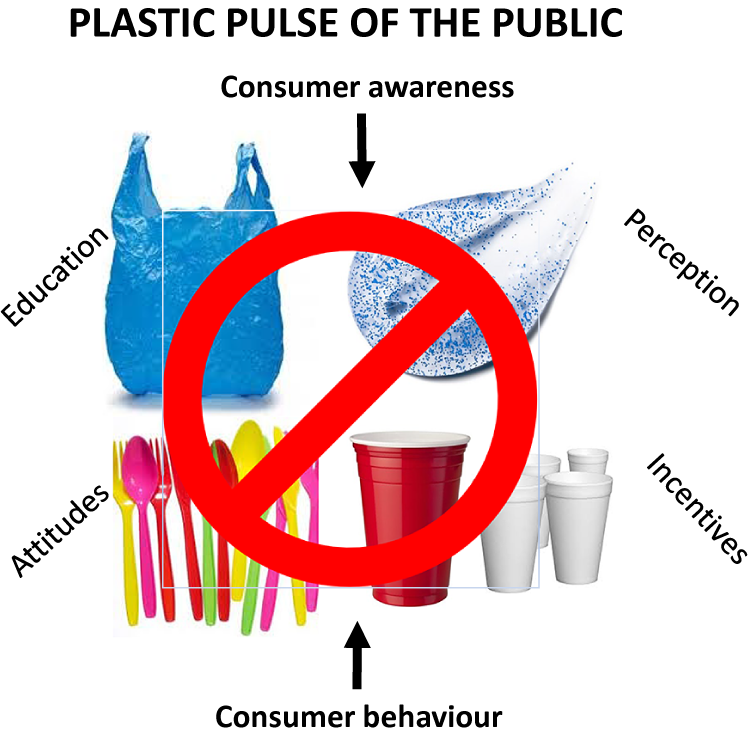
Plastics pollute all environmental compartments because of human activities and mismanagement. Public perceptions and knowledge about plastic pollution differ among individuals and across different jurisdictions. Targeted survey-based research tools can help measure consumer awareness about the impacts of mismanaged plastics and help identify trends and solutions to reduce plastic use and plastic pollution. This review primarily focused on survey-based research from presenters at the scientific track session TS-2.15 Plastic Pulse of the Public at the 7th International Marine Debris Conference (www.7imdc.org) and supplemented by contemporary literature. Survey-based research helps provide new insights about public opinions related to the pervasiveness of plastic pollution. This review includes results about consumer use and perceptions of plastic pollution impacts from diverse studies from nine countries including Ghana, Kenya, Bangladesh, Pakistan, United States, Canada, Norway, Germany, and United Kingdom. Overwhelmingly, public perceptions and consumer awareness of the negative impacts of plastic pollution were extremely high, regardless of geographic location. Awareness about the environmental impacts of plastic waste and plastic pollution was highest within younger, white, female, and well-educated demographic groups. However, differences were observed in public attitudes toward willingness to pay for sustainable alternatives, end-of-life plastic uses, unintended consequences, recycling, and mismanagement.
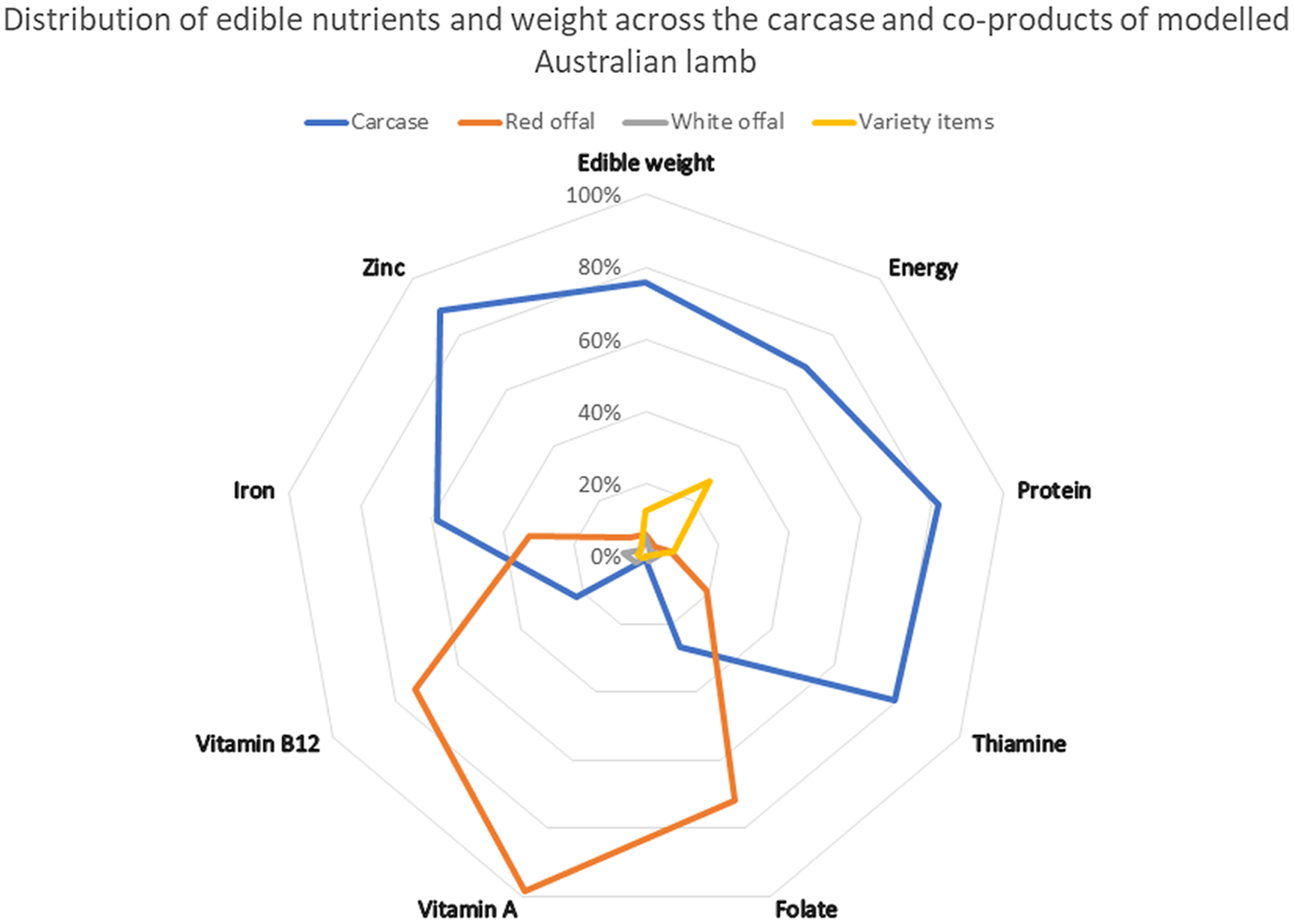
Achieving sustainable development is one of the greatest challenges for humanity. This includes producing food in a way that enhances ecosystem, animal and human health, at the farm level and more broadly. To measure the enhancement brought about by animal production systems, producers, livestock industries and governments need a deeper understanding of the nutrient distribution across the edible parts of the animal. This case study examined the nutrient distribution across food products (carcase and co-products (edible offal and slaughter fat)) derived from a typical Australian lamb, using modelling with secondary data. Due to data gaps, some edible offal products were not able to be incorporated into the model (blood, trachea, omasum, abomasum, intestines, feet/tendons and head meat). Co-products accounted for approximately 24% of total edible product (i.e., carcase and co-product) by weight, 18% of the total protein and 37% of the total fat. With regards to micronutrients, the co-products contained 42% of the total iron content and the liver had more vitamin A, folate and vitamin B12 than the carcase and other co-products combined. This case study highlighted the nutritional value of co-products, especially liver, in the context of the whole animal and, the importance of including co-products in assessments of animal production systems.
Important challenges like climate change require transformative policy responses. According to a growing public policy literature, such transformative responses typically require complex policy packages that bundle various individual policy instruments to complement each other, compensate transition losers, and create positive synergies. Nevertheless, while adding new instruments to a package can increase policy effectiveness, it comes at a price: increased policy design complexity. Increased complexity potentially leads to fundamental public misperceptions that undermine policy legitimacy and feasibility. Here, I argue that complex policy packages affect public opinion through a compensation, policy perception, and design complexity mechanism. To test this argument, this study assesses if citizens evaluate proposals for isolated climate policies related to food and mobility behaviors differently to complex policy packages. Employing a novel two-stage conjoint-experimental approach with 9115 respondents from the USA and Germany, the study shows that policy packaging increases citizens’ perceived policy effectiveness to reduce climate pollutants, but also perceived restrictions on citizens’ lifestyles. Moreover, increased design complexity can lead citizens to pay special attention to salient costly parts of policy packages. However, increased design complexity does not fundamentally reverse preferences. Through packaging desired and undesired policy instruments, policymakers can increase public support for transformative climate policies.
Our current global food system – from food production to consumption, including manufacture, packaging, transport, retail and associated businesses – is responsible for extensive negative social and environmental impacts which threaten the long-term well-being of society. This has led to increasing calls from science–policy organizations for major reform and transformation of the global food system. However, our knowledge regarding food system transformations is fragmented and this is hindering the development of co-ordinated solutions. Here, we collate recent research across several academic disciplines and sectors in order to better understand the mechanisms that ‘lock-in’ food systems in unsustainable states.
To examine perspectives on food access among low-income families participating in a cost-offset community-supported agriculture (CO-CSA) programme.
Design
Farm Fresh Foods for Healthy Kids (F3HK) is a multicentre randomized intervention trial assessing the effect of CO-CSA on dietary intake and quality among children from low-income families. Focus groups were conducted at the end of the first CO-CSA season. Participants were interviewed about programme experiences, framed by five dimensions of food access: availability, accessibility, affordability, acceptability and accommodation. Transcribed data were coded on these dimensions plus emergent themes.
Setting
Nine communities in the US states of New York, North Carolina, Washington and Vermont.
Subjects
Fifty-three F3HK adults with children.
Results
CSA models were structured by partner farms. Produce quantity was abundant; however, availability was enhanced for participants who were able to select their own produce items. Flexible CSA pick-up times and locations made produce pick-up more accessible. Despite being affordable to most, payment timing was a barrier for some. Unfamiliar foods and quick spoilage hindered acceptability through challenging meal planning, despite accommodations that included preparation advice.
Conclusions
Although CO-CSA may facilitate increased access to fruits and vegetables for low-income families, perceptions of positive diet change may be limited by the ability to incorporate share pick-up into regular travel patterns and meal planning. Food waste concerns may be particularly acute for families with constrained resources. Future research should examine whether CO-CSA with flexible logistics and produce self-selection are sustainable for low-income families and CSA farms.
Neuroimaging methods provide insight into the neural mechanisms underlying the decision process, characterizing choice at the individual level and, in a growing number of contexts, predicting national- and market-level behavior. This dual capacity to examine heterogeneity while forecasting aggregate choice is particularly beneficial to those studying environmental decision-making. To effectively reduce residential energy usage and foster other pro-environmental behaviors, policy-makers must understand the effects of information frames and behavioral nudges across individuals who hold a diverse array of attitudes toward the environment and face a broad range of barriers to action. This paper articulates the potential of neuroeconomic methods to aid environmental policy-makers interested in behavior change, especially those interested in closing the energy efficiency gap. Investigation into the roles of affect, eco-labeling and social norms will be discussed, as well as personal identity and climate change beliefs. Combining neuroimaging with behavioral economics experiments can inform the development of effective messaging, characterize the influence of individual differences on the decision process and aid in forecasting the efficacy of policy interventions at scale.
Social and health care provision have led to substantial increases in life expectancy. In the UK this has become higher than 80 years with an even greater proportional increase in those aged 85 years and over. The different life stages give rise to important nutritional challenges and recent reductions in milk consumption have led to sub-optimal intakes of calcium by teenage females in particular when bone growth is at its maximum and of iodine during pregnancy needed to ensure that supply/production of thyroid hormones to the foetus is adequate. Many young and pre-menopausal women have considerably sub-optimal intakes of iron which are likely to be associated with reduced consumption of red meat. A clear concern is the low intakes of calcium especially as a high proportion of the population is of sub-optimal vitamin D status. This may already have had serious consequences in terms of bone development which may not be apparent until later life, particularly in post-menopausal women. This review aims to examine the role of dairy foods and red meat at key life stages in terms of their ability to reduce or increase chronic disease risk. It is clear that milk and dairy foods are key sources of important nutrients such as calcium and iodine and the concentration of some key nutrients, notably iodine can be influenced by the method of primary milk production, in particular, the iodine intake of the dairy cow. Recent meta-analyses show no evidence of increased risk of cardiovascular diseases from high consumption of milk and dairy foods but increasing evidence of a reduction in the risk of type 2 diabetes associated with fermented dairy foods, yoghurt in particular. The recently updated reports from the World Cancer Research Fund International/American Institute for Cancer Research on the associations between dairy foods, red meat and processed meat and various cancers provide further confidence that total dairy products and milk, are associated with a reduced risk of colorectal cancer and high intakes of milk/dairy are not associated with increased risk of breast cancer. Earlier evidence of a significant increase in the risk of colorectal cancer from consumption of red and particularly processed meat has been reinforced by the inclusion of more recent studies. It is essential that nutrition and health-related functionality of foods are included in evaluations of sustainable food production.