1 Introduction: Major Themes
The Circumpolar Arctic is a unique and remarkable cultural and biogeographic region; nowhere is this clearer than in the ways people obtained, prepared, stored, and ate different foods. Throughout this Element, we consider many specific archaeological and ethnographic examples of these foodways. However, this introduction will set the stage by briefly considering some of the more general elements of the Arctic environment, as well as the profound ways in which people understood their relationship to it.
The Arctic Environment: Constraints and Opportunities
Understanding the distribution of important species in time and space was a key to ancient peoples’ successful lifeways and is also a key for modern archaeologists who seek to understand the Arctic past (see Pielou Reference Pielou1994 for a book-length overview of Arctic physical and biological environments). These species distributions are in turn governed by aspects of climate and geography. Most of the region is characterized by long cold winters and short cool summers. Precipitation in the form of rain and more frequently snow is generally low, with many areas approaching desert levels of precipitation, though exceptions exist, including wetter conditions in much of Fennoscandia (Norway, Sweden, and Finland). The long cold winters have many impacts, with formation of sea ice particularly important. In much of the north, the sea freezes over completely in the winter, making it impossible for most (but not all) sea mammals to live. However, for people who understand the ice, it can be an important platform for fishing, hunting at the ice margin, or hunting through breathing holes kept open by Arctic-adapted seals. Frozen sea ice (as well as lake and river ice) also provides a flat, smooth surface that can make travel on foot or by sled more efficient.
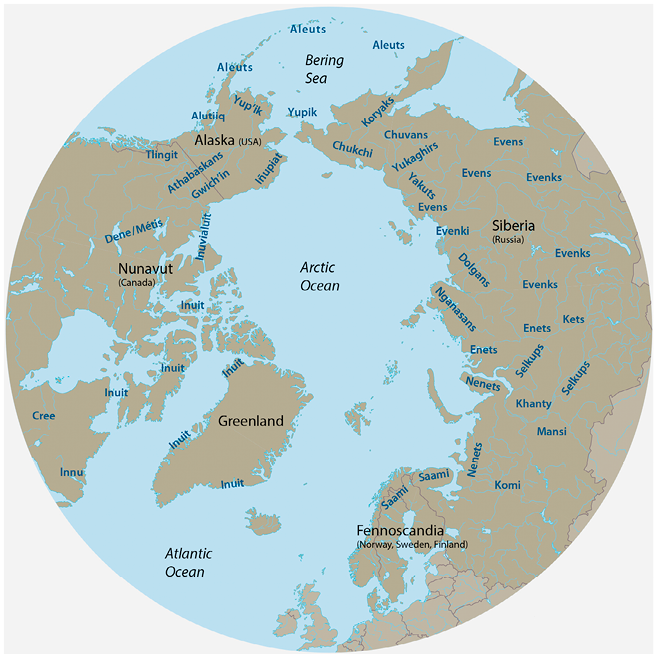
Arctic environments have never been static (Figure 1). Year-to-year changes in temperature, wind, and snowpack can have enormous impacts on hunting and fishing success and travel. However, longer term climate change is also important for understanding many aspects of archaeology. Most dramatically, large parts of the region were covered by glaciers during the Pleistocene, with deglaciation happening by about 8000 BCE in northern Fennoscandia, but much later in the North American Arctic, with glaciers retreating to modern levels by around 5000 BCE (note that Greenland is still covered by ice sheets today, except for most of its coastal margin). Much of eastern Siberia and Alaska, however, were never glaciated due to very low precipitation levels. After the Pleistocene, the most important major recognized climate anomalies were the Holocene Thermal Maximum (10,000–5000 BCE), the Neoglacial cooling period (2500–1700 BCE), the Medieval Climate Anomaly (800–1300 CE), and the Little Ice Age (1300–1900 CE) (Mason Reference Mason, Mason and Friesen2017). These climate shifts vary in timing and intensity by region. All had implications for animal numbers and distributions, with potential direct implications for human societies.
Map of the Circumpolar Arctic, showing major geographic features and the homelands of Indigenous peoples.
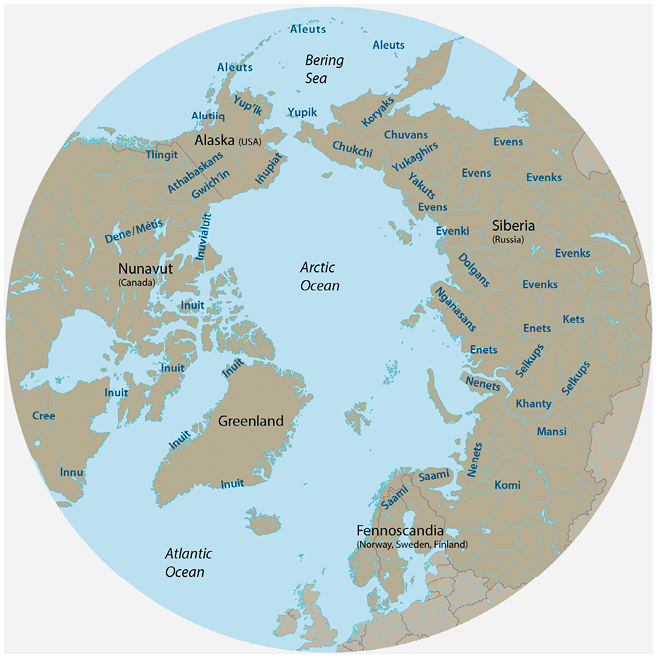
Figure 1 Long description
The Arctic Ocean is at the centre of the map. To the right is Eurasia, with Fennoscandia, consisting of Norway, Sweden, and Finland at the bottom, and Siberia at the top. To the left is North America, with Greenland at the bottom, the Canadian Arctic in the centre, and Alaska at the top. Names of the region’s many Indigenous groups are indicated on the map.
Importantly, due to the tilt of the earth’s axis as it orbits the sun annually, the daily amount of sunlight varies markedly across the course of each year. Above the Arctic Circle (66°30’ N), there is at least one day without sunset each summer, with more light the farther north you go. Likewise, in winter there is at least one day without sunrise; and at very high latitudes there can be months of darkness. These changes in amounts of sunlight have multiple effects. They can mean that the summer growing season is intense, allowing rapid plant growth, but because the summers are short, floral ecosystems are simple, with limited overall biomass, in turn limiting the number of herbivorous animals that can be supported. Long summer daylight hours can also be highly important for people; hunting, fishing, and plant harvesting can be performed continuously during the very brief summers, when most resources are available. Extended winter darkness can also have major impacts on people, especially combined with extreme cold temperatures, making travel more difficult and restricting many activities; famine was more likely in winter than in summer.
All these environmental factors together lead to profound impacts on access to food in the following four ways:
1) Particularly important is the fact that Arctic ecosystems are relatively simple. There are fewer species in all major categories – mammals, birds, fish, and plants – than at most mid- and low-latitude locations. This means that people have relatively few subsistence options in each region.
2) The Arctic has a high level of spatial patchiness. Many regions have very sparse and uneven resources, clearly not enough to support reliable human subsistence. An extreme example of this is the outermost series of islands in the northwestern Canadian Arctic Archipelago, which were never settled by people. Other areas, such as rivers with large fish populations, or major reindeer/caribou migration corridors, offer relatively reliable resource opportunities and therefore denser settlement.
3) Also critical is the extremely high level of seasonal variability. Most of the important species, including caribou/wild reindeer, most seal species, whales, salmon, Arctic char, migratory waterfowl, and virtually all plant foods, are only available for a brief period each year. This tends to be the warm season, since many of these species migrate south during the Arctic winter. There are exceptions, such as ringed seals, which are present all year, but which were easier to harvest in the winter at their breathing holes.
4) Many species are affected by interannual variability, as seen profoundly in multi-decade population cycles in caribou/wild reindeer (Bergerud Reference Bergerud1996). Note that caribou and reindeer are closely related subspecies of Rangifer tarandus; throughout this Element we use the traditional terms within their regional contexts: caribou in North America and reindeer in Eurasia. This interannual variability is often largely or completely independent of human actions, and difficult to predict, thus providing an additional element of risk for societies who depend on these species.
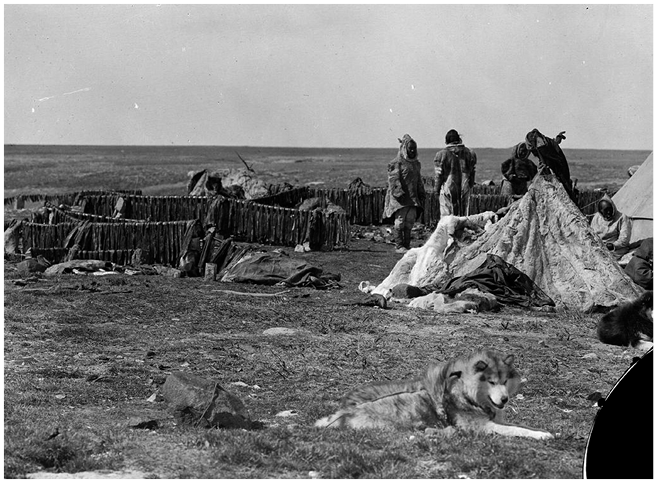
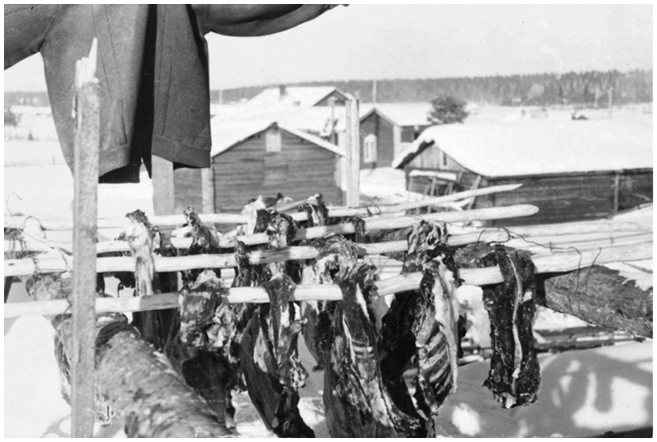
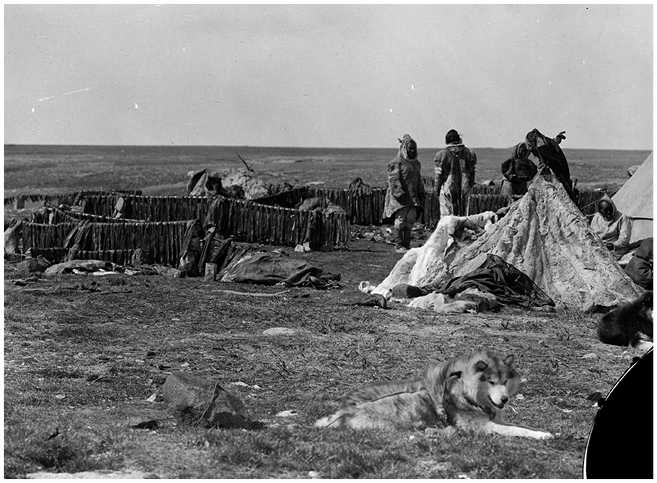
In sum, when these factors are all considered together, it is clear just how tightly constrained past Arctic foodways were. Animal foods (including birds and fish) were always dominant. There was an emphasis on storage in order to make briefly available resources last through the times in the annual cycle when few food sources were available (Figure 2). Annual cycles of movements were precisely scheduled to ensure that people were close to specific resources when they were available. Certain favoured regions drew repeated dense settlement due to plentiful resources, while others were rarely visited. Ultimately, most societies had relatively ‘focal’ economies, with a very large proportion of food derived from a small number of key resources, though in all cases there were secondary species which could add to variety in the diet, provide additional nutrients, and be relied upon if focal resources failed.
Inuit in the central Canadian Arctic drying large numbers of fish to allow long-term storage.
Centrality of Animal–Human Social and Spiritual Relationships
Arctic foodways were closely connected to human–animal relationships and spirituality. While it can be argued that such a connection exists in many cultures outside of the circumpolar sphere, northern cultures share a broadly similar understanding of the relationship between people, animals, and the landscape (e.g., Vitebsky Reference Vitebsky2005; Laugrand and Oosten Reference Laugrand and Oosten2015; Jordan Reference Jordan and Jordan2016; Herva & Lahelma Reference 78Herva and Lahelma2019; Hill & Whitridge Reference Hill, Whitridge, Whitridge and Hill2024; Whitridge Reference Whitridge, Whitridge and Hill2024).
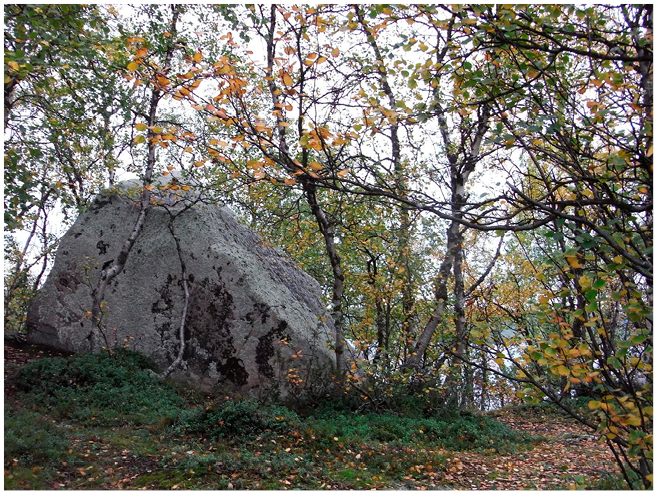
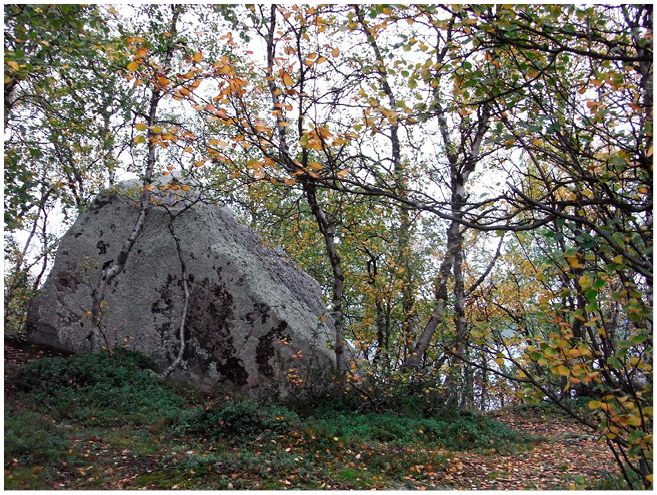
The worldview of the Sámi of northern Fennoscandia, for instance, is characterized by relationality, reciprocity, and acknowledgement of the agency of non-humans (Helander-Renvall Reference Helander-Renvall2010). The Sámi understand the world as a relational unity that includes both human and non-human actors, the relationships between these various actors always obtaining their meaning in practice, interaction, and encounters (Schanche Reference Schanche2000; Helander-Renvall Reference Helander-Renvall2010; Tervaniemi & Magga Reference Tervaniemi, Magga, Hylland Eriksen, Valkonen and Valkonen2019). The human, non-human, and supernatural worlds exist simultaneously, various sacred sites in the landscape acting as contact points for these worlds (Helander-Renvall Reference Helander-Renvall2010; Äikäs Reference Äikäs2015). Throughout Sámi history, there was a profound connection between subsistence activities, such as hunting, fishing, and reindeer herding, and the spiritual world (e.g., Äikäs et al. Reference Äikäs, Puputti, Núñez, Aspi and Okkonen2009). Offerings were given at various sacred places such as mountains, hilltops, boulders, and rock formations for the purpose of giving thanks and ensuring future success in subsistence and other activities (Äikäs Reference Äikäs2015) (Figure 3). Animal species that were offered were often economically and culturally important species, such as reindeer, wild forest birds, waterfowl, bear, beaver, and fish, highlighting the importance of the offering rituals as an integral part of the subsistence strategy (Äikäs et al. Reference Äikäs, Puputti, Núñez, Aspi and Okkonen2009; Salmi et al. Reference Salmi, Äikäs, Spangen, Fjellström and Mulk2018). On the other hand, although there were significant differences between the subsistence practices of Sámi communities, the major transformations in the offering tradition seem to have occurred simultaneously across northern Fennoscandia, showing that the general principles of relating to the land and its resources were shared across the region (Salmi et al. Reference Salmi, Äikäs, Spangen, Fjellström and Mulk2018). The Sámi animal offering tradition was remarkably long lasting, continuing from the sixth century BCE to the seventeenth century CE and beyond; many of the places still retain their meanings to local communities as well as other groups (Äikäs & Spangen Reference Äikäs and Spangen2016).
Sámi offering site in Näkkälä, Enontekiö, Finland.
Another example of a spiritual tradition linking subsistence activities to the wider worldview in the north is rock art, which was created by a range of circumpolar hunter-gatherer communities. The functions and meanings of rock art were probably layered, with several possible meanings coexisting for the societies who made the art and visited the sites. It was probably intertwined with hunting activities, perception of the landscape, and spirituality (e.g., Lahelma Reference Lahelma2005; Gjerde Reference Gjerde2019). The images and scenes in rock art may refer to places in the landscape, relating rock art to geographical knowledge. At the same time, they relate to the cosmological world of northern hunter-gatherers (Gjerde Reference Gjerde2019). Combining these aspects, rock art can be understood as a manifestation of important cultural knowledge about the landscape and the world as it is, as well as a site of communication with the spiritual realm (Gjerde Reference Gjerde2019). The ‘functional’ and ‘spiritual’ meanings of rock art were not mutually exclusive, nor were they considered as separate spheres of life by prehistoric communities (Lahelma Reference Lahelma2005). Therefore, rock art sites were both ritual places and part of the practicalities of hunting and food production (Lahelma Reference Lahelma2005; Mantere Reference Mantere2023). For instance, elk (Alces alces, known as moose in North America) images in rock art contained meanings related to gaining hunting success, guaranteeing the reproduction of the elk species, and cultural ideas of the relationships between humans and elks (Mantere Reference Mantere2023). A related example is drawn from Nunavik (northern Québec, Canada), where the unique Dorset site of Qajartalik contains over 180 engravings of faces, some with characteristics interpreted as being linked to animals (Arsenault et al. Reference Arsenault, Gagnon and Gendron1998; Arsenault Reference Arsenault2013). These engravings occur on a steatite (soapstone) outcrop which was also used to extract stone to make lamps. At present, the original meanings of the faces, and their connection to animals and landscapes, remain obscure.
As these examples show, the relationships between humans and animals they hunted were characterized by relationality and reciprocity in many northern worldviews. The relationships were maintained through engagements and rituals. Importantly, these aspects of human–animal relationships were not understood as different spheres of life as in the modern Western worldview (e.g., Brück Reference Brück1999; Laugrand and Oosten Reference Laugrand and Oosten2015; Herva & Lahelma Reference 78Herva and Lahelma2019). Rituals acted as a nexus of daily subsistence activities and religious meanings, but in a broader perspective, all subsistence-related activities from hunting to food preparation and storage were imbued with an understanding of animacy and reciprocity with the more-than-human world (Äikäs et al. Reference Äikäs, Puputti, Núñez, Aspi and Okkonen2009; Hill & Whitridge Reference Hill, Whitridge, Whitridge and Hill2024). Moreover, the combined economic and symbolic use of topographic space shows how subsistence and ritual were intertwined parts of the same conceptual process (Jordan Reference Jordan and Jordan2016). The process of associating meaning with the landscape was grounded in practical and ritual activities that took place in it; at the same time, these activities were an important manifestation of cosmology and worldview (Filtchenko Reference Filtchenko and Jordan2016).
2 Outline of Circumpolar Culture History
The Circumpolar North is a vast area, with enormous variability in both environment and culture. In particular, very different cultural trajectories and influences existed in Eurasia and North America – though there were also frequent contacts and migrations between these two land masses. Here, we provide a very brief overview; just enough to offer context for the remainder of this Element. We concentrate mainly on ‘true Arctic’, areas north of, or close to, the Arctic Circle, characterized by tundra vegetation or the northernmost limits of the boreal forest/taiga environment. Thus, for example, most of the vast area of Siberia is south of our region since it is characterized by boreal or even broad-leaf forest or steppe grasslands. Likewise, in North America we concentrate on tundra environments north of the boreal forest.
Eurasian Arctic
While the farthest northern limits of human settlement in Eurasia were reached only by modern humans, it is worth noting that two closely related hominins, Neanderthals and Denisovans, are commonly understood to have been physically and behaviourally adapted to cold temperatures, allowing them to move farther north than earlier hominins. The northern regions occupied by Neanderthals and Denisovans are known mainly through the presence of Middle Palaeolithic stone tools, often associated with animal bones which indicate successful hunting. In some cases, they occupied environments characterized by tundra and relied on cold-adapted species such as reindeer and woolly mammoths. However, it is important to note that the northern limit of Neanderthals and Denisovans (as indicated mainly by the presence of Middle Palaeolithic stone tools) was far south of current Arctic regions (Rolland Reference Rolland2015), likely due at least in part to a probable lack of complex tailored skin clothing. In Europe, for example, while there is plentiful evidence for Middle Palaeolithic sites associated with Neanderthals in much of southern and central Germany, it is not clear that they were present as far north as southern Scandinavia (Nielsen et al. Reference 83Nielsen, Benito, Svenning, Sandel, McKerracher, Riede and Kjærgaard2017). Interestingly, a recent study of ecological niches suggests that Denisovans may have been adapted to more northerly regions than Neanderthals (Ruan et al. Reference Ruan, Timmermann, Raia, Yun, Zeller, Mondanaro and Melchionna2023). Many people around the world retain genes from Denisovans; a particularly relevant legacy directly related to Arctic foodways is found among modern Inuit, whose ability to produce body heat from the metabolism of lipids (fats) when temperatures are cold was likely inherited from Denisovans (Ongaro & Huerta-Sanchez Reference Ongaro and Huerta-Sánchez2024).
With the arrival of anatomically modern peoples from Africa into Europe and Asia, in the process displacing Neanderthals and Denisovans, more southerly and mid-latitude regions were occupied first. While northern Europe was not accessible due to ice sheets for most of the Pleistocene, we have a better chance to track northward movements in areas to the east, most of which were never fully glaciated. Southern Siberia was occupied by around 43,000 BCE (unless otherwise indicated, throughout this Element all dates are based on calibrated calendar years, not on uncalibrated ‘BP’ radiocarbon years) (Hoffecker Reference Hoffecker2017). The most important early archaeological discoveries in northeastern Eurasia are at the Yana RHS site in eastern Siberia at 71°N, far north of the Arctic Circle. This site, together with several other nearby localities, dates from around 31,000 BCE and indicates active hunting of northern fauna, including woolly mammoth, reindeer, and Pleistocene horse (Pitulko et al. Reference Pitulko, Nikolsky, Girya, Basilyan, Tumskoy, Koulakov and Anisimov2004). These sites also include a rich artefact assemblage, including many decorated artefacts as well as a very large and diverse set of bone needles and awls, testifying to the importance of tailored skin clothing at this latitude (Pitulko & Pavlova Reference Pitulko, Pavlova, Grøn and Peeters2022; Pitulko et al. Reference Pitulko, Pavlova, Nikolskiy and Ivanova2012). For much of the Late Pleistocene, the northeastern part of Eurasia was joined into a continuous land mass with northwestern North America (mainly Alaska) in a region known as Beringia. Though the human history of this region is not yet fully understood, during at least parts of the Last Glacial Maximum (after 26,000 BCE) many regions’ economies focussed on hunting and consumption of large mammals such as mammoth, bison, horse, and reindeer/caribou, though other resources were also acquired.
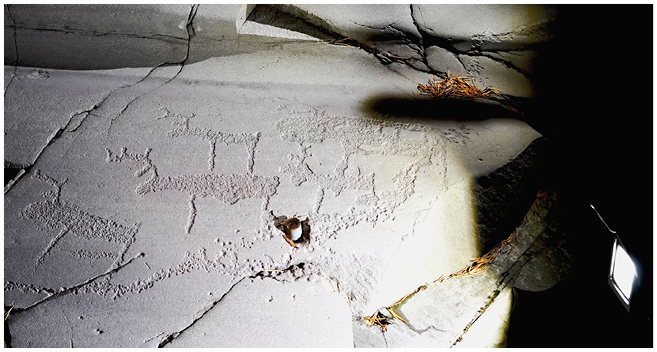
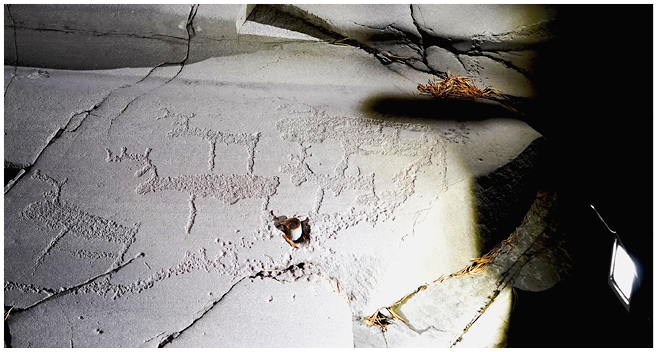
With the rapid warming at the end of the Pleistocene, commencing around 15,000 BCE, a series of cultural changes and migrations occurred among Eurasian peoples. In the west, northern movements in Europe resulted in the settlement of parts of northern Norway, Sweden, and Finland by around 9000 BCE by peoples often considered Mesolithic. These hunter-gatherers settled into a range of environments, including both coastal and interior regions (Glørstad Reference Glørstad2013). Farther east, on an island in the Arctic Ocean north of central Siberia, the Zhokov site is particularly remarkable. This site, dating to about 6800 BCE, had an economy built around reindeer and polar bear, with many other species present in much smaller frequencies (Pitulko et al. Reference Pitulko, Ivanova, Kasparov and Pavlova2015). Following the Mesolithic in northeastern Eurasia was a series of cultures often grouped as ‘Neolithic’, a term which in the context of Siberia is not associated with agriculture or domestication; rather it is based on the presence of ceramics in many regions. The earliest pottery in southern Siberia dates to earlier than 10,000 BCE; however, Neolithic hunter-gatherers peopled northeastern Siberia after ca. 5000 BCE in the form of the Syalakh and Belkachi cultures (Grebenyuk et al. Reference 76Grebenyuk, Fedorchenko, Dyakonov, Lebedintsev and Malyarchuk2022). The subsistence patterns in northern Fennoscandia were diverse during the Neolithic and Early Metal periods (in Northern Fennoscandian chronology, Bronze Age and Early Iron Age, ca. 2000 BCE–300 CE, are often referred to as Early Metal period), ranging from marine adaptations to reindeer hunting and other forms of hunter-gatherer economy (Figure 4). Likewise, social organization and mobility patterns varied from seasonal aggregate villages to small mobile communities (e.g., Damm et al. Reference Damm, Skandfer, Jørgensen, Sjögren, Vollan and Jordan2020; Halinen Reference Halinen2025: 150–157). In the Iron Age, the Sámi culture emerged in northern Fennoscandia and became increasingly connected with trade networks extending from Southern Scandinavia to Novgorod and beyond (e.g., Kuusela et al. Reference Kuusela, Salmi and Äikäs2020).
Rock art in Alta, northern Norway, seen at night under low-angle light to show details. Alta contains thousands of petroglyphs, dating from 5000–0 BCE, including these five reindeer.
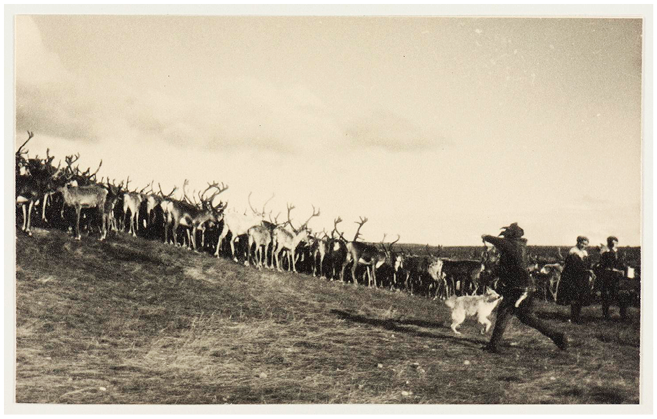
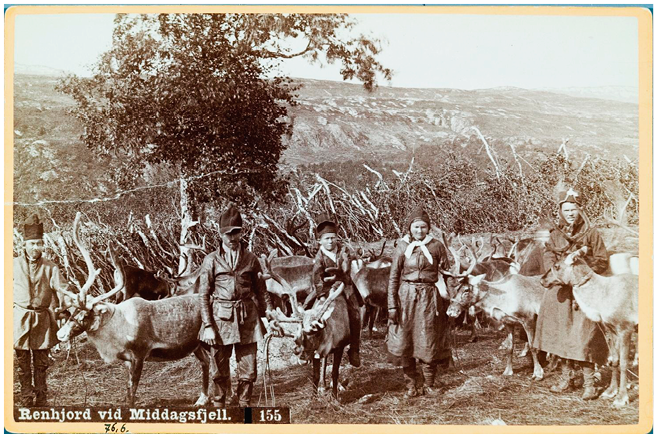
A final stage of regional development is seen in the advent of reindeer herding across a vast area of Eurasia. Based on recent genetic work, herding developed at least twice, once in northern Siberia and once in Fennoscandia (Røed et al. Reference Røed, Flagstad, Nieminen, Holand, Dwyer, Røv and Vilà2008). The connectedness of different reindeer herding traditions is still not fully resolved (Røed et al. Reference Røed, Bjørklund and Olsen2018). The origins of herding can be extremely difficult to define since archaeological sites of early herders may not look very different from those of preceding reindeer hunters; and also there are relatively few osteological differences between wild and domestic animals. We return to this topic in later sections.
Northern Eurasia gradually entered the historic record through reports of European, Russian, and Chinese state organizations. Archaeological sites show increasing interaction between northern regions and the much more densely populated southern areas, though northern peoples such as Sámi (Fennoscandia), Nenets (central Siberia), and Chukchi (eastern Siberia) maintained relatively independent lifeways until very recently.
North American Arctic
Most of the North American Arctic, consisting of northern Alaska, northern Canada, and Greenland, was occupied relatively recently due to very harsh environmental conditions, and because the final deglaciation of the central Arctic to near modern levels did not occur until around 7,000 years ago (5000 BCE) (Dyke Reference 73Dyke2004). Though earlier societies occasionally ventured into the southern margins of the Arctic, and a range of successful Subarctic societies existed just to the south in the boreal forest, for present purposes we concentrate on the distinctive societies inhabiting northern tundra and coastal environments over the past five millennia, who are commonly grouped into two traditions we refer to as Paleo-Inuit and Inuit (for overviews, see Friesen & Mason Reference Friesen, Mason, Friesen and Mason2016; Mason & Friesen Reference Mason and Friesen2017).
Paleo-Inuit. Around 3000 BCE, societies linked to the Neolithic cultures of northeastern Siberia expanded eastward across Bering Strait to Alaska, where their descendants are referred to as the Denbigh Flint Complex (Tremayne & Rasic Reference Tremayne, Rasic, Friesen and Mason2016). These are the earliest representatives of what is variably called the Paleo-Inuit, Paleo-Eskimo, Pre-Inuit, or Arctic Small Tool tradition (we refer to it as Paleo-Inuit). Denbigh sites occur at both coastal and inland locations, initiating a theme in North American Arctic archaeology in which much of the food consists of marine mammals, but other sources, often including terrestrial mammals such as caribou or muskox, were acquired whenever available.
In Alaska, Denbigh is succeeded by a series of related traditions, including Choris (800–500 BCE), Norton (500 BCE–500 CE), and Ipiutak (250–800 CE) (Friesen & Mason Reference Friesen, Mason, Friesen and Mason2016). All these societies maintained a focus on marine resources, including in some cases enormous coastal settlements with dwellings numbering in the hundreds. In many regions, salmon became an economic focus, while interior sites continued to be occupied, with a primary focus on caribou. The final Ipiutak settlements came to an end around 800 CE, probably displaced or absorbed by the contemporaneous Birnirk people.
In the Eastern Arctic, consisting of most of Arctic Canada and Greenland, a very different sequence of Paleo-Inuit cultures developed (Friesen Reference Friesen, Mason and Friesen2017). The migration that had brought Denbigh people from Siberia to Alaska continued into the East without much of a pause, with the earliest occupations in Canada around 3000 BCE. These earliest people, known as Pre-Dorset through much of their range but as Independence I in the High Arctic and Saqqaq in much of coastal Greenland, relied on marine mammals, particularly seals, in many areas, though many other resources, including caribou and muskox, were also consumed whenever available (Grønnow Reference Grønnow, Friesen and Mason2016; Milne & Park Reference Milne, Park, Friesen and Mason2016). Around 800–500 BCE, Pre-Dorset developed into the Dorset culture, with distinctive artefact types and dwellings, and with a way of life that was focussed even more on sea ice environments; in some regions, families likely lived in snow houses on the sea ice in winter to be closer to seals.
Inuit. The second great tradition of the North American Arctic, Inuit (also known as Neo-Inuit or Northern Maritime), originated in the Bering Strait region (on both the Siberian and Alaskan sides). Its origins are still obscure, though the inception of its earliest fully developed form, known as Old Bering Sea, is currently dated to ca. 300 CE (Mason & Rasic Reference Mason and Rasic2019). Old Bering Sea and succeeding cultures are marked by even more sophisticated technologies and skills than their Paleo-Inuit predecessors, allowing more frequent harvesting of larger and, in some cases, more dangerous marine mammals such as walrus and whales.
The earliest culture directly and clearly part of the Inuit tradition in Alaska (and parts of easternmost Siberia), Old Bering Sea is celebrated for its elaborate incised artwork, mainly on walrus ivory. Old Bering Sea sites are associated with major walrus haul-outs and whaling locations (Mason & Rasic Reference Mason and Rasic2019), though other food sources were also acquired. After around 900 CE, Old Bering Sea developed into two quite different but recognizable cultures, both of which were notable for the further development of whaling technologies. On the coasts and islands of the Bering Strait region, the Punuk culture developed. Meanwhile, on the northern coasts of Alaska and Siberia, the Birnirk culture inhabited many particularly productive locations, often on points of land extending into the sea (Mason Reference Mason, Mason and Friesen2017).
By around 1200–1250 CE, these two cultures, but mainly Birnirk, had developed into what has become known as the Thule culture (Alix et al. Reference Alix, Norman, Krus, Taïeb, Anderson, O’Rourke and Mason2025). The early Thule period was a time of major population movements and interactions, including across the northern Siberian coasts, to south central coastal Alaska, and to interior northern Alaska (Mason Reference Mason2020). Most remarkably, this period saw the rapid expansion of Thule Inuit across the remainder of the North American Arctic – to modern-day Canada and Greenland (Friesen Reference Friesen, Friesen and Mason2016). In the process, Thule Inuit displaced the Dorset Paleo-Inuit societies who had been living there for millennia. Over the following centuries, these societies of the North American Arctic gradually became more regionalized, resulting in the diversity of modern Inuit and Inuvialuit groups in Canada and Greenland, and Inupiat and Yupik in Alaska.
Concluding Remarks
The Arctic past, especially the distant past, of northern Eurasia and North America, is complex, but we will be drawing on archaeological examples from across much of its full breadth and time depth. We focus mainly on Indigenous histories, though we occasionally reference the expansion of more complex ‘southern’ state-level societies into our region. Importantly, despite our focus on archaeology, our discussion relies heavily on what we know about the peoples who currently live there, as recorded over the past several centuries. Thus, the ethnographic record of Sámi in Fennoscandia, reindeer-herding societies across northern Siberia, including the Nenets and Evenki, and Yupik, Inupiat, and Inuit societies of North America provide important context which can help in the interpretation of many aspects of past foodways.
3 Acquiring Food
Introduction
Food is central to all human societies. From an archaeological perspective, this is often most clear when looking at where people live, as seen in the distribution of archaeological sites. In the Arctic, because of the highly seasonal nature of most resources, and their patchy distribution with high densities in very limited areas, people generally had to position themselves precisely in time and space, in order to make a reliable living. Thus, there are often concentrations of dwellings on points of land extending into the ocean in areas with large numbers of marine mammals, on rivers with plentiful fish populations, near narrow valleys or river crossings where caribou migrations were concentrated, or near good pasture for reindeer grazing. In most cases, these locations directly relate to the most important focal resource. However, it is important to emphasize that the overall economy and diet at each location were complex and almost always based on a range of foods, not only the focal one. For example, at an important whale hunting site, a range of additional mammal, fish, bird, and plant species would broaden the diet, and could provide fallback emergency resources if whales did not appear in large numbers.
In this section, we outline archaeological approaches to food acquisition, organized around five major categories: plants, fish, birds, terrestrial mammals, and marine mammals. Much of the inference throughout this Element is based on ethnographic analogy – the use of observations about recent cultures for the interpretation of the archaeological record. Therefore, it is important to understand the advantages and limitations of this approach in the Arctic (Friesen Reference Friesen, Mason and Friesen2017). The ethnographic record, broadly understood to include both the work of anthropologists/ethnographers and records and accounts by other visitors to the region, is the product of colonial expansion. Most of the earliest written records about Inuit society in North America, for example, come from whalers, explorers, and missionaries; their observations were uneven in terms of aspects of culture observed and influenced by the goals of the European states they represented. Professional ethnographers, including Boas (Reference Boas1888), Jenness (Reference Jenness1922), and Rasmussen (Reference Rasmussen1931), are noted for the high quality of their observations; however, they were still often limited by the fact that they could not see all aspects of life equally (for example, all early ethnographers were men), and by the fact that they were observing cultures that were already impacted by new trading patterns brought by Europeans, and in many cases, epidemic disease and its profound impacts on Indigenous societies. These changes demonstrably affected foodways, as has been demonstrated in several archaeological analyses of changing subsistence across time (e.g., Friesen Reference Friesen2013b; Henshaw Reference Henshaw1999; Woollett Reference Woollett1999). Thus, the ethnographic record can provide important information, but it cannot be considered a straightforward source for the interpretation of all aspects of Arctic cultural history. Importantly in this connection, modern Indigenous communities hold profound knowledge which forms the critical baseline for any historical understanding of the region; this has been recognized unevenly in past archaeological practice, though currently there is a resurgence in community-led interpretation of the past.
There is a significant disparity between the Indigenous histories and ethnographic record of northern peoples, with their exceptionally rich accounts of many aspects of life (despite the limitations outlined earlier), and the archaeological record which is often fragmentary and ambiguous. This is perhaps nowhere as clear as in the understanding of gender roles in past food acquisition and preparation. Ethnographies are relatively clear, for example, that most circumpolar societies had well-defined and relatively distinct roles for women and men, though these roles could be flexible or changeable depending on circumstances. However, in the archaeological record, it is usually very difficult to do more than make assumptions, which are often untestable, and which in most cases simply extend recent ethnographic patterns into the past. In this connection, we note here simply that in all recent Arctic societies women’s and men’s roles were complementary, and both were critical to successful foodways.
A final important general point is that since this Element is about foodways, our descriptions are directed mainly at the use of plants and animals for their nutritional value. However, as will become apparent, all species had multiple uses, particularly as sources of raw materials. To list just a few examples, bone, antler, and teeth (including walrus ivory) were used for a huge range of technologies; skins of many species, including fish and birds, were used for clothing, boat coverings, bags, and rope; sinew was used for sewing and binding; and intestines were used for sewing waterproof clothing and to make windows to let light into winter houses.
Plants
The archaeological signals of plant food consumption are often harder to detect than animal-based foods because vertebrate bones preserve in the soil much better than most plant tissues. In general, high latitudes saw relatively low consumption of plant foods as a proportion of the overall diet. However, ethnographic and historical sources include wide-ranging information about regional plant use. To take Sámi plant use as an example, the seeds of sheep’s sorrel (Rumex acetosella) and turnip (Brassica rapa) were sown in reindeer corrals where trampling and reindeer manure created good growing conditions for these plants (Bergman & Hörnberg Reference Bergman and Hörnberg2015). Moreover, garden angelica (Angelica archangelica) was harvested by the Sámi in a way that showed intimate knowledge of the plant’s ecology and ensured its continuous availability (Bergman & Hörnberg Reference Bergman and Hörnberg2015). Also, Scots pine (Pinus sylvestris) inner bark, birch (Betula sp.) sap, and berries were harvested; sheep’s sorrel was so important that yearly migration routes were sometimes planned according to its growing places (Itkonen Reference Itkonen1948: 254). Though usually discussed in the framework of gathering, the management and harvesting patterns of these plants left subtle marks in the landscape as well as affected settlement strategies, thus provoking the question if they should be considered as cultivation or landscape domestication – both human–landscape relationships that involve systematic planning, organization, and agency in ways that altered the landscape (Bergman & Hörnberg Reference Bergman and Hörnberg2015; Rimpi Reference Rimpi2025). There is also archaeological evidence that the Sámi incorporated cereal cultivation into their subsistence from the Late Iron Age (ca. 800 CE) onwards – it was probably small-scale shifting cultivation incorporated within a mixed hunting, herding and fishing livelihood (Bergman & Hörnberg Reference Bergman and Hörnberg2015). Historical sources show that plant-based products were also traded. For example, Bailiff’s accounts from the sixteenth century onwards mention the import of flour and bread to the north (Kylli et al. Reference 80Kylli, Salmi, Äikäs, Aalto, Äikäs and Salmi2019).
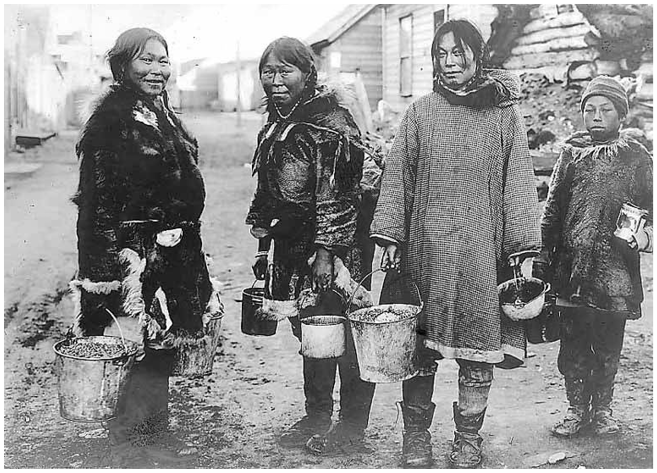
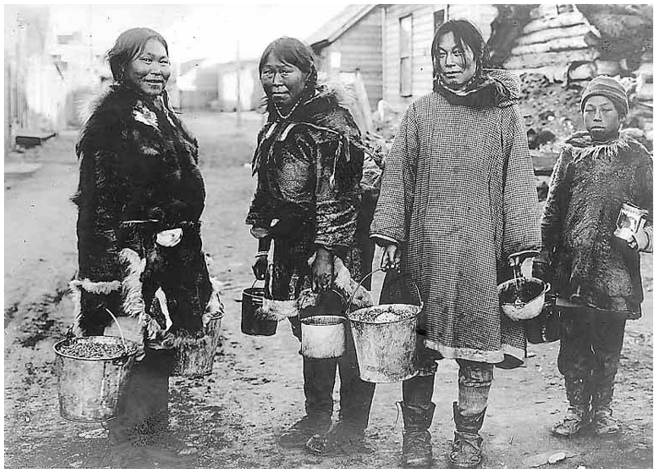
Inuit societies across the North American Arctic also relied on a range of plant foods, though they never provided a large proportion of the overall diet. Plant consumption depended on regional availability, for example, Iñupiaq societies in northwest Alaska harvested at least twelve species of berries (Figure 5). Most were used for food, but cranberries (Vaccinium sp.) were also used for medicinal purposes (Burch Reference Burch2006). Berries were widely consumed across the remainder of the Arctic, though in most regions fewer species were available (Boulanger-Lapointe et al. Reference Boulanger-Lapointe, Gérin-Lajoie, Siegwart Collier, Desrosiers, Spiech, Henry and Cuerrier2019; Zutter Reference Zutter2009). Other plant foods included the leaves and flowers of several species and several roots. In particular, in some regions the root known as masru (alpine sweetvetch, Hedysarum alpinum) was prized and sometimes available in significant amounts, collected mainly by digging with mattocks (Burch Reference Burch2006). In addition, in some regions the partially digested lichens and other plants in hunted caribou stomachs would be consumed, providing important nutrients (e.g., Jenness Reference Jenness1922).
Three women and a boy after a successful berry picking trip near Nome, Alaska.
Fish
It is easy to overlook fish in the archaeological record. Their remains are generally fragile, frequently decomposing over time while the more robust bones of mammals and even birds are preserved. Their bones are also relatively small and can be difficult to recognize, and thus earlier excavations that usually did not employ fine-mesh screening would often recover only a very small proportion of them. However, when looking at the ethnographic record of the Circumpolar Arctic, it is clear that fish played an important role in many economies. They were often a high-volume staple food during certain seasons, and in others served as a ‘back-up’ which could be relied on if other resources failed (Whitridge Reference Whitridge2001).
Recent advances in recovery methods (for example, fine mesh screening) have begun to redress this under-representation, with widespread sites indicating very high fish frequencies. Recent excavations from northern Norway (Wickler & Narmo Reference Wickler and Narmo2014), Alaska (Miszaniec et al. Reference Miszaniec, Darwent and Darwent2021), and the Canadian Arctic (Norman & Friesen Reference Norman and Friesen2010) have all yielded contexts where fish comprise over 50 per cent of all faunal specimens, based on overall bone counts. Equally, advances in analytical techniques are allowing inference of fishing from other data sets. For example, analysis of isotopes and lipids (fats) on pottery residues from coastal Alaska indicates a likely presence of freshwater aquatic resources (Anderson et al. Reference Anderson, Tushingham and Buonasera2017). Similarly, chemical analysis of soils in Alaska (Knudson & Frink Reference Knudson and Frink2010) and hearth sediments in Finland (Butler et al. Reference Butler, Koivisto, Brumfeld and Shahack-Gross2019) show distinct signatures for the presence of fish.
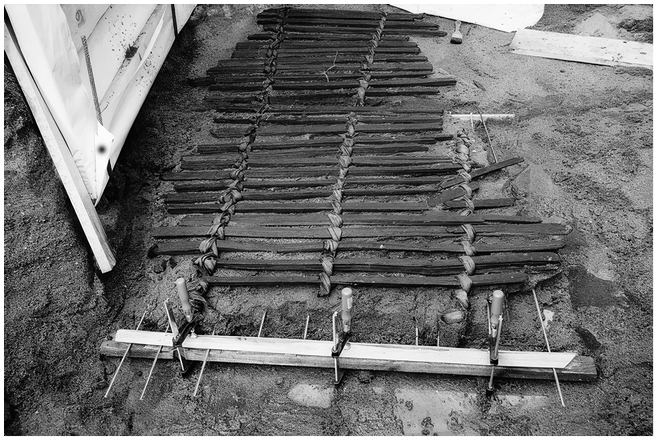
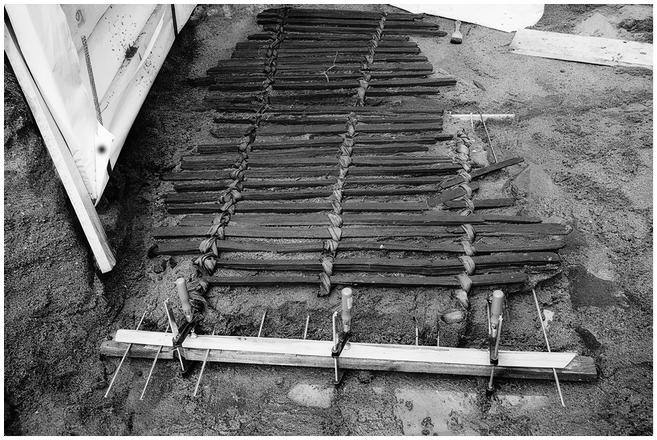
Fishing was accomplished with a great range of methods, many of which leave clear evidence. Ethnographically, fishing commonly occurred with weirs – walls or fences of rock or wood stakes that spanned rivers, blocking fish movements and directing them towards fishers (Figure 6). Unfortunately, in much of the Arctic the often-violent spring breakup, when rivers are swollen and large blocks of ice scrape the riverbed, frequently destroy ancient weirs. Despite this, some examples have survived, as in the case of a series of wood weirs in northern Finland dating to ca. 3900–2700 BCE (Koivisto Reference Koivisto2012). In many cases, weirs were probably maintained annually for hundreds or even thousands of years, for example, there are Inuit accounts of their Tuniit (Dorset Paleo-Inuit) predecessors having built fish weirs which were later used by Inuit (Mathiassen Reference Mathiassen1927).
Fragment of a Neolithic wooden weir from Purkajasuo, Yli-Ii, Finland.
The earliest fishing technologies in the region are fish spears and possibly harpoons, which occur in the Mesolithic Zhokov site in northern Siberia (Pitulko et al. Reference Pitulko, Ivanova, Kasparov and Pavlova2015) and in some of the earliest Paleo-Inuit sites in North America (Grønnow Reference Grønnow2017). Taking many forms, fish spears all used some form of prong with backward-facing barbs to ensure the fish could not escape once speared. A particularly efficient form was the leister, a three-pronged spear designed such that the two outer prongs could be quickly sprung apart to remove the fish once it was impaled. Fish nets are widespread across all of Eurasia and Alaska, though they were not used in the pre-contact Eastern North American Arctic. The nets themselves, made of organic materials such as sinew, plant fibres, or baleen (keratinous material from large whales), as well as their bark or wood floats, often do not preserve archaeologically. However, the stone net sinkers used to keep vertical nets upright in the water are often found. Early netting technology dates to the Mesolithic period in Norway (Bergsvik & Ritchie Reference Bergsvik and Ritchie2020), and net sinkers are quite common in Alaska by the Norton phase ca. 500 BCE (Dumond Reference Dumond, Friesen and Mason2016). Catching fish on hooks was also widespread in all regions in the recent past, from the shore, from boats, or through the sea or lake ice. A bewildering array of fishhook designs were customized for different species of fish and were often made up of multiple materials and decorated.
In many regions, the most important fish were anadromous species such as salmon (Salmo salar or Oncorhynchus sp.) and Arctic char (Salvelinus alpinus), which spawn in freshwater but live and feed in saltwater for at least part of their lives. These species often occur in very large numbers during their annual river migrations, downstream to the ocean during a range of seasons, and upstream to freshwater usually in summer or early fall. During downstream and upstream runs, great numbers of fish were present for short periods of only a few weeks, and efficient harvesting could yield hundreds or even thousands of often large, fatty fish. In different regions, these fish were caught at stone weirs, or with nets, spears, or harpoons.
In addition to anadromous species that could form a major component of the diet, many other species were also caught when available in lakes, rivers, and the ocean. In inland northern Fennoscandia, fishing was widely practiced as a part of varying subsistence strategies. Stone Age archaeological sites where the faunal assemblage is dominated by fish bones (pike, cyprinid fish and perch being the most common identified species) seem to reflect a non-specialized hunting and fishing strategy, where other taxa, such as cervids, fur-bearing mammals, and birds, were hunted (Ukkonen Reference Ukkonen and Lavento2004). It seems to have been primarily subsistence fishing, with no indication of storage and/or trade of dried fish (Ukkonen Reference Ukkonen and Lavento2004). Later, during the Late Iron Age, specialized seasonal cod (Gadus morhua) fishing and drying was practiced in coastal Norway (Perdikaris Reference Perdikaris1999), which expanded into large-scale commercial fisheries by 1200 CE (Wickler & Narmo Reference Wickler and Narmo2014).
In some regions of the Canadian Arctic, marine species were fished at least occasionally. For example, cod (Gadidae sp.) species fished through the sea ice may have formed an emergency resource during winter when few other food sources were available (Norman & Friesen Reference Norman and Friesen2010). One category of fish that may have had a major role in the worldview of northern peoples despite minimal contribution to diet is the sculpin (Cottoidea sp.). Bones of this oddly shaped, often brightly coloured group of marine species with large heads and fins are rarely found on archaeological sites and never occur in numbers sufficient to represent a significant part of the diet. However, carefully made ivory carvings of sculpins have been found on several Dorset sites in the North American Arctic, indicating the clear association of this fish with important meaning in Dorset society, even if it is difficult to reconstruct what that meaning may have been (LeMoine et al. Reference LeMoine, Darwent, Darwent, Helmer, Lange, Whitridge and Hill2024).
Birds
Bird bones are often difficult to identify to species, especially in the highly fragmented burned bone material that is typical in prehistoric sites in the European Arctic. Nevertheless, bird bone finds show that fowling was a part of the subsistence pattern of many communities. In inland northern Fennoscandia, both waterfowl and forest birds were hunted, ducks, geese, and grouse being the most common bird finds from Stone Age sites (Ukkonen Reference Ukkonen and Lavento2004). The historical Sámi communities in the Varanger Fjord area engaged in varied fowling activities, collecting eider down, hunting gulls for their feathers, and catching birds in their breeding colonies by placing nets in the water beneath the bird cliffs (Odner Reference Odner1992: 46–48). Bird species identified in faunal assemblages from the region include eider (Somateria mollissima), kittiwake (Rissa sp.), guillemot (Uria or Cepphus sp.), puffin (Fratercula sp.), auk (Alle alle), gulls, ducks, geese, grouse (Lyrurus tetrix), and ptarmigan (Lagopus sp.) (Odner Reference Odner1992: 193). Tetraonid (grouse-like) birds such as capercaillie (Tetrao urogallus) and grouse were caught in snares during wintertime by the Varanger Sámi (Odner Reference Odner1992: 48).
In the North American Arctic, many bird species were acquired, with eggs also important in season. They were occasionally critical for food, for example, in the case of large numbers of migratory geese and ducks that are briefly available in the summer in many regions. During the nesting season, geese moult and are unable to fly, leading in some cases to conditions where large numbers could be driven towards hunters or even into stone corrals built for this purpose (Bennett & Rowley Reference Bennett and Rowley2004). Ptarmigan and grouse are among the few bird species that live in the Arctic year-round. In fact, large proportions of their bones in a site are often a good indication that it represents a winter occupation (Friesen Reference Friesen and Grønnow2009). Birds are often central to ideology; probably in large part because they are beings that can travel between the land, sky, and in the case of some waterbirds such as loons (Gavia sp.), under the water. Thus, shamans frequently transformed into birds (Hayden Reference Hayden2003), and birds appear in elements of clothing (Driscoll-Engelstad Reference Driscoll-Engelstad2005), hunting equipment (Fienup-Riordan Reference Fienup-Riordan1990), and burial-associated materials (Hill Reference Hill2019).
Land Mammals
In the North American Arctic, caribou (Rangifer tarandus) were never domesticated. Reasons for this profound difference in animal–human relationships between Eurasia and North America are not completely clear; however, it may have been at least in part due to differences in migratory patterns and population densities. However, the lack of domestication cannot be taken as evidence for a lack of importance. In fact, wherever caribou were available, they were hunted, in many cases in large numbers, and they were a critical resource not just for food, but also for their skins which were particularly well suited to clothing manufacture, antlers which were an optimal material for making tools such as arrowheads and knife handles, and other materials such as sinew for sewing (Burch Reference Burch1972; Stenton Reference Stenton1991).
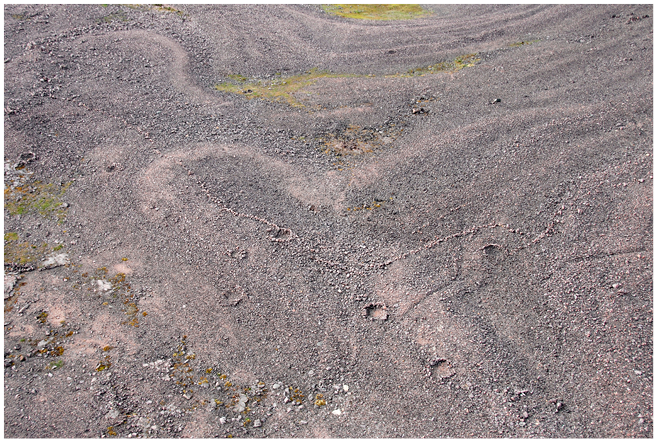
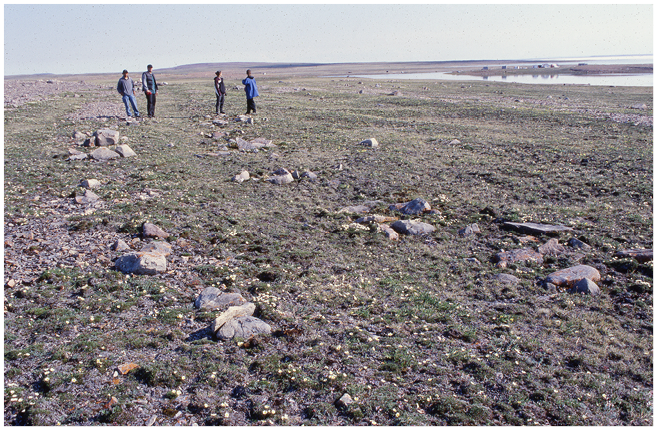
Millennia of close relationships between caribou and people led to the development of a remarkable array of hunting methods in all seasons. During caribou migrations, and when large numbers were on the move, elaborate drive systems were constructed (Figure 7). In tundra regions, these consisted of either lines of individual stone cairns or in some cases continuous stone walls (Friesen Reference Friesen2013a; Grønnow et al. Reference Grønnow, Meldgaard and Nielsen1983); in the northern forests, drives were generally made of logs and brush (MacKay & Andrews Reference MacKay, Andrews, Friesen and Mason2016). These drives directed the caribou towards either hunting blinds from which arrows or spears could be launched, or to bodies of water. A hunter in a kayak or canoe can paddle faster than a caribou can swim, making them very vulnerable when crossing water. Drive hunts often involved entire communities, with many people including children circling behind the caribou to gradually, or rapidly, direct their movements towards the hunters. Caribou could also be obtained through stalking of individual animals. Hunters’ intimate knowledge of caribou behaviour allowed them to predict their movements quite precisely, even taking advantage of caribou ‘curiosity’ to lure them closer to hunters. Even snares and traps were sometimes used. However, most of these methods leave little archaeological evidence and can only be inferred indirectly from bones in sites and the presence of appropriate technology such as arrowheads.
Part of a 2,000-year-old caribou drive near Cambridge Bay, Nunavut. Stone walls in a V-shape lead to a series of circular pits from which waiting hunters would spear caribou.
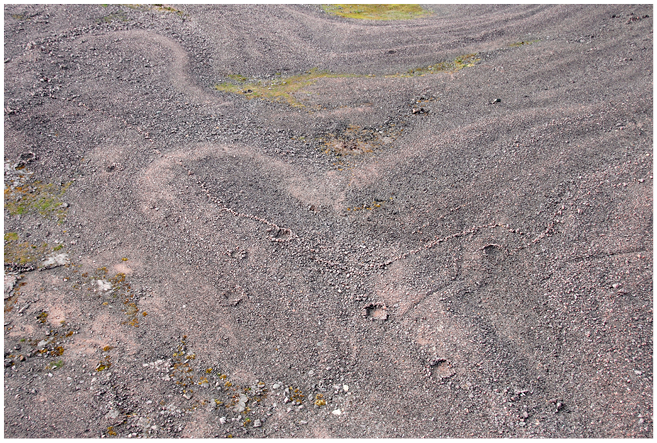
The role of reindeer hunting for prehistoric societies of northern Fennoscandia is well-documented in the archaeological record – it has even been argued that reindeer hunting was among the reasons for people to settle in Northern Fennoscandia after the last Ice Age (e.g., Rankama & Ukkonen Reference Rankama and Ukkonen2001; Halinen Reference Halinen2005; Helskog & Indrelid Reference Helskog and Indrelid2011; Sommerseth Reference Sommerseth, Indrelid, Helle and Stene2015; Hennius Reference Hennius2020). Reindeer themselves colonized Fennoscandia soon after the last Ice Age, likely from both Eastern and Southern directions (Rankama & Ukkonen Reference Rankama and Ukkonen2001; Røed et al. Reference Røed, Flagstad, Nieminen, Holand, Dwyer, Røv and Vilà2008; Weldenegodguad et al. Reference Weldenegodguad, Pokharel, Ming, Honkatukia, Peippo, Reilas, Røed and Kantanen2020). Land bridges that made the southern dispersal route possible existed for short periods in the Late Glacial period, whereas the eastern route remained open ever since the continental ice melted (Larsson Reference Larsson1994; Rankama & Ukkonen Reference Rankama and Ukkonen2001). There are two subspecies or ecotypes, the mountain reindeer (Rangifer tarandus tarandus) and forest reindeer (Rangifer tarandus fennicus), in continental Fennoscandia. They have different habitats, seasonal herd structure patterns, and mobilities (Banfield Reference Banfield1961). The ecological differences between the ecotypes had an impact on the choice of hunting techniques and strategies. Due to the smaller herds and less prominent seasonal migrations of forest reindeer, this subspecies was probably hunted together with a number of other species; hunting coupled with fishing and gathering allowed a variable subsistence strategy in a forested environment (Rankama & Ukkonen Reference Rankama and Ukkonen2001). Mountain reindeer, on the other hand, have more distinct seasonal migrations, the predictable migration routes of the large herds of animals make them susceptible to mass hunting techniques such as pit and fence hunting – such mass hunting served as the basis for the economy of reindeer hunting communities inclined towards specialization in this livelihood (Rankama & Ukkonen Reference Rankama and Ukkonen2001).
The intensity, economic role, and strategies of reindeer hunting varied significantly across regions and over time. Hunting pits are found in large numbers across northern Fennoscandia, often in rows and in groups of even hundreds of pits. Pitfall hunting seems to have been practiced for thousands of years, having been documented in different regions in the Stone Age, Early Metal Age, as well as the Medieval period (Halinen Reference Halinen2005; Myrvoll et al. Reference Myrvoll, Thuestad and Holm-Olsen2011; Hennius Reference Hennius2020; Rimpi Reference Rimpi2025). It is part of a long-term practice of landscape domestication, where small-scale societies introduce subtle changes in the landscape, including physical infrastructure such as pitfall systems (Rimpi Reference Rimpi2025). Many Arctic hunter-gatherer communities led a mobile life, utilizing a range of available resources across the landscape seasonally. Availability of many plant and animal resources was contingent on the season and other environmental parameters, for instance the ripening of berries, seasonal movements of ungulate herds, migrations of birds, and spawning seasons of fish occurring at different times and in different locations. Knowledge of when and where such resources were available formed the basis of the subsistence pattern of many Arctic hunter-gatherer communities, with these foods essentially ‘stored’ until they were harvested. The locations of the pitfall systems reflected the in-depth knowledge hunter-gatherer communities had about the migrations of reindeer herds and the effects of environmental factors on them – the hunting pits were often located in places in the landscape the reindeer herds would have been passing through on their way from the mountains to their winter habitat in the forested lowlands (Rimpi Reference Rimpi2025).
During the Late Stone Age and Early Metal Age, intensive wild reindeer hunting with pitfall systems seems to have been practiced in northern Finland and inland northern Norway (Halinen Reference Halinen2005; Myrvoll et al. Reference Myrvoll, Thuestad and Holm-Olsen2011). The pitfalls were dug in sandy soil in river valleys. The hunting bases of the people using them were probably located along the major rivers, the travel between villages, hunting bases, and pitfall systems probably taking place by boat or on foot along the riverbanks (Halinen Reference Halinen2005). Another period of intense wild reindeer hunting occurred in the Medieval period. For instance, in Finnmark in coastal northern Norway, wild reindeer mass hunting was practiced using extensive pitfall systems, the hunters occupying hunting camps such as the Gollevárri site discovered on the isthmus between Varanger fjord and Tana River, dating to the thirteenth and fourteenth centuries (Munch & Munch Reference Munch, Munch and Vorren1998; Hansen & Olsen Reference Hansen and Olsen2014).
In addition to pitfall systems, drives consisting of stone or tree fences were utilized in wild reindeer mass trapping. Funnel-shaped trapping systems where the hunters drove reindeer to a corral where they were killed with the aid of cairns, fences, and poles are known from all over the circumpolar area (e.g., Itkonen Reference Itkonen1948: 16–17; Solli Reference Solli2018; Bergstøl Reference Bergstøl, Spangen, Salmi, Äikäs and Fjellström2020). Wild reindeer were also stalked on snow and ice patches in mountain areas during the summer when they gathered on these cool spots on warm days. As the snow patches are now melting, archaeologists have found material evidence of this hunting practice, including arrowheads and scare-sticks (slender posts with a flag at the top), dating from the Neolithic period onwards (Pilø et al. Reference Pilø, Finstad, Bronk Ramsey, Robert Post Martinsen, Nesje, Solli, Wangen, Callanan and Barrett2018; Solli Reference Solli2018). The scare-sticks were possibly used to drive the animals towards a hunter who was hiding in a shooting blind (Solli Reference Solli2018). Other wild reindeer hunting techniques included driving them by ski on the hard-crusted snow during late winter. A group of hunters on skis would drive a herd of wild reindeer, the latter being slowed down by the hard snow crust hurting their ankles. When the hunters reached the animals, they were killed with the aid of spears (Itkonen Reference Itkonen1948: 12–13). Decoy hunting, on the other hand, was practiced during the autumn rut, with a female reindeer acting as a decoy to attract male reindeer (e.g., Itkonen Reference Itkonen1948: 22–23). Reindeer herding, discussed in more detail in Section 6, emerged in northern Fennoscandia during the Late Iron Age, from ca. 600–700 AD onwards. Despite the growing importance of reindeer herding and the transition to mobile pastoralism around the fifteenth to sixteenth centuries, wild reindeer hunting retained its economic, dietary, and cultural significance for many communities for centuries, only coming to a halt in the nineteenth century (Salmi Reference Salmi2023).
A second important species of large herd animal in parts of the Arctic – though not as broadly important as caribou/reindeer – is muskox (Ovibos moschatus). Muskoxen are bovids, with their closest relatives being sheep and goats, and are a fully Arctic-adapted species. They do not migrate in regular annual patterns, but herds do sometimes move significant distances, including across water or sea ice. Their defence mechanisms, which evolved mainly for protection against wolves (Canis lupus), involved bunching up the herd, with young in the middle and their sharp horns facing out. In many contexts, this made them vulnerable to people with dogs and bows and arrows. In the North American Arctic, muskox bones often appear in small quantities in archaeological sites, but in a few restricted areas they appear to have been a focal food item, at least seasonally, for limited periods. This includes sites as widespread as the Umingmak site on Banks Island (Müller-Beck Reference Müller-Beck1977) and a series of early Paleo-Inuit sites in northernmost Greenland (Jensen & Gotfredsen Reference Jensen and Gotfredsen2022). A longstanding model posited that muskox may have been a major resource drawing the first Paleo-Inuit into the North American Arctic around 5,000 years ago due to the relative ease of hunting when present in large numbers (Steensby Reference Steensby1916). However, more recent overviews tend to favour sea mammals, especially seals, as the most important resource for the earliest Paleo-Inuit migrants, with muskox important only in limited regions (Grønnow Reference Grønnow, Friesen and Mason2016). Many other terrestrial mammals were hunted across time and space in the Circumpolar North, as seen in often small frequencies in archaeological faunas. Other large ungulates that were hunted occasionally include moose (Alces alces) and Dall’s sheep (Ovis dalli).
Black (Ursus americanus) and brown/grizzly (Ursus arctos) bears were hunted in some regions when available, and a variety of other carnivores, such as fox (Vulpes sp.) and wolverine (Gulo gulo), were likely hunted mainly for furs. Bear has been culturally and religiously prominent for many peoples circumpolarly, its hunting and the treatment of its remains imbued with ritual and religious meaning (e.g., Mannermaa et al. Reference 81Mannermaa, Kirkinen, Viranta-Kovanen and Grimm2023; Spangen et al. Reference Spangen, Salmi, Äikäs, Fjellström and Grimm2023). In the Sámi culture, for example, the special relationship between bears and humans was played out in ritual practices such as bear burials and offerings of bear bones at sacred sites (Sommerseth Reference Sommerseth and Grimm2023; Spangen et al. Reference Spangen, Salmi, Äikäs, Fjellström and Grimm2023). Small rodents such as muskrat (Ondatra zibethicus) and Arctic ground squirrel (Urocitellus parryii), and rabbits such as Arctic hare (Lepus arcticus), were also hunted for both food and furs. The cultural conceptions about their value and suitability for food varied across the Arctic (Eidlitz Reference Eidlitz1969: 16–19). In northern Fennoscandia, for instance, hunting of fur-bearing mammals such as fox, ermine (Mustela erminea), beaver (Castor sp.), squirrel, and hare was common, evidenced by the discovery of the bones of these species in archaeological sites throughout prehistory (e.g., Ukkonen Reference Ukkonen and Lavento2004). The religious meanings attached to these species are archaeologically understudied, though we know from ethnographies that beavers were understood as sentient creatures inhabiting the landscape alongside humans, with ritual and practical aspects intertwining in their hunt (Jääskeläinen Reference Jääskeläinen2023). Hunting techniques for these species were varied, ranging from passive to active trapping methods, all requiring close knowledge of the behaviour and ecology of the animal. Most of the hunting methods, such as snares, do not normally leave archaeological traces.
Finally, though it is earlier than our period of emphasis, it is important to note that the Circumpolar region included the northern part of the vast subcontinent of Beringia during the Pleistocene. Beringia was home to a diverse megafauna that included many species known to have been hunted by people, including horse (Equus sp.), bison (Bison sp.), and mammoth (Mammuthus sp.). In fact, it was human adaptation to this unique ecosystem, including also its smaller package resources such as small mammals, waterfowl, and fish, that led to at least some of the earliest episodes of migration from Eurasia to North America (Goebel & Potter Reference Goebel, Potter, Friesen and Mason2016).
Sea Mammals
Northern coastal peoples are famous for their successful hunting of marine mammals. Requiring elaborate technologies, detailed knowledge of animal behaviours, and cooperative social structures, the development of marine mammal hunting opened many areas to human occupation that would otherwise be impossible to live in, including most of the North American Arctic.
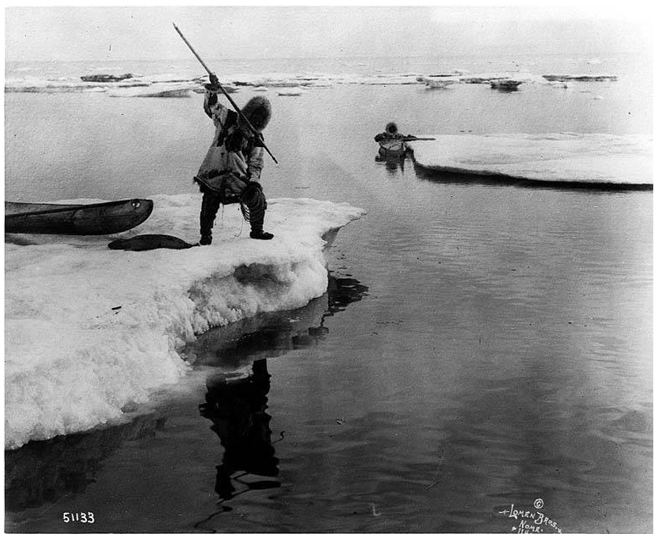
The most frequently hunted marine mammals around the circumpolar North were seals. On most coastal archaeological sites in the Canadian Arctic and Greenland, seals dominate the assemblages, in many cases yielding well over 50 per cent of all bone fragments (e.g., Darwent Reference Darwent, Mondini, Muñoz and Wickler2004; Meldgaard Reference Meldgaard2004; Murray Reference Murray1999; Schledermann Reference Schledermann1990). While there was enormous variability in locations and methods used to hunt seals, almost all relied on one category of weapon: harpoons. Harpoons are a weapon designed to penetrate deep below the skin of the hunted animal, after which the weapon point – the harpoon head – detaches from the weapon shaft and remains in the animal, attached to a line (Figure 8). The hunter would then hold onto the line to stop the seal escaping, eventually pulling it close enough to make the kill. Seals could be harpooned from the ice edge, through the ice at breathing holes, from points of land, or from kayaks or other skin boats. Open skin boats appear in rock art from northern Norway at least as early as 3000 BCE (Fauvelle et al. Reference Fauvelle, Horn and Alvå2024) and must have been present by 7000 BCE in the Bering Sea region based on sites on the Aleutian Islands which could only have been reached by long-distance boat travel (Fitzhugh Reference Fitzhugh, Friesen and Mason2016).
Hunter waiting to harpoon seal near Nome, Alaska.
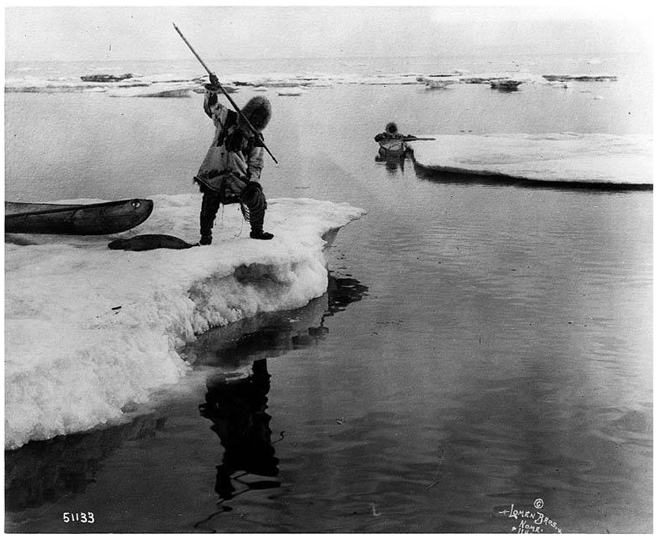
Harpoon heads form a particularly important artefact class in the North American Arctic (Maxwell Reference Maxwell1985; Park & Stenton Reference Park and Stenton1998). This is because they are complex, highly variable, and change over time. While all harpoons had a sharp point, a line hole, and a way to attach the harpoon head to the weapon shaft, there were a bewildering array of additional, variable elements. For example, some had barbs to prevent backward movement in the flesh, while others ‘toggled’, with angled bases making them turn sideways in the animal to prevent them coming out. Some were ‘self-bladed’, meaning that the end of the harpoon head was carved into a sharp point; others had blade slots, with a stone or metal endblade making them sharp. Some were decorated with incised designs, some had extra stone blades on their sides, and the list goes on. The high level of care that went into their manufacture was likely often intended as a sign of respect for the hunted animal – an indication that the hunter appreciated the animal’s willingness to be hunted. Due to this high level of variability over time, specific harpoon head traits, and ‘types’, are exclusive to particular cultures and can be used to date archaeological occupations.
Different seal species vary in size, behaviour, and geographic range, all of which influence the conditions and locations in which they could be hunted (Betts Reference Betts, Friesen and Mason2016). Most species, such as harp (Pagophilus groenlandicus), grey (Halichoerus grypus), and common/harbour (Phoca vitulina) seal, need open water to survive and thus are present mainly on the margins of the Arctic. Some of these species, and in particular harp seals, migrate over significant distances in dense herds and can form a key seasonal resource. In fact, two of the largest and most important archaeological sites relating to Paleo-Inuit culture had an economy focussed on harp seals: Qeqertasussuk in west Greenland (Meldgaard Reference Meldgaard2004) and Phillip’s Garden in Newfoundland (Hodgetts Reference Hodgetts and Monks2005; Renouf Reference Renouf and Renouf2011).
Three species show particularly significant adaptations to the Arctic and therefore hold a special place in many northern lifeways: ringed seal (Pusa hispida), bearded seal (Erignathus barbatus), and walrus (Odobenus rosmarus). The ringed seal is very common around most of the circumpolar North. It is fully adapted to life in a sea-ice-covered Arctic, as shown by its ability to maintain multiple breathing holes during the winter under large expanses of sea ice. As a result, during the winter, it does not need access to the ice edge or other naturally occurring open water. Ringed seals were often hunted from the ice edge or from boats, but in many ways the most remarkable seal hunting techniques were developed by Inuit in the central Canadian Arctic. In some regions, up to half of each year was spent living on the sea ice, far from land, in snow houses (igluit). Here, ringed seals were harpooned through their breathing holes and were in most cases the only food source, with the rare exception of a bearded seal if encountered and occasional sled trips to land where fish or caribou meat cached in the fall could be retrieved. When seals were ‘hunted out’ in an area around a snow house village, the occupants would move on to a new location where more seals were available. In some regions, Inuit would leave the seal skulls on the snow pointed in the direction the hunters were travelling, to encourage the souls of the seals to move in that direction (Balikci Reference Balikci1970). Similar relations occurred with other animals, for example, when fish were jigged through the sea ice, they were often laid on the ice with fish heads facing the hole, leading them to come back and be fished again (Rasmussen Reference 85Rasmussen1932).
Bearded seals are a much larger seal species, averaging about 300 kg in weight. Bearded seals usually prefer areas with open water but can maintain breathing holes when necessary. They are generally present in much lower numbers than ringed seals but are desired both for the large amount of meat and fat available from each individual and for their thick hides which were the best material for making strong ropes and lines, such as harpoon lines.
Walruses (a seal species related to sea lions) were also important in many regions. These large animals provided plentiful meat and blubber and were also important for their hides and the high-quality ivory from their tusks. This ivory was crucial for many Indigenous technologies ranging from harpoon heads and handles to much of the region’s most striking artistic expression, as in the case of Old Bering Sea incised designs or Dorset Paleo-Inuit animal carvings. Walruses are dangerous to hunt and are usually found in only small numbers in early sites; in some cases this may represent scavenged rather than actively hunted animals. However, they are important by around 900 CE in northern Scandinavia (Arneborg Reference 69Arneborg2021), 800 BCE in the Canadian Arctic (Darwent & LeMoine Reference Darwent and LeMoine2021), and 300 CE in the Bering Strait region, though there is evidence for earlier walrus hunting in southern Alaska, outside of our region (Mason & Rasic Reference Mason and Rasic2019). Walrus ivory also played a major role in early interregional trade. Northern European ivory made its way to southern Europe and as far as East Asia (Arneborg Reference 69Arneborg2021); and the presence of walrus in Iceland, Greenland, and the Canadian Arctic may have played an important role in the initial Norse expansion across the North Atlantic (Frei et al. Reference Frei, Coutu, Smiarowski, Harrison, Madsen, Arneborg and McGovern2015) and may also have led to interaction and trade between Norse and Paleo-Inuit or Inuit peoples (Ruiz-Puerta et al. Reference Ruiz-Puerta, Jarrett, McCarthy, Pan, Keighley, Aiken and Jordan2024).
Polar bears (Ursus maritimus) are best considered a marine, not terrestrial, mammal, since they spend most of their lives on the sea ice, usually hunting seals. While they were hunted occasionally, they made up a high proportion of food in only a few cases. For example, one regional group of Inuinnait of the central Canadian Arctic is reported to have relied largely on polar bears for subsistence in the early twentieth century (Stefansson Reference Stefansson1919), and the Siberian Mesolithic site of Zhokov contains a very high proportion of polar bear bones (Pitulko et al. Reference Pitulko, Ivanova, Kasparov and Pavlova2015). In any case, polar bears were central to ideology for many groups, particularly in North America. Not only did they represent danger, as a species very capable of hunting humans; their behaviour also closely resembled that of humans in many respects. In particular, both polar bears and Inuit hunted seals throughout much of the Arctic, often with similar methods at the ice edge or at seal breathing holes. As a result, relations with bears were governed by elaborate rules of respect, and bears were an important part of shamanism. This pattern is also highly pronounced in the Dorset culture, the final Paleo-Inuit people who lived in the Eastern North American Arctic before Inuit. Dorset are known for their very finely carved miniature sculptures in walrus ivory, antler, bone, and other materials. A notably high proportion of carvings are of polar bears (many other species also appear in lower numbers), and this includes many of the most elaborate and larger carvings. The role of these carvings and related rituals in Dorset society was complex and likely served both to access the hunting abilities of bears and to symbolize the Dorset worldview centred on their ice-edge lifeway (Betts et al. Reference Betts, Hardenberg and Stirling2015).
This brings us to whale hunting, the most spectacular element of Arctic foodways in many regions. To successfully hunt whales in any way that is more than opportunistic, a community needs intimate knowledge of whale behaviour, tight coordination among hunters, and highly specialized tools (McCartney Reference McCartney1980; Spencer Reference Spencer1959; Whitridge Reference Whitridge1999). They also need to pay very close attention to the needs of the whale through ritual and respectful interactions. Whaling also played an important role in the pace and nature of increasing interaction between Indigenous Arctic societies and ‘southern’ peoples. In Fennoscandia, whaling was an important factor leading to increasing participation in trade networks by the end of the Iron Age (Hennius et al. Reference Hennius, Ljungkvist, Ashby, Hagan, Presslee, Christensen and Maldre2023), and European whaling led to increased interaction with Inuit in the Eastern North American Arctic by the early sixteenth century (Dickinson & Sanger Reference Dickinson and Sanger2022) and in the Bering Strait region by the mid-nineteenth century (Bockstoce Reference Bockstoce1986).
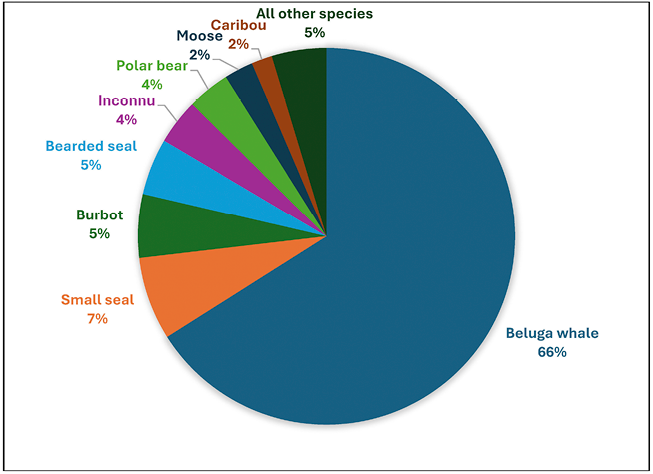
Small toothed whales available in many regions across the circumpolar Arctic include beluga whales (Delphinapterus leucas) and narwhals (Monodon monoceros). Evidence for large-scale narwhal hunting is absent in the archaeological record, though occasional hunting occurred. Narwhal have a very distinctive single tusk, formed of spirally oriented ivory, which is relatively easy to recognize archaeologically and was occasionally used for artefact production. Belugas, on the other hand, were important to several economies across the circumpolar North, wherever they aggregated seasonally in near-shore areas. This is most apparent in the Mackenzie Delta region of northwestern Canada (see Section 5 for a more detailed account). They also appear prominently in several rock art sites in northern Fennoscandia and northwestern Russia which, while difficult to date, are potentially as early as 5300 BCE (Gjerde Reference Gjerde2013).
Larger baleen whales, particularly bowhead whales (Balaena mysticetus), were important in many regions. In northern Norway, the earliest hunting of large whales was performed during the Stone Age (Damm et al. Reference Damm, Skandfer and Jordan2022). However, they were much more central to several societies in easternmost Siberia and the North American Arctic. In fact, their presence was likely a factor in the initial migration of early ‘Thule’ Inuit across the North American Arctic from Alaska around 1250 CE (Friesen Reference Friesen, Friesen and Mason2016). In the ethnographic record, North Alaskan Inupiat were highly adept hunters, using umiaks (open skin boats that could hold multiple paddlers and a harpooner) to pursue bowheads, often in leads (linear openings in the sea ice) but sometimes in open water (Spencer Reference Spencer1959). Their successful hunting was critically important for many coastal Alaskan societies, providing enormous amounts of food which would be redistributed by the umialik (‘boat owner’) and his wife, allowing them to maintain their high-status positions of leadership. Elaborate ritual surrounded the whale hunt and all equipment associated with it, including giving the hunted whale a drink of fresh water from a special vessel, with the umialik’s wife central to the most important rituals (Bodenhorn Reference Bodenhorn1990).
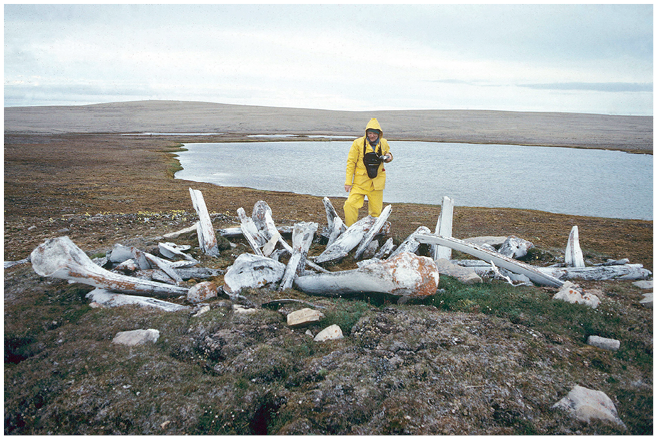
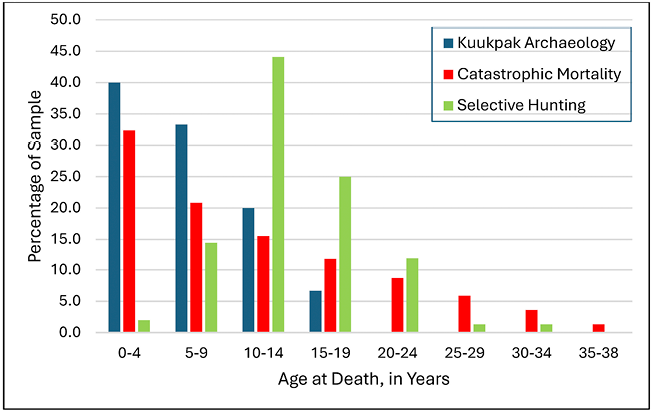
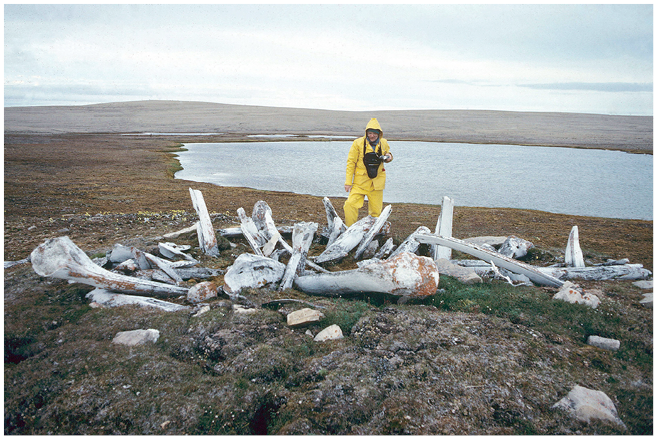
Archaeologically, hunting of large baleen whales can be surprisingly difficult to confirm (Freeman Reference 74Freeman and McCartney1979). This is because individual whales are so large, and their bones so heavy, that in many cases bone was left at the butchery site, with only the meat and blubber returned to a dwelling site. In addition, bowhead bones were commonly used as frameworks for houses in some regions (Figure 9), so in some cases their bones might be transported to sites not because they were associated with food, but rather for architectural purposes (Savelle Reference Savelle1997). However, strong evidence providing certainty that early Inuit actively hunted bowhead whales includes recovery of specialized very large whaling harpoon heads on early sites and incised whale hunting scenes on tools (McCartney Reference McCartney1980). Perhaps most powerfully, studies of bowhead whale mortality profiles (age at death frequencies for multiple individuals) derived from large numbers of bowhead whales at early Inuit sites in the Central Canadian Arctic indicate a high degree of selective hunting of one-year-old whales (Savelle & McCartney Reference Savelle, McCartney, Morrison and Pilon1994). These yearlings were relatively small, averaging 8 m to 9 m in length, and were favoured as easier to hunt and easier to tow to land for butchery. The argument is also strengthened by studies of changing frequencies of diatoms (microscopic unicellural algae) from a pond adjacent to an early whaling site in the central Canadian Arctic. Analysis of diatoms from dated sediments showed marked changes during the whaling period likely resulting from decaying whale bones (Douglas et al. Reference Douglas, Smol, Savelle and Blais2004).
Early Inuit semi-subterranean house in the central Canadian Arctic, dating to about 1400 CE. The collapsed superstructure of the house, made of bowhead whale bones, is still prominently visible.
4 Storing and Eating Food
Once foods were acquired through hunting, herding, fishing, or gathering, they were subject to a great range of processes before they were deposited in the archaeological record, including transport, storage, cooking, consumption, and discard. To understand past Arctic foodways, all these activities must be reconstructed as carefully as possible. They also show how Arctic foodways were connected to seasonality, social networks, mobility, and ritual practices.
Transport
Once acquired, foods often had to be transported to locations where they were to be stored or consumed. Foods could be packed on people’s backs, but in many Arctic regions transportation technology was highly developed. Sleds were widely used in a range of shapes and sizes (Vitale et al. Reference Vitale, Rasmussen, Grønnow, Hansen, Meldgaard and Feuerborn2023); in many areas they were pulled by reindeer, or dogs, though people also pulled sleds when necessary. Many sleds leave recognizable archaeological evidence. For example, in the North American Arctic ‘sled shoes’, which are plates of hard materials such as bone, antler, or ivory fastened to the bottom of the wooden sled runners to reduce damage, are relatively common in several periods. Dog traction and reindeer harnessing also involve many specialized forms of technology; for example, early reindeer harness headgear has been recorded in the Iamal region of Siberia, dating up to 2,000 years old (Losey et al. Reference Losey, Nomokonova, Arzyutov, Gusev, Plekhanov, Fedorova and Anderson2021). During open water periods, boats were also important for transport. Boats, either made of skin covering a wood frame, or fully made of wood, are assumed to have been present in northern Fennoscandia during its earliest peopling, by around 9000 BCE (Glørstad Reference Glørstad2013). In the North American Arctic, the largest umiaks (open skin boats) had a capacity of over 5,000 kg, though most were much smaller (Burch Reference Burch2006).
A particularly important aspect of food transport that has received much attention from archaeologists relates to selection of which parts of an animal are transported from locations where they are hunted or fished to the places where they will eventually be stored or consumed. Not all parts of animals are edible; for example, bones (once marrow is removed) and skins have relatively little nutritional value, though they do have other uses. Thus, if time and distance are factors, to increase efficiency people will leave behind parts with low amounts of edible materials, such as lower legs and heads, and take away the meaty parts, such as upper legs and the rib cage, often with bones attached. In an influential ethnoarchaeological study, Lewis Binford (Reference Binford1978) lived with Nunamiut (interior Inupiat groups in northern Alaska) and recorded decisions they made relating to butchering and transporting caribou. His quantification of which parts of the animal (including bones) were left at kill sites, versus which were transported to camp sites, clearly indicated that certain categories of bones were more likely to be transported for consumption and storage because they were associated with more meat, marrow, and fat. These studies of bone transport have since been reworked, updated, and critiqued, and have spawned a host of research which is still central to understanding bone frequencies around the world, including in the Arctic, because it makes explicit a general principle about transport of animal products (e.g., Metcalfe & Jones Reference 82Metcalfe and Jones1988). The most extreme example of the practice of efficient food transport relates to bowhead whales: their bones are so large and heavy that they may never be transported with meat and blubber. In this case, archaeologists must use other means to infer bowhead consumption. This is an issue of paramount importance, since in some cases bowhead whales may have been the focal resource for entire villages, and even regions.
Trade
Evidence for trade is ubiquitous in the circumpolar Arctic past. While it functioned to distribute rare or desirable materials across significant distances, it was also important for social reasons. Most Arctic regions had small human populations spread over very large areas, and as outlined earlier, many important prey species were unpredictable in their movements, leading to occasional difficult years or even famine. Thus, it was critically important to maintain contacts with neighbours in order to find marriage partners, exchange environmental information, and allow movement to other areas if local resources failed (Friesen Reference Friesen2013b). Archaeologically, these interaction networks are seen most clearly in trade of materials such as metal and stone which preserve relatively well. For example, in the Eastern North American Arctic, long-distance trade is visible in every period, from traded tool stone in the early Paleo-Inuit period in Greenland by 2000 BCE (Grønnow Reference Grønnow, Friesen and Mason2016) through metal trade in the late Paleo-Inuit period around 1000 CE (Jolicoeur Reference Jolicoeur2020) and throughout the Inuit period of the past 800 years (McCartney Reference McCartney and Ehrenreich1991). However, because foods such as meat, fat, and berries have low archaeological visibility, trade in food must be reconstructed based mainly on the ethnographic record.
Because of the distances involved, the frequency of trade in food is linked to available methods of transport. In the North American Arctic, transportation technologies, even the large boats and sleds used in some regions, could not always be used to regularly transport large amounts of food due to the great distances involved. Nevertheless, in some cases foods did comprise important parts of trade networks, particularly where important resources were available in adjacent areas. The most well-known example of this trade occurred between coastal and interior regions of north Alaska. The most important items traded were caribou skins from interior Inupiat, critically important for clothing manufacture on the coast, exchanged for whale and seal oil from coastal Inupiat, important mainly as a dietary supplement in the interior (Spencer Reference Spencer1959). In this trading network, other food items were also traded, including dried caribou meat, Dall’s sheep meat, and fish (Burch Reference Burch2005).
Reindeer products such as meat, antler, and hides were important exports from northern Fennoscandia at least from the Late Iron Age onwards, well into the historical period (Kuusela et al. Reference Kuusela, Salmi and Äikäs2020). In this region, reindeer hides were important trade goods throughout the Medieval Period to the eighteenth century (Luukko Reference Luukko1954: 380–381; Virrankoski Reference Virrankoski1973: 270), and possibly earlier. The trade in reindeer products is archaeologically visible in animal bone assemblages, for instance, in terms of representation of different body parts at different sites (Lahti Reference Lahti and Herva2006). Archaeological analyses show a complex pattern of wild reindeer hunting, small-scale reindeer herding, and reindeer product trade at urban and agrarian settlement sites across the north. For instance, the frequencies of reindeer skeletal elements indicate a mix of reindeer meat trade and local butchery of reindeer, with the emphasis varying between sites (Salmi & Heino Reference 86Salmi and Heino2019). Reindeer bone and antler were also used for crafts and industries in rural and urban settlements, for example, with cut marks on the bones of the extremities, possibly related to hide processing. Moreover, chopped antler pieces may represent blocks of raw material intended for crafts (Puputti Reference Puputti2010: 33).
Stockfish was another important nutritional resource and a driver of trade network development in the Arctic. There is archaeological evidence that fisheries and preparation of large quantities of dried fish were locally important in the northern coast of Norway already in the Late Iron Age (Perdikaris Reference Perdikaris1999). Likewise, it has been argued that dried fish such as pike (Esox lucius) was important in the development of trade networks between Arctic Fennoscandia and Europe from the ninth century CE onwards (Kuusela et al. Reference Kuusela, Salmi and Äikäs2020). In the Medieval period, stockfish caught in the northern waters were increasingly traded to the European market, the Hanseatic League’s ships sailing from the Baltic Sea to European ports in the thirteenth century at the latest (Vahtola Reference 89Vahtola1990; Perdikaris Reference Perdikaris1999). Archaeological and isotopic analyses have revealed that while locally sourced stockfish was already consumed in northern Europe from the ninth century CE, a shift towards increasing consumption of stockfish from Arctic Norway, Iceland, Orkney, and Shetland occurred during the thirteenth and fourteenth centuries onwards, probably due to a demand created by population growth and urbanization (Barrett et al. Reference Barrett, Orton, Johnstone, Harland, Van Neer, Ervynck, Roberts, Locker, Amundsen, Enghoff, Hamilton-Dyer, Heinrich, Hufthammer, Jones, Jonsson, Makowiecki, Pope, O’Connell, de Roo and Richards2011). Stockfish continued to be exported from the Arctic for centuries, evidenced by finds of marine fish bones from inland marketplaces, such as Markkina, Pappila, and Kolari in northern Finland, throughout the seventeenth to nineteenth centuries (Harlin et al. Reference Harlin, Mannermaa, Ukkonen, Mannermaa, Manninen, Pesonen and Seppänen2019; Salmi et al. Reference 86Salmi and Heino2019).
Storage
Storage is centrally important to understanding food in Arctic contexts, perhaps more so than any other world region. Because many species were available in large numbers for only brief periods each year, they had to be stored, often on a large scale, in order to feed communities during lean seasons when few resources were available. Fortunately, storage is often visible to archaeologists in a range of technologies and strategies that were applied to a wide variety of foods.
In many Arctic archaeological sites, storage structures usually known as ‘caches’ are common (Figure 10); they are often among the most frequent classes of features recorded by archaeologists (e.g., Grønnow et al. Reference Grønnow, Gulløv, Jakobsen, Gotfredsen, Kauffmann, Kroon and Sørensen2011; Stewart et al. Reference Stewart, Friesen, Keith and Henderson2000; Stopp Reference Stopp2002). Caches, often of stone, were designed to keep meat, fish, or other substances in good condition for later consumption, for example, by allowing air circulation that would inhibit decomposition (Valtonen Reference Valtonen and Herva2006). Often their most important function was as a barrier to scavenging animals. Stones would have to be big enough that bears could not move them, but also tightly fitted so that foxes could not squeeze between them. Caches were frequently built on slopes or high points of land with well-drained soil and were often topped by poles, caribou antlers, upright stones, or other markers that could allow them to be easily found after deep snow had covered the ground (Binford & Bertram Reference Binford and Bertram1977). In northern forested areas, caches might be elevated in trees (e.g., Osgood Reference Osgood1936).
A stone cache used to store fish, central Canadian Arctic. The cache has been opened; the covering stones are seen behind the main structure.
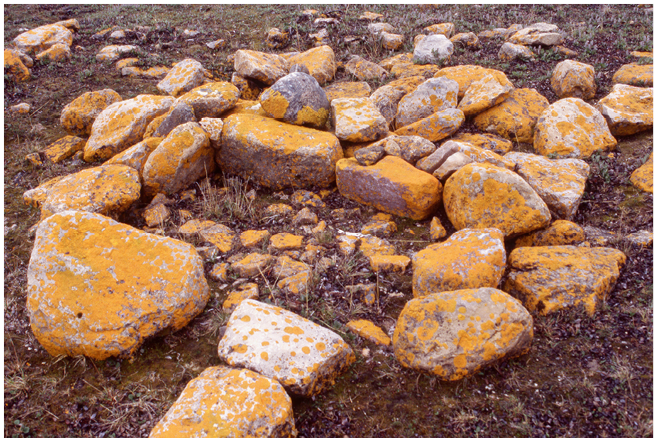
The Sámi, for instance, used stone caches to store meat, fish, reindeer milk, butter, and cheese (Itkonen Reference Itkonen1948: 216–217). The caches were typically built in boulder fields by digging a pit reaching down to ground level and then building the walls of large stones (Valtonen Reference Valtonen and Herva2006). The shapes and types vary according to the type of food being stored as well as the available materials, the most common shape of North Sámi stone cache being rectangular (Valtonen Reference Valtonen and Herva2006). Inside the cache, various organic materials such as lichen, moss, grass, birch bark as well as birch and juniper branches were used for lining (Valtonen Reference Valtonen and Herva2006). Used in between the thirteenth and fifteenth centuries at the latest (Mulk Reference Mulk1994: 159), the North Sámi stone caches were built in places where they were easily visible and accessible, often close to dwelling sites (Valtonen Reference Valtonen and Herva2006).
Due to the Arctic’s generally very cold temperatures, across much of the year food could be preserved easily by freezing. In many areas food was stored in pits or cellars dug into the permafrost (permanently frozen soil) which provided refrigeration throughout the year (Yoshikawa et al. Reference Yoshikawa, Maslakov, Kraev, Ikuta, Romanovsky, George and Nyland2022). However, during the warm summers, food was at risk of rapid spoilage. Thus, many foods were dried, often in large quantities – including fish (Perdikaris Reference Perdikaris1999), terrestrial mammals (Friesen & Stewart Reference Friesen and Stewart2013), and seals (Park Reference 84Park1999). The key to optimal drying was warm, windy weather, with meat or fish suspended from stones, wooden poles, or cords (Figure 11). The Sámi, for instance, used different racks and shelters to dry fish, meat, and cheese (Itkonen Reference Itkonen1948: 216–227). Archaeologically, drying can sometimes be seen in stone pillars set apart over uniform distances; these served as supports for cordage or poles which have long since decomposed.
Reindeer meat drying outside in Sodankylä, Finland.
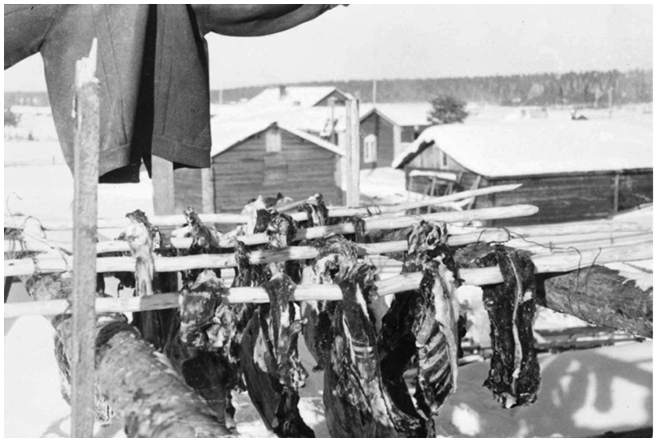
Drying can also be inferred from the frequencies of different skeletal elements (body parts). Drying necessitated the cutting of meat into thin strips to maximize the surface area, thus speeding up the drying process. With caribou, for example, some parts of the carcass, such as the rib cage and parts of the vertebral column, could be dried without additional processing, since these areas, with bone, were already quite thin. However, parts with thick muscles such as upper limbs generally had the meat cut away from the bones, and then cut into thin strips, before drying (Friesen Reference Friesen2001). Other parts were poor for drying; for example, brains spoiled easily, and marrow from large leg bones would also spoil if not consumed soon. Thus, in several Arctic contexts, archaeologists have suggested the possibility of meat drying based on element distributions (e.g., Friesen & Stewart Reference Friesen and Stewart2013; Howse & Friesen Reference Howse and Friesen2016). Likewise, fish drying is sometimes suggested from element frequencies, for example, with fish heads remaining at fishing sites, but fins and vertebrae more common at village sites, indicating processing and storage (Hoffman et al. Reference Hoffman, Czederpiltz and Partlow2000).
Drying was also used to prepare foodstuffs for trade and tax-paying in Fennoscandia. Dried cod and pike, for instance, were sought-after commodities in Europe during the Middle Ages and Early Modern period, fished in quantity in coastal and inland Scandinavia and dried into stockfish (Bergman and Ramqvist Reference Bergman and Ramqvist2017; Barrett Reference Barrett2019). Pike and cod bones have been discovered at archaeological sites, both from the settlement sites of the fishers, where the cranial bones were left as the result of chopping off the head, splitting the body, and hanging it to dry; and trading places, where the presence of both cranial and postcranial elements suggests that fish was consumed and traded there (Bergman and Ramqvist Reference Bergman and Ramqvist2017; Harlin et al. Reference Harlin, Mannermaa, Ukkonen, Mannermaa, Manninen, Pesonen and Seppänen2019; Kuusela et al. Reference Kuusela, Salmi and Äikäs2020). Reindeer meat was also dried for trade; archaeologically, the trade of dried reindeer meat is potentially visible in the under-representation of certain skeletal elements, such as the humerus, at trading places, and conversely, their over-representation at the sites of consumption, such as towns (Lahti Reference Lahti and Herva2006; Puputti Reference Puputti2010: 33–34).
Many other highly specialized methods for storage existed. Chief among these are methods for ‘fermenting’ or ‘curing’ meat and fish. This involved controlled slow decomposition leading to preserved, edible foods with flavours prized by the people who made them (Starks Reference 88Starks and Saberi2011). Some examples of this include fish fermented in pits or in ceramic containers, seal meat in skin bags, and sea mammal meat in specially prepared pits. In Greenland, large numbers of auks (small birds) were stored in sealskin bags (Holtved Reference Holtved1967). In some regions plant foods, including berries, were also preserved in containers filled with seal oil, fish oil, or caribou grease (Burch Reference Burch2006). Unfortunately, despite the fact that these methods occur frequently among recent Arctic peoples, they can be difficult to discern in the archaeological record. An exception is the identification of pits used for walrus storage at a Thule Inuit site near Igloolik, Canada (Desjardins Reference Desjardins2020), and slightly outside our research area in southern Sweden, a Mesolithic pit used for the fermentation of fish has been identified (Boethius et al. Reference Boethius, Kjällquist, Kielman-Schmitt, Ahlström and Larsson2021).
Reindeer milk was consumed by some, but not all, reindeer herding groups (Eidlitz Reference Eidlitz1969: 75). The Sámi, for example, consumed fresh reindeer milk, and it was also preserved as sour milk, cheese, and butter. Sometimes a bag made of reindeer intestines was filled with milk and dried with the aid of smoke. Such milk-filled intestine bags were also frozen; pieces of frozen milk were then cut and consumed during the winter (Itkonen Reference Itkonen1948: 273–279). Reindeer were milked from the midsummer (when the calves had begun to eat grass in addition to their mothers’ milk) to the autumn (Itkonen Reference Itkonen1948: 273–279). Archaeologically, reindeer corrals and milking pens can often be distinguished from the surrounding landscape because of the vegetation changes that occur with trampling, fertilization of the soil by reindeer faeces, and felling of trees for construction of fences and other structures. Pollen analyses suggest that such vegetation changes associated with corrals and/or milking pens date as far back as the eleventh century in northern Sweden (Aronsson Reference Aronsson, Halinen, Lavento and Suhonen2009). Likewise, there is tentative evidence of fence structures/corrals, which could have been used for reindeer milking, by 1000–1300 CE in Arctic Norway (Jerand & Lindherholm Reference 79Jerand, Linderholm, Halinen and Olsen2019).
Preparation and Consumption
In large parts of the Arctic, some foods were eaten raw or frozen due to taste preferences (think of sushi as an analogue) or convenience if it was difficult to sustain a fire. However, cooking was also universally practiced, with food preparation frequently centred on formal hearths, features that were often constructed inside dwellings but sometimes outside. Hearths are common in the archaeological record, identified by stone arrangements with distinctive shapes and sizes, and often by signs of burning or deposits of organic material, charcoal, or congealed fat on or under them. For example, early Paleo-Inuit societies in North America built distinctive square ‘box hearths’ surrounded by four tabular stones on edge. These sometimes occur in isolated contexts, but in others they are built within tents or other dwellings (Odgaard Reference Odgaard2003). In Arctic Fennoscandia, rectangular hearths situated in linear rows – hence the term ‘hearth row site’ used for the dwelling sites characterized by these hearths – have been the topic of active research. The hearths, dating to ca. 800–1300 CE and associated with hunter-herder Sámi communities, were probably parts of cold season dwellings, the sturdy construction indicating their heating function (Halinen et al. Reference Halinen, Hedman, Olsen, Anderson, Wishart and Vaté2013).
Around the circumpolar North, hearths were not simply places to cook food or provide heat and light; they were also imbued with multiple layers of additional meaning. For the Evenki of northern Siberia, they were a place where supernatural beings lived, and in special shaman’s tents, hearths served as portals to the lower world where life began (Grøn & Kuznetsov Reference Grøn, Kuznetsov, Weber and Mackenzie2003; Kokoris Reference Kokoris2011). Odgaard (Reference Odgaard and Anderson1998, Reference Odgaard2003) has linked Paleo-Inuit hearths in North America to aspects of Siberian Shamanism, including their possible connection to mythological clan rivers. In addition, LeMoine (Reference LeMoine2003) has discussed the association of women with hearths in the Dorset Paleo-Inuit period, using analogy with Inuit ethnographies to suggest that tending of hearths was equivalent to tending the souls of animals. Social and ritual importance of hearths is also seen in special rows of hearths in very different archaeological contexts. A North American example can be found at large aggregation sites in the Late Dorset Paleo-Inuit period which included ‘longhouses’. These sites often included multiple rows of identical hearths, sometimes at some distance away from the longhouses and often with very few bones or artefacts (Figure 12). They are often interpreted as having been used for ritual, quite likely in conjunction with the consumption of communal meals, which reinforced ideas of egalitarian social relations and mutual dependence (Friesen Reference Friesen2022). Likewise, the linear organization of Sámi rectangular hearths, as well as the differences in their size and construction, suggest that they reflected and actively created social differences within the community (Halinen et al. Reference Halinen, Hedman, Olsen, Anderson, Wishart and Vaté2013). Their placement within the dwelling resembled that in the traditional Sámi winter tent, goahti, and the discard pattern of animal bones (and probably other organic remains related to food preparation) was also similar – the back of the dwelling was traditionally associated with the male gender and sacredness and was also used for preparing foodstuffs for cooking (Halinen et al. Reference Halinen, Hedman, Olsen, Anderson, Wishart and Vaté2013).
A double hearth row, dating to around 1000 CE, in the central Canadian Arctic. Hearth rows like this one were likely used to cook communal meals.
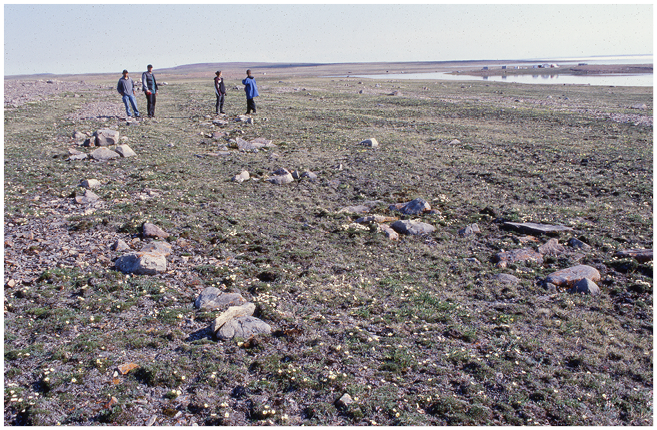
Actual cooking of food took place through several methods. Roasting of meat, fish, or plant foods over open flames or on flat hot stones is recorded in many locations (Eidlitz Reference Eidlitz1969: 91–92). The Sámi, for instance, sometimes roasted meat on a spit (Itkonen Reference Itkonen1948: 264–267), and Inuit of the central Arctic would cook meat on hot stones covered in sod (Jenness Reference Jenness1922). Boiling appears to have been more common. Ceramic vessels occur frequently in many areas of the Arctic, particularly in Eurasia and Alaska over the last 5,000 years. They were probably mainly used for cooking, though in some cases storage may have been their primary function (Admiraal et al. Reference Admiraal, Jordan, Talbot, Bondetti, Serna, Taché, von Tersch, Hendy, McGrath, Craig and Lucquin2023; Anderson et al. Reference Anderson, Tushingham and Buonasera2017; Harry & Frink Reference Harry and Frink2009). Technical analysis of early ceramic use among northern peoples, for example, gas chromatography of lipid (fat) residues, has suggested that there is a strong association of ceramics with aquatic resources, particularly fish (Farrell et al. Reference Farrell, Jordan, Taché, Lucquin, Gibbs, Jorge and Knecht2014; Jordan & Gibbs Reference Jordan and Gibbs2019). In Fennoscandia, lipid analysis of Early Metal Age (from the late second millennium BCE onwards) pottery vessels revealed three distinct subsistence and dietary traditions (Pääkkönen et al. Reference Pääkkönen, Bläuer, Olsen, Evershed and Asplund2018). The pottery from coastal agrarian sites contained residues of dairy and marine products, corresponding with the zooarchaeological and paleobotanical identifications of domesticated animal species as well as cereal pollen and grains (Pääkkönen et al. Reference Pääkkönen, Bläuer, Olsen, Evershed and Asplund2018). North of these communities, a hunter-gatherer diet heavy on marine mammals and fish was evident in organic residue and zooarchaeological analyses (Pääkkönen et al. Reference Pääkkönen, Bläuer, Olsen, Evershed and Asplund2018). Inland hunter-gatherers, on the other hand, based their economy on a more diverse food procurement pattern consisting of terrestrial animals and freshwater fish (Pääkkönen et al. Reference Pääkkönen, Bläuer, Olsen, Evershed and Asplund2018).
Another important material used to make cooking pots is soapstone (steatite), used to make rectangular pots by Inuit in much of the Canadian Arctic and Greenland. Soapstone is a soft material relatively easy to carve and may have taken over from ceramics in the Eastern North American Arctic both because it is available in more locations and because the rarity of wood made it difficult to properly fire ceramic pots (Arnold Reference Arnold and Luc Pilon1994; Frink et al. Reference Frink, Glazer and Harry2012). Soapstone pots often had drilled holes on their upper rims so they could be suspended over open fires or oil lamps. Accounts of Inuit living in snow houses on the sea ice, for example, indicate that in some contexts a ‘stew’ would be kept in a pot, with new meat or snow (to melt into water) added whenever the level got low (Jenness Reference Jenness1922).
Another wide-spread cooking method was stone boiling. Carefully selected stones, often fist-sized, were heated in a fire and then transferred to vessels filled with water and food, usually meat. The heat was transferred to the water, cooking the food over time. In the absence of ceramic or stone pots, stone boiling in other containers such as skin bags may be a practical way to cook. However, it is important to note that stone boiling requires more fuel than other methods (Harry & Frink Reference Harry and Frink2009). Stone boiling has been interpreted from the archaeological record based on concentrations of selected stones near hearths, for example, in the Paleo-Inuit period in Greenland (Odgaard Reference Odgaard2003). As a final important aspect of cooking, in many cases ritual prohibitions defined what could be eaten by individuals or entire groups, as well as related aspects of food preparation. In the ethnographic record, this is perhaps best seen among the Inuit of the North American Arctic, in their careful distinction between products of the land and sea, which must never be mixed. Thus, among the Inuinnait of the central Canadian Arctic, caribou and seal meat could not be cooked together in the same pot. Likewise, driftwood, as a product of the sea, could not be used to cook caribou meat, which came from the land (Jenness Reference Jenness1922).
An important aspect of Arctic foodways, which is prominent in all phases of acquisition, storage, and consumption, relates to animal fat. In areas with high meat diets, fat is particularly important to enable healthy metabolism (Speth & Spielmann Reference Speth and Spielmann1983). In addition, fat consumption is related to body heat; for example, Inuit often consume seal blood, meat, and fat before travelling or performing tasks outside during winter, in order to maintain body temperature and stave off frostbite (Borré Reference Borré1994). Two widespread archaeologically visible forms of specialized fat acquisition relate to terrestrial mammals, and especially caribou/reindeer: marrow acquisition and bone grease production. Terrestrial mammal long bones (large leg bones) as well as some other elements, including mandibles, have large marrow cavities. These are full of nutritionally rich marrow which is very high in fat, though many factors influence marrow quality and characteristics (Morin Reference Morin2007). In order to obtain this marrow, bones must be split using stones or other hard hammers. These actions leave distinctive marks, including ‘spiral fractured’ breakage surfaces and impact marks on the inner surfaces of the bones (Byers et al. Reference Byers, Keith and Breslawski2020). On many northern archaeological sites complete marrow bones are virtually never found, since all were broken open to obtain the highly prized marrow (Figure 13). Marrow was an important part of the foodways of all Inuit groups in North America, and of the Sámi and the agrarian population in northern Fennoscandia in the Medieval and early modern periods (Hambleton & Rowley-Conwy Reference Hambleton and Rowley-Conwy1997; Salmi et al. Reference Salmi, Tranberg, Pääkkönen and Nurmi2014; Harlin et al. Reference Harlin, Mannermaa, Ukkonen, Mannermaa, Manninen, Pesonen and Seppänen2019). In this latter region, lower limb bones, especially metapodials, tibiae, and radii, were briefly boiled and broken longitudinally or by removing a length of bone from both ends with the aid of a large knife (Itkonen Reference Itkonen1948: 257–258; Salmi et al. Reference Salmi, Tranberg, Pääkkönen and Nurmi2014).
A marrow-cracking area on a bedrock outcrop, near Baker Lake, Nunavut. Note the large numbers of broken caribou leg bones, as well as the two small boulders in the centre used to break the bones.
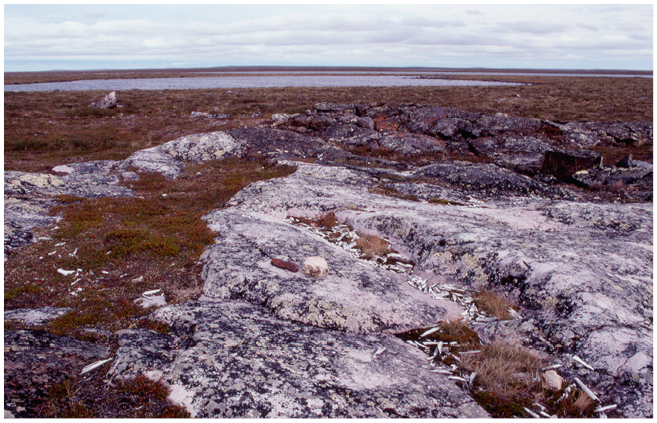
Bone grease, on the other hand, requires more specialized processing (Binford Reference Binford1978). Bone grease is produced from the large amount of fatty organic material found in the spongy bone at the ends of long bones, and in many other bones to varying degrees. Unlike marrow, it is not present in large pieces but instead is embedded in very small cavities in the bone. To obtain bone grease, these bones must be crushed to produce very small pieces with increased surface area. They are then boiled, with the fat floating to the surface where it can be skimmed off, either to eat immediately or to store for future use. Bone grease production is widespread in the ethnographic record, for example, in bone boiling among the Evenki of Siberia (Abe Reference Abe2005). Archaeological examples of bone grease production have been found in several Arctic contexts based on bone fragmentation frequencies, including in an early Paleo-Inuit context in Greenland (Outram Reference Outram1999), often identified by areas with a high density of very small fragments of crushed bone. In fact, this practice may be quite ancient in cold-adapted behaviours, with recent reports associating bone grease production with Neanderthals in central Germany around 125,000 years ago (Kindler et al. Reference Kindler, Gaudzinski-Windheuser, Scherjon, Garcia-Moreno, Smith, Pop and Roebroeks2025).
As a final important element relating to food consumption, sharing was a central part of northern lifeways. It was an important symbol of social connectedness and mutual support and also a crucial way to ensure that even when individuals’ hunting or fishing success varied, all members of a community would have food. The ethnographic record shows many types of sharing, with some cultures having elaborate rules. For example, among Inuit of the central Canadian Arctic, when multiple families lived in the same community on the sea ice, each seal was butchered, and then very specific body parts (for example, the neck or the hind quarter) were given to specific other families (Damas Reference Damas1972). A quite different example is drawn from the ethnographic record of north Alaska, where bowhead whales were often obtained by hierarchically organized hunting parties led by an umialik, a wealthy man who owned the umiak (open skin boat). The umialik and his wife commonly kept the most prestigious parts of the whale, including the flippers and tail, and distributed the rest of the meat and blubber to crew members, thus reinforcing their own status (Sheehan Reference Sheehan, Price and Brown1985; Whitridge Reference Whitridge2002). Despite its common occurrence in the ethnographic record, demonstrating sharing and other forms of food distribution at archaeological sites is extremely difficult, primarily because individual acts of sharing over time will normally be invisible over the ‘background noise’ of constant bone discard. However, some initial attempts have been made (e.g., Henshaw Reference Henshaw1999), and in future refitting of broken bone fragments might be used to observe sharing between individual households as has been used successfully in French Upper Palaeolithic contexts (Enloe Reference Enloe2010).
Discard
Discard patterns of food refuse were a combination of practical, cultural, and cosmological considerations for Arctic communities. They were also tied to seasonality and mobility. While discard of food waste might seem trivial, it is critical for archaeologists because it represents the mechanism through which much of the archaeological record is formed – providing the data for interpreting early foodways. For example, foods consumed away from settlements are likely to be discarded on the land surface and decompose within a few years – thus, archaeologists will never be able to find them. However, foods consumed in settlements and discarded into concentrated middens are more likely to be well preserved (Figure 14). This is because middens often accumulate rapidly, so new layers cover and protect lower layers which are kept out of harm’s way. In many Arctic regions, preservation in deep layers is enhanced by permafrost; deep areas remain frozen even in summer.
A two-metre-deep midden from the Kuukpak site, Mackenzie Delta region, northwestern Canada. Virtually all bones visible in the excavation are from beluga whales.
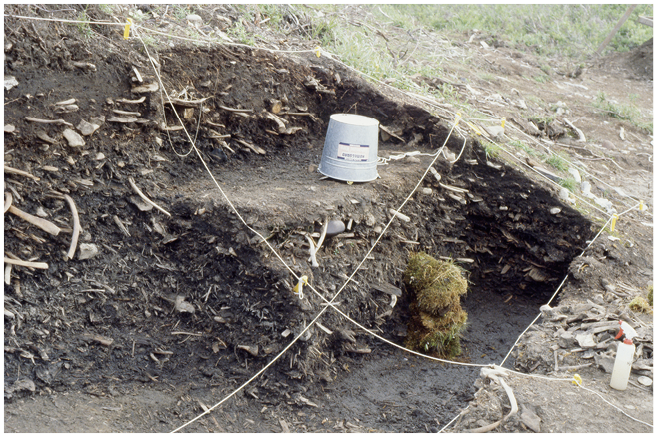
Middens in the Arctic can be shallow or non-existent for short-term occupations; or up to several metres thick for sites in optimal locations that were occupied for decades, centuries, or even millennia as was the case for several sites on St Lawrence Island in Bering Strait (Collins Reference Collins1937). In many cases, middens were not simply catch-all disposal areas, but rather different types of material were discarded in different areas around dwellings (Binford Reference Binford1978; Newell Reference Newell and Kent1987). These separate areas could serve as sources of raw material, for example, for making bone tools, but could also provide emergency foods, as in the case of the ends of long bones, which could be boiled to produce additional bone grease. Another important consideration relates to the differences between loss or disposal within dwellings, as opposed to disposal outside in middens. Several Arctic case studies have indicated differences in food remains between these areas (e.g., Friesen & Betts Reference Friesen, Betts and Maltby2006; Norman Reference Norman2015); thus, if archaeologists only analyse food remains from houses or middens, but not both, they will not necessarily get the whole picture of local foodways. Sometimes the hunting and fishing grounds were located far from the dwelling sites, resulting in complex patterns of butchery, preservation, and transportation in archaeological assemblages. For example, large accumulations of reindeer bones have been discovered from Medieval mass hunting sites such as Gollevarre in Norway (Wickler Reference 90Wickler2025).
The record of recent peoples around the Circumpolar North also indicates another common aspect of disposal; often it was subject to special rules which can broadly be interpreted as showing respect for animals (Hill Reference Hill2011). While many of these practices are difficult to observe archaeologically, a recent study in northern Canada, performed in collaboration with local Inuit Elders, identified an exception. Specific stone structures that resembled storage caches were intended to protect discarded caribou bones from dogs and other scavenging animals; bones found in these structures differed in significant ways from the contents of standard caches (Friesen & Stewart Reference Friesen and Stewart2017).
At dwelling sites, the ethnographic record indicates that in Sámi households, hunting and cooking of meat and fish were reserved for men; they were also allowed to eat the hind parts and head meat of reindeer, unlike women (Yates Reference Yates and Hodder1989). Women were responsible for milking and processing the milk, which should only enter the dwelling through the front door. The back of the dwelling, on the contrary, was reserved for handling reindeer carcasses. Rituals also took place at the back (Yates Reference Yates and Hodder1989). Archaeological evidence, however, paints a more varied picture of the use of domestic space, particularly regarding food refuse discard practices. In rectangular hearths that have been studied in detail, burned animal bone fragments were found from the hearth itself, whereas unburned bones were concentrated on the side that was towards the back of the dwelling structure (Hedman et al. Reference Hedman, Olsen and Vretemark2015). It is possible that this pattern reflects the traditional, cosmologically informed use of domestic space described earlier – refuse from food preparation would be expected to concentrate in this area of the dwelling (Hedman et al. Reference Hedman, Olsen and Vretemark2015). It is interesting to note, though, that there are also discrepancies between archaeological data and ethnographically documented discard practices. For instance, although ethnographic observations emphasize how game and domestic animal products were to be kept separate, sheep bones were found in the same deposits with wild animal bones (Hedman et al. Reference Hedman, Olsen and Vretemark2015). Moreover, in contrast with animal bones, artefacts were evenly distributed around the hearths, possibly indicating that the discard patterns of food refuse were more strongly regulated by cultural and cosmological norms than those of other materials (Hedman et al. Reference Hedman, Olsen and Vretemark2015).
Cosmological concerns are also reflected in animal offerings at Sámi offering sites. Offerings were made to give thanks or ask for success in herding, hunting, or fishing, as well as in other things. According to ethnographic sources, the rituals at these sites took many forms. In some instances, reindeer were slaughtered at the site; in others, they were taken to the site and left there alive (Itkonen Reference Itkonen1948: 311). The anatomical representation of the archaeological bone finds, as well as the cut marks identified on the uppermost vertebrae, indicate that mostly crania or antlers were offered (Salmi et al. Reference Salmi, Äikäs and Lipkin2011). Butchery probably took place elsewhere (Salmi et al. Reference Salmi, Äikäs and Lipkin2011). Sometimes cooking and eating the meat of the sacrificial animal was a part of the ritual (Äimä Reference Äimä1903: 115). Fragments of freshly broken reindeer long bones from the offering sites may relate to consumption of marrow; burned bone discovered from some of the sites seems to be an indication of fire being kept at the sites (Salmi et al. Reference Salmi, Äikäs and Lipkin2011). Indeed, written sources suggest that a fire was sometimes made and the offerings burned (Paulaharju Reference Paulaharju1932: 15, 21).
5 Case Study: Beluga Whale Hunting in the Mackenzie Delta
Recent Histories
The Mackenzie River Delta region in northwestern Canada is home to Inuvialuit, a regional expression of broader Inuit culture in the North American Arctic (Alunik et al. Reference Alunik, Kolausok and Morrison2003; Arnold Reference Arnold, Friesen and Mason2016). Today, Inuvialuit culture is strongly connected to the land, and in particular to country foods such as fish, caribou, waterfowl, berries, and beluga whales. As with many Arctic regions, Mackenzie Delta archaeology is inseparable from the ethnographic record, and from modern Inuvialuit society, which form a continuum. Thus, to understand the archaeology it is best to start with an overview of recent times, which can provide a guide for understanding the earlier archaeological record.
The earliest detailed records of Inuvialuit society, recorded by Inuvialuit knowledge keepers and historians such as Nuligak (Reference Nuligak1966), as well as early explorers and ethnographers (Petitot Reference Petitot1887; Stefansson Reference Stefansson1919), relate to the nineteenth century. Together, these sources reveal a complex society living on or near the coasts of the Beaufort Sea, centred on the mouth of the Mackenzie River. This area was divided into around eight regional groups, each with well-defined borders, and each centred on a large village occupied by much of the population for at least part of the year (Arnold Reference Arnold, Friesen and Mason2016). These regional groups interacted through trade, conflict, and in many other ways. Each relied on a different set of major foods depending on which were most available locally, with particularly important categories being several fish species, ringed seals, caribou, beluga whales, and bowhead whales (Betts Reference Betts2008).
The most prominent and best-known regional groups were the two whose territories were centred on Kugmallit Bay at the mouth of the Mackenzie River, with their major villages at Kitigaaryuit and Kuukpak (McGhee Reference McGhee1974). For these two groups, by far the most critical resource was the beluga whale, an Arctic-adapted toothed whale related to dolphins (Figure 15). Each summer, thousands of beluga whales enter the relatively warm waters of the region, creating ideal conditions for hunting.
Inuvialuit hunters with beluga whale at Kitigaaryuit, Mackenzie Delta, ca. 1910.
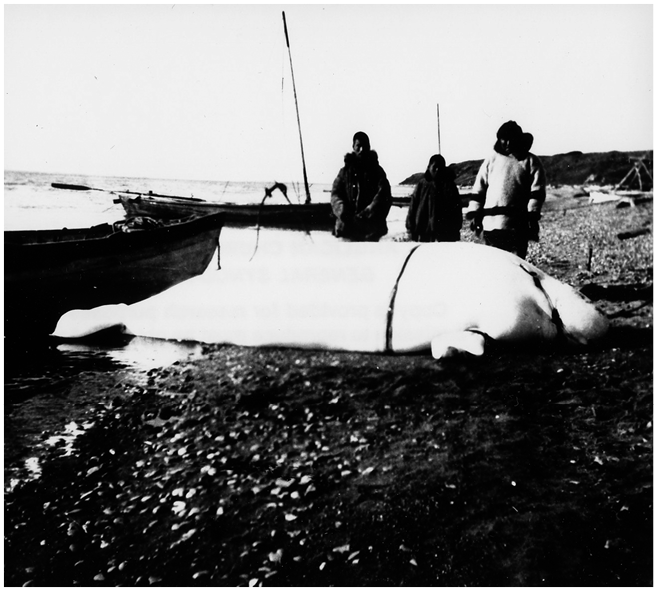
The entire annual seasonal cycle for these regional groups was anchored by the beluga hunt. During the hunting season, mainly late July and early August, hundreds of people would converge on the major villages. Here, lookouts on high bluffs would signal when belugas were seen, after which the men would launch their kayaks and engage in the hunt (Friesen Reference Friesen2004). The method used was to form a long line of kayaks whose paddlers would splash the water with their paddles, driving the belugas into shallows where they could be easily harvested with lances and harpoons (Nuligak Reference Nuligak1966). After towing the belugas back to shore, women would butcher and prepare them for storage. Preparation methods included storing fat or maktak (skin with subdermal fat attached) in skin bags and drying of meat. Once prepared, these beluga products were stored in pits dug into the permafrost (Friesen Reference Friesen2004). The importance of showing respect for the belugas was incorporated into every aspect of village life during the hunting season. For example, a range of activities were prohibited, including cutting wood, working iron, or digging house foundations. Shamans also paid close attention to the beluga hunt. In summer, there were important drum dances in communal structures almost daily, many of which were likely meant to ensure the success of the hunt. A more specific example of ritual treatment of belugas is given by Isaac Stringer, a missionary, who visited Kitigaaryuit during the summer of 1896:
Mimeguuk went through certain medical [shamanistic] performances with the whale. He had a certain kind of light colored clay said to be obtained far to the East & West. This he rubbed in lines down both sides from the corners of the mouth and also a short line from the spout-hole back & put some on the tongue, then cut up the whale.
After the beluga hunt, most families dispersed to acquire fall resources and then returned to the beluga hunting villages for the winter, living in large driftwood-framed pit houses and consuming stored beluga whale meat and fat along with other seasonally available foods.
Belugas were by no means the only food source for the occupants of these villages. A wide range of birds, such as geese, ducks, and ptarmigan were hunted, with blunt arrowheads (intended to minimize damage to the carcass) used in bird hunting frequently encountered in the archaeological record. Fish such as burbot (Lota lota) and inconnu (Stenodus leucichthys) occur in large numbers, with fishing technologies seen in bark net floats, stone net sinkers, multipart fishhooks, and fishing spear prongs. Mammals such as seals, caribou, muskrat, and Dall’s sheep are also present, with bow and arrow parts, harpoons, and many other related technologies common.
Beyond foodways, Inuvialuit society was complex and distinctive in relation to its neighbours. Leadership roles were well-developed, with early explorers and missionaries referring to ‘chiefs’, senior men who had authority probably based on knowledge and ability. Material culture (tools, clothing, ornaments, etc.) was highly elaborated and carefully manufactured and often included decorative elements. However, this distinctiveness was, in many ways, clearest in house architecture. Inuvialuit, particularly those living in the core beluga-hunting area of the Mackenzie Delta East Channel, lived in extremely large and sophisticated houses in the winter. These houses were semi-subterranean, excavated into the soil so they were partly underground, with floors, walls, and roofs made of the plentiful driftwood that descends the Mackenzie River. Their overall pattern was the ‘cruciform’ type, containing three separate alcoves around a square central floor, with the fourth wall connected to a sunken entrance tunnel. The houses varied in size, and held one or two families per alcove, with up to thirty people in each house (Friesen & Mereuze Reference Friesen and Mereuze2020).
Archaeology – The Kuukpak Site
Over the last forty years, the Mackenzie Delta has seen several periods of intensive archaeological research, often in collaboration with Inuvialuit communities or institutions, which have led to many insights into life in the distant past. At the scale of the full region, archaeology has confirmed that the recent regional variability in foodways has significant time depth. For example, coastal sites to the east (Pauline Cove on Herschel Island; Friesen Reference Friesen2013b) and west (Iglulualuit on the Cape Bathurst Peninsula; Morrison Reference Morrison1990) have very high frequencies of seal bones, and interior sites on the Husky Lakes, east of the Mackenzie River, are dominated by either caribou (Morrison Reference Morrison1988) or fish bones (Morrison Reference Morrison2000). However, particularly intensive research on the East Channel of the Mackenzie River, in regions historically occupied by beluga whale hunters, has revealed a detailed picture of the long-term development of this most populous region. The earliest site on the East Channel, Cache Point, dates to the fourteenth century CE and shows a focus on beluga hunting even at this early date (Betts Reference Betts2008; Friesen Reference Friesen and Grønnow2009).
The largest site in the entire region is Kuukpak. Originally excavated in the 1980s due to its importance to regional culture (Arnold Reference Arnold1988, Reference Arnold and Luc Pilon1994), renewed research in the 2010s was driven by the rapid erosion now occurring on the region’s coasts, which is accelerating due to modern climate change (Friesen Reference Friesen2015). Because many parts of the site have already been destroyed, a collaboration between the Inuvialuit Cultural Centre and the University of Toronto was designed to assess the damage and excavate houses at risk of imminent erosion.
Kuukpak is an enormous site by regional standards. It currently contains a minimum of twenty-nine house pits and likely held at least forty before erosion began destroying large parts of the site. These houses are not just numerous, they are also very large; all that have been excavated or assessed in detail are of the multifamily cruciform type described earlier. Within these houses, and in deep middens in front of them, tens of thousands of animal bones have been excavated, along with thousands of tools, hunting implements, ornaments, and many other categories of material culture. Radiocarbon dates indicate a likely initial occupation in the late fifteenth or sixteenth century CE, and the site was abandoned in the late nineteenth century CE, based on Inuvialuit historical knowledge (Stefansson Reference Stefansson1919).
Foodways at Kuukpak
While the historical information from the Mackenzie Delta gives us a detailed picture of recent Inuvialuit foodways, there are many aspects of the distant past that remain unclear. We know beluga whales were hunted, but how important were they? How broad was the overall economy in terms of other food sources? And, what methods did Inuvialuit use to hunt belugas in the distant past?
The overall diet for Inuvialuit at Kuukpak, at least for the winter season, can be reconstructed through analysis of animal bones from the site. It should be emphasized that recovery methods and analyses completed thus far have not been aimed at plant remains, and thus we do not know the precise mix of berries, roots, leaves, and other plants consumed. However, while providing important nutrients, they would have contributed a small proportion of the overall food consumed whether measured by weight or calories.
A detailed analysis of over 11,000 animal bone fragments has been performed, based on samples recovered during excavations in the 1980s directed by Charles Arnold (Reference Arnold1988, Reference Arnold and Luc Pilon1994). This sample is from a pre-contact house, probably dating to the sixteenth century AD. Fauna was recovered with 6 mm mesh screens, yielding almost all bones other than those of small fish. Because of their size and weight, beluga bones were recovered and analysed separately from the remainder of the bones, but all data are combined in Table 1 (Friesen & Arnold Reference Friesen and Arnold1995a). It is important to recognize that activities must have varied over time and space within the Mackenzie Delta, and this sample is representative of only one household. However, it does reveal a very high-resolution picture of the foodways of this house’s inhabitants.

Table 1 Long description
A total of 11,602 animal bones were identified from Kuukpak. These are divided into 6,010 fish bones representing 51.8% of the total; 309 bird bones representing 2.7% of the total; 5,240 mammal bones representing 45.2% of the total; and 43 bones that could not be identified to class, representing 0.4% of the total. For each species, two summary statistics are given. The first is the total number of specimens identified, known as the Number of Identified Specimens or NISP. The second is the minimum number of animals represented by the bones, known as Minimum Number of Individuals or MNI. Within fish, eleven species are represented, along with several other taxonomic categories at higher levels such as genus. The most commonly occurring fish species is burbot, which has an NISP of 1,391 specimens, and an MNI of 84 individuals. Within birds, seventeen species are represented, along with several other taxonomic categories at higher levels such as genus. The most frequently occurring category of bones is made up of ptarmigan and grouse, which together have an NISP of 203 specimens, and an MNI of 16 individuals. Within mammals, fourteen species are represented, along with several other taxonomic categories at higher levels such as genus. The most frequently occurring species is beluga whale, which has an NISP of 2,266 specimens, and an MNI of 19 individuals.
Note: Table excludes lemmings and voles (small rodents that are probably intrusive) and one bowhead whale bone that was probably brought in as raw material for artefact manufacture rather than as food.
The most obvious initial impression when considering these bones is that the site contains a remarkably diverse fauna, by Arctic standards. While many other Arctic regions have very few species available, the Mackenzie Delta is a special case, for several reasons. It is located at an ecotone, a transitional zone between two or more ecosystems. It contains freshwater rivers and lakes, marine waters, tundra environments, and is very near to Subarctic environments (the northernmost limit of trees is only 50 km south of Kuukpak). In addition, the Mackenzie River is one of North America’s major flyways for migratory birds, including many economically important species of ducks, geese, and swans. As a result, faunal diversity is seen in all three economically important classes: fish (eleven species), birds (seventeen species), and mammals (fourteen species). These classes are not equally frequent, though. Fish are most common, representing 51.8 per cent of all bones recovered. This number is almost certainly lower than the original frequency, since fish are most subject to decomposition and consumption by dogs. Mammals are almost as common, representing 45.2% of all bones, with birds at only 2.7% despite having the greatest number of species.
When looking at the numbers more closely, an important additional pattern appears. Within each class, there are only one or two species that are present in far higher frequencies than the others. For fish, burbot is the most common, followed by inconnu. Both are large-bodied fish that are still important to Inuvialuit today. Burbot, a freshwater cod species, are the most frequent, no doubt because they spawn in winter under the ice and were therefore fished by residents of Kuukpak while occupying their winter houses. Among the birds, three closely related species of ptarmigan and grouse provide over half of all bird bones. This again is an indicator of winter occupations; ptarmigan and grouse live in the area year-round, while most other bird species on the list are migratory and only present in the summer. Finally, among mammals, beluga whales are overwhelmingly the most common species, yielding almost three times as many bones as the next most frequent species, muskrat. Also relatively important are seals and caribou. Unlike bones of burbot and ptarmigan/grouse, beluga bones in the houses are not directly related to season of occupation, since belugas are only available in summer and the houses were occupied mainly in the winter. Instead, they indicate consumption of stored food on a large scale.
Beluga Whales: A Focal Resource
The discussion thus far relates to the numbers of bones, but of course this is only an indirect indication of the importance of each species to the diet. One way to approximate ancient diets is to convert faunal numbers to meat weights. For the Kuukpak bones, this was performed by multiplying the minimum number of individuals (MNI) by the average meat weight per individual for each species (see Friesen & Arnold Reference Friesen and Arnold1995a for more details on methods used). Figure 16a shows a pie chart for the total amount of meat, by weight, provided by the top eight most important species, plus a ninth division for all additional species combined. The pattern is very clear: beluga whales were a critically important focal resource for Inuvialuit in this house, providing well over half of all food by weight and almost ten times as much as the next most important resource, ringed and harbour seals. Despite the very long list of resources in Table 1, it is likely that if any other resource failed, residents of Kuukpak could rely on alternatives, but if belugas failed, it would be potentially catastrophic.
Analysis of animal bone samples from Kuukpak, illustrating the importance of beluga whales.
Pie chart showing percentage of overall meat weights made up by different species.
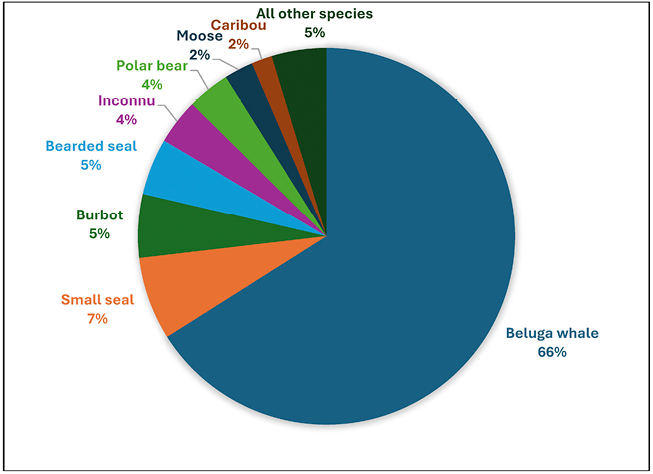
Bar graph comparing mortality profiles (age-at-death patterns for individual animals) for beluga whales. Note that the archaeological Kuukpak pattern in blue is similar to the catastrophic pattern in red, confirming that early Inuvialuit hunted entire pods of beluga whales. Both of these patterns contrast with the modern selective hunt in green, in which prime-aged males are sought.
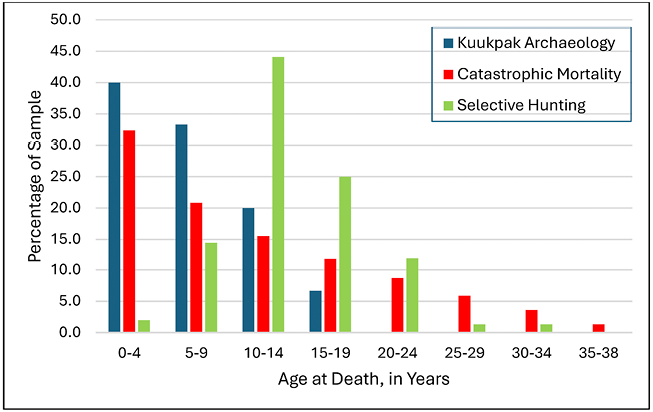
This analysis of animal bone frequencies reveals much about which species contributed to the diet at Kuukpak; however, archaeology also offers insights into many other aspects of foodways as well. For example, storage of large amounts of meat and blubber is indicated in the large number of pits that have been recorded at Kuukpak. A single large cruciform house was associated with sixteen large cache pits, averaging about 1 × 1 × 1 metre in dimensions (Friesen & Arnold Reference Friesen and Arnold1995a). Storage is also clearly indicated simply by the presence of large numbers of beluga bones in the houses; the houses were occupied mainly in winter, but belugas are available for only a brief period in the summer. Cooking is indicated by stone or ceramic lamps found in the Kuukpak houses and also by a large open hearth in the central floor area of one house (Friesen & Mereuze Reference Friesen and Mereuze2020).
In terms of food acquisition, can we say anything specific about how beluga whales were hunted? The houses and middens are full of a diverse array of technologies associated with hunting and fishing of all species, including bow and arrow technology, fish net and hook technology, kayak parts, and many harpoon shafts, fore-shafts, and heads. This includes a number of well-made harpoon heads that are larger than those normally used to hunt seals and therefore were likely used to hunt belugas. The location of Kuukpak also suggests that it was chosen for beluga hunting: there are extensive shallows in the waters adjacent to the site, and the site is next to 30-metre-high bluffs from which lookouts could spot pods of belugas. However, none of these data categories can directly indicate the methods used for hunting.
One solution to this problem is to reconstruct ‘mortality profiles’. Mortality profiles combine the ages at death for all individual animals in a sample and can provide important information on the manner of death. For Kuukpak, beluga whale ages at death were reconstructed based on their mandibles (lower jaws) which have distinctive annual growth lines that, when thin-sectioned and viewed under a microscope, can be used to indicate the age of each animal. For Kuukpak, fifteen right beluga mandibles from a house excavation were thin-sectioned, yielding a provisional mortality profile (Friesen & Arnold Reference 75Friesen, Arnold and McCartney1995b).
To interpret the mortality profile, it can be compared to beluga mortality information from two other sources. One is a ‘catastrophic’ mortality profile, referring to the patterns of death in wild animals if an entire population dies in a single event. Catastrophic mortality has the most individuals in the youngest age classes and fewer in each age category as they get older, which is the structure of living populations. We would expect a catastrophic mortality profile for belugas hunted as they were in the nineteenth century – entire pods were driven by kayakers into the shallows where all were potentially harvested. This contrasts with a ‘selective’ mortality profile, which occurs when hunters choose a particular preferred age class. In the modern Mackenzie Delta, Inuvialuit are highly selective as they hunt belugas with modern technologies, choosing older individuals which are larger, and males where possible, in order to keep the hunt sustainable (Harwood et al. Reference Harwood, Norton, Day and Hall2002).
Figure 16b shows three beluga mortality profiles compared, with age classes grouped into five-year categories (see Friesen & Arnold Reference 75Friesen, Arnold and McCartney1995b for details of methodology). Importantly, the Kuukpak profile closely resembles the catastrophic profile which is based on a reconstruction of living beluga population age frequencies (Burns & Seaman Reference Burns and Seaman1986), with both showing the greatest numbers in the 0–4 age category, and fewer in each succeeding category. On the other hand, a selective profile based on modern Inuvialuit hunting of large individuals (Fraker et al. Reference Fraker, Sergeant and Hoek1978; Sergeant Reference 87Sergeant1973) is very different, with a peak in the 10–14 age category. This is strong evidence for ancient hunting patterns being similar to those recorded in the nineteenth century, with drive hunting being the main method.
Concluding Remarks
In summary, Inuvialuit foodways in the Mackenzie Delta are a striking example of a focal economy based on dependable aggregations of a large-bodied prey species, while also incorporating a great range of additional resources. Themes emphasized throughout this Element are clearly illustrated here. For example, beluga whales form a resource that is highly spatially discontinuous; there are only a few places in the entire circumpolar Arctic where they can be reliably hunted due to the presence of large numbers in a tightly restricted, shallow near-shore environment. It also clearly indicates how extreme seasonality impacts northern foodways. Beluga whales were available for only a few weeks each year, yet they were a primary food source for at least half of each year. This was only possible through elaborate preparation and storage methods.
It is also an excellent example of how the ethnographic and archaeological records can be complementary, with Inuvialuit knowledge holders having a profound and nuanced understanding of regional history, but with archaeology filling in some gaps in the recent record and becoming more important for interpretation as time depth increases. Without Inuvialuit knowledge, we would not be able to reconstruct most of the elaborate rituals and ideas that surrounded the beluga hunt, how society was organized, or many other aspects of regional history. However, the archaeology gives us a very accurate picture of the range of foods eaten during the early parts of the cultural sequence. Sites such as Kuukpak reveal that the distinctive recent social organization of Inuvialuit, and their elaborate material culture, including very large houses, has great time depth. The analysis of animal bones makes clear that the beluga hunt, so important to recent and modern Inuvialuit, was the critical factor that made these developments possible. In other words, detailed knowledge of foodways is indispensable to understanding all aspects of the history of this Arctic region.
6 Case Study: Development of Reindeer Herding in Fennoscandia
Reindeer Domestication and Early Reindeer Herding in Fennoscandia
Reindeer has been and still is an important nutritional resource across the Arctic, the engagements of human communities with this species ranging from hunting to mixed hunter-herder livelihoods and large-scale mobile herding ways of life. Reindeer herding has been practiced in a wide geographic area from Siberia in the east to Fennoscandia in the west, with herding practices varying in time and space. Reindeer herding is a unique Arctic adaptation, shaped by stark seasonal contrasts, extreme environmental conditions, the ecology and behaviour of the reindeer, as well as the human cultures thriving in the region. Despite the variation across time and space, a unifying feature of reindeer herding cultures is that herding is usually practiced in close dialogue with the landscape and the supernatural creatures inhabiting it, taking care of the herd in a holistic, nuanced, and seasonally varied way (Figure 17).
Reindeer in Näkkälä, Finland.
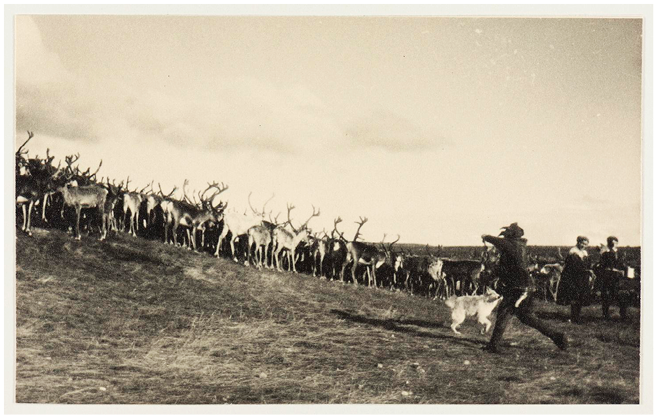
Reindeer domestication is a relatively recent process in comparison with many other livestock species; archaeological evidence currently points to incipient reindeer domestication around 2,000 years ago. The origins of reindeer domestication and the relationships between the different reindeer herding traditions are still not fully resolved. In the light of a growing body of archaeological and genetic evidence, it seems that reindeer herding was adopted in Siberia earlier than in Fennoscandia (Røed et al. Reference Røed, Kvie, Losey, Kosintsev, Hufthammer, Dwyer and Anderson2020; Anderson et al. Reference Anderson, Harrault, Milek, Forbes, Kuoppamaa and Plekhanov2019; Losey et al. Reference Losey, Nomokonova, Arzyutov, Gusev, Plekhanov, Fedorova and Anderson2021; Nomokonova et al. Reference Nomokonova, Losey, Fedorova, Gusev and Arzyutov2021). Around the beginning of the first millennium CE, material cultural evidence such as harness parts, and geoarchaeological data from settlement sites, indicate that small-scale reindeer herding incorporated into a hunter-gatherer lifestyle was probably practiced in the Yamal Peninsula in Arctic Siberia. Moreover, the genetic lineages common in today’s domesticated reindeer occur in Siberia considerably earlier than in Fennoscandia. The connections between Siberian and Sámi reindeer herding traditions remain unclear, but as East-West cultural and economic connections existed during the Iron Age, it is possible that the Sámi got the incentive and knowledge of reindeer herding from their Siberian contacts.
Archaeological and historical sources have established that reindeer herding was probably adopted by the Sámi of Fennoscandia in the Late Iron Age onwards (ca. 600/700 CE). However, there was considerable variation in the timing and course of events across northern Fennoscandia (e.g., Bergman et al. Reference Bergman, Zackrisson and Liedgren2013; Halinen et al. Reference Halinen, Hedman, Olsen, Anderson, Wishart and Vaté2013; Hedman et al. Reference Hedman, Olsen and Vretemark2015; Seitsonen & Viljanmaa Reference Seitsonen and Viljanmaa2021). In the Late Iron Age, a shift in settlement patterns suggests that lichen pastures for reindeer became a factor in the choice of settlement site, implying that small domesticated reindeer herds were kept alongside hunting, gathering, and fishing (Halinen et al. Reference Halinen, Hedman, Olsen, Anderson, Wishart and Vaté2013; Hedman et al. Reference Hedman, Olsen and Vretemark2015; Seitsonen & Viljanmaa Reference Seitsonen and Viljanmaa2021). Moreover, historical sources, such as the ninth-century Ohthere’s account and eleventh-century Historia Norwegiae, mentioning domesticated reindeer, are also among the early pieces of evidence of the beginnings of reindeer herding among the Sámi (Ekrem & Mortensen Reference Ekrem and Mortensen2003; Bately Reference Bately, Bately and Englert2007).
But why did the Sámi adopt reindeer herding? After all, the livelihood of Late Iron Age societies was varied, with seasonal rhythms for various fishing, hunting, and gathering activities. Wouldn’t it complicate matters to add herding on top of all those activities? Current research understands the underlying reasons for the adoption of reindeer herding as multifaceted. The beginnings of reindeer herding were gradual and connected to several societal, economic, and environmental changes that took place during the Late Iron Age. First, trade contacts with European markets intensified in the ninth century, which led to an increased need for animal-based trade products such as furs, hides, and fish (Kuusela et al. Reference Kuusela, Salmi and Äikäs2020). Moreover, climatic changes that took place during this period may have created a need to change subsistence patterns (Seitsonen & Viljanmaa Reference Seitsonen and Viljanmaa2021). Both economic and environmental pressures may, therefore, have contributed to the need for intensification of resource management, which in turn gradually developed towards animal management. In practice, it may have been the management of hunting fence systems that led to incipient reindeer herding. Hansen and Olsen (Reference Hansen and Olsen2014: 203–214) have argued that the management of wild reindeer hunting fence systems led to the emergence of social organization with leadership and the concept of ownership of resources such as animals, thus sowing the seeds of reindeer herding as a livelihood among the Sámi. Another possible driver in the adoption of reindeer herding was the use of reindeer for traction. Transporting reindeer was important in maintaining trade as well as social contacts, cargo, and draught reindeer, allowing the transportation of people and goods over long distances in land-connected areas (Halinen Reference Halinen, Halinen, Heyd and Mannermaa2022). Thus, there were many factors that contributed to the beginning of reindeer herding in Fennoscandia, the processes and underlying reasons probably varying regionally.
Ethnographic evidence and archaeological data clearly show that small-scale reindeer herding was integrated into an otherwise hunter-gatherer lifestyle by various Sámi groups in locally varying ways. For instance, spatial analysis of archaeological Sámi settlement sites has revealed a complex pattern of mobilities related to hunting and herding, with certain meeting points in the landscape for people and reindeer during their seasonal migrations (Seitsonen & Viljanmaa Reference Seitsonen and Viljanmaa2021). The locations of the settlement sites as well as animal bone assemblages consisting of varied fauna indicate that early reindeer herding was probably integrated into a mixed livelihood of herding, hunting, gathering, and fishing (Harlin et al. Reference Harlin, Mannermaa, Ukkonen, Mannermaa, Manninen, Pesonen and Seppänen2019; Salmi et al. Reference Salmi, van den Berg, Niinimäki and Pelletier2021; Vretemark Reference Vretemark, Halinen and Olsen2019; Seitsonen & Viljanmaa Reference Seitsonen and Viljanmaa2021). Zooarchaeological evidence, though often elusive, likewise suggests that wild reindeer was hunted alongside small-scale herding (Hull et al. Reference Hull, Salmi and Semeniuk2023).
Archaeological studies, therefore, imply that early reindeer herding was probably focused on maintaining small, multi-purpose herds inclusive of draught reindeer as well as individuals for reproduction, meat production, herd cohesion, and other purposes (Hull et al. Reference Hull, Salmi and Semeniuk2023). Zooarchaeological analyses point towards the presence of domesticated reindeer with different characteristics and social roles, such as working reindeer, males, females, castrates, and individuals of different ages and sizes, at archaeological sites (Hull et al. Reference Hull, Salmi and Semeniuk2023). Although the exact herd structures are impossible to estimate based on zooarchaeological evidence, it seems that there were local and seasonal variations, for instance, in the emphasis put on working reindeer and wild reindeer hunting between different sites (Hull et al. Reference Hull, Salmi and Semeniuk2023). Another aspect of reindeer herding practices that has been detected archaeologically is reindeer feeding. Stable isotope analysis, particularly the analysis of nitrogen isotopes, of which there are different concentrations in various plants and lichens that constitute the reindeer’s diet, has shown that reindeer were given supplementary feed, probably consisting of dried branches, grasses, and sedges, at least from the eleventh century onwards (Fjellström et al. Reference Fjellström2020). Working-related skeletal markers identified in reindeer bone assemblages show that reindeer were utilized for traction at least from the fourteenth century and probably earlier (Salmi et al. Reference Salmi, van den Berg, Niinimäki and Pelletier2021). Moreover, there is tentative evidence of using fence structures and corralling as parts of early reindeer herding – these could have been used for the purposes of milking, supplementary feeding, and roundups (Eronen et al. Reference Eronen, Zetterberg and Okkonen1994; Jerand & Linderholm Reference 79Jerand, Linderholm, Halinen and Olsen2019; Zetterberg et al. Reference Zetterberg, Eronen and Briffa1994; Korhonen Reference Korhonen2008; Norstedt et al. Reference Norstedt, Rautio and Östlund2017).
These reindeer herding practices – involving tasks such as maintaining infrastructure, collecting fodder, working reindeer taming and training, and roundups – needed to be incorporated into an annual cycle of other subsistence activities, such as hunting, fowling, fishing, and gathering. The subsistence patterns varied between different Sámi communities, each community thus needing to adapt the requirements of reindeer herding into their lives in locally suitable ways. Later ethnographic research shows that the Sámi in Inari, Eastern Fennoscandia, for instance, focused on fishing during the warm months, whereas autumn was the time for fowling, fishing, wild reindeer hunting, and reindeer roundups (Itkonen Reference Itkonen1948: 241–242). There were considerable differences in annual cycles between communities and families – usually, however, there were four distinct phases in the spring, summer, autumn, and winter (Carpelan Reference 72Carpelan and Lehtola2003: 71). Nowadays, reindeer roundups take place in late autumn, the winter feeding season beginning around the same time. The reindeer return to graze freely for the summer, with late summer being the time for making the winter forage (Soppela et al. Reference Soppela, Kynkäänniemi, Wallén and Salmi2024). Thus, rather than being mutually exclusive, reindeer hunting and herding were integrated into a mixed hunter-herder way of life in the subsistence patterns of many Sámi communities, and it is very likely that early reindeer herding followed a similar pattern (Seitsonen & Viljanmaa Reference Seitsonen and Viljanmaa2021; Salmi Reference Salmi2023).
Transition to Mobile Pastoralism
A major transition in reindeer herding occurred around the fourteenth and fifteenth centuries. Archaeological and genetic evidence implies that at that time, the subsistence economies of many Sámi communities shifted towards mobile pastoralism with larger reindeer herds, increased reliance on reindeer herding as a livelihood, and seasonal mobilities tuned specifically to the needs of the reindeer herds (e.g., Sommerseth Reference Sommerseth2011; Bergman et al. Reference Bergman, Zackrisson and Liedgren2013; Salmi Reference Salmi2023; Salmi & Seitsonen Reference Salmi, Seitsonen and Salmi2022; Seitsonen & Viljanmaa Reference Seitsonen and Viljanmaa2021; Bjørnstad, Flagstad, Hufthammer, & Røed Reference Bjørnstad, Flagstad, Hufthammer and Røed2012; Heino et al. Reference Heino, Salmi, Äikäs, Mannermaa, Kirkinen, Sablin, Ruokonen, Núñez, Okkonen, Dalén and Aspi2021; Røed, Bjørklund, & Olsen Reference Røed, Bjørklund and Olsen2018). The underlying reasons for this shift were probably manifold, consisting of socio-political, economic, and environmental factors. One of the reasons may have been a decrease in wild reindeer populations caused by overhunting; genetic bottlenecks in reindeer populations dated from the eleventh to fourteenth centuries imply overhunting, which may have triggered the need to intensify resource management by managing domesticated herds (Bergstøl Reference Bergstøl, Spangen, Salmi, Äikäs and Fjellström2020; Hansen and Olsen Reference Hansen and Olsen2014: 204; Røed et al. Reference Røed, Bjørklund and Olsen2018). Moreover, climatic cooling during the Little Ice Age (ca. AD 1300–1850) may have imposed a need to alter herding practices, and a possible outbreak of the Black Death in the mid-fourteenth century would have caused profound changes in the social conditions and livelihood of many Sámi communities (Salmi & Seitsonen Reference Salmi, Seitsonen and Salmi2022). In addition to these factors, changes in economic and colonial policies of the Scandinavian states meant the Sámi were met with increasing demands to produce surplus for the needs of trade and taxation (Wallerström Reference Wallerström2000).
Mobile pastoralism as a livelihood was only adopted by some Sámi communities, and there were considerable regional and temporal differences in subsistence patterns. The adoption of mobile pastoralism happened at different times among different Sámi groups, and some did not adopt it at all, retaining a hunter-herder livelihood until the twentieth century (Itkonen Reference Itkonen1948; Carpelan Reference 72Carpelan and Lehtola2003; Hansen & Olsen Reference Hansen and Olsen2014: 35; Harlin et al. Reference Harlin, Mannermaa, Ukkonen, Mannermaa, Manninen, Pesonen and Seppänen2019). The Mountain Sámi engaged in mobile reindeer pastoralism, characterized by large reindeer herds and long-distance migrations between summer and winter pastures (Figure 18). On the other hand, reindeer herding was smaller in scale and complemented by other means of livelihood, such as hunting, fishing, gathering, livestock husbandry, and agriculture, especially among the Forest and South Sámi (e.g., Fjellström Reference Fjellström1986; Kortesalmi Reference Kortesalmi2008: 24–28; Tegengren Reference Tegengren1952). Along the Norwegian coast, some Sámi communities adopted farming and commercial fishing as livelihoods (Hansen & Olsen Reference Hansen and Olsen2014: 186–188).
A reindeer herd in the Middags mountain, Jämtland, Sweden.
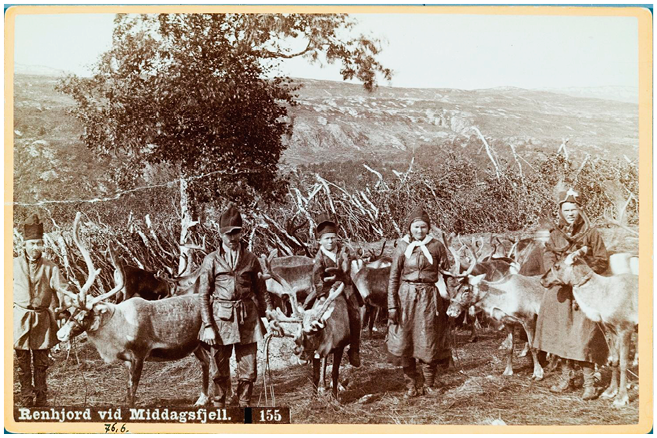
There were also subtler variations in reindeer herding practices, with archaeological studies showing nuanced and variable adaptations to local environmental and social conditions. For instance, two archaeological sites – Juikenttä and Nukkumajoki – located in inland eastern Fennoscandia and representing a mixed hunting and herding livelihood, nevertheless show differences in ways of engaging with reindeer herding. There were subtle differences in herding practices, the role of working reindeer in the reindeer herding practices of the inhabitants of Juikenttä probably being slightly more prominent than in Nukkumajoki (Hull et al. Reference Hull, Salmi and Semeniuk2023). Moreover, herding in Juikenttä seems to have been smaller in scale and more strongly complemented by hunting – this is evidenced by a notable representation of wild bird and mammal bones, including wild reindeer bones, in the faunal assemblage (Harlin et al. Reference Harlin, Mannermaa, Ukkonen, Mannermaa, Manninen, Pesonen and Seppänen2019; Hull et al. Reference Hull, Salmi and Semeniuk2023). Although the differences between these sites may partially relate to the temporal frame – the occupation period of Juikenttä began slightly earlier than Nukkumajoki – or seasonal variation, it also reflects fine-tuned adaptation to local environmental and social conditions (Hull et al. Reference Hull, Salmi and Semeniuk2023). For instance, Nukkumajoki seems to have been a winter aggregation site for local Sámi communities; the development of such aggregate winter villages probably related to the administration and taxation needs of the Swedish crown as a part of its colonial agenda as well as internal processes of the Sámi communities (Carpelan Reference 72Carpelan and Lehtola2003: 71; Halinen Reference Halinen, Halinen and Olsen2019). Under such conditions, increased herd size and a slight shift towards meat and hide production could have been adaptations to the changing economic and political backdrop.
Reindeer Herding, Cultural Practices, and the Land
Regardless of the vast variation in reindeer herding communities and their herding practices, there were also broad, unifying features in the way reindeer herding was practiced in the landscape, reflecting the relationship of the Sámi with the land at large. In the Sámi culture, relationships with the land and animals were traditionally constructed in active and reciprocal interaction with them (Helander-Renvall Reference Helander-Renvall2010; Tervaniemi & Magga Reference Tervaniemi, Magga, Hylland Eriksen, Valkonen and Valkonen2019). The land – meachhi in North Sámi, literally meaning a ‘forest’ but used in a more general sense of an area where people do not live – obtains its meaning in relation to people engaging with it as part of their daily and seasonal activities (e.g., Schanche Reference Schanche2000; Tervaniemi & Magga Reference Tervaniemi, Magga, Hylland Eriksen, Valkonen and Valkonen2019). Moreover, in the Sámi worldview, ritual and subsistence activities were inextricably intertwined: everyday practices were imbued with spiritual meaning, and ritual actions were an integral part of securing success in subsistence activities, such as reindeer herding (Äikäs et al. Reference Äikäs, Puputti, Núñez, Aspi and Okkonen2009). The Sámi worldview was characterized by the idea of a reciprocal relationship between humans, non-humans, and the supernatural (Helander-Renvall Reference Helander-Renvall2010). These relationships were negotiated by giving offerings, such as animals and animal body parts, metal objects, alcohol, and tobacco, at various offering sites (Manker Reference Manker1957; Mebius Reference Mebius2003, 148–153; Serning Reference Serning1956; Zachrisson Reference Zachrisson1984).
Reindeer bones, especially cranial bones and antlers, are common archaeological finds from offering sites (Figure 19), the antler offerings in particular linked to a symbolic relationship between reindeer antlers and the regeneration of the reindeer species in the Sámi worldview (Olofsson Reference Olofsson2010; Salmi et al. Reference Salmi, Äikäs, Fjellström and Spangen2015). The earliest radiocarbon-dated reindeer offerings date to the late twelfth and early thirteenth century (Salmi et al. Reference Salmi, Äikäs, Fjellström and Spangen2015, Reference Salmi, Äikäs, Spangen, Fjellström and Mulk2018). While ancient DNA analysis on a limited set of materials indicates that the earliest reindeer offerings were wild reindeer (Heino et al. Reference Heino, Salmi, Äikäs, Mannermaa, Kirkinen, Sablin, Ruokonen, Núñez, Okkonen, Dalén and Aspi2021), an interest in securing successful reindeer herding by giving offerings at sacred sites cannot be overruled, as reindeer herding was already practiced at the time. In any case, the fifteenth- to sixteenth-century shift towards mobile pastoralism seems to have increased this interest, as the number of dated reindeer offerings peaks between ca. 1400–1650 CE, and haplotypes typical of modern domesticated reindeer appear in the archaeological material (Salmi et al. Reference Salmi, Äikäs, Spangen, Fjellström and Mulk2018; Heino et al. Reference Heino, Salmi, Äikäs, Mannermaa, Kirkinen, Sablin, Ruokonen, Núñez, Okkonen, Dalén and Aspi2021). Changes in ritual practices, such as the emergence and peaking of reindeer offerings, seem to happen fairly simultaneously across the Sámi area, despite the differences in subsistence patterns and reindeer herding strategies; as such, they reflect shared ways of relating to the landscape and its resources among the Sámi practicing differing modes of subsistence (Salmi et al. Reference Salmi, Äikäs, Spangen, Fjellström and Mulk2018). In addition to rituals at offering sites, concerns related to ensuring continuous success in reindeer herding were also addressed in other ways. In traditional reindeer herding, maintaining a diverse herd with reindeer for multiple purposes such as reproduction, working, and herd cohesion was appreciated (Tyler et al. Reference Tyler, Turi, Sundset, Bull, Sara, Reinert, Oskal, Nelleman, McCarthy, Mathiesen, Martello, Magga, Hovelsrud, Hansen-Bauer, Eira, Eira and Corell2007; Mazzullo Reference Mazzullo, Stammler and Takakura2010). A diverse herd like that was considered ‘beautiful’, and it ensured the continuation of the herd under variable socio-environmental conditions (Tyler et al. Reference Tyler, Turi, Sundset, Bull, Sara, Reinert, Oskal, Nelleman, McCarthy, Mathiesen, Martello, Magga, Hovelsrud, Hansen-Bauer, Eira, Eira and Corell2007; Mazzullo Reference Mazzullo, Stammler and Takakura2010). Thus, a diverse herd – such as the herds with reindeer of various ages, sexes, and social roles archaeologically documented from Juikenttä and Nukkumajoki, for instance – was means towards an end of ensuring future successful herding. Such a herd stored genetic and functional diversity needed in a changing environment.
Split reindeer bones from Paddusas offering site in Sweden.
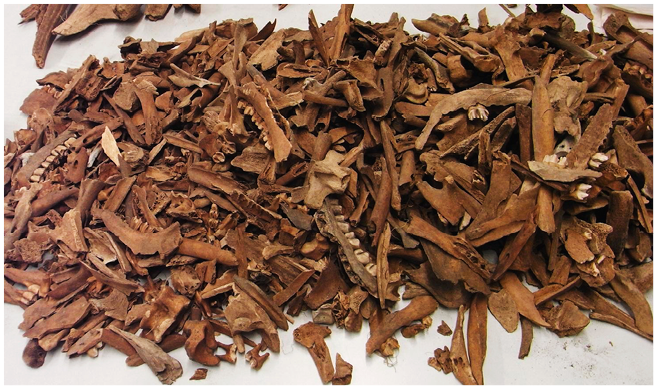
Reindeer were an important nutritional resource for the Sámi of northern Fennoscandia and an integral part of their food culture. However, reindeer domestication and the beginnings of reindeer herding were related to a wide range of social, political, and environmental factors, nutritional needs playing their part alongside other economic considerations, such as the pressure to increase productivity for trade and taxation purposes. Reindeer was also not always the main source of nutrition. For example, stable isotope analyses of human skeletal remains show that there were local, regional, and chronological dietary differences within the Sámi community. In the Late Iron Age and Middle Ages, people buried in Vivallen had a diet based on terrestrial and freshwater resources, whereas people buried in Guollesuolu and Kirkegårdsøya had diets based predominantly on marine protein. In the Medieval and Early Modern cemeteries in Rounala and Sillbajåhkå, people had a mixed diet from terrestrial, freshwater, and/or marine environments (Fjellström Reference Fjellström2020: 71–72). Moreover, secondary products, such as traction, were important for the early reindeer herders along with meat, marrow, blood, organ meat, hides, and antlers. The reindeer herd served as a portable storage for these resources, as well as a bank maintaining genetic and functional diversity that acted as insurance in a changing world. The food economies of the different Sámi communities varied across Fennoscandia and in time, domesticated reindeer formed the basis of the diet for some, whereas others relied more heavily on hunting, fishing, and fowling. As a shared cultural feature, reindeer herding and the other means of subsistence were tightly intertwined with the relationship with the land, linking everyday food procurement practices with spiritual elements and reciprocity between people and the landscape.
7 Archaeology, Foodways, and the Modern North
This overview of past Arctic foodways illustrates a dynamic array of relationships between people and animals. It is not just a story of human survival; rather, these cultures thrived despite the demonstrable challenges of life in a region with cold temperatures, seasonal darkness, and scattered resources. As we see time and again in talking with modern knowledge keepers, and also in early ethnographies, these foodways were also deeply embedded in a profound understanding of the interrelatedness of all things – human, animal, and other.
There is a very strong social and cultural continuum from the past to the present throughout the circumpolar North. In the face of rapid change in most aspects of life, Indigenous peoples are actively working to maintain the culture, heritage, and language so critical to their continued success. In this context, acquiring, sharing, and eating ‘country foods’ is central, providing contexts for the intergenerational transfer of knowledge on the land at traditional harvesting sites – most of which contain archaeological remains going back hundreds, or often thousands, of years.
Beyond its well-understood role in reconstructing long-term cultural histories, can archaeology contribute to modern northern societies, in ways that relate to foodways? We believe that it can, though always in a supporting role. For example, archaeology can be a context for cultural learning and pride, often in settings where youth participate in archaeological fieldwork on projects which also involve Elders’ oral histories and the speaking and recording of Indigenous languages. These projects frequently involve extensive discussion of hunting, fishing, gathering, and more specific activities such as storage or cooking (Figure 20) (e.g., Friesen et al. Reference Friesen, Angulalik, Crockatt and Gross2022; Kleist et al. Reference Kleist, Walls, Sadorana, Simigaq and Peary2022; Knecht & Jones Reference Knecht and Jones2019).
Elders at a combined Traditional Knowledge and archaeology camp near Cambridge Bay, Nunavut, prepare to dry caribou meat.
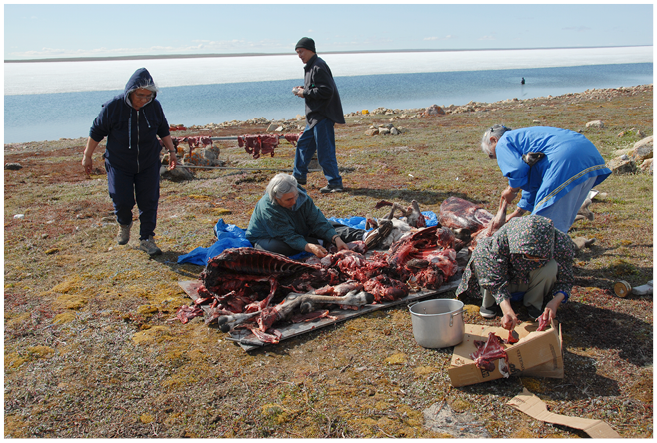
In some cases, archaeology may also be useful in answering specific questions in relation to modern Indigenous resource management. For example, a recent study of ancient beluga whale DNA from archaeological sites in the Mackenzie Delta showed that the Inuvialuit beluga hunt, despite involving the harvesting of hundreds of belugas per year, was sustainable and did not have any negative impacts on the long-term viability of the overall beluga whale population (Skovrind et al. Reference Skovrind, Louis, Ferguson, Glazov, Litovka, Loseto and Lorenzen2024).
In closing, we simply note that food is a topic that is centrally important to modern northern peoples, forming a profound set of connections between modern cultures and their lands. However, it is also important to archaeologists, who see it as a key to unlocking many aspects of past lifeways. We hope that foodways remain an area that can bring these two groups together, with positive outcomes for both.
Katheryn C. Twiss
Stony Brook University, New York
Katheryn C. Twiss is an archaeologist who studies ancient foodways in order to learn about social structures in the prehistoric and early historic past. Her primary areas of expertise are southwest Asian prehistory, zooarchaeology, animal management and symbolism, and life in early farming communities. Dr. Twiss wrote The Archaeology of Food: Identity, Politics, and Ideology in the Prehistoric and Historic Past (Cambridge University Press, 2019) and edited The Archaeology of Food And Identity (Southern Illinois University, 2007). She has published on topics ranging from feasting in early farming villages to Mesopotamian ceremonialism.
Alexandra Livarda
Catalan Institute of Classical Archaeology
Alexandra Livarda studies human-plant interactions through time and what they reveal about agronomy, commerce, social structures, perceptions, and identities in the past, but also how these may impact the present. She specialises in archaeobotany, Aegean archaeology, Roman commerce and is developing new methodological tools for the identification of past agricultural practices. Dr. Livarda has directed or (co)/directed archaeobotanical research in several projects, including some of the most emblematic sites in the Aegean, such as the Little Palace at Knossos and Lefkandi. She has published on a range of topics from the emergence of agriculture to the development of tastes and food commerce in the historic past.
About the Series
Elements in the Archaeology of Food showcase the vibrancy and intellectual diversity of twenty-first century archaeological research into food. Volumes reveal how food archaeology not only illuminates ancient political manoeuvres, social networks, risk management strategies, and luxurious pleasures, but also engages with modern heritage management, health, and environmental conservation strategies.