Preface
When most people think of the Amazon, the image that comes to mind is that of a vast, untamed wilderness, filled with trees, vines, and an endless abundance of wildlife, but devoid, most likely, of people.
During the last thirty years, archaeology has transformed the notion of the Amazon as a ‘pristine wilderness’ (Barreto et al. Reference Barreto, Lima and Jaimes Betancourt2016; Heckenberger et al. Reference Heckenberger, Kuikuro and Kuikuro2003) by revealing evidence of large, dense human occupations, ancient earthworks, and anthropogenic soils in almost every corner of the basin. It is now estimated that the Amazon was home to up to 10 million indigenous people on the eve of European invasion (Denevan Reference Denevan2014). Rather than reduce forest biodiversity, these populations, just like most of the 2 million indigenous people living today in the Amazon, worked symbiotically with plants, animals, and other non-humans to co-construct the forest we know today (Cassino et al. Reference Cassino, Henriques Soares and Mendes dos Santos2025; Kopenawa & Albert Reference 87Kopenawa and Albert2013).
Our short contribution towards the archaeology of food in the Amazon comes at a very exciting time, as the full potential for collaborative approaches involving western and traditional scientific knowledge is being revealed and heard within policy-making arenas (SPA 2021). As well as showcasing this kind of dialogic approach, we are also motivated by the opportunity to systematize and integrate recent archaeobotanical and zooarchaeological data that weren’t available just ten years ago. Since important recent reviews are available treating ancient plant food production in the Amazon (Iriarte Reference Iriarte2024; Neves Reference Neves2023), our goal is to partly step away from this theme and explore other aspects of archaeological research involving food.
Before delving into the Element’s contents, we want to make clear two of our shared personal beliefs.
First, that we cannot study past foodways in the Amazon without studying present-day foodways. If in archaeological contexts of Europe and the Orient the disciplines of zoarchaeology and archaeobotany have long been well established, in the Amazon we are still building the foundations upon which this research can happen. Many methodological and interpretative challenges can only be overcome in dialogue with living populations who continue to practise traditional foodways. In attempting to include the voices of some of these Forest PeoplesFootnote 1 in this Element, we are also compelled to raise awareness of the urgency of the socio-environmental crisis which is depriving many of them access to dignified and secure foodways.
Second, that there is no such things as apolitical science. As much as in respect to our friends and colleagues in the Amazon, as in our dedication to climate and biodiversity science, we do not attempt neutrality when discussing the Climate Emergency, the Capitalocene, or Forest People’s rights. Instead, we must commit ourselves to constructing an archaeology for the future that is, as far as possible, honest and just.
We divide this Element into five sections: Section 1 dives into the theory of food in the Amazon, from its focus on food production to a wider consideration of foodways; Section 2 describes the plants and animals used for food in the Amazon present and past, focussing particularly on the effects of European invasion upon indigenous foodways; Section 3 attempts to summarize ethnographic and archaeological research surrounding Forest Peoples’ traditional culinary practices and their variation over time and space; and Section 4 brings together data about past and present environmental changes in the Amazon, the link between biodiversity and food sovereignty, and the contributions of archaeology for helping find an escape route. Finally, the Conclusion suggests some future directions for the study of Amazonian foodways.
1 Introduction: Tackling Amazonian Foodways
1.1 Thinking about Food in the Amazon
1.1.1 Foodways as Subsistence
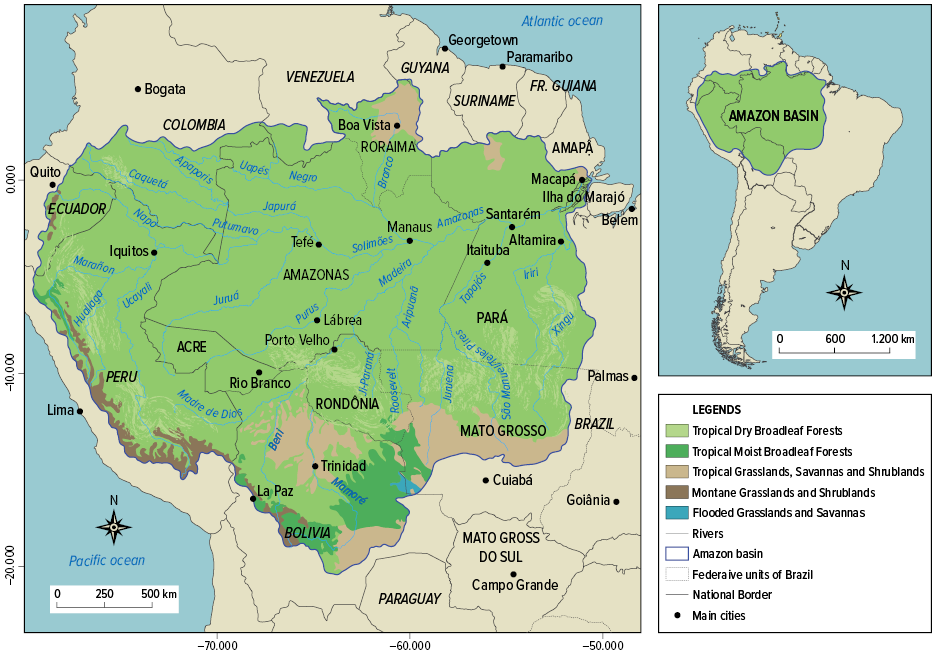
The first European explorers and missionaries to enter the Amazon basin (Figure 1) documented the presence of large indigenous populations and an abundance of plant and animal foods. However, the first anthropologists to work in the region in the first half of the twentieth century encountered a drastically different realityFootnote 2 and founded an academic tradition that was highly critical of the accuracy of the historical sources. One such anthropologist was Julian Steward, proponent of Cultural Ecology (Steward Reference Steward1955) and editor of the seminal seven-volume Handbook of South American Indians. For Steward, while Andean peoples domesticated animals as a strategy to develop large and dense populations, ‘tropical forest cultures’ relied mainly upon fishing and game hunting. Betty Meggers, one of the first archaeologists to work in the Amazon in the 1950s, was heavily influenced by Steward’s ideas and argued that the infertile soils of the tropical forest were a limiting factor for societal development. For Meggers, while Andean cultures practised advanced agriculture and formed state-level societies, the practice of swidden agriculture in the Amazon meant people had to live in small, mobile bands or tribes (Meggers Reference Meggers1954: 822). This idea of the Amazon as a ‘counterfeit paradise’ (Meggers Reference Meggers1971) gained support in subsequent arguments which cited protein scarcity as another limiting factor upon human settlement size and permanence (Gross Reference Gross1975). Such arguments reached their head when Beckerman (Reference Beckerman1979) argued that cultural anthropologists tended to overestimate the input of game protein and underestimate protein inputs from other sources such as invertebrates, palm fruits, and nuts. Despite this, in the 1990s, a series of papers were published questioning whether tropical rainforests were productive enough to have ever been home to ‘true’ hunter-gatherers (Bailey & Headland Reference Bailey and Headland1991).
Map of the Amazon basin highlighting the main rivers and cities mentioned in this Element
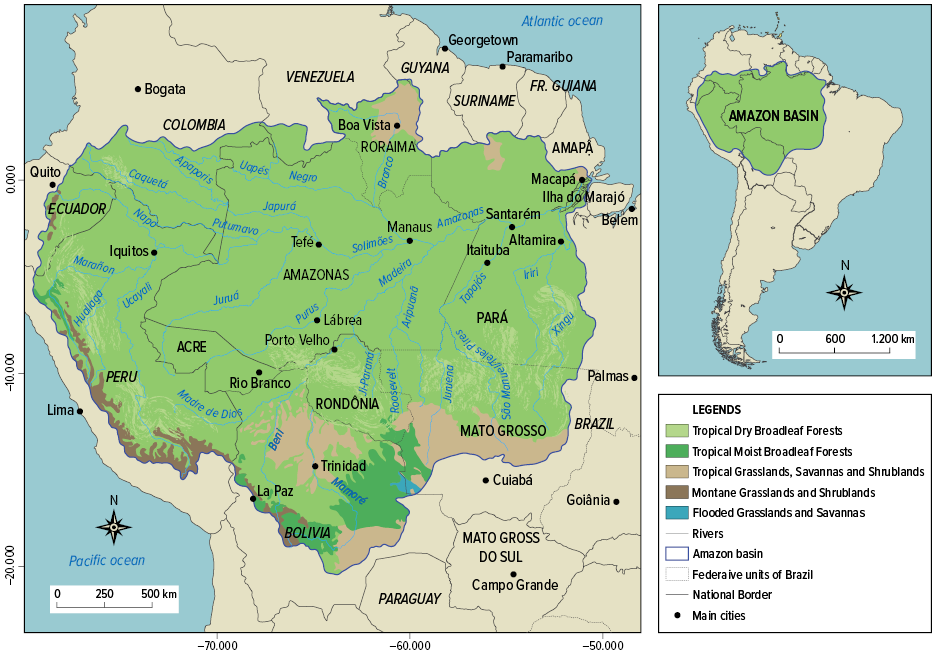
Figure 1 Long description
To the right, a map of South America with the Amazon basin outlined. To the left, a larger image of the Amazon basin showing national borders, major rivers, and the location of some major Amazonian cities. For Brazil, state divisions are also shown. Different colours are used to show the distribution of different vegetation types. Tropical moist broadleaf forests, shown in turquoise, cover the vast majority of the basin. Tropical grasslands, shown in terracotta, appear in the northern and southern extremes of the basin, alongside tropical dry broadleaf forests, in light green. Montane grasslands, shown in purple, are restricted to the Andes, at the extreme west of the map.
In other models, large, sedentary populations were able to flourish in floodplain environments (várzeas) but not in the uplands (terra firme) (See Supplementary Materials for information on of the geography of the Amazon basin). Donald Lathrap (Reference Lathrap1970) proposed that fishing and floodplain agriculture along the region’s white-water rivers, which carry nutrient-rich sediments from the Andes, led to the emergence and spread of complex societies in these settings. The so-called várzea versus terra firme dichotomy later gained ground when large pre-Columbian sites began to be discovered along the region’s major water courses (Roosevelt Reference Roosevelt1980).
Despite the importance of archaeological foodways to these models, it is important to note that they were conceived based on almost no empirical evidence. With few exceptions (e.g. Roosevelt Reference Roosevelt1980, Reference Roosevelt1991; Roosevelt et al. Reference Roosevelt, Lima da Costa and Machado1996), the recovery and analysis of archaeobotanical and zooarchaeological remains in the Amazon began only in the last twenty years. But organic remains analysis was not what steered the paradigm shift away from environmentally deterministic models of indigenous history. Instead, it was a wave of ethnobiological studies conducted in the late 1980s that began to detail the many subtle, complex and transformative ways that Amazonian groups mould the environment, encouraging useful species and creating mosaics of anthropogenic landscapes that extend far beyond village limits (Posey Reference Posey1984; Posey & Balée Reference Posey and Balée1989). This work, which inspired the Historical Ecology research framework (Crumley Reference Crumley, Hornborg and Crumley2006), had direct implications for archaeologists working in Amazonia, as past societies could no longer be seen as having passively adapted to their environment. This also coincided with a period when archaeological research became more widespread in the Amazon. In the 1990s and 2000s, major pre-Columbian settlement complexes began to be discovered in upland settings (Erickson & Balée Reference Erickson and Balée2006; Heckenberger et al. Reference Heckenberger, Kuikuro and Kuikuro2003; Petersen et al. Reference Petersen, Neves, Heckenberger, McEwan, Barreto and Neves2001), many associated with Amazonian Dark Earths (ADEs) – fertile anthrosols that are legacies of intensive waste and landscape management in and around ancient settlement sites (Case Study 2.2).
It is not our intention here to detail the history of Amazonian archaeology, but rather highlight how prevailing paradigms surrounding ancient foodways have steered archaeological thought and expectations about even basic aspects of human occupation in the region. However, this is also a vision that equates foodways with subsistence, and it is no surprise that much of the archaeobotanical and zooarchaeological work of the last twenty years has had subsistence concerns at their core.
Arguably the largest contribution of these studies has been to show how indigenous agriculture (or, perhaps more accurately, horticulture: Clement & Casas Reference Clement, Casas, Casas, Peroni and Parra-Rondoniel2025), rather than being allochthonous and limited by a hostile environment, has its origins in autochthonous niche construction processes that stretch back to at least the Early Holocene. Sites in Colombia and Brazil dating to the Pleistocene/Holocene transition reveal the heavy exploitation of palm fruits and nuts, alongside roots and rhizomes (Garay-Vázquez et al. 2026; Morcote-Rios et al. 2026; Shock & Watling, 2022). We now know that both southwestern and northwestern Amazonia were independent, early nuclei for plant cultivation and domestication, with archaeobotanical remains of manioc (cassava; Manihot esculenta), leren (Calathea sp.), squash (Cucurbita sp.), and bottle gourd (Lagenaria siceraria) appearing since the Early Holocene (Lombardo et al. Reference Lombardo, Iriarte and Hilbert2020; Morcote-Rios et al. Reference Morcote-Ríos, Mahecha and Franky2017; Piperno & Pearsall Reference Piperno and Pearsall1998; Watling et al. Reference Watling, Shock and Mongeló2018). In the seasonally flooded savannas of the Bolivian Llanos de Mojos, early cultivation practices are associated with landscape transformations in the form of earthen and shell mounds known as ‘forest islands’ (Lombardo et al. Reference Lombardo, Iriarte and Hilbert2020). During the Middle Holocene, as the number of forest islands and other sitesFootnote 3 proliferated in southwestern Amazonia, these populations also began cultivating exotic cultivars such as maize (Zea mays) and beans (Phaseolus sp.) (Lombardo et al. Reference Lombardo, Iriarte and Hilbert2020; Watling et al. Reference Watling, Shock and Mongeló2018), and domesticated a local species of rice (Oryza sp.) (Furquim et al. Reference Furquim, Watling and Hilbert2021; Hilbert et al. Reference Hilbert, Neves and Pugliese2017). By the Late Holocene, an ample variety of domesticated plants are found all over the Amazon, routinely associated with remains of edible fruit and nut species that were likely managed within agroforestry systems (see Section 2).
To those who see it from afar, the Amazon appears to be a homogeneous forest; but for the communities that live there, it resembles more of a cultivated garden. Just as in Europe, communities recognize in the woods the plants that are part of their daily lives – like apples, pears, and peaches – in the Amazon, traditional communities recognize hundreds of plants that are part of their everyday life. One study estimates that over 130 plant species were once managed by indigenous Amazonians: of these, 84 are native to Amazonia and two-thirds are woody, perennial species (Clement et al. Reference Clement, Denevan and Heckenberger2015). The legacy effects that these practices had upon modern ecosystem composition have become increasingly clear (Junqueira et al. Reference Junqueira, Shepard and Clement2010; Levis et al. Reference Levis, Costa and Bongers2017), and it is now widely accepted that, far from being an inhospitable ‘green hell’, thousands of years of human interactions with the environment significantly increased the agrobiodiversity and productivity of the Amazon forest for human populations (Neves et al. Reference Neves, Junqueira, Levis, Carneiro da Cunha, Magalhaes and Adams2021a). With the advance of the first zooarchaeological studies, we have learned that crop cultivation went hand-in-hand with hunting, fishing, and gathering of diverse animal products. However, different from plants, it appears that not many animals were domesticated in the Amazon. While in the Andes, at least three animals were domesticated – guinea pig, llama, and alpaca (Stahl Reference Stahl, Silverman and Isbell2008) – in the Amazon, there is only one possibly domesticated animal, the muscovy duck (Carina moschata) (Driesh & Hutterer Reference 81Driesch and Hutterer2011; Hermenegildo et al. Reference Hermenegildo, Prümers and Jaimes Betancourt2025). The question of why Amazonian populations didn’t domesticate animals is yet to be answered. Some argue it has to do with indigenous ontologies, whereby animals are not perceived within a food production logic; on the contrary, they are active social subjects that can present serious dangers to people if mistreated (Kopenawa & Albert Reference 87Kopenawa and Albert2013; Garcia Reference Garcia2018; Stahl Reference Stahl and Rostain2014; Viveiros de Castro Reference Viveiros de Castro1988).
1.1.2 Foodways beyond Subsistence
The study of food as subsistence is just one of many possible approaches to the archaeological study of foodways (Hastorf Reference Hastorf2016; Twiss Reference Twiss2019). In the words of Christine Hastorf (Reference Hastorf2016: 84), ‘subsistence is the maintenance of life and growth; food is nourishment, both physical and mental’. Lying within everyday practice, foodways are schemes of knowledge and embodied action through which individual, social, and historical circumstances are incorporated (Babot et al. Reference Babot, Hocsman, Figueroa, Haros, Babot, Marschoff and Pazzarelli2012).
The cuisine of a certain culture, which includes the ingredients used to make food, their processing and cooking methods, taste preferences, meal cycles, and consumption practices, are fundamental markers of social identity, and often reflect people’s social status and political aspirations (Dietler & Hayden, Reference Dietler and Hayden1991; Twiss Reference Twiss2019). Accessing the cuisine or foodways of the past involves studying the chaîne opératoire of food, summarized in Hastorf (Reference Hastorf2016) as: production/acquisition, storage, preparation, serving, consumption, and discard.
In the Amazon, the focus of food research on food production and acquisition has been essential in contributing towards the paradigm shift we have just described, and harbours implications for present-day biodiversity conservation (see Section 4).
On the other hand, this research has largely based its findings upon lists of species identified in archaeological sites from different periods (Watling Reference Watling and Scheel-Ybert2024). Such lists (sensu Jamarillo Reference Jamarillo, Babot, Marschoff and Pazzarelli2012), while useful for studying the nature and spread of food production, are unable to shed light upon other aspects of cuisine and cuisine change. In Amazonia, we still have very little data about how social (political, demographic, etc.) and technological (food processing and preparation methods) factors interacted to drive food production and culinary practice through time and space.
To begin asking more complex questions about past foodways, archaeological analyses must be expanded to incorporate more stages of the chaîne opératoire, which also requires a renewed focus upon domestic archaeology (Jamarillo Reference Jamarillo, Babot, Marschoff and Pazzarelli2012). Such research programmes are both costly and time-consuming in any global context, but in the Amazon present additional challenges.
1.2 Studying Food in the Amazon
1.2.1 Specific Challenges
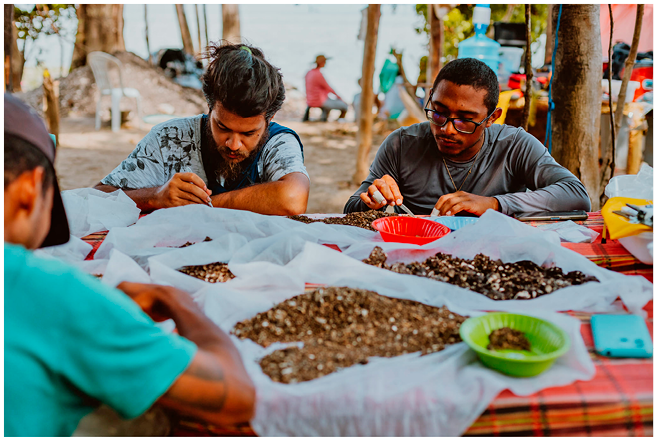
The main challenge to studying Amazonian foodways is the unfavorable preservation of organic remains (Figure 2). Situated in the tropics, where heavy rains and high temperatures create environments with the highest primary productivity in the world, rates of organic matter decomposition and nutrient turnover by insects, fungi and other microorganisms are greatly accelerated. Most plant remains only survive through accidental charring, introducing a number of biases to what types of remains are recovered (Piperno & Pearsall Reference Piperno and Pearsall1998: 33). Meanwhile, a combination of bone degradation and the high proportion of small compared to large mammals exploited for food results in faunal assemblages composed of small remains that are hard to identify (Stahl Reference Stahl1995). Other animal raw materials such as fats have been shown to survive in ceramic residues from the Amazon (Furquim Reference Furquim2024), however these studies are still in their infancy and lack large regional reference collections.
Hand-sorting faunal and botanical remains in the field
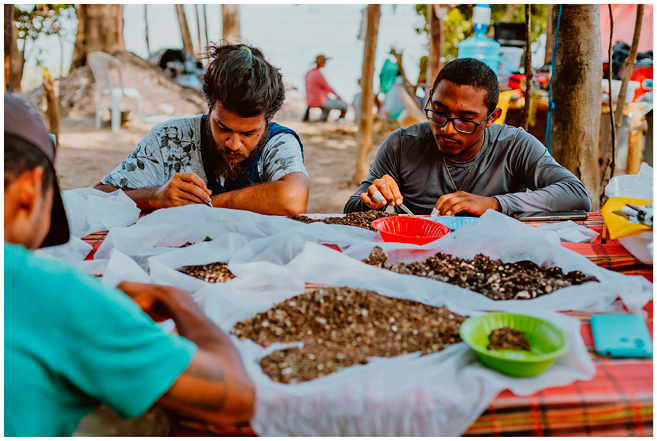
Tropical regions such as the Amazon have been important laboratories for the advancement of microbotanical techniques, such as phytoliths and starch grains (e.g, Piperno Reference Piperno2009; Piperno et al. Reference Piperno2009; Torrence & Barton Reference Torrence, Barton, Torrence and Barton2006). When analysed alongside carbonized macroremains, a much larger range of taxon can be accessed, however they have only been applied together in a small handful of archaeological sites.
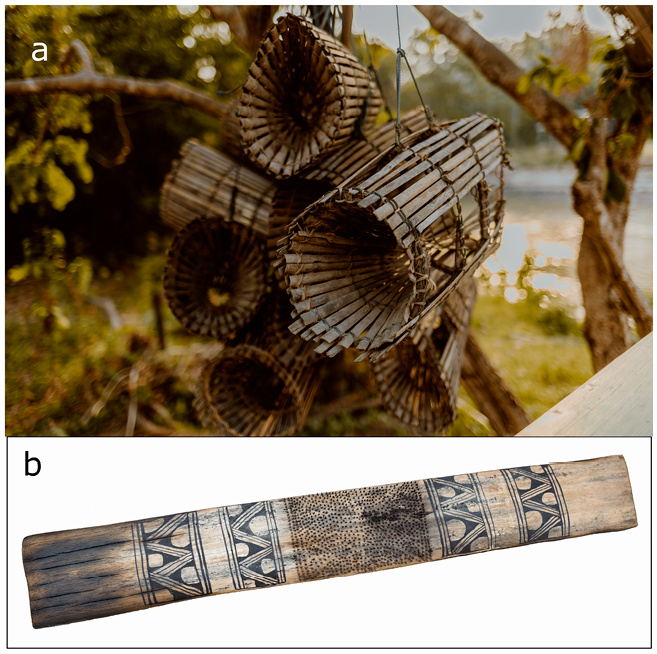
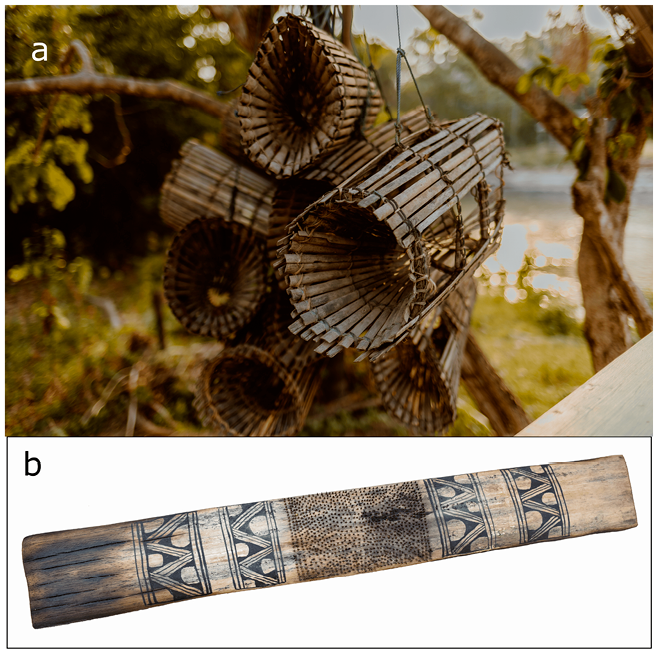
Many of the objects used by Forest Peoples to procure, handle and consume food are themselves made of perishable materials: for instance, fish traps, bone knives, leathers, gourd containers, wooden pestles and pounders, and palm spine graters (Silva et al. Reference Silva, Shock and Prestes-Carneiro2021) (Figure 3). This also extends to houses and dwellings, which are typically constructed using wood, vines, and palm or grass thatch (Troncarelli Reference Troncarelli2022). Since many archaeological sites subject to intensive research are both multi-componential and contain Anthropogenic Dark Earths, structural features of houses are often no longer visible. Carrying out domestic archaeology to investigate foodways is often hindered by this lack of identifiable house structures (see exceptions in: Barreto Reference Barreto, Barreto, Lima, Rostain and Hofman2020; Bassi Reference Bassi2016; Rostain & Saulieu Reference Rostain and Saulieu2015). Subsequently, since most archaeobotanical remains are extracted from bulk sediments collected in stratigraphic profiles, it can be ambiguous whether the species identified were used as food or for something else (e.g. as raw materials). This is especially true with palms, whose phytoliths are produced indiscriminately by both edible and non-edible organs, and which have multiple functions, from food to medicine, thatching, basketry, canoe construction and fibre production (Silva et al. Reference Silva, Shock and Prestes-Carneiro2021; Watling Reference Watling and Scheel-Ybert2024).
Examples of perishable material culture related to food. a) Shrimp traps made from palm fronds and liana fibres. Nossa Senhora de Nazaré extractivist reserve, Porto de Moz, Pará, Brazil. (Courtesy of Barbara Valle), b) Manioc grater made by Jakalo Kuikuro of the Kuikuro indigenous community, Mato Grosso state, Brazil. The grater teeth are made from spines of the buriti palm (Mauritia flexuosa)
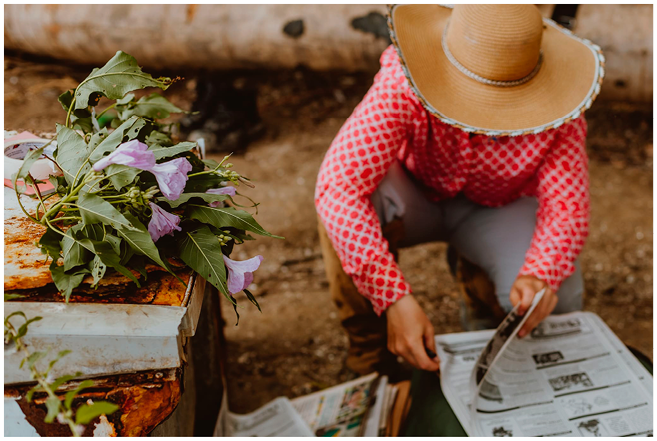
The second challenge for those studying foodways is what makes the region such an exciting place to work: its biodiversity. In any given region, the number of potentially-exploited plants and animals can be overwhelming. There are currently estimated to be ~15,000 plant species (Ter Steege et al. Reference 100Ter Steege, Pitman and Killeen2015), 2,000–8,000 fish species (Vari and Malabarba Reference Vari, Malabarba, Malabarba, Reis, Vari, Lucena and Lucena1998), and ~430 mammal species, with smaller mammals being over twice as abundant in the neotropics than in temperate regions (Silva et al. Reference Silva, Rylands and da Fonseca2005). In archaeological sites, it’s common to find the remains of fish from families that have more than a thousand described species, as well as for unidentified morphotypes to outnumber identified ones in archaeobotanical assemblages. This biodiversity poses challenges to constructing regional reference collections. If one also considers that some remains such as starch grains also alter their morphologies in response to different culinary processes (e.g. heating, grinding, fermentation), then the challenge of building large-enough, relevant reference collections for studying plant foods becomes even greater (Figure 4). Meanwhile, though some European and North American institutions hold large collections of Amazonian fauna (e.g. Smithsonian Institution, Museum national d́histoire naturelle), reference collections of skeletal remains in Amazonian institutions have only started to be built in the last ten years.
Building botanical reference collections
The third challenge lies in the scale of analysis. The Amazon basin measures almost 7 million km2 and incorporates extremely diverse ecosystems; thus, there are many Amazons and many ancient foodways to be studied. National boundaries have also shaped archaeological trajectories in the region. Roughly 70% of the Amazon is in Brazil, which is where most archaeological research has been carried out, and where we ourselves work. ADE and earthwork sites in the Southwestern Amazon, Manaus and Santarém regions have been the focus of most scholarly work, creating a dataset that is both spatially limited and skewed towards more heavily occupied areas. While we draw heavily from these studies in this Element, we also recognize that regional nuances in foodways must have existed across this vast area.
1.2.2 Recent Advances
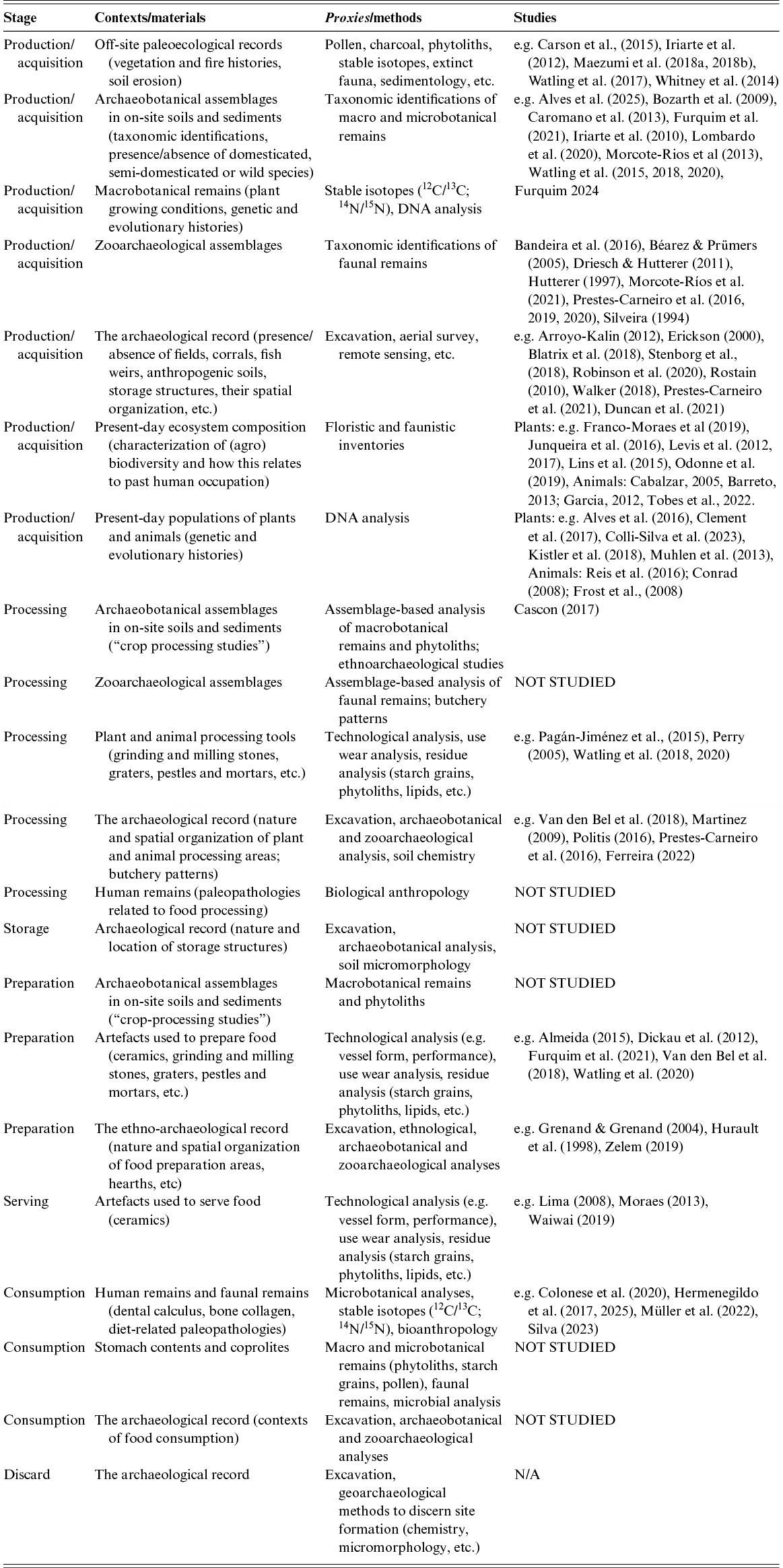
Table 1 provides examples of archaeological studies that have approached certain aspects of the culinary chaîne opératoire in Amazonia, while also providing broader considerations of the materials and proxies mobilized.
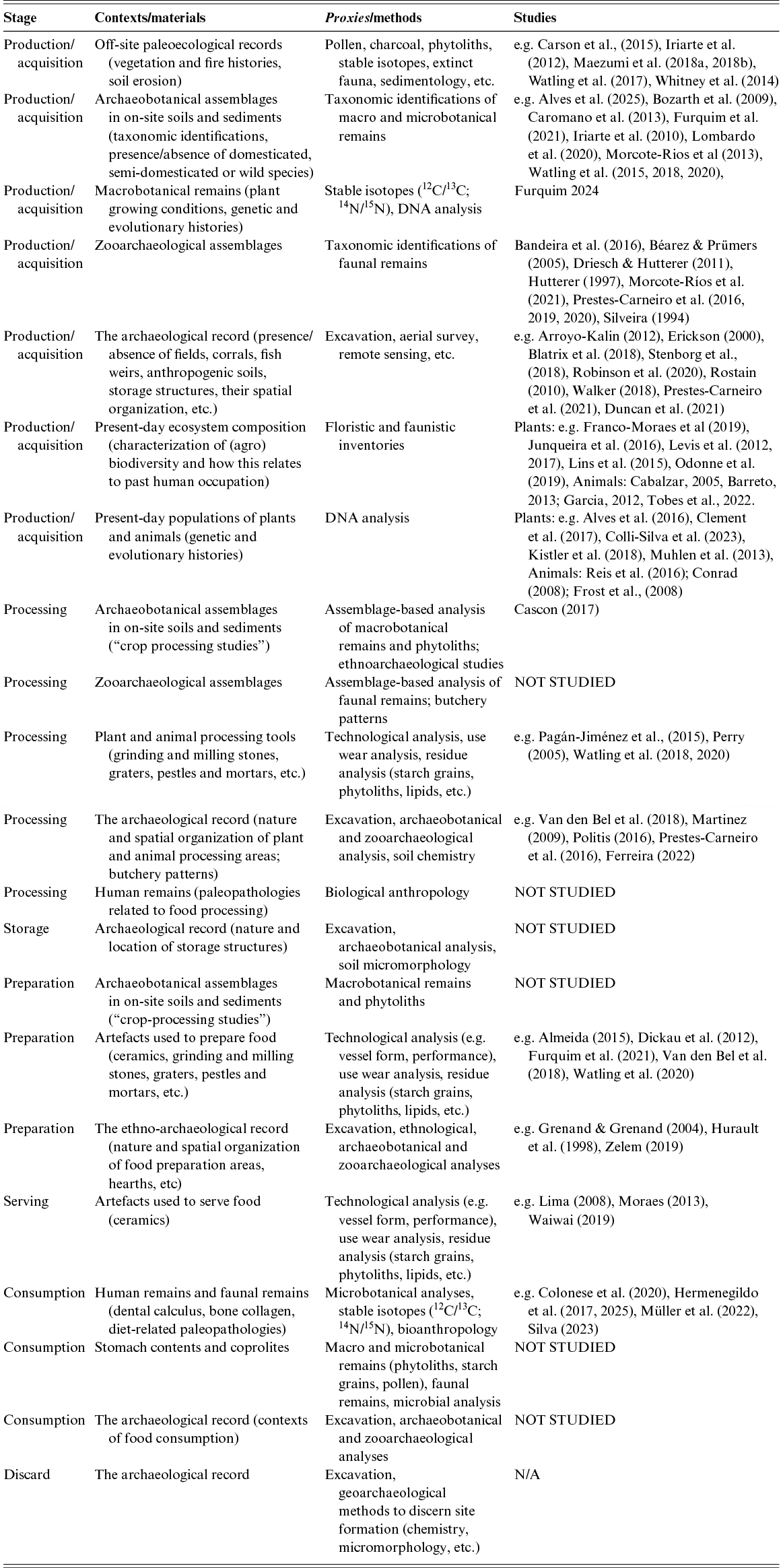
Table 1 Long description
The table is organised following the different stages of the chaîne opératoire of food (first column), which include production/acquisition, processing, storage preparation, serving, consumption and discard. The second column lists the types of contexts and materials studied in order to shed light on these different stages, while the third column lists specific proxies and methods employed, and the last column contains references to these studies in the Amazon.
The stage with the largest number of available studies for the region is Production/acquisition, which can be accessed through: off-site paleoecological records (plant and animal microfossils, sedimentology, etc.); archaeobotanical assemblages in on-site soils and sediments (taxonomic identifications of macro and microremains); DNA and isotopic analyses of macrobotanical remains; zooarchaeological assemblages (taxonomic identification of faunal remains); the presence of landscape features such as fishweirs, anthropogenic soils, etc (aerial and ground surveys and excavation); and present-day ecosystem composition (floristic and faunistic inventories). All of these types of study are represented in the Amazon, although only a single reference exists for DNA and isotopic analyses of macrobotanical remains.
Food processing can be accessed via: archaeobotanical assemblages from on-site soils and sediments (crop processing studies and assemblage-based approaches), for which only one study exists; zooarchaeological assemblages (assemblage-based approaches and butchery patterns analysis), for which no studies currently exist; the tools used to process plants and animals (technological, use wear and residue analysis), for which four studies are listed; the nature and spatial organization of plant and animal processing areas (excavation, archaeobotanical and zooarchaeological analyses, soil chemistry, etc.), for which five studies are listed; and pathological markers in human remains related to food processing, for which no studies currently exist.
Food storage can be accessed through the excavation and identification of storage structures in archaeological sites (archaeobotanical analysis, soil micromorphology, etc.), for which no studies currently exist in the Amazon.
Food preparation can be accessed via: archaeobotanical assemblages in on-site soils and sediments (crop processing and assemblage-based approaches), for which there are no studies for the Amazon; artefacts used to prepare food (technological, use wear and residue analysis), for which five studies are listed; and the archaeological record (nature and spatial organization of food preparation areas (excavation, archaeobotanical and zooarchaeological analyses), for which three studies are listed.
Serving can be accessed via the artefacts used to serve food, for instance ceramics (technological and residue analysis), for which three studies are listed.
Consumption can be evidenced via: human and faunal remains (microbotanical analyses, isotopic analyses, bioanthropology), for which five studies are listed; stomach contents and coprolites (floral and faunal remains and microbial analyses), for which no studies currently exist in the Amazon; and the archaeological record (to identify contexts of food consumption), also not yet studied.
Finally, food discard patterns are evidenced via the archaeological record (excavation, geoarchaeological methods used to discern site formation).
As can be seen, archaeologists have approached food production and acquisition through a range of methods involving mainly off-site and on-site analysis of botanical remains combined with floristic studies of modern vegetation. This integrated approach (Iriarte et al. Reference Iriarte, Elliott and Maezumi2020) has been very successful, but has focused almost entirely on plants. By contrast, zooarchaeological studies have just got underway, but have revealed interesting data about contemporary indigenous butchery practices (Martinez Reference 89Martínez2009), an important starting point for understanding animal processing. Meanwhile, landscape-scale studies of archaeological features such as raised fields, fish weirs, and Anthropogenic Dark Earths have been crucial in highlighting the scale of some Amazonian food production systems in the past.
In contrast, there are fewer studies addressing aspects of food processing and preparation. Most of those cited in Table 1 almost exclusively consist of starch grain data collected from a limited number of ceramic or lithic artefacts, and do not represent systematic studies into food processing in the respective archaeological sites. Studies linking the results of residue analysis to broader regional studies of material culture are much rarer (e.g. Van den Bel et al. Reference Van den Bel, Knippenberg, Jiménez and Reid2018). The work of Cascon (Reference Cascon2017) is so far the only ethnoarchaeological crop processing study made in the Amazon, though it should be noted that experimental studies of maize and manioc processing have been conducted by researchers from other regions (e.g. Babot 2012; Gardiman 2014; Pagán-Jimenez et al. 2017). Both types of research – artefactual/residue analysis and ethnoarchaeological crop processing studies – must be invested in to advance our knowledge of past Amazon foodways (Watling Reference Watling and Scheel-Ybert2024). To build an overview of animal processing in the Amazon, studies into smoking processes, fire structures,butchery, the production of fish and meat flours, and the use of fats, eggs, and leathers must also be expanded.
The issue of food storage in Amazonia is still unapproached archaeologically, while food consumption has been accessed to date through a handful of stable carbon isotope studies, with one recent example of microbotanical analysis of dental calculus (Silva, Reference Silva2023).
2 Dietary Diversity in the World’s Most Biodiverse Ecosystems
2.1 Diets of Contemporary Forest Peoples
Among contemporary Forest Peoples, dietary diversity and the practices that produce it vary in relation to cultural preferencesFootnote 4 and a range of ecosystem particularities (e.g., Moran Reference Moran1993). There are, however, many similarities among the traditional foodways of Amazonian peoples, which include both the types of plants and animals used as food and the agroecological systems in which they are managed or produced.
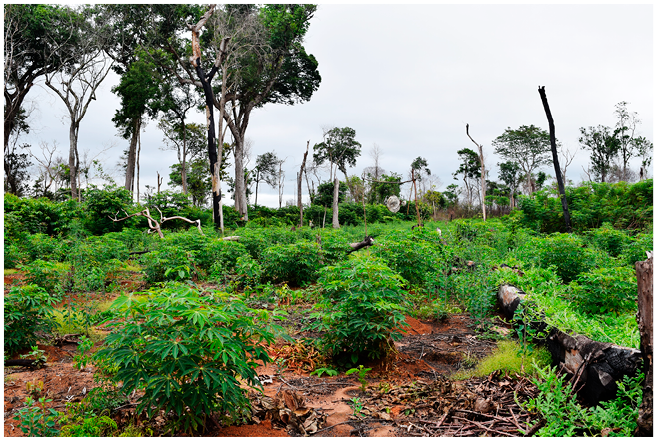
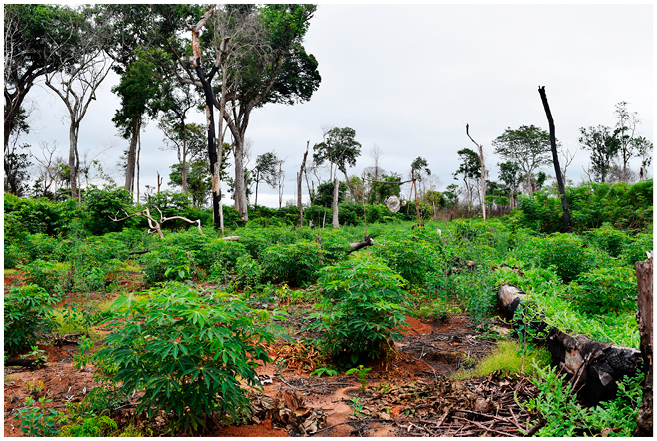
In most of the Amazon, bitter manioc (Manihot esculenta) is a primary food crop, and often a dietary staple, followed by maize (in the southwest) and, in some savanna areas, sweet potato (Ipomoea batatas) (Galvão Reference Galvão1963). Toasted manioc flour (farinha) and fish are considered the most basic and iconic elements of Amazonian cuisine in the popular imagination. Food crops of secondary importance typically include sweet manioc (the non-toxic variety of M. esculenta), arrowroot (Maranta arundinacea), legumes (both common bean [Phaseolus vulgaris] and peanut [Arachis hypogea]), squashes, yams (Dioscorea sp.) and chilli peppers (Capsicum spp.). These species are often planted alongside maize and manioc both in house gardens and swidden fields located further away from residential areas. Swidden agriculture refers to a system whereby a patch of forest is cut and burned during the dry season to release essential nutrients into the soil and sewn at the beginning of the rainy season (Figure 5). Most short-lived crops can be planted for up to 2 to 4 years, after which time nutrients are leached and weeding becomes a burden. However, rather than abandon the land entirely, most fields undergo a long stage of managed recovery, whereby fruit trees, medicinal plants, and other “useful” perennial species are planted and/or encouraged during forest succession. These include dozens of different palm species (Arecaceae), as well as Brazil nut (Bertholletia excelsa), pequi (Caryocar brasiliensis), cacau (Theobroma cacao) and many other perennials (Clement et al., Reference Clement1999) that continue to provide highly-productive food sources for many decades. These managed fallows are highly prized hunting locations for Forest Peoples, as game animals are attracted by the abundance of edible fruits (e.g. Politis Reference Politis2016; Box 2.1).
A 2-year old Kuikuro slash and burn field planted with manioc
As alluded to in Section 1, studies with modern plant populations show that at least 83 Amazonian species, two-thirds of them woody perennials, are domesticated to some degree: that is, possess populations modified by human selection (Clement et al. Reference Clement, Denevan and Heckenberger2015). At the same time, Forest Peoples also make use of between 3,000 to 5,000 non-domesticated plant species, many of them for food (Lleras Pérez Reference Lleras Pérez and Borém2012). The management practices employed by Forest Peoples to create and maintain this scenario are summarized in Levis et al. (Reference Levis, Flores and Moreira2018) and include 1) removal of non-useful plants, 2) protection of useful plants, 3) disperser attraction, 4) transplantation, 5) phenotypic selection, 6) fire management, 7) planting, and 8) soil improvement. In this scenario, the separation between what is anthropogenic versus natural, or wild versus domesticated is often blurry. Many see this as the result of an indigenous taste for diversity (Carneiro da Cunha Reference Carneiro da Cunha2019), and the process of kin-making between humans, plants and other forest beings (Cassino et al. Reference Cassino, Henriques Soares and Mendes dos Santos2025; Fausto & Neves Reference Fausto and Neves2018). Others have emphasized the pan-tropical nature of such diverse agricultural systems (Kennedy Reference Kennedy2012).
Beyond fish and mammals, many other types of animals enter into the diet of traditional communities. In mangrove areas, mollusks, shrimps and crabs are important staples (Barboza et al. Reference Barboza, Vieira and Siqueira2018). In inland riverine areas, the consumption of freshwater shrimp (Coelho et al. Reference Coelho, Imbiriba, Serrão and Zacardi2020), beetle larvae (gongos or tapurus) (Araújo et al. Reference Araujo, Mendes, Franco, Carneiro da Cunha and Almeida2002; Choo Reference Choo2008), bees wax and ants (Atta spp., tanajuras), which are mixed with manioc flour or used in fish sauces (Ribeiro & Ribeiro, Reference Ribeiro and Ribeiro1957), is also common.
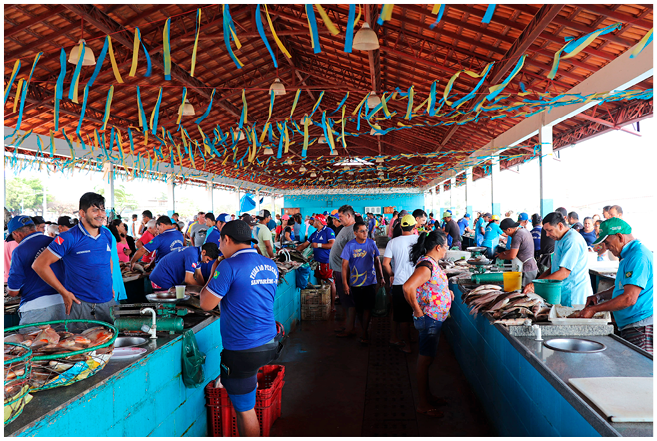
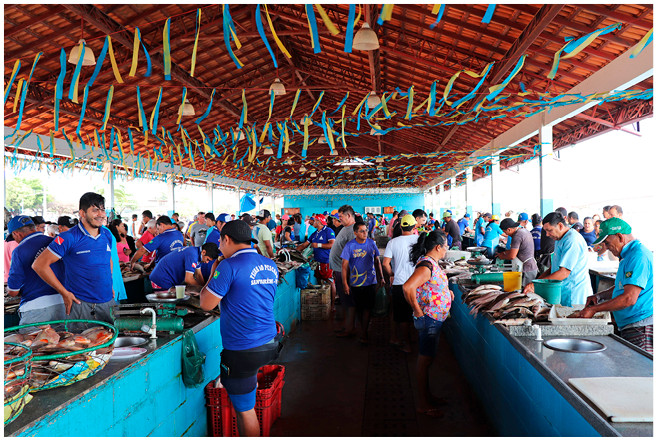
In the 21st century, the dietary diversity of Amazon Forest Peoples is increasingly under threat due to the effects of the “nutrition transition”: a global phenomenon whereby globalization and urbanization lead to the substitution of local with industrialized foods (Silva et al. Reference Silva, Garavello and Nardoto2017). Hunting and fishing, while still important among traditional and rural communities in the Amazon, are now subject to greater dynamism due to market effects. Before the 1970s, fishing techniques were centered around subsistence fishing, using tools that are now rarely seen (baskets, sieves, fish traps, small nets). Today, fishing has a strong commercial focus, employing large nets and medium- to large-sized vessels, and focusing on a few species such as pirarucu/paiche (Arapaima gigas), tambaqui/pacu (Colossoma macropomum) and surubim/pintado (Pseudoplatystoma spp.) (Furtado Reference Furtado1993). These transformations have driven the development of major commercial fish markets in urban centers (Figure 6), which brings multiple consequences for aquatic environments.
The fish market (Mercadão) in the city of Santarém, Pará, Brazil
In Brazil, salt, sugar, vegetable oil, instant pasta and frozen chicken have crept more and more into Forest Peoples’ diets, mainly linked to the proliferation of urban centres and the increased buying power of Forest Peoples through national welfare schemes (Nardoto et al., Reference Nardoto, Murrieta and Prates2011; Piperata et al. Reference Piperata, Spence, Da-Gloria and Hubbe2011, Silva et al., Reference Silva, Garavello and Nardoto2017; Heilpern et al. Reference Heilpern, Fiorella and Cañas2021). Várzea communities are reported to be most affected by these changes because they have easier access to urban centres (Silva et al., Reference Silva, Garavello and Nardoto2017). Land conflicts also have an important role to play, as indigenous populations living in territories not recognized by the state are less likely to be able to maintain their traditional ways of life (França Reference França2023). In recent years, climate and environmental change has increased the vulnerability of traditional foodways (see Section 4).
2.2 The Pre-Columbian Problem
The extent to which traditional Amazonian foodways reflect those practised in the region in pre-Columbian times is the subject of some debate. At its core is the question of how indigenous foodways changed in response to the European invasion of the Americas and the subsequent depopulation of the Amazon basin. It’s estimated that the indigenous population of Amazonia in 1492 totalled over 10 million people (Deneven Reference Denevan2014), 95% of which was decimated in the years following European invasion. Some archaeological sites like those in the Upper Xingu, in southern Amazonia, attest to relatively rapid abandonment during the 16th century, despite the fact that direct contact with Europeans only took place nearly two centuries afterwards (Heckenberger Reference Heckenberger2005). This has been explained by both the long-range diffusion of Old World diseases (Dobyns Reference Dobyns1993), and the knock-on effects of territorial displacement of indigenous groups across the basin (Heckenberger Reference Heckenberger2005). Several studies argue that New World population decline in the decades following European invasion led to the reforestation of populated areas on a scale large enough to trigger the Little Ice Age: a 0.15C-drop in global surface air temperatures in the late-16th and early-17th century (Dull et al. Reference Dull, Nevle and Woods2010; Koch et al. Reference Koch, Brierley, Maslin and Lewis2019).
On the other hand, a study examining the evidence for mass post-invasion reforestation in Amazonian pollen records found, rather, that most sites displayed signs of forest regrowth 300–600 years before European invasion (Bush et al. Reference Bush, Nascimento and Åkesson2021). This is consistent with recent evidence suggesting that Amazonian populations experienced a slow-down in population growth after ca. 1,200 cal. CE (Arroyo-Kalin & Riris Reference Arroyo-Kalin and Riris2021). Whether this happened because a “ceiling” in environmental carrying capacity was reached (Arroyo-Kalin & Riris Reference Arroyo-Kalin and Riris2021), and/or was partly a consequence of the Medieval Climate Anomaly (900–1,250 CE) (Souza et al. Reference Souza, Robinson and Maezumi2019), this was a period marked by major social changes across the whole of the American continent (Section 4.1.2). Until more empirical data become available, it remains unclear the extent to which foodways were already in flux during the couple of centuries preceding European invasion.
The very first explorers and chroniclers of the Amazon documented some of the indigenous foods they came across. In the expedition of Francisco de Orellana in 1542, which was the first to descend the entire Amazon River from Quito to the estuary, mention is made of the cultivation of manioc, “a lot of maize”, and “fruits of all types” (Carvajal 1955[Reference Carvajal and Millares1542]: 80), as well as the exchange of fish flour between riverine and upland groups, and the construction of turtle ponds. A point that got the attention of these explorers was the impressive abundance of fish captured by these populations (Carvajal cited in Medina Reference Medina1934[1542]: 53).
In the Late Pleistocene and Early Holocene, diets appear to have been rich in palm fruits and nuts, as well as rhizome and tuber-bearing species (Morcote-Ríos et al., Reference Morcote-Ríos, Aceituno-Bocanegra, Robinson, Saúl and Iriarte2026; Shock & Watling Reference Shock and Watling2022). Such a pattern gradually gave way to diets characterized by a diversity of domesticated plants alongside wild and semi-domesticated fruit and nut species Exactly how and when these systems emerged varied from place-to-place, but we know that they became widespread during the Late Holocene. While the data are still very sparse, palaeoecological records from different areas of the basin show a step-up in human land-use signals, including vegetation burning and changes in forest composition to favour edible plants, starting around 2,000 cal. BCE (Watling et al. Reference Watling and Scheel-Ybert2024). In the Lower Tapajós, near Santarém, Brazil, lake pollen show the gradual enrichment of local forests with several genera of edible trees, alongside the cultivation of annuals such as maize, sweet potato and manioc (Maezumi et al. Reference Maezumi, Alves and Robinson2018a). It is also around this time that widespread social processes related to the expansion of ceramic technologies, and the proliferation of settlement sites and ADEs occurred throughout the Amazon (Kater et al. Reference Kater, Almeida, Lima, Alves, Watling, Tamanaha, Frahm, Burger and Neves2026). In the Upper Madeira, southwest Amazonia, where populations were already engaging in plant cultivation and soil management since at least the Middle Holocene (Watling et al. Reference Watling, Shock and Mongeló2018), the arrival of ceramics belonging to the Pocó tradition by at least 1,000 cal. BCE is associated with an increase in the diversity of domesticated crops, which included maize, manioc, arrowroot and leren (Watling et al. Reference Watling, Almeida and Kater2020).
Other archaeobotanical studies conducted across different sites and time periods suggest that this pattern of “polyculture agroforestry” (Denevan Reference Denevan, Balée and Erickson2006; Maezumi et al. Reference Maezumi, Alves and Robinson2018a), incorporating diverse plant species, was a common feature of pre-Columbian indigenous foodways (e.g. Bozarth et al. Reference Bozarth, Price, Woods and Woods2009; Cassino et al. Reference Cassino, Shock, Furquim, Jacob and Albuquerque2021; Furquim et al. Reference Furquim, Watling and Hilbert2021). On the other hand, archaeobotanical studies have so far been unable to measure the dietary contribution of individual species; thus, we still have a fairly limited understanding of the relative importance of domesticated, semi-domesticated and wild foods to ancient Amazonian diets.
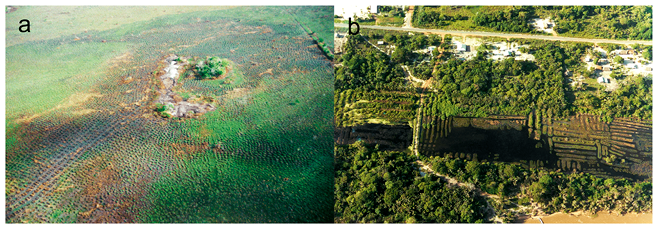
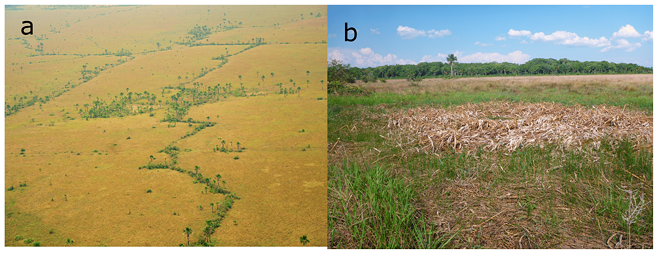
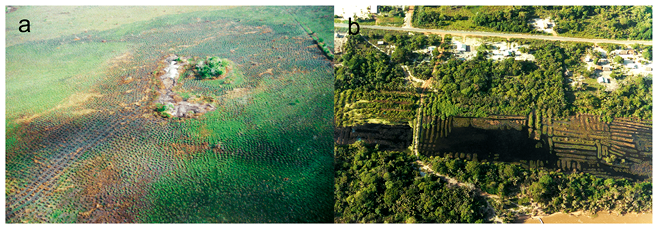
In the last few years, a handful of stable carbon isotope studies conducted on human remains have provided insights into the dietary contribution of maize (the only widely consumed C4 plant in the Americas). Populations living near the mouth of the Amazon (Marajoara and Maracá cultures) between ca. 500 and 1,500 cal. CE (Colonese et al. Reference Colonese, Winter and Brandi2020; Hermenegildo et al. Reference Hermenegildo, O’Connell, Guapindaia and Neves2017), and others living in the Middle Xingu River between ca. 400 BCE and 1600 cal. CE (Müller et al. Reference Müller, Kipnis and Ferreira2022) did not rely on this crop. However, populations occupying large monumental mound complexes in the Bolivian Llanos de Mojos did, at least for a time, receive most of their calories from maize (Hermenegildo et al. Reference Hermenegildo, Prümers and Jaimes Betancourt2025; Case Study 2.2). This is despite the recovery of a diverse range of other edible plants such as squash, peanut, manioc, yam and palm fruits in the archaeobotanical record (Dickau et al. Reference Dickau, Bruno and Iriarte2012). Maize remains are also particularly abundant in French Guiana and the Circum-Caribbean region, in the first case associated with raised field systems (Iriarte & Dickau Reference Iriarte and Dickau2012; Van den Bel Reference Van den Bel2015) (Figure 7), as well as in some cultural components of ADE sites (Watling et al. Reference Watling, Almeida and Kater2020), hinting that it may have become particularly important during certain periods.
Aerial photographs of raised field complexes in French Guiana. a) Rounded raised fields in the flooded savanna of Maillard, central coast; b) Elongated raised fields in a flooded area in Piliwa, near the Kali’na village of Awala, western coast
In the Atlantic forest of southeastern Brazil, bone stable isotope and organic residue studies show that Tupi-Guarani-speaking groups – who migrated to the region from Amazonia during the late 1st millennium CE – were prolific consumers of maize (Admiraal et al. Reference Admiraal, Colonese and Milheira2023; Loponte & Carbonera Reference Loponte and Carbonera2021), but again within highly diverse polyculture agroforestry systems (Noelli et al. Reference Noelli, Votre and Santos2022). The same was recently evidenced for groups producing Aratu pottery who inhabited the central Brazilian cerrado between 800–1,500 cal. CE (Chim et al. Reference Chim, Fernandes, Viana, Straioto, Mayer, Huesges, Scott, Mendes, Zardo, Stríkis, Henriques, Souza, Correia, Nicolau, Rocha, Koole, Rodrigues, Lima, Liryo, Isnardis, Bueno, Santos, Etchevarne, Alves, Prous, Steinhof, Cruz Júnior, Ilgner, Fernandes, Roberts and Strauss2026)
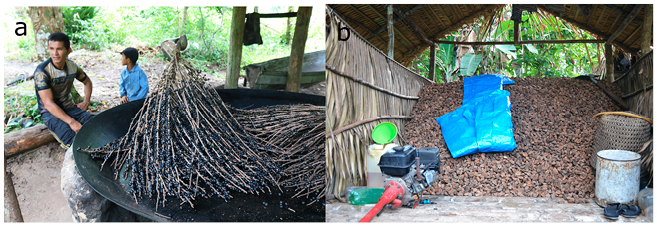
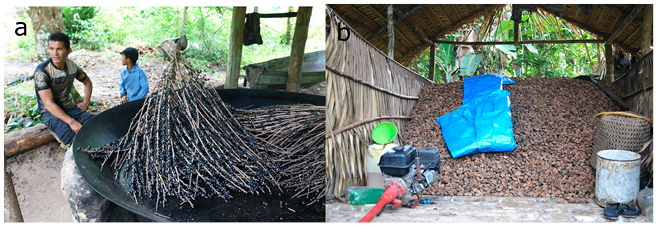
Manioc, on the other hand, cannot be distinguished from other C3 (non-maize) plants in stable carbon isotope studies. It also produces phytoliths and macroremains in much lower quantities than maize. We also know little about the past dietary role of tree crops, whose carbonized remains are ubiquitous across nearly all sites and periods in the Amazon. It is estimated that pre-modern Brazil nut populations in the Amazon contained protein equivalent to 141.2 million cattle, while the palm fruits açaí (Euterpe precatoria and E. oleraea) and pataua (Oenocarpus bataua) contained protein equivalent to 10–18 million cattle (Clement et al. Reference Clement, Ferreira, Cassino and Franco-Moraes2024; Figure 8). These and other edible species feature on the list of 227 “hyperdominant” species, meaning they represent just 1.4% of the total number of species in the Amazon but are so abundant that they account for half of all individual rees in the basin (ter Steege et al. Reference Ter Steege, Pitman and Sabatier2013). Species on the scale of domestication are five times more likely to be hyperdominant (Levis et al. Reference Levis, Costa and Bongers2017).
a) Photo of açaí fruits collected at the Laranjal village, Amazonas, Brazil, b) A Brazil nut harvest in Canutama, Amazonas, Brazil
Zooarchaeological evidence available so far shows that aquatic resources were very important in pre-Columbian Amazonia ever since its colonization. At the Late Pleistocene-Early Holocene site of Cerro Azul, Colombia, a range of fish, reptile and mollusk species occur alongside mammals adapted to aquatic ecosystems (Morcote-Rios et al., Reference Morcote-Ríos, Aceituno and Iriarte2021). In the Central Amazon, a study at the Hatahara site (750–1,230 cal. CE) found that nearly all consumed animals were aquatic species. Alongside turtles, caimans, amphibians and river snakes, more than 37 different fish taxa were found, demonstrating that the peoples who inhabited the site employed fishing techniques adapted to fish size, fishing environments (river channels, river creeks, lakes, swamps), migratory cycles, and more. Among the most frequent species were pirarucu, tambaqui, catfish and small characins such as piranhas (Prestes-Carneiro et al. Reference Prestes-Carneiro, Béarez and Bailon2016). The importance of fishing is also evident in other parts of the Amazon, where landscape modification for managing aquatic resources is clearly observed (Blatrix et al. Reference Blatrix, Roux and Béarez2018; Prestes-Carneiro et al. Reference Prestes-Carneiro, Sá Leitão Barboza and Sá Leitão Barboza2021) (Case Study 2.1). Fish traps are still built by many Forest Peoples, and ethnoarchaeological studies can help archaeologists better understand how these structures functioned (Box 2.2). People’s relationship with aquatic resources changed after the European invasion, as we will see in the following section.
A range of mammal bones have been identified at archaeological sites, including tapir (Tapirus terrestris), peccary (Tayassuidae), armadillo (Dasypodidae), monkeys, and others. Special attention should be given to deer (Blastocerus dichotomus and Mazama spp.) found at various sites in the Llanos de Mojos and Xingu regions (Driesch & Hutterer, Reference 81Driesch and Hutterer2011; Ferreira, Reference Ferreira2022), alongside rodents. In addition to large rodents like capybara (Hydrochaerus hydrochaeris), paca (Cuniculus paca), and agouti (Dasyprocta spp.), archaeological sites contain remains of smaller species such as spiny rats (Echimys, Proechimys) and the large vesper mouse (Calomys callosus) (Driesch & Hutterer Reference 81Driesch and Hutterer2011; Prestes-Carneiro et al. Reference Prestes-Carneiro, Béarez and Bailon2016).
2.3 Colonialism and Dietary Diversity
Needless to say, colonization of the Amazon and its peoples did not end in the years following European invasion and initial population decline, as: “in the 16th–18th centuries, the Amazon became an open field for different agents who entered the region to exploit its natural, mineral and human resources; to establish settlements, including urban centers and missions; and to evangelize its inhabitants in the name of the unity of the Christian faith” (García-Jordan Reference García-Jordán, Navarro and Díaz del1999, cited in Cuvi et al. Reference Cuvi, Guiteras Mombiola, Lehm Ardaya and Sachs2021).
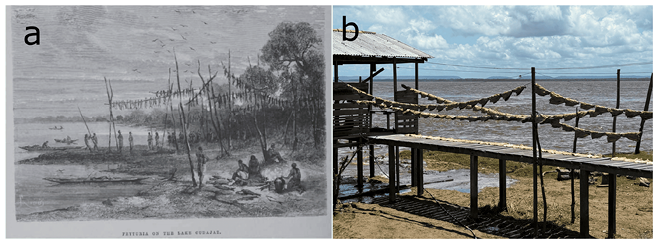
One could argue that colonization of the Amazon began in earnest in the 17th century when English, Spanish, French and Dutch settlements were established between the Orinoco and Amazon basins, and Portuguese slaving expeditions (bandeiras) began to make successful incursions into the lower Amazon river with the assistance of Jesuit missionaries (Cuvi et al. Reference Cuvi, Guiteras Mombiola, Lehm Ardaya and Sachs2021). Part of the goal of the Jesuit missions and the Portuguese crown was to exploit and trade local food resources. In this context, royal fisheries operated by indigenous labor appeared on the Amazon coast and inland locations from 1640 until 1780. In Marajó Island, Pará, a royal fishing station operated alongside the exploitation of the region’s salt flats, whereby enslaved indigenous people fished and salted primarily mullet (Mugil spp.) to supply the state. Such enterprises were crucial in asserting Portuguese control over the region (Nobre Reference Nobre2017). In just two years, the Lago Grande fishery in Santarém produced 59 tons of dried freshwater manatee (Trichechus inunguis) meat and 260 tons of lard (Ferreira Reference Ferreira1903; Stoll & Simenel, Reference Stoll and Simenel2024).
While fishing pressure on certain species was established, other species once commonly consumed fell out of use. One of the most striking examples is the case of the freshwater eel (Synbranchus spp.). This species is ubiquitous in archaeological sites in the Amazon (Case Study 2.1), however, as European colonists settled in the interior, they brought new fishing tools (such as metal hooks) along with their own food traditions and dietary taboos that gradually replaced native foods (Prestes-Carneiro et al. Reference Prestes-Carneiro and Béarez2017, Reference Prestes-Carneiro, Béarez and Shock2019).
The 17th century also saw a greater influx of exotic plant and animal species into the Amazon, mainly from Europe and Asia. The first cattle arrived in several waves between the 1620s and 1680s, initially to Marajó Island and Belém, and eventually into the interior (Daniel Reference Daniel2004[1722–1776]), and had to adapt to living in seasonally flooded, riverine areas. The extraction of native plants fueled a significant trade in spices, herbs and medicines that became known as the drogas do sertão (backlands drugs) (Chambouleyron Reference Chambouleyron2023), while plantations of cacau, tobacco (Nicotiana tabacum) and sugar cane (Saccharum officinarum) were established and worked by enslaved African and indigenous people (Stoll & Simenel, Reference Stoll and Simenel2024). In the context of mass extermination of indigenous people through epidemics, constant conflicts occurred between missions, settlers and indigenous peoples that culminated in the expulsion of the Jesuits by both the Portuguese (in 1759) and Spanish (in 1767) crowns and a ban upon indigenous slavery (Cuvi et al. Reference Cuvi, Guiteras Mombiola, Lehm Ardaya and Sachs2021).
During the 18th century, colonists in urban centres and forts throughout the Amazon established more intense trade relations with “free” indigenous populations and the international trade in forest products such as oils, wood and cacau soared. These were exchanged by indigenous people for aguardente (rum), metal axes, beads and cloth (Dias Reference Dias and Chambouleyron2023). These relationships were transformed in the 19th century in the wake of the Rubber Boom, whereby rubber tappers were provided manufactured products and then had to work disproportionately to pay off their “debt” in a system known as “aviamento”.
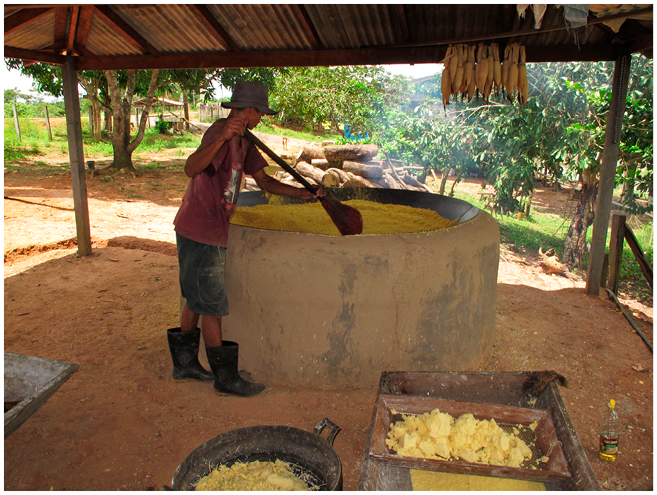
It was in this context that a potentially significant change in traditional foodways occurred in the Amazon: namely, an increased dependence on manioc and toasted manioc flour (farinha) (Figure 9). It has long been suggested that extensive swidden farming such as that practised by today’s Forest Peoples is a colonial artefact, since the work required to cut down forests with stone axes (before the arrival of European metal) would have been too costly (Deneven Reference Denevan, Balée and Erickson2006). Moreover, manioc, with its low nutrient demand, is the principal crop planted in these systems and its flexibility would have been advantageous to indigenous groups forced to adopt more mobile lifestyles in response to colonial pressures (Denevan Reference Denevan1992). However, as more historical data emerge (Dias & Bombardi Reference Dias and Bombardi2016), it is clear that toasted manioc flour, produced by indigenous labour on an industrial scale, was one of the fuels that drove European colonization of the Amazon. Being storable for up to several months, it became a dietary staple in urban centres and sustained both small and large-scale extractivist expeditions in the region.
Man toasting manioc flour at Careiro da Varzea, near Manaus, Amazonas, Brazil
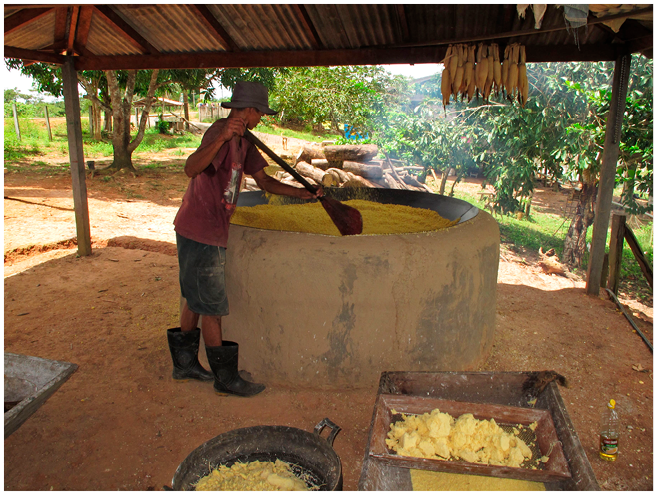
A study combining archaeological and historical data in French Guiana makes a strong case that maize, planted in raised field systems, was the dominant food in Late Pre-Columbian times but that it lost space to manioc during the colonial period to occupy only a minor role in most traditional diets today (Van den Bel Reference Van den Bel2015). This was due both to a European preference for manioc bread (beiju), because it resembled the taste of their own oat bread, as well as the introduction and commercialization of metal graters. In the 17th century, the Portuguese introduced toasted manioc flour and it quickly became a dietary staple (Van den Bel Reference Van den Bel2015).
A similar situation presents itself among indigenous groups of the Upper Negro River, northwest Amazonia (França Reference França2024). While today, toasted manioc flour is indispensable in the culinary landscape of the region, historical sources and oral tradition suggest that in the past, of all manioc products, only bread (beiju) and caxiri (a fermented beverage) were considered “true” foods, and that maize was more widely consumed. In this context, the trading of farinha during the Rubber Boom of the 19th and 20th centuries led to the crop becoming more dominant, while the consumption of other forest tubers became stigmatized (França Reference França2024).
We can probably expect many plant and animal species to have fallen out of use during the colonial period due to social and territorial upheaval and the processes of ethnogenesis that followed. Some plants that had been managed and had locally domesticated populations before European invasion may have become feral (Clement Reference Clement1999), such as a local species of rice that was domesticated in southwestern Amazonia (Hilbert et al. Reference Hilbert, Neves and Pugliese2017). Equally, many of the plants commonly found today in the gardens of Forest Peoples are colonial introductions: e.g. banana (Musa sp.), mango (Mangifera indica), coconut (Cocos nucifera), oil palm (Elaeis guineensis), and sugarcane. In Brazil, some indigenous groups only began cultivating these crops in the mid-20th century after contact by the Indian Protection Service (the predecessor of the National Indian Foundation) (Leite Reference Leite2007; Mendes dos Santos Reference Mendes dos Santos and Cabral de Oliveira2020). While state protection of indigenous groups and their territories have been fundamental for maintaining their autonomy, “contact” has often had the effect of reducing residential mobility, increasing dependence on local markets, and reducing dietary diversity.
Meanwhile, the contribution of Africans and African descendents to Amazonian culinary landscapes is a topic yet to be fully explored (Carvalho, 2012). It is thought that rice (Oryza glaberrina) cultivation, which became important in the lower Amazon from the 18th century onwards, was only successful due to the previous knowledge that these populations had surrounding the crop (Rosero-Peña Reference Rosero-Peña and Nobre2021). Many people managed to escape colonial plantations and establish maroon communities (quilombolas), adapting their agroecologial knowledge of the tropical environments from which they were displaced to a similar flora and fauna (Rosero-Peña Reference Rosero-Peña and Nobre2021). It is important to note that different diets coexisted in the Amazon – and this remains true today. One study (Barreno Reference Barreno2021) examined food consumption at a rich 18th–19th century property in Belém and showed that access to beef was limited to the local elite. Residents of the property had access to the best cuts of beef, while servants and the poorer population of Belém continued to consume fish, turtles and game meat.
Case Study 2.1 Fish Farming in the Llanos de Mojos, Bolivian Amazon
Although animal management structures exist throughout the Amazon, the most evident and well-studied cases are located in a specific region: the Bolivian Llanos de Mojos, a seasonally flooded savanna covering 200,000 km². Here, multiple forms of landscape modification are documented, involving the use of labor to move tonnes of earth. In the Baures region, aerial mapping and ground surveys documented hundreds of kilometers of zigzagging earthen lines (Erickson Reference Erickson2000; Figure 10). Since this area is seasonally flooded but located far from major rivers, the peoples who inhabited it between approximately 1,030–1,650 cal. CE built earthworks that blocked and redirected water into ponds (Blatrix et al. Reference Blatrix, Roux and Béarez2018). Very similar structures are documented in the region of Santa Ana de Yacuma, although they have never been excavated or studied in detail (Duncan et al. Reference Duncan, Loughlin and Walker2021; Robinson Reference Robinson2023). These ponds allowed populations to store water year-round and possibly stock fish.
a) Aerial photograph of excavated pre-colonial channels that served as fish weirs in the Baures region; b) Pond associated with a fish weir in the Baures region
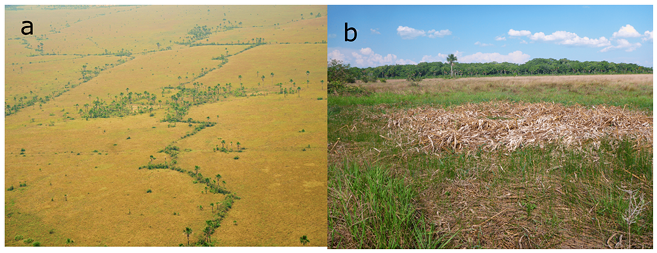
In the case of Baures, the use of ponds for fish storage remains hypothetical due to the lack of zooarchaeological studies in the area. However, at Loma Salvatierra (Case Study 2.2), this practice has been confirmed. At this site, a series of canals surrounding the mound directed water to lower ground and towards pond structures. The zooarchaeological record of Loma Salvatierra is composed of up to 40% fish remains. Among these, freshwater eels dominate (> 80%), followed by armored catfish (Callichthyidae), piranas, and trahiras (Hoplias malabaricus) – all species adapted to low-oxygen waters such as those found in the constructed ponds.
Many other similar ponds are found across the Amazon that have never been investigated – such as in the Santarém region and on Marajó Island (Schaan Reference Schaan, Silverman and Isbell2008; Stenborg et al. Reference Stenborg, Schaan and Figueiredo2018). Was fish farming a widespread practice in other parts of the Amazon? At present, we cannot affirm this with evidence.
Another important question for future research is the possible association between plant cultivation systems and fishing systems (Lombardo et al. Reference Lombardo, Hilbert and Bentley2025; Rodrigues et al. Reference Rodrigues, Lombardo, Beeby and Veit2017). As in the Llanos de Mojos, expanding zooarchaeological and archaeobotanical studies in these regions will be essential to better understand the multifunctionality of earthworks in the Amazon.
Case Study 2.2 Amazonian Dark Earths and Agrobiodiversity
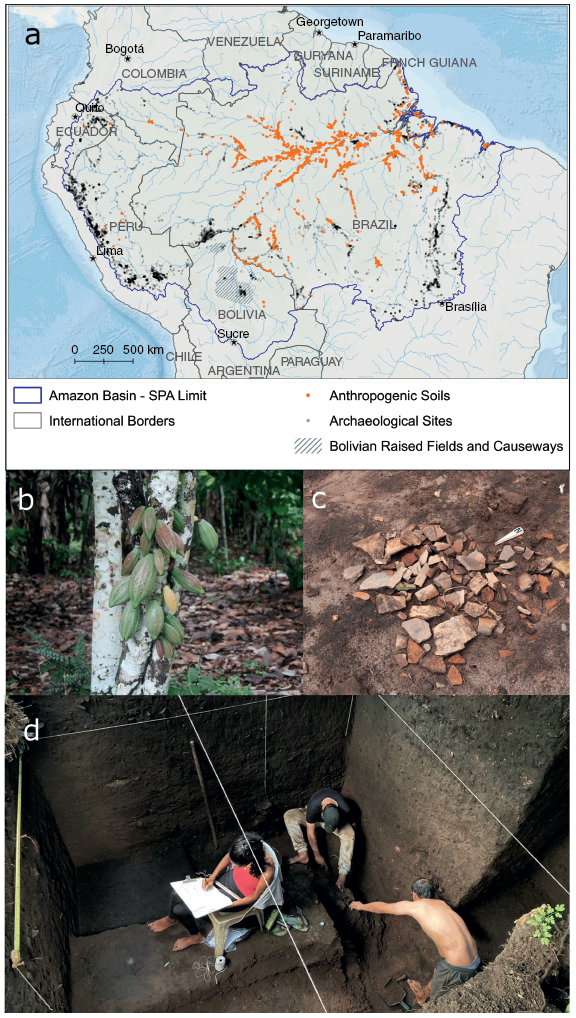
Amazonian Dark Earths (ADEs or terras pretas) are a type of anthrosol covering roughly 3.2% of the land surface of the Amazon basin (McMichael et al. Reference McMichael, Palace and Bush2014; Figure 11). Visually recognizable from adjacent soils due to their dark brown/black colour and artefact content, they harbour higher concentrations of nutrients such as phosphorus, calcium and magnesium, and have a more neutral pH than adjacent soils, making them exceptionally fertile and sought after by Forest Peoples for agriculture (Lehmann et al. Reference Lehmann, Kern, Blaser and Woods2003; Woods et al. Reference Woods, Teixeira and Lehmann2009). Multidisciplinary studies of these soils (e.g. Arroyo-Kalin Reference Arroyo-Kalin2010; Glaser and Berk Reference Glaser and Birk2012), which include ethnographic studies (e.g. Schmidt et al. Reference Schmidt, Goldberg and Heckenberger2023), suggest they formed in and around ancient settlements as a direct result of waste management practices, mainly from ca. 1,000 BCE onwards. Moving away from the settlement cores, it is common to find shallower Dark Earth deposits (terras marrons or Brown Earths) that are lighter in colour and devoid of ceramics, possibly formed by soil management in garden areas (Arroyo-Kalin Reference Arroyo-Kalin2010). Areas of Brown Earths can be anything between 3 to 10 times larger than Dark Earths, which themselves measure from <2 to 500 ha.
a) Map of ADE distribution (after Neves et al. 2021b, courtesy of Eduardo Tamanaha), b) Cacau tree growing in modern-day garden atop an ADE site at Laje village, Parintins, Amazonas, Brazil (Courtesy of Carlos Augusto da Silva), c) Surface ceramic scatter atop an ADE at the Fazendinha site, Alvarães, Amazonas, Brazil (Courtesy of Carlos Augusto da Silva); d) A 3.9-m deep ADE being excavated and recorded at the Teotônio site, Rondônia, Brazil (Jennifer Watling)
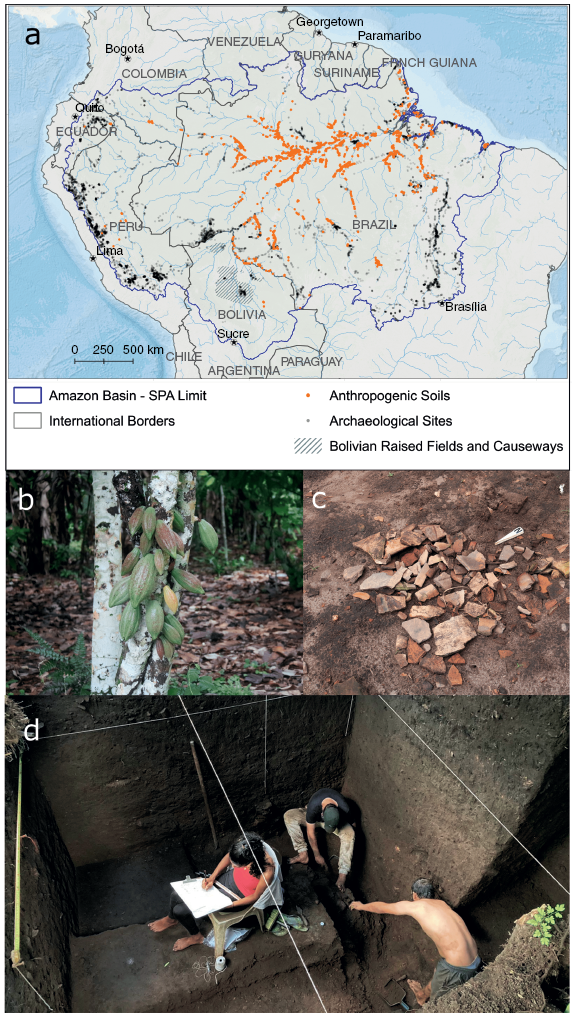
Figure 11 Long description
(a) A map of the northern part of South America with the Amazon basin outlined. The location of archaeological sites are indicated by black dots. Sites containing Anthropogenic Dark Earths are shown by hundreds of orange dots that span the whole of the Amazon river and its main tributaries. (b) The trunk of a cacau tree with cacau fruits hanging from it. (c) A concentration of around 30 ceramic fragments lie on the surface of a dark-coloured soil. (d) Three archaeologists are at the bottom of a large, deep excavation. One is drawing and two are excavating. The profile walls are black to dark brown from top to bottom.
There is still some debate as to whether ADEs were created intentionally for plant cultivation (see Schmidt et al. Reference Schmidt, Goldberg and Heckenberger2023), but there is some evidence that they were used for this purpose (Iriarte et al. Reference Iriarte, Elliott and Maezumi2020). Archaeobotanical studies in Brazil and Colombia have found ADEs to contain the remains of many edible species, including maize, squash, manioc, sweet potato, arrowroot, leren, chilli peppers, and fruit trees such as cashew (Anacardium occidentalis), Brazil nut, and many palms (Alves Reference Alves2017; Bozarth et al. Reference Bozarth, Price, Woods and Woods2009; Caromano et al. Reference Caromano, Neves and Scheel-Ybert2013; Herrera et al. Reference Herrera, Bray and McEwan1980; Morcote-Rios et al. Reference Morcote-Ríos, Raz and Giraldo-Cañas2013; Shock et al. Reference Shock, Moraes, Belletti and Rostain2014; Watling et al. Reference Watling, Almeida and Kater2020).
Meanwhile, floristic inventories carried out on ADEs and adjacent soils show that they harbour a distinct species composition characterized by higher abundance and richness of domesticated and edible species (e.g. Junqueira et al. Reference Junqueira, Souza and Stomph2016; Levis et al. Reference Levis, de Souza and Schietti2012). Moreover, multicomponential ADE sites (i.e. those containing more than one cultural occupation) are associated with up to 10% greater species diversity than single component sites (Lins et al. Reference Lins, Lima, Baccaro, Valdely, Shepard and Clement2015). ADEs can be considered veritable seed banks of edible plants: Forest People often report that, upon re-opening ADE forests for cultivation, edible plant species spontaneously sprout from the ground.
Case Study 2.3 The Changing Role of Maize in Monumental Mound Villages of the Llanos de Mojos
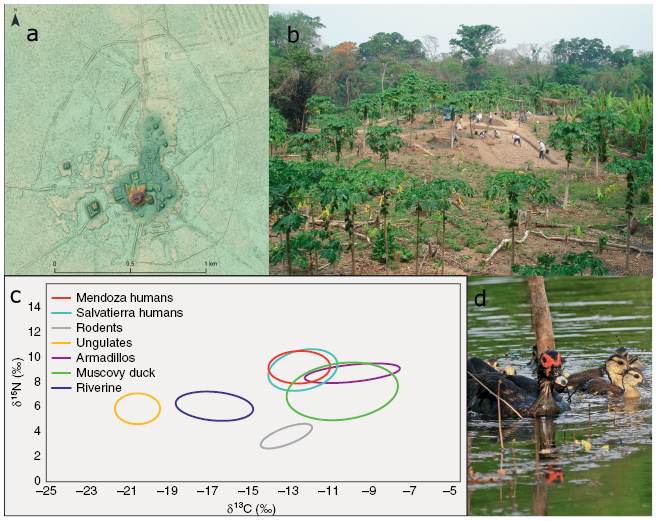
Among the most impressive archaeological sites in the Amazon are the monumental mounds or lomas of the Llanos de Mojos, Bolivia (Figure 12). These sites are earthen mounds built and occupied by the Casarabe culture between 400 and 1,450 cal. CE (Jaimes Betancourt Reference Jaimes Betancourt2012). Some reached huge proportions, and recent LiDAR surveys have revealed the true nature and extent of these sites, composed of a mixture of platform mounds, U-shaped structures and conical “pyramids” surrounded by canals and reservoirs (Prümers et al. Reference Prümers, Jaimes Betancourt and Iriarte2022). Such complexes were organized into a four-tier settlement system, with first tier “megasites” measuring up to 300 ha.
a) LiDAR photograph of Loma Catoca and associated earthworks, b) Excavation of Mound 2 of Loma Salvatierra in 2002, c) Carbon and nitrogen isotope values of human populations at Lomas Mendoza and Salvatierra alongside native fauna, d) Muscovy duck
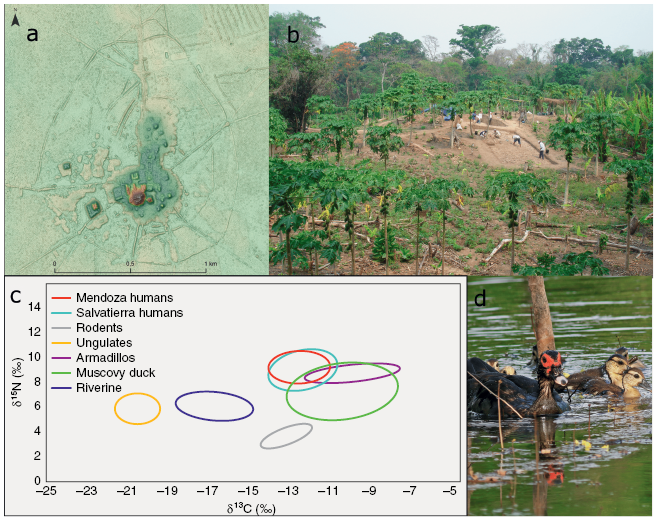
Figure 12 Long description
(a) A computer-generated topographic relief map shows a large platform on top of which are around a dozen smaller, rectangular-shaped platforms. Several straight roads lead out from the platform in all directions. A ditch measuring over a kilometre in diameter encircles the platform and a large area around it. (b) A large, open-area excavation is taking place on the slope of a large mound that is covered in papaya trees. (c) A graph plots delta 14N and delta 13C bone stable isotope values of rodents, ungulates, armadillos, muscovy duck, riverine taxa, and humans whose remains were excavated from the Mendonza and Salvatierra monumental mounds. The ellipses for humans, muscovy ducks, and armadillos overlap, indicating similar isotope values consistent with a predominantly C4 diet. (d) A female muscovy duck with her two ducklings on the water.
Two of these sites – Loma Salvatierra and Loma Mendonza – have been the focus of the most comprehensive study of stable carbon and nitrogen isotopes of human (n=86) and faunal (n=68) remains in the Amazon to date (Hermenegildo et al. Reference Hermenegildo, Prümers and Jaimes Betancourt2025). Its results show that maize was the dietary staple for the populations living on the monumental mounds until roughly 1,100 cal. CE, when its dietary importance dropped in favour of C3 plants for the last 300 years of occupation. The δ13C values in the initial period are the highest documented anywhere in the Amazon basin, comparable with the Maya Classic and Late Classic period in Guatemala, and support macrobotanical evidence showing a higher ubiquity of maize remains during Phases 1 and 2 of the site’s occupation (Bruno Reference Bruno and Prümers2015). Meanwhile, both macro and microbotanical studies show that maize was planted and consumed alongside peanut, yam, manioc, sweet potato and a range of managed fruit trees (Dickau et al. Reference Dickau, Bruno and Iriarte2012). It is possible that these other cultivars came to the forefront in diets when maize declined in importance.
Furthermore, analysis of muscovy duck (Carina moschata) remains showed that they also had a predominantly maize-based diet. These ducks present confinement-related pathologies and thus were probably managed (Driesch et al. 2011) and intentionally fed maize (Hermengildo et al. Reference Hermenegildo, Prümers and Jaimes Betancourt2025).
This case study highlights the importance of stable carbon isotope studies in understanding ancient Amazonian foodways, and testifies to their dynamic nature over both time and space, even within the same cultural tradition.
In the indigenous cycle, when we stayed a long time in one area, we saw that the game would become sparse and that people’s dreams were no longer good, so we would leave and let our houses fall down. But the place wasn’t lost or abandoned because, sometimes, our dead were there, and we always knew to return to plant fruits, medicines and magic plants for this life and other lives of the forest that would follow us. We saw that forest not as a bunch of wild trees, but as a place where our story and our future were written; the trees planted to remember the dead or to some day provide for our sons and daughters. The forest isn’t a wild thing for us. It is our world.
The Indigenous peoples of the Lower Amazon are fishers and hold much traditional knowledge about fishing. In the past, for the generation of my parents and grandparents, the techniques that exist today did not exist – techniques which, in my view, harm the environment. At that time, they made their fishing tools themselves, including harpoons, bows and arrows, used in the type of fishing called facheado. At night, they would fish by firelight. A second method was the construction of fish weirs, which we call tapagens. Every year, before the lake filled up, they would build large fences woven with the leaves of the curuá palm, which we call panos. The woven panels were tied together with forest vines, such as cipó-do-mato or cipó titica and measured between 2 and 3 meters, depending on the depth of the lake. Men dove deep to drive the stakes into the ground and secure the fences underwater. These fences would be combined with other fish traps such as the cacuri. The women wove and the men fished. A third type of fishing we used here was fish poison, which we call timbó, made from the root of a plant (Dracontium guianensis). After pounding the root, a white sap was released, which, when placed in the water, killed all the fish. In the 1980s, this type of fishing was banned because fish had started to become scarce. Today, timbó trees still exist, but noone uses them. That was how they used to encircle the fish. This process was carried out by several men, and all the families of the community benefited from it. There was great abundance; it was enough to meet everyone’s needs, and the environment was in no way harmed. The message I want to leave for non-Indigenous people is that we, Indigenous peoples, respect the rivers, streams, and lakes; we respect nature. Today, we live beside lakes that are being heavily impacted. Nature is suffering from so much destruction. Greedy humans cannot see how much they are harming it. We live under threat from predatory fishing in the lakes, from fishing industries arriving with their iceboats and motorboats, taking huge quantities from our river. They arrive with 500-meter nets that cross almost the entire river, carrying away all the food to sell abroad. And when we report it, we are attacked by public agencies. Because they have money, they have the power to come, take, invade, and use everything without us being consulted. This destroys us deeply. But we Indigenous peoples remain firm because we fight together. We are the territory. We are here to protect Mother Nature, our land, our water, our forest, our fish, for all living beings, for life. And we will continue in this struggle.
3 Grinding, Grating, Boiling, Smoking: Amazonian Culinary Practices
3.1 Plants and Their Many Products
Like other regions of the Neotropics, the Amazonian culinary landscape is characterized by diverse practices aimed towards preparing plants for food and drink. These practices range from the simple roasting of potatoes, palm hearts and other plants, to the boiling, pounding, grating and juicing of fruits and tubers to extract doughs and pulps which are made into breads/tortillas (beijus), toasted flour (farinha), porridge (mingau), fermented drinks and a range of other products (Mendes dos Santos & França Reference Mendes dos Santos and França2024). The first Europeans to descend the Amazon River in 1542 (Medina, Reference Medina1934[1542]) reported indigenous people offering them bread, beer and fruit wines along their journey, and archaeological evidence supports the existence of such products long before European invasion.
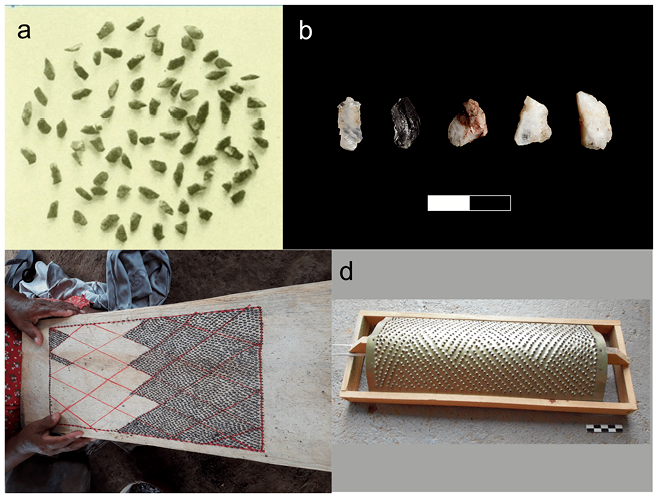
The most extensive literature regarding modern indigenous foodways comes from the Upper Negro River in northwestern Amazonia (e.g. Emperaire et al. Reference Emperaire, Van Velthem and Carneiro da Cunha2019; França Reference França2023; Katz Reference Katz, Carneiro da Cunha, Magalhaes and Adams2021). One study listed 34 objects used to process food in the region, most of them made from perishable materials (Emperaire et al. Reference Emperaire, Van Velthem and Carneiro da Cunha2019). These include woven baskets, mats, sieves, fans and tipitis (presses) made of leaf and bast fibres and lianas; utensils, troughs and supports carved out of wood; gourd containers; ceramic ovens, fire dogs and basins. Stoneware is notably absent, except for the small chert flakes used for the confection of graters (Emperaire et al. Reference Emperaire, Van Velthem and Carneiro da Cunha2019: 181).
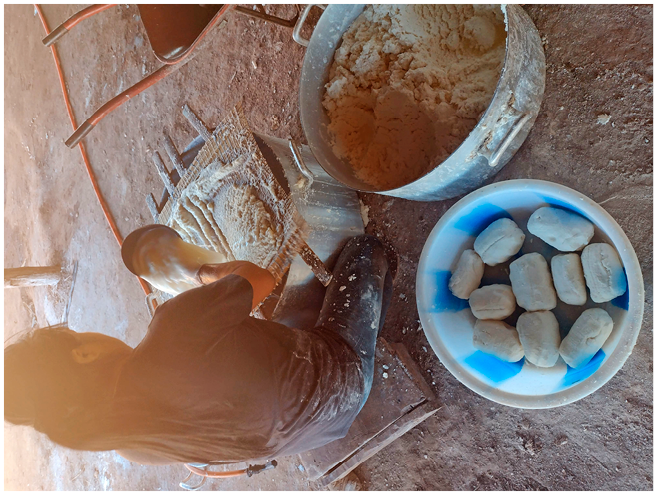
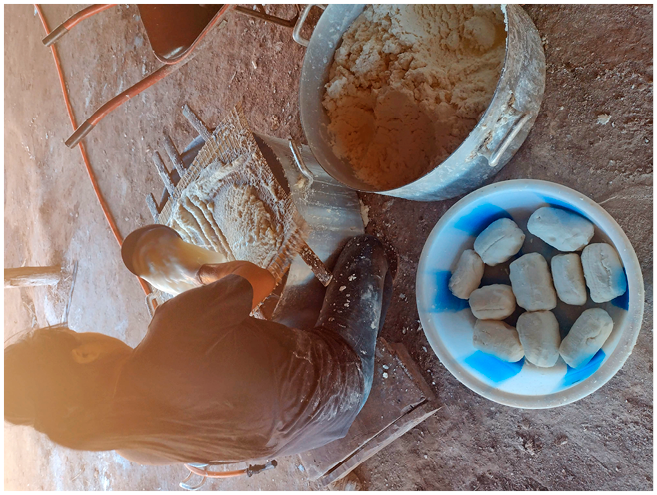
Of all the culinary traditions of Forest Peoples, the most famous is the bitter manioc complex. While applied most widely to manioc, the basic principle of intensely washing grated plant products using basket mats and decanting the solid has deep roots in indigenous cuisine, and is applied to a range of fruits, seeds and tubers, whether cultivated, managed or wild (França, Reference França2023; Mendes dos Santos Reference Mendes dos Santos and Cabral de Oliveira2020). In its simplest form, freshly-harvested manioc tubers are peeled, washed, then grated, and the resulting mass washed thoroughly with water atop a basketry mat (Figure 13). A basin is placed under the mat to collect the resulting liquid (manicuera or tucupi), which after some time can be poured off, leaving the manioc starch (goma, tapioca, or polvilho) at the bottom. Once dried, often using a press, the polvilho can be stored, or sieved and then baked or toasted to make beiju or farinha, while the tucupi (which contains the cyanide compounds) can be boiled down to make a sweet drink, sticky sauce or fermented beverage. The coarser, more fibrous mass left behind after washing can be also be pressed, dried and made into beiju or farinha.
Iracema Kuikuro washing grated bitter manioc through a woven. In the foreground, clumps of mash that did not pass through the sieve. Ipatse village, Xingu Indigenous Territory, Mato Gross, Brazil
In a variation of this process, peeled manioc is left out in the open or soaked in water for days before undergoing processing. The resulting, slightly fermented pulp is called puba and has an acidic taste. Indigenous groups of the Upper Negro River only make manioc flour out of puba (known as farinha d’água) (França Reference França2023).
The main products of the manioc complex – beiju, farinha and tucupi– are often not end products in themselves but are further processed into other foods, for example beer (caxiri, cauim, tarubá or chicha). In the Upper Negro River, manioc beer is made first by chewing beiju that has been intentionally burnt and mixing the amylotic mixture with boiled manicuera, the cooked (and sometimes chewed) mash of sweet manioc, yam or maize, and finally melted sugar or sugarcane juice. The more steps that are included, and the longer the liquids are left to sit, the stronger the beer will be (França Reference França2023). Throughout indigenous Amazonia, the preparation and consumption of strong alcoholic drinks happens only during special occasions such as marriages, funerals and shamanic rituals (Erikson Reference Erikson2004). However, lightly fermented drinks are part of everyday life and often substitute water. Farinha d’água can be mixed with water to produce a slightly acidic porridge (mingau) or, as recorded historically (Daniel Reference Daniel2004[1722–1776]: 285; Ferreira Reference Ferreira1974[1783–1792]), slightly gone-off (sometimes chewed) beiju. Forest Peoples also make a range of fruit wines and juices of varying alcohol content, the most famous being açaí, made from the fruit of the palm Euterpe precatoria or E. oleracea. Other palm fruits pulps (including buriti [Mauritia flexuosa], peach palm [Bactris gasipaes], patauá [Oenocarpus bataua] and bacaba [O. bacaba]), as well as pineapple (Ananas sp.), are common ingredients in such beverages and must often be boiled, pounded with water and then strained to extract the juice. Doughs are also made from the fruits or seeds of some plants and can be left to ferment, mixed with water, boiled, and strained to produce wines, or added do flavor meat broths and other foods (França, Reference França2023). It is argued that fermentation was traditionally an important mechanism to both detoxify and conserve food in Amazonia (Barghini Reference Barghini2018).
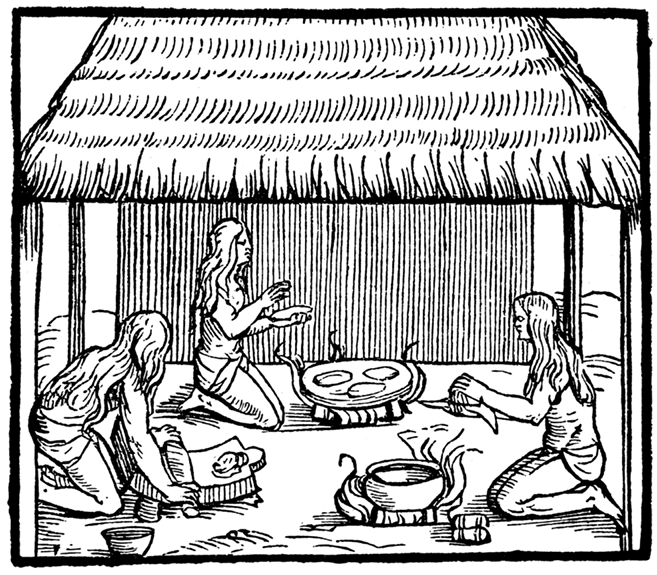
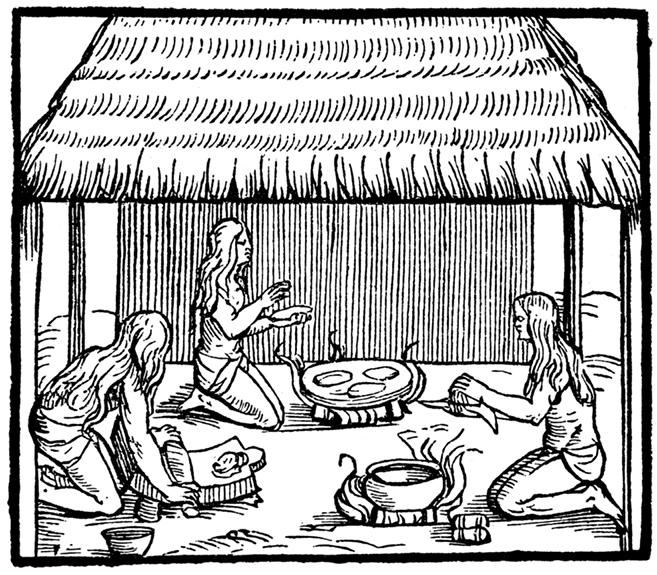
In regions where maize and/or and sweet potato are of greater dietary importance than manioc, many of the basic culinary processes and products are similar to those already described. In the cerrado, sweet potato can be roasted, mashed and dried to make flour, and mixed with water and fruit juices to make mingau (Morim de Lima in Katz Reference Katz, Carneiro da Cunha, Magalhaes and Adams2021: Box 4.4). In southwestern Amazonia and elsewhere, maize is consumed roasted, in fermented drinks, or grated, sieved and boiled into a mash that is wrapped in leaves and roasted on the fire (e.g. Araujo et al Reference Araujo, Mendes, Franco, Carneiro da Cunha and Almeida2002). Similar to Mexican tamales, in Brazil they are known as pamonhas (Figure 14).
Indigenous people from Hispaniola Island making beijus (centre) and pamonhas (right). Engraving made in the mid-16th century for the book History of the World by Girolamo Benzoni (Reference Benzoni1857: 84)
3.2 The Processing and Consumption of Animals
The abundance of animals and derived products in the Amazon has been noted since the earliest historical accounts. Gaspar de Carvajal (Medina, Reference Medina1934[1542]) mentioned a trade network involving fish flour (also known as piracuí) between riverine and upland populations. Today, in the regions of Santarém and Alenquer, the fish flour sold in urban centers is produced mainly by quilombola communities (Nunes, Reference Nunes, Bittencourt and Silva2013, Lima, Reference Lima2020). To prepare it, fish are gutted, roasted, descaled, and the meat toasted on a griddle (as with manioc flour). The most common fish used is catfish or acari (Loricariidae) (Figure 15). Piracuí can be prepared as farofa (a dish made from manioc flour mixed with meat or eggs), fish broth (mujica), or fried fish cakes, and is storable for years. The fish bones are often included in the preparation to keep the flour slightly moist. While archaeological records contain many burned fish bones, no studies have yet investigated the production of piracuí in the past.
Catfish being roasted for the production of fish flour in the Arapemã quilombo, Santarém, Brazil
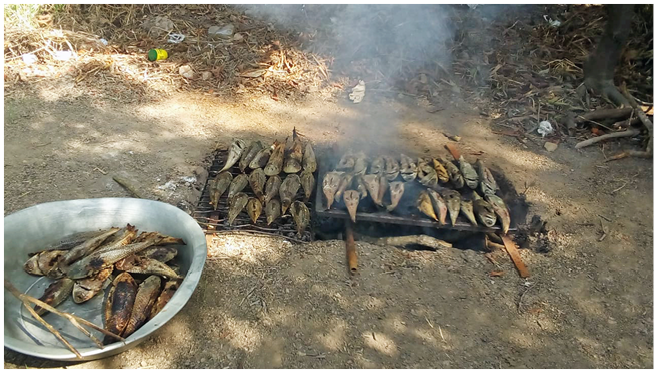
Many other animal-derived products are fabricated in the Amazon. The Munduruku people make fish salami using small fish (e.g. piabas, Characidae) which are wrapped in banana leaves and smoked. There are ethnographic records of sausage-making in the Amazon, but it’s unclear whether this practice has ancient or more recent roots. The Ashaninka people of the Juruá River make sausages using tapir or monkey intestines, which are smoked and preserved for days (Araújo et al., Reference Araujo, Mendes, Franco, Carneiro da Cunha and Almeida2002). There are also reports of sausage made from the loin and fat of the manatee by riverside communities in the 1970s (Pereira, Reference Pereira1974). Other than sausages, the eggs of almost all animals – fish, birds and reptiles – are also consumed (Ferreira, Reference Ferreira1974[1783–1792]).
Reptiles and amphibians are highly valued in Amazonian cuisine, though were more common in the past (Comier, Reference Comier2003; Praita et al., Reference Praita, Chahud, Machado and Okumura2023). References to turtle eggs and turtle butter appear throughout the colonial period (Ferreira, Reference Ferreira1974[1783–1792]; Marcoy, Reference Marcoy1875) (Figure 16), and archaeological sites are often abundant with turtle, alligator, snake, amphibian, and lizard remains (Driesch & Hutterer, Reference 81Driesch and Hutterer2011; Prestes-Carneiro et al., Reference Prestes-Carneiro, Béarez and Bailon2016; Ferreira, Reference Ferreira2022). Almost every part of the turtle is used: meat, eggs, butter, and even bones, which are used to make tools (axes, spindles) and ornaments. Recently, García-Soto et al. (Reference García-Soto, Jaimes Betancourt and Rodrigues2024) documented ceramists in the Bolivian Amazon using powdered turtle bone as an anti-plastic. As for tortoises, they have only been found at one archaeological site in the Xingu River region (Ferreira, Reference Ferreira2022), but today, several Amazonian populations consume jabuti (Chelonoidis carbonarius), with one of the most well-known dishes being tortoise cooked in Brazil nut milk (Iglez Reference Iglez2021).
Manufacture of oil from turtle’s eggs by Conibo indigenous people in the Peruvian Amazon
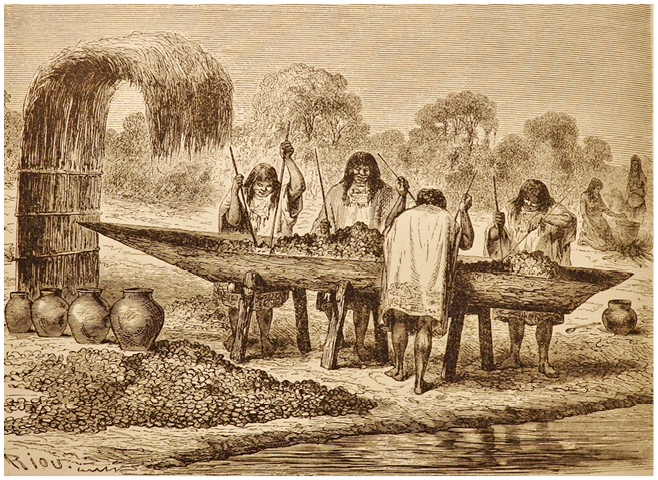
Nearly all species of bird can be consumed. The pato do mato (Muscovy duck) is raised in the backyards of many Amazonian households, though it also exists in the wild. Large birds such as mutuns and jacus (family Cracidae), nambus (Tinamidae), toucans, and macaws are highly appreciated, but small birds may also be eaten (Araújo et al., Reference Araujo, Mendes, Franco, Carneiro da Cunha and Almeida2002). In addition to meat, feathers from many birds are made into adornmentsFootnote 5. Studying the role of birds in precolonial times is particularly challenging as their bones preserve badly.
As previously mentioned, insects (beetle larvae and ants) also play an important role in the diet of many Amazonian peoples (Box 3.1). These are often mixed with manioc flour or added to soups and broths. It is interesting to note that mollusks formed the primary building material of ancient shell mounds (sambaquis), though today their consumption is uncommon. Some indigenous groups, such as the Kuaruara and Borari in the Lower Amazon, still recall the recipe for preparing the freshwater gastropod Uruá (Pomacea spp.), which was cooked and mixed with manioc flour to make a type of farofa (Box 3.2).
3.3 Culinary Practices in the Archaeological Record
3.3.1 Lithics: Grinding, Grating, Slicing, Chopping
While the Amazon is by no means devoid of lithic raw material sources, they are generally much sparser, and of poorer quality, than in other regions of South America. Most of the functions served by lithic tools, such as grinding, grating, slicing and chopping, are routinely performed today using a myriad of perishable alternatives which are invisible in the archaeological record. Nevertheless, as elsewhere, lithic tool assemblages have been mobilized as important temporal markers within discussions of food procurement, the origins of agriculture, and culinary practices.
Grinding tools, including milling stones, handstones, pestles and mortars, have long been associated with the Archaic period (Willey & Phillips Reference Willey and Phillips1958). Like the Old World Mesolithic, the appearance of these tools is interpreted as representing a subsistence shift towards a greater investment in the processing and consumption of domesticated plants (Piperno & Pearsall Reference Piperno and Pearsall1998). In the Americas, it was initially speculated that such tools were used to grind tough seeds and grains, especially maize (Babot et al. Reference Babot, Hocsman, Figueroa, Haros, Babot, Marschoff and Pazzarelli2012; Lathrap Reference Lathrap1970); however, while the earliest grinding stones in Mesoamerica are associated with maize domestication ca. 6,700 cal. BCE (Piperno et al. Reference Piperno2009), in the Colombian Andes – where they are just as old – starch grain analyses associate them with other species such as legumes (Fabaceae and Phaseolus vulgaris), manioc, yam, and cocoyam (Xanthosoma sp.) (Aceituno & Loaiza Reference Aceituno and Loaiza2014). The same is true in the Colombian Amazon, where handstones dating from ca. 9,300 to 8,200 cal. BCE were used to process a several starchy rhizomes belonging to the Zingiberales order (Heliconia sp., Costus spiralus, Phenakospermum guyannense and Maranta arundinacea) (Morcote-Rios et al. 2026). The use of handstones and milling stones to grind and pound rhizomes, roots and tubers suggests that pulps were produced from these crops from the very earliest of times, and that these culinary practices went hand in hand with the beginnings of plant cultivation and domestication. At the Monte Castelo shellmound site in Rondônia, Brazil, maize starch grains with cracking damage like that caused by grinding provide first-hand evidence of probable maize flour consumption at least 2,000 cal. BCE (Furquim et al. Reference Furquim, Watling and Hilbert2021)
At Peña Roja, on the Middle Caquetá River, Colombia, Middle Holocene grinding tools are associated with hoes and stone axes, attesting to vegetation clearance and soil tillage, but most of the lithic assemblage consists of small unifacial flakes, choppers, burins, drills, and abraded cobbles used for pounding (Oliver Reference Oliver, Silverman and Isbell2008). At the Eva 2 and St. Louis sites in French Guiana (ca. 4,000 to 2,000 cal. BCE), where milling stones and mortars (Figures 17 and 18) yielded maize, sweet potato, leren and jack bean (Canavalia sp.) starch, most of the lithic assemblage is also comprised of small quartz flakes (Pagán-Jiménez et al. Reference Pagán-Jiménez, Rodríguez-Ramos and Reid2015; Van den Bel et al. Reference Van den Bel, Knippenberg, Jiménez and Reid2018).
Milling stones from Eva 2, French Guiana (6,000–4,000 cal. BP)
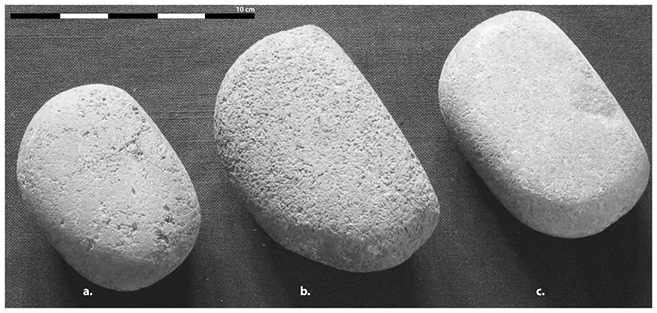
Mortar from Eva 2, French Guiana (6,000–4,000 cal. BP)
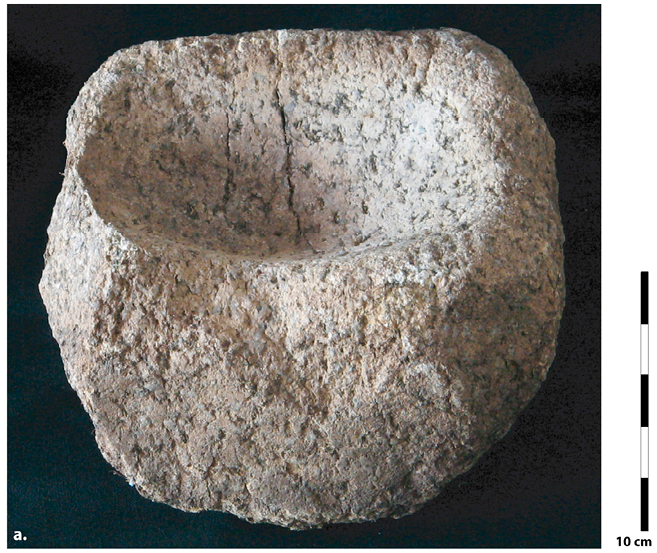
The use of small, unipolar and bipolar flaked tools, found in archaeological sites from all time periods across the Amazon, has been the subject of some debate (e.g. Mongeló Reference Mongeló2020; Honorato de Oliveira & Wai Wai, Reference Honorato de Oliveira and Wai Wai2021; Roosevelt Reference Roosevelt1980; Souza Reference Souza2016), treated here in Case Study 3.1.
3.3.2 Ceramics: Boiling, Toasting, Serving
Ceramics have traditionally received more attention than lithics in Amazonian archaeology (e.g. Barreto et al. Reference Barreto, Lima and Jaimes Betancourt2016, Reference Barreto, Lima, Rostain and Hofman2020). Traditional markers of the Formative Period (equivalent to the Neolithic), it was long assumed that their use and spread correlated with the development of fully-agricultural societies during the Late Holocene (Willey & Phillips Reference Willey and Phillips1958). This narrative has since been challenged by evidence of more ancient ceramic complexes and the even greater antiquity of plant cultivation and domestication in the region (Neves Reference Neves, Pearce, Beresford- and Heggarty2020); however, it remains true that the appearance of ceramic production was, in many regions, associated with larger and more enduring landscape impacts, such ADEs (Neves et al. Reference Neves, Guapindaia, Lima and Rostain2014).
The earliest ceramic technologies in Amazonia dated to between 6,000–3,000 cal. BCE are associated with shellmound sites and appear to have been largely localized phenomena (Bandeira Reference Bandeira, Barreto, Lima and Jaimes-Betancourt2016; Pugliese et al. Reference Pugliese2018; Roosevelt Reference Roosevelt, Barnett and Hoopes1995). They consist mainly of small, hemispherical bowls, and the extent to which they were used for the controlled heating of liquids (boiling and cooking), or for serving beverages, is unclear (sensu Oliver Reference Oliver, Silverman and Isbell2008) (Case Study 3.2). Clay balls found in contexts dated to ca. 3,000 cal. BCE may have also been used to heat liquids (Costa Reference Costa2024). At Eva 2, ceramics dated to ca. 2,000 cal. BCE yielded starch grains of maize, sweet potato and leren damaged by grinding and heating (Van den Bel et al. Reference Van den Bel, Knippenberg, Jiménez and Reid2018). These vessels appear alongside clay griddles and seem to have replaced earlier cooking methods focused on roasting food in fire pits, a trend also observed in North America (Van den Bel et al. Reference Van den Bel, Knippenberg, Jiménez and Reid2018).
The first widespread pottery traditions in lowland South America appear between 3,000-1,000 cal. BCE cal. BP, related to the technologically and stylistically-related Saladoid series of the Orinoco basin (Cruxent & Rouse Reference 80Cruxent and Rouse1958) and Pocó Tradition of Amazonia (Kater et al. Reference Kater, Almeida, Lima, Alves, Watling, Tamanaha, Frahm, Burger and Neves2026; Neves et al. Reference Neves, Guapindaia, Lima and Rostain2014). The appearance of this pottery along the Amazon’s major tributaries was initially thought to reflect migrations of Arawak-speaking floodplain agriculturalists (Lathrap Reference Lathrap1970), and today is understood as representing complex processes of social network construction and territorialization (Kater et al. Reference Kater, Almeida, Lima, Alves, Watling, Tamanaha, Frahm, Burger and Neves2026). In terms of culinary practice, Saladoid and Pocó assemblages are characterized by a number of small vessel forms and griddles (Figure 19). Griddles were likely an important culinary innovation since they permitted the toasting of plant pulps and, perhaps for the first time, the production of beiju and farinha. The presence of griddles alongside lithic flakes at Orinoquian sites led to an early association being made between the emergence of ceramic technologies and manioc agriculture (Roosevelt, Reference Roosevelt1980). A large starch grain study of griddles from the Greater Antilles cautions against associating griddles with manioc, however (Ciofalo et al. Reference Ciofalo, Sinelli and Hofman2019). Meanwhile, a recent study of Pocó ceramics raises the possibility that these assemblages were used to consume fermented beverages (Case Study 3.2).
Ceramic container attributed to the Pocó tradition from the collection of the Museum of Archaeology and Ethnology, University of São Paulo
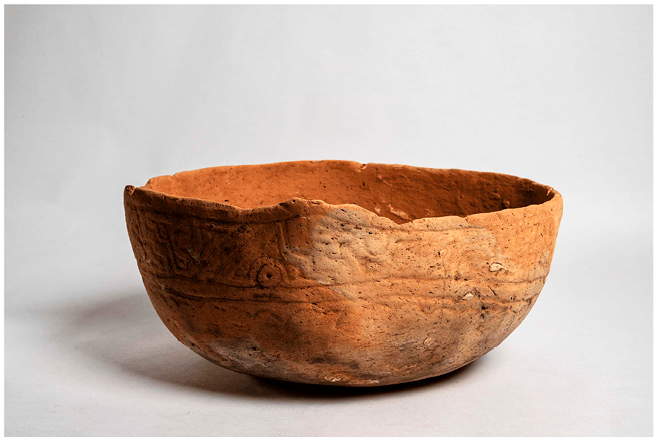
Many containers made from animal and plant materials were likely used in the past as they are today. The production of cuias (Crescentia spp.) and gourd containers (Lagenaria siceraria) is recognized as intangible cultural heritage in Brazil (Carvalho & Santos Reference Carvalho and Santos2012; Moreira Reference Moreira and Cabral de Oliveira2021). Turtle shells are also used to store and heat liquids and food (Figure 22).
3.3.3 Hearths, Racks and Ovens: Drying, Baking, Roasting, Smoking
In the Amazon, there has been little opportunity to study culinary practices related to drying, roasting, smoking, and baking. Forest Peoples teach us that meat does not necessarily need to be heated to be preserved. There are numerous mentions of fish racks from the colonial period which are still used today to sundry large quantities of fish (Figure 20). A number of types of wooden racks for fish drying are also reported ethnographically (e.g. Grenand & Grenand Reference Grenand, Grenand, Aubaile, Bernard and Pasquet2004).
a) Illustration of fish racks at Lake Cudajaz, near Tefé (Saint Cricq, Reference Saint-Cricq1875) b) Catfish (Brachplatystoma vaillantii) hung up to dry at the Nossa Senhora de Nazaré riverine village, Pará, Brazil
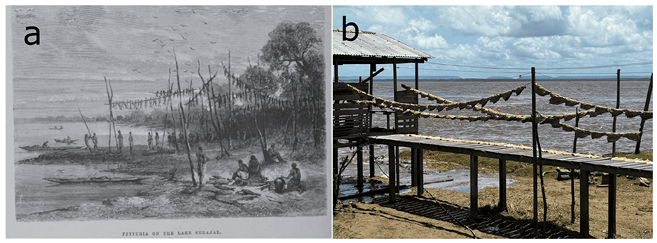
When it comes to roasting, we find evidence of campfires from the very beginning of human occupation in the Amazon (Rodet et al. Reference Rodet, Duarte-Talim, Pereira and Moraes2024). The oldest identified structures clearly used for cooking, however, date to between 4,000–2,000 cal. BCE at the Eva 2 site in French Guiana (Van den Bel Reference Van den Bel2010; Van den Bel et al. Reference Van den Bel, Knippenberg, Jiménez and Reid2018). There, over 200 clusters of fire cracked rocks were discovered, some of which were deposited in shallow pits (Figure 21). The site was likely a centre for quartz extraction (Van den Bel Reference Van den Bel2010).
Cooking pit filled with fire cracked rocks at the Eva 2 site, French Guiana
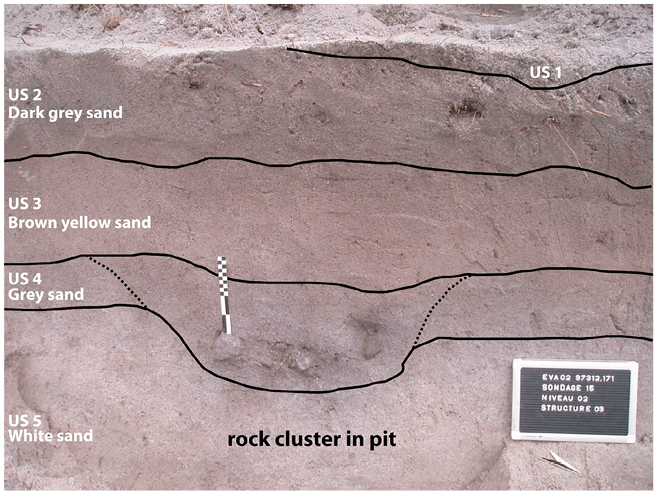
Around 1,000 CE, burning features appear systematically at archaeological sites in Central Amazonia (e.g., Hatahara and Laguinho). These features are oval-shaped pits, approximately 1x1 meter in size that are associated with firedogs or trempes (Castro Reference 78Castro2009). It appears that these pits were dug for roasting purposes.
The smoking of meat (moquem) alongside a range of plant products (Franca, 2023), is also widely practised. Often food is placed meat up on grill-like wooden racks and heated over several days over a slow-burning fire. Before smoking, foods may be wrapped in palm or banana leaves to retain moisture (Hurault Reference Hurault, Grenand and Grenand1998; Zelem Reference Zélem2019). When ready to be consumed, dried meat is often rehydrated.
3.3.4 Archaeological Breads
Recently, archaeological and anthropological research has brought renewed focus upon a curious type of artefact known as pães de índio or “Indigenous breads” (Figure 22). These consist of compact, rounded, amorphous masses often found buried underground. Initially they were classified as a species of fungus (Araujo & Souza Reference Araujo and Souza1978) reportedly consumed by riverine people (Fidalgo & Poroca Reference Fidalgo and Poroca1986). However, numerous Forest Peoples and indigenists recognize them to be a type of loaf made by mixing together different wild and cultivated plant products, which can then be wrapped in leaves, coated in resin, and/or smoked before being buried (Mendes dos Santos et al. Reference Mendes dos Santos, Cangussu and Furquim2021). In a pilot study (Mendes dos Santos et al., Reference Mendes dos Santos, Cangussu and Furquim2021), two of these breads were analysed for starch grains and its results support the latter hypothesis. Among the plants identified were maize, peppers, mairá potato (Casimirella rupestris), and several unidentified species, including underground storage organs. It is unclear why such breads were buried and for how long this has been practised (oral traditions suggest at least 100 years or more), but a range of techniques are now being applied to better understand their composition (Furquim Reference Furquim2024).
Indigenous breads housed at the Archaeology Laboratory of UFAM-Museu Amazônico. a) From Fazenda Águas Claras, Iranduba, Amazônas, Brazil; b) From the ABC site, Manacapuru, Amazônas, Brazil
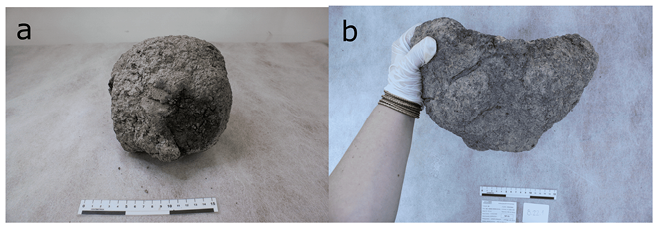
Case Study 3.1 Lithic “Grater Teeth” and the Bitter Manioc Complex
In Amazonia, small bi- or uni-polar lithic (often quartz) flakes measuring from <1 to 2 cm long, are a common component of the archaeological record throughout the Holocene, often dominating lithic assemblages (Figure 23). Their function has been debated, but in Late Holocene contexts of the Orinoco basin they came to be attributed to manioc grater teeth (Roosevelt Reference Roosevelt1980) because several indigenous groups, for example the Wai wai of the Guianan highlands (Honorato de Oliveira & Wai Wai, Reference Honorato de Oliveira and Wai Wai2021), produce manioc graters consisting of a wooden plank incrusted with dozens of similar lithic “teeth”.
a) Lithic grater teeth made by Tarumã indigenous people at the beginning of the 20th century, b) Archaeological “grater teeth” from the Teotônio site containing manioc, sweet potato, and unidentified starch grains (scale 2 cm), c) A Waiwai woman inserting lithic teeth into a manioc grater. Mapuera village, Nhamundá/Mapuera Indigenous Territory, Brazil, d) Metal grater sold in the city of Oiapoque, on the border between French Guiana and Brazil, in 2012
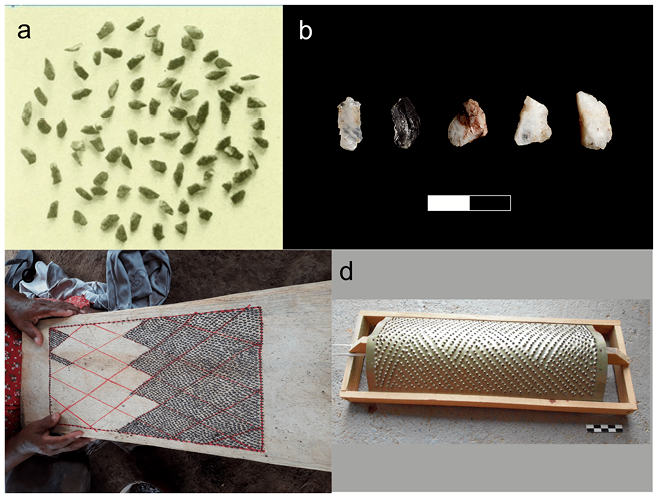
Figure 23 Long description
(a) Dozens of very small pointed lithic artefacts are spread out, forming a circle. (b) Five quartz lithic flakes are lined up side-by-side. Each measure less than 2 cm long and 0.5 cm wide.(c) Two hands hold a large wooden plank upon which is drawn a rectangle filled with interlocking diamonds. In roughly half of the diamonds, there are inserted dozens of very small lithic flakes. (d) A hollow metal cylinder is inserted into a wooden frame measuring roughly 40 × 15 cm. The metal is perforated in a pattern of interlocking diamonds.
Archaeobotanical studies of these objects are limited, but have placed doubt upon their association with manioc. At the Pozo Azul Norte-1 site in the Middle Orinoco, Venezuela, these objects yielded starch grains from arrowroot (Maranta sp.), yam, maize and Zingiberaceae but not manioc (Perry Reference Perry2005). In the Upper Madeira river, the heartland of manioc domestication, the analysis of 28 such flakes from Early and Mid-Holocene contexts at the Teotônio site, Brazil (ca. 7,000–3,000 cal. BCE) confidently identified starch in just 10 of them, with the only identifiable taxa being common bean (Watling et al. Reference Watling, Shock and Mongeló2018). Meanwhile, flakes belonging to later occupations of the same site (700–1600 cal. CE) did yield predominantly manioc starch grains (Watling et al. Reference Watling, Almeida and Kater2020).
In French Guiana, graters fabricated from lithic flakes may be indigenous copies of Dutch metal graters that entered the region in the 17th century (Van den Bel Reference Van den Bel2015). Together with indigenous oral histories and other evidence showing that large-scale consumption of manioc flour was largely a colonial phenomenon there (Section 2.3), there is thus little evidence connecting these objects to the manioc complex.
Another piece of this puzzle lies in the circumstances that led to the appearance of bitter manioc as a cultivated crop. Genetic data strongly suggests that manioc varieties domesticated in the Early Holocene were non-bitter (Mühlen et al. Reference Mühlen, Pereira, Clement and Valle2013), and that varieties with higher concentrations of cyanetic compounds were selected for much later, either as a protection mechanism against pests (due to the extensification of agricultural practices in the Late Holocene) (Arroyo-Kalin Reference Arroyo-Kalin2010) or through the more widespread use of grating technologies (which loosened the selective pressure for sweet varieties) (McKey & Beckerman Reference Mckey, Beckerman and Hladik1993). The fact that most ethnographically known grating tools are made from perishable materials, and that stone grater teeth found in the archaeological record were apparently used to process a range of other species, complicates the investigation of this question, which is one of the most tantalizing regarding past Amazonian foodways.
Case Study 3.2 Fermentation and the Emergence of Long-Distance Social Networks in the Amazon
While Andean fermented beverages (particularly maize chicha) have been the focus of intensive archaeological study, the same cannot be said for those produced by lowland South American indigenous groups, despite the existence of a rich body of ethnographic and historical work attesting to their important social role (see exceptions in Almeida Reference Almeida2015 and Gardiman Reference Gardiman2014).
The Pocó Tradition consists of a particularly fine ware, commonly containing polychromatic painting and plastic decoration, that is found in contexts dating from around 1,000 cal. BCE in the lower, central, and southwestern Amazon (Figure 24). Vessel morphologies are complex and suited for consumption and service functions, while storage vessels are rare. In the Upper Madeira river, Brazil, the appearance of Pocó ceramics marks the beginning of the Late Holocene human occupation of the region (Zuse et al. Reference Zuse, Barreto, Lima and Jaimes Betancourt2016). Formal analysis of this pottery from the Teotônio site has shown that the majority was not used for cooking and would have held small volumes of food or drink (< 15L), possibly for individual or collective consumption (Almeida & Kater Reference Almeida and Kater2017). Starch grain analyses carried out on vessel fragments (n=7) and associated griddles (n=2) and fire dogs (n=2) found maize starch grains to be present in all but one of these artefacts. Furthermore, most of the maize starch grains recovered contained damage characteristics associated with grinding (cracking and scooping), and in nearly half of the vases (n=3), fermentation (channelling). When compared with maize starch grain assemblages retrieved from brewing experiments (Gardiman Reference Gardiman2014; Vinton et al. Reference Vinton, Perry and Reinhard2009), they are consistent with a fermented drink made from chewed maize flour left to ferment at room temperature and not boiled. All but one artefact (n=10) contained starch grains diagnostic to other species such as manioc (n=3), squash (n=1), sweet potato (n=3), arrowroot (n=2), unidentified tubers (n=3) and other unidentified plants (n=9). The practice of mixing maize with tubers to produce beer is common in the ethnographic record.
a) Pocó ceramic fragment, b) Pocó vessel forms found at Teotônio site, c–f) Starch grains (Jennifer Watling). c) maize starch with fermentation damage, d) maize starch with fermentation and grinding damage, e) manioc starch, f) arrowroot starch
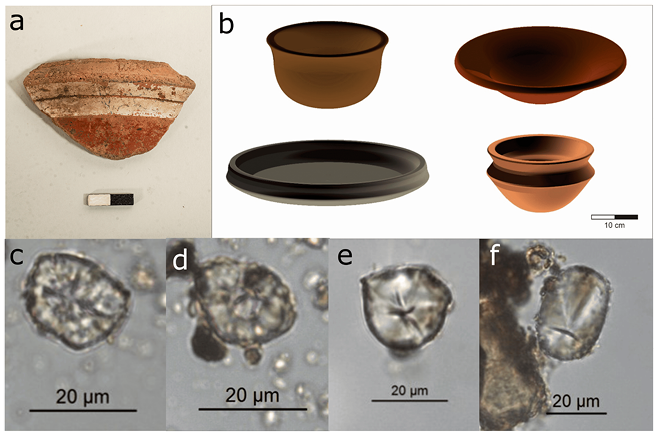
Figure 24 Long description
(a) A ceramic fragment with an inverted rim decorated with two bands of white-on-red slip. (b) Reconstructed images of four ceramic vessel shapes: a hemispherical bowl (d = 20 cm), an open bowl (d = 25 cm), a plate (d = 40 m), and a vessel with inverted rim (d = 20 cm). Underneath are four photos of starch grains that appear as transparent three-dimensional bodies. Two of them (c and d) are sub-circular and covered with cracks and pock marks. One of them (e) is hemispherical and has a cross-shaped fissure at its centre. The other (f) is oval-shaped and has a line-shaped fissure on one of its extremes.
While these results come from only one site, they offer an intriguing insight into the use of these first ceramic technologies in the Upper Madeira river. Did the consumption of fermented beverages ease the establishment of local alliances and long-distance trade networks by producers of Pocó pottery across vast expanses of the Amazon basin?
Case Study 3.3 Butchery Practices in Amazonian Animals: Opening Fish, Manatees, and Turtles
The preparation of animals involves a chain of gestures, sequences, and tools that vary depending on the ethnic group, characteristics of the animal, cook’s individual preferences, recipes, trade networks, and knowledge transmission. From an archaeological perspective, we have begun to reconstruct some of these operational sequences – especially for fish and turtles.
The preparation of fish depends on the texture of the meat, the animal’s anatomy (body shape, skin type), and the intended method of preparation (soup, roasting, smoking, etc.). Fish that will be boiled for soup should be descaled, but fish that are to be roasted need not be (Grenand & Grenand, Reference Grenand, Grenand, Aubaile, Bernard and Pasquet2004). Fish scales are found at Loma Salvatierra, Bolivia, though it’s unclear what tools were used to remove them. The clearest archaeological evidence of fish processing is the presence of cut marks. Most of these are found on the cranial bones and neurocranium (associated with the removal of the head) and on the pectoral fins (Prestes-Carneiro et al. Reference Prestes-Carneiro, Béarez and Bailon2016; Chahud & Okumura Reference Chahud and Okumura2020).
Some Amazonian catfish have sharp ossified pectoral fins that are coated with a mucous layer containing venomous elements that can irritate human skin (Wright, Reference 102Wright2009). At archaeological sites, these pectoral fins almost always show cut marks, suggesting they were removed immediately after slaughter (Prestes-Carneiro et al., Reference Prestes-Carneiro, Béarez and Bailon2016). Fish bones also show signs of burning, particularly in the bony plates that cover armored catfish (Callichthyidae and Loricariidae). Today, it is common to see these fish cooked with their plates intact as they protect the flesh from burning. The plates are only removed during consumption.
Fragments of turtle and tortoise plastrons and carapaces also display cut marks or signs of burning (Prestes-Carneiro et al., Reference Prestes-Carneiro, Béarez and Bailon2016; Ferreira, Reference Ferreira2022), consistent with the practice of opening the turtle from the belly and roasting it directly over a grill – using the shell as a cooking vessel (Figure 25). In shellmound sites of the Lower Amazon, we have found cut marks on manatee skulls, likely related to meat removal or head disarticulation. A systematic study of these marks in the future is needed to identify synchronic and diachronic patterns in animal processing in the Amazon.
River turtles: a) roasted whole, and b) in its shell
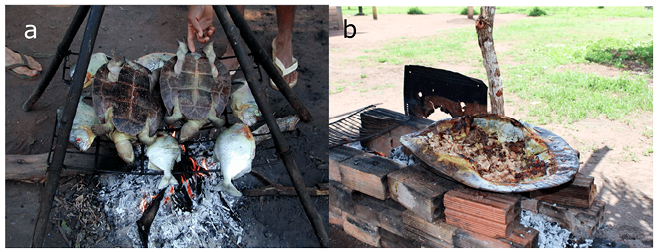
For us Indigenous peoples, food goes far beyond nourishing the body – it nourishes our spirit and our culture. Our food sovereignty is millenial, it is ancestral. We draw our food from the forests and rivers which were passed on to us by our ancestors who planted and cultivated our Amazon.
The Borari people still maintain an ancestral food bond, handed down from generation to generation: eating the ant we call saúva-taia. This species has a slight spiciness, a lemongrass-like aroma. It is still highly appreciated today and is added to tucupi broth with mingau. We also prepare it as paçoca or farofaFootnote 6. This food has medicinal properties for the body – it is good for heart palpitations — and it is also nourishment for our spirit. We believe that by eating the saúva-taia we strengthen our connection with our ancestors and the enchanted beings.
To keep our culture, our customs, our traditions alive, we need to fight for our territories, for our standing forest, for our rivers free from mining and dams, for biodiversity. The bem viver of Indigenous peoples is to protect our territories so that future generations may continue to live, to be healthy, and to remain connected to Mother Earth. We do not want our food poisoned with pesticides, nor with mercury that runs in our rivers. Our bodies are already sick, as are those of many other Indigenous peoples. We need our river free so we can continue to feed ourselves, with food security, spirit, and culture.
My name is Raimundo José Gama Sousa, and I am from the Kumaruara people. I left home when I was 9 years old to live in Santarém, in other people’s houses (…). I remember that when the river starts rising, clumps of grass float by, carrying fish, alligators – everything. And I wanted to get to the uruá (Poacea spp.) that they used to gather in large quantities to season and cook. I never saw them do it because we don’t eat it anymore, but where I live, there are still people who use uruá. It’s like a snail – you grab it by the shell, shake it, and the whole thing comes out.
There’s another animal we eat, and I’m going to tell you about it because I actually saw it being prepared. Those gongos (beetle larvae) that grow inside coconuts, those little white larvae – they used to take them out [of the shell], make farofa with them, and it was really tasty.
4 Threatened Environments, Threatened Foodways, and Paths to the Future
4.1 Environmental Change and Foodways
4.1.1 The Climate Emergency and Unsustainable Land-Use: A Positive Feedback Loop
The effects of the Climate Emergency in the Amazon are dramatic and will be further aggravated during the coming decades (Flores et al. Reference 82Flores, Montoya and Sakschewski2024). Mean temperatures are currently 1.2 C above average, increasing the frequency of extreme floods and droughts and leading to abrupt changes in hydrological systems, terrestrial and aquatic biodiversity, fire ecology, forest resilience and productivity, and carbon storage and sequestration (SPA, 2021). Global greenhouse gas emissions are projected to have an ever larger contribution to this scenario as current models predict warming of up to 4 C or higher if these are not curtailed, and the exposure of more than 90% of Amazonian species to unprecedented temperatures by 2100 (SPA, 2021). The most significant current driver of biodiversity loss in the Amazon is, however, deforestation (SPA 2021; Figure 26), which affects local temperature and precipitation, creating dry, flammable forest mosaics and fire feedback loops (Brando et al. Reference Brando, Balch and Nepstad2014; Cochrane & Laurence Reference 79Cochrane and Laurance2002). Brazil contains 58% of the Amazon rainforest but has been responsible for 77% of all its primary tree cover loss since 2001 (Larrea et al. Reference Larrea, Murmis, Peters and Nobre2021), mostly focused in the so-called “arc of deforestation” in its southern fringe. In addition to temperature changes and shifts in rainfall patterns, deforestation is also a major driver of defaunation. The removal of animal habitats is the main cause of declining wildlife populations, which seriously threatens the food sovereignty of Forest Peoples that rely on hunting for their subsistence (Batista et al. Reference Batista, Brocardo and Castro2025; Pörtner et al. Reference Pörtner, Scholes, Agard, Archer, Arneth, Bai, Barnes, Burrows, Chan, Cheung, Diamond, Donatti, Duarte, Eisenhauer, Foden, Gasalla, Handa, Hickler, Hoegh-Guldberg, Ichii, Jacob, 94Insarov, Kiessling, Leadley, Leemans, Levin, Lim, Maharaj, Managi, Marquet, McElwee, Midgley, Oberdorff, Obura, Osman, Pandit, Pascual, Pires, Popp, Reyes-García, Sankaran, Settele, Shin, Sintayehu, Smith, Steiner, Strassburg, Sukumar, Trisos, Val, Wu, Aldrian, Parmesan, Pichs-Madruga, Roberts, Rogers, Díaz, Fischer, Hashimoto, Lavorel, Wu and Ngo2019).
Different threats to Amazonian environments and peoples. a) Border between a soy bean plantation (left) and standing forest of the Xingu Indigenous Territory, Mato Grosso, Brazil, b) The Santo Antônio hydroelectric dam, one of two “mega-dams” situated on the Madeira River in Porto Velho, Rondônia, Brazil. c) The floodplain of the Amazon River during an extreme drought event in October 2024, d) Cattle farming on the floodplains near Prainha, Pará, Brazil
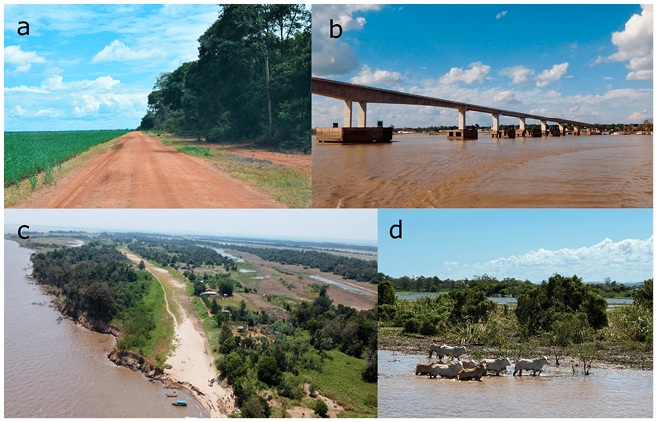
Figure 26 Long description
(a) A red dirt road leads off into the horizon. On the left, a soybean plantation. On the right, a wall of standing forest. (b) A very wide river is spanned by what looks like a bridge. It is a hydroelectric dam.(c) An aerial photo depicts an expanse of land next to a river containing large areas of newly exposed beaches. (d) A small herd of cattle wade through water in a floodplain area next to a protruding river bank.
Deforestation has accelerated since the 1970s due to the rapid expansion of monoculture farming and neoextractivist activities that supply largely grains and beef, as well as timber, fish, and other native species, for foreign export and domestic consumption within ever-burgeoning Amazonian cities (Hecht et al. Reference Hecht, Schmink, Abers and Nobre2021; Larrea et al. Reference Larrea, Murmis, Peters and Nobre2021) (Figure 27). Meanwhile, mining, road-building, oil drilling and the construction of 307 hydroelectric dams have been catastrophic – even deadly – for the animals and Forest Peoples who live from the region’s rivers (Castello & Macedo Reference Castello and Macedo2016; Fearnside et al. Reference Fearnside, Berenguer, Armenteras and Nobre2021). While these infrastructure projects – both legal and illegal – have been met with organized resistance by Forest Peoples since the 1980s (Hecht & Cockburn Reference Hecht and Cockburn2010), these are almost always ignored in favor of developers’ interests, even in cases where local consent is legally required. It is estimated that 51% of protected areas of the Amazon and 48% of indigenous territories specifically are threatened in some way by infrastructure projects, despite being essential strongholds for biodiversity conservation (SPA, 2021).
Commercial cargo boat passing very close to the Munguba archaeological site, Pará, Brazil
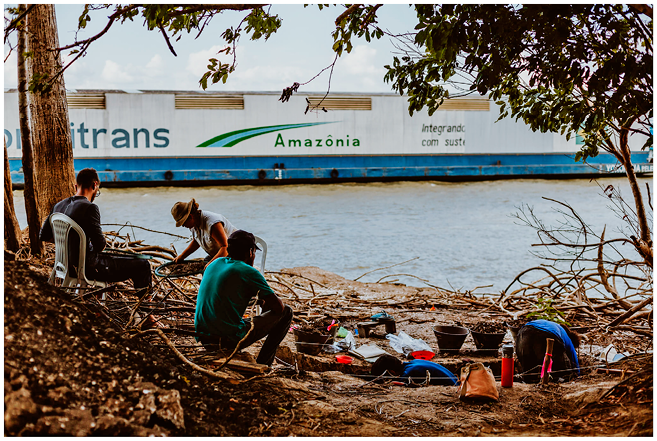
In the face of such socio-environmental upheaval, the food sovereignty and quality of life of many Amazonian peoples is increasingly under threat (Boxes 4.1 a 4.3) and many people depend increasingly on shop-bought food for their daily subsistence.
It is possible to see these modern changes played out in the plant and animal remains recovered from archaeological sites and lake sediments. In the ichthyofauna record there is a significant difference when we compare the species identified at archaeological sites with those sold commercially today. In archaeological sites, small-sized species are frequently found, whereas in modern commercial and industrial fishing, the targeted species are large (Castello & Macedo Reference Castello and Macedo2016). However, in the archaeological record, the bones of some fish species –especially pacu and arapaima – have vertebrae that are much larger than specimens in reference collections, consistent with the effects of modern-day overfishing (Furtado Reference Furtado1993; IBAMA 1995; Silva & Braga Reference Silva and Braga2017). The presence of archaeological assemblages where these two species are well represented is a unique opportunity to investigate whether industrial fishing may be the cause of the reduction in fish size.
If we compare ancient archaeological faunal spectra with present-day diets, we also observe that today’s diet is sometimes strikingly less biodiverse than those of the past. In central and southwestern Amazonia, studies identified >35 fish species (Prestes-Carneiro et al., Reference Prestes-Carneiro, Béarez and Bailon2016; Reference Prestes-Carneiro, Béarez and Shock2019). Today, commercial fishing in the Amazon rarely exceeds 20 species (Van Damme et al., Reference Van Damme, Carvajal-Vallejos, Rua, Van Damme, Carvajal-Vallejos and Molina Carpio2011). As yet, the available archaeobotanical data do not allow similar comparisons to be made. On the other hand, data from paleoecological records located in areas heavily occupied in the Late Holocene (with raised fields, geoglyphs, and other earthworks) show how the scale and amplitude of anthropogenic impacts since the 1970s (namely forest burning) is much greater than in the past (Watling et al. Reference Watling and Scheel-Ybert2024). This may have to do with the types of burn practised: while indigenous management practices often employ highly controlled, “cold” burns that enrich the soil and do not kill large plants, deforestation fires are extremely hot, leading to almost total biomass combustion and greater fire signals (Hecht & Cockburn Reference Hecht and Cockburn2010; Maezumi et al. Reference Maezumi, Robinson and de Souza2018b). Such records serve as a warning that Amazonian forests will not necessarily recover from these forms of modern land-use.
4.1.2 Cultural Responses to Past Environmental Change in the Amazon
The archaeological record is replete with cases in which past populations adapted their foodways in the face of climate and environmental change, but in the Amazon these cases are only recently coming to light (Case Study 4.1).
Data available so far place initial human occupation of the Amazon lowlands by hunter-gatherer groups by roughly 11,000 cal. BCE (Neves et al. Reference 92Neves, Furquim, Levis and Sachs2021b), at the tail end of one of the biggest environmental shifts in human history: the Pleistocene–Holocene transition. It was long assumed that Pleistocene groups were highly-mobile, large game hunters, but sites such as Pedra Pintada Cave (Monte Alegre, Brazil) and Cerro Azul (Middle Magdalena River, Colombia) are replete with carbonized remains of fruit and nut-bearing perennials and palms whose populations were likely managed in some way (Morcote-Rios et al. Reference Morcote-Ríos, Aceituno, Sicard and Rostain2014; 2026; Roosevelt et al. Reference Roosevelt, Lima da Costa and Machado1996; Shock & Moraes Reference Shock and Moraes2019). It is argued that the establishment of cultural forests would have facilitated – and perhaps even influenced the direction of – landscape occupation, in a process of counteractive niche construction (Shock Reference Shock, Bonomo and Archila2021; Shock & Watling Reference Shock and Watling2022). If this is true, then long-term investments in agrobiodiversity creation and forest productivity should be seen as a major feature of indigenous foodways since people arrived in the Amazon. It is through this lens that we must also interpret evidence of Early Holocene food production in places such as southwestern and northwestern Amazonia (see summary of Iriarte et al. Reference Iriarte, Elliott and Maezumi2020), which emerged in the context of more stable climatic and environmental conditions, and likely resource abundance (Smith Reference Smith2016).
If the Pleistocene–Holocene transition was a favourable period for the establishment of human occupation in the Amazon lowlands, climate change during the Middle Holocene (6,200–2,200 cal. BCE) is thought to have been largely unfavourable for people. During this time, an overall dryer climate predominated in western Amazonia and a wetter one in eastern Amazonia, and across South America radiocarbon dates attest to an overall decrease in human occupation (Riris & Arroyo-Kalin Reference Riris and Arroyo-Kalin2019). In the southwestern Amazon, however, human occupation intensified and left enduring marks on the landscape in the form of shellmounds (in wetland savanna areas) (Capriles et al. Reference Capriles, Lombardo and Maley2019; Pugliese Reference Pugliese2018) and the oldest accumulations of ADEs (along the banks of the Madeira river) (Mongeló Reference Mongeló2020; Watling et al. Reference Watling, Shock and Mongeló2018). Archaeobotanical data (summarized in Watling [in press]) shows an increase in plant cultivation activities during this period and the adoption of exotic cultivars that had probably already been “available” for some time via connections with the Andes. This suggests that people responded to environmental stress by occupying resource-rich areas (such as waterfalls and wetlands) and incorporating a wider range of cultivated plants into local foodways.
The archaeological record of the Late Holocene, which saw the return of wetter conditions to southwest Amazonia, and a dryer (though moist) climate in the eastern Amazon, is much more visible and better-studied. Around 1,000 cal. CE, the data point to a notable shift in the archaeological record of the Amazon that includes changes in the types of sites that were occupied (e.g. Saunaluoma et al. Reference Saunaluoma, Pärssinen and Schaan2018), population replacements (e.g. Schaan, Reference Schaan2004), and the appearance of fortification earthworks (e.g. Moraes & Neves, Reference Moraes and Neves2012). One study (Souza et al. Reference Souza, Robinson and Maezumi2019) has argued for close temporal synchronicity between these cultural shifts and the Medieval Climate Anomaly (Mann Reference Mann, Zhang and Rutherford2009), while also putting forward a theory about foodway resilence in the Amazon. According to the authors, there is a correlation, on the one hand, between politically-centralized, hierarchical social structures and foodways employing specialized land-use aimed at maximizing yields (the Casarabe Culture in Bolivia being the prime example), and on the other, between autonomous social structures and polyculture agroforestry involving ADEs, aimed at minimizing dietary risk. The study argues that societies employing the former land-use model were more vulnerable to the effects of climate change than those employing the latter.
While this remains a hypothesis, there is a growing body of literature demonstrating the benefits of agroforestry practices in mitigating the effects of climate change in smallholder farms (e.g. Lasco et al. Reference Lasco, Delfino and Catacutan2014; Tebkew et al. Reference Tebkew, Asfaw and Worku2024). It would also make sense that practices based on many cultivars with different tolerances to environmental stressors would be more resilient than those focused on a small handful of crops.
4.2 Food Sovereignty and Biodiversity
For a long time, Western academia viewed food production and biodiversity as antagonistic, with land often designated for one use or the other in a “land-sparing” or “land sharing” ideology. However, the last 10 years has witnessed a shift away from thinking about food production to thinking about food security and sovereigntyFootnote 7, and in perceiving food security and biodiversity as mutually attainable and intrinsically linked via feedback mechanisms (Fischer et al. Reference Fischer, Abson and Bergsten2017).
Of approximately 30,000 edible species on the planet, just 50 contribute to the top 90% of caloric intake, posing a severe threat to food security in an ever-changing climate (Khoury et al. Reference Khoury, Sotelo, Amariles and Hawtin2023). Local and diverse diets are often cited as a key way to improve food security and mitigate climate change (ex. Fischer et al., Reference Fischer, Abson and Bergsten2017), while a healthy, biodiverse ecosystem contributes to all aspects of food security (Blicharska et al. Reference Blicharska, Smithers and Mikusinski2019).
Forests and trees, in particular, provide enhanced resilience and a range of ecosystem services at a landscape scale, as well as being culturally valued and integral to local food systems and food sovereignty worldwide (Arnold et al. Reference 74Arnold, Powell, Shanley and Sunderland2011). In the Amazon, the positive feedback between indigenous people and food availability (agrobiodiversity) has both transformed forest composition and amplified food production (Flores & Levis Reference Flores and Levis2021). Contemporary Forest Peoples recognize the agency of their ancestors in the composition of the forest, and will often seek out these ecological niches to focus their economic activities (Posey & Balée Reference Posey and Balée1989; Ribeiro et al. Reference Ribeiro, Moraes, Valle, Colonese and Milheira2023)Footnote 8. In this sense, cultural forests can be considered “gastronomic landscapes”, where “culinary development and biosphere stewardship work together… for landscape substainability” (Jonsson et al. Reference Jonsson, Haider and Pereira2024).
The available archaeological data suggest that biodiversity conservation (enhancement or maintenance) and food security and sovereignty have gone hand-in-hand since the beginning of human occupation of the Amazon, and that they are mutually dependent. Take away biodiversity and food sovereignty suffers. Take away humans and biodiversity changes (Flores & Levis Reference Flores and Levis2021).
4.3 The Role of Archaeology
4.3.1 A Return to Ancient Ways?
Arguably, present-day environmental change in the Amazon is uniquely severe. The context in which Forest Peoples must now adapt to environmental change is completely different to 500 years, or even a century ago. The territorialization of indigenous lands has been fundamental in maintaining the autonomy of these groups, but has also left them with nowhere else to practise their traditional lifeways. Furthermore, the insertion of Forest Peoples’ subsistence activities into market economics ties their diets and productive activities to a market logic over which they have no control, leading to unpredictability and weakened food sovereignty.
In the 21st century, it has been common to discuss such trends as part of a wider global phenomenon understood as the Anthropocene (Crutzen & Stoermer Reference Crutzen and Stoermer2000). However, there is growing consensus that the concept of the Anthropocene is problematic, not least because it is an example of the Nature/Society dualism at its most elevated, and it is humans’ separation from nature that birthed the current global crisis (Moore Reference 90Moore and Moore2016). According to some (Haraway Reference Haraway2015; Moore Reference 90Moore and Moore2016), it is not just people but capitalism (or the Capitalocene) which is specifically at fault, “a world-ecology that joins the accumulation of capital, the pursuit of power, and the co-production of nature in successive historical configurations” (Moore Reference 90Moore and Moore2016: 7). This point of view resounds in numerous indigenous critiques (e.g. Kopenawa & Albert Reference 87Kopenawa and Albert2013; Krenak Reference Krenak2020, Reference Krenak2024). After all, not all humans are responsible. Traditional cultures and Forest Peoples across the world – including in the Amazon – have allowed symbioses to proliferate between humans and non-humans for millennia (Aparicio et al. Reference Aparicio, Moraes, Rapp Py-Daniel and Neves2024; Neves et al., Reference Neves, Junqueira, Levis, Carneiro da Cunha, Magalhaes and Adams2021a). Kopenawa & Albert (Reference 87Kopenawa and Albert2013) describe western culture as “commodity people”, whose obsession for accumulation is the cause of the falling sky, a cosmological event that symbolizes environmental collapse (Box 4.4).
Ailton Krenak (Reference Krenak2024) has proposed a return to ancient ways, arguing for the importance of reconnecting with the wisdom and ancestral traditions of indigenous peoples to rethink the relationship between western modes of thinking, the environment, and traditional communities (Box 4.5). It is in this sense that data about the past can be mobilized to think about the present and future of foodways, biodiversity, climate change, and all these factors which, as we have sought to demonstrate, are deeply entangled in the Amazon.
Recently, lists of plants found at archaeological sites are being mobilized to think about the restoration of degraded areas.
When we look at the accumulated evidence of how indigenous peoples have engaged with their environment, it seems that for most of the last 13 millennia their foodways and cultural practices favored agrobiodiversity and food sovereignty while also preserving forest structure and ecosystem services. This reflection highlights what would be the ideal “way out” of the current crisis: a focus on diverse diets that promote the health of cultural forests. However, it is also clear that these practices remain very much alive today among communities of Forest Peoples (Balée et al. Reference Balee, Honorato de Oliveira and Santos2020; Fausto & Neves Reference Fausto and Neves2018; Posey & Balée Reference Posey and Balée1989; Levis et al. Reference Levis, Flores and Moreira2018).
Recently, a scientific consensus has emerged in which Forest Peoples are deemed crucial to world-wide conservation efforts (Brondízio et al. Reference Brondízio, Aumeeruddy-Thomas and Bates2021; Levis et al. Reference Levis, Flores and Campos-Silva2024a, Reference Levis, Sarmento Rezende and Lima Barreto2024b). For example, we know that turtle conservation today is only possible thanks to the active participation of Forest Peoples in numerous turtle management programs throughout the Amazon (Freitas et al. Reference Freitas, Lopes and Campos-Silva2020). Similarly, many of the solutions for the balanced use of aquatic resources have come from local communities allying themselves with scientists to establish fishing agreements (McGrath et al. Reference McGrath, de Castro and Futemma1993). As well as embodying knowledge and practices that protect biodiversity, these communities can help expand western scientific knowledge, informing education and policymaking, and improving environmental restoration and monitoring (Brondízio et al. Reference Brondízio, Aumeeruddy-Thomas and Bates2021; Levis et al. Reference Levis, Flores and Campos-Silva2024a). Recently, the Science Panel for the Amazon Assessment Report (SPA 2021) made their number one recommendation for a sustainable Amazon: “the recognition and respect of the rights, and valorisation of the knowledge, of indigenous, traditional and local people as world heritage for their ecosystem services”. This being the case, beyond archaeology’s contribution in terms of learning from the past, it can also play a key role in support of Forest People’s fundamental rights, as we shall now see.
4.3.2 “Arqueologia Viva”
In the 21st century, archaeology in the Brazilian Amazon is being mobilized to support the claims of indigenous groups and other Forest Peoples to their traditionally occupied territories (Oliveira, Reference Oliveira2012; Rocha, Reference 96Rocha2017; Rocha & Honorato de Oliveira, Reference Rocha, Honorato de Oliveira, Odonne and Molino2020). By registering the material evidence of occupations that are disputed by external actors, archaeology can be combined with the ethnographic method to record the distribution of material culture, settlements, seasonal camps, and sacred sites that integrate Forest People’s territories (Oliveira Reference Oliveira2012). This is important because, despite constitutional law in Brazil which grants indigenous people exclusive use of their traditionally-occupied territoriesFootnote 9, of the 764 indigenous lands registered by the National Indigenous Foundation, only 448 of these are legally recognized and guaranteed any protection. Such reports record artefacts but also ecofacts such as cultural forests and palm and fruit groves that are also testimony to human occupations. In a type of “arqueologia viva”, indigenists that work to monitor the wellbeing of the 119 indigenous groups that choose to live in isolation in Brazil, must often travel deep into the forest to study and monitor their material remains (Cangussu Reference Cangussu, Furquim, Perez, Shiratori, Machado, Bruno and Neves2022). Such remains include abandoned campsites, from which it’s possible to determine who camped there, group size, mobility patterns, and hunting and plant management techniques, as well as clues in the forest itself (plants that show regrowth after cutting, evidence of honey or in-situ plant fiber extraction, etc.) (Cangussu Reference Cangussu, Furquim, Perez, Shiratori, Machado, Bruno and Neves2022).
But as well as doing archaeology for Forest Peoples, it is also important that it be done with and by them, for the discipline to democratize and become more relevant outside of academic walls. As we have already highlighted, it is common in the Amazon for archaeological sites to be occupied by Forest Peoples today, and to observe, for example, artefacts such as stone axes or ceramic vases being looked after, displayed, or even reused by local communities (Bezerra Reference Bezerra2013). Often, local peoples retain detailed knowledge of the locations of archaeological sites, even if there is no direct cultural affiliation to speak of. As such, archaeological surveys conducted with the participation of local people – called “consultative” rather than “opportunistic” surveys (Rocha et al. Reference Rocha, Beletti and Rapp Py-Daniel2014) – are often more fruitful. Collaborative archaeology takes this further by including local groups in the construction of the research, from defining the project’s objectives, to gathering and interpreting data, and there are several examples of these approaches being used (e.g. Cabral Reference Cabral2014; Heckenberger et al., Reference Heckenberger, Kuikuro and Kuikuro2003; Machado Reference Machado2016; Silva & Noelli Reference Silva and Noelli2015, Case Study 4.3).
In the last 15 years Amazonian archaeology, its methods and practices, has been transformed thanks to the presence of Forest Peoples within archaeology courses (Box 4.6). The expansion of higher education into remote areas of the Amazon and the creation of affirmative action policies to guarantee both access to and permanence of students from traditional communities, is changing the way and the reasons why archaeology is practised. In the Federal University of Western Pará, Santarém, where one of us (GPC) worked for several years, this has opened exciting new areas of research within the discipline and led to reflections about how archaeology is taught within academia. From an almost total absence of Forest Peoples’ histories in History books, these students have been working to document contemporary or recent archaeologies of their peoples (Jacome et al. Reference Jácome, Py-Daniel and Prestes-Carneiro2020). Much more attentive to living people than to objects (Wai Wai Reference Wai Wai2024), they bring forth an archaeology that interprets the European invasion from the viewpoint of the peoples who actually experienced it in practice. This type of archaeology has shown to impact the lives of traditional communities in the present: through the production of data that will support new textbooks and teacher training for basic education, through self-recognition, and through the demarcation of their territories. In the long term, this archaeology, connected to present-day demands, supports the struggle for rights within these communities, such as access to healthcare and differentiated education.
Case Study 4.1 Observing Mid-Late Holocene Climate-Change in the Archaeological Record of the Monte Castelo Shellmound
In the seasonally-flooded savanna-forest mosaic of the Guaporé Wetlands in Rondônia, Brazil, recent archaeological investigations have offered insights into cultural responses to Mid-Late Holocene environmental changes in the region.
The Monte Castelo shellmound measures approximately 120 m in diameter and 6 m high. Situated atop an ancient levée, during the wet season its surroundings are completely flooded and it is one of the only islands of dry land for kilometers around (Figure 28). Archaeological research initiated in the 1980s (Miller Reference Miller2013) and continued recently (Pugliese et al. Reference Pugliese, Zimpel, Neves, Rostain and Jaimes Betancourt2017; Reference Pugliese2018) have revealed a complex stratigraphy composed of 22 archaeological layers, divided into the Sinimbu (4,000–3,000 cal. BCE) and Bacabal (2,300 cal BCE–1,300 cal. CE) phases. In the present, the shellmound is part of the traditionally occupied territory of the Tupari ethnic group, who are also our research partners.
a) Monte Castelo shellmound in the wet season, b) Excavation of the Monte Castelo shellmound in 2016. The thick constructive layers of whole gastropod shells mark the end of the Sinimbu phase
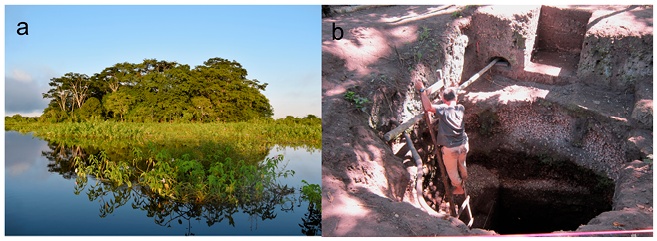
Icthyofauna analysis conducted throughout the site stratigraphy show a clear change in fish species consumed between the Sinimbu and Bacabal phases (Prestes-Carneiro et al. Reference Prestes-Carneiro, Béarez and Shock2019). In the former, species from swamps and secondary rivers predominate, particularly the swamp eel, which is a burrowing, drought-tolerant species. In the latter, from 2,300 cal. BCE onwards, the diversity and quantity of fish increases, and the species represented are from flooded forests and major rivers (Prestes-Carneiro et al. Reference Prestes-Carneiro, Béarez and Shock2019). Meanwhile, the archaeobotanical record contains maize and squash, alongside fruits from palms (particularly the genera Bactris sp., Astrocaryum sp., Euterpe sp. and Oenocarpus sp.) and Brazil nut throughout the whole stratigraphy, as well as other species that are restricted to either the Sinimbu or Bacabal phase (Furquim et al. Reference Furquim, Watling and Hilbert2021). Of the latter, the Sinimbu phase contains more species from swamps, and open habitats, and the Bacabal phase contains more species from upland forests, potentially reflecting the southward expansion of humid evergreen forests to the region (Smith & Mayle Reference 99Smith and Mayle2018).
With these data, it is possible to see how the establishment of the modern flooding regime led to both continuity and change in local diets, which appear to have focused on a broad range of aquatic resources, alongside domesticated, wild and managed plants.
Case Study 4.2 Freshwater Manatees and Amazonian River Turtles: Ancient Foods at Risk of Modern Extinction
As previously discussed in this Element?, turtles, tortoises, and manatees (Figure 29) were important food sources in the pre-colonial Amazon, however their consumption was so intense during the colonial period and up until the early 20th century that most of these species are now in a concerning state of conservation.
a) Turtle fishing with a harpoon in the Lower Amazon region b) Freshwater manatee mandible found at the Munguba shellmound, Pará, Brazil
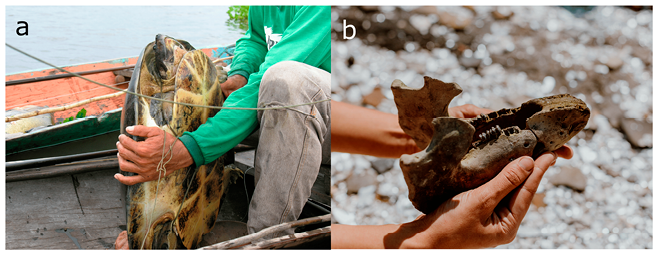
There are 16 species of chelonians in the Amazon (IBAMA 1989). In the pre-colonial period, in addition to turtle bones, archaeological evidence has been found of turtle corrals (Moraes Reference Moraes2006; Prestes-Carneiro et al. Reference Prestes-Carneiro, Sá Leitão Barboza and Sá Leitão Barboza2021), and there is ethnographic evidence of enclosures constructed to hold tortoises (Pezzuti et al. Reference Pezzuti, Lima, da Silva and Begossi2010). The consumption of chelonians and their derivatives was and still is so important in the Amazon that signs of fishing pressure on the large Amazonian river turtles (Podocnemididae spp.) have been documented since at least the 19th century. Turtle oil became a trade commodity, used for frying food and fueling oil lamps in Amazonian cities (Bates Reference Bates1892; Silva Coutinho Reference Silva Coutinho1868). As such, these species have experienced depopulation (Correa et al. Reference Corrêa, Braga and Laurido2019), leading Amazonian countries to implement a series of conservation measures since the early 1930s (IBAMA, 1989; Júnior et al., Reference 86Júnior, Balestra, Luz and Balestra2016). Despite these efforts, Podocnemis unifilis is currently classified as Vulnerable on the IUCN Red List, but potentially needs reclassification as Endangered (Rhodin et al., Reference Rhodin, Iverson, van Dijk, Stanford, Goode, Buhlmann and Mittermeier2021).
The first archaeological manatee remains were discovered in 2022 in the Lower Amazon (Santarém and Porto de Moz areas, Pará State). Manatees live in the calm waters of lagoons and rivers rich in floating vegetation. In the pre-colonial archaeological record, remains of these animals (skulls, ribs, long bones) appear in large quantities and with many cut marks, indicating that they were used not only for food but also to make tools and artifacts. Throughout the colonial period, this species was heavily exploited for its meat (which could be stored for months in its own fat), leather, and fat (for oil lamps) (Pereira, Reference Pereira1974; Júnior et al., Reference 86Júnior, Balestra, Luz and Balestra2016). This historical exploitation, combined with the fact that these animals are often accidentally caught in fishing nets, has led to the species also being classified as Vulnerable by the IUCN.
Other pressures on aquatic environments have also contributed to animals’ threatened conservation state. Deforestation, large vessel traffic, dam construction, and beach destruction are damaging the flooded forests that make up their habitats. Working with the zooarchaeological remains of these species offers an opportunity in the coming years to work alongside taxonomy, ecology, and conservation biology to answer questions that can help in preserving these species: Do these species still occur in areas with archaeological sites? How might environmental changes around these sites have affected their distribution? Is it possible to understand what they ate in the past? Has there been a reduction in the size of ancient populations compared to modern ones?
Case Study 4.3 Fire and Foodways in the Face of Climate Change and Deforestation in the Xingu Indigenous Territory
The Xingu Indigenous Territory (TIX) in Mato Grosso state, Brazil, lies in a transitional area between humid evergreen forest and savanna in southern Amazonia and is currently home to more than 7,000 indigenous people belonging to 16 ethnic groups. Its unfortunate position within the arc of deforestation has accelerated local effects of the Climate Emergency, leading to severe fires and widespread forest loss (Silvério et al. Reference Silvério, Oliveira and Flores2022), alongside river pollution through the upstream release of agrotoxins. These factors, among others, are threatening the traditional foodways of Xinguano peoples, who derive the vast majority of their calorific intake from manioc (consumed as beiju) and fish (Box 4.3).
A collaborative archaeology project started in 1992 between the Kuikuro indigenous group, archaeologists and anthropologists has identified Xinguano cultures as the direct descendants of a complex regional settlement system that reached its peak by approximately 1,250 cal. CE (Franchetto et al., Reference Franchetto and Heckenberger2001; Heckenberger, Reference Heckenberger2005; Heckenberger et al., Reference Heckenberger, Russell and Fausto2008; Figure 30). Materialized by alignments of fortified villages, ceremonial centres, roads, ADEs and wetland management systems, as well as forests containing a range of local domesticated species (including the pequi tree; Smith & Fausto Reference Smith and Fausto2016), this system appears to attest to dense, thriving indigenous populations during what would have been the height of regional climatic drying associated with the Medieval Climate Anomaly (Novello et al. Reference Novello, Vuille and Cruz2016).
a) Artist’s conception of the Kuhikugu archaeological site, b) Agafafa Kuikuro and Kumessi Waura talking about Kuikuro material culture. In the foreground are ceramic cooking vessels, a gourd container, and ornaments made from gastropod shells. c) Dunga and Huke Kuikuro collecting soil samples for phytolith and chemical analysis, d) Kalutata Kuikuro operating a drone in Ipatse village
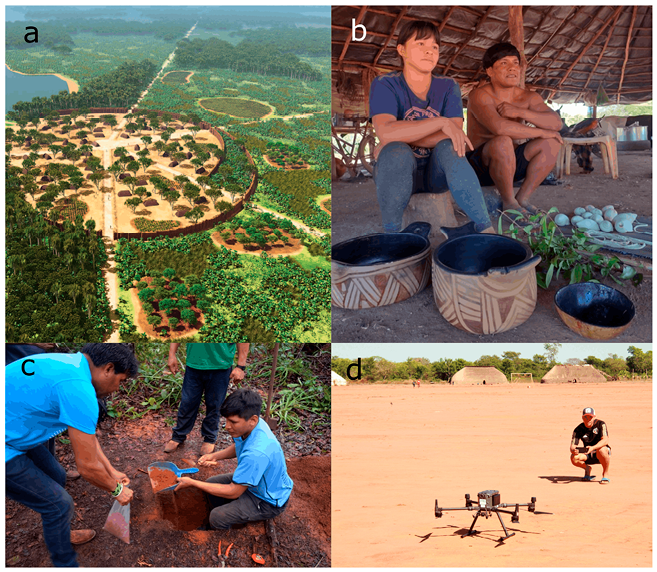
Figure 30 Long description
(a) A reconstructed aerial image of a circular walled village next to a water body. Inside the village are dozens of thatched longhouses and some trees. Four long, straight roads irradiate from the central plaza area. Outside the walls are patches of fields and modified forest. (b) A couple sit on a bench looking in the same direction. On the ground in from of them, two decorated ceramic vessels, a gourd container, a plant, and gastropod shells are laid out for viewing. (c) A young man is sitting on the ground with his legs inside of a small excavation. He is holding a dustpan containing reddish soil that has been collected from the profile and is being transferred to a plastic sample bag that is held open by a second man. (d) A young man is crouched on the bare ground of a village plaza holding a remote control and looking at a drone which is in the foreground. In the background is a row of thatched longhouses with forest behind them.
A new feature of the Kuikuro Ethnoarchaeological Project has been the creation of a cloud-based geographic information system (AIKAX Geoportal) which incorporates archaeological data with data from remote sensing and heritage mapping, carried out by the Kuikuro using phone apps, in order to map and monitor their biocultural heritage (Levis et al. Reference Levis, Flores and Campos-Silva2024a). The types of data collected include toponyms, traditional narratives, natural and anthropogenic landscape features, and animal and plant surveys. Partly conceived in order to give the Kuikuro exclusive rights over the access and use of social-ecological data collected in their territory, the portal has the potential to become a powerful tool for the extroversion of indigenous knowledge both inside and outside of the community, and for negotiating state protections to their traditionally occupied territory.
Meanwhile, new ethnoarchaeological research focused on archaeobotanical and ceramic analyses aims to shed light on the deep history of Xinguano foodways. While previous studies comparing contemporary and archaeological ceramic repertoires suggest that foodways have changed little from precolonial to modern times (Heckenberger Reference 84Heckenberger1998), the overall contribution of manioc in relation to maize and/or other species to past diets can still be questioned. As related by Afukaka Kuikuro (Box 4.3), there is much food from his childhood that people do not make any more, such as maize tortillas, and many of these cultivars require cultivation on Amazonian Dark Earths. Is it possible that more resource-diverse diets focused on ADE agroforestry were more of the norm in precolonial times? Is a return to such diets a possible path towards regaining some of the food sovereignty currently being lost in the TIX?
I live in a floodplain region. Here, our main activity is fishing. Then comes raising cattle, pigs, chickens, and shrimp, which become a refuge during the winter season (when the water rises a lot). We use matapi traps to catch the shrimp. If I had to choose one word to define the várzea, it would be abundance. I’ve never found a place as abundant as this, and I’ve lived in upland areas. Here, you can fish, hunt, and farm. If you know how to work with the land, you’ll have food all year round. We have a healthy diet here, based on fish, we produce from our suspended gardens (acerola, passion fruit), and sweet potato (I grow that too). But there’s a phenomenon happening here: erosion of the land where our houses are. The banks of the Amazon are constantly eroding. During the dry season, the water eats away at the land from below. During the flood season, the water erodes the topsoil. The problem now is that in the winter, large ferries pass too close to the shore. The waves are massive, and trees and houses fall into the Amazon River. There are a lot of accidents – ships crashing into homes.
My message is this: if we as human beings don’t stop and reflect – if we don’t look at the nature we still have (which is little compared to what we once had) – we are going to lose it all. We already see so much trash in the river. In the future, we won’t have fish to catch, we won’t have clean water to drink, and we’ll have to move to another planet. We don’t want more projects – we want solutions. Solutions that actually reach us, the riverine people.
“The people are asking for help. They are bathing in dirty water, mining is destroying their territory. The miners that are arriving dig enormous holes. What will they leave for the people? Simply it is money, which they say they will give [us] for health and education. But we already have money. We already have rights to all of this. You don’t need to build a hydroelectric dam or a mine close to our territory to sell us that. You are buying indigenous people. We don’t want that. We want life. We want to be able to see our children bathing in clean water, we want to see our elders have the hope of saying to our youngsters that you will guarantee the territory for us.”
“…The guarantee of demarcation of the land for our children is necessary. Because if it isn’t guaranteed, where will we go? Who will preserve all of this? Because here, in the Amazon where I live, it’s pasture, it’s soy beans, now a hydroelectric project, a railway, ports to store soy beans to be transported to Europe, so we are losing space… If the soy farmers want so much land to plant soy beans and put agrotoxins on everything, why can’t we have territory for us? Why can’t we have land to guarantee the integrity of the forest?”
“No money buys the life of indigenous peoples. Not only the land but also the principal cultural manifestations of the Munduruku are being heavily impacted by the advance of activities like hydroelectric dams in the region. Not even the dead are respected. Different to what happens with the white people, whose cemeteries are treated as sacred spaces, in the case of the Munduruku, the cemeteries are completely destroyed by the invaders. And the spirits are angry.”
When we were still young, we cleared [the forest], we planted manioc, and afterwards I thought, myself and my brother-in-law, to look for terra preta, then clear there too. You can do that. We cut [the vegetation] down, burn it, and we plant. When the rain falls, we plant corn. Lots of corn. A lot. Then, every day, every year, the people, the community, would clear the undergrowth in the forest to plant manioc. Manioc. There is a type of very white manioc that is very sweet. It’s sweet, sweet, used only to make perereba, a delicious broth. Today it is very difficult. The fires arrived in every village. Climate change. Then they came here. To everyone here in the Xingu. The fires are not good for plants, for manioc. If they come before planting manioc, it dies. My God! Then we wait for the rain, the rain that falls late now. In our grandparents’ time, it was absolutely certain that the rain would come in September. Rain. Done. Then the corn sprouts, the manioc… This is how it was. Then the wood dried, everything dried (….). It was like that, you see. Today it’s very difficult. None of the houses here have fields. Here… there… every house. We suffer. Really suffer. The women [usually] harvest manioc. This month they gather manioc starch, make manioc dough. Every year we store it, make beiju, make flour. Just like that. So today there is an even bigger change occurring because lots of animals are appearing, you see. Peccaries. In every home. Afukuri, Lahatua, Mehinaku… in every region. That’s how it is, you see. These days the young people don’t work any more, they don’t plant corn. Noone plants it. That’s why I’m very worried. It was I who planted a lot, who cleared [the forest], worked the land, planted corn. I adore corn, you know? Young people today are only interested in studying. They don’t think about planting. So it’s change, you see? A lot, a lot. And that’s how we are now, us Xinguanos.
In the beginning the first white people’s land looked like ours. It was a land where they were as few as we are now in our forest. Yet little by little their thought strayed onto a dark and tangled path. Their wisest ancestors, those whom Omama created and gave his words to, died. Their sons and grandsons had very many children in their turn. They started to reject the sayings of their elders as lies, and little by little they forgot them. They cleared their entire forest to open bigger and bigger gardens. Omama had taught their fathers the use of a few iron tools. They were no longer satisfied with them. They started desiring the hardest and most cutting metal, which Omama had hidden under the ground and the waters. They began greedily tearing minerals out of the ground. They built factories to melt them and make great quantities of merchandise. Then their thoughts set on these trade goods, and they became as enamored with them as if they were beautiful women.
They soon forgot the beauty of the forest. They told themselves: “Haixopë! Aren’t our hands so skilled to craft these things? We are the only ones who are so clever! We truly are the people of merchandise! We will be able to become more and more numerous without ever lacking for anything! Let us also create paper skins so we can exchange them!” They made money proliferate everywhere, as well as metal pots and boxes, machetes and axes, knives and scissors, motors and radios, shotguns, clothes, and sheet metal. They also captured the light from the lightning that fell to the earth. They became very satisfied with themselves. By visiting each other from one city to the next, all the white people eventually imitated each other. So the words of merchandise and money spread everywhere on their land. This is what I think. By wanting to possess all this merchandise, they were seized by a limitless desire. Their thought was filled with smoke and invaded by night. It closed itself to other things. It was with these words of merchandise that the white people started cutting all the trees, mistreating the land, and soiling the watercourses. First they started all over their own forest. Now there are few trees left on their sick land, and they can no longer drink the water of their rivers. This is why they want to do the same thing again where we live.
“In a not-so-distant future, we will all be transformed into spectators. We won’t need to do anything anymore: people will connect as soon as they wake up, just like a workers punching in, and then disconnect when it’s time to go to sleep. And we’ll be able to consume everything we want throughout our lives because Capitalism will provide everything for us! Professor Conceição Evaristo said something brilliant: People find it easier to end the world than to end Capitalism. It’s true, we’ve simply become complacent about the idea that capitalism will never end…”
“I’m still shocked that most political leaders…are so alienated that they don’t realize that if we don’t open ourselves to this vast cultural matrix, we’ll just deepen the disaster we’re aready mixed up in, including from an environmental perspective… Because the native people have their contributions to this debate… about ideas of nature, ecology and culture. If we’re able to open ourselves up to this abundance, political activity will just be one more dimension of an existence and not a predatory profession, as it has been for most of the twenty-first century, the century of neoliberalism, whose invention has served only to subjugate bodies and enforce servitude. To escape from servitude is also to be open to the idea of occupying spaces, including the space of politics and the state, and I hope that we can help breathe new life into these environments as much as possible, as well as our rivers, which generously flow together and share their power.”
I wanted to talk a little about the relationship of the Waiwai with Archaeology, and especially about the Waiwai way of doing archaeology. The discipline itself is new for us as well, but the relationship of Indigenous peoples with their own history has always been present. In my doctoral research I had the chance to carry out an archaeological expedition in my own territory, in search of archaeological sites together with the knowledge holders of my people. What I could see is that the way Indigenous peoples find archaeological sites is different from that of the karaywa (non-Indigenous, “white” people). The Waiwai do not want to excavate the archaeological site, to take the evidence from the surface. They do not pay attention to the objects; they pay attention to the trees. The trees are markers of the site, markers of time – they indicate something very ancient. The larger the tree, the older it is. Height also indicates great age. If they find these markers at a site, it is an ancient village. It works like this: when people clear a space in the forest to live, they cut down the trees, but the seeds and roots remain in the soil for a while. Over time, people move away, but specific trees remain, marking the archaeological site. For Indigenous people, we do not need to see the objects when we visit the site. As a student of archaeology, when I was digging with a machete, they told me: “You will not see the evidence now, because they are asleep, they are quiet. Only when we open a field will they awake – we will wake them up with the opening of the field, the opening of the place.” This is the scientific knowledge of Indigenous peoples showing human action. This is the way the Waiwai do archaeology, and I am trying to learn better how to identify these marks, in order to distinguish landscapes shaped by humans from natural landscapes. The science of non-Indigenous people cannot do archaeology the way Indigenous peoples do, and vice versa. So, we Indigenous researchers are in between – we are trying to translate these two worlds both for Indigenous peoples and for the karaywa. Western archaeology has long built its discipline with its own theories, and we Indigenous peoples are also building our own theories based on traditional knowledge. We do archaeology with living people. I could not do it without the living people in my region; I must produce archaeology together with my people, to show how we, Indigenous peoples, understand, see, and interpret things and objects. Within objects are inscribed the stories, the celebrations, the rituals. In these small things our histories are written. The karaywa always want to place us Indigenous peoples in the past, because it is easier. But my father always tells me: “I am Indigenous, does that mean I am ancient? Xamen, are you ancient? Then why do you consider Indigenous peoples to be ancient? We are alive in the present, so we must speak of the present, not only about the past.” We are past and present connected. That is my way of understanding living archaeologies. We, Indigenous peoples – living, current, future – are building the future from ancient things, and these ancient things today are helping many people. For example, even before colonization, the Waiwai people always built new villages on terra preta (Amazonian dark earth), on top of ancient villages. Recently they started to do it differently, and then they reconsidered: “No, we are mistaken.” The Waiwai are relearning to rebuild villages on terra preta. These are the “good places”: places of fish, of houses, of wood, of fruit trees. So, they chose these certain places to live – the right ones for community life. Today, Indigenous peoples are seeking to return to occupy these ancient places to rebuild community, because they are good places, already inhabited, already lived in. People already have experience of these places. For me, this is Waiwai Archaeology: to build a future that continues the practices of the past and to revive life close to those who came before us.
5 Conclusion
In this Element, we have attempted to present some of the new and exciting directions that foodways research is currently undertaking in Amazonian archaeology. Our focus has been as much upon the present as the past, since it is impossible (and arguably unwise) for archaeologists to study past food without understanding contemporary food in the region. Furthermore, the particular challenges facing the Amazon and its peoples is, as we have attempted to show, an area in which archaeology is able to contribute, providing as it does a long-term view of indigenous history and socio-environmental interactions.
The archaeological study of foodways in the Amazon is really only beginning. The number of people studying Amazonian archaeology in the 1990s did not exceed fifteen. Today, this community brings together dozens of researchers, about 30 of whom work with archaeobotany and zooarchaeology. Thanks to the advancement and exponential growth of this group, it was possible to produce a book dedicated to the archaeology of food in the region. Many of the studies we have cited here are pioneering which means that as well as producing new data about ancient foodways, they are also laying the basic methodological and technical groundwork, and constructing the first reference collections, for their object of study. Isotopic and organic residue studies are particularly novel and will undoubtedly contribute much to foodways research in the coming years.
As we have seen, Amazonian foods are rich, biodiverse, and nutritious and Forest peoples are the guardians of this culinary knowledge. Many recipes were lost, but many are still alive, either in people’s memories or in their everyday practices. In this sense, zooarchaeology and archaeobotany can function as libraries of ingredients, whether excavated or still buried in archaeological sites, that can help recover foods and techniques that had fallen into disuse and contribute to rethinking food dynamics in the present. We thus conclude our contribution by highlighting the importance of investing more research and resources into the study of Amazonian foodways, as well as of including Forest Peoples in the design, implementation and interpretation of archaeological data. Combining western and indigenous science to understand past foodways in the Amazon has the potential both to enrich the discipline and to enhance the socio-environmental resilience of the people that hold the key to its conservation.
Acknowledgements
We are grateful to the many people who supported us in the task of gathering and reviewing so much information on the archaeology of food in the Amazon. Our special thanks go to Adelina Borari, Afukak á Kuikuro, Elinalda Gama da Silva, Jaime Xamen Wai Wai, Leanderson Brito de Oliveira and Raimundo José Gama Sousa for their contributions which were made through interviews or written texts created especially for this Element. Afukuká sadly passed away during the production of this Element. A key figure in defending indigneous rights and cultural traditions, he was also a pioneer of collaborative archaeology and long recognized the power of understanding the past to construct the future. He will be sorely missed. We are also extremely grateful for the generosity of those who granted us access to their photographs and images included throughout the text: The Museum of Archaeology and Ethnology (University of São Paulo), the Kuikuro Indigenous Association of the Upper Xingu (AIKAX), Ader Gotardo, Asafe Eskavron, Barbara Valle, Carla Jaimes Betancourt, Carlos Augusto da Silva, Carlos Zimpel, Diana Mirela Toso da Silva, Edson Lopes, Eduardo Neves Tamanha, Estevão Silva, Gilson Vasconcelos dos Santos, Heiko Prümers, Laura Furquim, Martijn Van den Bel, Michael Heckenberger Schmidt, Myrtle Shock, Nadege Mézié, Philippe Béarez, Robertá Sá Leitão Barboza, Stéphen Rostain, Otekmi Wai Wai, Thiago Kater, Tiago Hermenegildo, and Vinícius Honorato de Oliveira. Many of these people are also dear friends and colleagues with whom we have shared many discussions about food and archaeology that have ultimately shaped the work presented in this Element.
Katheryn C. Twiss
Stony Brook University, New York
Katheryn C. Twiss is an archaeologist who studies ancient foodways in order to learn about social structures in the prehistoric and early historic past. Her primary areas of expertise are southwest Asian prehistory, zooarchaeology, animal management and symbolism, and life in early farming communities. Dr. Twiss wrote The Archaeology of Food: Identity, Politics, and Ideology in the Prehistoric and Historic Past (Cambridge University Press, 2019) and edited The Archaeology of Food And Identity (Southern Illinois University, 2007). She has published on topics ranging from feasting in early farming villages to Mesopotamian ceremonialism.
Alexandra Livarda
Catalan Institute of Classical Archaeology
Alexandra Livarda studies human-plant interactions through time and what they reveal about agronomy, commerce, social structures, perceptions, and identities in the past, but also how these may impact the present. She specialises in archaeobotany, Aegean archaeology, Roman commerce and is developing new methodological tools for the identification of past agricultural practices. Dr. Livarda has directed or (co)/directed archaeobotanical research in several projects, including some of the most emblematic sites in the Aegean, such as the Little Palace at Knossos and Lefkandi. She has published on a range of topics from the emergence of agriculture to the development of tastes and food commerce in the historic past.
About the Series
Elements in the Archaeology of Food showcase the vibrancy and intellectual diversity of twenty-first century archaeological research into food. Volumes reveal how food archaeology not only illuminates ancient political manoeuvres, social networks, risk management strategies, and luxurious pleasures, but also engages with modern heritage management, health, and environmental conservation strategies.