


1 Rethinking Language Discordance: A Normative Approach to Intercultural Health Communication
Health Communication, as a field of research, is relatively young. Health Communication and the Journal of Health Communication, two leading academic journals in the field, were established in 1989 and 1996, respectively. Building on medical sociology’s interest in examining system-level disparities and injustice (Bury, Reference Bury1986), communication scholars have argued that communication is the focal point through which individuals and communities negotiate meanings and coordinate actions. Communication is how we embody our values and principles through strategic actions.
When reflecting on the conceptualization of culture in health research, Hsieh and Kramer (Reference Hsieh and Kramer2021) explained,
Culture is an essential factor in shaping individuals’ understanding and behaviors in healthcare settings. Traditionally, the fields of public health and health communication have treated culture as an important caveat, noting that many of the findings may not be valid or applicable to individuals and organizations from non-western cultures. How can culture be an important contextual factor yet functions [sic] as a “caveat,” an outlier that creates noise in observed patterns? More importantly, such an approach to culture in health contexts (or communication in general) also fails to account for the roles, functions, and impacts of culture in the West. … . If western, modern, and/or industrialized societies are under the influence of culture, how can we theorize culture to explain our understanding and behaviors of health and illness, not just as a caveat or a contextual factor for non-western people but for all people?
We will first examine how cultural systems create blind spots in our ability to understand and conceptualize the meanings and functions of our social practices. Using language discordance as an example, we will explore how taken-for-granted assumptions have shaped our understanding of and solutions to health disparities experienced by people who do not share the same language with their providers. Finally, we will introduce Cultural Lenses and Shared Horizons (CLASH), a communication theory of intercultural health communication, to foreground the structure of the Element.
Theory Development and Knowledge Structure in WEIRD-based Literature
Starting in the 2010s, researchers have become increasingly critical of the foundations of social science research (Henrich et al., Reference Henrich, Heine and Norenzayan2010), noting that our failure to recognize the complexity and diversity of human experiences has resulted in blind spots in our research designs and findings. When psychologists Joseph Henrich and colleagues (Reference Henrich, Heine and Norenzayan2010) first coined the term WEIRD participants (i.e., research participants drawn from Western, Educated, Industrialized, Rich, and Democratic societies), their initial concerns centered on how the sampling bias can compromise the generalization of findings about human nature and behaviors. A review of research publications from 2006 to 2010 in high-impact journals of developmental psychology found that 90.5 percent of participants were drawn from WEIRD populations (Nielsen et al., Reference Nietzsche and Hollingdale2017). Despite the overreliance on WEIRD populations in western-based studies, researchers from various fields, including economics, cognitive science, psychology, and philosophy, have provided strong empirical evidence demonstrating that WEIRD populations differ from other populations in economic preferences, social behaviors (e.g., positive reciprocity, prosocial sharing, and patience), mating psychology (e.g., jealousy), personality structure, moral judgment, flexibility with social norms, and even sensory perceptions (e.g., visual perception, spatial reasoning, and olfactory categorization; Apicella et al., Reference Apicella, Norenzayan and Henrich2020). Notably, the WEIRD concept was “not intended to imply a dichotomous distinction between WEIRD vs. non-WEIRD or to suggest psychological uniformity within and under these two labels” but to raise awareness about the richness, diversity, and complexity of human societies, cultures, and beliefs (Apicella et al., Reference Apicella, Norenzayan and Henrich2020, p. 319).
The concerns about WEIRD populations that dominate scientific research are not just about sampling bias, but include concerns about knowledge production that structures our understanding of the world, our reality (Hsieh, Reference Hsieh, Ortega, Martínez, Lor and Ramírez2024a; Hsieh & Morin, Reference Hsieh, Pitaloka and Johnsonin press). WEIRD-based research made whiteness invisible (Frankenberg, Reference Garb2001). Clancy and Davis (Reference Clancy and Davis2019) explained that modern science “has developed within white Western European culture; this limited and limiting focus trickles down to influence not only our methodologies but also the questions we find important and the ways in which we interpret results” (p. 171). A review of publications between 1989 and 2010 in Health Communication, a top-tier journal in health communication, also found a similar trend with the nationality of the first authors being the United States (90.5%), followed by Canada (2%) and Australia (1.5%; Kim et al., Reference Kim, Park, Yoo and Shen2010). Clancy and Davis (Reference Clancy and Davis2019) concluded, “white Western European male perspectives and values have long dictated which questions we find worthy of answering and frame how we understand the fundamental nature of research” (p. 176; see also Mukherjee, Reference Mumford2020). Because such perspectives and values become taken for granted and embedded in the process of knowledge production, they become invisible, part of the norm.
Echoing broader trends in the social sciences, communication scholars have also reflected on the knowledge structure embedded in the discipline. A review of norm-based publications in Health Communication between 1989 and 2010 found that norm-based work has been based mainly on college student samples in the United States, confined to individual-level perceptions, and failed to consider sociological and cultural factors in shaping individuals’ understanding, expectation, and practice of social norms (Mollen et al., Reference Morales and Yong2010). In short, “communication scholarship normalizes Whiteness” (Chakravartty et al., Reference Chakravartty, Kuo, Grubbs and McIlwain2018, p. 262). By noting that nonwhite scholars are insufficient to address the structural problem of knowledge production if they are expected to continue to maintain the existing structure and process of knowledge production, Chakravartty et al. (Reference Chakravartty, Kuo, Grubbs and McIlwain2018, p. 261) argued that “rethinking normative theories of communication” is critical to moving beyond the WEIRD-based knowledge structure.
Rethinking Normative Theories of Communication
How can we rethink normative theories of communication when the knowledge and knowledge infrastructure have been dominated by Western scholarship? How can we identify and investigate what has been made invisible? Can normative theories do more than predict and explain the occurrence or frequency of a behavior, but also provide insights into how and why certain behaviors are evaluated more favorably than others?
When adopting a normative approach for theory development, Goldsmith (Reference Goldsmith2001) proposed the following assumptions: (1) situating the phenomenon within the sociocultural contexts (e.g., speech communities and speech events) in which it is embedded, (2) recognizing that communication practices are central to individuals’ co-construction of meanings and understanding within a community, and (3) focusing on investigating why, within a sociocultural context, some communication practices are likely to be more effective and appropriate than others. Goldsmith (Reference Goldsmith2001) urged researchers to shift their analytical focus from measuring a phenomenon to examining its “multiple and potentially conflicting meanings” in the situated contexts, from measuring communication behaviors to evaluating communication practices within a community, and “from predicting what people will do to predicting and explaining the effectiveness and appropriateness of what they do” (p. 519). Such an approach requires researchers and practitioners to be attentive to the cultural systems of meanings and beliefs, along with their contextualization cues, that orient individuals’ perceived reality within their communities.
What is implied in the act of measurement is the assumption that we know what we are measuring and can measure it accurately (Adcock & Collier, Reference Adcock and Collier2001). Often, the conceptualization and measurement of the concept implied in the variable analytics and norm-based studies are the taken-for-granted assumptions and contexts adopted by WEIRD populations (van de Vijver & Tanzer, Reference Vetlesen2004). Even when a concept can be identified and measured in a population or culture, it does not mean that the concept can be measured the same way, has cross-cultural equivalences in distinctive languages, shares the same conceptual similarities, or holds the same meanings, functions, and implications across different communities (Mushquash & Bova, Reference Mushquash and Bova2007; Prince, Reference Prince2008).
In addition, despite the importance of contexts in shaping individuals’ understanding and interpretation of meaning, individuals may not be fully aware of the layers of contexts that have defined, shaped, and limited their perceived reality (Goldsmith, Reference Goldsmith2001). Similarly, because different groups of people may not be aware of the differences, if not conflicts, in their embodied reality, they may not be aware of the misunderstanding and miscommunication inherent in their seemingly successful interactions. The same dilemma holds for researchers and practitioners, who can also be unaware of the taken-for-granted contexts that shape their lived environment and perceived reality.
A normative approach to theory development seeks to expose the dynamic interplays and interrelationships among individuals’ sense-making, communication practices, community norms, and the larger contexts (e.g., sociocultural, sociopolitical, and sociohistorical contexts) in sustaining their cultural systems of meanings and beliefs. A normative theory “thus has some elements that are generally applicable across sociocultural contexts and other elements that are specific to a particular sociocultural context” (Goldsmith, Reference Goldsmith2001, p. 529). For example, although management and coordination of social support within one’s social networks are general aspects of human experiences, communities may have distinct understandings and evaluations of social support. What counts as social support? When, how, and why are some acts more effective and appropriate than others? Communication is the focal point through which these general aspects of human experiences take specific shape in a community.
To this end, a normative approach to theory development is a commitment to adopt a reflexive stance in (1) identifying the relevant contexts that shape individuals’ understanding of reality, (2) examining how individuals’ social actions, including communication practices, can be resources and products of their reality, (3) investigating the quality (i.e., meanings) and/or qualitative differences of the phenomenon within a sociocultural context or across various communities, and (4) recognizing researchers’ cultural systems can influence and limit their interpretation and understanding of their participants’ perceived reality.
In the following section, we will use language discordance in health contexts as an illustration to explore (1) how sociocultural contexts are made invisible in healthcare settings, (2) the distinct meanings and practices of language discordance when situated in different sociocultural contexts, and (3) the tensions and challenges when these meanings and practices collide in healthcare contexts.
Language Discordance as a Social Phenomenon
How we understand and conceptualize a phenomenon will define (and limit) our ability to identify problems, imagine solutions, and address injustice. We use the term language discordance to identify the phenomenon when an individual does not share the same language as others in a community, including their healthcare providers. The literature has provided conclusive evidence demonstrating health disparities experienced by language-discordant patients (Jacobs et al., Reference Jacobs2006). Language discordance presents challenges when patients seek health information, access healthcare, communicate with healthcare providers, and adhere to medical recommendations (Terui, Reference Terui2017).
Language discordance is not a fixed communicative barrier but a social phenomenon involving culturally and institutionally structured practices within a community (Hsieh & Terui, Reference Hsieh and Terui2015; Terui & Hsieh, Reference Hsieh, Thompson and Harrington2022). Conceptualizing language discordance as a problem caused by patients’ lack of language proficiency oversimplifies a complex set of conditions shaped by factors such as limited resources, socioeconomic status, and host society receptivity, all of which contribute to individuals’ experiences of health disparities (Needle-Suarez, 2025; Woods et al., Reference Yakura, Lopez-Lopez, Brinkmann, Serna, Gupta, Soraperra and Rahwan2022). Societal strategies for organizing public policies and communicative practices to address language discordance shape who is recognized as a legitimate participant in care, what forms of accommodation are necessary, and the scope of collective responsibility for addressing health disparities.
Community Accommodation and Legal Frameworks: Disability versus Human Rights
To illustrate how cultural consciousness frameworks become embedded in sociopolitical infrastructures to organize communicative practices, we turn to legal approaches to language discordance. The presence of language discordance is often viewed as a barrier, a dichotomous, either-or phenomenon, to successful communication. Do individuals’ experiences of language barriers warrant governmental interventions? Should we help some people but not others? These questions cannot be answered independently of the cultural consciousness frameworks through which language discordance is constituted. Differences in legal frameworks do not merely reflect policy variations or social values. They constitute the conditions under which communicative practices become possible, meaningful, legitimate, actionable, and obligated within a specific community.
When language discordance is framed as a disability, legal frameworks often impose obligations to ensure that interpreters are available to those in need. For example, in Australia, access to professional interpreters is a legal right under the Disability Discrimination Act 1992 (Australian Healthcare Associates, 2023). In the United States, the Americans with Disabilities Act requires providers to ensure effective communication with patients with hearing, vision, or speech disabilities (ADA.gov, 2020). In the U.K., the Equality Act 2010 and the Accessible Information Standard create a legal duty to provide communication support to patients with disabilities, including British Sign Language interpreters (Grote et al., Reference Grote, Izagaren and O’Brien2021). However, by centering language barriers through the lens of disability, these laws often focus on providing accommodation to patients categorized as “disabled” (e.g., Deaf patients), while offering limited protection to patients who do not share a spoken language with their providers. Such a conceptualization of accommodation is grounded in ableist assumptions. Notably, many Deaf people do not view their conditions as a disability but as membership in a linguistic minority, adopting a different mode (i.e., nonverbal) of communication (Batterbury, Reference Batterbury2012).
People who do not share the dominant spoken language in their local communities also constitute a linguistic minority. Like people who have hearing disabilities, many language learners cannot hear variations of sounds in another language, a neurodevelopmental limitation and a biological phenomenon of their brains related to the phonetic structures of their mother tongues (Kuhl, Reference Lapinski, Oetzel, Park and Williamson2004). However, such constraints are not recognized as disabilities. Instead, individuals with barriers in spoken languages often rely on antidiscrimination and human rights as the legal basis for ensuring language access (Phelan, Reference Phelan2012). The National Health Service in England issued guidance to ensure that individuals’ language preferences and communication needs do not prevent them from “receiving the same quality of healthcare as others” (NHS England, Reference Noro, Roter, Kurosawa, Miura and Ishizaki2018, p. 6).
In the United States, language access for individuals with limited English proficiency (LEP) rests on a layered legal framework. Title VI of the 1964 Civil Rights Act prohibits programs or activities receiving federal funding from discriminating against people based on their race, color, or national origin (Youdelman, Reference Youdelman2008). By equating discrimination based on language with discrimination based on national origin, the US Supreme Court required language access for LEP individuals in educational settings (Lau v. Nichols, Reference Nichols1974). In 2000, the Clinton administration issued an Executive Order requiring federally funded agencies and institutions to provide language assistance to LEP individuals (Executive Office of the President, 2000). Section 1557 of the Affordable Care Act further requires language assistance services “must be provided free of charge, must be accurate and timely, and must protect the privacy and independent decision-making ability of the individual with LEP” (Rainer, Reference Rawls and Kelly2024, p. 3). Together, these regulations aim to ensure equality of care for people who do not share the same spoken language as their providers.
However, the antidiscrimination framework can leave gaps in protecting individuals’ rights in specific contexts. For example, although the United Nations has made clear that the right to healthcare is a human right, language access, including interpreter services in healthcare settings, is not explicitly recognized as an individual right (Phelan, Reference Phelan2012). In Europe, while the European Union has supported rights to interpretation and translation in criminal proceedings, it has not proposed a similar directive for people who lack language proficiency in healthcare settings (Phelan, Reference Phelan2012). Researchers argued that without identifying language as a protected status, the U.K. Equality Act of 2010 excludes migrants who do not assimilate or who are believed to be incapable of assimilation, resulting in weak protections for refugees’ rights (Walkey et al., Reference Walkey, Brown and Martin2024).
There is no inherent difference in communicative experiences between Deaf patients and patients with spoken language discordance. However, how these individuals are institutionally categorized (e.g., persons with disabilities versus migrants expected to assimilate) can directly impact their lived experiences and a community’s responsibilities toward them. Both groups’ experiences may be shaped by their biological constraints, minority status, and the need for alternative modes of communication. Nevertheless, some experiences are recognized as disability, while others are framed as linguistic differences or individual responsibility. This distinction is not inherent in these individuals’ lived reality but is constituted through legal frameworks, grounded in cultural understandings, that determine which forms of language discordance warrant collective accommodation and which are left to individual adaptation.
The antidiscrimination framework for language access can be particularly fragile when a host society views individuals who do not speak the dominant language as outsiders. For example, in 2011, the Danish government announced that non-Danish-speaking patients who had lived in the country for more than seven years would be required to pay for interpreting services in healthcare settings (Phelan, Reference Phelan2012). Similarly, following the 2010 general election, the Dutch government formed a minority government with a right-wing populist party, which holds an anti-immigrant agenda (Vossen, Reference Williams2016). In 2011, the Dutch government abolished all subsidies for translation and interpretation, despite having been a pioneer in ensuring language access in Europe since the early 2000s (Phelan, Reference Phelan2012).
A policy shift in the United States in 2025 also led to significant changes in federal services for LEP individuals. The Trump administration issued Executive Order 14224, Designating English as the Official Language of the United States, which revoked protection for LEP individuals’ access to federal services (Executive Office of the President, 2025). Shortly after, the US Department of Justice (2025) suspended the operations of LEP.gov, the federal one-stop hub for language access policies and resources for LEP individuals and federally funded programs. Thus, despite a community’s value and interest in ensuring equality among its citizens, political shifts, social tensions, or limited resources may prompt a community to view some individuals’ language-discordant status not as a sign of limited ability in need of assistance (e.g., a disability) but as a marker for outsider identities.
Access to resources can vary depending on how a society categorizes the Other (Terui & Hsieh, Reference Hsieh, Thompson and Harrington2022). In Japan, although documented immigrants and refugees are eligible for national health insurance, they often bear additional costs and face limited access when utilizing language services (National Center for Global Health and Medicine, 2025). As an exception, Japanese returnees from China can receive language services at no cost because their lineage as direct descendants categorizes them as ingroup members (厚生労働省[Ministry of Health, Labour and Welfare of Japan], 2025). In contrast, in the United States, individuals born in the country are recognized as ingroup members by virtue of birthright citizenship (Trump v. Barbara, 2026). The Affordable Care Act requires that language assistance services be provided at no cost to LEP patients (Rainer, Reference Rawls and Kelly2024). The boundaries by which a community defines ingroup and outgroup membership (e.g., citizenship, ancestral lineage, and language proficiency) can shape language-discordant individuals’ experiences of health disparities. In other words, although immigrants and refugees can be labeled as language-discordant patients in both countries, their lived reality differs significantly depending on how they are positioned within these boundaries.
Not speaking the same language as one’s healthcare provider is a shared struggle for Deaf people, immigrants, refugees, business travelers, and tourists. Their experiences of language discordance may be part of their biological limitation, life biography, or a temporary status. Nevertheless, a community may treat people differently based on specific contexts (e.g., cause of language discordance). Many communities view persons with disabilities as one of us, regardless of the cause or voluntary nature of the conditions (e.g., genetic conditions or self-inflicted trauma). They are entitled to equal treatment and equal participation (i.e., quality and equality of care) as other members of the community.
In contrast, a community may feel differently about ensuring equality for members who do not speak the dominant language of the community. Language proficiency is rarely listed as a protected status. Accommodation for spoken language discordance through antidiscrimination frameworks often relies on other protected statuses (e.g., country of origin) as proxies. Governmental legislation and regulations also further carve out settings (e.g., legal, educational, and healthcare settings), events (e.g., emergency care and primary care), individuals (e.g., recent refugees and long-term immigrants), and financial obligations (e.g., healthcare institutions, insurance providers, or language-discordant individuals) for such accommodation. These limitations can further restrict the rights and equal treatment of individuals with spoken language discordance.
When patients do not share the same language with their providers, language discordance is the most observable obstacle. Providers were found to be poor judges of patients’ health beliefs and cultural values, particularly when the patient is a racial minority or of a different race than the provider (Street & Haidet, Reference Street and Haidet2011; Street et al., Reference Street, O’Malley, Cooper and Haidet2008). These misalignments arise not only from differences in language but also from differences in lived experience and underlying understandings of reality (Batterbury, Reference Batterbury2012; Terui & Hsieh, Reference Hsieh, Thompson and Harrington2022).
Communication is not just about the transfer of information. Embodied realities are co-constructed through our social interactions (Hymes, Reference Imeri, Toth, Arnold and Barnard1972; Kramer & Hsieh, Reference Kramer, Hsieh, Dutta and Zapata2019). In this sense, the struggles of patients who experience language discordance in spoken languages are no different from those of patients with disabilities. It is not just that they do not have the words or means to communicate. Their worlds and worldviews cannot be readily understood by people who speak a different language. However, depending on whether a community views a person with language discordance as an ingroup or outgroup member, the community may adopt different moral reasoning and expectations in whether and how to ensure their quality and equality of care.
Solutions to Language Discordance: Bilingual Providers versus Professional Interpreters
When patients’ language discordance status is viewed as a broken channel for communication, ideal scenarios are to reestablish the channel (i.e., language-concordant care), either through providers who can speak the patients’ languages or through a perfect conduit (e.g., an interpreter) to transfer information (van Lent et al., Reference Williams2025). Both approaches view language discordance as a context-free phenomenon that can be mitigated through a universal solution. However, as we will demonstrate, these approaches take specific shapes and face unique limitations in situated practices.
To achieve language-concordant care, significant resources and attention have been devoted to language training for healthcare providers. Bilingual providers are often viewed as the gold standard when working with language-discordant patients (Hsieh, Reference Hsieh, Ortega, Martínez, Lor and Ramírez2024b). A Reference Hsieh, Kramer, Arxer and Murphy2019 survey found that 78 percent of the U.S. medical schools reported offering a medical Spanish curriculum (Ortega et al., Reference Paruzel-Czachura, Domurat and Nowak2021). Researchers have warned that providers’ medical Spanish can compromise the quality of care when providers do not recognize their lack of language proficiency and cultural competence for the tasks at hand (Diamond et al., Reference Diamond, Chung and Ferguson2014). Diamond and Jacobs (Reference Diamond and Jacobs2010) concluded that “teaching ‘Medical Spanish’ or related courses may contribute to health care disparities if clinicians begin using these non-English language skills inappropriately with patients” (p. 189). Nevertheless, various studies have demonstrated higher patient satisfaction (Haskard-Zolnierek et al., Reference Haynes, Pampari and Topham2023) and better outcomes (Lor & Martinez, Reference Lor and Martinez2020; Reaume et al., Reference Reaume, Labossière and Batista2025) with bilingual providers. Hsieh (Reference Hsieh2016) argued that such findings may be a function of rapport rather than quality of care.
Language-concordant care can take on many forms: (1) patients speak their providers’ mother tongue (e.g., LEP patients); (2) providers speak their patients’ mother tongue (e.g., medical Spanish); and (3) patients and their providers interact in a language different from their mother tongues (i.e., a Taiwanese patient speaking English with a Japanese doctor). The differences in forms also entail distinct expectations and relationships between patients, providers, and the host community. Researchers have noted that despite providers’ and patients’ lack of language proficiency and cultural competence in partial language-concordant care, they actively engage in relationship- and trust-building (Leung et al., Reference Leung, Dea and Ho2025), which is essential to successful medical encounters. In addition, language politics within a community may impact individuals’ experiences of language discordance (see also Hsieh, Reference Hsieh and Nussbaum2020). For example, English is the primary language for medical education in fifty-three countries where English is not the mother tongue (Hamad, Reference Hamad2023). In these countries, English-speaking individuals may mitigate some challenges associated with language discordance in clinical settings, but not necessarily in other domains (Hsieh, Reference Hsieh2018). In short, language-concordant care does not constitute a single, uniform solution but rather a set of context-dependent practices that shape patients’ experiences in different ways.
Similarly, studies have demonstrated that professional interpreters positively impact patient satisfaction and health outcomes (Heath et al., Reference Henrich, Heine and Norenzayan2023; van Lent et al., Reference Williams2025). Professional interpreters have often been viewed as the ideal option for interpreter-mediated interactions (Hsieh, Reference Hsieh, Ortega, Martínez, Lor and Ramírez2024b). The assumptions may be that professional interpreters are best trained to transfer information from one language to another accurately, faithfully, and neutrally, like a perfect conduit, with no interference from personal agendas or emotions. Such an understanding is also reflected in healthcare interpreters’ training and codes of ethics (Loach, Reference Loach2019). The preference for the interpreter-as-conduit model is also a widely held ideology among providers across various medical specialties (Hsieh et al., Reference Hsieh, Pitaloka and Johnson2013).
Despite the positive impacts of professional interpreters, providers were found to consistently underutilize professional interpreters even when interpreters are readily available and when required by legislative mandates (Quigley et al., Reference Ramirez2025). While some researchers have noted that providers were getting by with less qualified interpreters (Diamond et al., Reference Diamond, Schenker, Curry, Bradley and Fernandez2009), others argued that their usage patterns reflect a more nuanced understanding of different types (e.g., professional and family interpreters) and modalities (e.g., in-person, telephone, and video-based interpreting) of interpreters in managing the quality and equality of care (Brisset et al., Reference Brisset, Leanza and Laforest2013; Needle-Suarez & Hsieh, Reference Noro, Roter, Kurosawa, Miura and Ishizaki2026).
Providers have been found to adopt different communication patterns and strategies when working with different types of interpreters (Leanza et al., Reference Leanza, Boivin and Rosenberg2010). Providers were also found to strategically use various types of interpreters for distinctive purposes (e.g., choosing a nonprofessional, in-person interpreter over a professional telephone interpreter for emotional support when disclosing bad news; Hsieh, Reference Hsieh2015; Silva et al., Reference Smith2022). Providers often balance various considerations (e.g., time constraints, therapeutic objectives, organizational norms, and patient preferences) as they weigh their choices of interpreters (Brisset et al., Reference Brisset, Leanza and Laforest2013; Hsieh, Reference Hsieh2015).
Finally, some researchers have argued that interpreters and interpreting as a communicative activity are always politically situated in a community, resulting in different understandings and evaluations of its appropriateness in specific contexts (Hsieh, Reference Hsieh and Nussbaum2020; Messias et al., Reference Messias, McDowell and Estrada2009). Schwei et al. (Reference Schwei, Guerrero, Small and Jacobs2019) found that physicians’ understanding of high-quality interpreter-mediated medical encounters often requires interpreters to go beyond the conduit role of language transmission. A review of interpreter-mediated medical encounters concluded that “non-literal translation appears to be a prerequisite for effective and accurate communication” (Brisset et al., Reference Brisset, Leanza and Laforest2013, p. 131).
Some studies found that patients receiving interpreter services fared as well as or better than language-concordant patients in patient satisfaction and health outcomes (Bernstein et al., Reference Bernstein, Bernstein and Dave2002; Heath et al., Reference Henrich, Heine and Norenzayan2023). The findings may seem surprising to some. How could having access to interpreters result in better care than for patients who share the same language as their providers? Various scholars have noted that the interpreter-as-conduit model is unrealistic and impractical for ensuring the quality of care (Angelelli, Reference Angelelli2004; Hsieh, Reference Hsieh2016). Both professional and family interpreters often reported their struggles to adhere to the conduit role when they felt the need to adopt different functions (e.g., advocacy and cultural brokering) to ensure the quality and equality of care (Brisset et al., Reference Brisset, Leanza and Laforest2013; Hsieh, Reference Hsieh2006; Loach, Reference Loach2019; Messias et al., Reference Messias, McDowell and Estrada2009). Interpreters were found to do more than serve as a neutral conduit for language transmission to ensure the quality and equality of care – they actively adapt communicative strategies to empower patients and support providers’ agendas (Álvaro Aranda et al., Reference Álvaro Aranda, Gutiérrez and Li2021; Hsieh, Reference Hsieh, Dutta and Kreps2013).
In summary, patients’ experiences of language discordance in healthcare settings are contextually situated and locally managed. Different communities may hold different expectations for language-discordant individuals and thus, offer distinctive resources and accommodations to mitigate their experiences of disparities. In addition, sociocultural, sociopolitical, and sociohistorical contexts may influence the availability of different solutions to people with language discordance. Although having bilingual providers or professional interpreters may appear to be ideal solutions, they face specific limitations in practice. The limitations are not due to constraints in transferring information from one language to another. Rather, the limitations reflect the richness and complexity of provider-patient interactions and are situated in the unique contexts of a community.
Language discordance is more than an inability to speak the same language or exchange information with others (Terui & Hsieh, Reference Hsieh, Thompson and Harrington2022). It entails challenges in connecting with others. Providers inherently recognize such nuances and complexity as they contemplate their choices and balance their communicative goals, managing identities, relationships, and tasks in provider–patient interactions (Caughlin, Reference Caughlin2010). After all, successful provider–patient interactions are dependent on providers’ and patients’ ability to negotiate their communicative goals, including their understanding of quality of care and optimal outcomes.
Language-Concordant Care as Collaborative Achievement
Language discordance is a contextually situated and locally managed phenomenon in which individuals with different linguistic and cultural backgrounds co-construct meanings through communicative practices within a community (Terui & Hsieh, Reference Hsieh, Thompson and Harrington2022). By contextually situated, we mean that the meanings are embedded in layers of contexts, including interpersonal, organizational, and sociocultural contexts. By locally managed, we mean that communication involves co-constitutive processes among participants, sociolinguistic resources, and community norms. Effective and appropriate language-concordant care is a coordinated activity and collaborative achievement between multiple parties. Such an approach requires researchers and practitioners to be sensitive and attentive to the contexts that may shape individuals’ understanding and evaluation of meanings situated in different cultural systems.
Language discordance can contribute to divergent understandings of reality, depending on one’s framework of cultural consciousness (see also Chapter 2; Hsieh & Kramer, Reference Hsieh and Kramer2021). The meanings of words are co-constructed through the speakers’ and hearers’ understanding and use of sociolinguistic resources within their communities. The sociopolitical and sociohistorical contexts within the communities can further shape the meanings.
For example, “秋老虎 (fall tiger)” (in Chinese) and “Indian summer” (in American English) both refer to a period of unseasonably warm weather in October or November. For individuals who do not share the same cultural background, these sentences are still comprehensible but don’t make sense. What does it mean to say a weather pattern is like a tiger in the fall? What does it mean to use Native Americans as an adjective for a weather pattern? Why does ‘Indian’ refer to Native Americans but not people from India? Is it problematic to say Indian summer in the United States nowadays because it is a colonial-era term that may be tied to discriminatory stereotypes?
The lack of lexical equivalences across languages is common because linguistic patterns often reflect the cultural consciousness of specific communities (Hsieh, Reference Hsieh and Nussbaum2020). Nevertheless, in cross-cultural interactions, as people navigate the emergent dynamics, nonnative speakers may adopt strategies to disguise and minimize their lack of understanding, which can be face-threatening to both the speaker and the hearer (Terui & Hsieh, Reference Hsieh and Nussbaum2020). A recent study found that when international medical graduates (IMGs; i.e., doctors who completed medical training in other countries) adopt strategies to minimize threats to their identities, patients can evaluate the IMGs’ cultural competence and expertise negatively and report lower patient satisfaction (Liao & Guntzviller, Reference Lo and Bahar2026). In other words, miscommunication can entail not only misunderstandings of the content communicated but also problematic attributions of identities, relationships, and tasks in social interactions.
Differences in normative practices can lead to diverging expectations and interpretations of provider–patient interactions. For example, although truth-telling and informed decision-making are essential elements of Western bioethics, in Asian cultures, being blunt about a patient’s chances of survival would be considered presumptuous, arrogant, insensitive, and even malicious (Blackhall et al., Reference Blackhall, Frank, Murphy and Michel2001). In contrast, because the Deaf community adopts a communicative style that is more direct than the norms in American English, a hearing physician who delivers bad news in a gentle manner may be considered offensive because the Deaf person may feel that the physician is withholding information (Barnett, Reference Barnett1999). In other words, effective and appropriate communication involves situated practices, guided by cultural norms, within a community.
One cannot not communicate (Watzlawick et al., Reference Williams1967/Reference Williams2011). In our prior studies, we have found that U.S. physicians’ communication practice of teasing and joking (e.g., “We tortured your wife a bit, I’m sorry to say (smile and chuckle)”), explaining their lack of availability (e.g., the procedure will be delayed because a physician is “on vacation”), or recommending treatment options (e.g., saying to an elderly patient, “I don’t think it’s cancer and if it’s cancer, I wouldn’t want to know anyway. […] It’s not like you need to live 10 or 20 years.”) can be inappropriate or unthinkable in other cultures (Hsieh & Terui, Reference Hsieh and Terui2015). The problem here is not that a person who is not familiar with American culture would not be able to talk with providers, understand the jokes, or appreciate providers’ need for personal time, it is that these patterns of communication have entirely different meanings and implications regarding identities, relationships, and tasks in their communities (e.g., the physician is uncaring, cruel, selfish, and incompetent). Within a community, members share the knowledge of the meanings and functions of discursive structures, linguistic resources, and sociocultural norms, all of which entail meanings that go beyond the literal meanings of the words.
By framing language discordance as a social phenomenon, we aim to highlight the dynamic interplays of the various parties, resources, and factors involved in shaping individuals’ experiences. These variations are not anomalies but expressions of different cultural consciousness frameworks organizing communicative reality. In other words, language discordance is not a static state. Instead, participants coordinate with one another as they co-construct communicative processes and meanings within specific contexts within a community. For example, researchers have found that nonnative speakers often shift their accent to be closer to that of their conversational partners’ (i.e., accent convergence; Beebe, Reference Beebe1977) but adopt a heavier accent when their ethnic identities are threatened (i.e., accent divergence; Zuengler, Reference Zuengler1982). The nonnative speakers’ paralinguistic practices allow them to mark their ingroup and/or outgroup status with their interactional partners as they negotiate the meanings and processes of effective and appropriate communication in a host society.
These strategies allow nonnative speakers with diverse linguistic backgrounds and proficiencies to negotiate the degree to which they integrate new values, perspectives, and expectations. For example, native speakers were found to be more forgiving of problematic grammar and conversational patterns when the speaker had a heavy foreign accent than when the speaker had little or no accent (Fairchild et al., Reference Felix, Sobel and Salganicoff2020). As a result, a nonnative speaker may intentionally adopt a heavier accent to benefit from the interactional leniency that is afforded to nonnative speakers. However, telephone triage handlers are more likely to ignore emotional distress from parents of pediatric patients if the parents have a foreign accent (Gren et al., Reference Gren, Pedersen and Hasselager2022). Patients are more likely to perceive physicians with a foreign accent as less competent than physicians with a standard accent (Baquiran & Nicoladis, Reference Baquiran and Nicoladis2020). Thus, as nonnative speakers consider their communication strategies, they must negotiate the inherent tensions, expectations, and norms with their interactional partners.
Finally, depending on the sociocultural contexts of a community, the meanings of markers (e.g., accent and language proficiency) may be understood differently. For example, in metropolitan areas where immigrants, refugees, and racial minorities are common, an accent may not be a sufficient marker to indicate one’s lack of shared knowledge with others in the community (Terui, Reference Terui and Hsieh2016). Isabelle, an Italian living in the United States, explained her frustration when her proficiency in English was mistaken for her familiarity with the U.S. cultural knowledge and healthcare systems:
Since you show a certain proficiency in the language, then, there is the assumption that you understand the system. … What if I … have not been exposed or I don’t remember, or I’m not sure if it works that way anymore, but there is the assumption that … if you speak the language, then you should know this.
Rather than using accents to identify cultural Others, metropolitan residents often treat proficiency as an ingroup marker. Yet, as Isabelle noted, proficiency in English does not equate to cultural competence when navigating healthcare systems in the United States. In the face of language discordance, what are the fair, common, or appropriate assumptions for social interactions? Or should participants not make any assumptions? Is it possible for Isabelle to position herself as an ingroup member of the metropolitan community but an outgroup member of the U.S. healthcare system? How? If effective and appropriate communication is a collaborative achievement, the question becomes: how do participants from different cultural systems come to see enough of the same world to act and thrive together?
Cultural Lenses and Shared Horizons: Social Interactions as Intercultural Encounters
Cultural Lenses and Shared Horizons provides the theoretical grounding for this Element. Despite our focus on culture, the theory does not center on minority health or highlight minorities as marginalized populations. By recognizing that all human beings are cultural beings, we believe that any social interaction is an intercultural encounter. Our experiences are shaped by our cultural perspectives and dimensions, situated in our lived experiences, environments, and communities. Communication is the process through which individuals and communities enact and embody their reality.
It is important to note that CLASH is not intended to extend or revise the Culture-Centered Approach (CCA) and the broader literature on critical health communication. Rather, CLASH operates alongside this line of research while addressing different analytical concerns. Several normative approaches to culture, health, and communication, including CCA (Dutta, Reference Dutta2007, Reference Dyrbye, West and Sinsky2018), critical health communication scholarship (Sastry et al., Reference Sastry, Zoller and Basu2025), Afrocentric scholarship (Asante, Reference Asante2020), and culturally grounded models (e.g., PEN-3 framework; Airhihenbuwa et al., Reference Airhihenbuwa, Ford and Iwelunmor2024), have emphasized issues of voice, equity, and structural transformation. These normative approaches evaluate communication in relation to ethical and political commitments, including reducing health disparities and empowering marginalized communities.
CCA and the critical health communication scholarship (Ford & Airhihenbuwa, Reference Ford and Airhihenbuwa2010; Sastry et al., Reference Sastry, Zoller and Basu2025) foreground questions of voice, marginalization, and structural inequities, emphasizing how communities negotiate and resist conditions of power in health contexts. CLASH, in contrast, examines how different cultural consciousness frameworks shape the conditions under which meaning, interaction, and understanding become possible. CCA offers a normative and structural account of whose voices are heard and how inequities are reproduced or challenged. In contrast, CLASH provides an epistemological account of how realities are constituted and why communicative misalignments may arise even prior to, or independent of, structural asymmetries. In other words, whereas issues of power and inequity are central to CCA and critical health communication, CLASH is designed to address a different analytical problem: how cultural consciousness frameworks shape what can be recognized as meaningful, credible, or actionable in communicative contexts, including but not limited to contexts of structural inequality.
Similarly, CLASH is not a message effect model of cultural tailoring (Huang & Shen, Reference Hudson, Culley and Law2016; Lapinski et al., Reference Lapinski, Oetzel, Park and Williamson2025). Whereas cultural tailoring approaches focus on adapting health messages and interventions to align with the cultural characteristics of specific populations, CLASH operates at a different level of analysis. Rather than assuming that communication can be optimized through adaptation alone, CLASH examines how different cultural consciousness frameworks shape what counts as effective and appropriate communication in the first place. From a CLASH perspective, the effectiveness of culturally tailored interventions cannot be evaluated independently of the cultural consciousness frameworks through which participants experience realities. What is considered culturally appropriate and meaningful in one framework may be experienced as misaligned or even incoherent in another. In this sense, CLASH does not prescribe how to tailor communication, but instead provides a framework for understanding why tailoring itself may be interpreted differently across cultural contexts. Echoing Dutta’s (Reference Dutta2007) critique of cultural sensitivity approaches (i.e., adapting communication strategies to cultural characteristics of the targeted audience while pushing the agenda of the status quo), CLASH provides an analytical framework to examine how and why specific cultural consciousness frameworks may be more likely to engage in exploitation of the Other due to their understanding of reality (Hsieh & Kramer, Reference Hsieh and Kramer2021).
These approaches are complementary but analytically distinct. CCA and critical health communication scholarship illuminate inequalities in access, representation, and participation, while cultural tailoring scholarship highlights the value of aligning health interventions with the cultural contexts of targeted populations. CLASH, in contrast, aims to explain how divergent cultural consciousness frameworks shape what counts as evidence, knowledge, and ethical actions in specific communities.
Although CLASH is a normative theory, its approach to norms differs from that of CCA and critical health communication. Rather than advancing specific ethical or political commitments regarding voice or equity, CLASH adopts a normative stance at the epistemological level. At the same time, it conceptualizes cultural consciousness frameworks as constituting distinct ontological realities. It assumes that all knowledge, meaning, and interaction are culturally constituted and therefore cannot be evaluated through a single universal framework. In this sense, CLASH is nonprescriptive. It does not aim to prescribe effective or appropriate strategies or engage in social engineering to achieve predetermined or preferred outcomes. Instead, it explains how different cultural consciousness frameworks shape what can be understood as meaningful, appropriate, or effective within specific communities. This distinction is particularly important in health contexts, where breakdowns in communication are often attributed to deficits in knowledge or access, rather than differences in how reality is constituted across cultural consciousness frameworks.
By emphasizing an epistemological approach to the development of a normative theory, we aim to encourage researchers and practitioners to conceptualize culture in ways that are inclusive and expansive. When culture is viewed as a resource and a product of the co-constitutive process of social interactions, individuals may develop a shared understanding of a mutually agreeable reality despite the tensions, if not conflicts, between competing cultural systems.
In Chapter 2, we present four conceptual frameworks of cultural consciousness, including Magic Consciousness, Mythic Connection, Perspectival Thinking, and Integral Fusion, that serve as foundational frameworks for CLASH. These frameworks provide distinctive worldviews that anchor their cultural participants’ experience of reality. CLASH provides the analytical framework for macro-level analysis of institutionalized communicative practices (e.g., public policy and legal framework) as well as microlevel analysis of interpersonal interactions and discursive practices. Thus, CLASH allows researchers and practitioners to evaluate and predict whether, how, and why a communication practice may be more or less effective and/or appropriate in a specific context within a particular community.
Finally, in Chapter 3, we examine the different ways culture can be conceptualized in healthcare settings, including culture as groups, speech communities, worldviews, and a living process. By identifying the opportunities and limitations of these approaches, we explore how CLASH can serve as a regenerative paradigm for theory development and practice transformation, and how it can be operationalized in research and practice. We then revisit language-discordant care to illustrate how CLASH can guide research on and the use of emerging technologies and language access in healthcare settings.
2 Frameworks of Cultural Consciousness: Foundations of Cultural Lenses and Shared Horizons
Clashes in intercultural encounters are not what they seem. What appear to be incidents of conflict and divergence are opportunities to develop shared understandings if we can recognize and appreciate our differences.
Cultural Lenses and Shared Horizons refers not to conflict or violence, but to the dynamic, emergent, (re)generative encounters. Through social interactions, we encounter different ways of knowing, relating, and communicating. These encounters are culturally grounded, contextually situated, and interactionally negotiated. Yet, due to differences in one’s framework of cultural consciousness, individuals may experience divergent realities and meanings. These differences allow participants to identify, negotiate, and integrate different layers of understanding, resulting in a new reality uniquely situated within the interactional contexts.
This section builds on an earlier book, Rethinking Culture in Health Communication: Social Interactions as Intercultural Encounters (Hsieh & Kramer, Reference Hsieh and Kramer2021), in which the authors proposed four conceptual frameworks of cultural consciousness: Magic Consciousness, Mythic Connection, Perspectival Thinking, and Integral Fusion. The book provided detailed analyses, case studies, and applications of these frameworks in shaping individuals’ understanding of meanings and realities in health contexts. In this Element, our goal is to present a communication theory, Cultural Lenses and Shared Horizons, that connects these frameworks in ways that enable researchers and practitioners to understand the tensions and interplays among them. We will first outline the theoretical foundations of CLASH, then introduce the four analytically distinct frameworks, along with their relational tensions and interconnections.
Mapping Cultural Consciousness and Social Interaction: Theoretical Foundations of CLASH
To understand the foundational frameworks of cultural consciousness that form the basis of CLASH, we must first examine the intellectual foundations that inform them. Our theoretical framework draws on philosophical, theoretical, and interdisciplinary traditions – beginning with Kant’s architecture of awareness and evolving through Gebser’s (1949–1953/Reference Gebser, Barstad and Mickunas1985) cultural structures of consciousness and Mumford’s (Reference Mumford1934/Reference Mumford2010) notion of dissociation, which Kramer synthesized into the Theory of Dimensional Accrual and Dissociation (Kramer, Reference Kramer, Hsieh, Dutta and Zapata2013; Kramer & Ikeda, Reference Kramer and Ikeda1998) and Cultural Fusion Theory (Croucher & Kramer, Reference Croucher and Kramer2017; Kramer, Reference Kramer, Asante and Min2000; Kramer, Reference Kramer, Hsieh, Dutta and Zapata2019). These ideas formed the four foundational frameworks first presented by Hsieh and Kramer (Reference Hsieh and Kramer2021) in Rethinking Culture in Health Communication.
Kant’s (Reference Kant, Guyer and Wood1798/Reference Kant, Guyer and Wood1992, Reference Kant, Guyer and Wood1781/Reference Kant, Guyer and Wood1999, Reference Kates1786/Reference Kates2011) groundbreaking insight was that our experiences and understanding of the Lifeworld are constitutively structured through the integration of various systems (e.g., cognitive, emotional, and sensory systems). Our understanding of the Lifeworld is not merely received but produced – constituted through an active, interactive, and structuring consciousness. As he argued, the human manifold is “a projection of an a priori intuition, a manufactured totality, in unconscious thought, onto the phenomenal world” (Kant, Reference Kant, Guyer and Wood1781/Reference Kant, Guyer and Wood1999, p. 46). Kant’s conceptualization of the architecture of awareness is similar to Chomsky’s (Reference Chomsky1969) notion of deep structures. While Kant initially believed that our consciousness structure is universal, inherent in all human experiences (e.g., all humans experience time and space in the same way), he later recognized that human brains are still social and cultural products. Our culture, language, and experiences are not passive products of our lived experiences but are constitutive resources (i.e., tools and foundational constructs that define and limit our realities, what we know, and how we experience the world). In fact, the brain can be biologically reshaped, synapses formed and severed, in these sociocultural constitutive processes, which further (re)shape our lived realities. For example, in Chapter 1, we discussed how individuals’ brains can develop specific neurological pathways based on the phonetic variations of their mother tongues, which can prevent them from hearing certain sounds in another language (Kuhl, Reference Lapinski, Oetzel, Park and Williamson2004).
Such experiences are more than cognitive processes and involve embodied transformations and realities. Such is the case with trauma response. Traumatic stress can lead to lasting changes in our physical brain, altering our amygdala, hippocampus, and prefrontal cortex (Bremner, Reference Bremner2006). We now know how experiences of trauma in early childhood can transform our brain, resulting in lasting, often lifelong, changes in biological, cognitive, and psychological responses in how we experience realities, invoking various conscious, subconscious, and unconscious reactions and interpretations of new events (Winfrey & Perry, Reference Xue, Wheeler and Abernethy2021). These findings underscore that our consciousness structures are not purely ideological or abstract – they are somatically encoded. In other words, because our understanding of reality is synthesized in our brains, all experiences – even of those supposedly objective dimensions like time and space – are socially constructed, culturally situated, and communicatively contextualized through our Lifeworld.
Building on Kant’s conceptualization of the architecture of awareness, Gebser (1949–1953/Reference Gebser, Barstad and Mickunas1985) proposed four different architectures, which he called consciousness structures. By conceptualizing individuals’ experiences of time and space as dimensions (i.e., temporal and spatial dimensions), Gebser argued that different cultural worldviews structure these dimensions (and everything situated through space and time) differently. Gebser proposed four consciousness structures: the magic (one-dimensional), mythic (two-dimensional), perspectival (three-dimensional), and integral (four-dimensional or aperspectival) worldviews. Importantly, Gebser argued that we do not abandon an existing consciousness structure as we encounter new ones. Instead, the consciousness structures become layered. As individuals adopt a new consciousness structure, they develop layered, multivocal understandings of the same reality, enabling them to move, whether intentionally, strategically, or unconsciously, between the various consciousness structures they have developed. Gebser also described the archaic worldview as zero-dimensional because archaic men are animal-like, lacking a sense of time, space, and self-awareness as we know it. They do not experience nature or culture, but simply exist in the world. Thus, they are not cultural beings in the sense this Element explores.
Eric Kramer extended Gebser’s framework by synthesizing it with Mumford’s (Reference Mumford1934/Reference Mumford2010) concept of dissociation and focusing on communication practices. As consciousness accrues dimensionality, Kramer noted, cultural participants become increasingly abstracted from nature, developing more mediated and symbolic modes of relating to their world. The Theory of Dimensional Accrual and Dissociation argues that each worldview manifests through four different modes of communication and understanding: idolic communication (one-dimensional), symbolic communication (two-dimensional), signalic communication (three-dimensional), and integral polycentricity (four-dimensional; Kramer, Reference Kramer, Hsieh, Dutta and Zapata2013; Kramer & Ikeda, Reference Kramer and Ikeda1998). As dimensions accrue, dissociation increases – leading to decreased identification with others and nature, greater abstraction in language, and less reliance on essential cultural values in defining identities, informing actions and beliefs. Cultural Fusion Theory builds on the Theory of Dimensional Accrual and Dissociation by explaining how integral worldviews dynamically emerge through the integration of multiple worldviews. Rather than being a linear evolution, cultural fusion is contextually situated and interactionally negotiated, allowing participants to reconcile different perspectives and formulate hybrid worldviews (Kramer, Reference Kramer, Hsieh, Dutta and Zapata2019).
As Edwin Abbott’s (Reference Abbott and Jann1884/Reference Abbott and Jann2006) Flatland illustrates, dimensional constraints shape both what is perceivable and what can be conceptually grasped. A consciousness structure of a lower numeric dimension cannot truly understand the realities of the consciousness structure of a higher dimension – at least not the way they are understood by the other. Such realities would not make sense and, thus, are incomprehensible. Instead, it would be understood through its own framework and thus entail meanings and functions that are unique and specific to the consciousness structure. In contrast, a consciousness structure with a higher numeric dimension could recognize, but not necessarily understand, accept, or appreciate the realities of a consciousness structure with a lower dimension. Although both Kramer and Gebser used the numbering of dimensions as they delineated different cultural consciousness structures, they did not view them as a linear or progressive process. Hsieh and Kramer (Reference Hsieh and Kramer2021) explained,
[It] is important not to mistake the numbering as an indicator of developmental or linear progress of human societies or cultures. They represent different modes of understanding one’s reality and the roles of culture and language. Each cultural perspective serves as one’s architectural structure that governs how all other sources of information are combined to create a synthesized, coherent meaning. One is not “better” than the other.
In this sense, the consciousness structure is like the scaffolding of the dimensional universe. While a human being, who lives in a three-dimensional universe, can understand, see, and imagine a two-dimensional universe, the person would have a hard time truly embracing and embodying a two-dimensional world because even the thinnest of lines would carry some thickness that occupies a third dimension (Thompson, Reference Thompson2007). We can understand and recognize that a butterfly that flies in the air looks like a flat silhouette on a piece of paper, but that is not how we see it. Similarly, even though many scholars have suggested that time may be the fourth dimension, we cannot imagine or comprehend what a four-dimensional world looks or feels like (Abbott, Reference Abbott and Jann1884/Reference Abbott and Jann2006). We cannot imagine, let alone comprehend, what a butterfly is like or how it “flies” in a four-dimensional universe. Yet, importantly, each universe, regardless of its dimensionality, is complete and whole. We do not feel that we are missing anything in a three-dimensional world. At the same time, any of these dimensional universes can be challenged, destabilized, or compromised when they encounter differences (e.g., a time traveler to our three-dimensional world).
One consciousness structure is not necessarily better than another. Any of these four consciousness structures can become deficient (Kramer, Reference Kramer, Asante and Min1992) when it becomes rigid and extreme, making it unsustainable for its cultural members to thrive. At times, individuals, institutions, and even countries can shift from one primary framework to another as they tackle emergent challenges. Again, the shifts are not linear nor necessarily intentional (Gebser, 1949–1953/Reference Gebser, Barstad and Mickunas1985). Nevertheless, as individuals and groups adopt different consciousness structures, they embrace a completely different way of experiencing reality, including how they relate to and communicate with one another.
Four Conceptual Frameworks of Cultural Consciousness
This section introduces four frameworks that emerge from the theoretical foundations laid out earlier – each offering a unique way of making sense of the world and shaping human interaction. Hsieh and Kramer (Reference Hsieh and Kramer2021) first proposed four conceptual frameworks of cultural consciousness (i.e., Magic Consciousness, Mythic Connection, Perspectival Thinking, and Integral Fusion) in Rethinking Culture in Health Communication: Social Interactions as Intercultural Encounters. Figure 1 visualizes the four cultural consciousness frameworks as layered and copresent orientations, rather than sequential stages or advancements. We aim to demonstrate how different logics of meaning-making remain available and active across contexts.
The Layering of Cultural Consciousness Frameworks
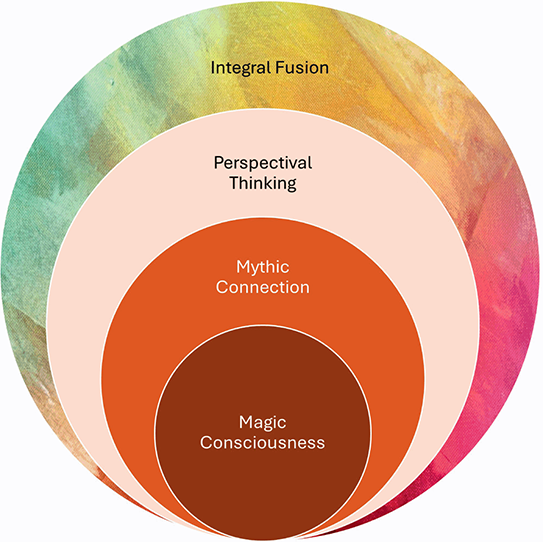
Although our terminology drew inspiration from Gebser’s structures of consciousness and Kramer’s Theory of Dimensional Accrual and Dissociation and Cultural Fusion Theory, the frameworks presented here are distinct in scope and purpose. Rather than tracing the historical evolution of human consciousness or communicative practices, these frameworks offer analytical lenses for understanding how diverse ontological orientations shape communication and meaning-making in social interactions, resulting in diverging, if not conflicting or incompatible, reasoning and practices in health contexts. CLASH thus provides an analytical framework for examining how different ways of knowing (epistemology) give rise to distinct, enacted realities (ontology).
These frameworks should not be understood as internal psychological traits or cognitive states. Instead, they are communicatively constituted through the interplay of discursive practices, relational expectations, and institutional structures that organize how meaning becomes intelligible within specific contexts – communication is the focal point through which these human experiences take specific shape in a community.
These four frameworks form the basis of our theory, CLASH, which aims to explain the interactional challenges when individuals do not share the same cultural perspectives. In the following discussions, we will (1) provide succinct definitions and explanations of the frameworks, (2) provide examples of health practices and policies under the corresponding frameworks, and (3) identify the tensions and interplay between these frameworks (for detailed discussions and applications of the four frameworks in specific contexts, please see Hsieh & Kramer, Reference Hsieh and Kramer2021).
Magic Consciousness: Undifferentiated Unity (All-as-One)
Magic Consciousness is the most foundational of the four frameworks. By foundational, we do not mean primitive or underdeveloped, but primal – present in all human beings as a deeply embodied way of relating to others, space, and time (Kramer & Hsieh, Reference Kramer, Hsieh, Dutta and Zapata2019). Meanings are inherent. We are not analytical. All things are experienced “as is.” They are complete and whole.
Under Magic Consciousness, there is zero dissociation between its cultural community members, space, and time. Thus, everything is experienced vividly as here and now, as Magic Consciousness is timeless and spaceless. There is no distinction between others and oneself. Language and action are one and the same.
Most of us have experienced moments of such deep connection with others that our individual selves and boundaries seem to dissolve. It does not matter how much time has passed or how far we are apart; we are connected in a way that it is hard to distinguish any individuality. Their pain is your pain, their joy is your joy. Literally. Parents often feel that way about their children. When a child is hurt (through assaults like rape or violent acts like a hit-and-run), the parents are hurt. It is not that they are sad or hurt because they feel their children’s pain. They literally experience their children’s experiences as their own. They are assaulted and violated.
This is the power of Magic Consciousness. There is no distinction among individuals within the same Magic Consciousness community. Words and actions are one and the same. Reality under Magic Consciousness is created as the speech is uttered. “There is no distinction between speech and reality. What is said is what it is. As the social action is performed, realities come into existence. Identities and boundaries are formed accordingly” (Hsieh & Kramer, Reference Hsieh and Kramer2021, p. 33).
Such an understanding of reality is similar to the concept of performative utterances in Austin’s (Reference Austin1975) Speech Act Theory – the meaning (i.e., locutionary force) and action (i.e., illocutionary force) of the act are one and the same. Austin (Reference Austin1975) argued that performative utterances require felicity conditions (i.e., the requirements that must be met for a speech act to be successful and achieve its intended effects). Under Perspectival Thinking, a curse is not real because language is indexical. In contrast, under Magic Consciousness, a curse is meaningful and powerful because language transforms reality. The felicity conditions required for an utterance to be “real” are different depending on one’s cultural consciousness framework.
Austin initially limited performative utterances to a small set of speech acts; however, Derrida (Reference Derrida1973/Reference Derrida, Chang and Butchart2012) argued that all speech is a performance – that action is inevitably performed through our speech. As we talk, social worlds are formed and realities come into being. Such is the embodied reality of Magic Consciousness. Words and meanings are not indexical. Realities are inseparable (i.e., zero distance) from our speech. Words have inherent power. Thus, when a patient holding Magic Consciousness hears a poor prognosis (e.g., “you have three months to live”), the utterance is neither indexical in referencing a neutral assessment nor empowering in facilitating informed decision-making. Instead, it is reality-transforming. Such acts can take away the patient’s hope or demonstrate the lack of family love and support (Surbone, Reference Tan2004). Saying it makes it so.
In addition, because of the lack of distinction between self and others, people under Magic Consciousness do not perceive themselves as separate identities, distinct from their community members (e.g., family members), but rather function as one. Figure 2 portrays ingroup and cultural Other distinctions under Magic Consciousness. Within the magic circle, community members do not hold distinctive individual identities and are experienced as an undifferentiated, collective whole. At the same time, those outside the magic circle are not differentiated either, other than being perceived as “not-us.” The boundary of the magic community is typically experienced as stable, well-defined, and absolute. As a result, outsiders may have difficulty being perceived as one of us within the magic circle. Conversely, once a member is excommunicated from the magic community, they become the Other. Unlike the Mythic Connection and Perspectival Thinking orientations, these boundaries are neither reflexively examined nor strategically enacted. The boundaries are a taken-for-granted reality based on community norms.
In-Group and “Not-Us” Relations in Magic Consciousness
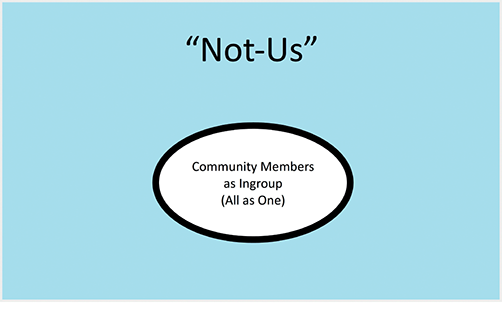
Figure 2 Long description
The surrounding space represents those outside the group labeled: Not-Us. A thick boundary separates the in-group from the outside, indicating an experienced absolute division between members and non-members.
Although some literature suggested the importance of balancing patient autonomy with family support (e.g., desire to withhold poor prognosis from the patient) to ensure informed decision-making, such concepts and understanding (e.g., patient autonomy, individual privacy, and self-determination), which are foundational concepts in Western bioethics and communication theories, can be problematic, untranslatable, or incomprehensible under Magic Consciousness. For example, Hsieh and Kramer (Reference Hsieh and Kramer2021) explained,
Social support is not something to be given or received, nor is it communicated to signal love, assistance, or “support.” […] By the qualities of Magic Consciousness, “supportive acts” are not categorized as such. Rather, they enact such behaviors and communicative acts because that is what they (i.e., members of the Magic Consciousness community) do. Your needs are my needs. We are one. Support is presumed and nondirectional (i.e., the concepts of support “giver” versus “recipient” are nonexistent as Magic Consciousness is nonspatial). We live within a supportive environment that nurtures us as a whole. It is inherent in life itself.
Imagine how angry and isolated you would feel if your family did not inform you about the year-long cancer treatment that almost killed your mom because they did not want to bother you or disrupt your education. For you, dropping out of school to take care of your mom is not a sacrifice. You are more than happy to do it. However, not being included in this major family crisis is much worse. It shows that you do not belong. You are not one of them. For a person with Magic Consciousness, nothing is worse than to be excommunicated from their community. In other words, under Magic Consciousness, supportive actions are not an act of generosity but an embodied reality of shared identity. To be excluded from such support is not merely disappointing – it is existentially disorienting.
Thus, support giving under Magic Consciousness is identity-reinforcing (i.e., I am part of the community) and empowering (i.e., I belong and I have a place in the community) rather than draining or exhausting (Chen & Silverstein, Reference Chen and Silverstein2000; Yuen-Tsang, Reference Zuengler2018). Notably, although for a person with Perspectival Thinking, such acts under Magic Consciousness may appear generous or altruistic, a person with Magic Consciousness would not perceive them as such. It does not make sense to say the right hand is helping the left hand. We are One. Your success and happiness are mine. These are just things we do for one another. It is what it is. This is the way. There are no additional moral claims (i.e., mythic values).
It is important not to think that people under Magic Consciousness cannot see the objective reality. Instead, they experience reality in a fundamentally different way – they do not experience distinctions between people, time, and space. They are not superstitious, which presumes a distinction between reality, myths, and the supernatural. They experience the world as complete and whole. One may argue that PTSD episodes are examples of people experiencing a sudden shift into Magic Consciousness. Researchers have argued that intrusion symptoms of PTSD (e.g., dissociative reactions that involve loss of awareness and intrusive recollections) are not abstract thoughts and appraisals of the traumatic events but are images and sensory memories experienced by patients as here-and-now events (Friedman, Reference Garb2013). In these moments, the traumatic memory is not recalled – it is (re)lived, vividly and unmediated. This experiential collapse mirrors the spaceless, timeless immediacy of Magic Consciousness. Such an embodied shift in experiencing realities suggests that our embodied Magic Consciousness is not always a deliberate, intentional choice, nor is it limited to specific groups of people (e.g., those from non-Western cultures and/or collectivist cultures).
Magic Consciousness is powerful because we are bigger than our individual selves. Under Magic Consciousness, cultural community members are motivated to survive together as a collective whole. All experiences and actions are unreflective and taken for granted, as they are holistic and complete in themselves. Cost-benefit analysis is irrelevant. No cost is too high to protect the collective whole. Outgroup members are not “real” and thus require no protection. As a result, individuals and even countries often shift into Magic Consciousness when experiencing a traumatic event because the framework eliminates the boundaries between self and others, thus making us feel more powerful as part of a larger collective whole. The COVID-19 pandemic, as a global trauma, triggered primal responses rooted in Magic Consciousness. In seeking protection and coherence, many communities reinforced collective identities – sometimes through nationalism, racism, or authoritarianism – as expressions of unity that rejected perceived threats or outsiders (Bieber, Reference Bieber2022). These responses are not merely political; they are culturally and ontologically structured. In such moments, Magic Consciousness reveals both its generative and destructive potential: by dissolving distinctions between self and other, it fosters collective power and belonging, but it may also exclude or erase those deemed outside the communal whole.
Mythic Connection: Community Bonds Through Shared Meanings
In contrast to the holistic, embodied oneness of Magic Consciousness, Mythic Connection introduces the first signs of dissociation – subtle but growing distinctions between self and other, between experience and meaning. Under Mythic Connection, people begin to experience “nascent dissociation and distancing in all aspects, including physical, psychological, and spiritual domains” (Hsieh & Kramer, Reference Hsieh and Kramer2021, p. 53). Meaning is no longer embedded or self-evident in the lived environment. Nevertheless, individuals find meanings in things. Objects can become symbols. Language holds symbolic power. In other words, they carry values, beliefs, and histories beyond themselves.
Symbols introduce complexity. Meanings can be multivocal – layered and often contested (Baxter & Montgomery, Reference Baxter and Montgomery1996). What does it mean to have a child who is deaf/Deaf? Does it matter if the parents are hearing or not? What does it mean to have the BRCA1 gene despite no signs of cancer? For people with Magic Consciousness, because the world is complete and meanings are inherent, they do not feel the need to interpret the meanings of things and thus do not experience uncertainty or anxiety (i.e., “it is what it is”; “It’s God’s will”; see also Pitaloka & Hsieh, Reference Hsieh2015). In contrast, people under Mythic Connection must actively reconcile differing interpretations to maintain a coherent sense of reality. Thus, language, with its sense-making and reality-forming capacities, becomes an essential resource for organizing and sustaining shared realities among community members.
We tell stories to make sense of our experiences, our reality. Illness narratives illustrate such a process. The experiences of an amputated limb can symbolize the patriotic sacrifice of a veteran (Jeppsen et al., Reference Jin and Ryu2019) or the personal resilience of a patient with diabetes (Livingstone et al., Reference Lo and Bahar2011). Their experiences are deeply personal and subjective. They recognized and grieved for the loss of the limb, but also found meaning in their experiences that transformed the objective reality of a loss into an inspirational tale of personal triumph, redefining their illness experiences, life meanings, and even future trajectories (see also Tan, Reference Tan2018). Stories allow us to rewrite the past and reimagine a future. More importantly, such transformations sustain the shared values and collective identity of their community (Hudson et al., Reference Hudson, Culley and Law2016). These narratives are not evaluated for their objective accuracy or the storyteller’s sincerity. Instead, their power lies in their resonance with shared communal values. Under the Mythic Connection framework, stories succeed not through empirical fidelity but through their capacity to affirm shared moral values and social order. Inherent in Mythic Connection is its moral dimension and value orientation. The stories are meaningful and powerful because they echo with the larger sociocultural system that embraces specific values (Bakhtin, Reference Bakhtin, Holquist and Emerson1981).
These dynamics become especially vivid during times of collective trauma, when the moral and symbolic weight of narratives intensifies, and storytelling becomes a way to restore social coherence. Pennebaker and colleagues demonstrated that societies often encourage storytelling immediately after a collective, traumatic event for 1–2 weeks (Pennebaker & Harber, Reference Pennebaker and Harber1993). For example, Mehl and Pennebaker (Reference Messias, McDowell and Estrada2003) found that after the September 11 attacks, individuals increased dyadic interactions with others. Such interactions created the intimacy needed to affirm, reevaluate, and recalibrate one’s beliefs and worldview, allowing people to develop personal narratives that helped them make sense of the world. We rely on our close others to make sense of our reality. However, communities also silence stories. Pennebaker and colleagues found that 1–2 weeks after the traumatic event, individuals actively suppress such discussions for the next 4–6 weeks, despite the fact that people often continue to think about the event, struggle to find meanings, and experience distress during the same period (Pennebaker & Harber, Reference Pennebaker and Harber1993). The active silencing is intriguing because it highlights the social and communal functions of storytelling.
Although individuals’ experiences are always unique and personal, communities are not always ready and willing to embrace certain types of stories. While cancer survivors’ optimism and resilience are embraced and celebrated (e.g., pink ribbon for cancer awareness), their stories of grief, anger, and pessimism are silenced and sanctioned (Kaiser, Reference Kant, Guyer and Wood2008; Makoul, Reference Makoul2004). As patients attended support group meetings, they modified their illness stories in response to the group’s emergent, dynamic feedback, often retelling events and interactions to better align with the community’s preferred values, behaviors, or moral expectations (Hsieh, Reference Hsieh2004).
Mythic Connection framework does not just create cultural heroes and heroines; it also defines antiheroes – the ones who fail its cultural codes. As same-sex marriage is legalized and LGBTQ narratives are woven into the social fabric in the United States, transgender women athletes capture the new imagination of villains in sports (Desjardins, Reference Desjardins2022). Charmaz (Reference Charmaz2002) explained, “Stories and silences simultaneously frame and constitute meanings among people who experience disrupted lives … [They] are emergent but seldom wholly idiosyncratic; they emerge within social contexts and thus are historically, socially, and culturally specific” (pp. 302–303). Swidler (Reference Switankowsky2003) echoed, “Becoming a certain kind of person is learned, practiced, and sustained through culture” (p. 73). In short, Mythic Connection provides not only the resources for and products of shared meaning, but also the cultural blueprints through which communities elevate some narratives while marginalizing others. In other words, Mythic Connection does not merely interpret reality; it prescribes it, binding communities through shared narratives even as it risks excluding those whose stories fall outside the accepted script.
In contrast to the stable and insular framework of Magic Consciousness, Mythic Connection’s symbolic world is more fragile and politically charged. Competing moral narratives may emerge, each vying to define a community’s values and truth. For example, the “Black Lives Matter” movement feeds the momentum and countermovements of “Blue Lives Matter” and “All Lives Matter” movements, competing for moral authority within a society (Solomon & Martin, Reference Street2019; West et al., Reference Youdelman2021). Pennebaker and Smyth (Reference Phelan2016) encouraged people who cannot find audiences for their stories due to the sociopolitical climate or interpersonal dynamics to use writing as a coping strategy. Through journaling, people can begin to (re)build their narratives, fostering coherence in the midst of trauma.
In Figure 3, we illustrate relational positioning, boundary conditions, and cultural distances among mythic communities to demonstrate the tensions and relationships between different communities operating under Mythic Connection. Mythic communities are held together through shared community values, that is, myths that provide moral orientation and collective meaning. As a result, individual identities are enacted primarily through their participation in communities. An individual may belong to multiple communities, with different communities holding different levels of influence and priorities in their decision-making process in situated contexts.
Relational Positioning in Mythic Connection
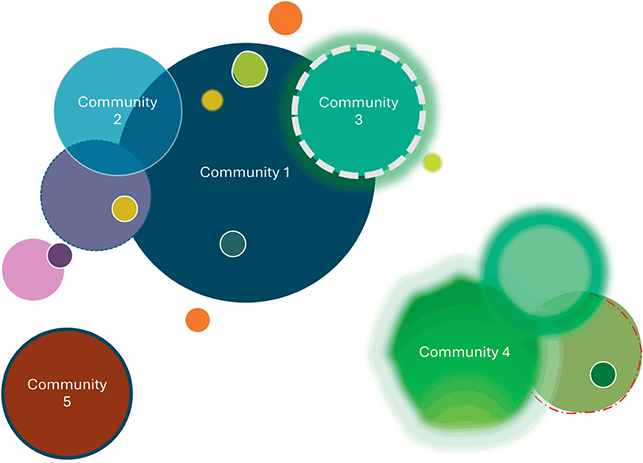
Figure 3 Long description
Differences in color, size, boundary thickness, and overlap indicate variation in shared values, interaction frequency, entry barriers, and boundary porousness among communities.
Visual elements are used to represent key dimensions of mythic community relations. Color similarity indicates cultural proximity and similarity in values, while distance and clustering among communities suggest the frequency and intensity of interactions. Color intensity reflects the strength with which community values are held. Boundary features further differentiate communities, with line gaps indicating varying degrees of porousness, line thickness representing entry barriers, and overlap between communities indicating the clarity and definitiveness of membership boundaries.
Several illustrative cases are shown. For example, Confucianism (儒家), a Chinese philosophical, ethical, and relational system rooted in the teachings of Confucius, has exerted pervasive influence across many East Asian societies, shaping the foundational values of multiple communities (Community 1). Other communities may maintain defined but noncompeting boundaries (Community 2, such as a dog-lover community) or impose stringent entry requirements while remaining porous to other affiliations (Community 3, such as an exclusive golf club). Some communities exhibit less clearly defined membership boundaries, with shared values held to varying degrees among members (Community 4, such as communities organized around spiritual beliefs).
Community 5 highlights a special case. Cult-like communities often exhibit thick, clearly defined, and nonporous membership boundaries, strong internal value coherence, and minimal interaction with other communities. Although such communities operate within Mythic Connection insofar as members recognize the existence of other groups with different values, they also carry the potential to shift toward Magic Consciousness. When such a shift occurs, relational differentiation collapses into a singular ingroup versus “not-us” distinction, with all others experienced as the Other.
In summary, Mythic Connection binds people through moral resonance, generating stories (i.e., myths) to develop shared meanings and navigate realities. But its coherence is always under scrutiny, fragile in pluralistic communities, and vulnerable to competing interpretations. Even as stories bring people together, they can fracture along lines of ideology, identity, or exclusion. In the end, Mythic Connection reveals both the generative and constraining forces of cultural meaning-making and community-building.
Perspectival Thinking: Individual Pursuit of Precision Through Fragmentation
As dissociation continues, the bonds and meaning between self, community, and external environment become increasingly fractured. Perspectival Thinking emerges as the dominant framework. Moving away from the holistic oneness of Magic Consciousness and value-driven Mythic Connection, people under Perspectival Thinking are completely alone in an objectified world. Hsieh and Kramer (Reference Hsieh and Kramer2021) explained that Perspectival Thinking “is characterized by a complete fragmentation and dissociation. This shift from mythic polarity to perspectival fragmentation, from compassion to objective disinterest, and from collectivism to individualism is evident in all modes of life” (p. 80). Language becomes indexical. Words no longer carry sacred or symbolic powers. They serve as neutral signifiers, conduits valued only for the information they carry.
A hallmark of Perspectival Thinking is a relentless pursuit of a singular perspective, which defines all realities: what cannot be measured is not real. One of our favorite illustrations of Perspectival Thinking comes from a heated argument between the second author (Terui) and her friend. As Terui and her friend engaged in a heated argument, her friend interrupted and asked, “I don’t understand what you are saying. From one to ten, ten being the angriest you have ever been, how angry are you?” Anger is not real, at least, not in a way that is understandable to a perspectival thinker, until it can be quantified. As Nietzsche (Reference Noro, Roter, Kurosawa, Miura and Ishizaki1882/Reference Noro, Roter, Kurosawa, Miura and Ishizaki1974) declared, “God is dead. God remains dead. And we have killed him” (section 125). Under Perspectival Thinking, God is not real because God cannot be seen or measured. Because it is not real, God no longer holds the power to define morality or guide human life. We have only ourselves to count on.
The rise of Perspectival Thinking also marks the emergence of the Renaissance, a celebration of humanism (e.g., the human-centered perspective and sensibilities) and the celebration of human agency, exemplified by Nietzsche’s (Reference Nietzsche and Hollingdale1883/Reference Nietzsche and Hollingdale1974) concept of Übermensch – we are responsible and in charge of our values and destiny. Individual autonomy, self-determination, and informed decision-making, all cornerstones of Western bioethics, are concepts rooted in Perspectival Thinking. Our perspectives and senses (i.e., what we can see, hear, and feel) are concrete and real because we can measure them. Seeing is believing. Hearts and lungs are real because we can see them and touch them. Chi (i.e., a fundamental concept in Chinese medicine, referring to the life force that animates the body and is believed to flow through specific pathways) is less so because we cannot measure it (Matthews, Reference Matthews2023). Cartesian dualism (i.e., mind–body dualism, where mind and body exist as separate entities) continues to influence Western biomedicine today (Switankowsky, Reference Switankowsky2000), shaping public discourse, social perceptions, and individual experiences of health and illness.
Science and scientific reasoning would not be possible without Perspectival Thinking. With meaning and values stripped from our lived environment, cultural participants in Perspectival Thinking are free to investigate, dissect, and challenge objective reality (e.g., human anatomy and genetic editing), free from concerns about the sacred prohibition of Magic Consciousness or the moral scrutiny of Mythic Connection. Moderns become obsessed with identifying the things that can make us sick: from parasites, bacteria, and viruses, to genetic defects and radiation. Evil spirits or a guilty conscience cannot cause a person to become ill unless they can be measured and thus seen. People with observable symptoms (e.g., MRI for a stroke), visible disabilities (e.g., cast for a broken arm), and identifiable causes (e.g., a positive diagnostic test for COVID-19) are readily accepted as legitimate patients; in contrast, those with mental health symptoms (e.g., depression), neurodivergent status (e.g., ADHD), or medically unexplained syndromes (e.g., chronic fatigue) can face challenges in being perceived as believable patients even to their family members (Dixon-Ward & Chan, Reference Dixon-Ward and Chan2022; Engebretsen, Reference Engebretsen2018; Tan, Reference Tan2018). Ironically, the status of truth in Perspectival Thinking is not so different from that in Mythic Connection. What is accepted as real often depends less on empirical fidelity than on whether it fits a culturally sanctioned logic, now determined by metrics rather than moral standards of the community.
To ensure that the items of interest are real and to examine them with greater precision, we develop new methods and better technologies to see, observe, and measure them. Reality (and knowledge) is debated and embraced accordingly. One is free to change their understanding of reality as long as the new and better measurement supports such a shift. Thus, appropriate decision-making is dependent on the latest objective findings based on observable facts, rather than anecdotal data about our feelings, others’ expectations, or community norms.
Should people get COVID-19 vaccines, and which type (e.g., mRNA or inactivated vaccines)? People under Perspectival Thinking develop a hierarchy of scientific evidence (i.e., a measurement to evaluate which scientific finding is closer to the truth) to assess which findings are more trustworthy (i.e., closer to the objective reality; Evans, 2003). Thus, to challenge a prevailing belief, a perspectival thinker must challenge the quality or validity of the measurement itself. For example, a person with Perspectival Thinking may reject COVID-19 vaccines by arguing that existing studies are too preliminary or that the sample sizes are too small to prove efficacy or safety, both of which are attacks on the measurements (Zimmerman et al., Reference Zimmerman, Shiroma and Fleischmann2023). In contrast, a person with Magic Consciousness may argue that all government claims cannot be trusted (e.g., a deep state that does not serve its people, and thus, viewing the government as the outgroup Other). A person with Mythic Connection may argue that the health risks of rejecting an effective vaccine are necessary to protect individual autonomy (e.g., subjecting oneself to mandatory vaccination fails one’s duty to reject tyranny).
The increasing fragmentation also leads to specializations in medicine and medical technologies. Rather than a holistic whole, humans are fragmented into parts (e.g., eyes and hearts) and systems (e.g., immune and endocrine systems). A shaman in a magic world does not see boundaries between a patient’s physical, social, and spiritual life; in contrast, under Perspectival Thinking, an OB/GYN physician can refrain from making comments about a patient’s depression and offer a referral instead (Hsieh et al., Reference Hsieh, Ju and Kong2010). Fadiman (Reference Fadiman1997) described an incident when an emergency care physician worked on a patient with life-threatening conditions for more than twelve hours straight without realizing that the patient was a girl. Fadiman concluded, “Here was American medicine at its worst and its best: the patient was reduced from a girl to an analyzable collection of symptoms, and the physician, thereby able to husband his energies, succeeded in keeping her alive” (p. 147). A patient’s illness is detached from a patient’s Lifeworld experiences and situated in clinical terms within different components of a patient’s body. This fragmentation is not merely anatomical – it is epistemological. We treat human beings not as persons, but as data points.
In a capitalist society, cost, benefits, and effectiveness as measures can frame our understanding of and solutions to a problem. Several major public health theories and models (e.g., Health Belief Model, Theory of Planned Behavior, and Transtheoretical Model) explicitly incorporate cost/benefit and barrier/facilitator components in explaining and predicting changes in health behaviors (Glanz et al., Reference Glanz, Rimer and Viswanath2024). Such conceptualizations of human actions highlight that these theorists are heavily influenced by Perspectival Thinking (for detailed discussions, see Chapter 6 in Hsieh & Kramer, Reference Hsieh and Kramer2021). These theories often assume that by offering more comprehensive and accurate information about the costs (e.g., health risks) and benefits (e.g., cost savings), people will change their behavior accordingly. This assumption is valid only for people under Perspectival Thinking.
Let’s use the earlier example of COVID-19 vaccine hesitancy to illustrate here. For people under Perspectival Thinking, the decision to change one’s stance on vaccines does not signal betrayal toward a group or tradition. It is a rational decision derived through objective analysis grounded in new and better evidence. However, this logic does not work for other frameworks. For individuals operating under Magic Consciousness or Mythic Connection, the change could feel like a rupture of identity or a moral violation. Their decision-making is not driven by variable analytics. This explains why public health messaging based on scientific reasoning or the latest medical information may be less persuasive to audiences who do not operate within a Perspectival Thinking framework (Zimmerman et al., Reference Zimmerman, Shiroma and Fleischmann2023).
Perspectival Thinking’s commitment to impersonal objectivity and neutral measurement also opens the door to strategic manipulation. When reality is defined only by what is measured, those who define the measurements hold the power because they define the reality. Decisions can be framed, justified, or even distorted through selective measurement. Subjective experiences and empirical observations are dismissed because they do not align with the metrics. Detached from inherent meanings or shared moral frameworks, people under Perspectival Thinking can selectively frame metrics to shape outcomes that serve their individual interests. In this way, Perspectival Thinking is deeply instrumental: what matters is not what is meaningful, but what is measurably persuasive to its cultural participants. In other words, what counts as real is not only measurable but also manipulable.
In a fascinating and paradoxical way, the pursuit of precision in response to an increasingly fragmented world leads Perspectival Thinking to become disconnected from its human-centered origins. Our feelings and senses can become biased and thus unreliable. We begin to trust machines over our senses to inform us about the empirical world. Depending on the measure of success, healthcare delivery and public health policies can become disconnected from fundamental elements essential to human well-being and thriving communities. When cost-benefit analysis and complex algorithms become core elements for policymakers in the public sector (Levy et al., Reference Lo and Bahar2021), it may be comforting to believe that an objective, neutral analysis can yield the best decisions and outcomes. However, an inherent fault in such Perspectival Thinking is that how, who, and what we measure can easily change the realities we live in (Bentley, Reference Bentley2021; Boardman et al., Reference Boardman, Greenberg, Vining and Weimer2022; Hsieh & Kramer, Reference Kramer, Hsieh, Dutta and Zapata2019). When developing health policies and public health interventions, are we only concerned about the benefits and well-being of citizens, or should we consider all people living in the country, including undocumented migrants? Whose suffering counts? Who bears the cost and when? What does it mean if longer life for individuals comes at the cost of greater healthcare spending for the government? And what happens to the things that cannot be quantified (e.g., the public’s enjoyment of natural forests or minority populations’ sense of dignity and security)?
The pursuit of precision through the narrowing of measurement, which entails a singular perspective, can create major blind spots in perspectival thinkers’ understanding of the world, a seemingly objective but often inevitably oversimplified, if not biased, reality. In a TED talk, Verghese (Reference Walkey, Brown and Martin2011) warned against such Perspectival Thinking tendencies and the presumed preference, if not superiority, of objectivity:
When we shortcut the physical exam, when we lean towards ordering tests instead of talking to and examining the patient, we not only overlook simple diagnoses that can be diagnosed at a treatable, early stage, but we’re losing much more than that. We’re losing a ritual. We’re losing a ritual that I believe is transformative, transcendent, and is at the heart of the patient-physician relationship. […] The power of the human hand – to touch, to comfort, to diagnose and to bring about treatment.
Rituals do not exist in Perspectival Thinking, where things do not carry meanings beyond themselves. For Verghese, a physician’s hand is more than a tool for diagnosis; it carries a deeper meaning about connection, relationship, and trust. Despite the technological advances that Perspectival Thinking has afforded to the moderns, we are increasingly feeling the aftershock of extreme dissociation and detachment from our lived environment and communities (Barjaková et al., Reference Barjaková, Garnero and d’Hombres2023). Recent studies found that children and teens who experience loneliness are also more prone to phone addiction (Sarman & Çiftci, Reference Schwei, Guerrero, Small and Jacobs2024; Wu et al., Reference Youdelman2024). As people rely on AI to be their therapists and romantic partners (Loewenthal, Reference Lor and Martinez2024; Pan & Mou, Reference Pan and Mou2024), is it possible that perspectival moderns not only live in an objectified world but also become estranged from their own humanity?
Despite the analytical orientation and impersonal objectivity of Perspectival Thinking, people under Perspectival Thinking recognize the embodied experience in Magic Consciousness and the communal collective in Mythic Connection. In a way, one may argue that a perspectival scientist’s unquestionable reliance and belief in the accuracy and validity of science may resemble the taken-for-granted reality and passion under Magic Consciousness or the faithful aspiration under Mythic Connection. However, operating under Perspectival Thinking means they do not believe those understandings are real or those motivations are appropriate. Individuals under Perspectival Thinking are willing and able to adopt a reflexive attitude and change their perspectives (i.e., measurement) quickly as long as it serves their needs.
Figure 4 illustrates how people under Perspectival Thinking strategically join and leave different communities to meet their individual needs. These communities may be incompatible with or drastically different from one another. Because people under Perspectival Thinking prioritize strategic goals aligned with individual interests, that is, hypertrophic individualism, they do not experience enduring obligations to the values, practices, or norms of the communities they engage with. Instead, when a community no longer serves their needs, they disengage and move on. In other words, community membership is treated as instrumental rather than relationally constitutive. Communities function as resources rather than moral horizons within Perspectival Thinking. This results in largely unidirectional relationships between the self and the communities they choose to join.
The Strategic Self in Perspectival Thinking
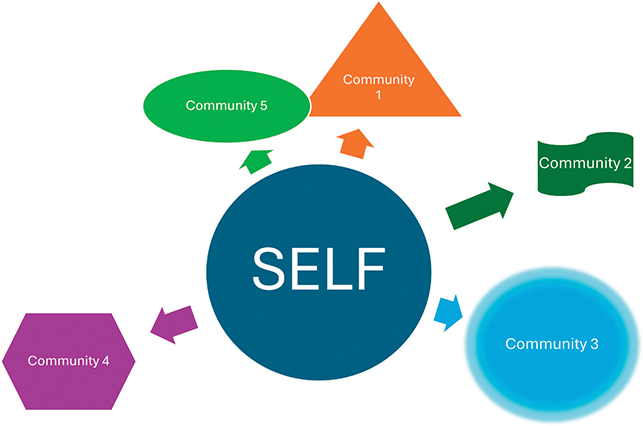
Figure 4 Long description
The links indicate selective and goal-oriented engagement, illustrating how the individual strategically joins and leaves different communities without enduring obligations.
A perspectival scientist is willing to change their attitudes without hesitation in response to objectively derived, scientifically rigorous evidence, irrespective of their individual feelings or biases. Similarly, a perspectival politician may strategically and instrumentally deploy language from other frameworks (e.g., hope, ritual, and solidarity), exploiting others’ cultural perspectives to achieve self-interested gains in their preferred measurement (e.g., persuasiveness, legitimacy, or popular support). However, because they are not true believers in other frameworks, they are disingenuous and cynical when utilizing the language and reasoning of other frameworks for self-interest, strategic gains. Such actions reflect what Sloterdijk (Reference Street1988) termed cynical reasoning (i.e., being aware that one’s beliefs and actions are based on some sort of lie, yet continuing to act as if everything is just fine).
People under Perspectival Thinking only subscribe to one framework (i.e., Perspectival Thinking); all other frameworks are not considered valid or real. In fact, as individuals subscribe to Magic Consciousness, Mythic Connection, or Perspectival Thinking as their cultural consciousness framework, they become believers of the corresponding reality. While individuals may recognize the reasoning of lower-dimensional frameworks, they do not regard them as equally real. Believers of these three frameworks are constrained by their reasoning and reality – they thrive and falter accordingly.
Integral Fusion: Layered Understanding and Meanings
Integral Fusion is the framework that integrates multiple cultural consciousness frameworks, as shown by the fused coloring in Figure 1. The Theory of Dimensional Accrual and Dissociation explained, “As dimensions of awareness increase, the total is different from the sum of parts. The whole exhibits synergy. The whole is more than the sum of parts” (Kramer & Ikeda, Reference Kramer and Ikeda1998, p. 43). Whereas earlier frameworks immerse participants in a single cultural logic, Integral Fusion provides its cultural participants with opportunities to navigate multiple competing, if not conflicting, perspectives. It is responsive to complexity, ambiguity, and difference. Hsieh and Kramer (Reference Hsieh and Kramer2021) explained,
An Integral Fusion worldview is able to see by seeing through the different cultural perspectives, appreciating their strengths, understanding their limitations, and developing unique and innovative blends that best accommodate everyone’s needs. An Integral Fusion worldview can be a result of intentional efforts or organic, unexpected processes of intercultural encounters. It is not inherently “better” than other cultural perspectives. Cultural fusion does not guarantee a “better” result. Nevertheless, because an Integral Fusion worldview promises infinite possibilities and potentials through the blending of cultural perspectives, its flexibility and diversity are some of the greatest strengths in addressing problems faced by our society.
One of our favorite quotes reflecting the layered understanding of Integral Fusion comes from Dr. Fauci’s (Harvard University, Reference Haynes, Pampari and Topham2014) reflection on leadership,
When you’re making a decision […] you’ve got to do a combination of getting as much information as you possibly can, as well as listening to your gut. There’s a certain something that when you build up your own training, your own moral values, your own principles, that your instinct and your gut about how something feels is really important. If you just go by your gut without any evidence, then you’re just sort of a slave of your emotions. But if you go with evidence and never listen to how you really feel about it, I think you can make mistakes.
Fauci’s reflection illustrates how good decision-making requires integrating empiricism with embodied, moral sensibility – an approach that mirrors the layered, dynamic reasoning of Integral Fusion.
Integral Fusion recognizes the value and importance of diverse perspectives – for instance, following evidence while also honoring a gut check. But this inclusivity does not mean that all perspectives are flattened to equal weight, a notion that itself reflects Perspectival Thinking’s measurement logic. Integral Fusion also should not be mistaken for cultural relativism. It does not claim that all perspectives are equally valued or valid in all circumstances. Instead, as one encounters new, emergent, and unknown elements, Integral Fusion asks what makes the best blend of perspectives for the problem at hand. For example, patients often choose to incorporate contemporary and alternative medicine (e.g., prayers, food therapy, meditation, and herbal medicine) in their health practices, not because of dissatisfaction with Western biomedicine, but because these coping strategies are responsive to their cultural perspectives and empower them in everyday life (Astin, Reference Astin1998; Kong & Hsieh, Reference Kong and Hsieh2012). Whereas Perspectival Thinking believes that the best solution is to allow a patient to have the best biological outcomes based on the latest clinical evidence, Integral Fusion asks what enables a patient to live a full life based on their individual understanding of what enriches their life – the correct answers are often different for different people.
Integral Fusion is similar to Lull’s (Reference Lull2000) concept of transculturation, “a process whereby cultural forms literally move through time and space where they interact with other cultural forms and settings, influence each other, produce new forms, and change the cultural settings” (p. 242), resulting in “cultural hybrids – the fusing of cultural forms” (p. 243). However, the resulting hybrid is not a static, completed whole; Integral Fusion entails an open-ended, continuously evolving consciousness that integrates new insights over time. It recognizes that different frameworks can offer partial insights, which, together, despite the inherent tension, would provide a more nuanced understanding. As a result, Integral Fusion is generative and context-sensitive, allowing its cultural participants to generate a wide range of strategies tailored to the situation at hand. Some solutions may fail, but one may succeed as long as individuals continue to (re)imagine the possibilities of the synthesis.
This process is similar to neuroplasticity, which highlights the lifelong, evolving nature of our brain. Though neuroplasticity refers to biological processes, we propose it as an illustrative analogy for the cognitive and cultural shifts enabled by Integral Fusion. We now know that our brain, as a biological organ, is never complete (Costandi, Reference Costandi2016). New, mindful, real-world experiences prompt our brains to develop new neurons, ensuring efficiency related to the experience (Costandi, Reference Costandi2016; Hermans et al., Reference Hiebert2025). At the same time, we never unlearn what we have encountered, though our brains prune their processing mechanisms to encourage efficiency and specialization (Coyle, Reference Coyle2010). When parts of our brain no longer function properly (e.g., after a stroke), the brain shifts functions to undamaged areas (i.e., reorganizing and rebuilding its structure). New experiences can change how we understand the current reality, reshape our interpretation of the past, and frame our future practices (Hermans et al., Reference Hiebert2025). Importantly, like Integral Fusion, neuroplasticity does not always guarantee positive outcomes (Ho & King, Reference Hoffman, Trawalter, Axt and Oliver2021). Nevertheless, neuroplasticity, like Integral Fusion, is a lifelong process, offering the best chance to identify effective strategies for thriving in a dynamic environment. This allows individuals to continuously build, modify, and experiment with their solutions and the operating infrastructure.
As we encounter new experiences (e.g., a cancer diagnosis), we develop new ways of understanding ourselves and others, our past histories, and our future life trajectories and meanings. Relying on the concept of biographical disruption (Bury, Reference Bury1982), researchers have found that an illness diagnosis can challenge a patient’s taken-for-granted, linear life trajectory and transform their understanding of themselves, their reality, and life meaning (Williams, Reference Williams2000; Wilson, Reference Youdelman2007). Patients reported experiencing time (e.g., the speed and markers of time) differently after a cancer diagnosis (Charmaz, Reference Charmaz1991; Duan et al., 2026), transforming their views of their past, present, and future selves. An illness diagnosis may also allow a patient to generate a transformed understanding of a past self that reaffirms their life journey (i.e., biographical reinforcement; Carricaburu & Pierret, Reference Carricaburu and Pierret1995) or reconstruct a self that transcends the medical meaning and context, allowing individuals to enrich their personal biography and social relationships (i.e., biographical illumination; Alper et al., Reference Alper, Rauchberg, Simpson, Guberman and Feinberg2025; Tan, Reference Tan2018). In this sense, Integral Fusion is expansive. It is always backward- and forward-looking, as it helps its cultural participants navigate the here and now. Importantly, Integral Fusion is not a final or superior cultural consciousness framework but an ongoing, fragile process that remains context-dependent.
In Figure 5 and Video 1, we use dynamic color blending in an undefined landscape to illustrate the constantly evolving and shifting processes of Integral Fusion. Unlike earlier frameworks, Integral Fusion does not rely on fixed boundaries between self and other, inside and outside, or past and future. Under Integral Fusion, experience is not organized around clear beginnings or endings, which are concepts associated with Perspectival Thinking. Instead, Integral Fusion unfolds through ongoing movement, integration, and transformation of self and the larger system. The continual influx of new elements does not simply add to existing perspectives, systems, or communities. Rather, it reshapes and reconfigures them, producing emergent forms of meaning, relationship, and orientation. These emergent forms become part of the broader system, resulting in a dynamic and innovative blending that redefines the larger community. This is a panevolutionary process driven by aperspectival innovation (i.e., innovation not bound to a single perspective, element, process, or purpose).
Integral Fusion as a Dynamic, Living Process

Figure 5 Long description
The absence of clear edges or focal points represents ongoing integration and emergence across perspectives, systems, and communities.
Video 1 Transcript
Colors flow into one another without fixed edges, forming and dissolving patterns through gradual motion rather than discrete transitions. No single focal point, boundary, or stable form is present. The visual emphasizes ongoing movement, integration, and transformation, illustrating a process in which perspectives and elements continuously reshape one another rather than accumulating or progressing toward a fixed endpoint. This video has no meaningful audio.
More importantly, Integral Fusion is not an isolated process involving only the cultural participants’ adoption of an abstract framework. It is contextually and socially situated. Even when we encounter the same thing, we will not share identical experiences. For example, not all language-discordant patients share the same experiences in healthcare settings (Han et al., Reference Haynes, Pampari and Topham2025; Hsieh, Reference Hsieh2018). An English-speaking German, White patient is likely to have drastically different expectations and experiences than a Swahili-speaking Congolese, Black patient in Taiwan. This is because in Taiwan, (1) healthcare providers are familiar with English, which is often the language for their medical textbooks (Lu & Corbett, Reference Lull2012) and (2) discrimination against Black people is common (Ho & Svensson, Reference Ho, Svensson, Svensson and Ringø2022). Thus, depending on the clinical contexts, the host society’s sociopolitical and sociohistorical contexts, and the patient’s demographic status, a patient’s experiences of language barriers can be drastically different and would require diverging interventions (Terui & Hsieh, Reference Hsieh, Thompson and Harrington2022). At the same time, one can argue that some experiences are universal to all patients who do not share the same language with their physicians (Hsieh, Reference Hsieh2016). As a result, language-discordant patients are likely to develop layered understanding, including shared and diverging experiences, of language barriers in healthcare settings. Unlike prior frameworks, individuals with Integral Fusion do not necessarily share an identical understanding of reality. Rather, their understanding is constituted through a unique and often personal blend of experiences situated in specific contexts.
One particularly fascinating element of Integral Fusion is its capacity to reshape the broader context and the larger system through a dialogic process between cultural participants and their lived environment. Kramer (Reference Kramer, Hsieh, Dutta and Zapata2019) used the term panevolution to describe a “multi-directional process” (p. 110) through which cultural participants and the broader ecosystem evolve together through the integration of new, divergent experiences (i.e., changes in one can lead to changes in all others that are connected to the system; Hsieh & Kramer, Reference Hsieh and Kramer2021). In other words, Integral Fusion helps illuminate how cultural and institutional shifts emerge as new syntheses challenge, reshape, and/or destabilize existing ecosystems.
A recent shift in U.S. policies exemplifies this process. Rawls (Reference Rawls and Kelly2001) argued that how a society distributes its social and economic resources will have profound implications for whether all members can thrive from one generation to the next in the face of adversities and unavoidable inequalities. The rise of and emphasis on diversity, equity, and inclusion (DEI) in health research and practice are responses to sociohistorical atrocities and health disparities related to race and gender, often involving brutal violence against and willful neglect of Black people’s and women’s bodies (Campbell, Reference Campbell2021; Dusenbery, Reference Dutta2018). However, the Supreme Court’s recent ruling against affirmative action in college admissions (Students for Fair Admissions, Inc. v. President and Fellows of Harvard College, 2023) will impact the future admissions and demographics of healthcare providers and health scientists (Ballejos, Reference Ballejos2024; Malcom, Reference Malcom2024). By framing DEI as “illegal and immoral discrimination programs” that have caused “immense public waste,” the Trump administration’s Executive Order 14151 effectively terminated all federal DEI initiatives and programs, including funding from the National Institutes of Health (The White House, 2025). Such actions created a paradigm shift. Its rippling effects will transform how we conceptualize health and illness, address health disparities, develop medical technologies, and justify public health policies in the United States and around the world (Kates, Reference Kates2025; Malcom, Reference Malcom2024; Shim, Reference Shim2025). Rawls (Reference Rawls and Kelly2001) noted that because social conditions are constantly changing, a just society’s search for fairness is also never-ending (i.e., inequity is a process, not a result, because changes may expose new inequities). Because Integral Fusion is constantly evolving, we can always correct past mistakes by adjusting our current actions to achieve favorable future outcomes.
In summary, Integral Fusion does not merely accommodate complexity; it thrives on it, offering a generative framework by reimagining and reframing the challenges we encounter. Its cultural participants see and appreciate multiple perspectives simultaneously, affording them new insights and solutions that may not be apparent at first glance. Because it is expansive and evolving, it allows cultural participants and the larger ecosystem to continuously adapt to emergent challenges.
Finally, while these frameworks explain how realities are experienced and interpreted, they do not by themselves account for how culture is organized, enacted, and sustained across social contexts. In Chapter 3, we turn to how culture can be conceptualized and examined in health contexts. CLASH provides an analytical framework to conceptualize communities through these distinct approaches to culture.
3 Cultural Lenses and Shared Horizons: Theory and Applications
Cultural Lenses and Shared Horizons (CLASH) provides an analytical framework to examine how cultural participants experience and understand reality. The “same” reality can be drastically different, if not incomprehensible, to individuals under different cultural consciousness frameworks. Yet, these frameworks do not provide insights into whether, when, and how individuals share the same framework with others. This raises critical questions: Are there different ways to conceptualize culture that better capture the dynamics and interrelationships between the cultural consciousness frameworks? How can researchers and practitioners identify the dominant cultural consciousness framework that is shaping individuals’ understanding of reality? How and why do cultural participants create, join, or leave a community? How and why are certain behaviors evaluated more favorably than others in intercultural encounters?
In the following sections, we will (1) explore the variety of ways in which culture has been conceptualized in health contexts and (2) propose a heuristic theory, Cultural Lenses and Shared Horizons, for intercultural health communication. We will also examine ways to operationalize CLASH and present nine propositions that highlight the complexity and dynamics of intercultural encounters. Finally, we conclude with an illustrative example of how CLASH can be used to investigate language-discordant care in the age of AI.
Conceptualizing Culture in Health Contexts
In health contexts, culture is often implied but rarely unpacked in its full complexity. In this section, we explore major approaches to conceptualizing culture in the literature. In particular, we are interested in culture as (1) groups, (2) speech communities, (3) worldviews, and (4) a living process. We will explore the strengths and limitations of these approaches, including how they inform the analysis and application of CLASH. For example, CLASH’s frameworks can be used to identify and examine communicative practices within and between specific groups, speech communities, and worldviews. Some cultural consciousness frameworks may be more salient in particular groups or speech communities (e.g., Magic Consciousness for a religious cult). Alternatively, a particular approach may provide additional insights into a cultural consciousness framework or process (e.g., culture as a living process is a good fit for Integral Fusion or for investigating shifts in cultural consciousness frameworks).
Culture as Groups
The literature is dominated by a group-based understanding of culture, which assumes that all group members share similar and unique characteristics (Hsieh, Reference Hsieh, Thompson and Harrington2022). Health research and interventions often conceptualize intercultural health communication through national and/or ethnic groups, which provide an effective way to track the target population because the group boundaries are clearly defined and remain stable over time (e.g., Mackey et al., Reference Makoul2021). Demographic variables (e.g., age, gender, education, socioeconomic status, and sexual minority status) also provide defined and relatively stable boundaries, allowing researchers to explore how these social determinants impact specific groups’ health outcomes and health equity (e.g., Green et al., Reference Gren, Pedersen and Hasselager2021; Na et al., 2025). CLASH’s cultural consciousness frameworks are not bound by one’s nationality, race, or ethnicity. The frameworks are applicable to any group identified by researchers and practitioners, based on a clear understanding of how they shape the group’s meaning-making processes.
When health interventions are conceptualized through group-based designs, we may overlook populations that are not readily identifiable or difficult to categorize. For example, groups with fluid group boundaries are often overlooked because their members’ status may be more episodic or variable, thus resisting simple categorization. Individuals’ at-risk status (e.g., homelessness), illness conditions (e.g., depression and addiction), behavioral patterns (e.g., treatment adherence), and skill levels (e.g., health literacy and language proficiency) may change over time, resulting in different understandings of their lived experiences. A person who is joining the group for the first time may have a very different understanding and expectations of their experiences than a person who has been in the group for a long time (e.g., chronic homelessness) or has multiple entries (e.g., cancer remissions). As a result, health interventions need to consider how the revolving and evolving nature of group identity and needs impacts healthcare delivery and research findings (e.g., Imeri et al., Reference Imeri, Toth, Arnold and Barnard2022).
Some groups may resist labeling or may not be salient, but can provide significant insights into a phenomenon. For example, in cross-cultural care, patients are often conceptualized as the cultural Other; in contrast, providers are viewed as a cohesive collective (i.e., experts trained in Western biomedicine with minimal variations among them). However, one in four physicians in the U.S. and Canada is an international medical graduate (i.e., individuals who received their primary medical degree outside of the U.S. and Canada; Ahmed et al., Reference Ahmed, Hwang, Thomas and Deville2018). Studies have also demonstrated that physicians’ nationality, ethnicity, gender, and religion have significant impacts on their communication style and treatment recommendations in various clinical settings (Lawrence et al., Reference Leanza, Boivin and Rosenberg2015; Mebane et al., Reference Mebane, Oman, Kroonen and Goldstein1999; Seale, Reference Shim2010). From this perspective, a nuanced understanding of cross-cultural care, one that examines healthcare providers’ unique and intersectional characteristics, can provide insights into the complexity of intercultural health communication.
Finally, while conceptualizing culture as groups is helpful and practical for public health surveillance and interventions, such an approach also risks stigmatizing a group, pathologizing group characteristics, overlooking structural barriers, deflecting institutional responsibilities, and oversimplifying intersectional challenges (Epstein, 2007). For example, individuals categorized as homeless, addicted, or veterans may be treated as distinct groups with their unique characteristics and needs, yet a homeless veteran struggling with addiction may face compounding challenges tied to illness (e.g., PTSD) and cultural identities (e.g., masculinity and military affiliation) that cannot be easily reduced to a single group membership. Similarly, although homeless veteran status can be easily identified, other types of homeless groups (e.g., homeless artists) may receive less attention due to challenges in labeling the group or empathizing with its suffering as opposed to identifying shared characteristics. Hsieh and Kramer (Reference Hsieh and Kramer2021) explained:
As we contemplate how we identify, categorize, and support different populations, it is important to remember the limits of Perspectival Thinking: Whatever is not measured becomes meaningless, invisible, and valueless. The labeling of [health disparity populations] is a political act. Some categories are named to facilitate social control yet others are not named due to difficulties in identifying boundaries of membership or pathologizing their differences.
In short, although a group-based understanding of culture is prevalent in the health literature, it is important to remember the overlooked populations and missed opportunities inherent in this approach.
Culture as Speech Communities
Recognizing that some groups can share norms, practices, and beliefs that transcend rigid geographic boundaries, some scholars have proposed the concept of speech community (Gumperz, Reference Gumperz and Duranti1982; Hymes, Reference Imeri, Toth, Arnold and Barnard1972). Conceptualizing culture as speech communities highlights the analytical focus on cultural groups’ communicative practices, “their usage, their origins, and the relationship between speech and social action that they reflect” (Gumperz, Reference Gumperz and Duranti1968/Reference Gumperz and Duranti2009, p. 67). Communication practices in a speech community orient individuals’ interpretation and evaluation of social actions within a community (see also Chapter 1; Goldsmith, Reference Goldsmith2001). Because CLASH views communication practices as the focal point through which individuals and communities embody and enact the cultural consciousness frameworks that shape their realities, speech communities are especially well aligned for examining how these frameworks are expressed, maintained, and negotiated in interaction.
For example, patients’ illness narratives are often expressed through the Voice of the Lifeworld (Habermas, Reference Hamad1981/Reference Hamad1985; Kant, Reference Kant, Guyer and Wood1781/Reference Kant, Guyer and Wood1999). As such, they understand their illness through their embodied experiences, normative expectations, and cultural perspectives (Lo & Bahar, Reference Lo and Bahar2013). In addition, their illness experiences are contextually situated and interactively negotiated (Hsieh, Reference Hsieh2004; Terui & Hsieh, Reference Hsieh2016). For example, a torn anterior cruciate ligament (ACL) may have little impact on a computer engineer’s identity or life biography but can significantly destabilize an NFL player’s professional identity, career trajectory, financial outlook, and even interpersonal networks (Secrist et al., Reference Secrist, Bhat and Dodson2016). At times, patients may face challenges in communicating their experiences. For example, when describing his frustration in explaining his symptoms to the doctor, a patient commented,
There’s a fuzzy feeling. And the doctor looks at you and goes, “So what do you mean?” It’s like a whoosh. “Describe whoosh.” And I told her, “I feel poopy.” I mean, that’s how I feel but what’s the medical terminology for that?
The patient recognized that his lived experience is not compatible with providers’ understanding of health and illness.
This is because physicians’ understanding is constructed through the Voice of Medicine (i.e., health and illness are oriented to, constructed through, and framed by Western biomedicine; Mishler, Reference Morales and Yong1984). Providers’ Voice of Medicine actively (re)frames patients’ lived experiences through the lens of medicine, a process Foucault (Reference Garb1973) termed the medical gaze. By doing so, providers can organize a patient’s diffuse and chaotic lived experiences into a structured, standardized, impersonal measure of health and illness (i.e., Perspectival Thinking). “Poopy” and “woosh” are meaningless and incomprehensible unless they fit into a biomedical framework pertinent to the providers.
By conceptualizing culture through speech communities, researchers and practitioners can explore the interactive dynamics between the group and the larger systems. These patterns reflect how normative expectations within and across speech communities shape how communicative practices are interpreted and evaluated. For example, studies have demonstrated that women and minorities experience health disparities in a wide range of issues (Dusenbery, Reference Dutta2018). Women’s and racial minority patients’ reports of illness symptoms, mental health concerns, and chronic pain are often discounted, resulting in misdiagnosis, delayed diagnosis, and undertreatment (Chiaramonte & Friend, Reference Chiaramonte and Friend2006; Garb, Reference Garb2021; Morales & Yong, Reference Morales and Yong2021). Historically, when addressing health disparities, group-based interventions have aimed to enhance groups’ health literacy and communicative competence. However, by conceptualizing culture as speech communities, researchers have noted how stereotypes and normative expectations of gender (e.g., “stoic men” v. “hysterical women”) and race (e.g., African Americans are more emotionally expressive and less sensitive to pain) in the larger society can impact how providers hear and understand their patients’ reports (Hoffman et al., Reference Hoffman, Trawalter, Axt and Oliver2016; Zhang et al., Reference Zhang, Losin, Ashar, Koban and Wager2021). For example, men’s reports of their illness and pain are likely to be treated as factual, taken seriously, and result in more referrals and lab tests (Samulowitz et al., Reference Samulowitz, Gremyr, Eriksson and Hensing2018). In contrast, women’s and racial minorities’ displays of emotional distress and reports of stressful life events often lead providers to discount the extent of their suffering and miss opportunities for timely diagnosis, referral, and treatment (Earp et al., Reference Engebretsen2019; Markowitz, Reference Matthews2022).
A speech community’s normative expectations shape how we understand each other. Providers are not immune to such normative expectations. Patients are more likely to view male providers as informative, forthright, and superior; in contrast, female providers are described by communal qualities, such as empathetic, sweet, and attentive (Haynes et al., Reference Haynes, Pampari and Topham2021). Female healthcare providers are less likely to be considered leaders and more likely to be evaluated negatively by nursing staff despite comparable competence to their male counterparts (Boge et al., Reference Boge, Dos Santos, Moreno-Walton, Cubeddu and Farcy2019; Brucker et al., Reference Brucker, Whitaker and Morgan2019). Compared to their counterparts, female and racial minority physicians are more likely to experience mistreatment or discrimination by patients (Dyrbye et al., Reference Dyrbye, West and Sinsky2022). Patients seeing physicians of their own race rated their physicians’ communicative patterns to be more participatory, informative, and engaging (Cooper-Patrick et al., Reference Cooper-Patrick, Gallo and Gonzales1999). Patient–provider gender concordance has been found to have positive, but typically small, effects on the quality of care (Malhotra et al., Reference Malhotra, Rotter and Tsui2017; Street, Reference Street2002).
At an interactional level, the emergent nature of communicative practices provides opportunities to explore the dynamic interactions of provider–patient communication beyond the static conceptualization of race and gender. For example, a study of Japanese primary physicians found that “female physicians would modify their style of communication when with male patients to a greater extent than male physicians would modify their style when with female patients” (Noro et al., Reference Noro, Roter, Kurosawa, Miura and Ishizaki2018, p. 231); however, the same study also found that provider–patient gender concordance is likely to lead to higher patient satisfaction for only female patients but not male patients. Patients may also develop different expectations due to differences in clinical contexts. For example, Levinson et al. (Reference Lo and Bahar1997) found that primary care physicians who adopt other-oriented communication styles and spend more time with patients are less likely to receive malpractice claims; in contrast, a surgeon’s other-oriented communication style is not predictive of their likelihood of receiving malpractice claims. However, Ambady et al. (Reference Ambady, LaPlante and Nguyen2002) found that compared to their counterparts, a surgeon whose tone of voice conveys high dominance and low concern/anxiety is more likely to receive malpractice claims. It is possible that compared to visits with primary care physicians, patients’ visits with surgeons are usually brief and limited to a short period of time (i.e., a few weeks); a patient may be more sensitive to a surgeon’s tone of voice, rather than the communicative patterns or duration of visits, when evaluating whether the surgeon was offering quality care. Such findings highlight the nuanced expectations that individuals may hold in complex situations, including those related to social norms, clinical contexts, and gender role expectations for providers.
In summary, by highlighting the normative and interactive nature of communicative practices within and between groups, conceptualizing culture as speech communities encourages researchers and practitioners to reflect on how a group’s quality of care can be shaped by the dynamic interplay of speech communities, including the normative expectations placed on the group. This approach aligns with CLASH’s emphasis on the interpretive and interactional nature of intercultural health communication.
Culture as Worldviews
Our cultural worldviews are embedded in our communicative practices in everyday life (Berger & Luckmann, Reference Berger and Luckmann1967; Geertz, Reference Gérain and Zech1973). Worldviews are more than social practices or communicative norms; they entail the “fundamental cognitive, affective, and evaluative presuppositions a group of people make about the nature of things, and which they use to order their lives” (Hiebert, Reference Hiebert2008, p. 15). Worldviews provide the anchoring points for cultural participants to orient their reality and comprehend the events taking place in their social worlds. Note et al. (Reference Pan and Mou2008) argued that cultural participants “semi-consciously or consciously” interpret their experiences through their worldviews, which function “as beacons, guiding people through their lives in two basic matters: ethical matters and matters regarding the ‘being’/becoming of the world” (p. 2). In this sense, worldviews function as a compass, helping cultural participants to interpret their realities by navigating the boundaries of what is real, true, and moral. Geertz (Reference Gérain and Zech1973) argued that culture fuses worldview and ethos into a single symbolic system, a meaning-making framework that not only helps its cultural participants to interpret their realities but also compels them to act in a certain way through the emotional and moral forces (i.e., ethos) of the worldview.
CLASH’s four frameworks of cultural consciousness constitute distinctive worldviews. Thus, the same event would be experienced and understood in drastically different ways, compelling divergent actions depending on the cultural participants’ worldviews. Protection for abortion care provides a good example of how different cultural consciousness frameworks can create divergent understandings and compel specific actions. In Dobbs v. Jackson Women’s Health Organization (2002), the U.S. Supreme Court eliminated the constitutional right to abortion that had been upheld since Roe v. Wade (Reference Samulowitz, Gremyr, Eriksson and Hensing1973). As of April 2026, twenty states have abortion bans or early gestational limits between six and twelve weeks in effect, among which five states have no health exceptions, nine states have no rape or incest exceptions, and twelve states have no fatal fetal anomaly exceptions (KFF, Reference Kim, Park, Yoo and Shen2026).
For people who hold the taken-for-granted belief (i.e., Magic Consciousness) that all lives are sacred and life begins at conception, abortion is not only unacceptable but also immoral, if not unthinkable. Although health risks to mothers or the circumstances of conception (e.g., rape and incest) are unfortunate, these sufferings are just part of the taken-for-granted, “as-is” reality. For example, in 2025, Louisiana lawmakers rejected a bill that would create an exception for young victims of rape to receive an abortion (Cline, Reference Cline2025). Democratic Rep. Patricia Moore acknowledged that she was conceived after her mother was raped as a young teenager and that she is aware of a nine-year-old who is pregnant. Nevertheless, she opposed the bill and explained,
I’m struggling because life and death, according to our Heavenly Father it’s in his hands. I’m like, “God are you wanting this child … to have a baby? What good can come out of this?” I know we got to protect our children, but to this point right now, I cannot vote “Yes” because I’m constantly hearing that God would take a bad situation and turn it into good.
It is important to note that it’s not that people with Magic Consciousness do not recognize the tremendous suffering when abortion bans are in place; nevertheless, they do not see it as a choice a person can make (i.e., because the taken-for-granted reality in the magic world is complete and whole, individuals do not have rights or agency). Anyone who believes or acts otherwise is viewed as a nonhuman cultural Other (Vetlesen, Reference Vetlesen2005). All outgroup members are discredited, if not outright evil.
A recent study highlights differences in moral reasoning across cultural consciousness frameworks. When examining individuals’ moral foundations, researchers found that pro-life women score higher in loyalty (i.e., solidarity with one’s group) but lower in care (i.e., maximizing others’ well-being) and liberty (i.e., safeguarding individual autonomy) than pro-choice women (Paruzel-Czachura et al., Reference Paruzel-Czachura, Domurat and Nowak2024). In addition, when given real-life scenarios, pro-life women emphasized authority (i.e., respect for tradition) and purity (i.e., avoidance of contamination); in contrast, pro-choice women emphasized fairness (i.e., proportionality and just treatment), care, and liberty (Paruzel-Czachura et al., Reference Paruzel-Czachura, Domurat and Nowak2024). Pro-life women reinforced their stance by noting “We don’t want to play God” and the need to follow “God’s will” (LaRoche et al., Reference Larsen, Needle, Hsieh, Evans and Shapiro2024, p. 113). Such findings are consistent with the frameworks in CLASH. When adopting a Magic Consciousness framework, cultural participants unreflectively and unconditionally accept its inherent logic and act accordingly. Thus, it is not surprising that individuals and communities with Magic Consciousness are more likely to emphasize loyalty, authority, and purity. These values highlight ingroup cohesion (i.e., all lives as One) and discredit outgroup perspectives. In addition, because there is no individual agency in Magic Consciousness, fairness, liberty, and care are not necessary to guide one’s actions. In fact, exercising human judgment and agency can threaten the magic world (see also Chapter 2: Perspectival Thinking; Nietzsche, Reference Noro, Roter, Kurosawa, Miura and Ishizaki1882/Reference Noro, Roter, Kurosawa, Miura and Ishizaki1974).
Individuals with a Mythic Connection worldview may also believe that all life is precious and that life begins at conception. Nevertheless, because such beliefs are structured through the Mythic Connection framework, they view these as values that they would like to live by, rather than an unreflective, taken-for-granted reality. As such, a person with a Mythic Connection worldview may choose to support their child’s abortion (i.e., exercising agency) to uphold other community values, including self-determination, harm reduction, or communal care. Importantly, a person with Mythic Connection recognizes the tensions and interplays between various community values. Thus, even when they choose to support abortion, they may also grieve for the loss of the fetus. Alternatively, if they decide against the abortion, they also recognize the other community values that they have failed to sustain. In Japan, women engage in mizuko kuyō, memorial services for aborted or miscarried children. These rituals allow them to actively manage their grief, guilt, and healing while simultaneously asserting their agency amid the silencing of their child-loss experiences within the male-dominated, oppressive social structures (Harrison, Reference Haynes, Pampari and Topham1995). Individuals with a Mythic Connection worldview exercise their agency and are confronted with the complexity and ambiguity of meanings as they struggle to be moral persons in their social worlds.
Individuals with a Perspectival Thinking worldview are disinterested decision-makers who rely on objective information to guide their actions. Unlike individuals with a Mythic Connection worldview who may experience distress for failing community values, a perspectival thinker is not burdened by community standards because they do not view life as inherently sacred (i.e., things do not have inherent value). In fact, despite the prevalent assumption that women often experience mental health harm after abortion (e.g., a likely outcome for people with a Mythic Connection worldview due to feelings of shame, guilt, or regret), various high-quality studies have demonstrated that, compared to women who carried an unintended pregnancy to term, women who received abortion care do not experience more mental health problems (Biggs et al., Reference Biggs, Upadhyay, McCulloch and Foster2017; Steinberg et al., Reference Street and Haidet2012).
A perspectival thinker might ask, “When does life begin?” Dr. Paulson (Reference Phelan2022), a reproductive care physician, explained, “We do not create life in the laboratory. We do not witness a human death when an embryo fails to survive cryopreservation. We observe the continuous nature of human life, with fertilization representing only one key step, and know that from a biological point of view, no new life begins when fertilization is achieved” (p. 177). However, 96 percent of biologists worldwide agree that a human life begins at fertilization (Jacobs, Reference Jacobs2021). How to reconcile conflicting information? Which is a better scientific claim? The strongest evidence will dictate whether an embryo constitutes life. Like a person with a Mythic Connection worldview, a perspectival thinker may still support abortion care even when they believe that life begins at conception. However, a perspectival thinker’s decisions are driven by the results of analytical thinking (e.g., calculated decisions for the best outcome), rather than by emotions, identities, or values. Their choice of criteria (e.g., minimizing harm, maximizing happiness, or protecting autonomy for oneself or the public) will guide their analysis and influence their actions.
Finally, a person with an Integral Fusion worldview sees and appreciates other cultural perspectives. Thus, they may appreciate the Magic Consciousness arguments that all lives are sacred and life begins at conception. Their concerns for policy fairness, communal care, and individual liberty (i.e., common values in Mythic Connection) conflict with the reality that the burden and harm of abortion bans often fall disproportionately on low-income and/or racial minority women (Watson, Reference Watson2022). In addition, they may be troubled by measures that are unable to achieve their desired purpose (i.e., a Perspectival Thinking worldview) when they recognize that exceptions to abortion bans often are unworkable in practice because the language is too vague and too narrow, resulting in a lack of healthcare access for a person in a health crisis despite the exceptions (Felix et al., Reference Felix, Sobel and Salganicoff2024). By recognizing the pragmatic limitations of the exceptions to abortion bans, the disparate suffering for marginalized populations, and the inherent value of human life, a person with an Integral Fusion worldview may choose to avoid abortion themselves but support others’ access to abortion care. Rev. Clinton L. Stancil explained, “I am really pro-life. I believe in the sanctity of life. But I also believe a woman’s right to choose” (New York Times Opinion, 2022; 0:15). Reflecting that people who sought his help often face abject poverty and limited choice in life, he commented:
That decision was not my choice because I wasn’t in her condition. It wasn’t my choice because I didn’t live in the hell that she had to go through every day. It wasn’t my choice; it was her choice. And thank God that she made that choice because it was based on her experiences and not mine. Abortion cannot be debated without considering the quality of life in our urban schools. It cannot be debated without considering the high unemployment rate in our community or the disparities in our health care. We cannot talk about abortion without talking about the high rates of infant mortality in our community. We’ve got to talk about it in its totality.
Individuals with an Integral Fusion worldview appreciate differing and competing, if not conflicting, worldviews concurrently. A 2025 national survey in the United States found that 64.5 percent of the participants identified as both pro-life and pro-choice to some extent (LaRoche et al., Reference Larsen, Needle, Hsieh, Evans and Shapiro2024). Noting that the pro-life and pro-choice dichotomy does not sufficiently reflect the complexity in individuals’ attitudes, LaRoche et al. (Reference Larsen, Needle, Hsieh, Evans and Shapiro2024) urged moving beyond the dynamics of “us versus them” discourse. By noting that the pro-life or pro-choice discourses are constrained by White, middle-class cultural ideologies, Smith (Reference Smith2005) encouraged women of color to develop an alternative paradigm for discussing their experiences of reproductive justice within their socioeconomic reality. When adopting an Integral Fusion worldview, cultural participants are not constrained by group boundaries (e.g., pro-life v. pro-choice) or existing perspectives. By appreciating different cultural perspectives, they creatively and collaboratively build new imagination and shared realities to navigate uncharted waters (Hsieh & Kramer, Reference Hsieh and Kramer2021).
Culture as a Living Process
By conceptualizing culture as a living process, researchers and practitioners view culture and cultural encounters as a fluid process through which cultural participants continuously (co-)construct meanings (Derrida, Reference Derrida1973). As individuals encounter differences in ideas, values, language, norms, behaviors, and even technologies, they do not simply transfer or reproduce these artifacts from one culture to another. Rather, they create a fused world in which new ideas emerge and evolve as they transform the larger ecosystem along the way. From this perspective, the Integral Fusion worldview, along with its understanding of panevolution (Kramer, Reference Kramer, Hsieh, Dutta and Zapata2019), reflects the understanding of culture as a living process.
When culture is viewed as static or fixed, researchers often rely on between-group comparisons. For example, the literature on interpreter-mediated medical encounters often focuses on comparing and contrasting different types of interpreters (e.g., professional v. nonprofessional interpreters) or interpreting modalities (e.g., in-person v. telephone v. video), with varying measures of quality of care (Heath et al., Reference Henrich, Heine and Norenzayan2023; Schwei et al., Reference Schwei, Guerrero, Small and Jacobs2019). This approach treats interpreter types and modalities as discrete, often competing, groups, using a Perspectival Thinking lens to determine the best one.
In contrast, by conceptualizing culture as a living process, researchers and practitioners can open new avenues for investigation and intervention. By recognizing that language-discordant patients’ experiences are contextually situated and locally managed, we can investigate within- and between-group dynamics and participants’ experiences within the broader ecosystem (e.g., the host society) that shape individuals’ quality and equality of care. For example, patients tend to adopt different preferences and communication patterns depending on physicians’ race, ethnicity, gender, and clinical specialties (Lawrence et al., Reference Leanza, Boivin and Rosenberg2015; Mebane et al., Reference Mebane, Oman, Kroonen and Goldstein1999; Seale, Reference Shim2010). Similarly, providers modify their communication strategies, including changes in the process and content of provider–patient interactions, depending on the types of interpreters they work with (Larsen et al., Reference Larsen, Needle, Hsieh, Evans and Shapiro2025; Leanza et al., Reference Leanza, Boivin and Rosenberg2010; Rosenberg et al., Reference Rosenberg, Seller and Leanza2008).
From this perspective, research and interventions to improve language-discordant care can include (1) identifying the contexts and communicative goals that make a particular type or modality of interpreter more effective and appropriate than others, (2) educating providers and patients to adopt effective strategies when working with different types of interpreters, and (3) exploring contextual factors and system barriers that compromise the quality and equality of care. This approach moves beyond the search for a single “best” solution and instead encourages creative strategies and solutions to facilitate cross-cultural care. Such an approach reflects the Integral Fusion worldview in practice – embracing complexity, acknowledging local specificity, and cocreating adaptive strategies to transform the larger health communication ecosystem.
Cultural Lenses and Shared Horizons as a Regenerative Research Paradigm
Cultural Lenses and Shared Horizons offers a regenerative research paradigm by enabling dynamic interpretations and transformative engagement across four cultural consciousness frameworks. By doing so, we put culture front and center in understanding communicative practices and processes. CLASH thus represents a meta-theory that provides a scaffold for examining the assumptions, logics, and implications of divergent frameworks of cultural consciousness, allowing researchers to reflect on their positions, interrogate existing theories, identify gaps in the literature, and advance theories and practices.
Cultural Consciousness Frameworks as Constitutive of Reality
The four frameworks set the cultural lenses through which participants engage their realities, including what counts as real, meaningful, and ethical. Existing literature often views cultural differences as sources of conflict to be managed or as locally situated variations in sense-making processes. CLASH extends these perspectives by examining how distinct cultural consciousness frameworks constitute the conditions under which evidence, knowledge, and practice are defined, understood, and enacted. These frameworks are not merely epistemological variations in how individuals interpret reality; rather, they reflect distinct ontological orientations that constitute different realities.
These frameworks are communicatively constituted. The dominant cultural consciousness framework within a community can organize sense-making processes but can also be reinforced, contested, and transformed throughout the communicative process. These frameworks may be enacted unconsciously (e.g., a mother shifts into Magic Consciousness upon learning a child’s debilitating illness) or strategically (e.g., a politician adopts divisive language to gain support). Importantly, the four frameworks should not be understood as psychological traits, personality types, or fixed stages that individuals possess. Although in this Element we occasionally refer to individuals and communities as “holding” or “adopting” a particular framework, or as “perspectival thinkers,” we do not mean these terms to refer to psychological or cognitive states. We view the frameworks as ontological orientations that shape individuals’ and communities’ realities through communicative practices.
Individuals may engage different cultural consciousness frameworks depending on the issue at stake and the nuances at play. Shifts between frameworks may occur gradually through sustained changes in communicative conditions (e.g., power and structural inequities) or more abruptly in response to disruptions in lived environments and experiences (e.g., war, cancer diagnosis, or homelessness). Such shifts do not follow a linear progression. Changes in discursive resources, institutional structures, relational expectations, and community norms can reconfigure the meanings that are available, legitimate, or persuasive within a given context, thereby enabling or constraining different cultural consciousness frameworks.
Individuals or communities may predominantly hold a particular framework as their worldview. At the same time, individuals may subscribe to frameworks that differ from those of their communities. For example, although Perspectival Thinking grounds worldviews in science, a survey found that nearly 50 percent of elite scientists reported being religious, and another 20 percent adopted an Integral Fusion worldview that integrates their spiritual sensibilities with their identity as scientists (Ecklund, Reference Engebretsen2010). Individuals may compartmentalize the contexts in which a particular framework dominates (e.g., a scientist may rely on Perspectival Thinking to guide scientific research but shift into Mythic Connection when participating in a church service) or develop a contextualized understanding of multiple frameworks (e.g., Integral Fusion).
Notably, Magic Consciousness presents a unique case here. Within this framework, community members share a taken-for-granted reality, and any deviation threatens one’s belonging to the group. Maintaining an all-as-one identity, thus, is essential for survival. If an individual shifts to a different worldview (e.g., no longer accepting God as a taken-for-granted reality), they assume what Goffman (Reference Goldsmith1963/Reference Goldsmith1986) termed a discreditable identity (i.e., a stigmatized identity that is not immediately visible or known to others). To avoid excommunication, they may conceal such shifts to prevent the loss of resources, including social standing, interpersonal networks, and material means. During the COVID-19 pandemic, vaccination and mask-wearing were not just health behaviors but also markers of social identity. Thus, individuals in a magic community may be compelled either to risk their health or to hide their practices (e.g., getting vaccinated without keeping a record; Lee, Reference Leung, Dea and Ho2021). Renström et al. (Reference Rosenberg, Seller and Leanza2026) found that when vaccine-hesitant individuals are informed that the general population is positive toward vaccines, they express stronger anti-vaccination attitudes. CLASH explains this pattern: because the us versus “not-us” divide is central to identity cohesion in a magic community, making such distinctions salient strengthens differences in behaviors and attitudes.
A person or community may adopt different frameworks depending on the nuances of the issue at stake. For example, a person may feel that a government is not responsible for ensuring every person’s access to healthcare (i.e., rejecting universal healthcare) but support social policies that provide healthcare access to people who are sixty-five or older, with certain disabilities, or with limited income (e.g., favoring Medicare and Medicaid). Alternatively, a community may feel that healthcare institutions have the right to deny services to individuals who cannot afford care, but expect emergency departments to provide care in life-or-death situations without verifying a patient’s financial or immigration status (Brenner et al., Reference Brenner, Blutinger and Ricke2021; Fields et al., Reference Ford and Airhihenbuwa2001).
These positions are not inherently inconsistent; they reflect different cultural consciousness frameworks. Resistance to universal healthcare may be guided by Perspectival Thinking (e.g., personal responsibility) or certain values in Mythic Connection (e.g., self-reliance and self-sufficiency); in contrast, support for emergency care is likely to be guided by other values within Mythic Connection (e.g., care for the vulnerable) and/or Magic Consciousness (e.g., all lives are sacred). In other words, CLASH conceptualizes these tensions not as contradictions to be resolved, but as layered and context-dependent interplays across frameworks. This approach allows researchers to investigate the nuances, tensions, contradictions, and blind spots in the cultural participants’ understanding and application of frameworks in guiding decision-making and practices on specific issues. It also highlights opportunities to advance theories and transform practices, including behavioral change and policy advocacy.
Although the frameworks can be relatively stable in guiding individuals’ decision-making or communities’ social policies (e.g., an individualistic society that embraces Perspectival Thinking), they can also be destabilized in the blink of an eye, shifting from one framework to another. Under Perspectival Thinking, individuals pursue self-interested goals (e.g., maximizing personal gain). However, a crisis that threatens one’s existential understanding of self and one’s relationships with the larger community may prompt a shift in cultural consciousness toward a more expansive understanding of collective Self. For example, major attacks against a group (e.g., terrorist attacks or pandemic threats) can motivate their community members to move away from Perspectival Thinking and to embrace nationalism, authoritarianism, and extremism (Cloudy et al., Reference Cloudy, Gotlieb and McLaughlin2024; Maher et al., Reference Makoul2023), which often marks clear boundaries between ingroup and outgroup members (i.e., markers of Magic Consciousness and Mythic Connection). Various studies have demonstrated that humans become more prosocial in stressful or threatening situations (Pfattheicher et al., Reference Pitaloka and Hsieh2022). Jin and Ryu (Reference Jin and Ryu2022) found that the greedier, more selfish, narcissistic, and materialistic a person is, the more they engage in charitable donations during the COVID-19 pandemic but only when they perceive COVID-19 as a threat to their mortality. Rather than viewing this as a random pattern, CLASH would have predicted that mortality threat can prompt perspectival individuals to shift toward Mythic Connection and/or Magic Consciousness as they orient toward a more expansive, collective Self, a group membership.
From this perspective, CLASH enables researchers and practitioners to investigate the triggers and motivators that prompt individuals or communities to adopt or shift between specific frameworks. For example, individuals and communities are more likely to adopt Magic Consciousness when contextual factors that limit one’s agency and self-efficacy, heighten one’s collective identity, or eliminate boundaries between self and other community members are present. Ethnic minorities, marginalized populations, and individuals with low socioeconomic status or education level often actively incorporate religious coping, operating through Mythic Connection or Magic Consciousness, in their illness management (see also Chapter 13 in Hsieh & Kramer, Reference Hsieh and Kramer2021). Whereas one’s suffering (e.g., illness and poverty) is likely to be understood as deficits under Perspectival Thinking, Magic Consciousness and Mythic Connection provide their cultural participants with opportunities to qualitatively shift the meanings of these experiences (e.g., “It is God’s will”; “an opportunity to show grace”). Illness and poverty become part of their rhetorical resources, allowing individuals to co-construct their lived experiences beyond the illness and their socioeconomic reality. Magic Consciousness and Mythic Connection allow their cultural participants to “actively manipulate and transform the meanings of their experiences to (re)gain and (re)claim power in their social worlds” (Pitaloka & Hsieh, Reference Hsieh2015, p. 1164), building resilience and empowerment.
CLASH provides an analytical framework for explaining how and why people evaluate certain communicative behaviors to be more or less effective and appropriate, depending on the cultural consciousness framework guiding their sensemaking. Under Perspectival Thinking, the more one gives, the less one has. Thus, social support is often understood through the lens of support giving and receiving. Support givers often experience stress and burnout (Gérain & Zech, Reference Gérain and Zech2019). At the same time, support recipients also experience stress as they contemplate the potential debt owed to the support giver. As a result, invisible support (i.e., when a support provider reports offering support but the support recipient does not report receiving it) often predicts the best outcomes for support recipients (Goldsmith, Reference Goldsmith2004; Howland & Simpson, Reference Howland and Simpson2010). However, we argue that such findings are most applicable to contexts shaped by Perspectival Thinking.
Under Magic Consciousness or Mythic Connection, as one integrates self with others, altruistic attitudes qualitatively transform the meanings of give and take as the boundaries of Self expand beyond the individual self (Hsieh & Kramer, Reference Hsieh and Kramer2021). Various studies of Pay-It-Forward show that both givers and recipients of random acts of kindness experience positive effects on their well-being. These benefits often ripple beyond the immediate act, extending to others in the broader community (Dass-Brailsford et al., Reference Dass-Brailsford, Thomley and de Mendoza2011). A survey of post-9/11 veterans who continue to volunteer after their military service found that wanting a sense of purpose and wanting to integrate and participate in a community were dominant personal reasons (Matthieu et al., Reference Matthieu, Meissen, Scheinberg and Dunn2021), which reflect values in Mythic Connection and/or Integral Fusion (i.e., one’s value and meaning are situated within their communities). From this perspective, giving becomes empowering because the giver strengthens their ingroup bonds, expands their understanding of Self, and ensures the survival of the group, in which the individual self is integrated with collective identity and meaning.
Accordingly, CLASH can serve as more than an explanatory theory, as it can predict how individuals and communities may understand their reality, which guides their decisions and compels specific actions. By recognizing the conditions under which some communication practices are evaluated as more or less effective and appropriate than others, researchers can hypothesize about the participants’ reasoning and identify potential intervention points. In addition, researchers and practitioners can also explore ways to encourage participants to adopt a different framework to achieve an optimal outcome.
Finally, the four frameworks vary in malleability, with some cultural participants more likely to shift or transform their frameworks than others. For example, due to the insular and rigid nature of community membership in Magic Consciousness, it may be difficult to shift the dominant framework of individuals in a magic community. Because there is no separation of self and other members (i.e., all-as-One), shifting one’s operating cultural consciousness framework means dissociating from (and being disowned by) one’s community. In contrast, Integral Fusion is inherently fluid and inclusive. Thus, it may be easier to introduce new ways of understanding reality, including new practices and meanings, to individuals under Integral Fusion than to people under Magic Consciousness.
From this perspective, sharing the same cultural consciousness framework does not necessarily mean better communication or less conflict. For example, individuals who support abortion bans under Magic Consciousness and Mythic Connection may have an easier time communicating with one another than with individuals who oppose abortion bans under Magic Consciousness. In fact, two communities can both be under Magic Consciousness but view the other as the nonhuman, evil “not-us.” It may be impossible for them to reach a shared understanding or an agreeable consensus. In contrast, Integral Fusion may be able to create some level of shared understanding with any other cultural consciousness framework due to its integrative tendencies.
In summary, we argue that (1) individuals’ experiences of reality are grounded in their framework of cultural consciousness, (2) the framework defines and shapes one’s understanding and reasoning, which can compel corresponding actions, and (3) individuals’ adoption of frameworks can be issue-specific, contextualized, multilayered, and shifting. By recognizing that different frameworks provide distinct intervention points, CLASH offers researchers and practitioners rich opportunities for theory development and applied intervention.
To translate these insights into research and practice, we outline how CLASH can be operationalized.
Operationalizing CLASH in Research and Practice
Identifying cultural consciousness frameworks. Cultural consciousness frameworks can be identified by examining how participants define reality, construct relationships, and evaluate actions within a given context. CLASH directs attention to how meaning is produced and negotiated through communicative practices. Several analytical entry points can guide this process.
First, researchers and practitioners can be attentive to how participants construct boundaries between self and others. The extent to which individuals distinguish between self, ingroup, and outgroup members often signals the operating framework. For instance, a lack of differentiation between self and ingroup others, rigid ingroup–outgroup distinctions, and moral exclusion of the Other may indicate Magic Consciousness, whereas hypertrophic individualism and transactional relationships may reflect Perspectival Thinking.
Second, researchers can examine how participants define what counts as valid evidence or knowledge. For example, reliance on measurable data and verifiable information may signal Perspectival Thinking, whereas appeals to shared values and communal tales may indicate Mythic Connection. References to taken-for-granted reality may signal Magic Consciousness. Recognition of different cultural perspectives may signal either Perspectival Thinking or Integral Fusion, with the distinction that Integral Fusion acknowledges the validity of those perspectives, whereas Perspectival Thinking may exploit other cultural perspectives for self-interested goals.
Third, researchers and practitioners can attend to how participants evaluate social actions. What is considered effective, appropriate, or necessary varies across frameworks. When participants evaluate behaviors and practices in terms of personal responsibility, efficiency, or optimization, they are likely operating under Perspectival Thinking. In contrast, those framed through duty, care, or collective values may reflect Mythic Connection. Because individuals under Magic Consciousness are unreflective, they are likely to view specific actions as a taken-for-granted reality. For example, there is no “reason” why a mother who cannot swim would jump into fast-moving water to save her child. Reasons do not make sense here. She would also not consider herself to be brave or heroic. There are no other alternatives: This is the way, the only way. Importantly, these indicators should not be treated as discrete categories or coding schemes. Instead, they serve as interpretive guides for identifying the dominant and competing frameworks engaged in a given interaction or context.
Unit of analysis and analytical process. CLASH can be applied across multiple levels of analysis, including communicative practices across micro (e.g., interpersonal), meso (e.g., organizational), and macro (e.g., national) contexts. The unit of analysis is not limited to beliefs or values but extends to communicative practices, discursive resources, relational dynamics, and cultural artifacts through which cultural consciousness frameworks are enacted and negotiated.
A basic analytical process may involve several steps. First, researchers identify the phenomenon of interest, which can be a cultural group, an issue, a campaign, a theory, or a specific health behavior or belief. Second, researchers can examine the associated communicative practices, including anchoring concepts, discursive resources, and defining actions, to identify the operating framework(s) in shaping participants’ experience and understanding of reality. Third, they analyze points of understanding, tension, contradiction, or misalignment within or across cultural consciousness frameworks held by participants. Fourth, they can explore whether and how certain contextual factors can shape or shift participants’ operating framework, resulting in more or less effective and appropriate communication within specific contexts. Finally, researchers consider how these dynamics shape decision-making, behavior, and interactional outcomes. For more examples of applied analysis and case studies, see Hsieh and Kramer (Reference Hsieh and Kramer2021).
Implications for intervention and practice. Operationalizing CLASH also involves using these insights to design contextually grounded interventions. Interventions must engage the frameworks through which the participants construct meaning. For example, individuals who resist vaccination may operate under Mythic Connection, which heightens concerns about protecting community values such as personal liberty, moral autonomy, and opposition to authoritarianism. In such cases, interventions that rely solely on statistical evidence or scientific findings would be ineffective. Rather than dismissing these views as irrational or uneducated, CLASH invites researchers to examine the moral narratives and symbolic associations that underpin them. Introducing alternative values (e.g., a parent’s duty to protect their children’s health) and communal narratives (e.g., that a mandatory vaccine is an effort to protect the larger community) may be more effective in shifting attitudes and behaviors within Mythic Connection.
Alternatively, interventions may seek to encourage participants to engage with different frameworks. For instance, increasing individuals’ agency and self-efficacy may prompt engagement with Perspectival Thinking, whereas fostering dialogue that integrates multiple perspectives may support the development of Integral Fusion. These strategies do not assume that any one framework is universally superior; rather, they recognize that some frameworks may be more or less effective depending on the issue, context, and desired outcomes.
Methodological considerations. Operationalizing CLASH requires methodological approaches that capture the dynamic, context-dependent nature of cultural consciousness frameworks. Approaches that focus solely on individual attitudes or universal measures may overlook the nuanced, dynamic interplay among frameworks in a given context or in contexts where the researcher and participants do not share the same understanding of reality. Instead, community-based research design, qualitative inquiry (e.g., ethnomethodology, discourse analysis, and grounded theory), and mixed-methods approaches may be valuable for identifying context-specific elements, examining how meaning is co-constructed, and exploring how frameworks shift across contexts within specific communities.
Recognizing that a normative theory can also involve elements that are applicable across contexts (Goldsmith, Reference Goldsmith2001), CLASH does not preclude quantitative approaches. Survey instruments and experimental designs may be used to examine patterns within and across different frameworks, provided that they are grounded in a clear understanding of how frameworks shape meaning-making processes.
Propositions of Cultural Lenses and Shared Horizons
We view CLASH as a heuristic theory for intercultural encounters that is applicable at multiple levels and in various contexts, not limited to healthcare settings. Nevertheless, in this Element, we will focus our propositions on intercultural health communication. We offer the following propositions to guide the understanding and applications of intercultural encounters in health contexts.
(1) The perceived boundary between Self and Other predicts the specific conceptual framework one subscribes to. Under Magic Consciousness, individuals do not distinguish self and ingroup others, while all outgroups are discredited. In contrast, under Perspectival Thinking, one only considers oneself (i.e., hypertrophic individualism). Group affiliation is transactional, serving instrumental purposes based on self-interest rather than moral obligations or presumed ties.
(2) Different frameworks involve distinct experiences of reality, including expectations and interpretations of identity, relationships, and social norms. As such, a specific framework entails specific reasoning and moral logic that is coherent and unique to its cultural participants.
(3) Participants within a framework may not be aware of its underlying logic, which is often taken for granted and, thus, becomes invisible to its cultural participants.
(4) One’s adoption of the framework can be issue-specific and context-sensitive. Although a dominant framework can be relatively stable for an individual or a community, changes in lived environments and emergent events, including discursive resources, institutional structures, relational expectations, and community norms, can also trigger shifts or layering of the frameworks of cultural consciousness.
(5) Participants of different frameworks can experience miscommunication and misunderstanding due to differences in their understanding of reality. In addition, because participants may adopt different frameworks depending on the issue/context, they may not be aware of the potential tensions and conflicts inherent in their understandings and experiences.
(6) Communication serves both as a resource and a product of these frameworks. By conceptualizing communication as the process through which participants co-construct their understanding of realities, the frameworks can be sustained, reinforced, challenged, resisted, negotiated, and transformed through social interactions. If we fail to consider how the communication processes allow interactional partners to co-construct their understanding of reality, we miss critical opportunities to understand and facilitate intercultural health communication.
(7) Successful intercultural health communication is dependent on the participants’ ability to understand, negotiate, and coordinate their conceptual frameworks of cultural consciousness, identifying foundations for mutually agreeable goals for identities, relationships, and tasks.
(8) Integral Fusion is a locally managed and contextually negotiated framework that is coordinated by the participants involved. Thus, depending on the issue, context, and participants involved, Integral Fusion may present diverging understandings of reality, opportunities, and solutions.
(9) Although no framework is universally better than others, depending on the issue, contexts, and participants involved, a particular framework may be more effective and appropriate in understanding the issues at stake and developing a mutually agreeable solution.
In the final section of this Element, we provide an illustrative example of how to conceptualize, examine, and interrogate AI-assisted translation technologies in health contexts. By recognizing that communication is more than words, we will use CLASH to illustrate the promises, limitations, and risks of AI translation in intercultural health communication.
Examining AI-Assisted Translation Through CLASH
As AI-assisted translation technologies (AI translation) enable real-time understanding across languages by using smartphones to scan physical surroundings or interpret social interactions, language discordance seems to be a thing of the past. Recent studies have found that in structured, clinician-driven interactions with limited variations (e.g., discharge instructions at emergency departments), AI translation provides comparable performance to professional interpreters (Brewster et al., Reference Brewster, Gonzalez and Khazanchi2024; Tartak et al., Reference Terui2025).
Despite the promise of AI translation, researchers have long recognized its limitations and biases (e.g., gender, cultural, and low-resource language biases) and have worked to mitigate these challenges by improving data collection, analytical processing, and model training (Li & Song, Reference Lo and Bahar2025). These strategies, however, continue to adopt an instrumental approach, assuming that better communication can be achieved through improving the accuracy and efficiency of AI translation (Hsieh & Kramer, Reference Hsieh and Kramer2012).
Nevertheless, as noted earlier, intercultural health communication is a contextually situated and locally managed communicative activity. When people share similar normative assumptions, miscommunication may remain minimal. However, when people operate from divergent cultural consciousness frameworks, they may derive fundamentally different understandings of what is happening, who is responsible, and how relationships are structured. These differences persist even when language barriers are removed. CLASH highlights the heightened epistemological and ethical tensions amplified by AI translation.
For example, consider a patient who received a clinician’s discharge instructions through AI translation after an emergency department visit. The information was accurately translated, including medication use and follow-up care. Under Perspectival Thinking, the AI translation is no more than information given to support self-care. Healthcare institutions are likely to embrace AI translation because the information is accurate, the process is efficient, and costs are minimized.
However, communication does not merely convey information; it enacts social and moral worlds. Individuals’ experience of reality is grounded in their ontological assumptions about what communication is and what it does. For a patient under Mythic Connection or Magic Consciousness, the request to sign discharge paperwork, even when accurately translated, may be understood not as the conclusion of treatment but as a lack of care or withdrawal of relational responsibility, severing the social relationships and moral obligations between the clinician and patient.
From a CLASH perspective, the miscommunication stems from a misalignment of cultural consciousness frameworks. The translation worked, but the communication failed because the AI translation generally presupposes Perspectival Thinking, in which communication is primarily informational and task-oriented, limiting language to its indexical functions. In contrast, the patient’s interpretation is grounded in relational and moral expectations, which are embodied and enacted through communicative practices. Unless AI translation becomes sensitive to the contextually situated and locally managed nature of communicative activities, participants may experience miscommunication and even perceived discrimination when such meanings were not intended, at least from people under a different cultural consciousness framework.
Importantly, CLASH welcomes the potential of AI translation, which can complement existing infrastructures in meaningful ways. From an Integral Fusion perspective, the mixed and extended reality technology in Google Lens enables patients to navigate physical spaces, interpret signage, and locate clinics in ways previously inaccessible without human assistance. AI translation can also address accessibility gaps in healthcare delivery, assisting patients who speak rare languages, live in rural areas, or encounter an emergency outside of business hours. Integral Fusion recognizes pragmatic needs to balance a wide range of values and objectives in clinical settings by working with different types and modalities of interpreters.
Interventions informed by CLASH can also facilitate framework coordination. For example, AI translation can include features to flag or limit specific patterns of communication, acting as a smart technology by noting when a specific utterance would be incomprehensible or offensive when translated literally and recommending alternative ways of communicating (Hsieh & Kramer, Reference Hsieh and Kramer2012). AI translation can encourage clinician-patient dialogue by providing culturally responsive narratives and prompts that acknowledge relational expectations. Clinicians may then incorporate relational framing (e.g., expressing continued concern and clarifying ongoing responsibility for care) alongside translated instructions to develop a shared understanding of reality. Because of the diversity and complexity of intercultural interactions, AI translation can be particularly well positioned to respond to the nuances and tensions in communication across different languages and cultural frameworks.
In the coming years, AI translation may generate personalized communication that balances equality and quality of care with users’ needs. For example, although people from Taiwan and China both speak Mandarin Chinese, they often use different terminology that signals their political positioning regarding Taiwan–China relations, creating tension in interpreter-mediated medical encounters. Similarly, Somali interpreters and patients may be from the same country but use different dialects, which can hinder mutual understanding. Different communities may also have distinctive patterns and preferences when disclosing bad news (Barnett, Reference Barnett1999; Xue et al., Reference Xue, Wheeler and Abernethy2011). Because it is difficult for healthcare institutions to match human interpreters with patients across multiple contextual factors (e.g., nationality, dialect, and discursive norms), AI translation can accommodate these differences if such variations are built into the system. Researchers and practitioners can develop communication technologies that enhance individual empowerment, health literacy, and patient advocacy by building systems that are adaptive and responsive to patients’ demographic variables, psychological needs (e.g., uncertainty management), and cultural consciousness frameworks (Hsieh, Reference Hsieh, Dutta and Kreps2013; Pollock, Reference Pollock2020).
Beyond questions of accuracy, efficiency, or cultural sensitivity, CLASH also invites a different set of concerns. It asks what kinds of cultural consciousness AI presupposes and reproduces. If language structures our worldviews (Whorf, 1940/1956) and AI-assisted technologies are increasingly embedded in social interaction, how might these technologies reshape communicative practices and cultural consciousness in our everyday life (see Hector, Reference Henrich, Heine and Norenzayan2025)? Recent studies have found that Large Language Model AI, such as ChatGPT, is reshaping human culture, including our word choices and communicative patterns (Ramirez, Reference Ramirez2025; Yakura et al., Reference Yakura, Lopez-Lopez, Brinkmann, Serna, Gupta, Soraperra and Rahwan2025). Might AI-assisted communication technologies, through their panevolutionary effects, transform how we understand meaning, reality, and community, including our ethical commitments and social obligations to others?
These concerns raise further questions: Do some cultural consciousness frameworks become default while others are made at risk, invisible, or forgotten, resulting in the marginalization of particular groups of people, perspectives, or values? How and when do cultural participants come to recognize what has been lost? Can cultural participants remember and recover what has been lost from one generation to the next? How can we best protect the richness and diversity of human consciousness, which are fundamental to our humanity?
By adopting a normative approach to theory development, CLASH aims to (1) identify the relevant phenomenon (e.g., AI translation) that shapes individuals’ understanding of reality, (2) examine how individuals’ social actions, including communicative practices, can be resources and products of their reality, (3) investigate the quality and/or qualitative differences of the phenomenon within a sociocultural context or across various communities, and (4) recognize that researchers’ cultural systems can influence and limit their interpretation and understanding of their participants’ perceived reality. From this perspective, the challenges faced by researchers and practitioners are not whether and how we can have the best AI translation. Instead, it is about how we can design, integrate, and evaluate such technologies in ways that support cultural plurality, relational complexity, and the co-constitutive nature of meaning. CLASH offers an analytical framework for recognizing what remains at stake when language barriers disappear, but cultural worlds become more vulnerable than ever.
Author Note
Acknowledgment: We thank Dr. Eric Mark Kramer for his insightful feedback on Cultural Lenses and Shared Horizons.
Funding: This work was supported by Dr. Elaine Hsieh’s Research Fund at the University of Minnesota-Twin Cities. This funding enabled open-access publication of this Element under a Creative Commons license.
AI disclosure: ChatGPT was used for editorial assistance in reviewing clarity and coherence. All theoretical development, analysis, and interpretations are the sole responsibility of the authors.
CRediT author statement: Elaine Hsieh: Conceptualization, methodology, formal analysis, resources, visualization, supervision, project administration, funding acquisition, writing – original draft, writing – review and editing. Sachiko Terui: Conceptualization, visualization, writing – review and editing.
Louise Cummings
York St John University
Louise Cummings is Visiting Professor at York St John University in the UK. She conducts research in pragmatics, clinical linguistics, communication disorders and health communication. She is the author and editor of over 20 books, including most recently the Oxford Handbook of Communication Disorders in Neurodegenerative Diseases (2026), the Handbook of Pragmatic Language Disorders (Springer, 2021), and Language in Dementia (Cambridge University Press, 2020). Prof. Cummings is editor of the book series Routledge Research in Speech-Language Pathology and Cambridge Elements in Health Communication. She is a member of the Royal College of Speech and Language Therapists in the UK.
About the Series
This series brings together a wide range of disciplines that converge on the study of communication in health settings. Each element examines a key topic in health communication and is carefully crafted by experts in their respective disciplines. The series is relevant to students, researchers, and practitioners in humanities, medical and health professions, and social scientific disciplines.
Video 1 Transcript
Colors flow into one another without fixed edges, forming and dissolving patterns through gradual motion rather than discrete transitions. No single focal point, boundary, or stable form is present. The visual emphasizes ongoing movement, integration, and transformation, illustrating a process in which perspectives and elements continuously reshape one another rather than accumulating or progressing toward a fixed endpoint. This video has no meaningful audio.
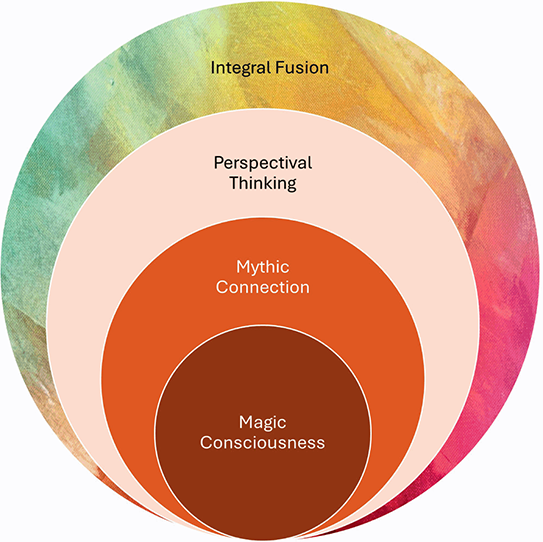
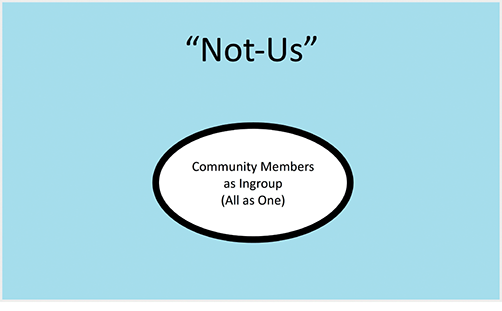
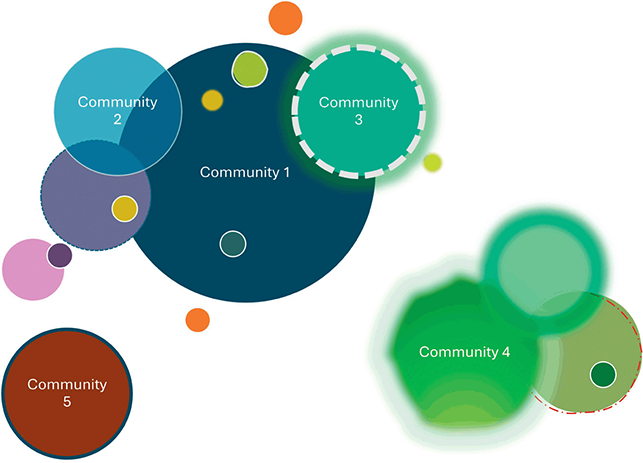
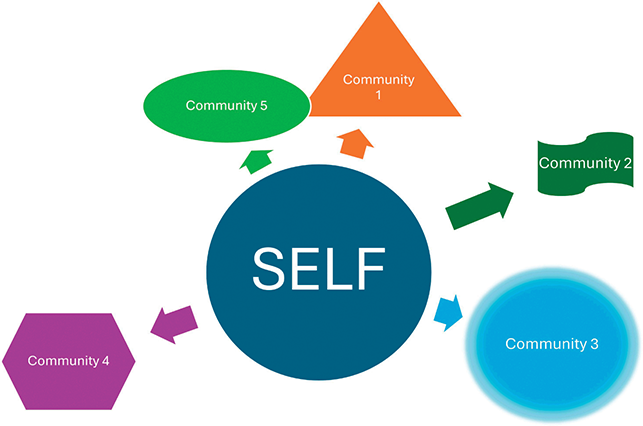



 Open access
