


1 Introduction
Transformations in gender relations typically unfold slowly, shaped by the gradual alignment of enabling conditions (Agarwal, Reference Agarwal1994; Goldin, Reference Goldin2006; Kabeer, Reference Kabeer2024). Yet history occasionally presents moments when change accelerates. One such moment arrived in the twentieth century when the expansion of export-oriented manufacturing drew large numbers of women into factory work on assembly lines – triggering rapid, often complex shifts in their agency, household dynamics, and well-being (Kabeer, Reference Kabeer2018, Reference Kabeer2024; Wolf, Reference Wolf1992).
This Element explores another such moment. Jeevika, a large-scale livelihoods program based on the women’s Self-Help Group (SHG) model in India, dramatically expanded women’s agency and reduced household indebtedness within a decade. What makes this case particularly striking is its setting: Bihar – a state historically marked by entrenched poverty and patriarchy – and the speed of change, which became evident within just four years of the program’s inception. While quantitative evaluations have provided causal evidence of Jeevika’s impact, the mechanisms – the how and why of transformation – remain less understood. This Element addresses that gap by offering qualitative evidence that reveals the social and institutional processes driving change.
The core of this study offers two interlinked contributions. First, it offers “thick description” (Geertz, Reference Geertz1973) and interpretive analysis of Jeevika’s operational modalities, especially the economic, social, and political processes it engendered. Second, it offers mechanism-focused explanations, grounded in qualitative data, that illuminate how the program spurred change among women living below the poverty line and situated at the intersection of deeply entrenched systems of caste, class, and gender inequality.
Our methodology combines research design principles from development economics with qualitative data collection and interpretive frameworks from sociology and anthropology. We adopt a reflexive approach to knowledge production, drawing on the qualitative social sciences (Burawoy, Reference Burawoy1998) and integrating them into economics (Rao, Reference Rao and Deshpande2023). Our approach rests on four key tenets:
Cognitive empathy, which bridges the experiential distance between researcher and researched.
Narrative-based inquiry, which centers participants’ voices and experiences.
Mechanism identification, which move beyond outcome measurement to explain change.
Participant-guided inquiry, which allows those being studied to partially shape what is observed and analyzed.
We invite development scholars across disciplines to engage with this Element as a case study of how participatory, large-scale interventions can transform the lives of marginalized women – by expanding agency, reshaping gender relations, and positioning women as agents of social change. At the same time, we aim to draw broader insights into the mechanisms that enable relatively rapid and lasting shifts in gender norms and structures. Our analysis contributes to ongoing debates across several overlapping fields, including participatory development, gender and development, and women’s movements in India and beyond. Given the breadth of these literatures, we do not attempt a comprehensive review; instead, we direct readers to existing surveys, including our own earlier work (Mansuri and Rao, Reference Mansuri and Rao2012; Sanyal, Reference Sanyal2014).
This introductory section begins by outlining Jeevika’s objectives, design, and the context in which it was implemented. We trace its roots to earlier SHG-based programs and India’s broader history of women’s movements. We then review the quantitative impact evaluations of Jeevika and related livelihoods initiatives. Finally, we present the qualitative methodology used in this study and offer a brief road map to the sections that follow.
1.1 Bihar’s Developmental and Social Context
Jeevika was launched in rural Bihar in 2006, at a time when the state was marked by some of the most acute levels of poverty and deprivation in India. In 1999–2000, Bihar was categorized as a low-Human Development Index (HDI) region, scoring 0.292 – a figure that rose only marginally to 0.367 by 2007–2008.Footnote 1 Footnote 2 Footnote 3 The rural poverty rate stood at 55.7 percent, far exceeding the all-India average of 41.8 percent. Bihar’s per capita GDP, at ₹6,773, was 32 percent of the national average. Bihar was classified in the “Low Equality” category of the Gender Development Index (GDI) and had the lowest GDI score in 2011–2012 (0.422). The gender gap in literacy was particularly stark. In 2006, only 37 percent of women were literate compared to 70.4 percent of men.Footnote 4 Nationally, these figures stood at 55 percent and 78 percent respectively. Access to formal credit was limited: only 1 percent of Bihari women had access to microcredit, one-fourth of the national average. Indebtedness among rural households was very high, with 66 percent of loans obtained from private moneylenders charging exorbitant interest rates ranging from 100 to 200 percent annually (Hoffmann et al., Reference Hoffmann, Rao, Surendra and Datta2021). These statistics illustrate the formidable challenge of improving gender roles and relations.
Caste remains a central axis of identity and social hierarchy in Bihar, with a long history of discrimination, exclusion, and violence. A British magistrate in undivided Bengal, of which Bihar was a significant part, described the province as the “home of extreme Hindu orthodoxy,” with extreme caste distinctions (O’Malley, Reference O’Malley1989/ Reference O’Malley1907, p. 3). In the postindependence period, structural reforms attempted to destabilize traditional caste hierarchies. The Abolition of Zamindari Act (1950) and the Land Ceiling Act (1962) disrupted longstanding patterns of land ownership and labor control, catalyzing resistance from landless, lower-caste groups. These tensions fueled the rise of the Naxalite movement in the late 1960s, which began as a class-based peasant rebellion but evolved into a broader assertion of lower-caste rights in Bihar during the 1970s and beyond (Banerjee, Reference Banerjee2006; Bhatia, Reference Bhatia2005). In response, dominant castes organized private militias to suppress lower-caste mobilization and engaged in brutal reprisals with ninety recorded massacres between 1984 and 2001 that claimed the lives of 860 individuals and often targeting women and children (Louis, Reference Louis2002; Kumar, Reference Kumar2003).
Although levels of violence have sharply declined, caste continues to shape the social fabric of Bihar in subtle and symbolic ways. It continues to structure critical aspects of daily life, including political mobilization, occupational access, marriage practices, and social interactions such as commensality (sharing meals with people from other groups).
Jeevika was launched in 2006 in this context as a community-based poverty alleviation initiative.Footnote 5 It was initiated by the Government of Bihar, supported by a long-term low-interest loan and technical assistance from the World Bank. The program’s primary goal is to enhance the economic well-being of the poor by establishing women’s SHGs and providing credit and other livelihood support services. Enrollment is focused on women from the most impoverished families, who are predominantly from historically marginalized castes, specifically the Scheduled Castes (SC), often referred to as dalit (oppressed). The SC category, as defined by the Indian constitution, includes subcastes positioned at the lowest rung of the caste hierarchy. Despite constitutional guarantees of affirmative action in public education and employment, the stigma associated with SC identity persists in informal life. For SC women, this marginalization is compounded by gender and class, severely limiting their agency, autonomy, and overall well-being.
Jeevika mobilizes such women into SHGs, which are self-managed institutions of ten to fifteen members each. Being formed into groups makes women “bankable,” or credit-worthy for institutional lending using the collateral-free joint-liability model. These SHGs are linked with banks and nested into a federated structure. Ten to fifteen SHGs form a Village Organization (VO), and thirty-five to forty-five VOs form a Cluster-Level Federations (CLF). Within each SHG, regular meetings are held to facilitate savings, borrowing loans, and repayments. These gatherings also serve as a platform for members to connect and share their experiences of family and community life. In principle, these meetings are managed and led by three elected office bearers: the President, the Treasurer, and the Secretary, all chosen from among the group members by the women. However, due to the prevalence of low literacy and numeracy, a Community Mobilizer (CM) – a person with basic financial literacy skills – was appointed, among other things, to assist with account keeping.
Following group formation, SHGs are expected to hold regular weekly meetings and initiate savings practices within the first six months. During this period, members contribute a modest weekly amount of ₹5–10. This initial phase emphasizes “inter-loaning,” whereby members borrow from the collective savings, fostering trust and familiarizing themselves with essential financial practices. Peer monitoring and mutual accountability mechanisms are employed to ensure timely repayment of loans. After approximately five to six months of consistent and regular meetings, the project provides the SHG with a Community Investment Fund (CIF) – a substantial one-time grant of Rs. 50,000. These funds are then disbursed to members as loans that must be repaid with interest. Through repeated cycles of borrowing and repayment, the capital base of each SHG grows, gradually forming a sustainable corpus or “resources in perpetuity” for the community.Footnote 6
As capital accumulates, SHGs expand their lending operations. Members submit loan requests, which are prioritized and approved through collective deliberation. Over time, loans are extended to members who were not part of the initial priority list, reinforcing a culture of repayment and generating a documented financial track record. This track record enhances SHGs’ credibility with formal banking institutions. Moreover, regular meetings and financial operations enhance members’ institutional and financial management skills. At this stage, Jeevika facilitates SHGs’ access to additional credit through linkages with national and regional banks. These institutional loans typically carry an annual interest rate of approximately 24 percent.
When ten to fifteen SHGs are formed within a village, they are federated into a Village Organization (VO). These VOs are envisioned as autonomous community institutions capable of leading broader interventions in livelihood promotion, social development, and access to public entitlements and services. Their responsibilities include providing financial support and agricultural inputs to beneficiaries, procuring grains at wholesale rates, offering emergency health loans, and improving access to government schemes such as the Public Distribution System (PDS) and the Mahatma Gandhi National Rural Employment Guarantee Act (MGNREGA). Additionally, VOs are mandated to identify and address local development issues in collaboration with Jeevika staff.
VOs convene bimonthly meetings, attended by three elected representatives from each member SHG – typically comprising thirty to forty-five women. These meetings involve specialized committees such as the loan repayment committee, social action committee, and procurement committee. Each VO elects its own leaders and appoints a bookkeeper to maintain financial records. At the next level of organization, VOs are integrated into Cluster-Level Federations (CLFs), which focus on scaling livelihood activities and enterprise development (see Figure 1).
Institutional architecture of Jeevika
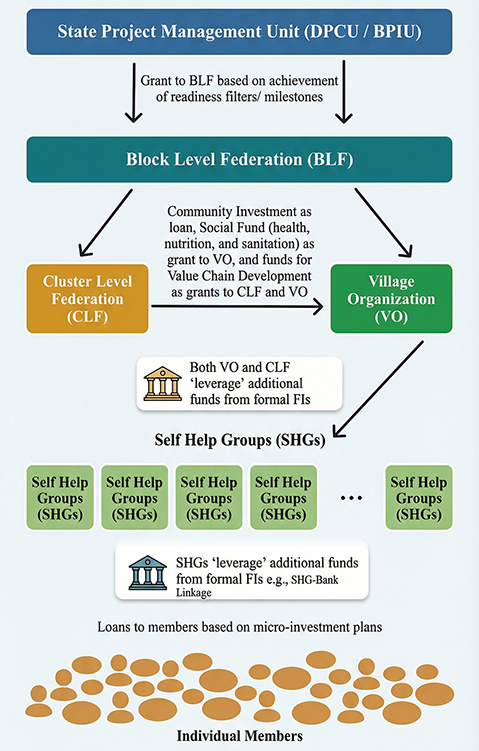
Through this multilayered institutional architecture, Jeevika established a robust “associational mechanism” for women’s collective empowerment, facilitating the development of women’s agency (Sanyal, Reference Sanyal2009, Reference Sanyal2014). Initially piloted in 2006 across six districts, the model has since been scaled across all thirty-eight districts of Bihar. Jeevika now operates statewide, reaching approximately 12.5 million households.
The institutional architecture of the Jeevika intervention drew upon existing models of poverty alleviation and women’s empowerment that had already been implemented in various Indian states. Core components such as the provision of credit through women’s SHGs, the integration of SHGs into federated structures, the creation of small-scale employment and livelihood opportunities, and the articulation of aspirational roles for SHGs in broader developmental and democratic processes were all elements found in earlier state-led initiatives. Three pioneering examples include the Tamil Nadu government’s Pudhu Vaazhvu Project (PVP, formerly Mahalir Thittam), launched in 1990, the Kerala government’s Kudumbashree program, initiated in 1995, the Velugu Society for the Elimination of Rural Poverty (SERP), which launched in Andhra Pradesh with support from the World Bank in 2000.
When the Government of Bihar launched Jeevika in 2006, the SERP model served as a foundational blueprint. However, rather than being a direct transplant, it was contextually adapted to suit local needs. This process involved cross-regional learning: SHG leaders from Andhra Pradesh traveled to Bihar to support SHG formation, while women from Bihar undertook immersion visits to Andhra to train as community mobilizers. Upon their return, these mobilizers played a pivotal role in catalyzing SHG formation across Bihar. This form of knowledge exchange and local adaptation underscores that Jeevika exemplifies a process of co-production and adaptive implementation, rather than “institutional monocropping” (Andrews et al., Reference Andrews, Pritchett and Woolcock2017; Evans, Reference Evans2004) – the wholesale transplantation of idealized institutional blueprints without sensitivity to local contexts and cultures.
Women’s SHG-based programs such as Jeevika embody the aspirations and values advanced by India’s long-standing women’s movements – movements that themselves trace their roots to the social reform initiatives of the colonial era (Krishnaraj, Reference Krishnaraj2012). In the nineteenth century, Indian social reformers across several regions launched movements to abolish regressive practices affecting Hindu women, such as sati (widow immolation), child marriage, the prohibition of widow remarriage, and the confinement of women to the domestic sphere. These reformers championed women’s education, the possibility of remarriage for Hindu widows, and women’s participation in public life.
Between 1917 and 1927, key national women’s organizations such as the All-India Women’s Conference (AIWC) and the Women’s India Association (WIA) were established. These organizations advocated for women’s suffrage and legal reforms in marriage and property rights, laying the groundwork for collective women’s action in the public sphere. The nationalist movement led by Mahatma Gandhi further legitimized women’s public engagement. Gandhi actively encouraged women’s participation in civil disobedience and the Swadeshi movement, which promoted economic self-reliance and resistance to foreign goods. Around the same time, Subhas Chandra Bose’s formation of the Rani of Jhansi Regiment, an all-female combat unit, marked a pioneering development.
In the postindependence (after 1947) period, the report “Towards Equality” by the Committee on the Status of Women (1974) marked a pivotal moment in the contemporary Indian women’s movement.Footnote 7 The report revealed entrenched gender disparities despite constitutional assurances of equality and called for a broad range of reforms, including the mobilization of women’s collectives at the grassroots level. The legacy of Gandhian cooperative ideals also played a role in shaping these efforts. In 1972, Ela Bhatt founded the Self-Employed Women’s Association (SEWA) in Gujarat, the first women’s cooperative and trade union focused on organizing low-income women in the informal sector (Bhatt, Reference Bhatt2006). SEWA provided its members with access to credit, food security, employment opportunities, and legal recognition, and became a globally recognized model for empowering working-class women.
Building on these efforts, the Mahila Samakhya program, launched by the Government of India in 1988, further institutionalized women’s empowerment by promoting the formation of women’s collectives across rural India. Together, these historical and contemporary movements provided a normative and organizational foundation upon which SHG-based programs like Jeevika could be developed and scaled.
In essence, Jeevika can be understood as an example of “induced” interventions that adapted and scaled up home-grown organic social movements (Mansuri and Rao, Reference Mansuri and Rao2012). While the provision of credit to poor women constitutes a shared cornerstone of the SHG model and globally prevalent microfinance approaches, important distinctions differentiate them. Many microcredit models (pioneered by Grameen and BRAC in Bangladesh) have evolved from their original nonprofit, NGO-led structures into for-profit, commercialized entities. Many of these pioneering organizations have transitioned into full-service financial institutions or banks.
Similarly, the dominant global model of financial inclusion – led by microfinance institutions (MFIs) and non-banking financial companies (NBFCs) – has been largely commercial in nature. By contrast, the SHG model as implemented in India, including Jeevika, remains a nonprofit, state-supported initiative. While it does prioritize the provision of low-cost credit as a poverty-alleviation strategy, credit alone is not the sole focus. Rather, the model incorporates explicit goals of social empowerment through the construction of grassroots women’s institutions.
This approach positions Indian SHGs not only as financial intermediaries but also as institutional platforms upon which a wide array of “vertical” development interventions can be layered. Over the past two decades, a diverse range of programs – spanning nutrition, maternal health, food security, income generation, and governance convergence – have been integrated into the institutional architecture of Jeevika. In doing so, SHGs have come to serve as critical conduits for state-led development, embodying a more holistic and participatory vision of empowerment.
1.2 A Brief Review of the Impact of Jeevika and Other SHG Programs in India
Jeevika has been very open to external research, resulting in a substantial body of literature evaluating its impacts. Among the earliest evaluations is Datta (Reference Datta2015), which focused on Phase I of the project (2008–2011). Employing propensity score matching methods on data from approximately 7,000 households across 400 villages, the study reported significant reductions in household debt. On average, households in treatment areas had outstanding debts of Rs. 5,000, compared to Rs. 14,500 in control areas. Moreover, treatment households were more likely to borrow for productive activities or to refinance high-interest debts, rather than for consumption. Asset ownership among treatment households also improved significantly, with higher rates of ownership of mobile phones, watches, livestock (such as cows and bullocks), and other durable goods.
Beyond economic gains, the intervention also yielded notable outcomes in women’s social empowerment. After four years, 9 percent of women in treatment villages attended gram sabhas (village assemblies), compared to 3.5 percent in control villages. Additionally, 79 percent of women in treatment areas reported expressing opinions on their children’s education (10 percentage points higher than controls), and 83 percent reported willingness to intervene in or prevent instances of domestic violence (a 9-percentage point increase relative to controls).
In 2011, the expansion of Jeevika to Phase II was deliberately subject to a randomized rollout to facilitate a Randomized Control Trial (RCT) conducted by Hoffmann et al. (Reference Hoffmann, Rao, Surendra and Datta2021) between 2012 and 2014. The study involved 179 gram panchayats (GPs): in 89 GPs, Jeevika was launched in 2012 (treatment group), while in the remaining 90, it was introduced eighteen months later in 2014 (control group). Within each GP, one or two villages were randomly sampled, followed by random selection of forty households per village, with deliberate oversampling of Scheduled Caste/Scheduled Tribe (SC/ST) households to reflect the program’s focus on economically disadvantaged groups. The final sample included 8,900 households across 333 villages in 179 GPs.
While this design enhances confidence in the causal validity of findings, the timing of the evaluation – just eighteen months post-rollout – limited the detection of longer-term or social impacts. Nonetheless, the study documented strong economic effects. SHG membership rose by 47 percent, and SHG-linked loan uptake increased by 28 percent. This led to a marked shift in household borrowing patterns: 28 percent of debt was moved from high-interest informal lenders to Jeevika-supported SHGs. At a macro level, the study observed a 35 percent decline in the interest rate for informal borrowing, suggesting that increased credit access through Jeevika created competitive pressure on informal lenders. Together, these changes were estimated to increase household annual disposable income by approximately Rs. 1,441, which is approximately 2.3 percent of annual household consumption expenditure in control villages as measured by the second-round survey.
More recent research has revisited the original Hoffman et al RCT sample to explore long-term and social impacts that require more time to emerge. Sen and Sharan (Reference Sen and Sharan2024) investigated the political empowerment of SC women in the 2016 GP elections, four years after Jeevika was introduced in treatment areas. Their analysis revealed a 126 percent increase in the number of SC women running for office in treated GPs. Notably, these candidates were disproportionately drawn from poorer and less-educated households and were more likely to be SHG leaders than ordinary members. The study also found higher voter turnout in GPs reserved for SCs. The authors interpret these findings as evidence that SHG participation cultivates leadership capacity and enables SHG networks to function as platforms for political mobilization.
Attanasio et al. (Reference Orazio, Kochar, Mahajan and Surendra2023), using both the original 2012–14 data and new data from 2019, examined the effect of SHG membership on group-based risk sharing. In villages where SHGs had been active for longer periods and were better implemented, SHG members demonstrated significantly improved ability to provide mutual financial assistance. Separately, a district-level RCT assessing a nutrition intervention delivered through Jeevika reported significant improvements in dietary diversity (Scott et al., Reference Scott, Gupta and Menon2022).
Beyond the evaluations of Jeevika in Bihar, there is a substantial body of research on related SHG-based programs across India, many of which have been subject to rigorous impact evaluations (Deshpande Reference Deshpande2022, provides an excellent review). One of the earliest evaluations was conducted by Deininger and Liu (Reference Deininger and Liu2013) on Andhra Pradesh’s Velugu project (2000–2004), which found improvements in female empowerment, dietary diversity, and household consumption. Desai and Joshi (Reference Desai and Joshi2014) implemented an RCT on SEWA’s SHG program in Rajasthan, reporting increased women’s participation in group savings schemes, greater engagement in non-farm labor, and improved involvement in both household decision-making and civic activities.
Deshpande and Khanna (Reference Deshpande and Khanna2021), in a study of an SHG initiative in Maharashtra, found evidence that the program fostered significant social capital among participating women. In Tamil Nadu, Khanna et al. (Reference Khanna, Kochhar and Palaniswamy2015) evaluated the Pudhu Vaazhvu Project and observed a notable decline in high-cost debt, diversification of livelihoods, and some improvement in women’s empowerment and political participation. Complementing these findings, Palaniswamy et al. (Reference Palaniswamy, Parthasarathy and Rao2019) reported that PVP participation increased women’s involvement in village assemblies not only through attendance but also through greater participation in discussions, longer speaking time, and a redirection of the assembly agenda toward PVP-related concerns – at times crowding out other community issues.
Prillaman (Reference Prillaman2023) found that women involved in SHGs in Madhya Pradesh, were substantially more likely to engage in local politics, particularly through participation in village assembly meetings. Christian et al. (Reference Christian, Kandpal, Palaniswamy and Rao2019) assessed the responses of villages in Odisha during the aftermath of Cyclone Phailin and found that villages with functioning SHGs were significantly more resilient due to their enhanced organizational capacity. Finally, using social network data derived from name-generator questions and formal network analysis, Davidson and Sanyal (Reference Davidson and Sanyal2017) found that credit-group membership in Karnataka expanded women’s social networks, particularly non-kin ties over kin ties.
Beginning in 2011, these different SHG programs were integrated into the nationwide National Rural Livelihoods Mission (NRLM). Kochhar et al. (Reference Kochar, Barooah and Jain2020), using quasi-experimental methods on a large-scale dataset comprising 27,000 households across nine Indian states, documented substantial economic benefits. They found that SHG participation led to increased access to credit from both SHGs and banks, which translated into higher household incomes – approximately Rs. 11,000 more annually after an additional 2.5 years of SHG membership, representing a 19 percent increase over a baseline of Rs. 57,000. The program also led to increased labor force participation among both women and men in SHG-member households, and a reduction in reliance on informal loans. Further analysis by Kochhar et al. (Reference Kochar, Nagabhushana, Sarkar, Shah and Singh2022) indicated that in states with larger allocations of Community Investment Funds (CIF), SHG participation strengthened women’s intra-household bargaining power, particularly regarding decisions on household expenditure.
Qualitative and mixed-methods studies of SHG programs also deserve mention. Sanyal (Reference Sanyal2009, Reference Sanyal2014, Reference Sanyal2015) analyzed SHGs’ role in enhancing women’s agency, normative influence, and social capital drawing on interviews with hundreds of SHG members. She argues that organizing socially isolated women into SHGs stimulates an “associational mechanism” that cultivates women’s capabilities and capacity for collective action. These effects were most evident when SHG members engaged in collective mobilizations or participated in grassroots political institutions such as village assemblies. Notably, these gains were not primarily driven by economic advancement. In further work on citizen’s participation in village assembly deliberations in South India, Sanyal and Rao (2018) and Palaniswamy et al. (Reference Palaniswamy, Parthasarathy and Rao2019) have shown that rural women who publicly identify as SHG leaders or members articulate demands for public goods (rather than individual public entitlements or grievances) and in more informed and sophisticated ways in contrast to unaffiliated women.
Agarwal (Reference Agarwal2019) examines women-only group farming initiatives led by women’s SHGs in Telangana and Kerala, where women lease and cultivate land collectively. She finds that group farming enhances women’s economic, social, and political empowerment – especially when supported by institutional infrastructure and state commitment. Kerala’s decentralized and better-supported model yielded significantly higher productivity and income than Telangana’s, where state support was limited and caste-based constraints more severe. Banerjee (Reference Banerjee2023) conducted a village ethnography and found that SHGs fostered horizontal solidarities among women, bridging caste and class divides. These solidarities facilitated “civic growth” and “natality” – the capability for active citizenship and political agency – and influenced local electoral politics, enabling women to challenge corrupt leadership and shape village governance. Dulhunty (Reference Dulhunty2024) similarly found that SHGs reduced gendered isolation and fostered “power with” – a collective form of agency that enabled women to contest patriarchal norms. However, she highlights the variability of outcomes depending on program design. SHGs grounded in feminist frameworks are more likely to promote dignity, mobility, and solidarity than those guided by neoliberal logics.
Taken together, these studies demonstrate that the benefits of SHG-based programs are both economic and social in nature. On the economic front, SHG membership is associated with reduced household debt, greater asset ownership, enhanced income levels, and improved access to affordable credit. Socially, SHGs have been shown to increase women’s participation in political and civic life, build social capital, facilitate mutual financial support, and enhance empowerment. Notably, the economic impacts of SHG participation often become evident within twelve to eighteen months of group formation and the establishment of federated, bank-linked structures. Social impacts, by contrast, have a longer gestation period, typically beginning to manifest after four years – an observation reinforced by findings presented in this Element.
1.3 Understanding “How” and “Why”: The Qualitative Counterpart to Quantitative Evidence on Jeevika
This Element offers a complementary contribution to the growing body of literature on Jeevika and other SHG-based programs discussed above. Specifically, we focus on the processes and mechanisms underlying the social impacts of SHGs – the “how” and “why” of these transformative outcomes – which are particularly striking given the rural Indian contexts in which these programs operate.
To explore these dynamics, we conducted a four-year qualitative study (2011–2015) across ten villages that formed a sub-sample of those included in the original RCT-based impact evaluation of Jeevika (Hoffmann et al., Reference Hoffmann, Rao, Surendra and Datta2021) and subsequent related studies, see Figure 2 for a timeline. The ten villages span two sets of triplets in Madhubani and Muzaffarpur districts, and two sets of pairs in Madhepura and Saharsa districts. These villages fall into three categories: (a) two Phase I villages where Jeevika had been active since 2006, (b) four Phase II villages where Jeevika began in 2011, and (c) four control villages where Jeevika was not introduced until after 2015.
Project and research timeline
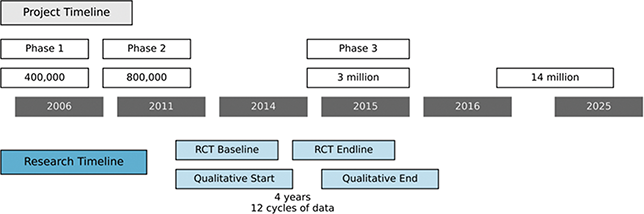
The Phase I villages were randomly selected from the broader RCT sample in Muzaffarpur and Madhubani districts. Once these were identified, each was paired with a Phase II and a control village using a two-pronged matching strategy. First, we employed quantitative matching via propensity score methods using 2001 Census data on key variables such as literacy rates, caste composition, landlessness, outmigration, and infrastructure. This yielded a shortlist of candidate control villages – three in Muzaffarpur and two in Madhubani.
To finalize the matches, we supplemented the statistical matching with qualitative assessments. Field investigators visited the shortlisted villages and conducted week-long exploratory studies to examine their geographical, economic, social, and political characteristics (see Table 1). For the comparison between districts where Jeevika started in Phase I (2006) and where it started only in Phase II (2011), we included two additional pairs of Phase II and control villages from the Kosi region (Madhepura and Saharsa districts).
| Muzaffarpur | Madhubani | Saharsa | Madhepura | |
|---|---|---|---|---|
| Treatment (Phase I, since 2006) | Saifpur | Ramganj | X | X |
| Treatment (Phase II, since 2011) | Raipur | Nauganj | Ramnagar | Rahua |
| Control | Bhimpur | Virganj | Basantnagar | Shahpur |
| Total (N = 10 villages) | – | – | – | – |
Note: Sampled villages, and individual respondents, have been given fictional names to keep their identities anonymous.
This integrated sampling strategy – combining quantitative rigor with qualitative depth – enabled us to construct meaningful “statistical clones” for comparison. It strengthens the basis for causal inference regarding the social changes that Jeevika induced, while also allowing us to unpack the pathways through which these impacts emerged.
Across all ten villages in our study, residential patterns reveal a distinct caste-wise spatial concentration into hamlets or neighborhoods, commonly referred to as tolas. These hamlets are caste-homogenous and are often physically separated from each other by roads, fields, or other natural and built boundaries – signifying a clear pattern of spatial and social segregation along caste lines.
In the sample villages from Madhubani district, upper-caste communities – particularly Brahmins and Bhumihars – form the majority. Their hamlets are typically situated near key village institutions such as the temple, pond, and school, reflecting both symbolic and practical centrality in village life. In contrast, lower-caste hamlets – home to SC groups such as the Musahar, Pasi, Ram, and Dhobi subcastes – extend toward the peripheries. The Other Backward Classes (OBCs) in these villages include the Yadav, Mandal, Badhai, Hajam, and Teli subcastes. A notable difference between two Madhubani villages – Ramganj and Virganj – is their religious composition. Ramganj has a significant Muslim population, including groups such as the Sheikh, Ansari, Nutt, and Pamariya, whereas Virganj has only a single Muslim household (Sheikh). Livelihoods here are predominantly agricultural or agriculturally linked.
The Muzaffarpur villages share similarities with Madhubani, but with variations in caste composition and economic orientation. Here, the dominant upper castes include Chaudhury and Rajput. OBC and middle-caste communities consist of Ansari and Badhai, while the SCs include the Pasi, Ram, Paswan, and Sabzifarosh subcastes. Unlike Madhubani’s farm-centric economy, Muzaffarpur villages are more bazaar-centric, with local markets playing a prominent economic role.
The villages in Madhepura district are broadly comparable to those in Madhubani in terms of caste and livelihood patterns. In contrast, the Saharsa district villages exhibit a markedly different configuration. Both are situated along major district markets, around which hamlets have organically developed. These market hubs have historically attracted trading communities, and local livelihoods are far more commercial than agrarian. Common occupations include tailoring, running private tutoring centers (referred to as “coaching institutions”), and bangle-making.
Taken together, these differences across villages, particularly in caste composition, religious diversity, and economic orientation, shaped both the opportunities and constraints through which Jeevika unfolded. They help explain variation in the pace of change, forms of resistance encountered, and the pathways through which women’s participation translated into shifts in mobility, authority, and political engagement; themes we return to in later sections.
This qualitative study was conducted by the authors with a team of four field researchers from Praxis, an NGO specializing in participatory research in the development sector. The researchers, all young women and men from Bihar, had graduated from local colleges and universities and were fluent in Hindi (and in its local dialects) and English. The researchers were familiar with village life and adept at engaging with women and men across caste lines, facilitating access to households and community spaces. They served as local ethnographers, providing valuable insights into the social dynamics of the villages under study.
In each village, we began with preliminary research using participatory rural appraisal (PRA) methods to understand the local political economy. Subsequently, over four years, we collected qualitative data across twelve cycles. Every four to six months, the ethnographers visited the villages for one cycle of data collection, always accompanied by one or more of the three principal investigators (PIs), who coauthored this Element. All three PIs had functional knowledge of Hindi, allowing them to understand the interviews and interactions with respondents.
The fieldwork involved week-long periods of observation and interviews within each hamlet, with each village consisting of approximately ten hamlets. The ethnographers interviewed a diverse range of respondents across the socioeconomic spectrum and conducted follow-up interviews with initial respondents in the final data collection cycles, generating a set of longitudinal interviews. These allowed us to examine the respondents’ experiences and reflections on the changes induced by Jeevika and the formation of SHGs.
In the Phase I villages, retrospective interviews provided insights about the early implementation and experiences of Jeevika, which began in 2006. By the start of our study in 2011, SHGs had been active for five years. Thus, data from Phase I villages – gathered through retrospective accounts as well as interviews and observations conducted during the ongoing operation of SHGs – covered a nearly decade-long period from 2006 to 2015. In contrast, in the Phase II villages, all interviews and observations were conducted concurrently with Jeevika’s launch and rollout. As a result, our findings from these villages reflect a four-year window aligned with the duration of our fieldwork (2011–2015).
In the initial stage of participant recruitment, we selected individuals to represent a range of socioeconomic strata within each village. In subsequent stages, we employed purposive and snowball sampling techniques to expand the participant pool. To collect qualitative data, we used multiple strategies: (a) individual interviews – both structured and unstructured – with women who participated in Jeevika and those who did not; (b) focus group discussions with both participant and non-participant women; (c) non-participant observation of SHG meetings, trainings, workshops, mobilization drives, and interactions at various administrative levels (village, block, district); and (d) interviews and focus groups with men and key village figures, including religious leaders, panchayat members, moneylenders, ration shop dealers (PDS), landlords, and other public officials. This multi-source data enabled us to compare Jeevika’s impact across its two implementation phases, as well as across treatment and control villages. It also facilitated an assessment of variations in project facilitation quality between the two phases.
To supplement village-level data, we conducted interviews with twenty-four Jeevika personnel at different levels of the organizational hierarchy. These included state, district, and block project managers, training officers, area and cluster coordinators, consultants, and young professionals, both in our field sites and in Patna. Interviews, lasting one to two hours, were conducted in Hindi or Maithili, recorded, and transcribed verbatim into English. We also directly observed project activities carried out by frontline personnel, allowing us to study social processes in real time rather than relying solely on retrospective accounts.
Transcript analysis was conducted using NVivo software. We employed both index coding – guided by themes of interest embedded in our research questions – and analytical coding, which inductively identified emerging themes from respondents’ narratives. Our analytical process proceeded in three stages. First, we identified changes in gender roles and relations as described by women and men in the treatment villages, focusing on those changes attributed to Jeevika and SHG participation. Second, we traced the mechanisms underlying these changes – such as SHG formation, group meeting participation, and financial management – to understand how change occurred. Third, we conducted interpretive analyses to examine why these mechanisms were transformative. For instance, we explored why organizing women into SHGs, requiring regular participation in meetings, and facilitating access to loans – despite limited direct income-generation by women – produced the observed outcomes.
Our interpretive approach is grounded in the specific sociocultural context of village life in Bihar, with particular attention to its impact on marginalized groups. Attending to context, rather than assuming it away, or controlling for it, was essential to understanding the magnitude and meaning of the changes experienced by SHG members. The qualitative design enabled us to adopt an emic approach, foregrounding participants’ own meanings and assessments. This approach allowed us to understand, from their point of view, why certain transformations were prioritized over others.
This Element centers on two core sections grounded in four years of qualitative fieldwork. Section 2, which draws on Sanyal et al. (Reference Sanyal, Rao and Majumdar2015), analyzes how Jeevika shifted gender roles by enabling women’s access to and management of money, expanding their mobility, and supporting their participation in public life. These processes helped redefine women’s identities and roles, especially in contexts marked by restrictive patriarchal norms. Through routine engagement with SHG finances, public meetings, and collective action, women gained social standing and challenged entrenched hierarchies. The section concludes that deep cultural change requires more than credit or transfers – it depends on institutions led by marginalized women, cultivated over time.
Section 3, building on Majumdar et al. (Reference Majumdar, Rao and Sanyal2017), explores how Jeevika’s architecture enabled such institution-building. By granting women access to symbolic, financial, and networked resources, the program fostered new cultural competencies and collective agency – effectively operating as an induced social movement.
Section 4 reflects on the broader implications for the theory of cultural change and shifting gender norms, and for development policy.
2 Money, Mobility and More: Understanding Jeevika’s Impact on Women in Bihar
This section provides an in-depth account of changes to women’s agency induced by Jeevika between the period of 2006 (program inception) through our study period (which was between 2011 and 2015). It explains how the changes occurred and why they were transformative. The four dimensions of change that were most apparent and valued by the women were physical and spatial mobility, group solidarity, access to money, and access to public spaces for deliberation and action.
Although Jeevika’s work began with the offer of low-cost credit, it was the institutional mechanism for delivering this credit that made money a catalytic force for empowering women. In other words, rather than low-interest loans directly empowering women by enabling them to earn independent incomes, it was the group-based practices of obtaining loans and managing repayments that facilitated women’s empowerment. Over time, the social gains achieved by women within the realm of Jeevika SHGs spilled over into their family and community lives. The changes in women’s competencies and capabilities radiated beyond the sphere of credit, creating a ripple effect that the program’s advocates had anticipated.
2.1 Access to Money
Having access to money, let alone control over it, was a challenge for most women in the villages we studied. Both men and women believed that economic resources should be controlled by men. Many also thought that women “don’t have a feel” for money and that they end up wasting it. “You don’t put money in the hands of women. If you let women handle money, they’ll be so happy they’ll go crazy!” said a man from a control village.Footnote 8
In most households where husbands were present throughout the year (i.e., not migrant workers), the man managed all aspects of household finances – earning, saving, spending, borrowing, and lending. Women had to ask their husbands for money when they needed to make purchases from roaming vendors who arrived at their doorsteps with various goods. Women with migrant husbands or older women often managed finances in the absence of their husbands, but they still did very little without permission.
Jeevika and other SHG-based interventions typically have two financial components: credit and savings. Small savings played a significant role in making women feel empowered through their participation in Jeevika SHGs. Half of the women we interviewed had never borrowed a loan, either from their SHG savings or from the SHG-bank-linked credit line, yet they spoke animatedly about the financial awakening they experienced through Jeevika. This financial awakening can be attributed to three aspects linked to money associated with Jeevika: controlling money, counting money, and circulating money. These aspects were encapsulated in the messages: “We can access the money, it stays with us,” “We can count the money,” and “We can decide whom to give it to.”
Controlling personal savings secured in Jeevika (even when set aside from the husband’s earnings) held special value for women, who rarely had money protected from the claims of other family members. “Owning” this money became synonymous with belonging to the SHG and infused the money with meaning. “Owning the money means owning the group. Until every single member takes ownership of the group and sees it as her responsibility, there can be no development,” shared a group member.Footnote 9
Savings in Jeevika SHGs were sanctified as money over which women had full authority, and this had an empowering effect. Jeevika personnel and community mobilizers (CMs) repeatedly convinced women that the money would always be in their control; Jeevika women were encouraged to handle money independently and take full ownership. Each SHG was provided with a moneybox and a register, both of which were kept in the treasurer’s house and used during weekly meetings. The CM’s role was limited to noting weekly transactions in the register.
Counting money regularly was another significant act for women, given low levels of literacy which was a commonly cited reason in control villages for why women were considered unfit to handle money. “Women are dehaati (unsophisticated, rustic); men are better able to negotiate and bargain outside the home,” said one man.Footnote 10 This pejorative notion held by some men was also internalized by many women, who considered themselves incompetent in the world of money and finance. Equating illiteracy with incompetence, they were often excluded from financial decisions within the household. Those forced by circumstances to handle money were acutely aware of doing so despite their illiteracy. “In my family, I take care of the money because my husband and sons are away. They give me money to save and to take care of all the expenses. My husband never goes to the bank. He says, ‘You handle it.’ But I still let him know whenever I take a loan from someone. I am illiterate, though, so I have to memorize everything,” shared a woman from a control village.Footnote 11 Yet, a woman from a treatment village who had become accustomed to handling money through the SHG struck a different tone: “Earlier, we were illiterate. Now my son says, ‘I don’t have to worry, my mother’s there to take care of everything!’ He earns and sends me money, and I repay my loan in easy installments.”Footnote 12
Transacting with money in Jeevika SHGs over the years gave women important skills, such as performing basic manual calculations with relatively large sums of money, calculating simple and compound interest, and figuring out repayment installments. They took great pride in the routine task of counting their savings every week. In most SHGs, the CM and the women serving as the group leader and the treasurer did the calculations. However, in some groups, women rotated this task. “Those who don’t know how to count money are made president for one day, and they are asked to collect savings from the other members of the group so that they can do it themselves. This is done on a rotation basis, and other women are also given a chance to learn counting,” explained one participant.Footnote 13
Teaching women how to count money and calculate interest seemed like trivial components of the project, but according to the women, it had a profound and lasting impact. This was most evident when we studied a few groups that had failed to function properly. These groups illustrated how educated, socially advantaged members could usurp the group’s access to credit for personal profiteering when fellow group members, handicapped by their illiteracy, refrained from monitoring the group’s financial affairs. For instance, in one of the groups in Saifpur, a few educated, upper-caste women repeatedly borrowed from the group at a 2 percent monthly interest rate and lent to non-members at 5 percent, pocketing the difference. For a long time, group members from the Halwai (sweet makers) community had no knowledge of this. They relied on the educated, upper-caste group members from the Chaudhury community to conduct all financial transactions. Upon finally uncovering this, they complained to the CM, who refused to do much about it as she was an upper-caste Chaudhury herself.
In the context of poverty alleviation programs such as Jeevika, literacy can be a weapon that allows elites to capture the benefits if left unchecked. Therefore, for lower-caste women, becoming financially conversant had a significant impact. It positioned them to be protected from being duped by all manner of lenders and financial operators. Hardened by their experience, these women had become vocal in group meetings and constantly reinforced the idea that the money belonged to everyone. What had taken place in this group reflected a wider change. In every meeting we observed, lower-caste women reiterated to upper-caste women that they understood they had equal rights over the money since they had all invested the same amount. “The group is for everyone. You’re not special here! You save ten bucks, and I save ten bucks, too,” they asserted.Footnote 14
Circulating money within the SHG through peer-lending practices enabled women to wield new forms of authority and agency. When women sought loans, they presented their requests during group meetings, where members collectively deliberated and decided on approvals, often weighing competing needs. For women accustomed to others exerting power over them, this governing role in lending decisions marked a significant step toward financial self-governance and autonomy. A group member outlined the step-by-step process.
First, all group members form a circle and sit down. Then they all pray and greet each other. Members deposit their savings, and I write the meeting details and count the total savings of members. If any member needs a loan, she conveys it in the meeting and the decision to grant her loan is taken by all members collectively.Footnote 15
These practices not only facilitated verbal claims-making and participatory decision-making but also honed women’s skills in arguing their cases and justifying decisions based on financial and economic circumstances. Group meetings thus became vital spaces for public articulation and deliberation that were otherwise unavailable to these women in other aspects of life. When conducted fairly, these processes instilled women with a sense of financial self-efficacy. However, issues arose when elites dominated proceedings or when malpractices occurred due to insufficient facilitation. Nevertheless, groups that addressed these challenges and adopted fair practices deepened women’s confidence in their financial abilities.
One member shared how her group implemented a preventive rule against malpractices, exemplifying their authority and capability to uphold integrity. Reflecting on past conflicts, particularly regarding inter-loans and accusations of favoritism among group leaders, she explained that new rules now required signatures from all ten members for withdrawals. In cases where not all members were present, at least eight signatures were mandatory, ensuring transparency and fairness.
Earlier we struggled a lot. There were several conflicts in the groups on matters of inter-loaning. The president, secretary and treasurer were blamed of favoritism towards some women. These office bearers withdrew money from the bank on their own, and there were cases where they withdrew money without informing the group. So, now we have changed the rule. You need to get the signatures of all ten women to withdraw money. If ten women are not present in the meeting due to some reason, then at least eight signatures are mandatory.Footnote 16
Demonstrating to themselves and to others outside their group that they could effectively control, count, and circulate money was transformative for women. It challenged the entrenched belief that only men were capable of managing finances, granting women access to household funds. Women asserted their haq (right) over household finances and decisions, citing their newfound ability to secure loans. “Before, even for ten rupees, I had to scramble. Now, I can easily borrow as much as I want. No one can even tell if I am in need (of money) or how I am managing. No one gets to know anything about it. It’s brought many positive changes in my life, which is good. I get respect,” one woman remarked.Footnote 17
This stood in stark contrast to neighboring control villages where women rarely had a say in household financial matters. Even those whose husbands worked away often deferred to their husbands over the phone or relied on their fathers-in-law for decisions.
Women also valued the preferential access to a credit source that offered loans at a guaranteed and standardized low interest rate, which was the most visible and tangible material benefit of their SHG membership to their families. Even if women never borrowed a loan themselves, knowing they had access to these funds for essential household needs had an empowering effect. It enabled them to participate in financial decisions typically made solely by their husbands.
The right to question their husbands marked a significant shift in many women’s lives, shared one member. She recounted how her newfound ability to secure loans allowed her to assert herself when her husband dismissed her input.
Researcher: Does he consult you before taking a loan?
Respondent: No, if we intervene, he’ll just say, “Go get the loan yourself.” Now that I can actually obtain a loan, I feel more entitled to question him.Footnote 18
Access to credit gave many women significant bargaining power within their households, leading to a role reversal where men began requesting loans from women instead of the other way around.
Before joining Jeevika, my husband managed all our credit needs. Now, I actively participate in household credit decisions. When he requires credit for business or other purposes, he consults me to figure out how much I can contribute by taking a loan from my group.Footnote 19
Despite these loans being repaid from men’s earnings, the opportunity to access low-interest credit through women was highly valued. This dependence on women for access to credit increased their perceived value in their husbands’ eyes. Women shared how access to Jeevika loans reduced the financial burden on their husbands by providing access to low-interest funds which not only enabled them to share the household’s financial responsibilities but also inspired them to explore income-generating opportunities beyond their usual domestic roles.
It’s much better now! Previously, if I needed money, I had to plead with many people. Now, I approach the group directly and get things done. The group also provides rice and other cereals. Both my husband and father-in-law appreciate having food supplies at home because of my involvement in the group. Now, we (women) want to contribute something by earning a little so that our husbands don’t get overburdened with the family’s responsibility.Footnote 20
Earlier, we had to approach ten different people for all our credit needs. Today, I can easily provide Rs. 20,000 to my husband, which shows him my worth. This allows us to invest more in agriculture.Footnote 21
In the microcredit literature, borrowing for a husband’s business is often viewed as disempowering for women. It is associated with potential exploitation and exacerbating gender disparities in asset ownership, reinforcing existing male dominance. However, participants in Jeevika rarely differentiated between borrowing for themselves or for their husbands and family. They did not perceive supporting the main household enterprise, typically managed by their husbands, as a reaffirmation of vulnerability. This perspective likely stemmed from the understanding that the family’s primary income source sustained all family members, even if men managed and ran the economic activities.
Another major reason why credit from Jeevika empowered women, even without turning them into entrepreneurs, was its role in reducing dependency on relatives and informal lenders for loans. Moneylenders, landlords, and employers could be unreliable, discriminatory, or charge exorbitant interest rates. Relying solely on them or on financially constrained relatives could be life-threatening during medical emergencies.
During medical emergencies, when children are in the hospital, we would run from one person to another seeking a loan. By the time the moneylender could make the money available, children would die. This nearly happened to me. When my son fell ill, I had to mortgage my house at the last moment to pay for his treatment.Footnote 22
Jeevika provides a Community Health Fund (CHF) that offers loans for medical expenses at a 1 percent monthly interest rate, half the usual 2 percent rate. Women often cited health emergencies as their primary reason for borrowing, followed by expenses for ceremonies, home construction, and less frequently, repaying old debts or funding entrepreneurial activities. Accessing low-interest loans during medical crises greatly enhanced women’s sense of financial self-efficacy.
I’ve taken loans for health reasons. Once when I fell seriously ill, I had to rely on loans from relatives and villagers. I also got help from my brother and sister. Recently, during another medical emergency, I was rushed to the hospital. I made an urgent call to my group members from the hospital to arrange funds through Jeevika. They promptly secured the loan from the VOFootnote 23 and supported me.Footnote 24
The ability to borrow easily at low rates during medical emergencies prevented families from selling assets under duress or falling into substantial debt. Men, appreciative of this group-based borrowing system, recognized that it alleviated the pressure of arranging for loans under critical time pressure, often at unfavorable terms.
My son says to me, “Mummy zindabad (kudos)!” You know why? My daughter-in-law had a serious medical condition and was in the hospital for her delivery. So, I had taken a loan of Rs. 30,000 from the group in my name and another Rs. 10,000 in the name of another member. If I would have taken this loan from the market (moneylender), the interest rate would have been 10 percent (monthly). Now I can get it at 2 percent!Footnote 25
These benefits were amplified for poor lower-caste Hindu and Muslim women. In one of the two treatment villages, where many men worked as migrant laborers, these women were accustomed to making financial transactions. However, they were severely disadvantaged in their ability to borrow from moneylenders, who offered them the least favorable terms. Through their SHGs, they could borrow more easily and affordably, at the same rates as women of other castes, classes, and religions. In sum, Jeevika loans provided much-needed money without tarnishing people’s dignity, which was especially important for lower-caste borrowers. “We don’t have to beg for money” or “ask for alms” was a common refrain among these women. Moneylenders, now operating in a more competitive financial landscape due to Jeevika’s lower interest rates, were displeased with this development. Some even mocked their women clients and refused to lend to SHG members. “I tell them, why should I lend to you? Go ask your group for money!” said a goldsmith-cum-moneylender in Saifpur.Footnote 26
A small number of women borrowed to expand their existing income-generating enterprises, and an even smaller number borrowed to start new economic activities as first-time entrepreneurs. Despite the small numbers, the impacts were significant. An exemplary case was Sudha Devi, the CLF president in Saifpur. She summarized her story, saying, “Before, I had to worry about having enough to eat. Now I’m sending my grandchildren to private school!” Her acumen in accessing both small and large loans from Jeevika to run her village convenience store made her the poster child of Jeevika. She frequently mentioned that her success had made her husband’s remittances a drop in the ocean, motivating him to return home and help with the business. She boldly embraced and reinforced her role as the family’s breadwinner.
In Ramganj, some men responded by starting their own savings groups to outdo Jeevika. A man, who served as the president of such a group and was a former candidate for the post of Mukhiya (Village Head), explained their intention unabashedly.
In an attempt to outdo these women, we lend to our members and other men in the village at 2 percent interest. We sometimes lend at 1 percent or even nothing, depending on the borrower’s need and ability to repay. Notable members of our group include the Sarpanch (Village Judge), who has been very active. Our attitude towards defaulters is more straightforward than Jeevika – if someone defaults for too long, we resort to violent means. In money matters, we don’t care if it’s our brother or father.Footnote 27
This assertion of not considering kin relationships for lending or punishing defaulters was a direct jab at Jeevika SHGs. Women SHG members referred to each other as didi, or sister, a term Jeevika used to foster group solidarity.
Credit from Jeevika had an empowering effect on women for many reasons, most of which had nothing to do with entrepreneurship; Jeevika’s enabling effect came from financially awakening women by giving them control over money and reducing their dependency on relatives and the informal credit market. Unlike loans from moneylenders, which triggered feelings of humiliation, Jeevika loans produced feelings of pride and self-efficacy. They also reduced their family’s vulnerability to losing dignity or being treated poorly. Jeevika transformed borrowing into a right, a positive entitlement, raising women’s value to themselves and to others.
2.2 Spatial and Physical Mobility
In rural Bihar, femininity is demarcated by confinement to domestic spaces, limited socialization within intimate circles of family and kin, and the inability to move freely without a chaperone. Village men and women interpret physical and spatial mobility as a reflection of a person’s gender and caste. Thus, women’s mobility is seen as immodest and wayward, leading to its suppression. These perceptions contribute to women’s gendered isolation, deliberately structured to subdue their power over their own lives and those of others. This suppression diminishes their ability to get things done and curbs their collective power to achieve desired goals. Therefore, changing mobility and participation in the public sphere are challenging. Yet, Jeevika was able to redefine physical and spatial mobility as signifying competence and self-sufficiency.
In these rural communities, the extent of women’s travel, the places they can go to with or without an escort, and their activities in those spaces are integral to their gendered disadvantaged status. Being a woman was associated with the domestic sphere, where they served their families and were protected by men. These spatial boundaries were reinforced by normative and physical sanctions from families and communities; women could be restrained or even beaten for going places without permission and an escort. In our control villages, men’s narratives revealed that, for women, mobility, morality, and modesty were closely linked. Men typically viewed mobile women as immoral and perceived the public domain, such as local bazaars, as threatening to women’s sexuality and commitment to their families.
A typical conversation illustrates these views:
Man: No, no, women should not go out alone. Many women go to the market, and then they run away. They do go occasionally, but they should not go alone or without a purpose. They should only venture out if there is some need or work.
Researcher: Do you see women sitting together and chatting sometimes?
Man: Yes, they do sit and talk among themselves. During long summer days, they sit under a tree and talk.
Researcher: And do you approve of this?
Man: It’s okay to some extent, but I think it’s wrong. They are influenced by the dayan (witch, referring to a widowed nurse in the village who tries to bring women together and circulate information about public health and sanitation). She teaches them how to speak and fight with others. One woman got influenced by her and was finally sent to jail. Now no one says anything.Footnote 28
This brief dialogue highlights the major themes observed in several hours of interviews and observations. In control villages, moral codes of behavior remained resistant to change, even though daily practices were beginning to yield to the pressures of changing times and needs. Deviations were denounced. Nonconformist women who used their influence and information to inspire others to be agentic and break conventions were viewed as a menace. Such women risked being labeled as troublemakers.
Negative views expressed in control villages were echoed in treatment villages by men in households where women had chosen not to affiliate with Jeevika. A police constable in Ramganj starkly declared that a woman’s proper place was within the household because women were household property, and husbands had proprietary rights over their wives. He viewed women venturing out as signifying male deficiency. In this framework, achieving gender equality would remain incomplete because it was a zero-sum game. Women gaining freedom would entail men losing status and power, ultimately loosening the proprietary rights husbands exercised over their wives.
It is a man’s duty to provide for his wife. If he can’t do that, it’s his fault. That’s when his wife has to step out of the house. You ask about mobility, I’ll tell you – no more than ten percent of the women in the Sheikh tola (Muslim neighborhood) leave their homes, including mine. Now you might think this is shaasan (domination/control), but that’s not what this is. It’s just inconvenient to let her out, and I’ll tell you why. If I let her out, she’ll have to be escorted by someone sent by me. Also, she can’t go beyond the destination she has sought permission for. So, at every point, it’s not full freedom, you see. Her freedom will always be regulated by me. So, what’s the point?! At the end of the day, a woman belongs to the house [aurat (woman) ghar (house) ka saamaan (object/property) hai]. If she starts earning and steps out, I’ll lose all my rights over her!Footnote 29
These gender norms were deeply internalized by women and tied to caste. While upper-caste women could not step out of their homes and neighborhoods, lower-caste women who had to do so could not obtain societal consent. For Brahmin, Kayasth, Bhumihar, Rajput (Hindu upper castes), and Sheikh (Muslim upper caste) women alike, their courtyard was their world. Some of these women were proud of their limited mobility and considered it as a reflection of their husband’s fulfilling their provider-protector role. “Women should not step foot outside their threshold. Women from the Brahmin community will starve to death, but they won’t step outside,” said one woman.Footnote 30 Another woman countered with a rhetorical question, “Why do I need to step out of the house if my husband is providing for me!”Footnote 31
Dominant discourses had permeated communities with caste privilege and class advantage (for instance, some Brahmins and Sheikhs) to those without. However, the political empowerment of lower caste groups in the past two decades and a dramatic rise in male out-migration among them had introduced discourses countering the dominant narrative. In many focus group discussions with Yadav and Paswan women, particularly the wives of migrants, some argued that life would be difficult if a woman did not step outside the house.Footnote 32 Yet, women who had to go out did not glorify or enjoy this liberty. Like the police constable mentioned earlier, they saw it as symptomatic of male deficiency. They perceived sitting at home and doing household work as “a luxury, available only to women from well-to-do and ‘decent’ families.”Footnote 33
Thus, women’s freedom of mobility was seen as a tainted freedom, a necessity arising from compromised circumstances. This cultural meaning was similar for those who disapproved of it and those who practiced it. Occasionally, Brahmin women whose husbands had migrated did not see any harm in stepping into the public domain to fulfill their family’s caregiving needs. Even this attempt at reinterpreting the meaning of women’s mobility out of the house relied on caregiving-based justifications. Thus, the household as a physical and symbolic space was crucial to the legibility of women as “wifely” instead of “wayward.”
In treatment villages, spurring women’s mobility and amplifying their voices were key to the process of undoing the everyday practice of gender. Notions of interactional propriety within the family hierarchy meant that women had to keep their voice subdued so it would not travel outside the walls of the house. Physically leaving the perimeter of the house and speaking with strangers were considered egregious violations, only to be permitted or tolerated when required by unfortunate circumstances (usually male incompetence or absence). From this being the reality of their post-marital lives to being able to go places freely was experienced by the women as a dramatic improvement.
Earlier we were not allowed to stand at the entrance of the house, and women used to be reprimanded if their voices were a little too loud or audible outside their home. But now we can go anywhere we please.Footnote 34
We are not claiming that Jeevika women could now go anywhere they pleased. Their increased mobility should not be read as their ability to go to places for personal pleasure (a freedom still reserved for men) but rather for an important personal or household purpose (like visiting markets, banks, schools, health centers, etc.). This qualification of freedom grounded on serving a purpose came through in several participants’ recounting of the change. An upper-caste member qualified her freedom and ability to speak with “even men if required.” This was telling of the enormity of the change and its new parameters.
Earlier I was confined to my house. I had no freedom to talk to anyone. My brother- in-law would ask me not to go out in the village, and my brothers didn’t like me to be working. They had apprehensions about me joining the group. But now women have really moved ahead. Now women are not burdened with restrictions anymore. Now we talk to other women, even men if required.Footnote 35
Another group member also serving Jeevika as a community mobilizer justified going out for her family’s needs in a way that seemed to be a clever manipulation of her family’s sentiments. This self-justificatory move that she may have used to convince her husband, and in-laws allowed her to extend the mobility she had gained from doing “I” related work. This captures the spillover effect of physical mobility from the domain of I activities to other domains of life.
Earlier I never used to go anywhere. But ever since my association with I, I’ve started managing a lot of work outside home. Typically, I would go out to conduct meetings and do SHG-related work. I even had to go live in the block office once until our bank linkages were done. But then I realized that if I keep going out for work and not for the work that my family needs, it’ll look bad. So now I go to the market when my children need things. I even go to their school when needed. One thing is for sure, that when a woman starts going out of the house, then the in-laws and everyone assumes that she can manage everything, both inside and outside the house.Footnote 36
Some of the most severely disadvantaged women, who had endured extreme poverty and caste-based discrimination and ignominy, underwent remarkable transformations. Suneeta Devi, a middle-aged widow from the Hajaam tola (traditionally barbers), lived with her parents and defied norms by being vocal, mobile, and self-taught in Madhubani painting – an art traditionally reserved for upper-caste Brahmin women with a national and international market. Despite facing community ridicule, she joined Jeevika’s initiative in her village, becoming instrumental in recruiting women into the SHGs. Initially targeted with verbal assaults for her interactions with male staff, Suneeta’s pioneering role led her to rise as the president of her group and Village Organization (VO). Years later, she achieved further success as a licensed Public Distribution System (PDS) dealer under Jeevika’s livelihood intervention. Through Jeevika, Suneeta gained opportunities to travel beyond her village (to other villages in Bihar), state (to Delhi and Hyderabad), and even internationally (air travel to Bangladesh). She asserted that now no one dared to pass disparaging comments on her being “freefain” (freely mobile) and that the detractors had been silenced, earning her respect and admiration within her community. Suneeta became a beacon of trust among women and was welcomed in every neighborhood.
Sita Devi and her family faced lifelong discrimination as untouchables due to their Dom caste affiliation. Traditionally, Doms have been marginalized for their caste occupation involving handling and cremating dead bodies in Hindu funerary rites. This discrimination was evident in the physical segregation of their community to the village periphery and their proximity to fields used for open defecation. Throughout her life, Sita Devi experienced the invisible aspects of discrimination. She was prohibited from visiting people of other castes, coming into contact with them, or interacting with them. Despite these challenges, she emerged as one of the highest-paid members of Jeevika in Ramganj. As an active Community Resource Person (CRP), she participated in over fifteen mobilization drives, extending her work and travel far beyond her home. Her transformation into a passionate Jeevika didi led her to criticize other women who struggled to assert themselves outside their homes. She derided such women who were limited by their gendered habitus, which she belittled as cooking, cleaning and feeding families.
The other didis who come with me for CRP drives frustrate me. They are women who can feed their families, women who can scrub and clean utensils, but once outside their home, they can’t get a word out of their mouth!Footnote 37
Sita Devi’s statement highlights a key feature of Jeevika’s organizational functioning. Filling leadership roles – such as Community Resource Persons (CRPs) and leaders of SHGs, VOs, and CLFs – was itself difficult, requiring Jeevika to remain flexible and recruit women it could successfully mobilize. In some cases, these were women whose life circumstances had forced them to fend for themselves, fostering agency and articulateness that made them well suited to leadership. More often, however, Jeevika recruited women who had spent most of their lives as cloistered housewives and were entering the public sphere for the first time. The constraints of operating in rural Bihar made preferential selection for leadership impractical; women were therefore not screened out for lacking prior leadership qualities. As a result, most women who assumed leadership roles were inexperienced and initially lacked mobility and confidence in public settings. Yet participation in SHGs – and especially serving in leadership positions – repeatedly exposed them to new situations, enabling them over time to develop new competencies and substantially expand their skills and capacities.
Women like Suneeta and Sita were mobilized quickly and enrolled early due to their harsh lives. However, upper-caste women proved challenging to integrate into the project. Despite the opportunities for accessing cheap credit and building personal savings, they hesitated to leave the consecrated space of their upper-caste homes and share space with lower-caste women. In Ramganj, dominated by Maithili Brahmins, some women refrained from joining Jeevika because they viewed the work as beneath their dignity. One non-joiner explained her reluctance: “I am not part of any savings group. Lower-caste groups are rife with backbiting and quarrels. They are all illiterate and constantly bicker. That’s what my husband says.”Footnote 38
Savita Devi, a Brahmin woman, initially refused to join, stating, “This is the work of chhotka log (people of lower status and means).”Footnote 39 Sometime later, a combination of economic incentives, skillful facilitation, and exposure to diverse groups during mobilization drives eventually persuaded her to join the SHG and serve as a Jeevika CRP. Even then, she prevented her educated daughter-in-law from joining, asserting, “She’s an educated girl; she’s meant for bigger things. She won’t sit with us illiterates, no way!”Footnote 40 Reflecting on her journey, Savita emphasized the transformative impact of seeing other women venture outside their homes:
You know, when a woman sees other women going outside, she becomes willing to try it herself … Now I’ve also gone on CRP drives to other villages. We don’t go alone; we’re always accompanied by four or five other women who’re also part of the group. It’s not wrong to do this. Even though the men at home don’t like that we’re moving about together, we remain determined to continue. Tell me, what’s wrong with going to other villages and connecting with other women? Nitish (Chief Minister) has created Jeevika for our benefit; we have to spread the word. He has tempted even those of us from upper castes to participate. With what? With a steady income and the promise that affordable loans and skills training would expand livelihoods.Footnote 41
Change rarely occurs without opposition. And if a change is perceived as calamitous, it is resisted fiercely. In rural Bihar, concerns over losing social control over mobile women outweighed fears about losing economic control due to their newfound access to credit. In places like Ramganj and Saifpur, men and many women resisted new discourses promoting women’s mobility and the autonomy it implied. They viewed women’s participation in SHGs as immoral, fearing that women venturing outside could lead to licentious behavior and illicit romantic relationships. Thus, women associating with SHGs threatened men’s roles as husbands, fathers-in-law, and fathers, challenging their control over women as wives, daughters-in-law, and daughters. Arula Devi shared how critics condemned the changes that were showing up.
They would say, “So-and-so’s daughter and daughter-in-law have stepped outside their home. They claimed these groups are corrupting women; women are going out freely and behaving indecently. Many consider such actions wrong (sinful) and see women joining the group as bad women (morally corrupt). Some men even suspected their own wives!”Footnote 42
By referencing these women as someone’s daughter or daughter-in-law, detractors highlighted the potential dishonor to family that was ever present as a silent threat. Interestingly, the economic aspects of the credit and livelihoods program did not receive nearly as much intense criticism or scrutiny.
For this reason, enrolling in Jeevika was initially challenging for many upper-caste women. There were instances where breaches in norms of female mobility were deemed so severe by husbands that they resorted to violence.
I faced a lot of opposition. Once, I had to travel to Muzaffarpur for training. The woman organizing it assured me it would be a one-day session with just an overnight stay. However, it extended to four days. By then, everyone at home was worried. In those days, with no mobile phones and no contact number left behind, I couldn’t inform them. When I returned, my husband beat me and asked me to leave the house (threatening to throw her out). But where could I have gone?Footnote 43
Barb-filled public comments in treatment villages starkly contrasted circulating wives with circumscribed husbands. Men who allowed their wives to join Jeevika faced crude taunts, such as “You work within the village while your wife mingles with other men outside the village (during group mobilization work)!”Footnote 44 This tactic sometimes led to the desired outcome for the program’s opponents. Some men, initially supportive, pressured by peers, forced their wives to withdraw. Shakeela Khatoon’s husband reacted similarly to derisive comments.
Two years ago, my husband fell seriously ill with a liver infection. We borrowed 100,000 rupees for his medical treatment. So, I thought, why not attend a Jeevika training to help repay the loan, as Jeevika offered access to affordable credit? We left for a one-month training in Sarai, Bihar, but I returned after eleven days. It was a training session for a CM (Community Mobilizer) drive, during which I formed thirty-five groups in eleven days. When I left the village, members of our Muslim community began speaking ill of me, saying, “The man stays home while the woman goes out to work!” My husband was furious and asked me to return. Many women from the Muslim community were later barred from participating in CRP drives again. Women from the Kushwaha, Mallah, and Ram communities no longer face such challenges at home.Footnote 45
Men’s sanctioning of women’s physical and spatial mobility served dual purposes: to confine women by upholding age-old conventions and to fiercely defend their masculine exceptionalism. Often, men reacted not just as husbands asserting power over their wives within their individual marital families but as members of a broader gender group that perceived Jeevika as an emasculating intervention threatening their masculinity.
The renegotiation of boundaries regarding womanhood and caste is an ongoing, dynamic process. While some women were optimistic about unfolding changes, others remained cautious and in flux. Maya Jha, a community mobilizer and wife of the temple’s head priest, struggled to fully accept the increased mobility of lower-caste women. She sought to convince Jeevika personnel and us (the researchers) that her attitudes had evolved. She recounted that a decade ago she would not have allowed even the shadow of a woman from the Ram community to touch her, yet now she welcomes them into her courtyard for meetings. However, observations of her group meetings revealed a gap between rhetoric and practice. She sat on the bed with two other Brahmin members, while the eleven Ram community women crowded on the floor. She personally collected savings from Brahmin women but insisted that Ram women leave their contributions at the edge of the bed, keeping them at a distance. In her absence, Ram women often complained about her behavior, making it a subject of their sarcasm and jokes.
The potential of these gains to lead to lasting social change was a critical concern for Jeevika’s field-level facilitators, program designers, and evaluators. This concern was most pressing though for women like Sita Devi, for whom increased mobility had been transformative. Any reversal would be devastating for her. She was acutely aware that her momentous newfound mobility was anchored in Jeevika and would last only as long as Jeevika. She feared that without the program, restrictions might resurge, once again excluding women like her from certain spaces.
I’m allowed to be in the temple premises during our VO meetings only because I’m a Jeevika didi. But the day I’m not a member of my group, you’ll see, they’ll reject my donations (to the temple) and won’t allow me in the temple premises ever again. That’s the fate of a Domin (Dom woman).Footnote 46
The marked expansion of women’s physical and spatial mobility during Jeevika’s early Phase 1 (2006–2015) represented a profound shift, disrupting the gender–caste habitus that had long confined women within rigid social categories and symbolic boundaries. These boundaries became more porous, enabling women to expand their capabilities. This transformation involved not only individual changes among women participating in SHGs but also broader relational shifts among husbands, in-laws, and kin who gradually accepted and accommodated women’s new “beings” and “doings.” Through everyday negotiations within households, these changes reshaped the attitudes and practices of men and women who were not SHG members themselves. Over time, the effects rippled across families and communities, exceeding the sum of individual transformations by altering the social expectations that structured gendered behavior. The standards against which future generations of women and men would be judged were irrevocably changed, making the scale and implications of these shifts akin to a revolution.
This revolution, however, was not uncontested. Some men and upper-caste groups expressed resistance and skepticism, yet opposition never escalated into the widespread or violent backlash observed elsewhere – such as against women garment workers or microcredit groups in Bangladesh. Explaining this absence of backlash requires a contrastive perspective. Two factors are especially salient. First, Jeevika’s visible sponsorship by the state and its explicit endorsement by the Chief Minister conferred political legitimacy from the outset. While social acceptance had to be negotiated locally, political acceptance was already established, raising the costs of organized opposition. Second, by the early 2000s, the private militias of dominant castes that had previously suppressed lower-caste mobilization had been largely dismantled, and religious institutions lacked both the capacity and personnel to mount large-scale resistance, even when ideologically opposed to women’s participation. Together, these conditions help explain why the changes endured and why, in our view, they amounted to a quiet but genuine revolution.
2.3 Public debate and Action
In rural Bihar, women rarely participated in public life before 2006, the year Jeevika launched in two treatment villages. Women’s gatherings typically revolved around private family celebrations, kin group rituals (births, marriages, deaths, and funerals), communal religious ceremonies at temples and mosques (for those allowed to enter), and community responses to calamities. Participation in village meetings involving public deliberations on local governance and collective action was exclusively dominated by men.
In control villages, women did not perceive local self-governance institutions as responsive to their needs. These spaces for political action were seen as male-dominated, where women had little literal and figurative space. Public officials viewed women as incapable of active participation in public debates and governance. In Virganj and Bhimpur, most women had never attended village assemblies, a forum for resolving individual and collective issues and selecting beneficiaries for government schemes and subsidies. The few women who did attend were often widows seeking pensions or housing rights under government welfare schemes, or impoverished women appealing for assistance. They were generally treated poorly, denied information, and kept at bay.
The only reported instance of large-scale female attendance at a Virganj village assembly involved women being summoned solely to appear in a photograph with the Mukhiya. One woman recalled, “We arrived on time, but you know what happens there! They took a group photo of all of us, made us sign a paper, and then we left.”Footnote 47 Women’s disillusionment with their superficial inclusion was corroborated by the sarcastic and demeaning remarks of the sarpanchFootnote 48 about women attempting to enter the public sphere.
These days women have become the seth (a term describing a powerful figure with significant resources and influence, akin to boss)! But does that mean they’re equal? Once I visited a BDO (Block Development Officer in a neighboring village who told me that a bunch of illiterate women had been selected from their wards as mukhiya candidates. I tell you; how can a bunch of illiterate women fight for elections! That’s the problem with women’s empowerment!Footnote 49
In summary, women in control villages had limited direct interaction with the state and its officials, witnessing it mainly through the lens of male household members. Regardless of their caste or class, most women lacked knowledge on accessing government entitlements, navigating public services, and meeting bureaucratic requirements for welfare access. The gendered status quo in village political life remained entrenched, neutralizing the potential revolutionary impact of political empowerment through reservations for women in elections.
In treatment villages where Jeevika had disrupted the gendered status quo, a dramatically different political landscape emerged. Women enrolled in Jeevika, especially those in leadership positions, became active participants in the political arena. They attended village assemblies and voiced their complaints against corrupt mukhiyas (elected village presidents). By expressing their critical views on traditional politics in this public forum, these women asserted their role in community governance while positioning themselves as political outsiders. This insider–outsider political critic role mirrored Jeevika’s objective, which aimed to raise women’s political consciousness and civic engagement without directly pushing them to intervene in local politics.
The program sought to establish a parallel institutional structure led by women, which would eventually “converge”Footnote 50 and collaborate with the existing panchayat-based local governance system. The SHGs were federated into CLFs. Jeevika envisioned this federation, controlled by women, as the future main conduit for implementing the government’s many women-centered interventions. Therefore, this institutional infrastructure was not intended to undermine politically authorized governance institutions. However, by providing women with a platform to discuss challenges affecting their economic welfare and social well-being, these spaces enabled women to unite around their experiences of exclusion from collective decision-making in the village. The grievances these women held against their elected panchayat leaders and their frustration with being excluded (or nominally included) led to the realization that it was time for them to take matters into their own hands.
Some of the women were fiercely critical of these institutions. “We’re quite against the mukhiya. When we said we wanted to attend the village assembly, he just stopped holding them!”Footnote 51 They also felt strongly about corruption in the panchayat institutions.
You know, they (the incumbent and their political supporters) came to bribe us once. They said, “Here goes the money, now get me all the votes from your Jeevika ladies.” We rejected the money and told him, “Just win fair and square if you can.Footnote 52
These experiences were significant because they signaled to women that public perceptions regarding their status and power were shifting. Although their individual empowerment was being negotiated within the dynamics of their families, they had been collectively empowered as “Jeevika ladies.” Grouped together, these women could be rallied and mobilized toward a common interest or aim, quickly gaining political power. The potential power the women could collectively harness made Jeevika comparable to established entities like caste groups, whose support, as “vote-banks,” was habitually sought for winning elections.
These appeals from outside entities and demands for support from “Jeevika ladies” were seen by some women as a sign that they could eventually harness their newfound power to pursue their interests. “I think if our CLF keeps moving in the right direction, then a day will come when they (those holding power or hoping to ascend to power within the local government) will have to come to us.”Footnote 53 This aspirational assertion reveals a conviction that Jeevika-linked institutions would, one day, become an axis of power, challenging the monopoly on power held by influential men.
What was evident in the meantime was a set of Jeevika leaders rising through the ranks to become conduits or brokers for public services. They became the contact points for women seeking to resolve issues, from obtaining their share of subsidized food staples to securing old-age pensions and subsidies for housing and sanitation. These redistributive entitlements were dispensed through the panchayat, and the decisions were supposed to be officially authorized after open public deliberations in village assemblies. However, these decisions were often opaque, perceived as discretionary and discriminatory. A new practice had emerged where women brought their concerns to the leaders of Jeevika SHGs and VOs instead of approaching elected local representatives or the head of the panchayat. The leaders arbitrated with the panchayat or other institutions to resolve these issues. Radha Devi, the CLF president in Saifpur, enjoyed problem-solving and helping other women. Having risen through the ranks of Jeevika and won elections at all three levels – SHG, VO, and CLF – she considered it her responsibility to care for her “constituency” of women. Our conversations with her were frequently interrupted by women coming to her doorstep for help or information. Her home had become the first stop for women seeking redress for various troubles, and she regularly acted as a broker with rhetorical flair and competence comparable to any skilled politician.
I wish I could take the law into my own hands. Then I would take care of the thirty to forty VOs in my CLF and push each one of those ten thousand didis forward. Then we would show everyone that women aren’t weak. We can sit at the same table with you … You know, all the poor are my supporters. That’s because I am against the rich.Footnote 54
Land disputes involving Jeevika members and non-members were frequently brought to these women for intervention. These disputes often reflected deep-seated caste and class rivalries. The women leaders saw intervening in land disputes as opportunities to address historical injustices inflicted by dominant caste men on women from backward castes.
Given the unity among women, we take action whenever needed. For instance, one member of the of Ganga Jeevika SHG had a land dispute with a Brahmin. The path to her land goes through this Brahmin’s land, and he was blocking it to prevent access. All of us women went together and resolved the issue.Footnote 55
In Saifpur, Jeevika women also arbitrated land disputes. Since the existing institutional system routinely disregarded women and neglected their complaints, and men offered little help, Jeevika members banded together as a show of force in their new role as a body for dispute resolution.
Men sort out their issues among themselves (implying they do not help women). But when it comes to women, if we learn of any land disputes involving SHG members or non-members, we unite and work to solve the problem. They (men) have to listen to us then, and why wouldn’t they? We go in large numbers, and non-group members also join us. No man can dare to ignore us then.Footnote 56
Jeevika members also arbitrated financial disputes. Girja Devi recounted how group members joined forces to help recover money on behalf of a Jeevika member’s family.
Didi (sister), earlier men handled all the local disputes. Women were not even allowed to be present (in the discussions of the customary dispute resolution entities). But now things have changed. Now, ten to twenty women can come together and go and solve any problem. Someone from this village had given a loan of Rs. 4000 to a person from another village. The creditor’s two daughters-in-law were Jeevika members. Men from that family would go (to the borrower) and ask for their money back, but they (debtor) refused to repay. Then ten of us didis (sisters) hired an autorickshaw and went there. We demanded the money and compelled them to repay the loan on the spot. The debtor repaid. Things have changed didi. Now we are confident and can talk to unfamiliar men without hesitation. We’ve gained exposure and learned many things in Jeevika.Footnote 57
A league of Jeevika members intervened on behalf of one of their group members to force a local brick kiln owner to pay the money he owed her. More significant than the amount of money or wages recovered was the fact that the women successfully confronted a man of wealth and power. This man’s business employed many of the poorest villagers, as brick kiln work is hard and poorly paid. Such businessmen were often among the village strongmen on whom the poor relied for employment and credit. For the women to force him to comply with what they perceived as rightful action signaled their emergence as power brokers. This reluctant acknowledgment from men indicated that the collective status of these women had surpassed their individual status within families and communities.
Once a brick kiln owner refused to refund Rs. 4000 for four years to one of our members. All of us women hired a Jeep and pursued him. We warned him that if he didn’t repay immediately, it would cost him his bricks and goats. Finally, he repaid on the spot. The women’s collective has established its status in the community, and people are often scared of it. Whenever we go out in a group, people passing by are alert and they start whispering to each other. Earlier, they were disrespectful, but now no one dares to be so.Footnote 58
Jeevika members also intervened to rescue women from domestic violence. Women in Ramganj and Saifpur did not hesitate to take action to stop violence as it unfolded and had cultivated the capacity for rapid mobilization. This was different from women in the control villages, who were reluctant to get involved in other families’ affairs, fearing they would be rebuffed or entangled.
If a group of thirteen members can’t stand up for each other, then what’s the use? If I don’t intervene, the woman will die. It happens in every family. If it is a serious matter, we call for a meeting, and they (perpetrator) are made to apologize. Women from all the groups attend the meeting and make a decision.Footnote 59
This new modality of Jeevika women transforming their membership base from routine borrowing, lending, and loan-recovery tasks into an active coalition rallying for justice was not well received by the established order. Initially, men disapproved of women mobilizing and often responded mockingly. “My husband would taunt us. He said that he’d see what women power could achieve. He doubted our strength and believed that if the mukhiya, the sarpanch, and the police couldn’t resolve the land dispute, we certainly couldn’t. But we did it.”Footnote 60
However, as time went by, some men began to see this empowerment of women as a positive change, the women reported.
They say it’s a good thing that women are now united and don’t just sit at home. Now, they hold meetings, stay aware of what’s happening in the houses next door, and share this information within the group, making other women aware of recent developments in the village. Previously, women didn’t know any better. They didn’t report any mistreatment from men of the village.Footnote 61
Women’s participation and engagement in the public sphere primarily manifested through problem-solving, dispute arbitration, and challenging the authority of local officials such as the sarpanch and mukhiya. These actions were often in response to appeals from aggrieved women who felt they had been wronged. For SHG members, these public actions were symbolic of women actively advocating for justice in ways that both traditional male-dominated institutions, and formal legal systems, had failed to do.
These experiences of successfully leading public actions sparked women’s critical awareness of local institutions – understanding how power operates within them and learning to engage beyond being marginalized recipients. For some, this realization evolved into political aspirations, leading them to contest elected positions in local government, such as ward member, mukhiya (village head), or other influential roles.
Radha Devi, a CLF leader, exemplified this transformation. She boldly contested the election for the top post in the panchayat and lost. Yet, she renewed her resolve to continue striving for power. She viewed attaining political office as a means for serving the community’s disadvantaged, particularly women, and to combat corruption within the existing system.
I ran for Mukhiya elections but I lost. The other candidate bought the seat (referring to bribery); he spent thirteen lakhs ($20,000 approx.), and I had no money. I had no money to give to any didi … My aspiration was that, if I win, I can use my position to do social work; to work for all my fellow didis free of cost. Just imagine how much our didis could progress! I wanted to challenge this practice of a proxy leadership. It’s a women’s seat after all, and if a woman wins the election, she should work! Before the elections, I had declared that “If I win, then you’ll find me at every doorstep and in every SHG and VO meeting, ready to serve. I have the jazbaat (passion). I’m going to help the poor. I’m going to get them what they need …”Footnote 62
Asha Devi, the CLF president of Ramganj, also charted a similar same path and contested the panchayat elections. She ran for the ward elections, and women affiliated with Jeevika across eight neighboring villages, whom she had mobilized through grassroots efforts, supported her campaign. As she put it, “Women came in large numbers from eight different villages for the election, and everyone voted for me. You know why? Because I’ve formed groups everywhere, and I’ve done it all on foot.”Footnote 63
Despite her efforts, she lost to her opponent due to alleged election rigging orchestrated by a Choudhary. “I would’ve won if the election had not been rigged by Choudhary. They threatened violence when I tried to protest against them.”Footnote 64 However, this setback did not diminish her determination to pursue future electoral bids. She expressed her ambition to contest the next Mukhiya elections, confidently stating, “Give me the position and then see.”
The political empowerment of women within Jeevika grew without direct facilitation from the project itself. In 2006, prior to mobilizing women into the project, Jeevika personnel invested considerable effort in gaining “buy-in” from key panchayat members. They assured them that the project aimed solely to be a women’s microfinance program and had no intention of altering the village’s social and political order. This strategy allowed the project to operate without interference from the panchayati raj institutions (PRIs). As the project gained funding and public support, and as Jeevika women became more visible and developed effective, autonomous problem-solving mechanisms that challenged the PRIs, Jeevika personnel began to withhold support. Consequently, women often felt disappointed when they sought financial or other assistance from Jeevika for election campaigns or anti-liquor mobilizations, only to be denied help.
Thus, the entry of Jeevika women into the public sphere, particularly within the panchayat, can be seen as the project’s unintended consequence. Women asserted that “Jeevika helps build leadership skills and instills confidence in us to manage our community. No school or formal education can teach you that.”Footnote 65 Additionally, the project strengthened the collective identity of gareeb didi (poor sisters/women), mobilizing women and improving the terms under which they were recognized and participated in public spaces.
2.4 Discussion and Conclusion
Gender equity and empowerment – central goals of many development programs – ultimately require cultural transformation. Promoting women’s agency entails shifts in norms (shared expectations and informal rules of conduct), habitus (embodied dispositions shaped by long-standing structural constraints), and repertoires (the cultivated capacities and competencies individuals draw upon). Inducing such change – by revising entrenched norms, dismantling inherited habitus, and cultivating new skills – is an ambitious undertaking. As we have argued in this chapter, Jeevika attempted precisely this, and it succeeded to a significant degree.
Participation in self-help groups altered the social and economic conditions shaping women’s lives, directly challenging patriarchal and caste-based structures. As women acquired new competencies, entrenched norms and habitus associated with gender and caste were disrupted. Over time, women adopted new dispositions and practices that redefined femininity: collectively managing finances, resolving community disputes, and aspiring to political office. Their growing civic, political, and financial engagement dismantled long-standing barriers and narrowed gender gaps within a relatively short period, even though progress was uneven.
These changes can also be understood through the lens of status construction (Ridgeway, Reference Ridgeway1991; Ridgeway et al., Reference Ridgeway, Boyle and Kuipers1998; Ridgeway and Correll, Reference Ridgeway and Correll2000). Status beliefs – shared assumptions about the competence and worth of social groups – emerge through repeated interactions in “doubly dissimilar encounters,” where participants differ both by social category (here, gender) and by access to resources. In such interactions, men’s greater access to resources has historically reinforced beliefs in their superior competence, beliefs that are internalized by both men and women. These beliefs persist through two reinforcing mechanisms: women’s own acceptance of lower perceived competence and their beliefs about how others evaluate men’s and women’s abilities, shaped by observing who holds authority and receives esteem in everyday life. Status beliefs become entrenched when both advantaged and disadvantaged groups come to believe that society broadly views one category as more competent and deserving.
Jeevika intervened directly in both mechanisms. It challenged assumptions that positioned women as inherently less capable and less deserving of respect. Prior to Jeevika, interactions between women and men were structured by unequal power and limited access to resources. By granting women exclusive access to low-interest credit – resources previously unavailable to poor households – Jeevika enabled women to borrow larger sums, move beyond the household, engage with public institutions, and manage financial affairs collectively. These activities, long associated with male authority, became visible markers of women’s competence. Paradoxically, by explicitly privileging women and excluding men, Jeevika initially accentuated gender distinctions – an approach that may sit uneasily with some Western feminist ideals but proved essential in the context of rural Bihar. Access to socially valued economic roles enhanced women’s self-worth, increased their perceived value to others, and elevated their public standing, thereby narrowing gender-based status inequalities.
3 Inducing a Movement: Understanding How Jeevika Was Implemented
Project implementation is where the rubber meets the road, where grand visions turn into ground realities. To be successful, development projects need to pay attention to process – high-quality context-sensitive implementation that is adaptive. However, evidence-based development focusses on measuring outcomes rather than the processes of implementation that lead to those outcomes. This section aims to correct that bias. It brings Jeevika’s project implementation to the forefront by describing the processes that unfolded from 2006 to 2010, during Jeevika’s first phase of rollout. It provides the backstory of how Jeevika worked.
During these years, the project was entirely new to the communities in the two treatment villages, Saifpur (in Muzaffarpur district) and Ramganj (in Madhubani district). The Jeevika team was also new to the task of bringing this complex project to life. In the narrative that follows, we hear from Jeevika personnel who recall how they transmitted messages and mobilized women, and from women recalling how they received these new discourses and directions. We also hear from men reacting to the project.
Implementing Jeevika in the early years was akin to mobilizing a social movement. Jeevika’s economic and social change goals were adopted at the top by the Bihar government. Then a campaign was launched at the grassroots level to align people and communities with these goals and to recruit poorer women into Jeevika’s fold. Jeevika’s work began by publicizing its offer of credit at a monthly interest rate of 2 percent. Credit was the core component around which other “verticals” – various kinds of livelihood subinterventions – were planned once the SHGs became well established. These included group-based procurement and distribution of staple food grains at wholesale prices and training poor women in making marketable Madhubani art, a well-known local style of painting traditionally guarded within high-caste communities. However, the SHGs needed to mature before women were ready to take on these activities.
Jeevika’s credit offer alone wasn’t enough to spur enrollment. Joining SHGs required women to cross gendered boundaries – interacting with men, handling money, and attending meetings outside the home – which provoked hesitation and male anxiety. The promise of low-interest loans and rational benefits couldn’t overcome these barriers; a concerted mobilization campaign was needed to make Jeevika real.
The movement-like nature of implementing Jeevika was evident in the efforts of project personnel to construct a trinity of resources dedicated to women – symbolic resources (new identities), institutional resources (new collective entities), and material resources (group money, credit, personal savings, and bank accounts) – that women were given exclusive access to. In the patriarchy within which it functioned, Jeevika broke that convention for the first time. Even if loans borrowed from Jeevika SHGs were used for meeting family needs, or invested in agriculture, or small businesses run by husbands and repaid from their earnings, those loans needed to be accessed by women first. To maintain their access to this cheaper source of credit, women needed to enroll and participate in SHGs. Access to these resources produced the social empowerment discussed in the previous section. Jeevika was a campaign waged with credit, layered by a process of identity and institution building by skilled frontline workers. They exercised great cultural sensitivity and political savvy to help breach gender conventions in a context hostile to women.
This section follows the sequence of steps that Jeevika followed in these communities, including the hurdles at each stage and how they were overcome. We show how frontline workers disrupted gender norms by persuasive messaging and by getting women habituated to new practices while managing men by alleviating their opposition without antagonizing them. We also highlight their concerted efforts to construct new identities and institutions for women aimed at counterbalancing traditional structures of power rooted in patriarchy and caste. Jeevika, effectively, induced a social revolution, expanding possibilities for women in rural Bihar.
3.1 Implementing Jeevika
Jeevika’s rollout followed a sequence of phases that laid the groundwork for sustained community participation. The initial “Village Entry” phase involved conducting a “power analysis” to identify influential local stakeholders and understand caste and power dynamics. Project personnel carefully navigated these relationships, gaining the trust of village elites while avoiding antagonizing them. This was followed by “social mapping” to identify the poorest households and target them for SHG enrollment. The “Mobilization” phase aimed to shift mindsets and encourage women to see themselves as capable of transforming their lives. This phase involved discursive and dramatic techniques – storytelling, street theatre, and role-playing – rooted in local traditions to promote concepts like self-reliance and collective action. Early participants, or “first movers,” were instrumental in enrolling others, often leveraging their community ties and prior experiences with group formation. “Facilitation” followed, focusing on constructing new identities and institutions for women. Women gained symbolic resources through identities like gareeb didi (poor sister) and saksham Jeevika didi (capable sister), which united them across caste and religion. Institutional resources were created through a tiered structure of SHGs federated into VOs and CLFs. After a period of maturation, these groups were given access to externally funded credit and other livelihood support and linked with mainstream financial institutions.
3.1.1 Village Entry
Power Analysis
“Village entry” in phase 1 began with conversations with key local figures. Project personnel sought out local politicians, customary leaders of caste and religious groups, moneylenders, schoolteachers, landowners, and other influential individuals, including some women. Their goal was to gather information on village power dynamics. Area Coordinators (ACs) and Community Coordinators (CCs) collected extensive information on caste dynamics, land ownership and use patterns, moneylending practices, and local norms and cultural practices. These interactions identified the powerful local elites who controlled village life and whom the project personnel needed to persuade to operate without obstruction. Persuading them often required assurances not to disrupt or diminish existing structures of power and privilege in the household and the community. It was common for the program to raise apprehensions among those who benefitted from the status quo, like moneylenders. When asked about Jeevika, a man mentioned that well-off families held a disdainful attitude toward it.
Those who are well off don’t think favorably (of Jeevika). They know we will get monetary assistance from the government, and we will not borrow from them. They could charge any interest rate from us! But I am not bothered. I’ll listen to what the government is doing for us. The government is doing it for our wellbeing …Footnote 66
The team then used this information to understand women’s positions and interests in each village. According to a former AC, “… it was our main task to figure out how to work within these setups and to be as least disruptive as possible. We had to avoid being seen as threatening, but we also had to get them to reveal reliable information about the village.”Footnote 67 For accomplishing this task, project personnel relied on strategically enticing people with the promise of easily available, collateral-free credit at lower rates than what people were accustomed to paying mofneylenders. Their plans for improving women’s lives more holistically in pursuit of gender equity goals, which could eventually be disruptive, were not publicized in this stage.
In these early stages, there was no substitute for time. This was emphatically pointed out by the project personnel. For instance, a former AC explained how it typically took one to three months to acquire the information he needed to form SHGs. In a few cases it took even longer.
I remember going to a village where, for several months, no one would speak to us. The environment was very tense, but no one would tell us what was going on. It took us six months of probing to figure it out. We had happened to enter the village when a twenty-five-year-long caste feud over a piece of land had reached its culmination, and both groups were waging war against each other. The entire village was split up on the issue. We immediately took note of this and knew that village-wide meetings were impossible as were inter-caste SHGs, at least in the initial stages. We had to find an alternative strategy.Footnote 68
Insights gained during this stage were mostly specific to each village, though some were broadly relevant. Many ACs and CCs early on identified a few key challenges that made their work daunting. First, they recognized widespread mistrust in many communities, especially among men, which needed to be addressed. This mistrust stemmed from three main issues. One, there was a history of failed projects. Some communities had a murky history of unsuccessful projects with similar savings and credit components, leading to skepticism about new initiatives. Two, there was a perception of deception. In communities with a significant number of migrant workers, Jeevika was viewed as deceiving women into joining SHGs without the knowledge of their migrant husbands. And three, the exclusion of men. Some men felt alienated from the SHGs and Jeevika personnel, which created resentment. These factors contributed to a deep skepticism toward Jeevika among some villagers.
In some communities, there were histories of financial fraud that had deeply scarred people and left them fearful of being scammed. This made villagers wary of the risks associated with Jeevika, even as they considered its potential benefits. Past experiences with bad actors from government and NGO group formation campaigns, as well as speculative microfinance schemes like “chit funds,” influenced their reactions to Jeevika. A notable example was a village pharmacist who recounted a case where someone had swindled a significant amount of savings. This experience made him cautious about Jeevika, despite recognizing the program’s potential benefits.
Nothing seems to be happening on the ground. Four months ago, I advised some women in Ram Tola to save money by joining Jeevika. They can take loans when in need or start some work by taking loans … I warned them to be cautious, as it’s important to avoid losing their savings. Previously, there was a savings group managed by PACS (Primary Agricultural Credit Societies, a state-run organization). In this system, women would save money in a locked box. This method is still in use in some areas. I don’t trust it. I think they’ll run away with the money. A Muslim man from outside the area once tried to establish similar groups among women. His organization was called YARC, India (though I don’t know what the acronym stands for). He eventually took between 3 and 4 lakhs from Ramnagar, by collecting Rs. 4,000 each month. He said, “If you give this much, in three years you will get 3 lakhs.” This occurred about a year and a half ago. Initially, he disbursed Rs. 70,000 to several people to build trust, which led to more people depositing their money. Wealthy people benefit from schemes like the IAY (Indira Awas Yojana for government housing subsidies), while poorer individuals often spend their money on alcohol. The middlemen in these transactions take a significant portion of the funds at each stage, and there is little opposition to this exploitation.Footnote 69
Village entry often occurred when many men were away working in distant cities.Footnote 70 These migrant-worker husbands viewed Jeevika SHGs with greater suspicion than others. They were resentful that their wives had joined the groups in their absence and felt excluded from the communication between project personnel and group members. This sense of exclusion led them to believe that decisions were being made behind their backs. Lacking information, they struggled to understand Jeevika’s purpose. Their mistrust was further fueled if their wives did not receive loans in the way the husbands had anticipated, which could be due to various factors related to group functioning, such as maintaining a good record of savings and repayments or reaching group maturity. In the two districts where Jeevika was introduced for the first time in Phase 2, we spoke with migrant men who had returned home during the off-season.
We want to understand how the public will benefit from it. The SHGs have been operating for the last five months. Men are the guardians of the house. However, those who came to start these groups only communicated with women and avoided speaking to the men. Despite our repeated inquiries, we have not received any clear information. We trusted the women in our households and allowed them to join the SHGs. My wife says she can access affordable loans and funding to start businesses. I haven’t encountered such groups in Delhi or Punjab (which are major destinations for migrant workers). Previously, similar groups were formed through banks, but we didn’t have them in our village. In these Jeevika SHGs, women hold meetings, but men are not permitted to attend. The organizers claim that men would be a disturbance. They also exclude children from being present for the same reason. Tell me, where are the children supposed to go during these meetings? I will remove all such groups! How can you not inform the men! So many problems they keep creating. They say men should not come and children should not attend!Footnote 71
No one from our family has joined the group. We haven’t seen any positive changes among the women involved. The women are restricted from going out, and it seems like bribes are demanded for everything. My wife has been part of the group for five years. They save Rs. 200-250 each month. The men stay outside, and the women end up falling into these traps. People from outside come in and teach the women all kind of things and promise that loans will be available from the group. However, we’ve never received any loans. Those running these groups appear to be deceiving the members. I’m very angry with her (wife)! If I can meet her needs, why does she need to be part of this group? If anyone from Jeevika comes to our home, I’m going to beat them up! If she really wants to save money, she should keep it at home or in the bank. The loans are never given out, and the Community Resource Person (CRP) prevents us from meeting the head of the group (AC). They say the matters are only for women, and when we try to inquire, they avoid us. Behind our backs, they’re teaching the women all kinds of things without our knowledge.Footnote 72
In some instances, migrant men who returned home and found their wives had joined Jeevika pressured them to withdraw from the groups. This led to the dissolution of some SHGs. In response, the project had to adapt its strategy to effectively recruit women into SHGs.
When the men (migrant workers) return from Delhi and Punjab, they learn about the SHGs and pressure the women in their families to leave them. They fear, we’ll make them sing and dance, run away with their money, and abduct their wife and daughter … They discourage the women from participating. I reassured the women, particularly those from Muslim families, that they could even read the Quran and recite the kalma (the declaration of Islamic faith) before starting the group meetings, if it made them feel more comfortable. My point was that they should save with good intentions for their own benefit. They’re not saving for me.Footnote 73
Second, the project personnel discovered that a long history of identity-based, clientelist politics had fostered a culture of caste-based entitlements in exchange for political support. People expected to be treated as beneficiaries receiving their dues, with additional expectations based on their caste. They also noted that the closest point of reference villagers had for interacting with outsiders were government surveyors and census officials, who often collected demographic and household data. Villagers viewed these surveyors with skepticism due to their practice of speaking only with key stakeholders and visiting only a few houses in the village. Consequently, the project’s initial messaging had to focus on distancing itself from these negative stereotypes: it aimed to avoid being perceived as a program that would defraud them, distribute benefits unequally, or be superficial like a government surveyor.
Once the contextual information was gathered, project personnel began regular discussions with key local figures. They sought support from leaders of customary caste panchayats and elected Gram Panchayat members, including Mukhiya, Sarpanch, and Ward members. Establishing a dialogue was sometimes challenging, and frontline workers endured some difficult experiences. For example, a District Training Officer (DTO) shared an instance where the Jeevika team started cleaning litter from the village streets to win the villagers’ trust.
In some villages in the Purnea district, for example, we were not provided accommodation by the panchayat members and ended up spending several nights on the streets or in the village temple. Faced with their reluctance to engage with us, we initiated a sanitation drive. We started by collecting trash, cleaning public spaces, and doing whatever was necessary to earn their trust. We stayed persistent until they eventually agreed to listen to us. Once the village leaders were willing to cooperate, we began a series of negotiations and network-building efforts. Their first question was always, “What do we get out of this?” The biggest challenge is to shift the mentality of the Mukhiya and his men away from the “what are we going to gain” and towards the realization that our support is about genuine assistance, not subsidies. We give nothing, and ask for nothing in return (referring to quid pro quo) …Footnote 74
Project personnel approached these negotiations with care and caution, knowing the importance of maintaining impartiality and being perceived as nonpartisan by different communities. They could not afford to be seen as colluding with powerful individuals or groups or favoring certain groups over others. At the same time, they needed to avoid antagonizing any influential person or group. As one district training officer (DTO) noted, “Getting the blessings of elected and customary leaders while respectfully bypassing them to reach the community was our hardest challenge. It was crucial to be seen as ‘social workers,’ not as political brokers.”Footnote 75
Engagement with local power figures extended well beyond the initial “power analysis.” For instance, two years into the project, a village Maulana (Muslim cleric) publicly criticized Jeevika as women began venturing out of their homes to manage SHG-related tasks at banks and other public venues. He accused Jeevika of causing women to neglect their domestic responsibilities and objected to them earning interest, which he claimed was against Islamic traditions. This situation necessitated ongoing negotiations with religious leaders to ensure that Muslim women could continue their participation in the SHGs. The project personnel had to address these concerns and work to maintain the women’s involvement despite the backlash.
As the project progressed, we encountered difficulties, especially within Muslim communities. The women were concerned about paying interest on their own savings. This concern led me to speak with the Maulana, as the husbands claimed that the pressure was coming from him. When I met with Maulana ji, he expressed the women’s concerns, saying, “Taking interest is a sin.” I listened patiently, but I countered with a question: “Don’t wealthy members of your community deposit their money in banks? Don’t they earn interest on it? If that’s acceptable, then what’s the harm here? Moreover, the interest being discussed is not traditional interest; it’s simply a way for women to add to their own savings.” After a lengthy discussion, I managed to convince the Maulana, and subsequently the husbands and the women. Thankfully, now he lets the women participate.Footnote 76
Engaging with individuals who held power and moral authority over their communities was a challenging task that frontline workers had to navigate skillfully. In most cases, this challenge diminished over time as communities grew more comfortable with Jeevika. However, in some instances, the challenge resurfaced later when women began undertaking activities that upset powerful individuals seeking to maintain a conservative control over women’s roles.
Social Mapping
After gaining the support of key stakeholders, the next step was conducting a “social mapping” exercise to identify target households for enrollment. The households classified as the “poorest of the poor” (POP, in project terms) were identified through a combination of census data on village hamlets and direct community input on their most vulnerable members. Inviting community commentary was aimed at fostering a sense of ownership over the SHGs that would be established. However, ACs and CCs approached community input with healthy skepticism. They were aware that deliberative exercises could be dominated by a few groups, that some voices were louder than others when identifying target households, and, most importantly, that the initial list would need to be revised over time as the project and the community became more familiar with each other. Consequently, the model of engagement and enrollment evolved collaboratively on the frontlines.
3.1.2 Mobilization
Messaging for Change
The “mobilization drive” focused on messaging that encouraged women to develop both their individual and collective capabilities. Women were informed that joining Jeevika would mean “coming together to help each other” address personal issues, such as reducing debt and alleviating poverty. The concept of “self-reliance” was promoted as a means for women to transform their own lives and improve their families’ situations, while also enabling them to support their peers. According to the project’s perspective, uniting women in a collective would enhance their individual capabilities and, over time, allow them to extend their influence from their households to the broader community. The material resources offered by Jeevika, such as credit, secure savings, and livelihood support, were positioned as benefits to be accessed once women achieved “self-reliance.”
The mobilization drive was an intensely discursive process, involving both dialogue and drama. It featured conversations between project personnel and women, as well as dramatic elements such as storytelling, street theatre performances, role-playing, singing, and games – all designed to evoke strong emotions and engage participants deeply. The focus was on delivering persuasive messages to shift mindsets and practices, while grounding these messages in existing traditions.
Verbal and visual communications drew from folktales and fables that depicted capable women navigating patriarchal challenges with determination and emerging successfully through their own efforts. The project created flipcharts illustrating these folk tales, emphasizing virtues such as solidarity, self-help, resourcefulness, and creativity, especially in the face of adversity. This approach aimed to root concepts like “self-reliance” (or “swayam sahayta”) and “self-help groups” (or “swayam sahayta samooh”) in Indian mythology and folklore, where women’s survival often depended on their ability to overcome adversities within patriarchal and hierarchical structures. Women were encouraged to connect the messages and morals from the flipcharts with their own experiences of overcoming deprivation.
We viewed these as resources that women could utilize as needed, whether for their livelihoods, within their households, or in other areas of their lives. As we introduced these tools, we encouraged women from diverse backgrounds to share their personal stories of deprivation. A poor Dalit woman has her own unique experiences, just as a poor Brahmin woman does. It is crucial to facilitate this kind of dialogue between the tools and the varied experiences of poverty.Footnote 77
The cultural activities of this phase were sometimes dismissed by critics as mere “entertainment.” However, for the participating women, these activities represented new ways of being that gently encouraged them to move beyond entrenched gendered roles that limited their physical and vocal spaces. Each woman was invited to share her life story, integrating personal narratives into the mobilization process. Some women recounted anecdotes with amusing or painful details about their lives, while those who were shy or less communicative were also encouraged to participate.
Project personnel focused on specific aspects like body language, eye contact, posture, and spatial presence to help women build confidence and prepare them to become future mobilizers for Jeevika as the project expanded to new areas. The power of play – through role-playing, playing games, watching plays being performed, and storytelling – was effectively utilized for drawing women into Jeevika’s SHGs.
In this phase, the process of enrolling women into Jeevika also became a participatory effort to build a shared understanding of poverty and its solutions. Despite the project inputs being designed by policymakers from a distance, women were guided through discussions to see how the project’s provisions could address core structural deficiencies that perpetuated poverty, such as issues in credit markets that affected the ease and cost of borrowing money. This dialogic approach, which involved women in articulating and explaining their perspectives, made the mobilization phase memorable for many.
What could have easily been alienating was often recalled by the women as a significant rite of passage. In interviews, some women vividly remembered the names of ACs, the dates of joining, and specific events from that time with great enthusiasm, even after five years. One woman reflected, “I felt a deep kinship with the project when Sumit bhaiyyaFootnote 78 first came and explained it. I even suggested the name Jeevika. We were all excited about it. The idea that we, as women, could come together to accomplish anything was transformational!”Footnote 79
Since men were kept at arm’s length from these mobilization activities, some became resentful and curious. One such man shared an unexpected story of how he was ultimately won over by Jeevika.
“Once, I asked the women if I could observe their group meetings. But they firmly refused saying, “No.” They explained that men were not allowed to attend. Despite this, I showed up one day, but they asked me to leave. This made me even more curious. I wondered what kind of work is this that men can’t see! So, I tried to sneak a peek from a hidden spot and witnessed the discussions. I saw one woman addressing the issue of drunken men causing disturbances. It became clear to me that she was rightly bringing this problem to light. In the meetings, the women staged a play depicting a husband who was an alcoholic and mistreated his wife. The play highlighted how the man’s health deteriorated, leading the couple to seek medical help. The wife, having no money for treatment, organized a collective effort within her group to raise funds for his care. Watching the play, I realized that these women were tackling a crucial issue. They showed that men should limit their alcohol consumption. Excessive drinking by men not only harms their health but also negatively impacts their families.Footnote 80
The “mobilization” phase was crucial to the project’s success. The core message delivered during this phase – that together, women could develop the capacity to benefit their families – resonated strongly with both women and men. It was important that the discourse did not explicitly oppose patriarchy, as this approach helped the community’s receptivity to Jeevika.
Enrolling Women with the Help of “First Movers”
When Jeevika launched in Phase I, the initial mobilization phase attracted a small group of women who self-selected into the project. These early participants were motivated by various reasons and volunteered to help enroll others into the SHGs. Often, these “first movers” were women who were so marginalized that they had little to fear or lose. In some rare cases, they had prior experience with group formation from other government programs. From the outset, Jeevika personnel depended heavily on these first movers to recruit other women, leveraging their established networks and community knowledge. Project personnel saw these women as key brokers who played a crucial role in representing and shaping the community’s interests.
By design, these self-recruited volunteers served as the project’s primary conduits into communities. To prepare them for their crucial role in the mobilization process, many of these women were taken to Andhra PradeshFootnote 81 for an “immersion” trip to experience the state’s celebrated Velugu SHG program. The trip had a profound impact on these rural women, most of whom had never left Bihar. In interviews, they often recalled their awe at seeing such empowered women in Andhra Pradesh: “Our didis in Andhra Pradesh were so empowered that they not only had access to banks but could also manage all the functions of a bank themselves!”Footnote 82
Inspired by what they had witnessed, these women returned with a mission to replicate the success in their own villages. Encouraged by project personnel, these “first movers” shared their experiences within their neighborhoods to mobilize more women to join Jeevika SHGs. As a result, these women became the primary point of contact for most new recruits, who were initially approached by their peers rather than unfamiliar Jeevika personnel, who were mostly male and not from the same social background.
In many cases, these “first movers” were women who were trusted figures within their communities. However, their circle of trust was often limited to their own caste communities. If these women were lower in the caste hierarchy and approached women of higher social standing, they risked being spurned and degraded. Despite these challenges, this strategy proved effective. When women were asked why they had decided to join, it was common to hear them reference these “first mover” women: “… because Shakuntala didi (a first mover) asked me to (join).”
Recognizing these early distinctions among poor women, the ACs and CCs learned to move away from a univariate representation of the “poor.” They understood that there were often multiple, even contradictory, interests within the category of “rural poor women.” These complexities were acknowledged in the discourse during the mobilization phase. After the project personnel left the village, the first movers took on the responsibilities of the personnel in their neighborhoods. They addressed women’s questions and concerns and helped sustain participation in the SHGs. Many of these first movers later became mobilizers and leaders within their SHGs.
Some men from these communities also became allies, assisting in enrolling women. This was particularly helpful in communities where religious and patriarchal ideologies made recruitment even more challenging. A notable example from Phase 2 implementation demonstrates how including men as allies fostered advocacy for Jeevika, whereas distancing them created feelings of opposition. A Hindu man living in a predominantly Muslim village explained how he accompanied a Jeevika worker from the capital city during rounds across several villages, offering reassurance to other community members as one of their own.
Initially, Somnath, a Jeevika representative from Patna, visited our village and spoke to everyone. He explained that the initiative was designed to help people advance in life. According to him, the government aimed to support poor people by forming groups of thirteen women. Once in a group, women could access funds for business and farming. They were required to save ten rupees each week, and if a member faced an emergency, like medical expenses for her children, she could borrow from the group. Later, the government would open a bank account for the group, and loans would be provided. Women could also obtain ration supplies for running a government-controlled ration shop. Somnath assured that those with good credit could improve their lives through this program. Initially no one wanted to join. This is a Muslim village. They (Muslim community) said, we will not take loans because it’s against our religion. Somnath clarified that Jeevika was not tied to any specific religion and encouraged the villagers to participate and learn more about it. I was sitting right here (in the same place), and he stopped by to speak to me and explained about the group in detail. And after that, I went everywhere in the panchyat with him. He spoke and I supported him. When people questioned the program’s benefits, I assured them that it was a government initiative and a good system for the poor, emphasizing that good credit could lead to improved prospects. Eventually, twelve groups of thirteen women each were formed in our village. Ramnath continued to visit, but he was eventually transferred. Each group has a president, a secretary, and a CC bhaiya (Community Coordinator). My wife is the president of her group because she is literate. I supported her because all the women in the group backed her leadership, and they need a person who can speak up. Only women are involved in the group; men have nothing to do with it. The bank accounts have been opened, external capital has been secured, and loans are being disbursed. The groups hold meetings twice a month, and my wife attends these meetings regularly.Footnote 83
3.1.3 Facilitation
Constructing Identities; Providing Symbolic Resources
Once the mobilization phase concluded, Jeevika personnel shifted their focus to identity work. They aimed to construct new identities, creating a foundation of symbolic resources for women. A new discourse was developed to build an identity rooted in class. Gareeb didi (poor sister) became a catchphrase in Jeevika’s trainings and workshops. This identity was designed to be unifying, fostering solidarity by binding women together through a sisterhood of poor women, regardless of caste or religion. In Community Resource Person (CRP) trainings and refreshers, project personnel encouraged women to take pride in identifying as gareeb didi. The two most repeated slogans at these trainings were “We have one religion and one religion alone, and that is poverty,” and “We’re poor, we’re defenseless, so what?”
This effort to replace caste and religion with economic disadvantage as the primary identity was a strategic move to make Jeevika a unifying force and subdue divisive forces. Poverty was positioned as the common ground to keep women enrolled and committed to Jeevika. Another common refrain was “The problems of a woman neck-deep in poverty can only be understood by another poor woman, and only she can help pull her out of this vicious cycle.” These mantras aimed to persuade women to recognize that the pain of poverty and the pain of being a woman compounded to make them all gareeb didis, tied together by their mutual struggles. This collective identity encouraged women to rise above individual interests and gain collective ownership of their Self-Help Groups (SHGs).
This class-based identity was paired with idealized portrayals of saksham Jeevika didi, or “capable Jeevika sisters,” who were competent in tasks beyond the household. “A Jeevika didi is one who can do much more than just stoking the fire and cooking at home. She’s a woman who can work both inside and outside the home. She can get real work done.” Noticeably, the hearth is referenced as one of the quintessential markers of domesticity and femininity, along with the inner courtyard and threshold.
In trainings and group meetings, project personnel denounced the notion that women were meant only to serve their families and remain within domestic confines. They discussed how conceptions of femininity were shaped early, starting with the toys children played with and the gendered notions influencing parents’ decisions about schooling, health, and marriage for girls and boys. They also addressed the treatment of young wives by their in-laws, who held significant control over women’s actions in rural India, where joint and extended households are prevalent. Navigating the public sphere was actively supported, and women who were afraid to do it alone were encouraged to do it collectively. Mobility was decoupled from morality and firmly linked to self-sufficiency and capability, which were portrayed as essential for overcoming economic and social deprivations. These ideas were enthusiastically received by the women CRPs, who were the first to be trained and evangelized in Jeevika’s philosophy. These new group-based identities were distinct from customary caste, marriage, and kinship identities, allowing women to mobilize these new identities as needed.
Establishing new identities that aimed to overcome caste distinctions and equalize women based on their class (poverty) and capabilities (recognized as constrained by gender) was challenging. Since caste was a primary anchor of identity, strongly influencing behavioral ideals women were expected to conduct themselves in public in ways that reflected their caste status and preserved dignity. In this social context the equalizing force of these new Jeevika identities was unsettling to groups concerned about losing their distinctive caste identities.
In Ramganj (Madhubani), where SHGs were formed as early as 2006, a man interviewed in 2014 shared his perspective on the balance women should maintain between their Jeevika identities and caste identities. This highlighted how communities were adapting to Jeevika and how new, competing sources of identity were emerging.
(Women following purdah) It has decreased. Women should stay in purdah. When my wife goes for the group meetings, she should remember which caste she belongs to, and she should maintain her dignity and speak accordingly.Footnote 84
Constructing Institutions: Institutional and Material Resources
Next, Jeevika created a tiered structure of institutions, starting with SHGs (Self-Help Groups) that were federated into VOs and culminating in the CLF. Project planners hoped these institutional resources would first facilitate the flow of credit and eventually play more expansive roles under government service provision schemes for rural communities, such as the nationwide free midday meal program for children enrolled in government schools.
These institutions were sanctified with secular rituals adapted to Jeevika, drawing from a long history of group-based programs in India and elsewhere. These institutional rituals, called the “Panchasutra” (or five principles), included sitting in a circle, introducing oneself in a specific format, and singing the Jeevika anthem. This orchestrated performance has parallels in Grameen Bank’s microcredit groups in Bangladesh and other SHG programs in India.
In the initial days of group formation, Jeevika personnel and community mobilizers taught women the significance of sitting in a circle. In rural Bihar, poor people, disadvantaged castes, and women customarily sit behind those ahead of them in class, caste, and gender hierarchies. The disadvantaged poor and lower-caste women are the last to fill a room and take up the least space, if they are allowed into the same space at all, as spatial segregation is a primary way in which class, caste, and gender boundaries are sustained in rural Bihar. Another common seating arrangement during local government business is to have bureaucrats and political leaders seated in chairs (usually draped with white towels), while laypeople sit on the floor.
Therefore, in rural Bihar, sitting in a circle meant breaking social hierarchies and being equal – even if only momentarily – during group congregations. It was a novel practice for women to suspend caste considerations, sit beside each other on the floor, and have project personnel, many of whom were college-educated men, also sitting on the floor next to them.
The next novelty for the women was the act of introducing themselves at every meeting, starting with their own name, followed by the names of their SHG and VO. A typical introduction would go like this: “My name is Gita Devi, Janki Swayam Sahayta Samooh (Janki Self Help Group), Archana VO (Village Organization).” Notably, these introductions omit the names of husbands or other senior male family members and foreground “Devi,” a widely used last name for women in Bihar. In interviews, women emphasized that stopping their self-introduction at “Devi,” rather than extending it through caste identifiers, hamlet or marital relations, signaled an equalizer.
The recurring practice of participating in weekly and semi-monthly meetings, taking up space in public places, sitting in a circle, and routinely introducing themselves in this unconventional manner were all new acts for these women, performed in public view. Verbally affirming their affiliation with a new collective entity symbolized their claim to this new institutional space. It also proclaimed a new identity untethered from caste, marriage, and family.
Another new experience for the women was the mandatory singing of the Jeevika anthem at the start of every meeting. Scripted by the project, the motivational song, also called a prarthana, or prayer, was titled “Badhte Kadam” (Marching Forward). Standing upright and loudly singing the Jeevika song in unison in a public space defied customary gendered notions of women as quiet and retreating.
Superficially, observing the women standing up and singing together may appear simply as their compliance to the project’s script. Indeed, the women were often quite self-conscious when called forth for the ritualized singing. Their discomfort was noticeable in their needing time to get started, with a general awkwardness in the air – shuffling feet, exchanged glances, and giggles – until the group leader began and the chorus of women followed.
There are social events where rural women sing together, such as weddings. However, those are familial affairs where women sing familiar songs in familiar postures (seated with and surrounded by female relatives) in familiar settings (inside the household or the courtyard). Singing the Jeevika song, however, collided with the conventional performance of gender compliance in every way. It gave women the experience of embodying a new demeanor (holding their bodies upright, raising their voices, and taking up space) and building a nascent collective consciousness anchored in a new institution.
These activities were akin to movement songs and workers singing in unison, which have a long history in labor and civic movements around the world. This imbued the practice with transformative potential, which the women sometimes realized in special moments. Urmila Devi, a veteran CRP in Ramganj, shared how she drew inspiration from the song during mobilization drives, when they ventured into new areas for enrolling women into Jeevika SHGs. Sometimes, in resistant communities, the women would be harangued with abusive language by men of dominant castes. Facing such challenges, she reminded herself and her fellow mobilizers of the Jeevika song to keep them focused on the significance of their mission.
These seemingly prosaic practices – sitting in a circle, introducing oneself by group identity, singing the Jeevika song – were orchestrated social performances that women in the treatment villages had been repeating every week for several years. They led to the routinization of these new rituals scripted by the project and the internalization of a new way of being.
Sita Devi, from the Dom caste (whose traditional occupation is cremation, placing them at the very bottom of the caste hierarchy), proudly recounted an incident that captured this transformation in full. Once when she was engaged in recruiting CRPs during Jeevika’s mobilization drive in a village, a Yadav man had harangued her. She vividly described how she used a slew of swear words to push back and how she “finished him off” with her speech. She concluded by saying,
… and then at last, he asks me, “What’s your name?” I said, “My name? Go anywhere in Ramganj and ask them the following – Sita Devi, Archana VO – anyone will tell you who I am. Is that enough for you? Go to Premnagar block, ask the BPM if he knows Sita Devi, Archana VO, and he’ll tell you. Is that enough for you? Go to the district office, ask Varun the DPM if he knows Sita Devi, Archana VO, and he’ll tell you. Is that enough for you?”Footnote 85
The rhetorical maneuver Sita Devi used to confront her detractor involved powerfully and repeatedly proclaiming her institutional identity and invoking her affiliation with the SHG and the VO. For poor Dalit women like her, who were often isolated within their families and deprived of social association, Jeevika’s institutional infrastructure became a source of dignity: self-worth, esteem, and assurance. By invoking this identity in public, they fought to free themselves from the stigma of poverty and caste. In this way, the institutional identities anchored in Jeevika served as enabling endowments or empowering assets.
Once the SHGs became operational, group members were required to attend mandatory weekly meetings. The primary financial tasks included collecting routine savings and loan repayments, as well as conducting lending activities (initially with internally generated savings and later with Jeevika’s capital). These meetings typically took place in the open courtyard of one of the group leaders’ houses and included all group members. In addition to the weekly SHG meetings, women serving as group leaders attended Village Organization (VO) meetings twice a month. These VO meetings were attended by leaders from all Jeevika SHGs in a village (usually ten to fifteen SHGs). One VO meeting addressed program-related non-financial matters, while the other focused on financial issues such as loans and repayments. Occasionally, ordinary group members were given the opportunity to attend VO meetings to make direct appeals for loans. VO meetings were held in public places like temples, panchayat buildings, or schools. SHG leaders also frequently visited local banks to conduct financial transactions, such as making group deposits and withdrawing money for loan disbursements. Sometimes, they would bring other group members along with them.
Participating in this series of recurring meetings and transactions with financial institutions led Jeevika didis to claim spaces that had traditionally been off-limits to women. A smaller number of women, selected to serve as CMs (Community Mobilizers) and CRPs (Community Resource Persons), had to travel beyond their village boundaries. Some traveled even further, beyond their district and state, to participate in mobilization drives, immersion trips, trainings, and conferences. A few women even traveled abroad. This entire structure of meetings and federated institutions was managed by the women themselves, with critical assistance from Jeevika personnel.
These practices involved profound changes for women and were strongly resisted by upper-caste families who could forgo the allure of Jeevika’s low-interest loans. Typically, both men and women condemned these practices, with disapproving men sometimes thwarting willing women. However, in some cases, it was the women themselves who resisted, rejecting encouragement from supportive husbands. An upper-caste Kayastha Brahmin man, who held a favorable opinion of Jeevika, shared his wife’s reasons for resisting the SHG.
No, the women from my family are not in SHGs. They would’ve joined, but some people care more about their dignity. They don’t want to go out and sit at another person’s (the group leader’s) house in front of other men (Jeevika staff). Other women also have self-respect, but they’re financially weak, so they are joining. Women from our family are not part of it because we have a certain standing in this village. People would think our financial condition is bad. This is why people from upper castes and classes are not joining these groups. I had told my wife to join, saying she would become empowered. But she said, “I can’t go to the block office or sit with others on the floor!” If the government could arrange for chairs and tables in a conference room so it doesn’t feel like we’re financially poor, then women from upper castes and classes would certainly join. Also, the officer dealing with this group should not call on any specific woman to attend events outside the village but should ask the whole group (referring to group leaders being asked to participate in trainings, immersion trips, and mobilization efforts in locations outside their village).Footnote 86
Such oppositional perspectives and caste- and class-based recommendations for reforming the social practices around SHG meetings highlight the magnitude of change that Jeevika had brought to these communities.
The dismantling of barriers had a spillover effect, leading to social changes that extended beyond the immediate scope of Jeevika. A particularly illuminating example came from our conversation with a man whose daughter was growing up in this post-Jeevika, post-SHG environment. Six years had passed between Jeevika SHGs starting in Saifpur (2006) and when we spoke to him for the first time (2012). He shared a story about a recent trip to an agricultural supplies store in town with his daughter, where the store owner admonished him.
You’re right that many women are now part of SHGs in Saifpur. However, the other day, when I went to town with my daughter to buy fertilizers, the store owner questioned why I brought her along. I was taken aback! In his view, I should handle such tasks on my own. In just a few words, he raised many questions and made me feel terrible. It forced me to think. Normally, we simply do business – I pay, and he sells. Yet, he still felt the need to criticize me. Outsiders still oppose these changes, and his comments about my daughter were disheartening. Here in our village, there are no issues, but some people believe that women are going too far and making fools of men. A similar sentiment prevails in town as well.Footnote 87
In rural Bihar, the social distinction of being men was constructed with structural and cultural barriers on the “beings and doings” of women. So, when Jeevika started deconstructing these foundational barriers, some men felt emasculated and as if they were being made into “fools.” This feeling among a faction of men intensified over the years as Jeevika deepened its impact. When we returned to Saifpur in 2014, we spoke to the same man and asked him the same question about how men regarded Jeevika SHGs. This is what he shared.
Some people say, “The government has spoiled the women and encouraged them too much! Women are supposed to stay at home, but the government has pushed them out of the house.” Despite this sentiment, most women in the village are part of the group. Only about five percent of women from wealthier families have not joined.Footnote 88
Such commentary associating Jeevika with the government painted the government as a traitor weakening the gender compact. Some critics even personalized Jeevika’s association with the government, attributing it to Chief Minister Nitish Kumar who was in power when Jeevika launched in 2006. He publicly supported Jeevika and its dual mission of livelihood enhancement and women’s empowerment. However, for the men who disliked Jeevika, Kumar was unlike them and disliked for it. In Saifpur, where changes induced by Jeevika since 2006 had deepened by 2014, some male critics held the Chief Minister personally liable for the gender transgressions that had become routine conduct. When asked about men’s views on Jeevika, a key informant critiqued the naysayers, revealing these public sentiments.
Yes, the men say, “Nitish has made the women shameless; they are coming out of purdah.” They speak this way because they are illiterate. The women are now challenging men in everything.Footnote 89
The material resources Jeevika created for women were the final component to fall into place, gradually building over many months. The first financial act women undertook was depositing their mandatory savings into the group by physically bringing cash and coins to the meetings. At this stage, the Jeevika team opened bank accounts for the group and each member, ensuring their savings could be securely deposited. These transactions were recorded in each woman’s personal account book and the group’s financial logbook provided by Jeevika.
Given that literacy and numeracy were often limited in many groups, Jeevika personnel frequently assisted the women with this task. Once enough savings had accumulated, the women could begin “interloaning,” borrowing from the capital generated by their own savings. After successfully borrowing, repaying, and gaining experience in deliberating and deciding on loan disbursements and managing repayments, Jeevika introduced project capital, financed by the government, to offer larger loans at a monthly interest rate of 2 percent.
Decisions on which member’s loan request to honor and how much to lend were made during group meetings through a process of internal deliberation led by the group leaders. Ensuring that loan disbursement decisions were democratic required significant monitoring and support from Area Coordinators (ACs) and Community Coordinators (CCs) during the initial months. These frontline workers closely monitored community dynamics to prevent elites from capturing the SHGs and their new streams of credit. Facilitators carefully managed the selection of SHG leaders, ensuring the process was genuinely democratic rather than a mere formality. Group members were encouraged to elect those who were competent and motivated, rather than simply influential or wealthy.
Once the elected women assumed their leadership roles, they were closely supervised. To prevent any leader from becoming entrenched in their position, leadership roles were rotated, with leaders replaced by their peers every two years. As SHGs were later federated at the village level, group leaders had to confirm that the most marginalized women were included in the project and had access to loans.
Most importantly, project personnel made it abundantly clear that the separation of powers between the Community Mobilizer (CM), group leaders, and the group itself was essential. During group meetings, they repeatedly emphasized that many of the decision-making powers lay with the entire group, not exclusively with the leaders. For example, the group held the authority to evaluate the CM’s work (such as notetaking and bookkeeping), authorize their wage payment, and approve loan disbursement decisions. Group members were urged to monitor their leaders’ actions and hold them accountable to the group. By actively involving women in managing the group, the project aimed to cultivate new leadership.
In this incremental manner, the force of Jeevika’s new discourse, identities, and institutional requirements led women to regularly infringe on the normative and symbolic boundaries that had long defined their gendered selves and lives. This initiated a process of transforming women’s gendered habitus by creating new institutional structures that granted them privileged access to opportunities for new “beings and doings” tied to significant, collectively valued material opportunities. The project also worked diligently to neutralize age-old moral judgments attached to actions and their gendered associations. These changes culminated in women developing capabilities that extended beyond the realms of Jeevika, creating a ripple effect that propagated broader social transformations.
3.2 Discussion and Conclusion
Bottom–up, people-centric implementation relies less on a fixed template and more on co-production and adaptive implementation, aligning the pace of project execution with the rate at which people adopt or resist the project. This is particularly relevant for SHG-based projects like Jeevika, which work with women in patriarchal contexts.
The disagreements regarding participating in SHGs often begins within households, manifesting as conflicts between husbands and wives or between parents-in-law and daughters-in-law. This division extends to broader ethno-religious communities, where religious leaders might oppose the initiatives, and to caste communities, where interactions between advantaged and disadvantaged castes can be fraught. Such dynamics make implementing SHG interventions in South Asia significantly more complex compared to other development projects.
In light of this complexity, Jeevika’s people-centric approach involved recognizing and addressing these divisive dynamics. Project personnel had to navigate conflicts, reconcile with factions and key figures initially opposed to the project, and engage the target population through intensive mobilization efforts. Effectively recognizing, reconciling, and recruiting women required Jeevika to leverage a significant number of interpersonal skills which included project personnel adapting their interactions at different stages of the project. At times, they used charismatic communication to engage and appeal to women. At other moments, they employed consciousness-raising dialogue to emphasize the deep-seated inequalities affecting women and the necessity of overcoming these barriers. When mobilizing key stakeholders in the village, they used consensus-building language to gain support for the project. Additionally, they resorted to restitutive communication to address and resolve hostilities towards the SHGs and the project. While some of these communication strategies were based on scripts developed at the project’s headquarters in Patna, the state capital, local adaptation was essential. The scripts needed to be adjusted to suit the specific contingencies and cultural contexts of the project communities.
The importance of tactically using communication to build relationships within the complex social landscapes of development projects is often undervalued by both development practitioners and scholars. Interpersonal skills, which do not require advanced technical knowledge, are frequently dismissed as less crucial compared to technical skills that directly contribute to physical infrastructure. However, they are critical for building social institutions for marginalized groups, the absence of which can be as detrimental as lacking physical infrastructure. In rural areas, where women often lack access to the same institutions available to men – such as farmers’ groups and political organizations – the gender gap widens, leading to disproportionately negative effects on women. In the case of Jeevika, the project personnel’s interpersonal skills were essential in shaping how women and men engaged with and related to the project. Their process of creating an enabling environment and forming institutions of, for, and by women with meaningful economic and social objectives was akin to activists mobilizing people into social movements.
While the project personnel played a crucial frontstage role in ensuring the success of Jeevika’s implementation, the state provided significant support. The government’s political commitment to the project translated into vital resources and stability. Indeed, villagers who opposed Jeevika often criticized the government for its backing of the initiative. Although this monograph does not focus on the state’s role, it remains an important aspect of the broader SHG movement in India.
Implementing SHG programs at scale across India, along the lines of the processes described in this section, has “induced” a social movement that has dramatically expanded the possibilities for what women can be, and do.
4 Implications for Theory and Practice
We completed our fieldwork in 2015. Since then, Jeevika has expanded to cover the entire state of Bihar, reaching over thirteen million members organized into more than one million Self-Help Groups (SHGs), 71,000 Village Organizations (VOs), and 1,669 Cluster-Level Federations (CLFs) (Jeevika, 2024). It has become a significant political force in the state. In parallel, the Deendayal Antyodaya Yojana–National Rural Livelihoods Mission (DAY-NRLM) – for which Jeevika has served as a key site of learning and experimentation – now includes approximately eighty-six million members across India, mobilized into over eight million SHGs. Together, Jeevika and DAY-NRLM arguably constitute the largest federation of women in the world.
While Bihar has by no means achieved gender equality, a substantial body of research – reviewed in Section 1 – shows that Jeevika and comparable SHG programs in India have significantly reshaped gender relations for participating women. This Element moves beyond impact measurement to reflexively examine how such transformations occurred, drawing on four years of qualitative fieldwork (Burawoy, Reference Burawoy1998; Rao, Reference Rao and Deshpande2023).
Earlier sections demonstrated that the creation of economic, social, and symbolic resources was central to Jeevika’s transformative effects. The program offered women a new collective identity – as Jeevika didis – that cut across caste, kinship, and religious boundaries. This identity provided access to symbolic resources that redefined women’s social standing, alongside tangible assets such as group savings, access to credit, and bank accounts, all embedded within a dense institutional infrastructure of SHGs and federated networks.
Jeevika also cultivated new capabilities that directly challenged prevailing gender norms. It expanded women’s social worlds, equipping them with language, skills, and confidence to engage in public life. Social capital deepened through peer networks and access to new knowledge, enabling women to interrogate – and at times contest – cultural systems that sustained rigid hierarchies.
These changes were equally visible in the domain of collective action. As women moved beyond the domestic sphere into civic, political, and financial institutions, they disrupted long-standing expectations about gendered roles. In doing so, they reshaped not only women’s self-understandings but also men’s expectations of womanhood.
As we have argued throughout this Element, these transformations would not have occurred without sustained support from the “top.” Bihar’s Chief Minister Nitish Kumar embraced Jeevika early and provided strong political and moral backing – so much so that one male respondent remarked, “Nitish has turned women into men.” This high-level commitment, combined with Jeevika’s status as a prestigious World Bank–assisted project with relatively competitive salaries, enabled the recruitment of highly capable Indian Administrative Service (IAS) officers and professional staff. Despite changes in leadership and shifting development fashions, the World Bank largely refrained from micromanagement, allowing for long-term managerial continuity. This stability fostered institutional memory, leadership succession, and a consistent strategic vision.
Such political sponsorship signaled legitimacy to the administrative apparatus and to local elites, creating the minimal conditions under which frontline staff could enter villages, persist through skepticism, and initiate collective action. The program’s entry script emphasized complementarity rather than displacement, and accommodation rather than confrontation. Where this bargain held, implementation proceeded smoothly; where it did not, the same political “air cover” allowed Jeevika to endure long enough for collective routines to take root and begin shifting norms through practice rather than rhetoric. This “sandwich” of top–down support and bottom–up mobilization (Mansuri and Rao, Reference Mansuri and Rao2012) was central to Jeevika’s success.
A second core insight of this study is that Jeevika catalyzed what can be described as a revolution by stealth. Rather than positioning itself as a challenge to existing hierarchies, the program secured the acquiescence of local power holders – the mukhiya, the sarpanch, and other brokers – by presenting itself as explicitly nonthreatening. The initial offer was pragmatic rather than insurgent: access to savings, credit, and routine financial services. There was no explicit language of rights, resistance, or transformation at the point of entry.
Only after groups were established did the cumulative effects of participation begin to unfold. Repeated practices of saving, lending, meeting, deliberating, and bargaining – week after week – gradually reworked relationships within households and communities. Some of these effects were anticipated; others emerged more organically. The most consequential intervention was simply bringing women together in durable, rule-bound collectives. Once established, these collectives generated a self-reinforcing dynamic: participation built confidence, confidence enabled voice, and voice reshaped expectations – producing a virtuous cycle of incremental yet compounding change.
This pathway stands in contrast to dominant images of social movements that mobilize through overt opposition to a clearly identified adversary – colonial authority, landed elites, caste domination, racial hierarchy, or economic oligarchy. Jeevika named no villain and mounted no frontal challenge; instead, it mobilized around poverty and financial exclusion as shared objects of reform. Its wager was that sustained, state-enabled collectivization could shift norms, competencies, and power relations without direct confrontation.
Viewed through the lens of intentional culture change (Hamedani et al., 2023), Jeevika represents a rare case of aligned, multilevel cultural transformation at scale. The program simultaneously reshaped ideas (about women’s competence and moral worth), institutions (through women-controlled financial and federated structures), interactions (regular meetings, deliberation, and public mobility), and identities (as capable and entitled actors rather than dependents). Its effects did not arise from attitudinal persuasion or incentives alone but from the repeated performance of new social roles that reconfigured status beliefs and everyday expectations. This is precisely the kind of relational, group-based process required to disrupt “inequality traps” (Rao, Reference Rao2006; World Bank, 2006) – entrenched systems that reproduce unequal distributions of wealth, power, and status. Such traps are broken not only by equalizing opportunity but by redistributing cultural and social capital in ways that help equalize agency itself (Rao and Walton, Reference Rao and Walton2004).
The Jeevika case further underscores a central lesson of intentional culture change: resistance, backlash, and uneven uptake are not signs of failure but evidence that power and identity are being renegotiated. When bottom–up mobilization is shielded by top–down political legitimacy, culture change need not be slow, spontaneous, or elite-driven. It can be induced, iterative, and enduring. Moreover, unlike many donor-assisted gender programs, Jeevika worked because it suspended liberal assumptions about autonomy; in this context, agency is not awakened or revealed – it is actively cultivated and institutionally induced under political protection through repeated collective practice.
4.1 From Theory to Practice: A Framework for Action
These insights point to both analytical and practical strategies for fostering gender equity. Programs seeking to induce durable change should aim to:
1. Generate new behavioral norms and shift moral judgments about what women and men can and should do.
2. Create interactional spaces in which norm-defying practices are learned, rehearsed, and socially sanctioned.
3. Cultivate new, enabling identities for women.
4. Provide exposure to experiences that challenge conventional associations between gender and capability.
5. Transform the opportunity structures and constraints that shape durable preferences and embodied practices.
6. Expand the cultural configurations – networks, relationships, and associations – available to women.
7. Build groups and institutions that redistribute power, rights, and responsibilities, while enabling access to symbolic and material resources.
Each of these principles was instantiated in Jeevika not as an abstract design choice but through concrete institutional routines described throughout this Element.
Much contemporary development discourse, influenced by behavioral economics (Thaler and Sunstein, Reference Thaler and Sunstein2008), treats culture as a set of cognitive biases to be “nudged” away. Jeevika’s experience suggests that durable shifts in gender norms require moving beyond narrow behaviorist paradigms to engage with the deeper processes that shape, constrain, and enable human action. Cultural change is not primarily a matter of individual nudges or incentives; it is a collective process of boosting agency (Hertwig et al., Reference Hertwig, Michie, West and Reicher2025), in which culture and gender are constitutive of what it means to act, choose, and aspire. Long-term change requires a reconfiguration of power relations within households and communities, sustained by new solidarities and recalibrated symbolic boundaries.
4.2 Implications for Project Design and Implementation
Projects like Jeevika highlight the importance of co-production and adaptive learning (Ostrom, Reference Ostrom1990). Development must be grounded in local realities and remain flexible to changing contexts; there is no universal “best practice.”
Jeevika avoided “institutional monocropping” (Andrews et al., Reference Andrews, Pritchett and Woolcock2017) by adapting proven SHG models from other Indian states to the Bihari context. Drawing on a wide range of governmental and nongovernmental experiences with membership-based organizations (Chen et al., Reference Chen, Jhabvala, Kanbur and Richards2006), the program localized these approaches through a tiered system of community facilitators. This design enabled scale while preserving contextual responsiveness.
Embedded research played a critical role. The World Bank’s Social Observatory worked closely with the project team, functioning as a thought partner rather than an external evaluator. Decision Support Systems and Process Monitoring Systems generated real-time, community-validated data, while qualitative fieldwork provided iterative feedback. Together, these tools fostered a learning ecosystem in which research informed design, implementation, and strategy.
Effective development, in this model, prioritizes processes as much as outcomes. Mistakes are inevitable; with robust learning systems in place, they become sources of institutional adaptation rather than failure.
4.3 Limits, Fragilities, and the Conditions of Cultural Durability
The transformations documented here are neither inevitable nor irreversible. Cultural change – even when induced and institutionalized – is contingent, politically situated, and must be continuously reproduced through practice. Recognizing this fragility clarifies rather than undermines the conditions under which durability becomes possible.
Bihar matters theoretically because it is a hard case. Deep patriarchy, caste segmentation, weak state capacity, and histories of coercive domination are not favorable conditions for gender-equitable change. That meaningful shifts occurred here strengthens the argument that culture is a site of political economy, not a residual constraint. Large-scale cultural change does not require consensus, enlightenment, or frontal confrontation. It requires aligned incentives, protected spaces for collective practice, and institutions that redistribute not only material resources but cultural capital itself.
In this sense, Jeevika offers no blueprint to be mechanically replicated. It offers instead a set of principles for how agency is built, sustained, and rendered durable through collective life. Cultural change remains vulnerable to reversal – but when embedded in everyday institutions and practices, it can outlast the moment of its induction and reshape what future change becomes possible.
Acknowledgments
Responsibility for this Element is shared equally among the three authors, who worked in close collaboration in both the field work and writing. Shruti Majumdar led the field work in Bihar, collated and analyzed field notes, and was the primary author of Section 3. Vijayendra Rao designed the study, managed and oversaw the research and writing, and was primarily responsible for writing Sections 1 and 4. Paromita Sanyal co-designed the study, helped analyze field data, and was the primary author of Section 2.
We thank all the Jeevika Didis and field staff – whose names have been changed in this Element – for generously sharing their time, space, and insights with us over four years. It is their collective strength and refusal to stay invisible that brought this Element to life.
We are grateful to the Jeevika team for granting us access to the field, actively engaging with our work, and taking our critical insights seriously in efforts to improve Jeevika’s programs; particularly Arvind Chaudhuri, who was CEO of Jeevika during our fieldwork; Ajit Ranjan, Manager for Monitoring and Evaluation; the late Archana Tiwari and Ritesh Kumar, who offered both insights and support.
At the World Bank, Parmesh Shah led the Jeevika project team and brought us on as active participants in this effort. Sitaramchandra Machiraju, Vinay Vutukuru, Onno Ruhl, Shobha Shetty, Isabel Guerrero, Samik Sundar Das, Gayatri Acharya, and Debraj Behera all supported our work with encouragement and critical insights.
This project was conducted under the umbrella of the World Bank’s Social Observatory, which was led by Vijayendra Rao. We are deeply grateful to two members of the Social Observatory for their contribution to this work. Upamanyu Datta, who was primarily responsible for the SO’s Bihar work, supervised all the quantitative surveys conducted with Jeevika, co-created Jeevika’s Decision Support Systems, and provided crucial logistic support and advice for this work. Nethra Palaniswamy was the deputy head of the Social Observatory and superbly managed the Social Observatory’s operations across India.
We gratefully acknowledge funding from the South Asia Food and Nutrition Security Initiative (SAFANSI), 3ie, and the World Bank Research Support Budget. We thank Monica Biradavolu, Shareen Joshi, Hazel Markus, M.R. Sharan, an anonymous referee, and participants at seminars at the Center for Global Development and Center for Policy Research, for extremely helpful comments
The fieldwork was done in collaboration with the Praxis Institute for Participatory Practices, led by the late Anindo Banerji. We are especially grateful to team members Sanjay Paswan, Shilpi Mishra, Vijay Prakash, and Vijeta Lakshmi, who conducted many of the interviews and focus group discussions on which this analysis is based. Surili Sheth helped construct an annotated bibliography.
The findings, interpretations, and conclusions expressed here are entirely those of the authors. They do not necessarily represent the views of the International Bank for Reconstruction and Development/World Bank and its affiliated organizations or the United Nations, or those of the executive directors of the World Bank or United Nations or the governments they represent.
Series Editor-in-Chief
Kunal Sen
UNU-WIDER and University of Manchester
Kunal Sen, UNU-WIDER Director, is Editor-in-Chief of the Cambridge Elements in Development Economics series. Professor Sen has over three decades of experience in academic and applied development economics research, and has carried out extensive work on international finance, the political economy of inclusive growth, the dynamics of poverty, social exclusion, female labor force participation, and the informal sector in developing economies. His research has focused on India, East Asia, and sub-Saharan Africa.
In addition to his work as Professor of Development Economics at the University of Manchester, Kunal has been the Joint Research Director of the Effective States and Inclusive Development (ESID) Research Centre, and a Research Fellow at the Institute for Labor Economics (IZA). He has also served in advisory roles with national governments and bilateral and multilateral development agencies, including the UK’s Department for International Development, Asian Development Bank, and the International Development Research Centre.
Thematic Editors
Tony Addison
University of Copenhagen and UNU-WIDER
Tony Addison is Professor of Economics in the University of Copenhagen’s Development Economics Research Group. He is also Non-Resident Senior Research Fellow at UNU-WIDER, Helsinki, where he was previously Chief Economist-Deputy Director. In addition, he is Professor of Development Studies at the University of Manchester. His research interests focus on the extractive industries, energy transition, and macro economic policy for development.
Chris Barrett
SC Johnson College of Business, Cornell University
Chris Barrett is an agricultural and development economist at Cornell University. He is Stephen B. and Janice G. Ashley Professor of Applied Economics and Management and International Professor of Agriculture at the Charles H. Dyson School of Applied Economics and Management. He is also elected Fellow of the American Association for the Advancement of Science, the Agricultural and Applied Economics Association, and the African Association of Agricultural Economists.
Carlos Gradín
University of Vigo
Carlos Gradín is Professor of Applied Economics at the University of Vigo. His main research interest is the study of inequalities, with special attention to those that exist between population groups (e.g., by race or sex). His publications have contributed to improving the empirical evidence in developing and developed countries, as well as globally, and to improving the available data and methods used.
RachelM.Gisselquist
UNU-WIDER
Rachel M. Gisselquist is Senior Research Fellow and member of the Senior Management Team of UNU-WIDER. She specializes in the comparative politics of developing countries, with particular attention to issues of inequality, ethnic and identity politics, foreign aid and state building, democracy and governance, and sub-Saharan African politics. Dr. Gisselquist has edited a dozen collections in these areas, and her articles are published in a range of leading journals.
Shareen Joshi
Georgetown University
Shareen Joshi is Associate Professor of International Development at George town University’s School of Foreign Service in the United States. Her research focuses on issues of inequality, human capital investment and grassroots collective action in South Asia. Her work has been published in the fields of development economics, population studies, environmental studies, and gender studies.
Patricia Justino
UNU-WIDER and IDS–UK
Patricia Justino is Senior Research Fellow at UNU-WIDER and Professorial Fellow at the Institute of Development Studies (IDS) (on leave). Her research focuses on the relationship between political violence, governance,and development outcomes. She has published widely in the fields of development economics and political economy and is the co-founder and co-director of the Households in Conflict Network (HiCN).
Marinella Leone
University of Pavia
Marinella Leone is Assistant Professor at the Department of Economics and Management,University of Pavia, Italy. She is an applied development economist. Her more recentresearch focuses on the study of early child development parenting programs, on education,and gender-based violence. In previous research she investigated the short-, long-term and intergenerational impact of conflicts on health, education and domestic violence. She has published in top journals in economics and development economics.
Jukka Pirttilä
University of Helsinki and UNU-WIDER
Jukka Pirttilä is Professor of Public Economics at the University of Helsinki and VATT Institute for Economic Research. He is also Non-Resident Senior Research Fellow at UNU-WIDER. His research focuses on tax policy, especially for developing countries. He is a co-principal investigator at the Finnish Centre of Excellence in Tax Systems Research.
Andy Sumner
King’s College London and UNU-WIDER
Andy Sumner is Professor of International Development at King’s College London, Non-Resident Senior Fellow at UNU-WIDER, and Fellow of the Academy of Social Sciences. He has published extensively in the areas of poverty, inequality, and economic development.
About the Series
Cambridge Elements in Development Economics is led by UNU-WIDER in partnership with Cambridge University Press. The series publishes authoritative studies on important topics in the field covering both micro and macro aspects of development economics.
United Nations University World Institute for Development Economics Research
United Nations University World Institute for Development Economics Research (UNU-WIDER) provides economic analysis and policy advice aiming to promote sustainable and equitable development for all. The institute began operations in 1985 in Helsinki, Finland, as the first research centre of the United Nations University. Today, it is one of the world’s leading development economics think tanks, working closely with a vast network of academic researchers and policy makers, mostly based in the Global South.

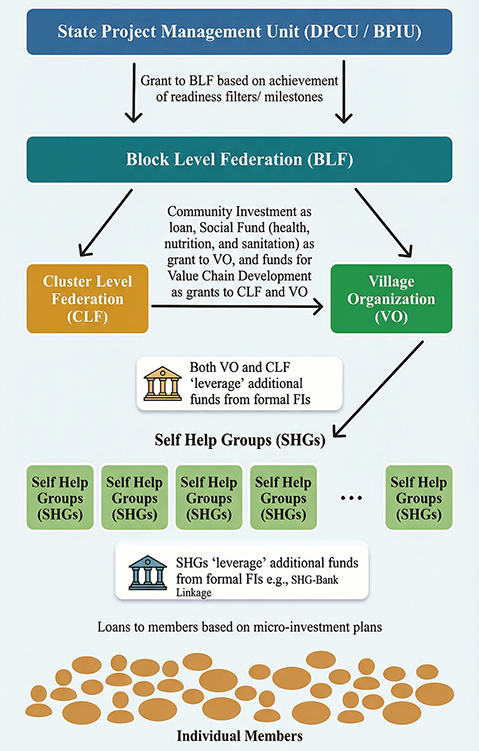
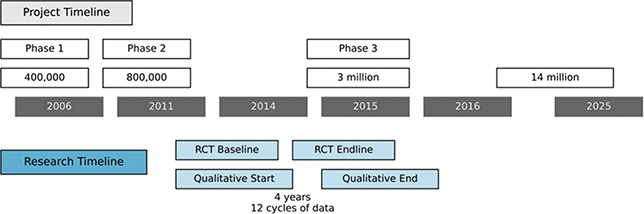

 Open access
