



No CrossRef data available.
Article contents
3-D Graphing of XRF Matrix Correction Equations
Published online by Cambridge University Press: 06 March 2019
Abstract
The Lachance-Traill, and Lucas-Tooth-Price matrix correction equations/functions for XRF determined concentrations can be graphically interpreted with the help of three dimensional graphics. Statistically derived Lachance-Traill and Lucas-Tooth-Price matrix correction equations can be represented as follows:
1
where:
Ci -elemental concentration of element “i”
Ij -X-Ray intensity representing element “i”
Ai0 -regression intercept for element “i”
Ai -regression coefficient
Zj -correction term defined below
2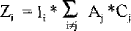
Ai0, Aj , and Zi together represent the results of a multi-dimensional contribution.
li, Ci, and Zi can be represented in three dimensional Cartesian space by X, Y and Z. These three variables are connected by a matrix correction equation that can be graphed as the function Y = F(X, Z), which represents a plane in three dimensional space. It can be seen that each chemical element will deliver a different set of coefficients in the equation of a plane that is called here a calibration plane. The commonly known and used two dimensional calibration plot is a “shadow” of the three dimensional real calibration points. These real (not shadow) points reside on a regression calibration plane in this three dimensional space. Lachance-Traill and Lucas-Tooth-Price matrix correction equations introduce the additional dimension(s) to the two dimensional flat image of uncorrected data. Illustrative examples generated by three dimensional graphics will be presented.
Information
- Type
- IX. XRS Mathematical Methods, Trace Analysis and Other Applications
- Information
- Advances in X-Ray Analysis , Volume 38: Forty-third Annual Conference on Applications of X-ray Analysis , 1994, pp. 649 - 656
- Copyright
- Copyright © International Centre for Diffraction Data 1994
References
1.
Lachance, G. R., “Introduction to Alpha Coefficients,” Corporation Scientifique Claisse, Inc., Sainte-Foy, Quebec (1986).Google Scholar
2.
Tertian, R. and Claisse, F., “Principles of Quantitative X-ray Fluorescence Analysis,” Heyden & Son Ltd., (1982).Google Scholar
3.
Klimasara, A. J., “Automated Quantitative XRF Analysis Software in Quality Control Applications,” Vol. 35, Advances in X-ray Analysis, Plenum Publ. Corp., NY (1992).Google Scholar
4.
Klimasara, A. J., “A mathematical comparison of the Lachance-Traill Matrix correction procedure with statistical multiple linear regression analysis in XRF applications,” Vol. 36, Advances in X-ray Analysis, Plenum Publ. Corp., NY (1993).Google Scholar
5.
Klimasara, A. J.., “Mathematical Modeling of XRF Matrix Correction Algorithms with an Electronic Spreadsheet,” Vol. 37, Advances in X-ray Analysis, Plenum Publ Corp., NY (1994).Google Scholar
6. Perspective Junior—2- and 3-Dimensional Business Presentation Graphics, Version 1.0 9/88 by Three D Graphics, Inc., Pacific Palisades, CA 90272.Google Scholar
7. Borland International, Inc., “Quattro Pro - Version 4.0 “ software manual, CA (1992).Google Scholar
8.
Parks, R.G.. “Quattro Pro for Scientific and Engineering Spreadsheets,” Springer-Verlag, NY (1992).Google Scholar
10.
Mezei, L.M.., “Practical Spreadsheet Statistics and Curve Fitting for Scientists and Engineers,” Prentice Hall, Englewood Clifs, NJ (1990).Google Scholar
11.
Chatterjee, S. and Price, B., “Regression Analysis by Example,” John Wiley & Sons, NY (1977).Google Scholar
12.
Daniel, C. and Wood, F.S.., “Fitting Equations to Data” - Computer Analysis of Multifactor Data, John Wiley & Sons, NY (1980).Google Scholar
13.
Jennings, A.., “Matrix Computation for Engineers and Scientists,” John Wiley & Sons, NY (1980).Google Scholar