


Introduction
The socio-emotional needs of older people are often not given enough attention as part of care needs (Kröger Reference Kröger2022). These needs are complex, encompassing various aspects such as belongingness, meaningful relationships, social contact and interaction, independence and a sense of safety and security (Charles and Carstensen Reference Charles and Carstensen2010; Hutnik et al. Reference Hutnik, Smith and Koch2012; Bruggencate et al. Reference Bruggencate, Luijkx and Sturm2018). When these socio-emotional needs are unmet, older people often experience feelings of loneliness, social isolation and depression (De Jong Gierveld and Tesch-römer Reference De Jong Gierveld and Tesch-Römer2012; Someşan and Hărăguş Reference Someşan and Hărăguş2016; Kröger Reference Kröger2022). As individuals age, meeting socio-emotional needs becomes increasingly challenging because of various factors such as health and functional limitations, a lack of social networks, loss of a loved one or cognitive impairments (Cornwell and Waite Reference Cornwell and Waite2009; Rook Reference Rook2009; Cacioppo and Cacioppo Reference Cacioppo and Cacioppo2014; Bruggencate et al. Reference Bruggencate, Luijkx and Sturm2018; Chou et al. Reference Chou, Mathew Puthenparambil, Kröger and Pu2024). While these needs may be temporary for some people, they can persist for others, particularly when the above-mentioned factors significantly impact their lives. Therefore, adequate socio-emotional support is essential for older people to maintain a meaningful and good quality of life (White et al. Reference White, Philogene, Fine and Sinha2009; Hutnik et al. Reference Hutnik, Smith and Koch2012; Rook and Charles Reference Rook and Charles2017; Bruggencate et al. Reference Bruggencate, Luijkx and Sturm2018).
Despite their importance, socio-emotional needs are often overlooked in both care research and service assessments for older people within the care contexts (Kelly Reference Kelly, Kröger, Brimblecombe, Rodrigues and Rummery2025). Recognizing this gap, Kröger (Reference Kröger2022) introduces the concept of socio-emotional care poverty as a distinct domain within the broader framework of care poverty alongside personal and practical care poverty, emphasizing that social and emotional support should be an integral part of care provision for older people. Nevertheless, support for socio-emotional needs is often given lower priority than personal or practical care needs, with care providers frequently regarding them as family responsibilities (Hoogendijk et al. Reference Hoogendijk, Muntinga, Van Leeuwen, Van der Horst, Deeg, Frijters, Hermsen, Jansen, Nijpels and Van Hout2014; Hansen et al. Reference Hansen, Hauge and Bergland2017; Kröger Reference Kröger2022). This assumption is increasingly problematic owing to changes in family structure, changing relationships, relocation and shrinking or absence of social networks (Rook Reference Rook2009; Keene and Ruel Reference Keene and Ruel2013; Wrzus et al. Reference Wrzus, Hänel, Wagner and Neyer2013; Verbakel Reference Verbakel2018; Conkova and King Reference Conkova and King2019).
This study investigates the extent of socio-emotional care poverty among older people by identifying high-risk, moderate-risk and low-risk groups. Additionally, it examines how the composition of social networks and the frequency of contact are associated with this phenomenon. In doing so, this study makes several key contributions to the literature on socio-emotional care poverty. First, it develops a more comprehensive operationalization of socio-emotional care poverty by incorporating loneliness and (lack of) social support dimensions. Second, it analyses socio-emotional care poverty across distinct risk groups, rather than focusing solely on relative care poverty (i.e. insufficient support) or absolute care poverty (i.e. complete lack of support) (Kröger Reference Kröger2022; Chou et al. Reference Chou, Mathew Puthenparambil, Kröger and Pu2024). Third, it assesses how network composition and contact frequency relate to these risks, particularly the increasingly uncertain role of family and informal care in providing such support. These contributions address notable gaps in current research, as discussed in greater detail in the following paragraphs.
Understanding the concept of care poverty
Care poverty is ‘a situation where people in need of care do not receive sufficient assistance from either informal or formal sources’ (Kröger Reference Kröger2022, p. 26). This concept emphasizes the deprivation of adequate care arising from both individual circumstances and broader societal factors, moving beyond the individual-level approach of ‘unmet care’ that has been widely used in long-term care research (Kröger et al. Reference Kröger, Mathew Puthenparambil and Van Aerschot2019; Rummery et al. Reference Rummery, Kröger and Rodrigues2025). The concept was first introduced to conceptualize the mismatch between care needs and available family resources in the context of child-care arrangements among working single mothers (Kröger Reference Kröger2010) and later extended to address issues faced by older people (Kröger et al. Reference Kröger, Mathew Puthenparambil and Van Aerschot2019). Kröger emphasizes that care poverty represents the deprivation of basic human needs and dignity and should be viewed as a ‘deprivation in well-being’ rather than economic deprivation (Kröger Reference Kröger2022, p. 21). The overarching goal of the concept is to expose inequalities in access to adequate care and to guide policies aimed at reducing them (Kröger Reference Kröger2022, p. 28; Kröger et al. Reference Kröger, Brimblecombe, Rodrigues and Rummery2025).
Socio-emotional care poverty
In line with the main concept of care poverty, Kröger (Reference Kröger2022) conceptualizes socio-emotional care poverty as a situation in which an individual’s social and emotional needs remain unmet, drawing on research on social isolation and loneliness. He distinguishes between social isolation, an objective weakness in a person’s social networks, and loneliness, a subjective perception or experience arising from the quantity or quality of social relationships (Kröger Reference Kröger2022, p. 21). Both concepts are closely connected to the idea of care poverty, which is understood as the lack of adequate support or the gap between what people need and what they receive. Socio-emotional care poverty specifically concerns the adequacy of social and emotional support available to the person within the context of care. Recognizing the methodological challenges of directly measuring socio-emotional care needs, Kröger (Reference Kröger2022) suggested that loneliness, particularly, and social isolation may serve as indicators of unmet socio-emotional needs, thus as proxy measures for socio-emotional care poverty. No other variable closely reflects the phenomenon of unmet social and emotional needs. Therefore, feelings of loneliness and social isolation can be strong signs that someone is experiencing socio-emotional care poverty (Kröger Reference Kröger2022; Chou et al. Reference Chou, Mathew Puthenparambil, Kröger and Pu2024).
This study advances research by incorporating the social support aspect into the operationalization of social-emotional care poverty. While loneliness serves as a valuable proxy for understanding socio-emotional care poverty among older people (as applied in Kröger Reference Kröger2022; Chou et al. Reference Chou, Mathew Puthenparambil, Kröger and Pu2024), it will be beneficial to include the dimension of social support, a component lacking in previous empirical research (Chou et al. Reference Chou, Mathew Puthenparambil, Kröger and Pu2024). To address this gap, this study combines loneliness with perceived social support (defined as the number of people on whom older people can rely for support) to provide a more comprehensive measure. Inclusion of perceived social support is important because a larger social network does not always guarantee meaningful or reliable support. Some people may have several acquaintances but only a few individuals to whom they can turn for support (Heylen Reference Heylen2010; Antonucci et al. Reference Antonucci, Ajrouch and Birditt2014). Even with a broader social support network, socio-emotional needs may remain unmet if interactions within it are not meaningful or if the support received is inadequate. Combining these dimensions, therefore, strengthens and provides a more comprehensive understanding of socio-emotional care poverty, especially as most people (including those in our study) retain some form of social network.
Risk groups of socio-emotional care poverty among older people
This study approaches socio-emotional care poverty in terms of different risk groups, examining whether older people have a higher or lower risk of experiencing socio-emotional care poverty. This approach captures individuals who may appear to have broader social support, but whose interactions may be insufficient to meet their socio-emotional needs; that is, having a larger social support network but still experiencing loneliness. By including the adequacy of their perceived social support, the study distinguishes between groups at varying levels of risk for socio-emotional care poverty. For example, older people with smaller perceived social support networks who also experience loneliness are particularly vulnerable, as this outlines the inadequacies or deprivation of care support.
As mentioned by Medgyesi et al. (Reference Medgyesi, Rodrigues, Zólyomi, Kröger, Brimblecombe, Rodrigues and Rummery2025), there is no best methodology to measure care poverty as each approach, whether objective or subjective, or one-dimensional or multidimensional, has its own strengths and limitations. Nevertheless, the authors recommend continued exploration of measurement approaches to strengthen the concept further. In line with this, the present study adopts a risk-based categorization grouping older people into three categories: (1) the high-risk group, (2) the moderate-risk group and (3) the low-risk group. The ‘high-risk group’ consists of older people who have either a small number (only one person) or no contact persons they can rely on for support, and they also experience loneliness. The ‘moderate-risk group’ comprises individuals with many contacts (two or more persons) whom they can rely on but still feel lonely. The ‘low-risk group’ consists of individuals with good access to social networks (two or more persons) and no loneliness. While both high-risk and moderate-risk groups share the aspect of loneliness, it is necessary to keep them separate, as the key difference between the two lies in the perceived adequacy of social support. Individuals in the moderate-risk group have a broader social support network, which acts as a shield (e.g. the availability of support for emerging care needs) and may delay the onset of more severe health outcomes. In contrast, individuals in the high-risk group often lack such a shield.
Despite a growing body of research on care poverty (e.g. Kröger Reference Kröger2010; Kröger et al. Reference Kröger, Mathew Puthenparambil and Van Aerschot2019, Reference Kröger, Brimblecombe, Rodrigues and Rummery2025; Sihto and Van Aerschot Reference Sihto and Van Aerschot2021; Hill Reference Hill2022; Hu and Chou Reference Hu and Chou2022; Rummery Reference Rummery2023; Chou et al. Reference Chou, Mathew Puthenparambil, Kröger and Pu2024; Rummery et al. Reference Rummery, Kröger and Rodrigues2025), socio-emotional care poverty remains relatively under-explored. Most prior studies (e.g. Kröger et al. Reference Kröger, Mathew Puthenparambil and Van Aerschot2019; Hu and Chou Reference Hu and Chou2022) focused predominantly on the first two domains of care poverty: personal care poverty (which refers to inadequate support with daily activities such as eating or bathing) and practical care poverty (which refers to insufficient assistance with tasks such as shopping, cleaning and meal preparation). Notably, Chou et al. (Reference Chou, Mathew Puthenparambil, Kröger and Pu2024) examined the associations between socio-economic status, health and care availability and all three domains of care poverty, but their analysis did not fully address the relationship between socio-emotional care poverty and different social networks, a gap this article seeks to fill. Therefore, using the new operationalized frameworks, this study explores the extent to which older people are at risk of socio-emotional care poverty and how the composition of their families and other social networks is associated with this phenomenon.
Social network and socio-emotional care poverty in older people
Social networks are crucial in determining whether a person is at risk of socio-emotional care poverty as they provide essential socio-emotional support and are often considered by both individuals and care providers as the primary source of such support. A lack of this support may increase the risk of unmet socio-emotional care needs in older people (Chou et al. Reference Chou, Mathew Puthenparambil, Kröger and Pu2024; Vlachantoni et al. Reference Vlachantoni, Evandrou, Falkingham, Qin, Kröger, Brimblecombe, Rodrigues and Rummery2025). Generally, kin or non-kin are primary sources of support for older individuals in meeting their socio-emotional care needs. Kin includes family members such as spouses, children, in-laws, grandchildren, siblings and other close relatives. In contrast, non-kin consist of friends, neighbours and others who are connected through shared interests. Kin and non-kin belong to the broader social network framework, which can change over time and within an individual’s lifecourse (Wrzus et al. Reference Wrzus, Hänel, Wagner and Neyer2013). Although social networks have been widely studied in relation to various aspects of wellbeing (Kawachi Reference Kawachi2001; Berg et al. Reference Berg, Hassing, McClearn and Johansson2006; Merz and Huxhold Reference Merz and Huxhold2010; Umberson and Karas Montez Reference Umberson and Karas Montez2010; Margelisch et al. Reference Margelisch, Schneewind, Violette and Perrig-Chiello2017; Rook and Charles Reference Rook and Charles2017), their specific role in socio-emotional care poverty remains under-explored, with only limited research available (Chou et al. Reference Chou, Mathew Puthenparambil, Kröger and Pu2024; Vlachantoni et al. Reference Vlachantoni, Evandrou, Falkingham, Qin, Kröger, Brimblecombe, Rodrigues and Rummery2025).
Social networks throughout one’s life are complicated, with various theories proposing how they change over time and how they influence support for older people in later life. The social convoy model and socio-emotional selectivity theory are prominent theories in this area. The social convoy model argues that individuals, throughout their lives, are supported by a network of relationships that vary in their connection, quantity, purpose and structure (Kahn and Antonucci Reference Kahn, Antonucci, Baltes and Brim1980; Antonucci et al. Reference Antonucci, Ajrouch and Birditt2014). These relationships are influenced by personal characteristics such as age and gender, as well as by situational factors such as role expectations, resources, norms and values (Antonucci et al. Reference Antonucci, Ajrouch and Birditt2014, Reference Antonucci, Ajrouch and Webster2019; Webster et al. Reference Webster, Antonucci and Ajrouch2022). On the other hand, socio-emotional selectivity theory (Carstensen Reference Carstensen1992, Reference Carstensen2021) argues that as people age they become more selective in their social relationships, prioritizing meaningful relationships that provide emotional support and companionship while ignoring the less fulfilling relationships. Moreover, advances in technology (e.g. mobile phones and personal computers) have the potential to expand the social networks of the present generation compared to those of the previous generation (Marston et al. Reference Marston, Kroll, Fink, De Rosario and Gschwind2016; Antonucci et al. Reference Antonucci, Ajrouch and Manalel2017). Therefore, having meaningful social networks and relationships is linked to better mental and physical wellbeing (Kawachi Reference Kawachi2001; Merz and Huxhold Reference Merz and Huxhold2010; Umberson and Karas Montez Reference Umberson and Karas Montez2010; Margelisch et al. Reference Margelisch, Schneewind, Violette and Perrig-Chiello2017; Rook and Charles Reference Rook and Charles2017), while stressful or demanding relationships can have a negative effect (Umberson and Karas Montez Reference Umberson and Karas Montez2010; Rook and Charles Reference Rook and Charles2017). Building on these theoretical insights, the composition of these networks (i.e. the types of relationship available) and the frequency of contact (i.e. maintaining these relationships) are important as they determine the accessibility and availability of socio-emotional support in older people’s everyday lives, making them crucial for understanding the risk of socio-emotional care poverty.
When considering which social networks are crucial for supporting the social and emotional needs of older people, living with a spouse or partner is often seen as a significant contributor (Ben-zur Reference Ben-Zur2012; Štípková Reference Štípková2021). A recent study found that older people living with someone are less likely to have their social and emotional needs unmet (Chou et al. Reference Chou, Mathew Puthenparambil, Kröger and Pu2024; Vlachantoni et al. Reference Vlachantoni, Evandrou, Falkingham, Qin, Kröger, Brimblecombe, Rodrigues and Rummery2025). However, not all research supports the assumption, as the quality of the relationship between the couple can also influence the outcome. For example, caring for a spouse or partner and poor marital satisfaction can negatively impact older people’s wellbeing (Drennan et al. Reference Drennan, Treacy, Butler, Byrne, Fealy, Frazer and Irving2008; Ben-zur Reference Ben-Zur2012; Margelisch et al. Reference Margelisch, Schneewind, Violette and Perrig-Chiello2017). Given that our study focuses on social networks, we specifically examine the connection between living with a spouse and the risk of socio-emotional care poverty. We hypothesize (H1) that older people living with a spouse are less likely to belong to the high-risk group for socio-emotional care poverty and are also less likely to be in the moderate-risk category.
Among kin, children are often the primary source of support for many older people, providing not only socio-emotional support but also personal and practical care. However, other forms of kin relationships, such as siblings or extended family, also play a significant role in meeting the social and emotional needs of older people. A recent comparative study found that frequent social contact with children reduced the likelihood of socio-emotional care poverty in the Taiwanese population, whereas no such evidence was observed in the Finnish population (Chou et al. Reference Chou, Mathew Puthenparambil, Kröger and Pu2024). Vlachantoni et al. (Reference Vlachantoni, Evandrou, Falkingham, Qin, Kröger, Brimblecombe, Rodrigues and Rummery2025) similarly found no association between children-centred networks and unmet emotional needs. Moreover, studies shown that limited contact with family members may affect people’s wellbeing, either positively or negatively (Holmén and Furukawa Reference Holmén and Furukawa2002; Drennan et al. Reference Drennan, Treacy, Butler, Byrne, Fealy, Frazer and Irving2008; Charles and Carstensen Reference Charles and Carstensen2010; Dahlberg and McKee Reference Dahlberg and McKee2014; Rook and Charles Reference Rook and Charles2017; Štípková Reference Štípková2021; Kim et al. Reference Kim, Kwak, Youm and Chey2022). It is also important to note that having children or extended family does not always guarantee adequate support; the quality of these relationships plays a key role (Someşan and Hărăguş Reference Someşan and Hărăguş2016). Nonetheless, most studies indicate that regular contact with family members is associated with lower levels of social and emotional needs. Therefore, within the framework of socio-emotional care poverty, we hypothesize (H2) that older people who have regular contact with other family members are less likely to belong to the high-risk group of socio-emotional care poverty and are also less likely to be in the moderate-risk category.
Alongside kin, relationships with non-kin are an important aspect of older people’s social circle. Having a friend or neighbour with whom they can engage in meaningful conversations can enhance various aspects of wellbeing (Holmén and Furukawa Reference Holmén and Furukawa2002; Charles and Carstensen Reference Charles and Carstensen2010; Merz and Huxhold Reference Merz and Huxhold2010; Dahlberg and McKee Reference Dahlberg and McKee2014; Rook and Charles Reference Rook and Charles2017). Vlachantoni et al. (Reference Vlachantoni, Evandrou, Falkingham, Qin, Kröger, Brimblecombe, Rodrigues and Rummery2025), in their study, found no association between friend-focused networks and unmet emotional needs. Besides friends, members (non-kin) of voluntary organizations and religious and cultural communities can also provide older people with indirect emotional and social support. Despite its potential importance, the link between non-kin networks and unmet socio-emotional care needs has often been overlooked. Given the data limitations in this study, we focus only on friends and neighbours. We hypothesize (H3) that older people who have regular contact with friends and neighbours are less likely to belong to the group that has a high risk of socio-emotional care poverty and are also less likely to be in the moderate-risk category.
In addition to social networks, socio-demographic and health factors also influence socio-emotional care poverty in older people. Recent studies have found that being older, female, in poor health, living alone and having limitations in activities of daily living (ADL) or instrumental activities of daily living (IADL) are all associated with a higher likelihood of persistent unmet social and emotional care needs (Chou et al. Reference Chou, Mathew Puthenparambil, Kröger and Pu2024; Vlachantoni et al. Reference Vlachantoni, Evandrou, Falkingham, Qin, Kröger, Brimblecombe, Rodrigues and Rummery2025). In this study, we focus mainly on social networks of older people instead of other contributing factors. Therefore, we aim to explore the extent to which older people are at risk of socio-emotional care poverty and how the frequency of contact with their family and social networks is associated.
Methods
This study used the Daily Life and Care in Old Age (DACO) survey, a continuation of earlier surveys conducted in 2010 and 2015 among older people (75 years and over) living in the Finnish cities of Tampere and Jyväskylä (Kröger et al. Reference Kröger, Mathew Puthenparambil and Van Aerschot2019), to answer the research questions. The latest survey, conducted in 2020, expanded to the national level. The survey was conducted in Finland between October and December 2020 among people aged 75 years and over, living in their own homes or residential settings (i.e. service housing, residential care with 24/7 assistance or nursing home). The contact information of 6,000 participants was randomly collected from population registers through the Finnish Digital and Population Data Agency. Each participant was sent a survey questionnaire and a consent letter, along with a prepaid postage envelope for returning the completed questionnaire. The survey asked about participants’ socio-economic, demographic and health backgrounds, their care needs, how they used care services and other questions about their everyday lives. In the first round of the survey, 2,150 respondents returned the questionnaire. After a reminder letter to those who had not responded, 1,129 questionnaires were returned, increasing the total to 3,279. This resulted in an overall response rate of 55 per cent. Among the respondents, 58 per cent were women, 42 per cent lived alone and 96 per cent lived in their own home. However, for this study, we excluded respondents living in residential settings (n = 114), those reporting other living arrangements (n = 10), cases with missing values (n = 355) and respondents excluded based on the operationalization of socio-emotional care poverty (n = 215; see the ‘Dependent variable’ section). The final analytical sample consisted of N = 2,585 respondents. The research did not require ethical approval from the institution owing to the minimal risk to participants (TENK 2023). However, the research adhered strictly to the ethical guidelines established by the Finnish National Research Integrity Board concerning the confidentiality and anonymity of secondary data.
Dependent variable
As mentioned in the ‘Introduction’, loneliness and perceived social contact were combined to measure three groups of socio-emotional care poverty (high-risk, moderate-risk and low-risk) among older people. The operational definitions and thresholds for these measures are described here. In the survey questionnaire, loneliness was measured by asking ‘Do you feel lonely?’. Respondents could choose from ordinal options: never, rarely, sometimes, often and always. Respondents who selected sometimes (n = 699; 25%), often (n = 144; 5%) and always (n = 26; 1%) were classified as experiencing loneliness, while those responding rarely (n = 901; 32%) and never (n = 1,065; 37%) were classified as not lonely. This threshold was chosen to capture the experiences of loneliness as it serves as one of the proxy measures for socio-emotional care poverty (Kröger Reference Kröger2022). The perceived adequacy of social support was measured with the question ‘Do you have someone you can turn to if you need support or if something is bothering you?’. Respondents had four options: (1) I have several people I can contact if I need help, (2) I have two or three people I can contact, (3) there is one person I can contact and (4) I do not have anyone I can contact if I need help or have concerns. Respondents reporting the last two options, that is, no contact person (n = 57; 2%) or one person (n = 338; 12%) were classified as having a low level of social support, while those reporting two or more people (n = 1,298; 46%) or several (n = 1,122; 40%) were considered to have adequate support. This classification reflects the level of available social support among older people, differentiating between limited and adequate social support. The loneliness and the perceived adequacy of social support variables were combined to construct three risk groups of socio-emotional care poverty, capturing both social support and emotional experiences.
The ‘high-risk group’ consists of older people who both experience loneliness and have low social support (i.e. one or no contacts). The ‘moderate-risk group’ comprises individuals who experience loneliness but have adequate social support (i.e. two or more contacts). The ‘low-risk group’ comprises individuals who are not lonely and have adequate social support. The high-risk and moderate-risk groups are kept separate because the former represents individuals who often lack sufficient social support to meet emerging care needs and therefore require more immediate attention than those in the moderate-risk group. Individuals in the moderate-risk group have a broader social network, which acts as a shield that may delay the onset of more severe health outcomes. However, we excluded one group from the study: older people with only one or no contact persons who were not experiencing loneliness (n = 215), as they do not fall under our operationalization of socio-emotional care poverty. In our framework, loneliness is a key element in defining socio-emotional care poverty (Kröger Reference Kröger2022), and the interaction between perceived social support and loneliness is central to identifying risk groups in this study. Older people with limited social contacts but no reported loneliness therefore do not meet the criteria of deprivation in our concept. While excluding this group reduces the sample size and may limit comparability with broader population estimates, it allows for a clearer focus on different risk groups of socio-emotional care poverty.
Independent variables
The social network in the study was divided into two categories, kin and non-kin groups, with a total of nine members included in the survey questionnaire. The kin group comprised eight variables: spouse, daughter, son, grandchildren, daughter-in-law, son-in-law, siblings and other relatives. The non-kin group consisted of one variable: friends, acquaintances or neighbours. Each variable was classified as an ordinal variable, representing the reported frequency of contact with these network members (weekly, monthly and less frequently). The ‘weekly’ category includes daily and weekly contact, while the ‘less frequent’ category includes two options: less frequent contact or no such relative. The reason for merging groups in the independent variable, especially ‘less frequent contact’ or ‘no such relative’, was to increase responses and enhance interpretability as a practical analytical choice. However, we acknowledge that combining these two groups may blur the conceptual distinction between the absence of a social tie and infrequent interaction, which may represent a potential measurement limitation. To assess the robustness of this decision, a sensitivity analysis was performed separately by treating ‘no children’, ‘no siblings’, ‘no other relatives’ and ‘no friends or neighbours’ as separate categories rather than combining them into a single less-frequent category. The findings closely resembled those in Table 3, with only minor differences in the coefficients (refer to the supplementary file, Table 4). For the sibling variable, missing values (n = 101) were coded as the ‘less frequently’ option if respondents answered ‘zero’ for a background question in the survey ‘How many siblings do you have? Please exclude deceased siblings’. The spouse variable was dichotomous, indicating whether the participants lived with their spouses or not.
The analysis also included background variables as control variables, such as age (75–79, 80–84 and 85–105), gender (men and women), self-reported health (good, fair and poor), household income (money is just enough for essentials, money is sufficient and can save money) and whether in receipt of formal care (no formal care and received formal care) which includes public and private support.
Since the data collection was conducted during the Covid-19 pandemic, Finland had movement restrictions that may have impacted older people’s feelings of loneliness and social contact. Three additional variables were used as control variables in the analysis to address the above issue: (1) potential feelings of loneliness during the Covid-19 pandemic, (2) changes in face-to-face meetings and visits with other people during the Covid-19 pandemic and (3) changes in contact with other people by phone, email or other methods during the Covid-19 pandemic. All three variables were coded as ordinal (decreased, no change and increased).
Statistical methods
This study utilized a pie chart, box plot, cross-tabulation and chi-square test to investigate the descriptive question. Multinomial logistic regression was performed to examine the relationship between the contact frequency with social network members and different risk groups of socio-emotional care poverty. Owing to the small number of observations, the daughter and son variables were combined into one variable named ‘children’, the daughter-in-law and son-in-law variables were combined into ‘in-laws’ and the grandchildren and other relatives variables were combined into ‘other relatives’. The model was controlled for age, gender, self-reported health, income, formal care and variables related to the Covid-19 pandemic since the data were collected during the pandemic, which may have had a more substantial influence on unmet socio-emotional needs.
The adjusted average marginal effects (AME) were estimated to facilitate a straightforward interpretation of the impact of contact frequency with social network members on the probability of socio-emotional care poverty, as odds ratios would not provide a meaningful interpretation in this study. The assumptions of multinomial logistic regression (e.g. multicollinearity) were checked before the analysis. Owing to multicollinearity, the variable ‘in-laws’ was removed from the analyses because it had a high variance inflation factor (VIF) of 32.46. The number of network members was not included in the regression analysis as this information was derived from the ordinal questions representing the frequency of contact with kin and non-kin (as mentioned in the ‘Independent variable’ section). Including a derived variable in the same regression model as other variables could raise concerns about multicollinearity or underestimate the separate impact of each independent variable. Our case confirmed the latter, so we excluded the variable from the regression model. However, we used the derived variable to visualize the median network members’ size across different risk groups in socio-emotional care poverty (see Figure 2). All statistical analyses were performed with STATA (V.16; StataCorp, College Station, Texas, USA). Missing values in the independent variables were excluded from the regression analysis (i.e. listwise deletion). The highest missing values were observed for the sibling variable (12%; n = 298), while other variables had fewer than 7 percentage points of missing data.
Results
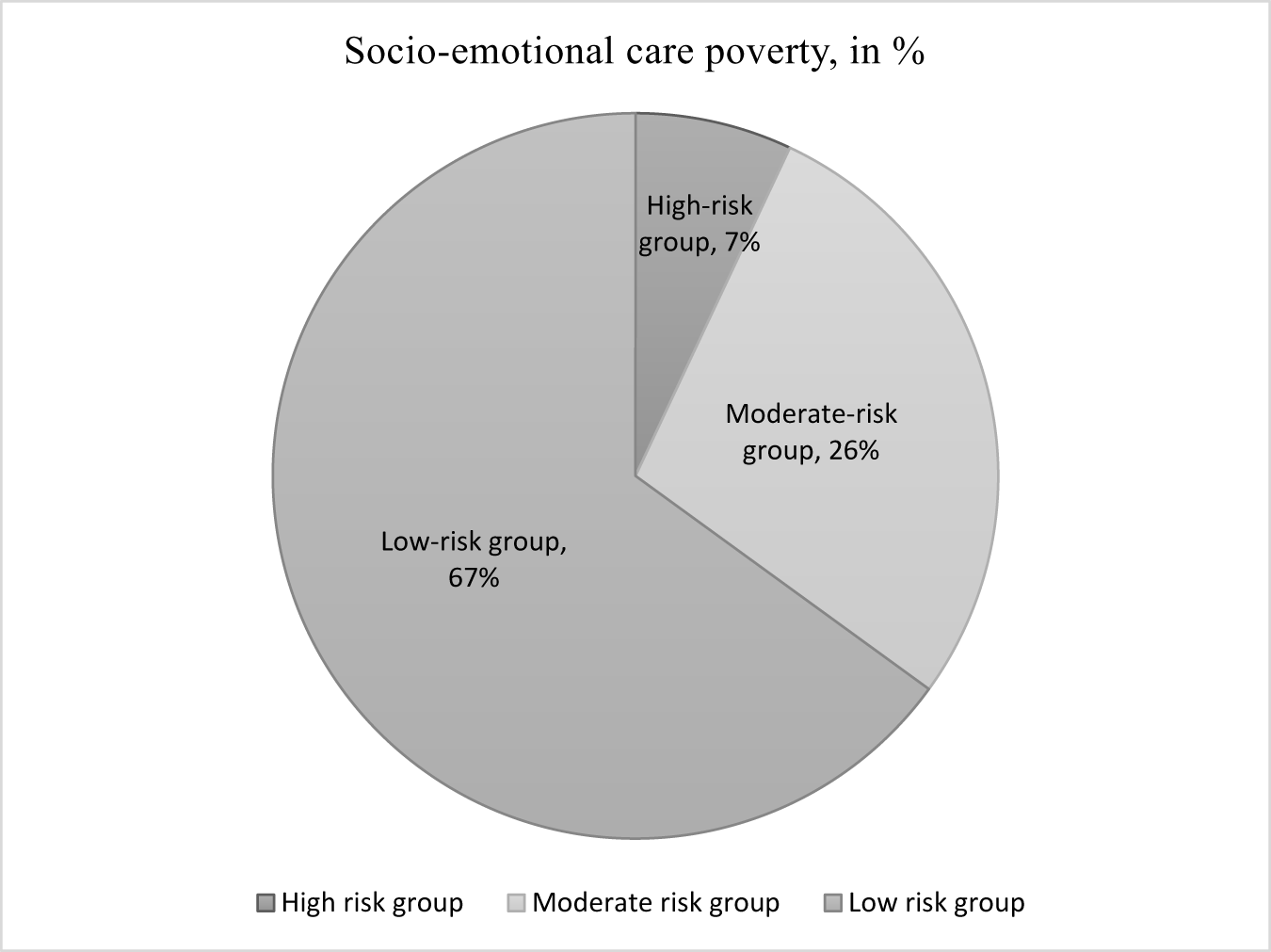
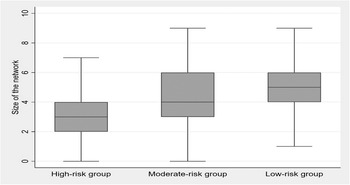
The pie diagram (see Figure 1) shows the overall percentage of participants in different risk groups of socio-emotional care poverty. In the total population (N = 2,585), 7 per cent (n = 175) of respondents are at high risk of socio-emotional care poverty, 26 per cent (n = 684) are in the moderate-risk group and the majority of them, 67 per cent (n = 1,726), are in the low-risk group. Figure 2 displays the median network members’ size based on different risk groups in socio-emotional care poverty. The total network members size ranges from 0 to 9, including eight kin members (spouse, daughter, son, grandchildren, daughter-in-law, son-in-law, siblings and other relatives) and one non-kin (such as friends, acquaintances or neighbours).
Socio-emotional care poverty risk groups in older people (N = 2,585).

Size of the kin and non-kin network in relation to different risk groups of socio-economic care poverty (N = 2,585).
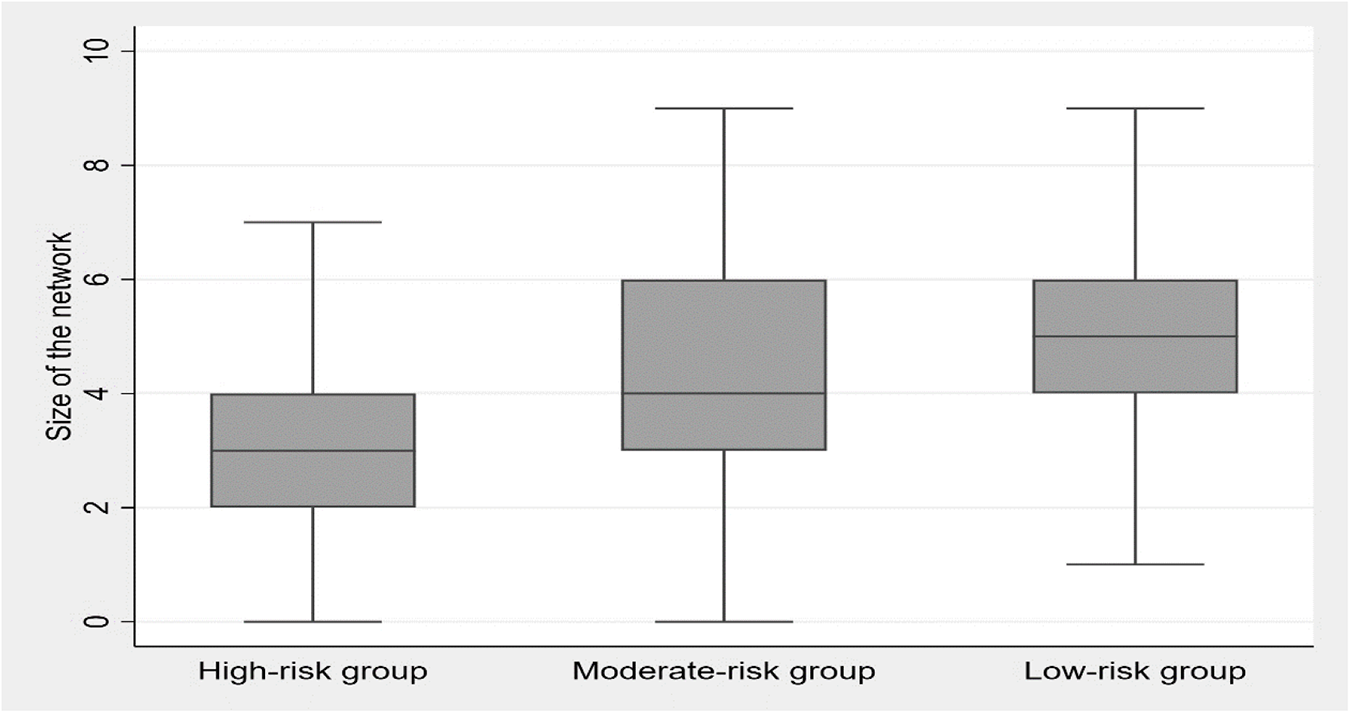
Notably, the high-risk group has a smaller network size with a median of three members compared to other groups. The low-risk group has a median size of five, with the interquartile range (IQR) between four and six. The moderate-risk group shows a larger variation in network size compared to the other two groups. As mentioned earlier, using the number of network members as a variable in the regression model underestimated the individual contribution of each independent variable. Therefore, this variable was only used to visualize the median network members size across different risk groups in socio-emotional care poverty.
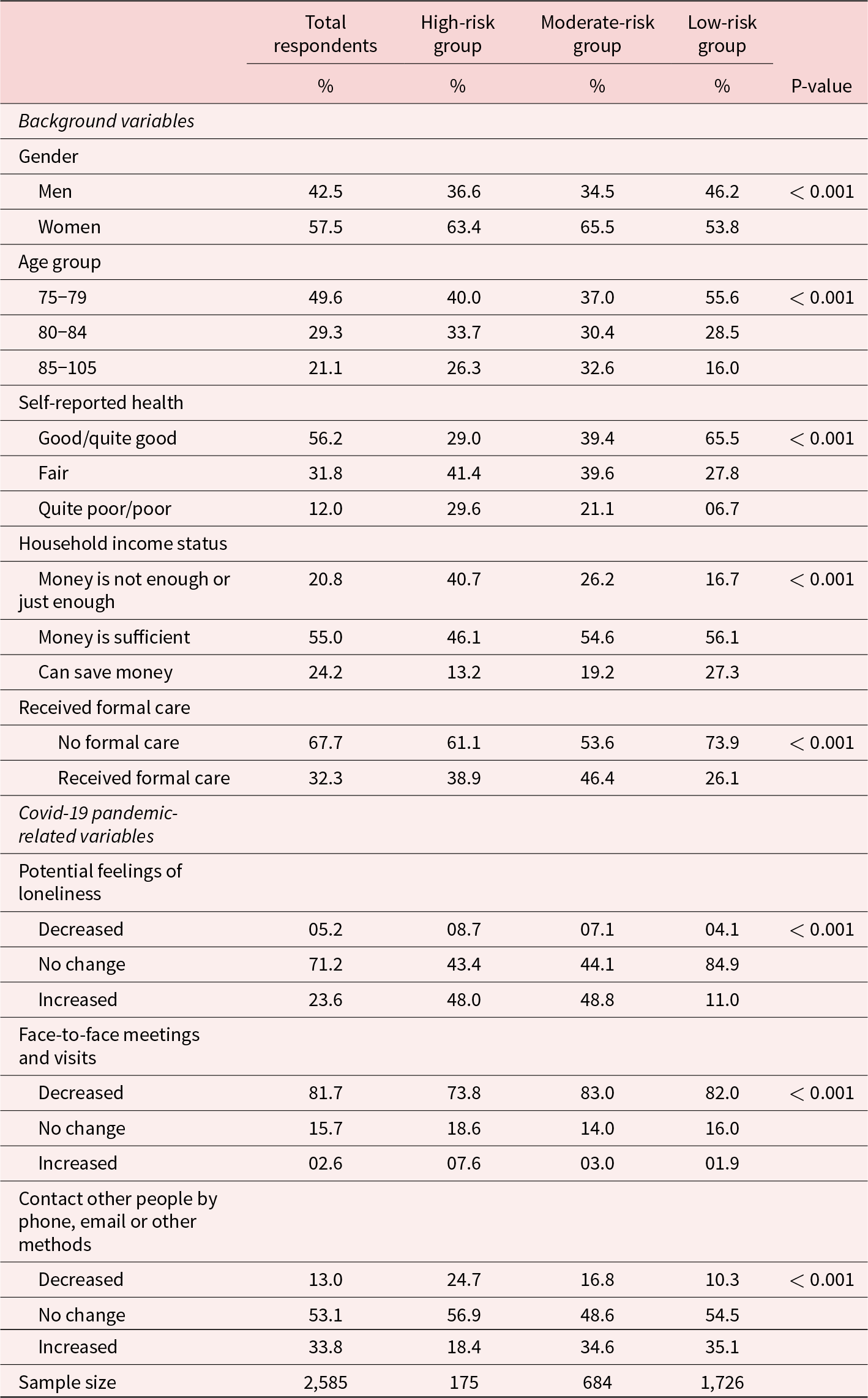
Out of the total study population (Table 1), the majority are women (57.5%) aged 75–79 years old (49.6%), with good self-reported health (56.2%) and sufficient income or the ability to save money (79.2%). Regarding different risk groups for socio-emotional care poverty, women (63.4%), those between 75 and 79 years old (40.0%), those with fair self-reported health (41.4%), respondents with sufficient income (46.1%) and those who received formal care (38.9%) were in the high-risk group. However, respondents in the low-risk group had good self-reported health (65.2%) and sufficient income (56.1%).
Descriptive statistic
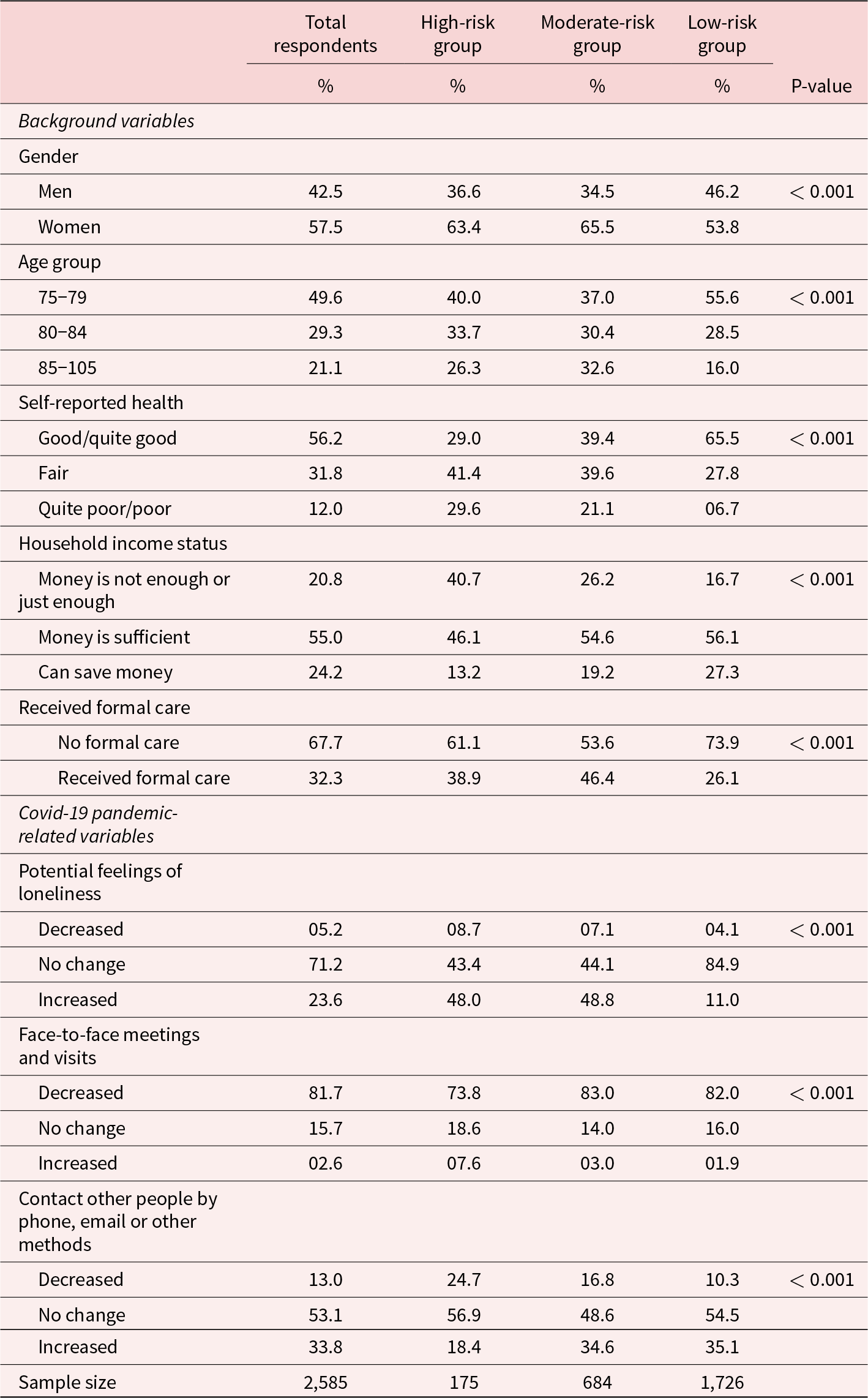
Table 1 Long description
Percent distributions are reported for total respondents and for high-risk, moderate-risk, and low-risk groups, with a p value shown for each variable block. Sample size is 2,585 total, with 175 high-risk, 684 moderate-risk, and 1,726 low-risk. Gender percentages are men 42.5 total, 36.6 high-risk, 34.5 moderate-risk, 46.2 low-risk, and women 57.5 total, 63.4 high-risk, 65.5 moderate-risk, 53.8 low-risk, with p value less than 0.001. Age group percentages are 75 to 79 at 49.6 total, 40.0 high-risk, 37.0 moderate-risk, 55.6 low-risk; 80 to 84 at 29.3 total, 33.7 high-risk, 30.4 moderate risk, 28.5 low-risk; and 85 to 105 at 21.1 total, 26.3 highrisk, 32.6 moderate-risk, 16.0 low-risk, with p value less than 0.001. Self reported health percentages are good or quite good at 56.2 total, 29.0 high-risk, 39.4 moderate-risk, 65.5 low-risk; fair at 31.8 total, 41.4 high-risk, 39.6 moderate-risk, 27.8 low-risk; and quite poor or poor at 12.0 total, 29.6 high-risk, 21.1 moderate-risk, 6.7 low-risk, with p value less than 0.001. Household income status percentages are money is not enough or just enough at 20.8 total, 40.7 high-risk, 26.2 moderate-risk, 16.7 low-risk; money is sufficient at 55.0 total, 46.1 high-risk, 54.6 moderate-risk, 56.1 low-risk; and can save money at 24.2 total, 13.2 high-risk, 19.2 moderate-risk, 27.3 low-risk, with p value less than 0.001. Received formal care percentages are no formal care at 67.7 total, 61.1 high-risk, 53.6 moderate-risk, 73.9 low-risk, and received formal care at 32.3 total, 38.9 high-risk, 46.4 moderate-risk, 26.1 low-risk, with p value less than 0.001. Covid 19 pandemic related variables include potential feelings of loneliness, with decreased at 5.2 total, 8.7 high-risk, 7.1 moderate-risk, 4.1 low-risk; no change at 71.2 total, 43.4 high-risk, 44.1 moderate-risk, 84.9 low-risk; and increased at 23.6 total, 48.0 high-risk, 48.8 moderate-risk, 11.0 low-risk, with p value less than 0.001. Face to face meetings and visits are decreased at 81.7 total, 73.8 high-risk, 83.0 moderate-risk, 82.0 low-risk; no change at 15.7 total, 18.6 high-risk, 14.0 moderate-risk, 16.0 low-risk; and increased at 2.6 total, 7.6 high-risk, 3.0 moderate risk, 1.9 low-risk, with p value less than 0.001. Contact other people by phone, email, or other methods is decreased at 13.0 total, 24.7 high-risk, 16.8 moderate-risk, 10.3 low-risk; no change at 53.1 total, 56.9 high-risk, 48.6 moderate-risk, 54.5 low-risk; and increased at 33.8 total, 18.4 high-risk, 34.6 moderate-risk, 35.1 low-risk, with p value less than 0.001.
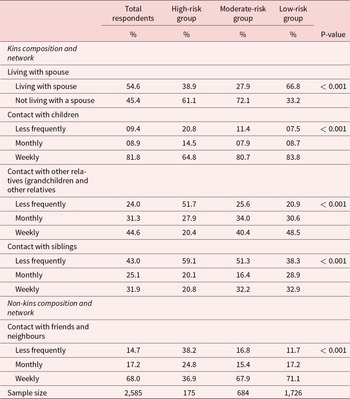
In terms of kin network (see Table 2) in the total study population (N = 2,585), over half of the respondents live with their spouse (54.6%) and have weekly contact with their children (81.8%), other relatives (44.6%) and their siblings (31.9%). In the non-kin network, 68 per cent of the respondents have weekly contact with friends and neighbours. All social network characteristics differed significantly across high-risk, moderate-risk and low-risk groups, as indicated by chi-square tests (p < 0.05), suggesting variation in socio-emotional care poverty across the groups.
Descriptive statistics of social network
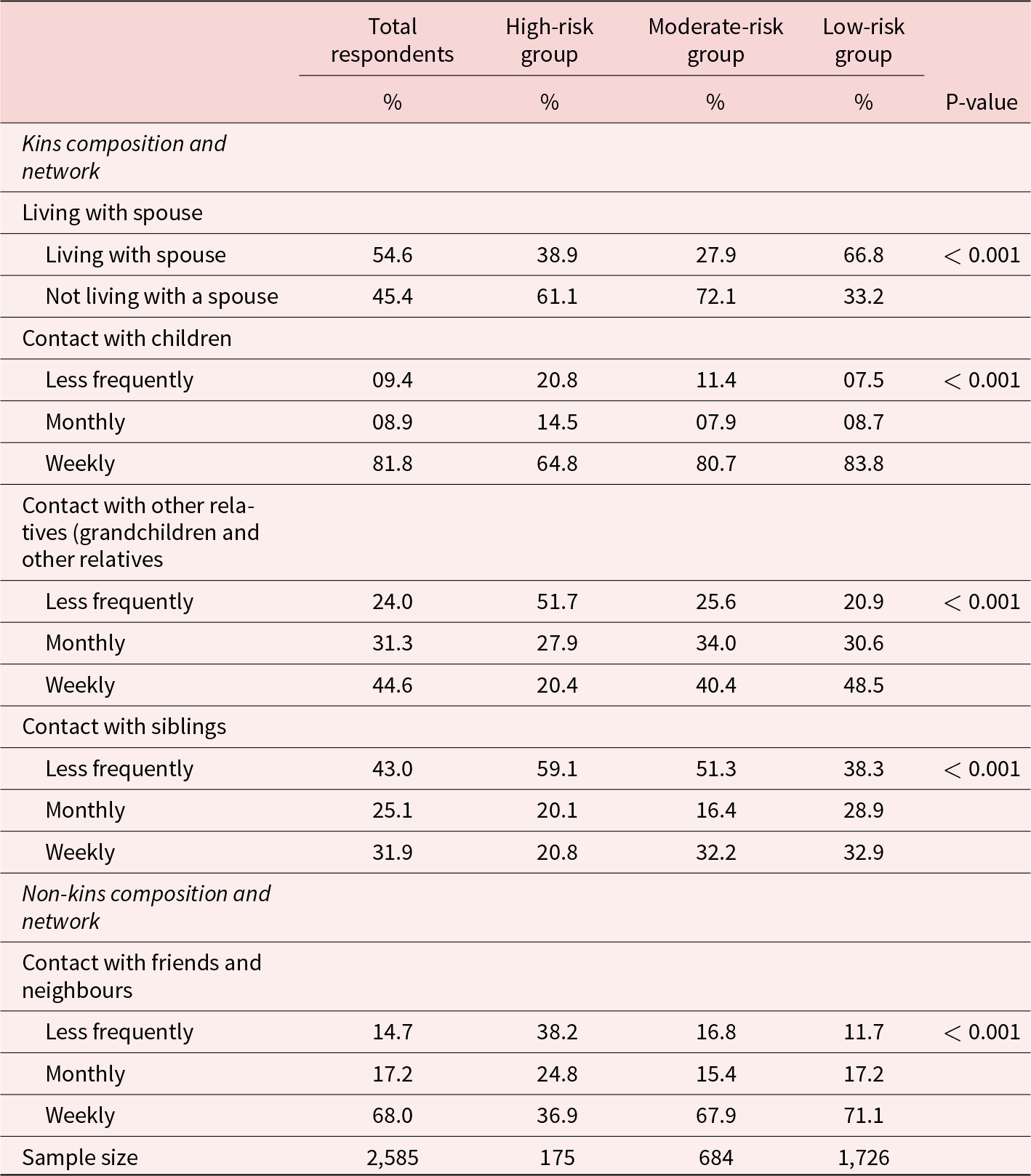
Table 2 Long description
Percent distributions are reported for total respondents and for high-risk, moderate-risk, and low-risk groups, across kins and non-kins composition and contact frequency, with p-values shown for each contact topic. Sample size was 2,585 total, with 175 high-risk, 684 moderate-risk, and 1,726 low-risk. For living with spouse, percentages were 54.6 total, 38.9 high-risk, 27.9 moderate-risk, and 66.8 low-risk, with p-value less than 0.001; not living with a spouse was 45.4 total, 61.1 high-risk, 72.1 moderate-risk, and 33.2 low-risk. For contact with children, less frequently was 09.4 total, 20.8 high-risk, 11.4 moderate-risk, and 07.5 low-risk, with p-value less than 0.001; monthly was 08.9 total, 14.5 high-risk, 07.9 moderate-risk, and 08.7 low-risk; weekly was 81.8 total, 64.8 high-risk, 80.7 moderate-risk, and 83.8 low-risk. For contact with other relatives, less frequently was 24.0 total, 51.7 high-risk, 25.6 moderate-risk, and 20.9 low-risk, with p-value less than 0.001; monthly was 31.3 total, 27.9 high-risk, 34.0 moderate-risk, and 30.6 low-risk; weekly was 44.6 total, 20.4 high-risk, 40.4 moderate-risk, and 48.5 low-risk. For contact with siblings, less frequently was 43.0 total, 59.1 high-risk, 51.3 moderate-risk, and 38.3 low-risk, with p-value less than 0.001; monthly was 25.1 total, 20.1 high-risk, 16.4 moderate-risk, and 28.9 low-risk; weekly was 31.9 total, 20.8 high-risk, 32.2 moderate-risk, and 32.9 low-risk. For contact with friends and neighbours, less frequently was 14.7 total, 38.2 high-risk, 16.8 moderate-risk, and 11.7 low-risk, with p-value less than 0.001; monthly was 17.2 total, 24.8 high-risk, 15.4 moderate-risk, and 17.2 low-risk; weekly was 68.0 total, 36.9 high-risk, 67.9 moderate-risk, and 71.1 low-risk.
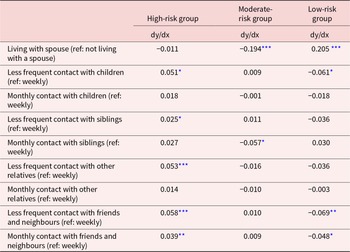
Table 3 displays the AME of social and family networks on the likelihood of belonging to different risk groups of socio-emotional care poverty, which serves as the main basis for assessing the hypotheses. In the high-risk group, less frequent contact with children, siblings, relatives and friends demonstrates a statistically significant result (p < 0.05). Among these variables, participants who have less frequent contact with children have a 5 percentage-point higher probability of experiencing high risk of socio-emotional care poverty (AME = 0.051; p = 0.011; CI: 0.01–0.09). Moreover, less frequent contact with siblings (AME = 0.025; p = 0.024; CI: 0.00–0.04), other relatives (AME = 0.053; p < 0.001; CI: 0.02–0.08) and friends (AME = 0.058; p < 0.001; CI: 0.02–0.09) indicates a higher likelihood (points range between 2% and 6%) of belonging to high-risk groups. These findings support Hypotheses H2 and H3 for the high-risk group, indicating that older people with regular contact with family members and friends are less likely to belong to the high-risk group of socio-emotional care poverty.
Average marginal effect of social and family networks on different socio-emotional care poverty risk groups (N = 1,945)
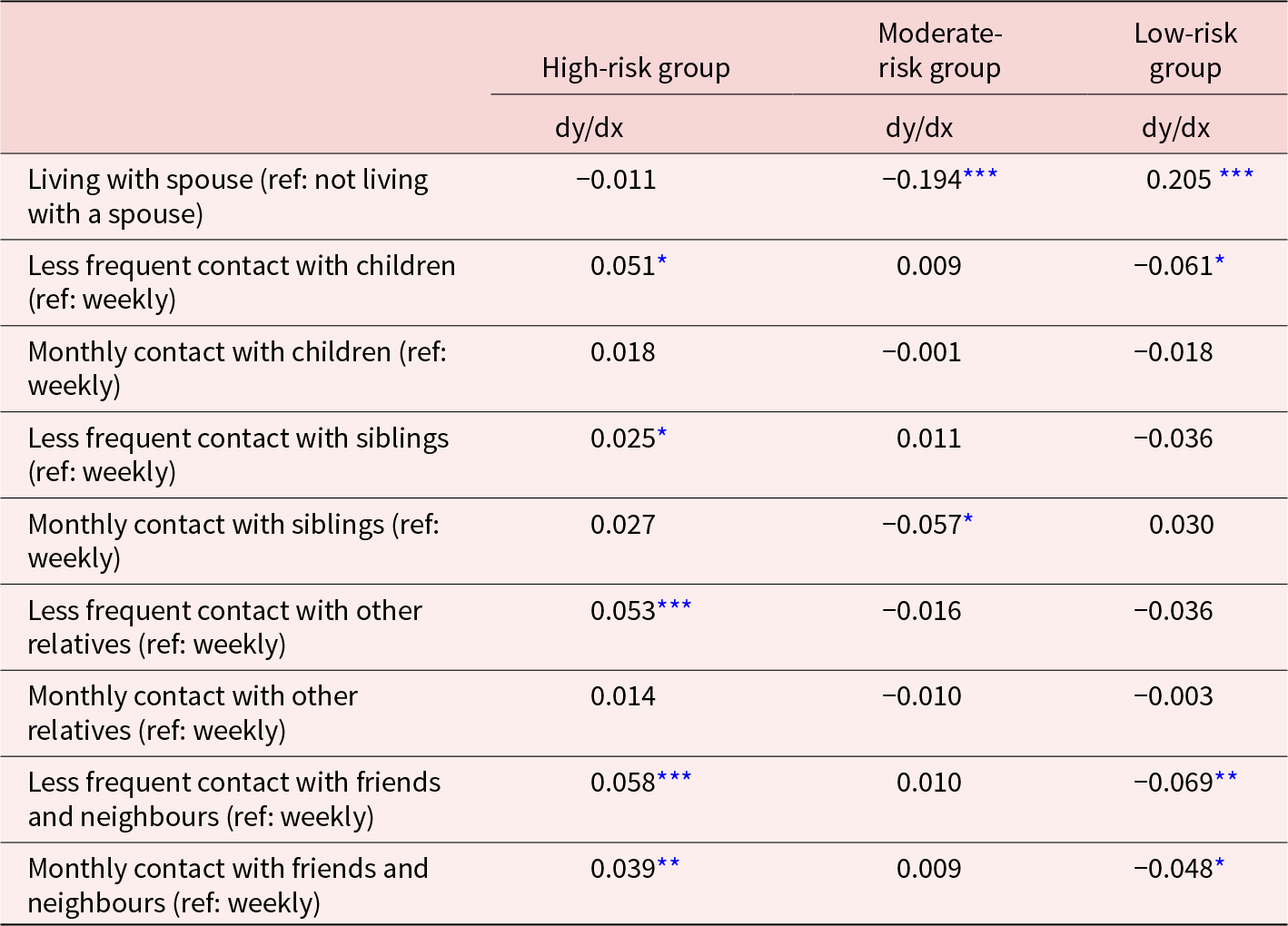
Table 3 Long description
Average marginal effects are reported as dy per dx for three outcome columns: High-risk group, Moderate-risk group, and Low-risk group. Living with spouse, compared with not living with a spouse, has dy per dx minus 0.011 for High-risk, minus 0.194 with three stars for Moderate-risk, and 0.205 with three stars for Low-risk. For contact with children, less frequent contact compared with weekly has 0.051 with one star for High-risk, 0.009 for Moderate-risk, and minus 0.061 with one star for Low-risk; monthly contact has 0.018 for High-risk, minus 0.001 for Moderate-risk, and minus 0.018 for Low-risk. For contact with siblings, less frequent contact has 0.025 with one star for High-risk, 0.011 for Moderate-risk, and minus 0.036 for Low-risk; monthly contact has 0.027 for High-risk, minus 0.057 with one star for Moderate-risk, and 0.030 for Low-risk. For contact with other relatives, less frequent contact has 0.053 with three stars for High-risk, minus 0.016 for Moderate-risk, and minus 0.036 for Low-risk; monthly contact has 0.014 for High-risk, minus 0.010 for Moderate-risk, and minus 0.003 for Low-risk. For friends and neighbours, less frequent contact has 0.058 with three stars for High-risk, 0.010 for Moderate-risk, and minus 0.069 with two stars for Low-risk; monthly contact has 0.039 with two stars for High-risk, 0.009 for Moderate-risk, and minus 0.048 with one star for Low-risk. Star markers appear next to some dy per dx values and indicate statistical significance levels.
Notes: Controlled for age, gender, self-reported health, income, received formal care and variables related to the Covid-19 pandemic. Multinomial logistic regression details: LR chi2(44) = 807.70***; Pseudo R2 = 0.2681. Significance levels: *p < 0.05; **p < 0.01;***p < 0.001.
On the other hand, in the low-risk group, living with a spouse (AME = 0.205; p < 0.001; CI: 0.16–0.24) shows significant results, with a 20 per cent higher probability of experiencing low risk of socio-emotional care poverty. Additionally, contact with children and friends (p < 0.05) shows a higher probability of experiencing low-risk socio-emotional care poverty. Finally, in the moderate-risk group, living with a spouse (AME = −0.194; p < 0.001; CI: −0.23 - −0.15) and monthly contact with siblings (AME = −0.057; p = 0.014; CI: −0.10 - −0.01) show significant results, indicating a lower probability of experiencing moderate risk of socio-emotional care poverty in this group. The hypothesis on living with a spouse (H1) is partly supported. Older people living with a spouse are less likely to belong to the moderate-risk group; however, the hypothesis is not supported for the high-risk group, as the AME is not statistically significant. For Hypotheses H2 and H3 related to the moderate-risk group, the evidence is more limited. Although regular contact with family members and friends was hypothesized to be less likely to belong to the moderate-risk group, only contact with siblings showed a statistically significant effect.
The primary focus of our study is not on background variables, although they are addressed in the analysis, and the results of background and Covid-19 pandemic-related variables are shown in Table 1 of the supplementary file. Among these variables (i.e. controlled variables), self-reported health (poor and fair health compared to good health) is statistically significant in all risk groups. However, older people with poor health had a 12 per cent higher likelihood of belonging to the moderate-risk group and a 19 per cent lower likelihood of belonging to the low-risk group. Respondents’ gender and age did not show any statistically significant association with the various risk groups (p > 0.05). Household income is a significant factor, with older people with lower income having a higher probability of belonging to the high-risk group (AME = 0.034; p = 0.031; CI: 0.00–0.06). Older people who use formal care services are more likely to belong to the moderate-risk group (AME = 0.058; p = 0.003; CI: 0.02–0.09) and less likely to belong to the low-risk group (AME = −0.042; p = 0.029; CI: −0.08 - −0.00). In Covid-19 pandemic-related variables, ‘potential feelings of loneliness’ showed no statistically significant results in the high-risk group but were positively associated (16%) with the moderate-risk group and negatively associated (20%) with the low-risk group. An increase in contact with others through phone, email or other methods was negatively associated with the high-risk group, while showing positive results for the low-risk group.
Discussion
The first aim of this study was to investigate the extent of socio-emotional care poverty among older people by identifying high-risk, moderate-risk and low-risk groups. The findings showed that approximately 7 per cent of respondents belonged to the high-risk group. The result should not be overlooked, as even a relatively small proportion of older people at high risk of socio-emotional care poverty requires attention. Earlier studies have shown that the adverse effects of unmet social and emotional needs, often reflected in experiences such as loneliness and social isolation, on older people can be linked to increased risks of health problems, depression, suicidal ideation and frailty (Cacioppo and Cacioppo Reference Cacioppo and Cacioppo2014; Hwang et al. Reference Hwang, Rabheru, Peisah, Reichman and Ikeda2020; Mehrabi and Béland Reference Mehrabi and Béland2020; Lapane et al. Reference Lapane, Lim, McPhillips, Barooah, Yuan and Dube2022). Additionally, 26 per cent of respondents belonged to the moderate-risk group. This group had an adequate number of contact persons in their social support network, likely providing support when needed. However, any significant changes (e.g. loss of loved ones or changes in relationships) in their family and social network could shift their status from the moderate to the high-risk group. Research consistently indicates that living alone, widowhood and divorce are associated with a higher likelihood of unmet socio-emotional needs (Štípková Reference Štípková2021; Chou et al. Reference Chou, Mathew Puthenparambil, Kröger and Pu2024; Vlachantoni et al. Reference Vlachantoni, Evandrou, Falkingham, Qin, Kröger, Brimblecombe, Rodrigues and Rummery2025).
The study’s second aim was to explore how the composition of and the contact frequency with social network members are associated with socio-emotional care poverty risk groups, with three hypotheses used to structure and assess the findings. In the total study population, more than half of older adults lived with a spouse, while children, friends and neighbours were significant sources of contact with whom they interacted frequently. The high-risk group tends to have fewer social networks, whereas the moderate-risk group shows a greater variation in network size (see Figure 2). The AME analysis, which serves as the basis for hypothesis evaluation, indicates that living with a spouse is significantly associated with a 20 per cent higher probability of experiencing a low risk of socio-emotional care poverty (see Table 3). The results partially support Hypothesis 1: older people living with spouses are less likely to belong to the moderate-risk group but show no association with the high-risk group. Conversely, the findings do indicate that older people living with spouses are more likely to belong to the low-risk group for socio-emotional care poverty. Earlier studies also suggest that living with someone is less likely to experience socio-emotional care poverty (Chou et al. Reference Chou, Mathew Puthenparambil, Kröger and Pu2024; Vlachantoni et al. Reference Vlachantoni, Evandrou, Falkingham, Qin, Kröger, Brimblecombe, Rodrigues and Rummery2025). While our study highlights the importance of living with a spouse for meeting socio-emotional care needs, exploring the influence of relationship quality on different risk groups would be interesting. Earlier studies have also shown a positive association between marital satisfaction and health and wellbeing in older people (Margelisch et al. Reference Margelisch, Schneewind, Violette and Perrig-Chiello2017). In addition, we conducted separate regression analyses for each gender to investigate whether the impact of living with a spouse differs between men and women. The findings were consistent, showing no statistical evidence for the high-risk group (refer to the supplementary file, Tables 2 and 3).
We hypothesize that regular contact with other family members (H2) and friends and neighbours (H3) is less likely to be in the high-risk and moderate-risk groups. The findings partially support these hypotheses. For the high-risk group, less frequent contact with children, siblings, other relatives and friends increases the likelihood of belonging to this group, supporting both H2 and H3. However, for the moderate-risk group, no statistical evidence was found except for monthly contact with siblings, indicating only limited support for the hypotheses. Previous studies have found similar results among children, showing that being childless increases the likelihood of unmet emotional needs (Someşan and Hărăguş Reference Someşan and Hărăguş2016). Moreover, frequent contact with kin and non-kin positively supports social and emotional needs (Keene and Ruel Reference Keene and Ruel2013; Conkova and King Reference Conkova and King2019; Devkota et al. Reference Devkota, Cummings, Hunter, Maxwell, Shrestha, Dennett and Hoben2023). Thus, the risk of socio-emotional care poverty among older people is closely linked to the frequency of their social interactions, that is, how relationships are maintained. However, maintaining frequent contact or meaningful relationships is not easy for everyone. As socio-emotional selectivity theory suggests, people become more selective in their social relationships as they age, prioritizing meaningful relationships that provide emotional support and companionship. This increased selectivity can make it more challenging for older people to meet their socio-emotional needs, often resulting in unmet needs that may lower their wellbeing in later life.
The socio-emotional needs of older people remain the least prioritized among care needs (Kröger Reference Kröger2022; Chou et al. Reference Chou, Mathew Puthenparambil, Kröger and Pu2024; Kelly Reference Kelly, Kröger, Brimblecombe, Rodrigues and Rummery2025; Vlachantoni et al. Reference Vlachantoni, Evandrou, Falkingham, Qin, Kröger, Brimblecombe, Rodrigues and Rummery2025). Therefore, this study raises an important discussion on socio-emotional needs as an integral part of care needs among older people. It also connects the relationship between contact frequency with social network members and different risk groups of socio-emotional care poverty. Addressing socio-emotional care needs is just as essential as meeting personal and practical care needs; neglecting them risks depriving individuals of their basic human needs and dignity (Kröger Reference Kröger2022).
While our data indicated that only a small percentage of participants are at high risk of experiencing socio-emotional care poverty, unmet needs are a growing concern in ageing societies as they significantly impact individuals’ health and wellbeing (Someşan and Hărăguş Reference Someşan and Hărăguş2016; Kröger Reference Kröger2022). We emphasize that socio-emotional care poverty should be prioritized in both research and practical applications, particularly by including socio-emotional support in service assessments and care provision. Obtaining emotional support from family members or others outside of one’s immediate family is becoming increasingly difficult owing to changing family structures and reduced health and social care support. Our findings show that individuals receiving formal care are less likely to be in the low-risk group and more likely to be in the moderate-risk group. This result suggests that while current care arrangements may meet the socio-emotional needs of some older people, they may not do so for others. However, these results do not allow for a definitive conclusion, as interaction with other social networks may also influence these outcomes. Therefore, at least, social care for older people should be improved by integrating emotional and social needs as part of care plans, enhancing staff training, maintaining adequate staffing levels and focusing on person-oriented care rather than structured and target-oriented care. Such support is essential for older people living alone or lacking a social network.
Additionally, our study findings underscore the need for policies that target both high-risk and moderate-risk groups because older people often face difficulties in maintaining adequate social contact owing to changing relationships, relocation and a lack of family members and non-kin. While the moderate-risk group may not require immediate attention, they could become vulnerable if significant life changes occur. In contrast, the high-risk group often lacks a support network to address emerging care needs; this group needs more attention than the moderate-risk group.
What sets this study apart from earlier work using the same data as Chou et al. (Reference Chou, Mathew Puthenparambil, Kröger and Pu2024) is its distinct approach to operationalizing and analysing socio-emotional care poverty. Instead of focusing on relative or absolute care poverty, this study identifies risk groups for socio-emotional care poverty by jointly considering perceived social support and loneliness, whereas earlier work primarily relied on subjective measures of loneliness. Moreover, Chou et al. (Reference Chou, Mathew Puthenparambil, Kröger and Pu2024) focused mainly on socio-economic status, health and care availability, whereas our study places greater emphasis on broader social networks. Some of our findings align with those of Chou et al. (Reference Chou, Mathew Puthenparambil, Kröger and Pu2024) because we used some similar variables. Both studies found that poor health among older people is positively associated with socio-emotional care poverty. The living arrangement measure in Chou et al. (Reference Chou, Mathew Puthenparambil, Kröger and Pu2024) differs from ours: while we focus on whether an individual lives with a spouse, they distinguish between living alone and living with others. Despite this, both living alone and living without a spouse are associated with socio-emotional care poverty. Furthermore, perceived social support plays an important role in both studies, but is operationalized differently. In our study, it forms part of the socio-emotional care poverty concept, whereas Chou et al. (Reference Chou, Mathew Puthenparambil, Kröger and Pu2024) treated it as an independent variable. In the kin group, our study found that older people with less-frequent contact with their children are more likely to belong to the high-risk group, whereas Chou et al. (Reference Chou, Mathew Puthenparambil, Kröger and Pu2024) found no statistically significant association.
This study provides new insights by examining both kin and non-kin groups with attention to ‘contact with friends and neighbours’, an area often overlooked in previous analyses. Unlike family ties, relationships with friends and neighbours are largely voluntary, yet they appear to be important for socio-emotional wellbeing (Holmén and Furukawa Reference Holmén and Furukawa2002; Merz and Huxhold Reference Merz and Huxhold2010; Dahlberg and McKee Reference Dahlberg and McKee2014; Rook and Charles Reference Rook and Charles2017). Therefore, fostering opportunities for older people to engage in social participation and interactions may be an effective way to address socio-emotional care poverty.
In today’s world, maintaining adequate social contact is challenging for older people owing to changes in relationships, relocation and a lack of family members and non-kin. Our approach distinguishes risk groups based on perceived adequacy of social support and the experience of insufficient connections to meet emotional needs. Our study findings underscore the need for policies that target both high-risk and moderate-risk groups. While the moderate-risk group may not require immediate attention, they could become vulnerable if significant life changes occur. This study also underscores the importance of focusing on the high-risk group, which is people with low levels of perceived social support and feelings of loneliness. As its members often lack a support network to address emerging care needs, this group needs more attention than the moderate-risk group.
The socio-emotional needs of older people are complex, and using loneliness and perceived social support as proxy variables may not fully capture the phenomenon of socio-emotional care poverty. However, this approach provides a valuable framework for identifying those at higher risk of care poverty based on social support levels. Most respondents in our study were in good health and maintained frequent contact with kin and non-kin, which may not fully represent the experiences of older people facing care poverty. Additionally, the loneliness and social support variables used to construct the socio-emotional care poverty groups were measured using a single-item scale, as these were the only measures available in the survey questionnaire. Although single-item measures are widely used in survey research, they may have limitations in terms of reliability, validity and comparability with studies using validated multi-item scales, particularly because loneliness and social support are conceptually complex constructs. Therefore, the findings from this study should be interpreted with the potential limitations of the measures used. The data collection was conducted during the Covid-19 pandemic, when Finland had movement restrictions that may have affected older people’s emotions, potentially influencing the results even after controlling for this in the regression. As our study focuses on social networks, we did not include other dimensions such as mental health, ADLs or IADLs; however, a self-reported health variable was used as a control variable. We acknowledge the possibility of measurement errors combining ‘less frequent contact’ and ‘no such siblings/relatives/friends’ into a single group; however, robustness checks that separated these groups produced results consistent with those reported in Table 3.
The study utilized data from Finland, which may not be representative in a global context. Finland is characterized by a universalist welfare regime with extensive public care for older people, where families are not legally obliged to provide care, unlike in many other countries. Nevertheless, informal care continues to play a role in the overall support system for older people (Verbakel Reference Verbakel2018). Comparative evidence shows that older people in Finland experience higher levels of socio-emotional care poverty than those in Taiwan (Chou et al. Reference Chou, Mathew Puthenparambil, Kröger and Pu2024). This suggests that social networks remain important for meeting socio-emotional care needs, even within strong welfare states.
Since this study is based on cross-sectional data, causal interpretations of the relationship between social networks and socio-emotional care poverty are not possible, and we acknowledge this limitation. Nevertheless, the evidence suggests that older people with weaker social networks are more likely to experience socio-emotional care poverty. At the same time, it is also possible that older people with unmet socio-emotional care needs are less socially active. However, this reverse relationship cannot be established with the present data. Moreover, socially isolated people or those lacking regular social contact may experience unmet socio-emotional needs if formal care (their only source of support) is inadequate or of poor quality. Moreover, socially isolated people may be less likely to seek formal care support. These topics are beyond the scope of the present study.
Future research could examine the group of older people with low social support but no loneliness; we could refer to this group as the ‘medium-high risk group’. Research is also needed that focuses on older people living alone and those experiencing changes in family structure, to understand the impact of socio-emotional care poverty better. Further research is needed to investigate the interplay between formal care provision and socio-emotional needs, particularly among socially isolated individuals, as they may be less likely to seek formal care support.
In a nutshell, a small percentage of people were found to be at high risk of socio-emotional care poverty, which needs attention. As Kröger (Reference Kröger2022) argued, insufficient assistance can lead to the deprivation of basic human needs and dignity, ultimately affecting the wellbeing and health of older people. Relationships with both kin and non-kin groups significantly impact socio-emotional care poverty, as those with regular contact are less likely to be in the high-risk group. In today’s society, receiving support from family members is increasingly challenging owing to changing family structures, and at the same time formal care services are struggling with limited financial and human resources. Therefore, special attention should be given to older people in high-risk and moderate-risk groups to ensure that their basic care needs are met, allowing them to maintain a good quality of life. We also emphasize the need for more research on socio-emotional care poverty and the inclusion of socio-emotional support in service assessments and care provision.
Supplementary material
The supplementary material for this article can be found at https://doi.org/10.1017/S0144686X26101044.
Acknowledgements
We thank the CoE AgeCare research group at the University of Jyväskylä for their valuable comments on the article during the seminar. This article was language-checked and edited with Grammarly and Grammarly’s AI prompts. The first author carefully reviewed and validated any feedback generated by the AI. The final version of the article is our own creation.
Authors contributions
Jiby Mathew Puthenparambil (JMP) designed the study, analysed the data and wrote most of the article. Mirkka Danielsbacka (MD) contributed by writing and commenting on the article, as well as assisting with developing the social network framework.
Financial support
The Research Council of Finland funds this research through the CoE AgeCare project (project number 352735). JMP has received support from this project. JMP further acknowledges the Jenny and Antti Wihuri Foundation grant. Additionally, the study is part of the NetResilience consortium and the INVEST flagship initiative. MD has received support from the Strategic Research Council through the NetResilience grant (grant number 364371) and from the Research Council of Finland through the INVEST grant (grant number 320162).
Competing interests
No conflict of interest to declare.
Ethical standards
Owing to the minimal risk to participants, the research did not require ethical approval from the institution. However, it adhered strictly to the ethical guidelines established by the Finnish National Research Integrity Board concerning the confidentiality and anonymity of secondary data. DACO datasets will be available from the first author upon reasonable request.

 Open access

