We partner with a secure submission system to handle manuscript submissions.
Please note:
You will need an account for the submission system, which is separate to your Cambridge Core account. For login and submission support, please visit the
submission and support pages.
Please review this journal's author instructions, particularly the
preparing your materials
page, before submitting your manuscript.
Click Proceed to submission system to continue to our partner's website.
To save this undefined to your undefined account, please select one or more formats and confirm that you agree to abide by our usage policies. If this is the first time you used this feature, you will be asked to authorise Cambridge Core to connect with your undefined account.
Find out more about saving content to .
To send this article to your Kindle, first ensure no-reply@cambridge.org is added to your Approved Personal Document E-mail List under your Personal Document Settings on the Manage Your Content and Devices page of your Amazon account. Then enter the ‘name’ part of your Kindle email address below. Find out more about sending to your Kindle.
Find out more about saving to your Kindle.
Note you can select to save to either the @free.kindle.com or @kindle.com variations. ‘@free.kindle.com’ emails are free but can only be saved to your device when it is connected to wi-fi. ‘@kindle.com’ emails can be delivered even when you are not connected to wi-fi, but note that service fees apply.
This study examines clay fragments found at Çemka Höyük, a Pre-Pottery Neolithic site in Mardin, Türkiye (tenth millennium BC). Analysis of mineral inclusions in the clay matrix indicates that these fragments may have been deliberately fired, representing an early example of ceramic technology in South-west Asia. The diversity of forms identified and their likely uses suggest, the authors argue, a formative phase in ceramic innovation during which the properties and potential applications of clay were explored by the local community and adopted and adapted within existing social and economic traditions in advance of widespread application in the seventh millennium BC.
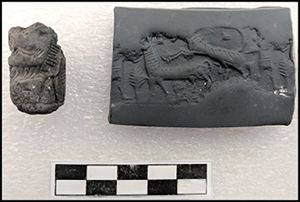
Two seasons of excavations at the site of Tapeh Tyalineh in western Iran retrieved the largest known corpus of late prehistoric administrative artefacts in the ancient world, including more than 7000 seal impressions, more than 200 clay figurines, several clay tokens and two cylinder seals, dating to 5000 years ago.
Regular finds of glassware at Roman sites provide a useful dataset not just for constructing glass typologies but for the comparative analysis of base-glass compositions. Here, the authors explore the form and chemical composition of 79 glass fragments from Khirbet al-Khalde, a strategically important site in southern Jordan that was integrated into a major Roman roadway, the Via Nova Traiana, in the early second century AD. Their findings challenge current models, identifying abundant pre-fourth-century Egyptian glassware in an area believed to be predominantly supplied by Syro-Palestine and providing evidence for continued activity at the site into the eighth century.
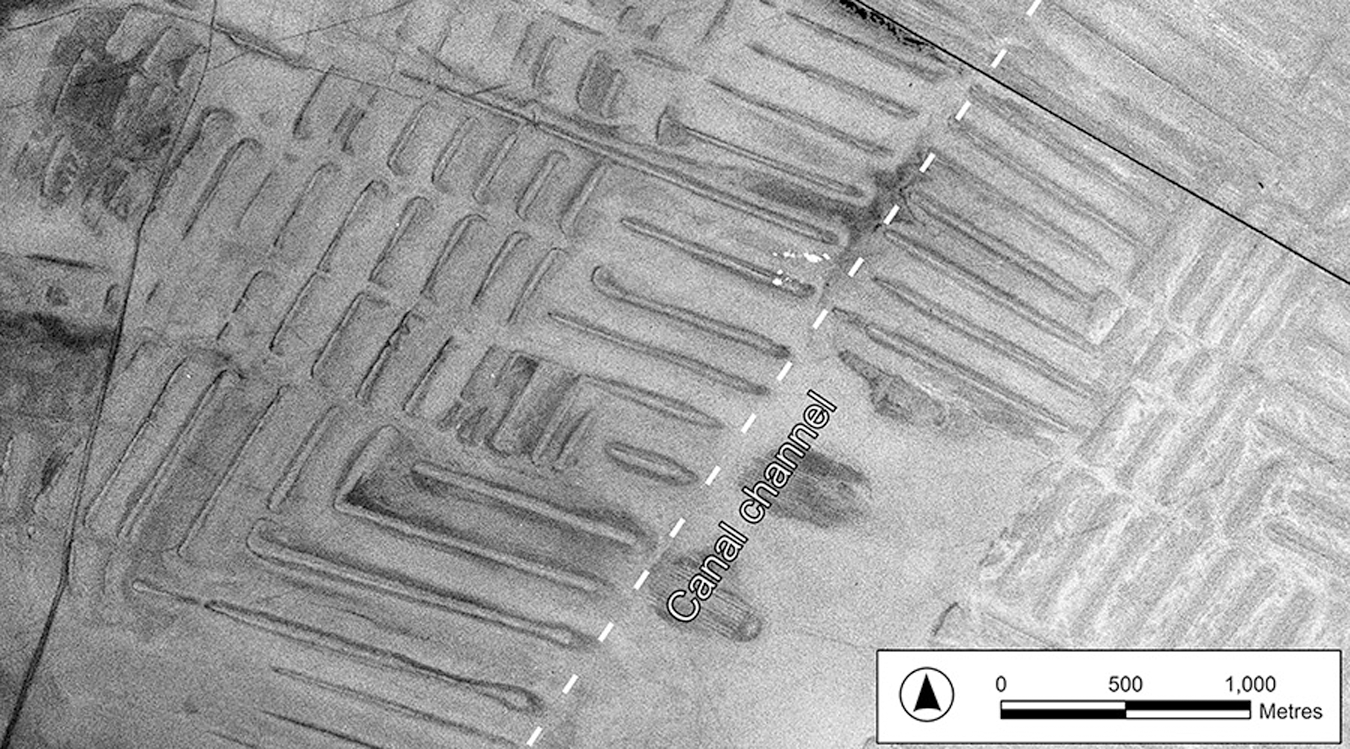
A system of abandoned ridge/earthwork features covers a large swathe of the Shaṭṭ al-ᶜArab floodplain in southern Iraq, standing as testament to a period of agricultural expansion in the past. Until now, the chronology of these features has been surmised from limited textual evidence that relates their construction to slave labour during the early Islamic period associated with the ‘Zanj rebellion’. This article presents the first absolute dates from this ridge system, demonstrating that these features were in use for a substantially longer period than previously assumed and, as such, they represent an important piece of Iraqi landscape heritage.
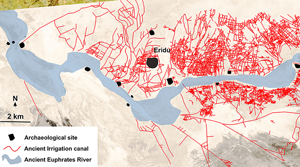
The Eridu region in southern Mesopotamia was occupied from the sixth until the early first millennium BC, and its archaeological landscape remains well preserved. The present study has identified and mapped a vast, intensive, well-developed network of artificial irrigation canals in this region.
The European shores of the Mediterranean are characterised by well-known sociocultural and economic dynamics during the Bronze and Early Iron Ages (2200–550 BC), but our understanding of the African shores is comparatively vague. Here, the authors present results from excavations at Kach Kouch, Morocco, revealing an occupation phase from 2200–2000 cal BC, followed by a stable settlement from c. 1300–600 BC characterised by wattle and daub architecture, a farming economy, distinctive cultural practices and extensive connections. Kach Kouch underscores the agency of local communities, challenging the notion of north-western Africa as terra nullius prior to Phoenician arrival.
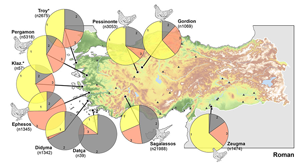
Written accounts suggest there were major changes in agricultural practices in Anatolia as the region switched between Roman, Byzantine, Arab and Turkic control, yet archaeological evidence of these changes is offered only on a site-by-site basis. This article presents the first synthesis of archaeobotanical, palynological and zooarchaeological evidence for changes in plant and animal husbandry in Anatolia through the first and second millennia AD. Available data indicate a minimal role of climate change in agricultural shifts but offer evidence for substantial changes towards short-term-return agricultural strategies in response to declining personal security, changing patterns of military provisioning and distinct taxation regimes.
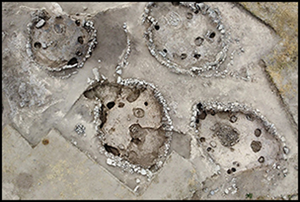
During the fourth millennium BC, public institutions developed at several large settlements across greater Mesopotamia. These are widely acknowledged as the first cities and states, yet surprisingly little is known about their emergence, functioning and demise. Here, the authors present new evidence of public institutions at the site of Shakhi Kora in the lower Sirwan/upper Diyala river valley of north-east Iraq. A sequence of four Late Chalcolithic institutional households precedes population dispersal and the apparent regional rejection of centralised social forms of organisation that were not then revisited for almost 1500 years.
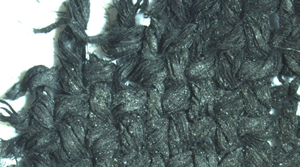
Cuneiform tablets indicate the importance of textile manufacturing in the Bronze Age Old Assyrian Colony Period and Hittite Empire, yet the organic traces of this industry rarely survive. Two burnt textile fragments found at Beycesultan offer an unexpected insight into the Bronze Age textile industry in Anatolia. Here, the authors present the results of chromatographic and microscopic analyses that indicate one fragment was made from hemp using the nålbinding, or single-needle knitting, technique and was dyed with the woad or indigo plant, while the other was a natural tabby weave. Both add to our understanding of the diversity of textile production in the Bronze Age.
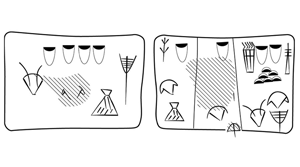
Administrative innovations in South-west Asia during the fourth millennium BC, including the cylinder seals that were rolled on the earliest clay tablets, laid the foundations for proto-cuneiform script, one of the first writing systems. Seals were rich in iconography, but little research has focused on the potential influence of specific motifs on the development of the sign-based proto-cuneiform script. Here, the authors identify symbolic precursors to fundamental proto-cuneiform signs among late pre-literate seal motifs that describe the transportation of vessels and textiles, highlighting the synergy of early systems of clay-based communication.
Regional variation in the historic development of agricultural societies in South-west Asia is increasingly apparent. Recent investigations at the wetland site of Balıklı (c. 8300–7900 BC) provide new insights into the initial processes of sedentism in Central Anatolia and the interaction of early communities within local and larger-scale networks. Located near major obsidian sources, excellent architectural preservation and faunal and botanical records at Balıklı suggest cultural connections to the upper Middle Euphrates region, yet inhabitants of the site do not appear to have participated in the wider South-west Asian obsidian-exchange networks and largely relied on wild resources.
Across more than seven centuries (c. 1350–600 BC), the Assyrian Empire established political dominance and cultural influence over many settlements in the Ancient Near East. Assyrian policies of resource extraction, including taxation and tribute, have been extensively analysed in textual and art historical sources. This article assesses the impact of these policies on patterns of wealth within mortuary material—one of the most conservative forms of culture, deeply rooted in group identity. The author argues that a trend of decreasing quality and quantity of grave goods over time supports models emphasising the heavy economic burden of Assyrian administration on its subjects.
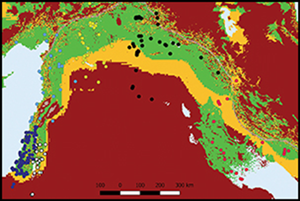
Historically, urban centres are seen as consumers that draw in labour and resources from their rural hinterlands. Zooarchaeological studies of key urban sites in Southwest Asia demonstrate the movement of livestock, but the region-wide application of these findings has not been tested and the logistics of urban provisioning remain poorly understood. Here, the authors analyse zooarchaeological data from 245 sites in the Levant and Mesopotamia to examine patterns of livestock production and consumption over a 5000-year period. They find that although preferences varied over time and space, urban sites consistently relied on rural satellites to overcome local limitations to support their large and diverse populations.
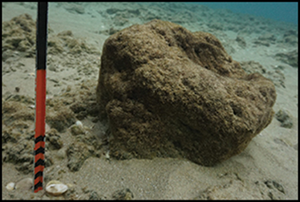
Sedentary occupation of the southern Levantine coast spans from the Pre-Pottery Neolithic C to the Early Bronze Age Ib phase (c. 7000–3100 BC). Sites dating to the Early Pottery Neolithic (c. 6400–5500 BC) are scarce, however, potentially reflecting the effects of the 8.2ka climatic event. Here, the authors present the investigations at the submerged site of Habonim North off the Carmel Coast. Typological and radiocarbon dating indicate an Early Pottery Neolithic occupation and evidence for continuity of subsistence and economic strategies with both earlier and later Neolithic cultures. The results indicate the resilience of coastal communities in the face of significant climatic uncertainty and contribute to understanding human responses to environmental change.
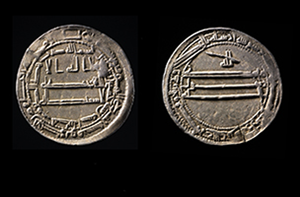
The expansion of the early Islamic state (c. AD 700–900) was underpinned by the minting of silver coins (dirhams) on an enormous scale. While the wider effects of this coinage have been studied extensively, the sources of silver have attracted less attention and research has relied on literary texts pointing to mines in Arabia and Central Asia. Here, the authors use lead isotope and trace element analyses of more than 100 precisely dated silver coins to provide a geochemical perspective on Islamic silver. The results identify multiple new sources, stretching from Morocco to the Tien Shen, and indicate an Abbasid-period mining boom. These source locations have implications for contemporary geopolitics including on the Islamic-Byzantine frontier.