





No CrossRef data available.
Article contents
ESTIMATES FOR APPROXIMATE SOLUTIONS TO A FUNCTIONAL DIFFERENTIAL EQUATION MODEL OF CELL DIVISION
Published online by Cambridge University Press: 12 March 2021
Abstract
Core share and HTML view are not available for this content. However, as you have access to this content, a full PDF is available via the 'Save PDF' action button.
The functional partial differential equation (FPDE) for cell division, $$ \begin{align*} &\frac{\partial}{\partial t}n(x,t) +\frac{\partial}{\partial x}(g(x,t)n(x,t))\\ &\quad = -(b(x,t)+\mu(x,t))n(x,t)+b(\alpha x,t)\alpha n(\alpha x,t)+b(\beta x,t)\beta n(\beta x,t), \end{align*} $$is not amenable to analytical solution techniques, despite being closely related to the first-order partial differential equation (PDE)  $$ \begin{align*} \frac{\partial}{\partial t}n(x,t) +\frac{\partial}{\partial x}(g(x,t)n(x,t)) = -(b(x,t)+\mu(x,t))n(x,t)+F(x,t), \end{align*} $$which, with known

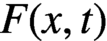 $F(x,t)$, can be solved by the method of characteristics. The difficulty is due to the advanced functional terms
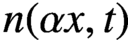 $n(\alpha x,t)$ and
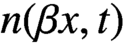 $n(\beta x,t)$, where
 $\beta \ge 2 \ge \alpha \ge 1$, which arise because cells of size x are created when cells of size
 $\alpha x$ and
 $\beta x$ divide.
The nonnegative function, 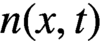 $n(x,t)$, denotes the density of cells at time t with respect to cell size x. The functions
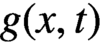 $g(x,t)$,
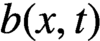 $b(x,t)$ and
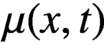 $\mu (x,t)$ are, respectively, the growth rate, splitting rate and death rate of cells of size x. The total number of cells,
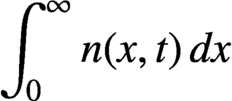 $\int _{0}^{\infty }n(x,t)\,dx$, coincides with the
 $L^1$ norm of n. The goal of this paper is to find estimates in
 $L^1$ (and, with some restrictions,
 $L^p$ for
 $p>1$) for a sequence of approximate solutions to the FPDE that are generated by solving the first-order PDE. Our goal is to provide a framework for the analysis and computation of such FPDEs, and we give examples of such computations at the end of the paper.
MSC classification
Information
- Type
- Research Article
- Information
- Copyright
- © Australian Mathematical Society 2021
References
Basse, B., Baguley, B. C., Marshall, E. S., Joseph, W. R., van Brunt, B., Wake, G. and Wall, D. J., “Modelling cell death in human tumour cell lines exposed to the anticancer drug paclitaxel”, J. Math. Biol. 49 (2004) 329–357; doi:10.1007/s00285-003-0254-2.CrossRefGoogle ScholarPubMed
Basse, B., Wake, G., Wall, D. and van Brunt, B., “On a cell-growth model for plankton”, IMA J. Math. Med. Biol. 21 (2004) 49–61; doi:10.1093/imammb/21.1.49.CrossRefGoogle ScholarPubMed
Begg, R., Wall, D. J. N. and Wake, G. C., “On a functional equation model of transient cell growth”, Math. Med. Biol. 22 (2005) 371–390; doi:10.1093/imammb/dqi015.CrossRefGoogle ScholarPubMed
Diekmann, O., Heijmans, H. and Thieme, H., “On the stability of the cell size distribution”, J. Math. Biol. 19 (1984) 227–248; doi:10.1007/BF00277748.CrossRefGoogle Scholar
Hall, A. J. and Wake, G. C., “A functional differential equation arising in modelling of cell growth”, J. Aust. Math. Soc. Ser. B Appl. Math., now ANZIAM J. 30 (1989) 424–435; doi:10.1017/S0334270000006366.CrossRefGoogle Scholar
Heijmans, H., “On the stable size distribution of populations reproducing by fission into two unequal parts”, Math. Biosci. 72 (1984) 19–50; doi:10.1016/0025-5564(84)90059-2.CrossRefGoogle Scholar
John, F., Partial differential equations, Volume 1 of Appl. Math. Sci. (Springer, New York, 1971).Google Scholar
Kafri, R., Levy, J., Ginzberg, M. B., Oh, S., Lahav, G. and Kirschner, M. W., “Dynamics extracted from fixed cells reveal feedback linking cell growth to cell cycle”, Nature 494 (2013) 480–483; doi:10.1038/nature11897.CrossRefGoogle ScholarPubMed
Laurençot, P. and Perthame, B., “Exponential decay for the growth-fragmentation/cell-division equations”, Commun. Math. Sci. 7 (2009) 503–510; doi:10.4310/CMS.2009.v7.n2.a12.CrossRefGoogle Scholar
Michel, P., Mischler, S. and Perthame, B., “General entropy equations for structured population models and scattering”, C. R. Math. Acad. Sci. Paris 338 (2004) 697–702; doi:10.1016/j.crma.2004.03.006.CrossRefGoogle Scholar
Michel, P., Mischler, S. and Perthame, B., “General relative entropy inequality: an illustration on growth models”, J. Math. Pures Appl. (9) 84 (2005) 1235–1260; doi:10.1016/j.matpur.2005.04.001.CrossRefGoogle Scholar
Mischler, S. and Scher, J., “Spectral analysis of semigroups and growth-fragmentation equations”, Ann. Inst. H. Poincaré (C) Anal. Non Linéaire 33 (2016) 849–898; doi:10.1016/j.anihpc.2015.01.007.CrossRefGoogle Scholar
Neumüller, R. A., “Dividing cellular asymmetry: asymmetric cell division and its implications for stem cells and cancer”, Genes Dev. 23 (2009) 2675–2699; doi:10.1101/gad.1850809.CrossRefGoogle ScholarPubMed
Perthame, B., Transport equations in biology, Front. Math. (Birkhäuser, Basel, 2007); ISBN 13: 978-3-7643-7841-7.CrossRefGoogle Scholar
Taheri-Araghi, S., Bradde, S., Sauls, J. T., Hill, N. S., Levin, P. A., Paulsson, J., Vergassola, M. and Jun, S., “Cell-size control and homeostasis in bacteria”, Curr. Biol. 25 (2015) 385–391; doi:10.1016/j.cub.2014.12.009.CrossRefGoogle Scholar
Trèves, F., Topological vector spaces, distributions and kernels, Volume 25 of Pure Appl. Math. (Academic Press, New York–London, 1967).Google Scholar
van Brunt, B., Almalki, A., Lynch, T. and Zaidi, A. A., “On a cell division equation with linear growth rate”, ANZIAM J. 59 (2018) 293–312; doi:10.1017/S1446181117000591.Google Scholar
Zaidi, A. A., van Brunt, B. and Wake, G. C., “Solutions to an advanced functional partial differential equation of the pantograph type”, Proc. R. Soc. Lond. Ser. A Math. Phys. Eng. Sci. 471 (2015) 20140947; doi:10.1098/rspa.2014.0947.Google Scholar
Zaidi, A. A., van Brunt, B. and Wake, G. C., “A model for asymmetrical cell division”, Math. Biosci. Eng. 12 (2015) 491–501; doi:10.3934/mbe.2015.12.491.CrossRefGoogle Scholar
 You have Access