Introduction
Previous research has established that children with Developmental Language Disorder (DLD) have impaired grammatical knowledge of long passives and, thus, prefer short over long passive sentences (e.g., Leonard et al., Reference Leonard, Wong, Deevy, Stokes and Fletcher2006; van der Lely, Reference van der Lely1996, etc.). Only few studies have been conducted on the acquisition of passives in Mandarin typically developing (TD) children (e.g., Deng et al., Reference Deng, Mai and Yip2018; Zeng et al., Reference Zeng, Mao and Duan2016; Zhou, Reference Zhou1997). As a result, we are uncertain whether Mandarin children with DLD will display impaired syntactic knowledge in long passives and exhibit the well-documented asymmetry between long and short passives. Therefore, the first question addressed in this paper is whether this population comprehends short passives better than long passives.
Although several studies have found that children with DLD struggle with the acquisition of long passives (e.g., Leonard et al., Reference Leonard, Wong, Deevy, Stokes and Fletcher2006; van der Lely, Reference van der Lely1996), there is little consensus regarding the underlying causes of the difficulty. Therefore, the second goal of this paper is to investigate the possible discrepancies between children with DLD and TD children in the comprehension of passives.
In this paper, we adopt the Edge Feature Underspecification Hypothesis (EFUH) (Yu, Reference Yu2018; Yu et al., Reference Yu, Wang and He2023) to account for the possible syntactic deficit in children with DLD exhibited in the comprehension of long passives in Mandarin, for which the smuggling analysis of passive is not possible. More precisely, the poor performance on the comprehension of long passives in children with DLD can be attributed to the intervention effect involved in long passives.
This paper will proceed as follows. First, it will review previous studies on Mandarin passives and the acquisition of passives in children with and without DLD. It will then go on to present the comprehension experiment and the results. The last section deals with the discussion and concluding remarks.
The analysis of passive constructions
English passives
According to the standard analysis (Chomsky, Reference Chomsky1957), the English passive derives from its active counterpart through an Argument-movement (henceforth A-movement)Footnote 1 , which moves the internal argument from the object position into the subject position. The external argument is moved into an optional by-phrase.
Apart from other problems of the standard analysis, Collins (Reference Collins2005) argues that the movement of the internal argument across the external argument would be blocked by the Relativized Minimality (henceforth RM) (Rizzi, Reference Rizzi1990; Reference Rizzi2004) effectFootnote 2 . To avoid this effect, he proposed the Smuggling Approach, suggesting that a stative subevent of a structurally complex event is first moved to a topic position at the edge of Voice crossing the external argument in the by-phrase, and then the internal argument is moved out of the event and into the subject position.
To facilitate the discussion, we first illustrate the Smuggling Approach to a long English passive (The book was written by John.) in (1). By is the head of VoiceP, taking a vP as its complement. The external argument John is merged in spec-vP in the same way as in the active sentence. The internal argument the book moves to spec-TP in two steps: the PartP written the book is first moved to spec-VoiceP, then the book is moved to spec-PartP and finally to spec-TP. Thus, the internal argument the book is smuggled to spec-TP successfully crossing the external argument without violating RM effect.
It should be noted that this Smuggling Approach violates the Freezing Principle (Wexler & Culicover, Reference Wexler and Culicover1980), which states that extracting any subpart of the moved phrase is prohibited. To be more precise, after the PartP has been moved to the spec-VoiceP, the Freezing Principle forbids the movement of the DP out of the PartP. Collins (Reference Collins2005), on the other hand, contends that the Freezing Principle allows for certain exceptions, such as in English long passives.

Mandarin passives
According to Liu & Huang (Reference Liu and Huang2016), the Smuggling Approach is inappropriate for Mandarin long passives. First, the surface word order of passives in Mandarin differs from that of English: in English, the VP comes before the external argument, whereas, in Mandarin, the VP follows the external argument, as shown in (2) (Liu & Huang, Reference Liu and Huang2016). Furthermore, it is not necessary to smuggle in the derivation of Mandarin passives. According to Ernst & Wang (Reference Ernst and Wang1995) and Shyu (Reference Shyu1995), Mandarin passives allow object preposing in spec-vP to circumvent the minimality conditions.

The precise nature of Mandarin passives has been one of the most controversial issues in Chinese linguistics. The canonical Mandarin passives are exemplified in (2a, b). The commonality between these two sentences is that they share three elements: the subject Zhangsan, the passive marker Bei Footnote 3 , and the verb da “hit.” Since the agent noun Lisi follows the passive marker Bei in (2a), it is referred to as a long passive, whereas (2b) is considered a short passive because there is no agent noun following the passive marker Bei.
The most influential syntactic analysis of Mandarin passives is proposed by Huang (Reference Huang1999) and Huang et al. (Reference Huang, Li and Li2009), contending that the Mandarin long and short passives should have the structure and derivation shown in (3).

According to the analysis, Mandarin long and short passives have different derivations. The verb Bei in the long passive takes an IP as its complement, while Bei in the short passive takes a VP. The long passive consists of an experiential verb Bei taking a clausal complement (IP), with the A’-movement of the null operator (NOP) transforming the IP into a secondary predicate. The moved NOP object is coindexed with the matrix subject under predication. The short passive, on the other hand, involves an experiential auxiliary Bei taking a VP complement, which undergoes internal A-movement. The theme (patient) object (PRO) is moved to Spec-VP and controlled by the matrix subject.
This analysis, however, has been proven insufficient in covering the syntactic characteristics of Mandarin passives. The first concern is that Mandarin long and short passives are essentially the same construction (e.g., Her, Reference Her2009; Ma & Song, Reference Ma and Song2015). Her (Reference Her2009), for example, argues that the Mandarin short passive does not exist as it allows the same range of syntactic behavior as the long passive and Bei in Mandarin passives is a single unified lexical itemFootnote 4 . The second criticism is directed at how short passives are derived. According to Ma & Song (Reference Ma and Song2015), it is against the Generative Grammar convention to presume that PRO is base-generated as a complement of VP in (3b), because PRO is considered the subject of a non-finite clause. Additionally, Her (Reference Her2009) has convincingly argued that the A-movement analysis of (3b) leaves unaccounted for the short passives with a long-distance gap, resumptive pronoun, and the particle suo Footnote 5 .
Given the limitations of the NOP/PRO movement analysis, in this paper, we adopt a Topic Analysis of Mandarin passives within the framework of the Minimalist Program, arguing that the passives in Mandarin are Topic Structures derived through merge-based operations. According to Ma & Song (Reference Ma and Song2015), Mandarin long passives Zhangsan bei Lisi da le (“Zhangsan was hit by Lisi”) and short passives Zhangsan bei da le (“Zhangsan was hit”) are Focus Structures. The derivations are shown in (4). The raising verb Bei selects the finite complement CP1 as its complement. Attracted by the EF feature [Focus] of the phase heads v*Footnote 6 , C1 and C2, the focus constituent Zhangsan moves successively via A’-movement from the internal argument of the transitive verb da “hit” to Spec of CP1 and finally to Spec of CP2. The only distinction between the long and short passives is that the long passive has an agent noun Lisi in the spec-v*P, but the short passive has a null subject pro.

The Focus Analysis is superior to the NOP/PRO movement analysis because it can both capture the language intuition of native Mandarin speakers, namely that the two passives constitute a unified structure and cover more empirical data. However, we argue that Mandarin passives should be better categorized as Topic StructuresFootnote 7 rather than Focus Structures. The following are the justifications for the Topic Analysis.
First, Her (Reference Her2009) contends that the subject of Mandarin passives possesses the six properties of the non-controversial topic in Mandarin proposed by Tsao (Reference Tsao1987: 4), such as the initial position and pause particlesFootnote 8 , among many others. Additionally, he discovers a close parallel relation between the pre-subject non-argument topic and the subject of passives in the relations they enter with the comment clause. Precisely, they permit nearly the same set of relations, including location, relational adverbials, possessor–possessee relation, and whole-part relation, with the exception of time adverbials and class–member relations. Second, there is cross-linguistic support for the Topic Analysis. For example, Gehrke & Grillo (Reference Grillo2008) propose that the core characteristic of passives (e.g., English) is the movement of a stative subevent of a structurally complex event to a topic position at the edge of the verb phrase. Demuth (Reference Demuth1989) argues that the subject position in Sesotho must be filled with previously mentioned arguments, which reintroduce the discourse topic as the grammatical restriction (cited in Júnior & Corrêa, Reference Júnior, Corrêa and Cardinaletti2020). Actual DP subjects are thus topic-oriented, making constructions such as passive sentences a more natural alternative than active sentences in a number of contexts.
It is in line with the above that we propose that the initial NP in Mandarin passives is better considered as a topic rather than a focus. Therefore, we maintain that the sentence initial NP in the aforementioned Focus Analysis of Mandarin passives is moved to Spec of Topic P, driven by the uninterpretable edge feature (EF) [Topic] of the phase head. The Topic Analysis of Mandarin passives is shown in (5).

Previous research on the acquisition of passive
For many languages, previous research has demonstrated that young children under the age of 6 exhibit an asymmetry between the acquisition of long and short passives, i.e., they perform better in acquiring short passivesFootnote 9 (e.g., Armon-Lotem et al., Reference Armon-Lotem, Haman, Jensen de López, Smoczynska, Yatsushiro, Szczerbinski and Kamandulytė-Merfeldienė2016; Baldie, Reference Baldie1976; Bever, Reference Bever and Hayes1970; Harris, Reference Harris1976; Maratsos, Reference Maratsos1974). There are many explanations for why young children exhibit difficulties in comprehending long passives, including the Noun-Verb-Noun strategy (NVN strategy) (Bever, Reference Bever and Hayes1970; Maratsos, Reference Maratsos1974), the A-Chain Deficit Hypothesis (ACDH) (Borer & Wexler, Reference Borer, Wexler, Roeper and Williams1987, Reference Borer and Wexler1992), and the Universal Freezing Hypothesis (UFH) (Snyder & Hyams, Reference Snyder and Hyams2015).
In early studies, researchers hypothesized that at the age of 4, young children’s comprehension of long passives depends critically on the NVN strategy, which states that any NVN sequence within a potential internal unit in the surface structure corresponds to “actor-action-object” (Bever, Reference Bever and Hayes1970: 298). For example, Maratsos (Reference Maratsos1974) used the act-out task to explore how well English preschool children aged 3-to-4 years old comprehend long passives, in which the experimenter first presented the test item to children and subsequently asked them to act out what they had heard with toys. The study found that only 35% of children aged 3;8–3;11 years can correctly act out at least two out of three long passives.
Undoubtedly, the early studies are groundbreaking, but they have been criticized for two reasonsFootnote 10 . First, according to the NVN strategy, young children only rely on the linear position of nouns in the sentence to comprehend passives, i.e., they will regard the first noun in a sentence as the actor and the second as the object, thus implying that their comprehension accuracy may be low in the picture-sentence matching task measuring long passive comprehension (Bever, Reference Bever and Hayes1970). Children are given two pictures to choose from in the task, one of which shows the scenario the long passives describe and the other of which shows the oppositeFootnote 11 . However, many subsequent studies have not corroborated the prediction of this analysis. For example, Armon-Lotem et al. (Reference Armon-Lotem, Haman, Jensen de López, Smoczynska, Yatsushiro, Szczerbinski and Kamandulytė-Merfeldienė2016) found that the mean accuracy rate of long passive comprehension in Dutch, Polish, German, English, and Danish children aged between 5;0 and 5;11 years is 82.31%, 82.97%, 83.38%, 87.06%, and 89.16%, respectively. Second, the failure of young children to act out the experimental sentences does not necessarily imply that they do not understand the test item, because they are likely to be distracted by toys due to their limited attention and, thus, fail to carefully follow instructions (Hirsh-Pasek & Golinkoff, Reference Hirsh-Pasek, Golinkoff, McDaniel, McKee and Cairns1996: 121).
The second account is known as the ACDH (Borer & Wexler, Reference Borer, Wexler, Roeper and Williams1987, Reference Borer and Wexler1992). It is based on the standard A-movement analysis and is thus hard to apply to newer accounts of the Mandarin passive. The account suggests that the immature grammatical system of young children under 5 years of age cannot form an A (argument)-chainFootnote 12 (henceforth A-Chain) (Lascaratou & Philippaki-Warburton, Reference Lascaratou and Philippaki-Warburton1984). The passive is derived from its active counterpart by the A-movement of the object into the subject position. The researchers contend that young children perceive passives as structures without the A-movement because of the A-Chain Deficit. While they are unable to comprehend the long passive, they are likely to misinterpret short verbal passives (6a) as adjectival passives (6b), because adjectival passives have no A-Chain. That means that children can comprehend the short verbal passive, because it has a similar interpretation as the adjectival passive in terms of the thematic role of the first NP.
However, the said adjectival passive strategy cannot be applied to long verbal passives (6c), because the by-phrase is incompatible with the adjectival passive. Therefore, the long verbal passive will be difficult for young children to understand, because they will regard it as the active counterpart. Thus, the ACDH accounts for the asymmetry in the acquisition of long and short passives by employing the adjectival passive strategy.

The third theory is the UFH proposed by Snyder & Hyams (Reference Snyder and Hyams2015). Based on the Smuggling Approach to English passives (Collins, Reference Collins2005), the UHF predicts that children younger than 4 years cannot extract any subpart of the moved phrase. Grammatically immature children fail to smuggle in passives, and therefore, the external argument (the logical subject) reliably blocks the movement of the internal argument (the logical object). According to Snyder & Hyams (Reference Snyder and Hyams2015), the main distinction between the grammar of adults and that of children is that there are exceptions to the Freezing Principle for adults, in which a moved object can be smuggled across an intervening DP. In contrast, children are not permitted to do so, thus implying that the internal argument of passives is entirely frozen in children’s grammar. Therefore, children struggle to move a DP past another argument and perform poorly in acquiring passives.
Given the controversy surrounding the Smuggling Approach in the syntax literature, Orfitelli (Reference Orfitelli, Biller, Chung and Kimball2012a, Reference Orfitelli2012b) proposed the Argument Intervention Hypothesis (AIH), a variant of UFH, which states that children are delayed in acquiring those structures that necessitate the A-movement across a structurally intervening argument, such as the long passive. It is worth noting that the AIH maintains that short passives contain an implicit external argument, following Collins (Reference Collins2005).
The picture-sentence matching task will be used in the current study to assess the comprehension of long and short passives in Mandarin children with and without DLD. If they use the NVN strategy to interpret the long passive, a low accuracy rate in comprehension is expected. When interpreting the long passive (as in 2a), the children will regard the patient (theme) noun Zhangsan as the actor and the agent noun Lisi as the object.
Other theories cannot be applicable to the acquisition of Mandarin passive. First, the assumption that English children can employ the adjectival passive strategy is based on the fact that there are homophonous adjectives and past participles, such as broken in (6) in English. For Mandarin, this would mean that children are likely to comprehend bei da “being beaten” in short passives (2b) as an adjective. However, since bei da “being beaten” and the Mandarin adjective are not comparable both in form and meaning, it is unlikely for children to interpret bei da “being beaten” as an adjectiveFootnote 13 . If the above analysis is on the right track, we predict that children in this study will not perform well on the condition of short passives. The acquisition of Mandarin passives, therefore, cannot be captured by the ACDH.
More crucially, the ACDH suggests that the A-Chain deficiency causes children’s inability to interpret passives. As discussed previously, if we adopt the Topic Analysis of Mandarin passives, there is no A-movement but only the A’-movement involved in the structure. Therefore, the acquisition of Mandarin passives is out of ACDH’s reach.
Second, although the UFH can account for the late acquisition of the English passive, we argue that it cannot be applied to the acquisition of Mandarin passive since extending the UFH to explain Mandarin passive acquisition is untenable. The UFH is based on the Smuggling Approach, which does not apply to the Mandarin passive (Liu & Huang, Reference Liu and Huang2016).
Again, since we adopt the Topic Analysis of Mandarin passives, the AIH cannot be applied to the acquisition of Mandarin passives.
To summarize, the ACDH, the UFH, and the AIH are all based on the A-movement analysis and thus cannot explain the possible long and short passive asymmetry in Mandarin children, because we assume a Topic Analysis of Mandarin passives. In this paper, we will test the EFUH to ascertain whether it can account for the possible asymmetry. Yu (Reference Yu2018) and Yu et al. (Reference Yu, Wang and He2023) have originally proposed the hypothesis to explain the impairment of syntactic knowledge in children with DLD in the acquisition of relative clauses.
Features at the edge of the clausal domain are referred to as EFs. Chomsky (Reference Chomsky, Freidin, Otero and Zubzarreta2008) hypothesized that a Wh-expression is moved to the edge of CP, where it becomes the Spec-C driven by the EF on C. The EFs are also known as syntactic-discourse features located on the left periphery of clauses, i.e., on the CP’s periphery (Rizzi, Reference Rizzi, Cheng and Corver2006). Rizzi (Reference Rizzi, Cheng and Corver2006) argues that the A’-movement takes place to fulfill the external interface with semantics. First, Wh-elements are merged and given thematic properties in a semantically appropriate position. Then, they can be moved to the scope-discourse semantics position, from which they derive their semantic interpretation. The positions necessitate agreement from the Spec-head on scope-discourse features such as Q, Top, Foc, and R, and for Questions, Topics, Focuses, and Relatives. EFUH was formulated in the following manner in (7):

If we adopt the previously discussed Topic Analysis of Mandarin passives, the EF (Topic) of C is responsible for the syntactic movement of the internal argument in passives. On the basis of this, we propose that the defective EF is the root of the syntactic deficit in acquiring passives in children with DLD. We further postulate that the possible long and short passive asymmetry in Mandarin can be explained by the EFUH. Children with DLD are insensitive to the EF in long passives, leading to the RM effect, which causes the asymmetry between the comprehension of long and short passives.
Rizzi (Reference Rizzi1990) initially proposed RM as constraints guiding extraction from syntactic islands, and later, Rizzi (Reference Rizzi2004, Reference Rizzi, Cheng and Corver2006) characterized it as a theory of syntactic locality. In configuration (8), the intervener Z is of the same structural type as X. If Z has a feature set similar to X, locality is violated, and a grammatical relation between X and Y cannot exist.

RM was used in what can be called the Subset Account by Friedmann et al. (Reference Friedmann, Belletti and Rizzi2009) to explain the difficulty in acquiring object A’ dependency in young TD children. According to the Subset Account, only if the attractor (X) and the intervener (Z) have the same featural set, as indicated in configuration of (9), can an intervener prevent the establishment of an A’ dependency in the adult grammar. However, if the attractor is more specified in terms of formal properties than the intervener, then there is no intervention effect, as in (10).
This partial overlapping of featural configuration in (10) cannot be computed in the child’s grammar. In (10), the attractor and the intervener are in the superset–subset relation, because the attractor’s specification properly includes the intervener’s. Due to their limitations in the operative syntactic memory, young children cannot calculate this superset–subset relation. In comparison to adults, children apply a stricter version of RM, implying that only (11) is correct, in which the attractor and the intervener do not share any features.


According to the RM, young children under the age of 6 years and children with DLD under the age of 8 years (Jensen de López et al., Reference Jensen de López, Olsen and Chondrogianni2014) may be vulnerable to the intervention effect in the Mandarin long passive (12a), an example of (10). In (12a), the external argument Lisi of the sentence with the feature set of [+N] is crossed over by the moved internal argument Zhangsan, which has the feature set of [+Top, +N]. Therefore, the external argument carries a subset of the moved element’s features. Acquiring long passives is difficult for young TD and DLD children, because they have trouble computing the subset relation. In short passives, however, there is no intervention effect because the potential intervener between the moved element Zhangsan and its copy is a pro, as demonstrated in (12b). In terms of lexical NP restriction, the arbitrary pro is pronominal in nature and of a different type than the crossing element (Friedmann et al, Reference Friedmann, Belletti and Rizzi2009). As a result, no RM effect is observed in short passives.
Similarly, the EFUH hypothesizes that the long passive (12a) will be reduced to the status of (9), in which the moved element and the intervener share the same featural set, because the EF of the moved element is underspecified in the grammar of children with DLD and young TD children. As a result, the RM effect will occur in long passives and not in short passives, because the potential intervener is not qualified to block the dependency, as discussed previously. According to the EFUH, the underspecification of EFs in children with DLD will give short passives an advantage over long passives in acquisition, meaning that these children should comprehend short passives better than long passives. We tentatively attribute the intervention effect Footnote 14 in both children with DLD and TD children to the same impairment, given that the Subset Account and EFUH predict the same behaviors. We hypothesize that TD children under the age of 6 experience the underspecification of EFs as well, yet to a lesser extent than children with DLD.
To summarize, the NVN strategy predicts a low accuracy rate for comprehending long passives in Mandarin children. The ACDH, AIH, and UFH do not apply to Mandarin given the structure of Mandarin passives. In contrast, the EFUH would predict a better comprehension of short passives over long passives in Mandarin. As a result, the first research question of this paper is whether long-short passive asymmetry exists in Mandarin children with and without DLD.
Theories on the language deficit in children with DLD
Children with DLD experience significant deficiencies in various aspects of grammar, including phonology, syntax, word finding and semantics, pragmatics/language use, discourse, as well as verbal learning and memory (Bishop et al., Reference Bishop, Snowling, Thompson, Greenhalgh, Adams and House2017). Challenges with semantic representations in the lexicon are evident in difficulties with word finding, delayed speed of word retrieval, and naming errors (e.g., Kail et al., Reference Kail, Hale, Leonard and Nippold1984; McGregor et al., Reference McGregor, Oleson, Bahnsen and Duff2013). Sheng et al. (Reference Sheng, Yu, Su, Wang, Lu, Shen and Lam2023) have concluded that Chinese (including Mandarin and Cantonese) children with DLD show wide-ranging deficits in basic auditory perception, phonological processing, vocabulary diversity, sentence length and complexity, narrative content and organization, literacy, and word learning. The investigation of various domains revealed that lexical difficulty emerges as one of the hallmarks differentiating Chinese children with DLD from their TD peers. The comprehensive review of Sheng et al. (Reference Sheng, Yu, Su, Wang, Lu, Shen and Lam2023) indicates that a considerable body of studies has consistently demonstrated the presence of vocabulary deficits in Chinese children with DLD, specifically pertaining to lexical diversity and novel word learning.
Furthermore, many studies have shown that children with DLD have a severe deficit in knowledge of passives (e.g., Adams, Reference Adams1990; Leonard et al., Reference Leonard, Wong, Deevy, Stokes and Fletcher2006; van der Lely, Reference van der Lely1996; van der Lely & Harris, Reference van der Lely and Harris1990). There are three major theories explaining the nature of the deficit exhibited in acquiring passives.
The Representational Deficit for Dependent Relationships (henceforth RDDR) (van der Lely, Reference van der Lely1996) attributes the grammatical deficit in children with DLD to a problem in the syntactic computational system, which was specifically manifested in their inability to represent the structural dependency between sentence components. Grammar difficulties in children with DLD can be seen in areas such as tense marking, subject-verb agreement, the interpretation of Wh-words, and the interpretation of the moved element in passives.
The theory further proposed that movement is available in the grammar of children with DLD, but that movement is optional rather than obligatory for these childrenFootnote 15 . According to the RDDR, children with DLD may perform at a chance level in the comprehension of both long and short passives, since the movement in passives is optional. However, van der Lely (Reference van der Lely1996) claimed that children with DLD may use the adjectival passive strategy to interpret short passives, resulting in a short passive advantage over long passives. Since Mandarin passives lack homophonous adjectives and past participles, as we discussed previously, the adjectival passive strategy cannot be used to interpret short passives. If correct, the RDDR predicts that Mandarin children with DLD will interpret both long and short passives at a chance level.
The Surface Account (SA) (Leonard, Reference Leonard2014: 288–292) postulates that due to the processing speed limitation, children with DLD will encounter difficulty perceiving grammatical morphemes with brief duration, such as different forms of the auxiliary be, past participle affixes –ed, and weak syllable prepositions by in English passives (Leonard et al., Reference Leonard, Wong, Deevy, Stokes and Fletcher2006). The SA assumes that children with DLD require more effort interpreting their grammatical functions. Because of this, the morphemes are sometimes processed incompletely and require more exposure to them than usual, before they are adequately learned. According to this theory, errors in English-speaking children with DLD will be limited to the passive participle –ed and the preposition by (Leonard et al., Reference Leonard, Wong, Deevy, Stokes and Fletcher2006).
However, according to this theory, Mandarin children with DLD should have no particular challenge with passives. No verb inflections are required to differentiate passive sentences from active sentences in Mandarin. Furthermore, phonological details of the passive marker Bei “by” are not reduced or neutralized.Footnote 16 Additionally, this account needs to explain how processing difficulties affect specific performance in the comprehension of long and short passive sentences in children with DLD.
In summary, the discussion highlights that the RDDR can only anticipate a comparable performance in Mandarin short and long passives among children with DLD. However, the SA fails to predict the specific performance due to the absence of grammatical morphemes with brief duration in Mandarin passives. Therefore, we propose that the EFUH presents a more plausible explanation for the syntactic deficit in acquiring Mandarin passives in children with DLD.
As shown previously, the EFUH was first proposed by Yu (Reference Yu2018) and Yu et al. (Reference Yu, Wang and He2023) to account for the impairment of syntactic knowledge in children with DLD when acquiring relative clauses. We tentatively propose that the EFUH be extended to account for the deficit in Mandarin passive acquisition observed in children with DLD. The EFUH predicts an RM effect in Mandarin long passives, as previously discussed, in which the external argument functions as an intervener, blocking the local relationship between the internal argument and its copy. We further propose that the RM effect will lead to thematic role reversal errors, where Mandarin children with DLD may select a picture of a sister pushing a brother in response to the sentence The sister is pushed by the brother. However, the EFUH predicts no thematic role reversal errors in short passives, because there is no RM effect due to the absence of a qualified intervener between the moved element and its copy.
The second prediction of the EFUH is that there will be a significant difference in comprehension between children with DLD and TD children. According to the EFUH, the EF in children with DLD is more underspecified compared to the representation in TD children, so we may conclude that children with DLD will have a stronger intervention effect than TD children in comprehending long passives. If this analysis is correct, we hypothesize that since the EFs in children with DLD are more underspecified, they may have more difficulty comprehending long passives and make more thematic role reversal errors than their TD peers. Since no RM is involved in short passives, the EFUH predicts no difference between children with DLD and TD children.
Third, the EFUH predicts a substantial variation in the severity of grammatical impairment in children with DLD. One of EFUH’s assumptions is that feature underspecification does not imply the absence of grammatical rules governing feature marking. Instead, different degrees of EF underspecification can lead to different degrees of disruption and impairment in the comprehension of long passives. The underspecification of features refers to the problem of not being activated in time for successful integration into the syntactic structure (Yu et al., Reference Yu, Wang and He2023). The underspecified features in children with DLD are thought to be caused by deficiencies in internal syntactic processing capacities. The less efficient processing of syntactic information will result in the desynchronization of parts of the syntactic tree (cf. Grillo, Reference Grillo2008; Kolk, Reference Kolk, Stemmer and Whitaker1998). Therefore, the integration of EFs into constructed syntactic constituents will be slowed. Children with DLD may have different syntactic processing capacities, implying that they have different degrees of underspecification of features.
In conclusion, the theories discussed above make varying predictions about the deficiencies in the comprehension of passives exhibited by children with DLD. However, the EFUH appears superior to the first two since it accounts for the possible long–short passive asymmetry. Furthermore, it explains how children will behave when they cannot comprehend the passives.
Along these lines, this paper will address the following two specific research questions: (I) Is there an asymmetry in the long and short passive comprehension in Mandarin children with and without DLD? (II) Is there any difference in the comprehension of passives between Mandarin children with and without DLD?
Concerning the first research question, we may accept the EFUH suggesting that Mandarin children may perform worse in long passives, because an RM effect blocks the local relationship between the moved element and its copy. Regarding the second research question, we expect children with DLD to perform worse than their TD peers, which may be due to DLD children committing more thematic role reversal errorsFootnote 17 in long passives than their TD controls. In contrast, there will be no difference between the groups in the comprehension of short passives.
Present study
We employed the four-choice sentence-picture-matching task (Armon-Lotem et al., Reference Armon-Lotem, Haman, Jensen de López, Smoczynska, Yatsushiro, Szczerbinski and Kamandulytė-Merfeldienė2016) with nine sets of different colored pictures in this study. To the best of our knowledge, this is the first study using the task to examine the comprehension of passives in Mandarin children with and without DLD. Results may contribute to our understanding of the normal and delayed acquisition of passives in Mandarin children aged 3;2 to 5;11 years undergoing a typical or delayed language development.
Method
Participants
In the experiment, 45 monolingual Mandarin-speaking children, ranging in age from 3;2 years to 5;11 years, were recruited from normal kindergartens. The experimental group consists of 15 children with DLD (age range: 4;2–5;11 years; mean = 62.8 months; SD = 5.76 months), with 4 girls and 11 boys. To answer the second research question, we recruited two groups of TD children (N = 30) to participate in the experiment, allowing us to ascertain whether there is a difference between children with and without DLD. One group of 15 children (age range: 4;3–5;8 years; mean = 62.1 months; SD = 4.97 months) were chosen as TD children who were age-matched with DLD children (henceforth TDA). The other 15 children (age range: 3;2–4;3 years; mean = 45 months; SD = 4.5 months) were identified as TD children younger than children with DLD (henceforth TDY).
All the children participated in the Peabody Picture Vocabulary Test-Revised Chinese Version 1990 (PPVT-R), which can assess the receptive vocabulary of Mandarin-speaking children with high validity and reliability (Sang & Miao, Reference Sang and Miao1990). Furthermore, they participated in the Diagnostic Receptive and Expressive Assessment of Mandarin (henceforth DREAM) (Ning et al., Reference Ning, Liu and de Villiers2014), which yielded five scores, namely total score, receptive, productive, semantics, and syntax score. The DREAM is intended to be a diagnostic test for Mandarin children aged 2;6 to 7;11 years (Liu et al., Reference Liu, de Villiers, Ning, Rolfhus, Hutchings, Lee and Zhang2017). Finally, they took the Wechsler Preschool and Primary Scale of Intelligence—Fourth Edition (WPPSI-IV (CN)), which was used to assess the children’s IQ performance.
Parents or kindergarten teachers had to complete the DLD Checklist for preschool Mandarin-speaking children to identify the children likely to meet the inclusion criteria during the screening phase. Candidates who did not meet the DLD criteria specified in Leonard (Reference Leonard2014: 14–15) were excluded at this stage. Further exclusion criteria were: (a) all participants have normal hearing ability; (b) no otitis media with effusion; (c) no structural anomalies of oral structure and function; (d) no history of neurological dysfunction; and (e) no impaired reciprocal social interaction. We have obtained parental consent for all children’s participation.
All children with DLD had nonverbal IQs in the normal range, and at least two of the six scores in the DREAM and PPVT-R language tests were at least one standard deviation below the mean for their age, with the syntax scores in DREAM being at least one standard deviation below the mean for their age. All scores in DREAM, PPVT-R, and WPPSI-IV (CN) of the TDA and TDY children are within the normal range, which indicates that they are characterized by normal language proficiency and nonverbal intelligence. Table 1 depicts detailed profiles of the three groups of children.
Detailed profiles of the three groups (mean and SD)

Note: The total score is a composite score of the other four scores. The scores obtained from DREAM and WPPSI-IV (CN) are standard scores, whereas the PPVT(R) scores are raw scores.
Experimental task
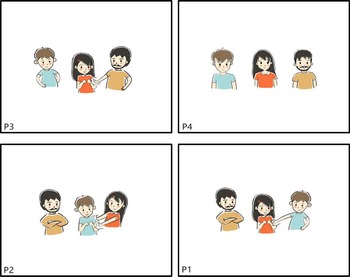
Many previous studies have used the picture-sentence matching task to investigate children’s comprehension of passives (Perovic et al., Reference Perovic, Vuksanović, Petrović and Avramović-Ilić2014; Terzi & Wexler, Reference Terzi and Wexler2002; van der Lely, Reference van der Lely1996, etc.), but the experimental picture, as shown in Figure 1, does not meet the felicity condition for the long passive (e.g., Ana is carried by Vuk.). According to O’Brien et al. (Reference O’Brien, Grolla, Lillo-Martin, Bamman, Magnitskaia and Saller2006), the felicity condition for the use of long passives is that there must be another person in the scene in addition to the target agent (Vuk). If not, using short passives is preferable. As a result, we adopted the task in Armon-Lotem et al. (Reference Armon-Lotem, Haman, Jensen de López, Smoczynska, Yatsushiro, Szczerbinski and Kamandulytė-Merfeldienė2016), in which there are three characters in each picture, with one serving as the agent, the second as the patient, and the third as a possible agent, to satisfy the felicitous requirement for the use of long passives, as shown in Figure 2.
The experimental picture in Perovic et al. (Reference Perovic, Vuksanović, Petrović and Avramović-Ilić2014).

A set of pictures used in the comprehension task.

The examples of stimuli under investigation were given in (13). There were 9 long passives and 9 short passives, summing up to 18 sentences in total. To build the stimuli, we used the same transitive verbs for the two passive types, such as tui “push,” ti “kick,” qin “kiss,” zhuang “bump,” pai “beat,” yao “bite,” bei “carry on back,” bao “hug,” and zhua “scratch.” A total of 11 nouns were employed to depict the animate characters involved in passives including xiaogege “brother,” xiaojiejie “sister,” shushu “uncle,” changjinglu “giraffe,” mianyang “sheep,” nainiu “cow,” gou “dog,” mao “cat,” laohu “tiger,” xiong “bear,” and shizi “lion.” The transitive verbs and nouns are familiar to Mandarin preschool children.Footnote 18 All test sentences were semantically reversible and between nine and eleven words. Each sentence was matched with a set of colored pictures. The layout of the four pictures was also provided at random for each test sentence and was consistent across all participants.

Procedure
Participants were tested individually in a quiet room in the kindergarten. The experimental items were randomized and presented to all participants in the same order. The first author was in charge of testing. Prior to the formal experiment, there was one trial for practice to ensure that the participants understood the task.
The children were then instructed to listen carefully to the experimenter and point to the picture that best matched what they heard. For example, in the condition of long passives, the experimenter pointed to the four pictures in Figure 2 one after the other, saying simultaneously Zheli you shushu, xiaojiejie he xiaogege. Zhiyixia xiaojiejie bei xiaogege tui le. (There is an uncle, a sister and a brother. Please choose the picture depicting that the sister was pushed by the brother). In the condition of short passives, the experimenter pointed to the four pictures in Figure 2 one after the other, saying simultaneously Zheli you shushu, xiaojiejie he xiaogege. Zhiyixia xiaogege bei tui le. (There is an uncle, a sister and a brother. Please choose the picture depicting that the brother was pushed.). If a child did not respond to a test sentence, the experimenter repeated it no more than three times before moving on, in which the experimenter replaced the passive marker Bei with three other passive markers, namely Jiao, Rang, and Gei, considering that in some dialects of Mandarin Chinese, Jiao, Rang, and Gei are more likely to be used as passive markers than Bei.
Data coding and scoring
When a participant correctly identified the correct picture (out of four), we coded the response as correct, while incorrect responses were coded as errors. These errors were labeled as (a) the thematic role reversal error, (b) the wrong agent/patient, and (c) the no-action error.
In the long passive condition (e.g., “Xiaojiejie bei xiaogege tui le, The sister was pushed the brother.”), if children chose P1 in Figure 2, the response was coded as correct. If children chose P2, depicting the brother being pushed by the sister, this was coded as a thematic role reversal error. If children pointed to P3, which depicts the sister being pushed by the uncle, the error was coded as a wrong agent. Finally, if children pointed to P4, it was coded as a no-action error.
In the short passive condition (e.g., “Xiaogege bei tui le, The brother was pushed.”), if children chose P2 in Figure 2, the response was coded as correct. If children chose P1, depicting the sister being pushed by the brother, this was coded as a thematic role reversal error. If children pointed to P3, which depicts the sister being pushed by the uncle, this was coded as a wrong patient. Finally, if children pointed to P4, this was coded as a no-action error.
Results
In this section, we used R (R Core Team, 2020) and lme4 (Bates et al., Reference Bates, Maechler and Bolker2012) to perform the generalized linear mixed model (Gallucci, Reference Gallucci2019). The generalized linear mixed model was compromised with maximal random effects and was successively simplified when the model failed to converge (Barr et al., Reference Barr, Levy, Scheepers and Tily2013).
In total, 674 correct responses were counted in the comprehension of long and short passives, with 317 correct responses obtained in long passives and 357 in short passives. Table 2 indicates the numbers, percentages, means, and standard deviations of correct responses in each group in both conditions, which is visualized in Figure 3. Descriptively, children with DLD and TDY children exhibited better performance on short passives than long passives, whereas TDA children reached the ceiling level in both conditions. In addition, children with DLD performed worse than any of the two groups of TD children.
Number (N), percentage (%), mean (M), and standard deviation (SD) of correct responses in the comprehension of passives by each group

Percentage of accurate and wrong responses in the comprehension of passives by each group (accuracy = accurate responses; LP = long passive; SP = short passive).

We fitted the correct responses into a mixed-effects model with the sentence type (i.e., long passives, short passives) and children type (i.e., DLD, TDY, TDA) as fixed factors, and items and subjects as random factors. As shown in Table 3, there was a significant effect of sentence type (x 2 = 37.17, p < .05), revealing that short passives were comprehended better than long passives (estimate = 1.64, SE = 0.58, Wald Z = 2.81, p <.05). There was also a significant effect of children type (x 2 = 7.92, p < .001). More precisely, both TDY children and TDA children comprehended passives better than children with DLD (TDY vs DLD: estimate = 1.99, SE = 0.50, z = 3.92, p < .001; TDA vs DLD: estimate = 3.80, SE = 0.66, z = 5.73, p < .001) and TDA children comprehended passives better than TDY children (TDA vs TDY: estimate = 1.81, SE = 0.68, z = 2.66, p < .05).
Fixed effects in the generalized mixed model in the comprehension of passives (N = 810, log-likelihood = −274.259)

To further examine whether there was any difference in the comprehension of long and short passives for each group separately, we compared the accuracy of each group in the two conditions. As shown in Table 4, children with DLD and TDY children performed significantly better in the short passive condition than the long passive condition, whereas TDA children did not.
Simple effects of sentence type in the generalized mixed model in the comprehension of passives (N = 810, log-likelihood = −274.259)

This pattern holds true for individual children within each group as well. Table 5 reports the individual analysis of each group performing above chance in the two conditions. Recall that children were required to choose 1 picture from a set of 4 in each trial, and there were 9 trials in each condition. Children’s performance was identified as above-chance level when they made 6 correct responses out of 9 in each condition in accordance with the binomial distribution.
Percentage (%) and number (N) of participants who performed above chance (i.e., six correct responses out of nine) in the comprehension of passives by each group

Descriptively, more children with DLD and TDY children performed above chance in short passives compared to long passives. In contrast, the TDA children reached the ceiling level in both conditions.
Then, we examined whether the three groups of children differed in the two passives separately. The accuracy of each sentence type was then compared across the three groups. Table 6 shows that children with DLD performed worse in the long passive condition than the two groups of TD children, and TDY children performed significantly worse than TDA children. In the short passive condition, children with DLD performed significantly worse than both TDY and TDA children. However, there is no significant difference between the two groups of TD children.
Simple effects of children type in the generalized mixed model in the comprehension of passives (N = 810, log-likelihood = −274.259)

To summarize, DLD and TDY children demonstrated a short over long passive advantage in the comprehension task, whereas TDA children performed equally well in both conditions. Children with DLD comprehended passives significantly worse than their TD peers, and they even fell behind TDY children, who were, on average, 17 months younger.
Error analysis
We conducted the error analysis in the three groups to investigate the deficit of children with DLD in the comprehension of passives, see also Figure 3. As shown in Tables 7 and 8, the thematic reversal error accounted for the most significant proportion of errors in the three groups. In addition, the wrong agent was found in children with DLD and TDY children in the condition of long passives, and the wrong patient was only found in children with DLD in the condition of short passives.
Percentage (%), number (N), mean (M), and standard derivation (SD) of wrong responses in the comprehension of long passives by each group

Percentage (%), number (N), mean (M), and standard derivation (SD) of wrong responses in the comprehension of short passives by each group

The results of the Kruskal–Wallis one-way ANOVA test revealed a significant difference in the thematic reversal error made by three groups in the two conditions, respectively (long passives: x 2 = 24.918, p < .001; short passives: x 2 = 9.818, p < .05). Specifically, in the condition of long passives, children with DLD committed significantly more thematic reversal errors than TDY children (x 2 = 13.433, p < .05) and TDA children (x 2 = 22.767, p < .001). However, there was no significant difference between TDY children and TDA children (x 2 = 9.333, p > .05). In the condition of short passives, children with DLD committed significantly more thematic reversal errors than TDA children (TDA vs DLD: x 2 = 12.633, p < .05). However, there was no significant difference between children with DLD and TDY children (x 2 = 8.267, p > .05) and between TDY children and TDA children (x 2 = 4.367, p > .05).
Although both children with DLD and TDY children made wrong agent responses in the condition of long passives, the Mann–Whitney U test indicated no difference (U = 84, z = −1.463, p > .05). The wrong patient error was only committed by children with DLD in the condition of short passives.
To summarize, children with DLD had lower accuracy rates in the comprehension of long and short passives. In terms of error patterns, children with DLD opted more for thematic role reversal errors than TDA and TDY children in the condition of long and short passives. Furthermore, children with DLD exhibited incorrect agent/patient responses, which were not observed in TDA children.
General discussion
This is the first study investigating the comprehension of passives in Mandarin children with DLD using the sentence-picture matching task. The results indicate that Mandarin children with DLD and TDY children had difficulties with long passive structures, whereas TDA children had a ceiling-level performance in both long and short passive comprehension.
Many of the theories presented above are insufficient to account for short–long passive asymmetry in children with DLD. First, if children with DLD use the NVN strategy to interpret the long passive, they are expected to have a floor level of comprehension accuracy. When required to interpret the long passive (13a), repeated here in (14a), the children will consider the noun xiaojiejie “brother” to be the agent and the noun xiaogege “brother” to be the patient. This strategy predicts that children with DLD always make thematic role reversal errors. However, in the condition of long passives, children with DLD made 35% thematic role reversal errors, which contradicts the account.

Second, the ACDH’s prerequisite is the A-movement analysis of the passive. However, following the Topic Analysis, Mandarin passives are better analyzed as the Topic Structure with an A’-movement. Consequently, the ACDH cannot predict how children in this study will behave. Third, the UFH predicts late passive acquisition in English-speaking children. As previously stated, the UFH cannot be extended to Mandarin passive acquisition, because it is based on the Smuggling Approach to the English passive, which does not apply to the Mandarin passive (Liu & Huang, Reference Liu and Huang2016). According to the AIH, a variant of the UFH, children are delayed in acquiring passives that necessitate A-movement across a structurally intervening argument. Again, this hypothesis cannot predict how Mandarin children will respond in the comprehension of passives, because A-movement analysis is not applicable to Mandarin passives.
In summary, the ACDH and the UFH (AIH) are not applicable to the Mandarin passives. The advantage of short over long passives observed in Mandarin children with DLD and TDY children in this study is consistent with the prediction of the EFUH (Yu et al., Reference Yu, Wang and He2023).
According to the Topic Analysis of Mandarin passives discussed above, the subject noun xiaojiejie “sister” moves from the Complement position of the matrix predicate tui “push” to the Topic position of the CP2 in the long passive (14a). Therefore, the relocated element xiaojiejie “sister” must cross another noun xiaogege “brother,” which has the featural configuration of [+N]. As children with DLD and TDY children cannot consistently represent the moved element’s EF [+Topic], the moved element xiaojiejie “sister” and the intervener xiaogege “brother” share the same formal feature [+N] in their grammar. As a result, the intervention effect arises in long passives, which prevents children from identifying the thematic role of the moved element, resulting in difficulty in correctly comprehending long passive sentences in the taskFootnote 19 . It is worth noting that given the Topic Analysis, the Subset Account of Friedmann et al. (Reference Friedmann, Belletti and Rizzi2009) would yield similar predictions. According to this account, subset calculations would be more challenging for children with DLD compared to TD children.
However, in Mandarin short passives, there is no intervention effect, because the potential intervener is a pro (pronominal) and, thus, of a different type than the crossing element. As a result, the moved element xiaogege “brother” can establish structural dependency with its copy, allowing children with DLD and TDY to recognize the thematic role of the moved element correctly.
van der Lely (Reference van der Lely1996) reported a similar finding, indicating that English children with DLD comprehended short passives better than long passives. According to the RDDR and ACDH, the researcher claimed that English children with DLD had difficulty identifying the thematic role of the moved element in long passives, because the dependent relationship between the moved element and its copy is not represented. The study attributes improved comprehension of short passives to using an adjectival strategy in the short passive condition. Nevertheless, this explanation cannot be extended to the comprehension of Mandarin passives, as discussed above.
We can extend the EFUH to the comprehension of passives in English children with DLD. According to Gehrke & Grillo (Reference Gehrke and Grillo2009), the English passives can be better analyzed as a Topic Structure. In English long passives, a stative subevent of a structurally complex event was moved to a topic position at the edge of Voice, where it will cross the external argument in the by-phrase. According to the EFUH, English children with DLD will have difficulty understanding long passives, because they cannot fully represent the EF (Topic) of the moved element. However, since there is no external argument, no intervention effect will arise in the short passive. If the preceding analysis is correct, the EFUH can account for the asymmetry of the comprehension of long and short passive sentences in Mandarin and English children with DLD and young TD children.
One anonymous reviewer points out that the findings of acquisition studies in other languages contradict the above analysis. Many researchers have attributed the problems with the object relative in young children and children with DLD to a structural intervention (e.g., Friedmann et al., Reference Friedmann, Belletti and Rizzi2009; Yu et al., Reference Yu, Wang and He2023, among many others). If we adopt a Topic Structure analysis to the passive, it follows that the long passive is equivalent to the object relative in terms of ease of acquisition, since there is the structural intervention in both structures. However, some researchers have discovered that the long passive is easier than the object relative in German children (Hamann et al., Reference Hamann, Chilla, Gagarina, Abed and Di Domenico2017; Ruigendijk & Friedmann, Reference Ruigendijk and Friedmann2017). Belletti & Rizzi (Reference Belletti, Rizzi, Piatelli-Palmarini and Berwick2012) have found that Italian children aged 5 tend to transform an object relative into a subject relative through passivation to avoid the structural intervention in the object relative. The data appear to imply that the intervention effect is missing in the long passive, since it is easier to acquire than the object relative.
However, the results of van der Lely (Reference van der Lely1996) reveal that English children with DLD (aged 9;3–12;10 years) cannot interpret the passiveFootnote 20 as well as their language ability controls. The findings indicate that the passive is comparable to the object relative in terms of ease of acquisition, because many studies have found that DLD children (aged around 11;0 years) cannot acquire the object relative (e.g., Friedmann & Novogrodsky, Reference Friedmann and Novogrodsky2004). To fully explain the cross-linguistic differences is beyond the scope of this study. One probable explanation is that the Mandarin and English passive is a Topic Structure with an A bar movement, in which the intervention effect is still at play, whereas the German and Italian passive is the A-movement structure. According to Friedmann et al. (Reference Friedmann, Belletti and Rizzi2021), A-movement occurs before any instance of A bar movement. In future studies, we need to directly compare the acquisition of the long passive and the object relative clause in children with and without DLD to ascertain which structure is acquired first.
It should be noted that the intervention effect did not appear in TDA children’s comprehension of long passives, according to the findings of this study. TDA children reached the ceiling level in interpreting the two passives, indicating that older Mandarin TD children (Age range: 4;3–5;8 years) can fully represent the EF in passives.
This study also discovered that when children with DLD failed to interpret passives, they made thematic role reversal and agent/patient errors. Non-target responses could reveal more about the nature of the deficit in this population.
First, we propose that, in keeping with the EFUH, the RM effect leads to thematic reversal errors in the comprehension of long passives in children with DLD. As previously discussed, children with DLD are unable to establish the dependency between the moved element and its copy due to the intervention effect in long passives, resulting in their inability to locate the thematic role of the moved element. At this juncture, we need to address the question of which strategies children with DLD will adopt to interpret the long passive.
Previous studies suggest that children with DLD may depend on linear word order to interpret the sentence (e.g., Chapman, Reference Chapman, Kavanagh and Strange1978). They, for example, will interpret the first noun xiaojiejie “sister” as the agent and the second noun xiaogege “brother” as the patient, when comprehending the long passive (xiaojiejie bei xiaogege tui le “The sister was pushed by the brother”), which will lead to the thematic role reversal errors. If this analysis is correct, children with DLD will consistently make thematic reversal errors in the comprehension task of long passives. However, this prediction runs counter to the results in this study, which reveal that the thematic role reversal error accounted for 37% of total responses in children with DLD.
Following Friedmann & Novogrodsky (Reference Friedmann and Novogrodsky2004), we propose that children with DLD may use their syntactic knowledge to determine the thematic role of a noun that has not been moved in the long passive. To be more specific, as the second noun xiaogege “brother” has not been moved in the long passive (14a), children with DLD can determine its thematic role as the agent. At the same time, children with DLD are more likely to assign the first noun xiaojiejie “sister” as the agent, because of the linear word order. As a result, there are two agent nouns in a single sentence. Thus, children with DLD will be forced to adopt a guessing strategy to reinterpret the long passive, resulting in a situation in which they will commit thematic role reversal errors at a rate of 50%.
The syntactic representation of the EF in children with DLD is unstable rather than completely missing, according to the EFUH. As a result, children with DLD may use their syntactic knowledge to represent long passives correctly in some cases. That means that the percentage of thematic role reversal errors is less than 50%, which is supported by the findings of this study.
The EFUH can explain the Mandarin data in a better way, because neither the RDDR nor the SA can explain this fact. Furthermore, the comprehension of long passives in children with DLD confirms the assumption of EFUH that children with DLD have varying degrees of language impairment, which cannot be accounted for by other theories.
It should be noted that in the case of short passives, children with DLD also produced a certain proportion of thematic reversal errors (23%). According to the above analysis, short passives do not exhibit an intervention effect, because the potential intervener between the moved element and its copy is a pro. In terms of lexical NP restriction, the arbitrary pro is pronominal in nature and belongs to a different type than the crossing element (Friedmann et al., Reference Friedmann, Belletti and Rizzi2009). As a result, the pro does not cause interference, and thus, no RM effect will be observed in short passives. According to the above analysis, children with DLD should not have difficulty locating the thematic role of the moved element, which contradicts the findings of this study.
It is plausible that thematic reversal errors result from an avoidance strategy used by the population with DLD when they struggle to handle complex structures.Footnote 21 Tuller et al. (Reference Tuller, Henry, Sizaret and Barthez2012) discovered that French-speaking adolescents with DLD displayed the avoidance strategy not only by exhibiting a low frequency of complex structures but also through unsuccessful attempts at subordination in their spontaneous language samples. The researchers posited that these avoidance strategies are used to compensate for their impaired language abilities. It is reasonable to assume that the strategies can also be adopted by the participants in this study, because children with DLD may be more vulnerable to syntactic complexity due to their less-developed language skills compared to adolescents with DLD.
Jakubowicz (Reference Jakubowicz2005) proposed a method to measure syntactic complexity by counting the number of syntactic operations in a sentence, which means that sentences with more syntactic operations are considered to be more derivationally complex.
In the context of Mandarin passives, the Topic Analysis indicates that they are more complex than their corresponding active sentences. When children with DLD are tasked with understanding a short passive sentence in Mandarin, they are prone to actively disregard the passive marker Bei, leading them to interpret the sentence as an active one, which is less derivationally complex. Notably, in Mandarin, a short passive sentence without the passive marker functions as an active sentence. For instance, children with DLD may interpret the short passive (e.g., xiaogege bei tui le “The brother was pushed”) as an active sentence by disregarding the passive marker Bei. As a consequence, the short passive sentence will be interpreted as xiaogege tui le “The brother pushed” in this context, in which the subject is assigned the role of the Agent. To conclude, this avoidance strategy, wherein the passive marker Bei is overlooked, leads to the thematic-role reversal error in the condition of the short passive.
It should be noted that this strategy will not always influence the choice of children with DLD, because the EFUH predicts that children with DLD can sometimes capitalize on their syntactic knowledge to interpret short passives.
Children with DLD, on the other hand, will not use this canonical word order strategy to interpret Mandarin long passives. If children with DLD ignore the passive marker Bei when interpreting the long passive (e.g., xiaojiejie bei xiaogege tui le “The sister was pushed by the brother”), the sentence they process is ungrammatical in Mandarin (*xiaojiejie xiaogege tui le “*The sister, the brother pushed”). The sentence’s word order is NNV, which is incompatible with Mandarin’s basic word order of NVN. In this case, children with DLD will reanalyze the sentence using other available interpretation strategies.
The second kind of wrong response is the wrong agent/patient responses in children with DLD and TDY children. We speculate that the underlying problem of the agent/patient errors is a naming error, which has nothing to do with the deficit of syntactic representation of the passive. This reasoning is in line with the previous studies, which demonstrate that lexical difficulty emerges as one of the hallmarks differentiating children with DLD from their TD peers (e.g., McGregor et al., Reference McGregor, Oleson, Bahnsen and Duff2013; Sheng et al., Reference Sheng, Yu, Su, Wang, Lu, Shen and Lam2023). For example, children with DLD may confuse xiaogege “brother” with shushu “uncle” when required to interpret the long passive (e.g., xiaojiejie bei xiaogege tui le “The sister was pushed by the brother”), because these two animate words share some semantic features. As a result, they interpret the sentence as xiaojiejie bei shushu tui le “The sister was pushed by the uncle,” which leads to the agent error in the long passive condition. In a similar vein, in the short passive condition (xiaogege bei tui le “The brother was pushed”), if children with DLD confuse xiaogege “brother” with xiaojiejie “sister,” they interpret the sentence as xiaojiejie bei tui le “The sister was pushed,” leading to the patient error.
Naming errors are essentially instances of lexical impairments.Footnote 22 Many studies have shown that children with DLD have impairments of the lexicon. Sheng & McGregor (Reference Sheng and McGregor2010) discovered that preschool children with DLD have limited vocabularies, poor elaboration of the semantic information underlying lexical words, and atypical configuration or access to their mental lexicon. Throughout the preschool years, children with DLD appear to have delayed lexical access to understanding and conveying words’ meanings. According to McGregor et al. (Reference McGregor, Oleson, Bahnsen and Duff2013), the population with DLD appears to have less stored information and produces fewer semantic associations to differentiate similar semantic neighbors compared to their age mates. If two entity words convey strikingly similar semantic or perceptual meanings, children with DLD are thus likely to produce naming errors.
To summarize, after investigating the possible underlying causes of different types of errors in the comprehension of Mandarin passives in Mandarin children with DLD, we conclude that there are three reasons for the disparity between children with DLD and TD children. First and foremost, according to EFUH, the thematic role reversal error in the comprehension of long passives by children with DLD can be attributed to their impairment of syntactic knowledge. Second, thematic role reversal errors in the short passive condition can be accounted for by using a canonical word order strategy, which is in line with the NVN strategy (Bever, Reference Bever and Hayes1970: 298). Third, agent and patient errors can be attributed to this population’s deficit in vocabulary knowledge.
Conclusion
In conclusion, the results show that Mandarin children with DLD exhibit a severe deficit in passive acquisition. We suggest that underspecified EFs of moved elements cause the RM effect, which results in the asymmetry of long and short passives. In theory, this study shows that the EFUH can capture the characteristics of children with DLD in acquiring both English and Mandarin passives and may also explain the nature of errors committed in the task. Empirical evidence suggests that comprehension of passives can be used to differentiate Mandarin children with DLD from TD children.
Given that this study primarily examined the comprehension of passives in children with and without DLD, further research should address whether similar error patterns can be found in the domain of the production of passives.
Acknowledgments
We would like to express our gratitude to everyone who participated in the experiments reported. Additionally, we are deeply indebted to Dr. Dai Huilin, Dr. Gong Chuanjie, Dr. Song Weiqi, Dr. Xing Xueming, and Luo Xiaoyan for their assistance in conducting experiments and data collection and to Dr. Ning Chunyan, Dr. Thomas Hun-tak Lee, Dr. Wu Zhuang, and two anonymous reviewers for their insightful comments and advice, which significantly improved this paper.
Funding statement
We gratefully acknowledge funding from the Henan Province Philosophy and Social Science Project (2022BYY011).