




No CrossRef data available.
Constrained sentence production in probable Alzheimer disease
Published online by Cambridge University Press: 17 May 2004
Abstract
This study examines the speech of older adults with and without probable Alzheimer disease (PAD) when they produce sentences that include a verb and two nouns provided by the experimenter. Compared to healthy controls, individuals with mild PAD produced fewer correct responses as well as anomalous proportions of active and passive sentences. Responses were particularly impaired when canonical sentence structures had to be suppressed and unusual sentence structures generated. The sentence production accuracy of individuals with PAD correlated strongly with performance on a picture-naming task. The findings support a theory in which the ability to fully activate semantic representations is impaired in PAD, resulting in proportional impairments on single-word and sentence production tasks.
Information
- Type
- Articles
- Information
- Copyright
- © 2004 Cambridge University Press
Descriptions of speech production in probable Alzheimer disease (PAD) present the language researcher with a paradox. On one hand, individuals with PAD perform poorly on production tasks that require the generation of specific nouns or verbs with their responses in tasks containing word finding errors, dysfluent speech, and many lexical substitutions (Albert, 1989; Bayles, 1982; Chertkow & Bub, 1990; Hier, Hagenlocker, & Shindler, 1985; Kempler, 1991; Kempler & Zelinski, 1994; Nicholas, Obler, Albert, & Helm–Estabrooks, 1985). On the other hand, spontaneous speech in PAD is frequently described as being preserved with respect to fluency and grammaticality (Bayles, 1982; Kempler, Curtiss, & Jackson, 1987; Kirschner, 1982; Patel & Satz, 1994; Schwartz, Marin, & Saffran, 1979; but also see Altmann, Kempler, & Andersen, 2001), although it also has impoverished semantic content as shown by the abundance of nouns and verbs with lowsemantic content and the overuse of pronouns (Bschor, Kuehl, & Reischies, 2001; Kempler & Zelinski, 1994; Nebes, 1989; Ripich & Terrell, 1987). This limited information content in speech can distinguish between individuals with PAD and their healthy peers and may be related to a breakdown in semantic processing ability (Bucks, Singh, Cuerden, & Wilcock, 2000; Forbes, Venneri, & Shanks, 2002). To explain this, Altmann et al. (2001) suggest that the semantic representations of super-ordinate and generic words (e.g., animal, thing, stuff) consist of the high frequency semantic features that are shared by members of a category, and this increased frequency makes these shared features easier to activate. Thus, less specific words might be easier to access than more specific words that also require the activation of less frequent distinguishing features. Based on this reasoning, it may be the option to use words with low semantic content in conversation that allows the speech of individuals with PAD to sound relatively preserved. If this is true, then a task requiring the incorporation into sentences of nouns and verbs that are specific (i.e., with high semantic content) may lead to impairments in sentence production performance. This possibility is tested in the current research.
Other findings in the literature suggest that sentence production in PAD should be somewhat impaired. For example, speakers with PAD have particular difficulty using and distinguishing verb meanings (Grossman, Mickanin, & Onishi, 1996; White–Devine et al., 1996). Full activation of a verb's meaning is crucial to the sentence production process because the argument structure information necessary for sentence construction may be either encoded as part of, or emergent from, a verb's meaning (Bresnan, 1982; Chomsky, 1982; Levin, 1993). Consequently, impairments of verb meanings might be expected to impair the ability to produce grammatical sentences. Furthermore, Bates, Marchman, Harris, Wulfeck, and Kritchevsky (1995) suggest that producing sentences with verbs that prohibit the use of the default, simple-active sentence form will be difficult for individuals with PAD. According to these researchers, production difficulty will be exaggerated in PAD if the sentence verb does not constrain the type of sentence produced to a highly frequent, overlearned sentence form or if the sentence verb requires the suppression of this high-frequency, default sentence structure. The goal of the current study is to test three hypotheses stemming from this body of research: sentence production in mild PAD will be severely impaired relative to that of healthy speakers when they are required to include specific nouns and verbs in their sentences; increases in production errors will be associated with verbs that prohibit the canonical, simple-active sentence form; and increases in production errors will be exaggerated when very frequent, canonical sentence structures must be suppressed.
CONSTRAINED SENTENCE PRODUCTION IN PAD
Bates et al. (1995) published the first study using a constrained sentence production task to examine aspects of sentence production in PAD. In a movie-clip description task, participants described a one- or two-part transitive event from the point of view of either the agent (i.e., the entity doing the action) or the theme (i.e., the entity affected by the action). Individuals with PAD performed normally when describing a single action from the agent's perspective, which allowed the use of the default English sentence form, a simple active sentence with an animate subject. However, performance was impaired in more complex conditions. The PAD group had significant difficulty correctly describing both parts of a two-event movie clip in a single sentence. This difficulty was attributed to the well-known memory deficit in PAD: Bates et al. (1995) postulated that speakers were unable to activate the semantic representations of both actions at once. Individuals with PAD were also impaired in describing events from the point of view of the theme, which required a passive sentence. These researchers attributed the difficulty with passives to impairments affecting the ability to suppress highly accessible simple-active sentence structures in order to generate more appropriate but unusual sentence structures like passives. Further, they argued that the difficulty producing passive sentences in appropriate conditions was due to a grammatical deficit analogous to the lexical deficit in PAD: both cause problems finding the right target and there is a reliance on high frequency, empty forms and occasional off-track substitutions. To account for this pattern, Bates et al. (1995) suggested that individuals with PAD have a general deficit in controlled processing that impairs the ability to generate and decide among a set of structural or lexical alternatives.
In a companion study to the current paper, Altmann and colleagues (2001) compared the speech production performance of individuals with PAD and healthy older adults (HOAs) in spontaneous speech and a constrained speech task. Compared to HOAs, individuals with PAD produced many more errors on closed class words (e.g., auxiliary verbs, determiners, and prepositions) and morphosyntax (e.g., subject–verb agreement, argument structure choice), as well as the expected errors on pronouns and open class words (e.g., nouns, verbs, and adjectives) in spontaneous speech. Furthermore, the PAD group produced more closed class and morphosyntactic errors in the constrained task than they had in spontaneous speech, although the frequency of errors on the two tasks was highly correlated. Altmann et al. (2001) attributed this pattern of results to differences in task demands. The conversational speech required speakers to generate appropriate content words and the corresponding syntax to encode them, thus allowing the substitution of general words and pronouns when more specific words were not available. Consequently, errors were found across all word types and aspects of grammar. On the other hand, the constrained production task provided participants with open class words, a verb and two nouns, to use in a sentence and, thus, minimized lexical access demands. However, in order to produce a meaningful, grammatical sentence using these words, participants had to fully activate the meanings of the three words and any unusual morphosyntactic requirements associated with them. In this case, errors primarily occurred with closed class words and morphosyntax, just those elements that speakers had to provide themselves in order to produce a grammatical sentence. Altmann et al. (2001), following Bates and Wulfeck (1989), suggested that grammatical information, such as that governing subject–verb agreement and closed class word use, might be semantically encoded like lexical information is. If this were so, deterioration within the semantic system would impair the use of grammatical information just as it impaired access to and use of open class lexical items. Thus, Altmann et al. (2001) supported the idea that the grammatical and lexical deficits of individuals with PAD could stem from the same source; however, these researchers asserted that the primary cause of the impairment was deterioration within the semantic network rather than deficits in controlled processing as suggested by Bates et al. (1995). The current study presents a more complete analysis of the performance of the participants in Altmann et al. (2001), concentrating on effects associated with stimulus manipulations rather than on grammatical and morphosyntactic errors.
Kempler and colleagues (Almor, MacDonald, Kempler, Andersen, & Tyler, 2001; Kempler, Almor, MacDonald, & Andersen, 1999; Kempler, Almor, Tyler, Andersen, & MacDonald, 1998) also addressed the issue of task and stimulus demands on the performance of persons with PAD. In Kempler et al. (1999) the poor performance of individuals with mild PAD on an off-line sentence comprehension task correlated with working memory capacity. However, individuals with PAD showed preserved performance in an on-line sentence-processing task, with normal sensitivity to subject–verb agreement errors and verb subcategorization violations (e.g., poured with the cereal, waited the bus). Kempler et al. (1999) concluded that the tasks on which individuals with PAD performed relatively normally did not require the full activation of semantic representations; people could perform adequately on them with the activation of only a few high-frequency, local cues, such as those involved in subject–verb number agreement. Furthermore, they asserted that the tasks on which these same individuals performed poorly (e.g., picture naming and sentence–picture matching) were tasks that required the full activation of semantic representations. These researchers also agreed with Bates et al. (1995) that a single impairment might underlie lexical and grammatical processing deficits in PAD, and they argue that explicit language tasks that require controlled, explicit processing also require the full activation of semantic representations. Thus, they hypothesized that poor performance on off-line sentence comprehension tasks was attributable to deterioration in the semantic network that affected the ability to fully activate semantic representations.
All of these studies highlighted the variability in performance of individuals with PAD across similar tasks or conditions within a task. In Bates et al. (1995), individuals with PAD were impaired at generating appropriate sentence frames to encode a noncanonical viewpoint using a passive sentence but performed similarly to HOAs when producing active sentences from the canonical point of view of the agent. In Altmann et al. (2001), individuals with PAD produced severely impaired output in a constrained sentence production task in which they were required to use specific nouns and verbs, but their performance in spontaneous speech was much less impaired. In the studies of Kempler and colleagues (1998, 1999), participants showed normal sensitivity to local grammaticality violations in an on-line task but impaired performance on a sentence–picture matching task. Further, each of these studies suggested that these patterns of performance could stem from a single underlying deficit that impaired both lexical and grammatical abilities, although the three studies suggested slightly different etiologies for this impairment. One key element, however, was not discussed in these studies of sentence level processes—the crucial role of the sentence verb in sentence production and comprehension. A deficit in verb use would impair language use in a number of ways, as discussed below.
VERB IMPAIRMENTS IN ALZHEIMER DISEASE
Verbs are crucial to sentence construction because their argument structures provide the framework determining the types of nouns that can be used and the syntactic positions these nouns must occupy (e.g., Altmann, 1999; McRae, Ferretti, & Amoyte, 1997; Tanenhaus, Carlson, & Trueswell, 1989). Argument structures are theorized to be part of a verb's semantic representation (Bresnan, 1982; Chomsky, 1982; Levin, 1993). Consequently, a semantic impairment could cause difficulty activating verb argument structures, thus impairing the ability to compose grammatical sentences (Berndt, Mitchum, Haendiges, & Sandson, 1997).
Researchers have documented that the semantic impairment in individuals with PAD affects both nouns and verbs (Albert, 1989; Bayles, Tomoeda, & Trosset, 1992; Grossman et al., 1996; Huff, Corkin, & Growdon, 1986; Martin & Saffran, 1996; Nicholas, Obler, Au, & Albert, 1996; Smith, Faust, Beeman, Kennedy, & Perry, 1995; White–Devine et al., 1996). Most studies of verb use in PAD examined deficits in single word comprehension or production (Grossman, Mickanin, Onishi, Robinson, & D'Esposito, 1997; Robinson, Grossman, White–Devine, & D'Esposito, 1996; White–Devine et al., 1996). A few reports of verb impairments in PAD identified specific deficits in the recognition and use of verb argument structures. Pye, Cheung, and Kemper (1992) examined the ability of healthy young adults, older adults, and individuals with PAD to detect errors affecting argument structures and complex syntactic constraints. Individuals with PAD were impaired at distinguishing argument structure violations relative to HOAs, although the two groups performed at a similar (impaired) level when judging the grammaticality of complex syntactic structures. Kemper (1997) also documented impairments in individuals with PAD that affected the ability to detect argument structure violations in a grammaticality judgment task that contrasted two verb types, “squirt” and “drip” verbs (see Levin, 1993). These two verb types differ in the types of sentence structures they allow: both appear in the structure “Jane dripped/squirted water into the sink”; however, only “squirt” can occur in the sentence “Jane squirted/*dripped the sink with water.” In this task, participants with PAD accepted as grammatical both sentence structures with both verb types. Similarly, Grossman et al. (1996) tested individuals with PAD on a grammaticality judgment task and found impaired awareness of argument structure restrictions associated with motion and cognition verbs. Thus, studies of PAD have found impairments in producing and comprehending verbs and in detecting argument structure violations; however, there have been no studies of the effects of these impairments on their sentence production.
A deficit that impairs the ability to fully activate word meanings might lead to a variety of speech difficulties, such as dysfluencies, grammatical errors, or missing words. Levelt (1989) suggested that sentence production dysfluencies arise due to speakers recognizing either that they have made an error in information or grammar or that a different approach to the current topic may be more appropriate. Moreover, speakers with a semantic impairment like PAD who are constrained to include specific words in a sentence may not be able to immediately determine how these words are related, leading to the testing of different word arrangements to determine how the words might fit together in a sentence. In this case, as well as in Levelt's examples, dysfluencies would signal difficulties with production. Furthermore, the inability to fully activate verb meanings could lead to failures in activating verb-specific argument structures or morphosyntactic information, resulting in the use of inappropriate, high frequency sentence structures, such as simple-active sentences with animate subjects, when these are prohibited by the verb type or the morphosyntactic form of the verb. For example, if argument structure information is unavailable, speakers may produce ungrammatical sentences like “*Paul bored the book,” whereas if morphosyntactic information is unavailable, they may produce sentences like “*Fran hidden the candy.” From a different point of view, closed class, grammatical formatives like auxiliary verbs and determiners theoretically are accessed secondarily to verb or noun representations (Levelt, 1989); that is, this information can only be accessed after the verb or noun in question has been activated. Consequently, closed class words might be omitted or substituted if the activation of the nouns and verbs in a sentence is slowed or incomplete. Finally, when a set of specific words must be included in a sentence, semantic impairments or memory limitations on the amount of information that individuals with PAD can activate at one time may lead to the omission or substitution of one or more of the specified words. Any or all of these difficulties might be found in the sentence production of individuals with PAD when they have difficulty activating word meanings.
THE CURRENT STUDY
The current study tests the hypotheses that sentence production in PAD is impaired when the speaker must include specific nouns and verbs in a sentence and that this will be exaggerated when the sentence verb puts unusual argument structure or morphosyntactic demands on the sentence production process. The constrained sentence production task at the heart of the study was designed to elicit the production of passive sentences by manipulating the verb type and the order and animacy of nouns in the stimuli. In this task, participants were required to create a sentence incorporating stimuli that included two nouns and a verb from one of three types with different syntactic requirements. Both of the two experimental verb types required sentence structures that differed from the default, canonical form (i.e., a simple-active sentence with an animate subject). Consequently, both experimental verb types necessitated suppressing the overlearned simple-active transitive sentence structure and generating alternative structures, processes hypothesized to be particularly impaired in PAD (Bates et al., 1995). For example, one experimental verb type consisted of irregular past participles, such as hidden, forgotten, and thrown. These verbs are very frequent in the language but occur only in a limited number of sentence constructions, such as the perfective (e.g., “Fran had hidden the candy.”) and various kinds of passives (e.g., “Fran's candy was hidden. The candy was hidden by Fran.”). However, they cannot occur in simple past tense sentences (e.g., “*Fran hidden the candy.”). The second experimental verb type has an unusual argument structure: in an active sentence it assigns a theme to the sentence subject position and an animate experiencer to the direct object position (e.g., “Kelly bored Paul. The book bored Paul.”). These theme-experiencer (TE) verbs are used more frequently in passive sentences than other transitive verbs (Altmann & Kemper, 2004a; Ferreira, 1994; Ferreira, 1996). A key characteristic of this verb type is that it allows a relatively rare construction, an active sentence with an inanimate subject and an animate direct object (e.g., “The book bored Paul.”). These sentences are relatively rare, because animate-subject sentences are highly preferred in English (Bock, 1986a, 1986b, 1987; Bock, Loebell, & Morey, 1992; McDonald, Bock, & Kelly, 1993). Thus, when a TE verb is accompanied by an animate and an inanimate noun, if speakers choose an animate subject, they must produce a passive sentence (e.g., “Paul was bored by the book.”). The stimuli also varied the order of the nouns that accompanied these verbs, so that some trials encouraged passives and others encouraged actives.
In summary, the task required the speaker to generate a sentence structure from a set of options (i.e., actives or passives), and it also required the suppression of an overlearned sentence structure, simple active sentences with animate subjects. Furthermore, to produce a grammatical sentence with the two experimental verb types, participants had to fully activate the semantic representations of stimulus verbs in order to determine their particular syntactic requirements. These are the exact conditions that Bates et al. (1995) and Kempler et al. (1999) predicted would impair sentence production in PAD. Therefore, the performance of individuals with PAD was expected to be impaired on this task relative to that of HOAs, and difficulties were expected to cluster in responses to experimental verb types.
To evaluate the effects of this constrained production task on the speech of older adults with and without PAD several analyses were computed. Initially, overall production accuracy was analyzed, followed by an in depth analysis of error rates. Subsequently, the distribution of active and passive sentences was examined. Finally, the error rates were compared to scores on semantic and cognitive tasks to determine if relationships existed between these measures.
METHODS
Subjects
Ten adults diagnosed with PAD using NINCDS-ADRDA criteria (McKhann et al., 1984) participated in the study. In addition, 15 HOAs were recruited through alumni newsletters, local newspapers, and senior centers in the Los Angeles area. All participants were native speakers of English, had vision and hearing sufficient for the tasks, and had no history of stroke or other neurological impairment. Means for the Mini-Mental Status Exam (Folstein, Folstein, & McHugh, 1975) distinguished the groups, MHOA=29.00, SD=1.32; MPAD=20.45, SD=1.41, t (23)=17.596, p<.0001. The groups did not differ significantly in age, MHOA=76.33 years, SD=6.95; MPAD=80.40 years, SD=6.98, t (23)=1.419, p>.15, or education, MHOA=15.7 years, SD=1.99; MPAD=15.0 years, SD=2.40, t (23)=.756, p>.40.
Materials
Stimuli contained a verb in the prominent, left-most position followed by two nouns arranged above and below the verb, as shown in Figure 1. All stimulus words appeared in 24 point Helvetica type on 5×8 in. index cards.

A sample of sentence production stimuli.
Verb stimuli consisted of 18 examples of each of three verb types: control verbs, irregular past participles, and TE verbs. Control verbs, called “normal” verbs by Ferreira (1994) and Ferreira (1996), consisted of transitive verbs that had identical past participle and simple past tense forms (e.g., carried, typed, explored). The second verb type, irregular past participles (e.g., hidden, thrown, forgotten), had distinct phonological forms for the simple past and past participle forms and a limited distribution in active perfects (e.g., had hidden), passives (e.g., was hidden), and deverbal adjectives (e.g., the hidden candy). All irregular past participles and control verbs had the same argument structure requirements: the subject of an active sentence had to be an animate agent.1
One exception is the verb loved, which is actually an experiencer-theme verb rather than an agent-theme verb. In any case, it strongly selects for animate subjects in active sentences.
Noun sets included either two proper names (e.g., Susan and Mike) or an inanimate noun (e.g., movie, toy, meeting) and a name. Each inanimate noun was a highly appropriate argument for a particular verb so that a semantic connection would be easy to make between them (e.g., poured/milk, thrilled/music, grown/roses). Noun arrangement varied so that a third of the stimuli showed a name above a name (two-name), a third positioned a name above an inanimate noun (animate-first), and a third showed an inanimate noun above a name (inanimate-first). The fourth possibility, two inanimate nouns, was not used because one of the verb types (i.e., TE verbs) required at least one animate argument.
Stimuli were divided into two lists of 27 items that were preceded by four practice trials. Each list included three examples of each of the nine conditions (3 Verb Types×3 Noun Orders). Stimuli were pseudorandomly ordered so that no more than two of any one condition appeared consecutively. The order of list presentation varied across participants. Twenty-three of 25 participants completed both lists; 1 HOA and 1 individual with PAD received only one list due to experimenter error. Error rates were low for these two participants (0 and 2 errors, respectively) and were doubled to simulate having completed both lists.
Note that the order of noun stimuli was not counterbalanced across items primarily because only a few verbs of each type could plausibly occur in the two-name condition. However, within each verb type, the verbs assigned to each noun order did not differ in lemma or past participle frequency (Francis & Kucera, 1982). More importantly, there was no difference in the ratio of past participle frequency to lemma frequency, which is related to the accessibility of active and passive argument structures (Trueswell, 1996). Furthermore, the relative frequency with which a verb form was used as a passive in text did not vary across nouns sets within a verb type.2
This figure was obtained via a text count of the times a verb form was used as a passive in the Brown corpus.
Procedure
All participants with PAD were tested at their homes or day care facilities over five sessions, each lasting less than 90 min. Each session contained a speech production task, various tests of cognitive and semantic ability, and other tasks unrelated to the current study. HOAs completed the speech production, cognitive, and semantic tasks in one test session.
Participants were handed the cards containing the stimuli one at a time and were asked to make up a grammatical sentence that included all three words. All subjects were told that they could use the words in any order and that they could add other words so that their sentences would “make sense” or “sound better.” No time limits were placed on responses. A stimulus card remained visible throughout the participant's response.
Two verbal working memory and three semantic measures were administered to participants. The first working memory task was digit span backward (Wechsler, 1987); the HOAs scored significantly higher on this measure than the PAD group, MHOA=5.7, SD=1.92; MPAD=4.0, SD=3.08, t (23)= 2.837, p<.01. The second working memory task was a digit ordering task, which has been shown to correlate highly with other types of linguistic and working memory performance in older adults with and without Alzheimer disease (Almor, Kempler, MacDonald, & Andersen, 1997; Almor, Kempler, MacDonald, Andersen, & Tyler, 1999; Altmann et al., 2001; Kempler et al., 1998, 2000; MacDonald, Almor, Henderson, Kempler, & Andersen, 2001). In this task, participants were presented with lists of digits and were required to put them into numerical order. The first level of the test used two-item lists; if subjects met criterion on this level (i.e., at least three out of four lists recalled and ordered correctly), they were tested at the next higher level. The largest sets of stimuli tested contained six items to be ordered. A subject's score was the proportion of trials completed correctly. Scores on this task were also higher for the HOAs (M=.87, SD=.12) compared to the PAD group, M=.44, SD=.29, t (23)=6.616, p<.0001.
The Peabody Picture Vocabulary Test—Revised (PPVT-R; Dunn, Dunn, Robertson, & Eisenberg, 1981) was given to all participants as a semantic measure. Scores on this task are reported as the proportion correct of 175 possible. Although PPVT scores for these individuals at the mild stage of the disease were relatively good (M=.87, SD=.09), they were still significantly below those of the healthy older group, M=.97, SD=.09, t (23)=4.131, p<.001. In addition, an untimed picture-naming task was administered only to the PAD group, because healthy elderly typically perform at ceiling on such tasks (Kempler & Zelinski, 1994). The 96-item picture-naming test included 12 items from each of eight semantic categories that varied in familiarity and prototypicality within each category. This task was presented using Psyscope on a Macintosh computer. The response scored was the most appropriate response offered. Naming scores varied from .68 to .92 correct (M=.83, SD=.10). An additional measure, the number of semantic paraphasias in naming, was computed, because this particular error type has frequently been considered a hallmark of semantic impairment (e.g., Chertkow & Bub, 1990; Hodges, Patterson, Oxbury, & Funnell, 1992; Hodges, Salmon, & Butters, 1991; Nicholas et al., 1996; Nickles, 1997; Parasuranam & Haxby, 1993), whereas other types of response, such as “I don't know” answers, may signal attentional failures (Nicholas et al., 1996). The number of semantic paraphasias ranged from 1 to 16 (M=8.70, SD=4.72). Examples of picture-naming errors that were and were not included as semantic paraphasias are shown in Table 1.

Scoring
Responses from the constrained production task were audiotaped, transcribed verbatim by a trained researcher, and checked for accuracy by the author. All responses produced by a speaker were transcribed, including fillers like um and uh, as well as self-corrections and carrier phrases. Responses were examined for dysfluent responses, lexical–grammatical errors, and omitted stimuli, examples of which are shown in Table 1. Dysfluent responses included those that began with or included uh or um or contained one or more false starts or reformulations (Levelt, 1983, 1989). Consequently, all error corrections were counted as dysfluent responses. Lexical–grammatical errors included missing or substituted auxiliaries or determiners, morphosyntactic errors, argument structure errors, and a very few content word errors on nonstimulus words (see Altmann et al., 2001, for a discussion). Only uncorrected ungrammatical elements in the final response were included in this category. Responses with missing stimuli included those final responses with uncorrected lexical substitution or omissions of stimuli. In addition to these types of difficulty, two individuals with PAD were occasionally unable to produce a sentence from the three words (N=4).
Responses were scored twice for the number of correct responses and errors of the three types presented above; interscorer reliability was high (r=.95). Correct responses were defined as responses that were fluent, grammatical and included all three stimulus words. This admittedly strict scoring method allows comparability across studies that use similar criteria for correct responses (e.g., Altmann & Kemper, 2004a, 2004b; Kemper, Herman, & Lian, 2004). An analysis of the three types of errors described above was also computed to provide a more detailed profile of the responses of these groups.
All correct responses were then classified as either actives or passives. Active sentences included simple actives (e.g., “Sam explored the cave.”) and active perfectives (e.g., “Albert had broken the toy.”) because this was the only grammatical, active form allowed for irregular past participles. Sentences falling into the passive category included full passives (e.g., “The cave was explored by Sam.”), agentless passives (“Albert's toy was broken.”), passives with alternate prepositions (“Ann was delighted with the gift.”), and adjectival constructions (“Fran found the hidden candy.”). This categorization was based on Bresnan (1982) who argues that all of these verb usages activate passive argument structures. However, to avoid controversy over this definition, the sentence type analysis was computed using only the proportion of active sentences produced. Interscorer reliability for sentence classification was high (r=.97).
RESULTS
The goal of the following analyses was to compare the sentence production of HOAs and individuals with PAD under highly constrained conditions. The first analysis examined the proportion of correct responses made by each group in response to different combinations of verb types and noun sets. The second analysis compared the types of errors made by the two groups across conditions. The third analysis examined the proportion of active sentences produced on correct trials to determine whether these two groups were sensitive to the same characteristics of the stimuli. The fourth analysis compared the proportion of correct responses and active sentences produced to measures of working memory and semantic ability to determine if a relationship existed between sentence production performance and individual differences in these abilities.
Correct responses
Correct responses were analyzed using a Group×Verb Type×Noun Set (2×3×3) analysis of variance (ANOVA) with group as a between-subjects variable and verb type and noun set as within-subjects variables. A robust main effect of group, F1 (1, 23)=39.288, p<.000, η2=.63; F2 (1, 45)=106.772, p<.000, η2=.70, reflected the fact that HOAs produced .90 of their responses correctly (SD=.13), but participants with PAD produced only .66 of their responses correctly (SD=.15). The main effect of verb type was also significant, F1 (2, 22)=13.816, p=.000, η2=.56; F2 (2, 45)=14.594, p<.000, η2=.39. Participants produced similar proportions of correct responses when using control verbs and TE verbs, MCON=.87, SD=.16; MTE=.82, SD=.18, t (24)=1.868, p=.074, but significantly fewer correct responses using irregular past participles, MIRR=.71, SD=.25, both t (24)>3.7, p<.002. Note that all multiple comparisons have been computed with alpha adjusted according to the Bonferroni method to avoid compounding error.
Verb type interacted with group, F1 (2, 22)=3.490, p=.048, η2=.24; F2 (2, 45)=3.342, p=.044, η2=.13. However, both groups seemed to show similar patterns in their responses: lower numbers of correct responses for irregular past participles than for the other two verb types. Consequently, this interaction was explored by comparing the two groups' difference scores between verb types. Difference scores between control verbs and TE verbs did not differ between groups, t (23)=1.44, p=.162, and those between TE verbs and irregular past participles only approached significance between groups, t (23)=2.206, p=.038,3
The Bonferroni correction required significance at the .018 level in this analysis.
Verb type also interacted with noun set, but this interaction was significant only by subjects, F1 (4, 20)=7.264, p=.001, η2=.59, not by items, F2 (4, 45)=1.573, p=.198, η2=.12, due likely to low power at this level of analysis (i.e., only six items per condition). This effect was secondary to the Group×Verb Type×Noun Set interaction, which was also significant by subjects, F1 (4, 20)=8.283, p=.000, η2=.62, but not by items, F2 (4, 45)=1.945, p=.119, η2=.15. This interaction, shown in Figure 2, arose because HOAs showed a simple verb type effect on accuracy, but no noun set effect. In contrast, for individuals with PAD, noun set interacted with verb type to determine the relative difficulty of conditions: the inanimate-first condition was the most impaired with both experimental verb types but was most preserved with control verbs. Furthermore, four conditions, the TE verb/inanimate-first condition and all three irregular past participle conditions, were particularly difficult for individuals with PAD, with scores ranging between .46 and .57 correct. This contrasts with their performance in the remaining five conditions in which performance ranged between .71 and .83 correct.

The proportion of correct responses produced. Individuals with PAD produced fewer correct responses than the healthy older adults. The TE verb/inanimate-first condition and the three irregular past participle conditions were most difficult for the individuals with PAD. Error bars indicate 1 standard error.
In sum, the ability of individuals with PAD to correctly respond on this task was significantly impaired compared to HOAs. Even in control conditions, participants with PAD never produced more than .83 of their responses correctly. Four conditions were particularly difficult for individuals with PAD: the TE verb/inanimate-first condition and the three irregular past participle conditions. In contrast, HOAs' responses were very accurate overall, though somewhat less so when using irregular past participles.
This analysis examined the distribution of completely correct responses made by the two groups and, therefore, provided an overview of those conditions in which successful sentence production was achieved. However, this analysis ignored the kinds of difficulties that occurred and the possibility that multiple difficulties of different types could occur within the same response. Thus, it does not yield any insight into the types and quantities of difficulties experienced by the two groups when they did have production difficulties. In order to accomplish that, an analysis of the errors produced was computed.
Error analysis
In order to get a more comprehensive picture of the actual responses of participants on this task, the current analysis examined the type and distribution of errors made by HOAs and those with PAD. To capture as much detail as possible, the dependent variable was the actual number of each error type produced: dysfluent responses, grammatical errors, and missing stimuli. These were analyzed using a (2) Group×(3)Verb Type×(3)Noun Set × (3) Error Type repeated measures ANOVA. Group was a between-subjects variable whereas verb type, noun set, and error type were within-subjects variables. The mean number of errors of each type, per condition is reported in Table 2.

As expected, this analysis duplicated several of the effects found in the above analysis; all significant effects in the analysis of correct responses were also significant in the current analysis. There were two primary differences between the two sets of findings. First, the main effect of verb type in the current analysis was again significant, F1 (2 ,22)=16.549, p=.002, η2=.43; F2 (4, 45)= 27.669, p=.000, η2=.55. However, in this analysis, there was a continuum of difficulty across the three verb types: irregular past participles (M=8.24, SD=9.71)>TE verbs (M=3.80, SD= 4.13)>control verbs (M=2.64, SD=3.46). Second, in the current analysis the three-way interaction between verb type, noun set, and group was significant in both subject and items analyses, F1 (4, 20)=8.150, p=.000, η2=.62; F2 (4,45)=2.880, p=.033, η2=.13. The magnitude of the group difference was also notable; the group with PAD averaged 29.30 difficulties on this 54 item task (SD=14.97), whereas HOAs averaged 4.27 difficulties, SD=3.37, F1 (1, 23)=41.516, p=000, η2=.64; F2 (1, 45)=97.415, p=.000, η2=.68. The following analyses deal only with error type effects.
There was a significant main effect of error type, F1 (2, 22)= 10.787, p=.001, η2=.50; F2 (2, 44)=50.220, p=.000, η2=.70. Participants produced significantly more dysfluent responses (M=1.58, SD=1.68) than grammatical errors (M=.47, SD=1.05) or missing stimuli (M=.40, SD=1.10), both t (24)>3.499, p<.003. However, the number of instances of the latter two error types did not differ, t (24)=.023, p=.982. Error type also interacted with group, F1 (2, 22)=3.441, p=.05, η2=.24; F2 (2, 44)=13.727, p=.000, η2=.38, although both groups showed the same pattern of producing a majority of dysfluent responses. However, the error rates of participants with PAD (MDYS=18.10, SD=11.05; MGE=5.60, SD=7.41; MMS=5.60, SD=9.82) were highly exaggerated compared to those of HOAs (MDYS=3.67, SD=2.55; MGE=.33, SD=1.05; MMS=.27, SD=.80).
Error type also interacted with verb type, F1 (4, 20)=3.110, p=.038, η2=.38; F2 (2, 90)=4.812, p=.001, η2=.18; because of the extreme numbers of dysfluent responses made in response to irregular past participle stimuli. In addition, noun set interacted with error type, F1 (4, 20)=4.031, p=.015, η2=.45; F2 (4, 90)=3.263, p=.015, η2=.13; reflecting similar distributions of dysfluent responses and missing stimuli across noun conditions but higher numbers of grammatical errors in the inanimate-first condition.
The Verb×Noun×Error Type interaction was significant by subjects but not by items, F1 (8, 16)=4.656, p=.004, η2=.70; F2 (8, 90)=1.359, p=.225, η2=.11; and was secondary to the significant Verb×Noun×Error Type×Group effect, F1 (8, 16)=3.696, p=.013, η2=.65; F2 (8, 90)=1.541, p=.154, η2=.12; which was also significant by subjects but not by items. These latter two item analyses are limited by low power (i.e., only six items per condition). One of the striking aspects of this distribution is the lack of grammatical errors and misused stimuli in the responses of HOAs. Thus, in several conditions individuals with PAD made types of errors that did not occur in the responses of the HOAs. This complex, four-way interaction was analyzed using three repeated measures ANOVAs, looking at noun set, group, and error type effects within each verb type, as shown in Table 2. The significance level of these three analyses was adjusted to .018 to control for the proliferation of error. The only significant effect in the analysis of control verbs was a main effect of group, F (1, 23)=23.697, p=.000. Participants with PAD made more errors than HOAs even with these verbs, but there was no effect of noun set on the distribution of these errors, nor did one type of error predominate. The analysis of errors in responses to irregular past participles showed a different pattern, with main effects of group, F (1, 23)=27.025, p=.000 (i.e., PAD>HOA), and error type, F (2, 22)=8.181, p=.002 (i.e., dysfluencies>grammatical errors and missing stimuli). In addition, the interaction between noun set, group, and error type reached significance, F (4, 20)=4.564, p=.009. With irregular past participles, responses of participants with PAD showed increases in grammatical errors in the inanimate-first condition, but they showed no noun set effects on the other two error types. In contrast, responses of HOAs only showed the error type effect described above (i.e., more dysfluencies than other errors). Responses to TE verbs showed yet a third pattern. Again, main effects of group, F (1, 23)=49.632, p=.000 (PAD>HOA), and error type, F (2, 22)=12.111, p=.000 (i.e., dysfluencies>grammatical errors and missing stimuli), were significant. In addition, the noun set effect was significant, F (2, 22)=8.396, p=.002. Responses to inanimate-first stimuli contained more errors than responses to the other two noun sets; furthermore, this effect was limited to the PAD group, leading to a Noun Set×Group interaction, F (2, 22)=10.231, p=.001.
In summary, the group with PAD made many more errors of all types compared to HOAs. The primary type of difficulty experienced on this task was dysfluency, and this finding was especially true for participants with PAD. In addition, responses to irregular past participles contained more errors for both groups, and the effect associated with irregular past participles was exaggerated for the group with PAD. Error-type effects limited to participants with PAD included increases in ungrammatical responses in the irregular past participle/inanimate-first condition and increases in all types of errors in the TE verb/inanimate-first condition. Interestingly, inanimate-first stimuli were associated with higher error rates in the PAD group for both experimental verb types but were associated with lower error rates with control verbs.
Sentence structures produced
In addition to the accuracy of responses and types of errors found, the sentence types produced across conditions were also analyzed. In particular, individuals with PAD were expected to produce fewer complex sentence structures, like the passive, and a higher proportion of simple-active sentences than HOAs. However, as illustrated in Figure 2, participants with PAD produced a large proportion of incorrect responses in several conditions; consequently, initial analyses showed they produced fewer of both active and passive sentences than HOAs did. To compensate for this, the proportions of correct responses that consisted of active and passive sentences were calculated, and the proportion of active sentences was analyzed. Considering that all correct responses were categorized as either active or passive usages, a value of 30% in this analysis indicates that participants produced 30% of their correct responses as active sentences and 70% as passive sentences in that condition. Two participants with PAD failed to produce any correct responses in one or both of the mixed animacy conditions with irregular past participles. These empty cells were replaced with condition means so as not to reduce the power of the analysis any further.
Figure 3 depicts the results of a 2×3×3 (Group×VerbType×Noun Set) ANOVA, with the dependent variable being the proportion of correct responses that were produced as active sentences. In this analysis, group was a between-subjects variable and verb type and noun set were within-subjects variables.

The proportion of correct sentences produced as actives. Active sentences for control and TE verbs were simple-active sentences (e.g., “Betty poured the milk.” “The movie shocked Sarah.”); for irregular past participles, active sentences were perfectives (e.g., “Frank had hidden the candy.”). Error bars indicate 1 standard error.
There was no significant main effect of group in this analysis (F<1); both groups produced approximately 60% of their correct responses as active sentences. The main effect of verb type was significant, F1 (2, 22)=97.277, p<.000, η2=.90; F2 (2, 45)=60.637, p=.000, η2=.73. Participants produced similar proportions of actives with the two experimental verb types, MIRR=.49, SD=.27; MTE=.42, SD=.23, t (24)=1.217, p>.20; but many more actives when using control verbs (MCON=.95, SD=.06), both t (24)>8.20, p<.000. The main effect of noun set was significant by subjects, F1 (2, 22)=8.258, p=.002, η2=.43, but only showed a trend in this direction by items, F2 (2, 45)=2.457, p=.097, η2=.10. Participants produced more actives in the two-name conditions (M=.68, SD=.17) than in the inanimate-first conditions, M=.56, SD=.15, t (24)=2.979, p=.007, and the proportion of actives produced in the animate-first conditions (M=.61, SD=.14) did not differ significantly from the other two noun conditions, both t (23)<1.85, p>.075.
Noun set also interacted with group in the subject analysis, F1 (2, 22)=6.225, p=.007, η2=.36, but this interaction was not significant in the items analysis, F2 (2, 45)=1.078, p=.349, η2=.05. This interaction was secondary to the three-way interaction between group, verb type, and noun set, pictured in Figure 3, which was significant by subjects, F1 (4, 20)=3.110, p=.038, η2=.38, and approached significance in the item analysis, F2 (2, 45)=2.444, p=.060, η2=.18. Examination of the data suggested that the two groups produced different proportions of active sentences in three conditions: the irregular past participle/animate-first and inanimate-first conditions and the TE verb/animate-first condition. Post hoc t tests with p adjusted to .018 were used to compare the proportion of actives produced by the two groups in these conditions. Compared to HOAs, individuals with PAD showed a trend toward producing fewer actives in the irregular past participle/animate-first condition (MHOA=.65, SD=.28; MPAD=.45, SD=.37), t (23)=1.787, p=.087, and produced significantly fewer actives in the irregular past participle/inanimate-first condition (MHOA=.54, SD=.27; MPAD=.26, SD=.274), t (23)=2.700, p=.013. In contrast, individuals with PAD produced more actives than HOAs in the TE verb/animate-first condition (MHOA=.18, SD=.29; MPAD=.50, SD=.32), t (23)=2.557, p=.018.
Overall, individuals with PAD showed no increase in the frequency of active sentences; however, the distribution of these varied between the two groups. First, the distribution of sentence structures did not differ between the two groups when using control verbs: all participants showed a strong preference for producing active sentences in all noun conditions with this verb type. Conversely, the sentence structure choices of the two groups diverged when using experimental verbs in mixed animacy conditions but not in two-name conditions. HOAs produced a majority of actives with irregular past participles and passives with TE verbs, and showed sensitivity to noun set: they produced more inanimate subject sentences in inanimate-first conditions than in animate-first conditions. In contrast, the PAD group produced more correct passives than actives with irregular past participles and this was exaggerated in the inanimate-first condition. Their correct responses to TE verbs showed equal proportions of actives and passives across noun sets, thus revealing no effect of noun set on the type of sentences produced with this verb type.
Relationships between production and cognitive measures
Subsequently, the relationships between semantic and cognitive measures, proportion of accurate responses produced, error rates, and the sentence type produced were analyzed using partial correlations in which age was held constant, because age has been found to be a factor in speech production accuracy and in sentence structure choice (Altmann & Kemper, 2004a; Kemper et al., 2004). Profiles of the performance of the individuals with PAD on semantic, cognitive, and sentence production measures are shown in Table 3.

Across all subjects, the proportion of accurate responses correlated with digit span backward, r (23)=.542, p=.006, digit ordering, r (23)=.634, p=.001, and PPVT, r (23)=.847, p=.000. Similarly, the number of errors overall correlated significantly with digit span backward, r (23)=−.576, p=.003, digit ordering, r (23)=−.844, p=.000, and PPVT, r (23)=−.569, p=.007. Within the HOA group, the proportion of correct responses did not correlate with cognitive or semantic scores; however, the number of errors produced correlated with digit ordering, r (13)=−.712, p=.005, and with PPVT scores, r (13)=−.652, p=.030. Within the PAD group, the proportion of correct responses and number of errors correlated highly with the number of semantic paraphasias, r (7)=−.903, p=.001, and r (7)=.941, p=.000, respectively, but not with working memory measures, the PPVT, or overall naming scores. The proportion of actives produced, total or by verb type, did not correlate with cognitive or semantic scores either overall or within each group.
In summary, production accuracy and the total number of errors produced were related to both overall vocabulary ability and working memory tasks across the entire group, with greater working memory scores and better vocabulary scores predicting better performance on the task. However, it is important to point out that PPVT is likely measuring two different constructs in the two groups. The scores of HOAs should reflect vocabulary size itself, whereas the scores of individuals with PAD will necessarily reflect both the predisease vocabulary size and the degree of semantic impairment. Looking just within the HOA group, however, only the total error rate (not the proportion of correct responses) showed a similar pattern. In contrast, within the PAD group both production accuracy and number of errors were associated with the number of semantic paraphasias on the naming task: those with the most difficulties with picture naming also had the most difficulty with sentence production.
DISCUSSION
This study demonstrates that the sentence production of individuals with PAD is seriously impaired when they cannot choose the words they must include in a sentence. Furthermore, the results contribute to the growing evidence regarding verb impairments in individuals with PAD. Previous studies have documented deficits in detecting argument structure violations, naming pictures of actions, and verb comprehension (Grossman et al., 1996; Kemper, 1997; Pye et al., 1992; White–Devine et al., 1996). The current study establishes that using verbs with unusual argument structures or unusual morphosyntactic requirements can also be impaired in PAD. The results of this study are consistent with many of the claims in Bates et al. (1995) regarding the effects of PAD on the language production system. Bates et al. assert that individuals with PAD perform well in sentence production situations that allow the use of overlearned patterns or in conditions that strongly constrain the sentence structure to be used. In addition, they argue that individuals with PAD show impairments of grammar and syntax if they must suppress highly accessible sentence structures or generate and decide among a set of structural options to fit a novel situation. In the following section, the results of the current study are interpreted with respect to the predictions of Bates et al. (1995) regarding those factors that should or should not lead to impaired performance in PAD. Subsequently, the implications of these findings for research on the effects of PAD on language use are discussed.
The control verbs provided strongly constrained contexts for sentence production with the optimal response being a highly overlearned sentence pattern, a simple-active sentence with an animate subject, which is just the type of production that should be preserved in individuals with PAD according to Bates et al. (1995). Indeed, that was the finding; individuals with PAD performed best when using control verbs. However, whereas the PAD group produced the highest proportion of accurate sentences using these verbs, their overall accuracy in this condition was only about 80%. Errors in this condition consisted largely of dysfluent responses, which may signal difficulties within the sentence production process (Levelt, 1983, 1989). In contrast to their relatively low accuracy rates, the PAD group's sentence structure choices with regular verbs were nearly identical to those of HOAs. This suggests that, when verb information was immediately available to them, access to the default, active-sentence template was also available to guide sentence structure choice (Altmann & Kemper, 2004a; Bates et al., 1995; Ferreira, 1994).
On the other hand, stimuli using the two experimental verb types blocked the use of the default, active sentence form in different ways, and thus required the suppression of this highly frequent form. Consequently, based on the analysis of Bates et al. (1995), performance of individuals with PAD when using the two experimental verb types was expected to be more impaired than when using control verbs. This is exactly what was found.
Sentence production by individuals with PAD using irregular past participles was consistently impaired relative to their performance with control verbs. The large number of dysfluent responses and uncorrected ungrammatical sentences may have resulted from extreme difficulties in simultaneously activating the word meanings, morphosyntactic requirements, and argument structures associated with these verbs. Moreover, responses to irregular past participles were missing many stimulus words. This suggests that these verbs may have required more resources to activate, leaving individuals with PAD with insufficient resources to simultaneously activate all three stimulus words and compose a grammatical sentence from them. In support of this hypothesis, results from the HOAs in the current study and from Altmann and Kemper (2004a) provide converging evidence for the particular difficulty of irregular past participles. In both studies, HOAs were significantly less accurate when using these verbs than when using verbs with regular morphology; moreover, in Altmann and Kemper (2004a) both older and young adults were significantly slower at producing sentences with these verbs than with control or TE verbs. These findings might be explained if the lexical representations of irregular past participles and verbs with regular morphology, which have identical simple past and past participle forms, differ. For example, it has been postulated that regular verb morphology is “stripped” from a verb when it is encountered, so that the regular past participle form accesses the main lexical representation, or lemma, of the verb directly (e.g., Pinker, 1997; Pinker & Ullman, 2002). The verb lemma includes the syntactic information associated with the verb including its argument structure requirements (Branigan & Pickering, 1998; Levelt, 1989). Therefore, producing a sentence with a verb having regular morphology would require just the activation of a single verb representation along with its argument nouns. However, irregular verbs may have distinct lexical representations for each form (i.e., threw, thrown, throw) that include specific syntactic-usage conditions for that form (e.g., that the past participle can only be used in passives, perfectives, or adjectives; Pinker, 1997). Furthermore, recent research has shown that argument structure information is encoded only on the base form of the verb, not on inflected verb forms (Branigan & Pickering, 1998). Consequently, producing a sentence using an irregular past participle form in the current task would require a speaker to activate the form-specific verb representation, thrown, its particular syntactic requirements, the base form of the verb, throw, and its associated argument structure information, as well as the subject and object nouns. Producing sentences with this verb then would depend on the ability to activate and manipulate all of this information simultaneously, which would crucially depend on the relative intactness of the semantic system so that activation could spread between the various representations.
Sentence structure choice when using irregular past participles was also affected in individuals with PAD. HOAs produced roughly half of their responses as active perfectives and half as passive sentences in mixed animacy conditions, whereas individuals with PAD produced more passives than active perfectives in these conditions. However, structure choice was computed over accurate responses, and the PAD group only produced about half of their responses accurately when using irregular past participles. Therefore, it is more precise to say that the accurate responses of participants with PAD were much more likely to be passives (e.g., “The movie was chosen by Gary.”) than they were to be active perfectives (e.g., “Gary had chosen the movie.”), rather than saying that they “preferred” to produce passives in these conditions. A possible explanation for this hinges on the presence of relatively large numbers of TE verbs in the study with their relatively high frequency of use in the passive (Altmann & Kemper, 2004a; Ferreira, 1994), which may have increased the accessibility of the passive sentence structure enough to allow it to guide sentence production in the few accurate sentences in this condition. Perfectives, on the other hand, virtually only occurred with irregular past participles, and thus, the perfective sentence structure may not have been as accessible for participants with PAD.
Based on previous studies showing impairments in argument structure awareness in PAD (Kemper, 1997; Pye et al., 1992), sentence production using TE verbs was expected to be significantly impaired. Furthermore, using these verbs also required generating unusual structural options (e.g., active sentences with inanimate subjects). Thus, according to Bates et al. (1995), the ability to produce sentences with this verb type should have been significantly impaired. However, the performance of individuals with PAD when using TE verbs is mixed, with unusually impaired performance occurring in only one of three noun set conditions (i.e., the inanimate-first condition). Also puzzling is the lack of noun set effects on sentence structure choice by the group with PAD. HOAs in the current study and in Altmann and Kemper (2004a) typically produce many passives in the animate-first condition with TE verbs and fewer passives in the inanimate-first condition. However, individuals with PAD in the current study showed the opposite pattern. Thus, whereas noun order had large effects on their accuracy of production and error rates with this verb type, it had little influence on their sentence structure choices. In all, although the data hint at abnormalities in the activation of TE verb argument structures, the interpretation of the data regarding sentence production by individuals with PAD using these verbs is difficult; clearly, this issue should be explored in the future using more subjects and noun stimuli counterbalanced for order.
Bates et al. (1995) attributed difficulties in constrained production among individuals with PAD to difficulties with controlled processing, which is one function of working memory (Engle, Kane, & Tuholski, 1999; Kane & Engle, 2002). Indeed, overall performance on this task and the performance of the HOA group correlated well with measures of both working memory and vocabulary ability, suggesting that both of these contributed to performance on the task, which is consistent with the findings of Altmann and Kemper (2004b). However, within the PAD group, the relationship between working memory scores and sentence production performance was not significant. Instead, performance was strongly predicted by a semantic measure, the number of semantic paraphasias made in a 96-item naming task. Following Altmann et al. (2001), this measure is interpreted as a metric of the relative intactness of the semantic system, with more semantic paraphasias signaling more damage to the system. In this interpretation, damage to the semantic system would impair the ability to fully activate the semantic representations of the stimulus words because the natural spread of activation would be impaired. This would lead to the slowing of sentence production processes. Because of this slowing, dysfluencies could increase when speakers begin their sentences before they have fully activated the semantic representations of the words they must include. For example, verb argument structure information is theorized to be activated as either part of the verb meaning (e.g., Bates & Wulfeck, 1989) or secondarily from the verb meaning (Levelt, 1989); consequently, speakers might begin a response when the word meanings were partially active but before argument structure information was available. This could lead to dysfluent responses, if the speaker realizes she has used an incorrect argument structure (e.g., “Betsy thrilled, er, Music thrilled Betsy.”), or to the production of ungrammatical sentences if they are not monitoring their responses (e.g., “Robert terrified the fire.”). Alternatively, if closed class, grammatical words like determiners and auxiliary verbs are accessed secondarily from verb and noun representations (Levelt, 1989), then difficulties in fully activating the semantic representations of nouns and verbs could also secondarily impair the production of closed class words, leading to ungrammatical responses (e.g., “Bill eaten cake. Plate was thrown at Lisa.”). Slow or incomplete semantic activation could also result in responses that are missing stimuli, by leading participants to believe they have included the correct stimulus words when they have actually included a variant or omitted a word (e.g., “Gary

the restaurant.” or “Gary had chosen the steak.”). Thus, all three of the error types could stem from the same impairment: an inability to fully activate semantic representations on demand. Moreover, damage within the semantic system would also sabotage the ability of working memory to facilitate sentence production in this task, because working memory provides the activation and processing resources for language tasks, but not the language representations themselves (Engle et al., 1999). Consequently, good working memory cannot compensate for damaged semantic representations, but damaged semantic representations can impair performance on verbal working memory tasks that require the ability to activate and manipulate verbal information.
The relationship documented here between semantic paraphasias on a picture-naming task and errors in the sentence production task offers converging evidence that a single, underlying factor is responsible for both types of difficulties in PAD. In both tasks, damage to the semantic system would compromise the individual's ability to quickly and accurately activate the meanings of words from written words and pictures, as well as the grammatical information associated with these words. If these speculations are true, then both single word and sentence-level tasks would likely be sensitive to the degree of damage within the semantic network. Based on this reasoning, any tasks requiring the full activation of semantic representations would be proportionally impaired. However, this explanation is only speculative, and other interpretations are certainly possible.
These findings also offer a cautionary note to researchers who use orthographic stimuli to study language processes in PAD. Researchers have used written-word stimuli to test the language ability of individuals with PAD from the very beginning, based on early findings that oral reading was preserved in PAD until the moderate or severe stage of the disease (e.g., Bayles, 1982). Implicit in many of these studies, particularly those investigating semantic priming, is the assumption that if a word can be read aloud, its semantic representation is also activated (Nebes & Madden, 1988; Ober & Shenaut, 1999; Ober, Shenaut, & Reed, 1995; Shenaut & Ober, 1996). Finding relatively normal semantic priming in individuals with PAD has been argued to support the hypothesis that PAD impairs the ability to access the lexeme of a word (i.e., the phonological word form), rather than the word's semantic representation. However, the results of the current research call this conclusion into question. In the current study, although participants were provided with the lexemes of words in writing just as in semantic priming tasks, they experienced a variety of difficulties when trying to use these words in sentences. Moreover, many of these inaccurate responses included repetitions of stimulus words, indicating that the phonological forms of these words were available to participants. Consequently, the difficulties with sentence production must have been located at a level of processing other than lexeme access. The current study suggests that the locus of difficulty is at the level of semantic representations, which could account for all of these difficulties, as discussed above. What, then, accounts for findings of relatively intact semantic priming in PAD accompanied by impaired performance on other more explicit tasks like picture naming and the sentence production task described here? Kempler et al. (1999) and Altmann et al. (2001) suggest that tasks like semantic priming can be successfully accomplished even if only the most frequent, shared semantic features of related words were activated. However, tasks like picture naming and constrained sentence production require more complete activation of semantic representations and thus would be impaired when there is damage to the semantic system, as in PAD. Thus, the different patterns of performance can be explained by the different demands the two types of tasks put on the language system.
In summary, this study introduced a method of assessing sentence production ability designed to engage the speaker's sentence-building procedures while minimizing lexical access demands. The sentence production of individuals with PAD, who are typically described as having preserved sentence production, was found to be significantly impaired when speakers were required to use words chosen by an outside source. Furthermore, the pattern of impairment across conditions provides strong support for the assertion in Bates et al. (1995) that individuals with PAD perform well in highly constraining conditions that allow the use of highly frequent default sentence structures but perform poorly when alternative sentence structures must be generated or overlearned responses must be suppressed. However, the severity of sentence production impairment does not appear to be related to working memory deficits in individuals with PAD, as might be construed from Bates et al. (1995). Instead it appears to stem from the same impairment that underlies picture-naming errors. This underlying impairment is interpreted to be damage within the semantic system that makes it difficult to fully activate semantic representations on demand, resulting in a range of difficulties in sentence production, such as dysfluencies, grammatical errors, and failures to include all stimulus words in a response.
APPENDIX A

ACKNOWLEDGMENTS
I would like to thank Laila Lalami, Karen Stevens, Sarah Schuster, and Karen Marblestone for assistance in data collection and the participants and their families for taking part in this project. I would also like to thank Amit Almor, Elaine Andersen, Daniel Kempler, and Stacy Betz for comments on previous versions of this paper. This research was supported by a grant from the Department of Health and Human Services Public Health Service (5348-28-2560) to Maryellen MacDonald, principal investigator, and Elaine Andersen and Daniel Kempler, coprincipal investigators.
References
Albert M., &
Millburg W.
1989
Semantic processing in patients with Alzheimer's disease. Brain and Language,
37,
163–
171.Google Scholar
Almor A.,
Kempler D.,
MacDonald M. C., &
Andersen E. S.
1997
Discourse comprehension in Alzheimer's disease.
Brain and Language,
60,
185–
188.Google Scholar
Almor A.,
Kempler D.,
MacDonald M. C.,
Andersen E. S., &
Tyler L. K.
1999
Why do Alzheimer patients have difficulty with pronouns? Working memory, semantics, and reference in comprehension and production in Alzheimer's disease.
Brain and Language,
67,
202–
227.Google Scholar
Almor A.,
MacDonald M. C.,
Kempler D.,
Andersen E. S., &
Tyler L. K.
2001
Comprehension of long distance number agreement in probable Alzheimer's disease.
Language and Cognitive Processes,
16,
35–
63.Google Scholar
Altmann G. T. M.
1999
Thematic role assignment in context.
Journal of Memory and Language,
41,
124–
145.Google Scholar
Altmann L. J. P., &
Kemper S.
2004a
Age differences in sensitivity to animacy and order of activation in sentence production.
Manuscript submitted for publication.
Altmann L. J. P., &
Kemper S.
2004b
Dedifferentiation of working memory and language proficiency in older adults.
Manuscript submitted for publication.
Altmann L. J. P.,
Kempler D., &
Andersen E. S.
2001
Speech production in Alzheimer's disease: Reevaluating morphosyntactic preservation.
Journal of Speech, Language & Hearing Research,
44,
1069–
1082.Google Scholar
Bates E.,
Marchman V.,
Harris C.,
Wulfeck B., &
Kritchevsky M.
1995
Production of complex syntax in normal aging and Alzheimer's disease.
Language and Cognitive Processes,
10,
487–
539.Google Scholar
Bates E., &
Wulfeck B.
1989
Crosslinguistic studies of aphasia.
In B. MacWhinney &
E. Bates (Eds.),
The cross-linguistic study of sentence processing
(pp. 328–
371).
Cambridge:
Cambridge University Press.
Bayles K.,
Tomoeda C. K., &
Trosset M. W.
1992
Relation of linguistic communication abilities of Alzheimer's patients to stage of disease.
Brain and Language,
42,
454–
472.Google Scholar
Bayles K. A.
1982
Language function in senile dementia.
Brain and Language,
16,
265–
280.Google Scholar
Berndt R. S.,
Mitchum C. C.,
Haendiges A. N., &
Sandson J.
1997
Verb retrieval in aphasia 2. Relationship to sentence processing.
Brain and Language,
56,
107–
137.Google Scholar
Bock J. K.
1986a
Meaning, sound and syntax: Lexical priming in sentence production.
Journal of Experimental Psychology: Learning, Memory and Cognition,
12,
575–
586.Google Scholar
Bock J. K.
1986b
Syntactic persistence in language production.
Cognitive Psychology,
18,
355–
387.Google Scholar
Bock J. K.
1987
An effect of the accessibility of word forms on sentence structures.
Journal of Memory and Language,
26,
119–
137.Google Scholar
Bock J. K.,
Loebell H., &
Morey R.
1992
From conceptual roles to structural relations: Bridging the syntactic cleft.
Psychological Review,
99,
150–
171.Google Scholar
Branigan H. P., &
Pickering M. J.
1998
The representation of verbs: Evidence from syntactic priming in language production.
Journal of Memory and Language,
39,
633–
651.Google Scholar
Bresnan J.
1982
The mental representation of grammatical relations.
Cambridge, MA:
MIT Press.
Bschor T.,
Kuehl K.-P., &
Reischies F. M.
2001
Spontaneous speech of patients with dementia of the Alzheimer's type and mild cognitive impairment.
International Psychogeriatrics,
13,
289–
298.Google Scholar
Bucks R. S.,
Singh S.,
Cuerden J. M., &
Wilcock G. K.
2000
Analysis of spontaneous, conversational speech in dementia of the Alzheimer's type: Evaluation of an objective technique for analyzing lexical performance.
Aphasiology,
14,
71–
91.Google Scholar
Chertkow H., &
Bub D.
1990
Semantic memory loss in Alzheimer-type dementia.
In M. Schwartz (Ed.),
Modular deficits in Alzheimer-type dementia
(pp. 207–
244).
Cambridge, MA:
MIT Press.
Chomsky N.
1982
Lectures on government and binding.
New York:
Foris.
Dunn L. M.,
Dunn L. M.,
Robertson G. J., &
Eisenberg J. L.
1981
Peabody Picture Vocabulary Test—Revised.
Circle Pines, MN:
American Guidance Service.
Engle R. W.,
Kane M. J., &
Tuholski S. W.
1999
Individual differences in working memory capacity and what they tell us about controlled attention, general fluid intelligence, and functions of the prefrontal cortex.
In A. Miyake &
S. Priti (Eds.),
Models of working memory: Mechanisms of active maintenance and executive control
(pp. 102–
134).
New York:
Cambridge University Press.
Ferreira F.
1994
Choice of passive voice is affected by verb type and animacy.
Journal of Memory and Language,
33,
715–
736.Google Scholar
Ferreira V. S.
1996
Is it better to give than to donate? Syntactic flexibility in language production.
Journal of Memory and Language,
35,
724–
755.Google Scholar
Folstein M. F.,
Folstein S. E., &
McHugh P. R.
1975
Mini-mental state: A practical method for grading the cognitive state of patients for the clinician.
Journal of Psychiatric Research,
12,
189–
198.Google Scholar
Forbes K. E.,
Venneri A., &
Shanks M. F.
2002
Distinct patterns of spontaneous speech deterioration: An early predictor of Alzheimer's disease.
Brain and Cognition,
48,
356–
361.Google Scholar
Francis W. N., &
Kucera H.
1982
Frequency analysis of English usage: Lexicon and grammar.
Boston:
Houghton–Mifflin.
Grossman M.,
Mickanin J., &
Onishi K.
1996
Verb comprehension deficits in probable Alzheimer's disease.
Brain and Language,
53,
369–
389.Google Scholar
Grossman M.,
Mickanin J.,
Onishi K.,
Robinson K. M., &
D'Esposito M.
1997
Lexical acquisition in probable Alzheimer's disease.
Brain and Language,
60,
443–
463.Google Scholar
Hier D. B.,
Hagenlocker K., &
Shindler A. G.
1985
Language disintegration in dementia: Effects of etiology and severity.
Brain and Language,
25,
117–
133.Google Scholar
Hodges J. R.,
Patterson K.,
Oxbury S., &
Funnell E.
1992
Semantic dementia: Progressive fluent aphasia with temporal lobe atrophy.
Brain,
115,
1783–
1806.Google Scholar
Hodges J. R.,
Salmon D., &
Butters N.
1991
The nature of the naming deficit in Alzheimer's and Huntington's disease: The role of attention and memory.
Brain,
114,
1547–
1558.Google Scholar
Huff F. J.,
Corkin S., &
Growdon J. H.
1986
Semantic impairment and anomia in Alzheimer's disease.
Brain and Language,
28,
235–
249.Google Scholar
Kane M. J., &
Engle R. W.
2002
The role of prefrontal cortex in working-memory capacity, executive attention, and general fluid intelligence: An individual-differences perspective.
Psychonomic Bulletin & Review,
9,
637–
671.Google Scholar
Kemper S.
1997
Metalinguistic judgments in normal aging and Alzheimer's disease.
Journal of Gerontology,
52B,
147–
155.Google Scholar
Kemper S.,
Herman R. E., &
Lian C.
2004
Age differences in sentence production.
Manuscript submitted for publication.
Kempler D.
1991
Language changes in dementia of the Alzheimer type.
In R. Lubinski (Ed.),
Dementia and communication: Research and clinical implications.
New York:
Decker.
Kempler D.,
Almor A.,
MacDonald M. C., &
Andersen E. S.
1999
Working with limited memory: Sentence comprehension in Alzheimer's disease.
In S. Kemper &
R. Kliegel (Eds.),
Constraints on language: Aging, cognition and memory
(pp. 227–
248).
Boston:
Kluwer Academic.
Kempler D.,
Almor A.,
Tyler L. K.,
Andersen E. S., &
MacDonald M. C.
1998
Sentence comprehension deficits in Alzheimer's disease: A comparison of off-line and on-line sentence processing.
Brain and Language,
64,
297–
316.Google Scholar
Kempler D.,
Curtiss D., &
Jackson C.
1987
Syntactic preservation in Alzheimer's disease.
Journal of Speech and Hearing Research,
30,
343–
350.Google Scholar
Kempler D., &
Zelinski E. M.
1994
Language in dementia and normal aging.
In F. A. Huppert,
C. Brayne, &
D. W. O'Connor (Eds.),
Dementia and normal aging
(pp. 331–
365).
Cambridge:
Cambridge University Press.
Kirschner H. S.
1982
Language disorders in dementia.
In H. S. Kirschner &
F. R. Freeman (Eds.),
The neurology of aphasia
(pp. 187–
196).
Lisse, The Netherlands:
Swets & Zeitlinger.
Levelt W. J. M.
1989
Speaking: From intention to articulation.
Cambridge:
Cambridge University Press.
Levin B.
1993
English verb classes and alternations: A preliminary investigation.
Chicago:
University of Chicago Press.
MacDonald M. C.,
Almor A.,
Henderson V. W.,
Kempler D., &
Andersen E. S.
2001
Assessing working memory and language comprehension in Alzheimer's disease.
Brain and Language,
78,
17–
42.Google Scholar
Martin N., &
Saffran E. M.
1996
Evidence for a common impairment affecting lexical processing and short-term memory in aphasia.
Brain and Language,
55,
191–
194.Google Scholar
McDonald J. L.,
Bock K., &
Kelly M. H.
1993
Word and world order: Semantic, phonological, and metrical determinants of serial position.
Cognitive Psychology,
25,
188–
230.Google Scholar
McKhann G.,
Drachman D.,
Folstein M.,
Katzman R.,
Price D., &
Stadlan E. M.
1984
Clinical diagnosis of Alzheimer's disease: Report of the NINCDS-ADRDA work group under the auspices of Health and Human Services Task Force on Alzheimer's disease.
Neurology,
34,
939–
944.Google Scholar
McRae K.,
Ferretti T. R., &
Amoyte L.
1997
Thematic roles as verb-specific concepts.
In M. C. MacDonald (Ed.),
Lexical representations and sentence processing
(pp. 137–
176).
Hove, UK:
Psychology Press.
Nebes R. D.
1989
Semantic memory in Alzheimer's disease.
Psychological Bulletin,
106,
377–
394.Google Scholar
Nebes R. D., &
Madden D. J.
1988
Different patterns of cognitive slowing produced by Alzheimer's disease and normal aging.
Psychology and Aging,
3,
102–
104.Google Scholar
Nicholas M.,
Obler L.,
Albert M., &
Helm–Estabrooks N.
1985
Empty speech in Alzheimer's disease and fluent aphasia.
Journal of Speech and Hearing Research,
28,
405–
410.Google Scholar
Nicholas M.,
Obler L. A.,
Au R., &
Albert M. L.
1996
On the nature of naming errors in aging and dementia: A study of semantic relatedness.
Brain and Language,
54,
184–
195.Google Scholar
Nickles L.
1997
Spoken word production and its breakdown in aphasia.
East Sussex:
Psychology Press.
Ober B. A., &
Shenaut G. K.
1999
Well-organized conceptual domains in Alzheimer's disease.
Journal of the International Neuropsychological Society,
5,
676–
684.Google Scholar
Ober B. A.,
Shenaut G. K., &
Reed B. R.
1995
Assessment of associative relations in Alzheimer's disease: Evidence for preservation of semantic memory.
Aging and Cognition,
2,
254–
267.Google Scholar
Parasuranam R., &
Haxby J. V.
1993
Attention and brain function in Alzheimer's disease: A review.
Neuropsychology,
7,
242–
272.Google Scholar
Patel P. G., &
Satz P.
1994
The language production system and senile dementia of the Alzheimer's type: Neuropathological implications.
Aphasiology,
8,
1–
18.Google Scholar
Pinker S., &
Ullman M. T.
2002
The past and future of the past tense.
Trends in Cognitive Sciences,
6,
456–
463.Google Scholar
Pye C.,
Cheung H., &
Kemper S.
1992
Islands at eighty.
In H. Goodluck &
M. Rochemont (Eds.),
Island constraints: Theory, acquisition and processing
(pp. 351–
372).
Dordrecht:
D. Reidel.
Ripich D. N., &
Terrell B. Y.
1987
Patterns of discourse cohesion and coherence in Alzheimer's disease.
Journal of Speech and Hearing Disorders,
53,
8–
15.Google Scholar
Robinson K. M.,
Grossman M.,
White–Devine T., &
D'Esposito M.
1996
Category-specific difficulty naming with verbs in Alzheimer's disease.
Neurology,
47,
178–
182.Google Scholar
Schwartz M. F.,
Marin O. S. M., &
Saffran E. M.
1979
Dissociations of language function in dementia: A case study.
Brain and Language,
7,
277–
306.Google Scholar
Shenaut G. K., &
Ober B. A.
1996
Methodological control of semantic priming in Alzheimer's disease.
Psychology and Aging,
11,
443–
448.Google Scholar
Smith S.,
Faust M.,
Beeman M.,
Kennedy L., &
Perry D.
1995
A property level analysis of lexical semantic representation in Alzheimer's disease.
Brain and Language,
49,
263–
280.Google Scholar
Tanenhaus M. K.,
Carlson G. N., &
Trueswell J. C.
1989
The role of thematic structures in interpretation and parsing.
Language and Cognitive Processing, Parsing and Interpretation,
4,
211–
234.Google Scholar
Trueswell J. C.
1996
The role of lexical frequency in syntactic ambiguity resolution.
Journal of Memory and Language,
35,
566–
585.Google Scholar
Wechsler D.
1987
Wechsler Memory Scale—Revised.
New York:
Psychological Corporation.
White–Devine T.,
Grossman M.,
Robinson K. M.,
Onishi K.,
Biassou N., &
D'Esposito M.
1996
Verb confrontation naming and word-picture matching in Alzheimer's disease.
Neuropsychology,
10,
495–
503.Google Scholar
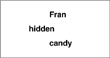
A sample of sentence production stimuli.
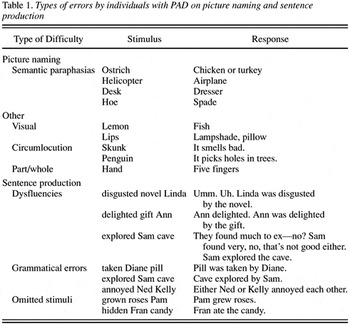
Types of errors by individuals with PAD on picture naming and sentence production
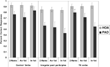
The proportion of correct responses produced. Individuals with PAD produced fewer correct responses than the healthy older adults. The TE verb/inanimate-first condition and the three irregular past participle conditions were most difficult for the individuals with PAD. Error bars indicate 1 standard error.
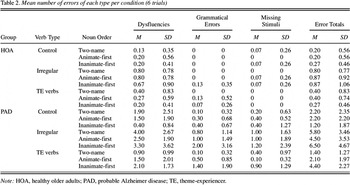
Mean number of errors of each type per condition (6 trials)
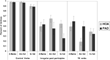
The proportion of correct sentences produced as actives. Active sentences for control and TE verbs were simple-active sentences (e.g., “Betty poured the milk.” “The movie shocked Sarah.”); for irregular past participles, active sentences were perfectives (e.g., “Frank had hidden the candy.”). Error bars indicate 1 standard error.
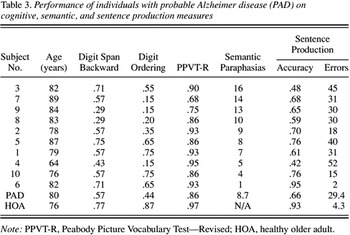
Performance of individuals with probable Alzheimer disease (PAD) on cognitive, semantic, and sentence production measures
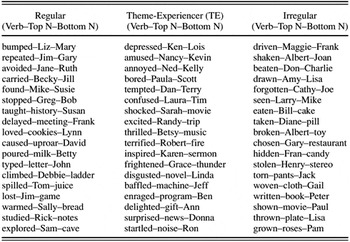
 You have
Access
- 15
- Cited by