Immigrant- and refugee-receiving countries are all concerned with the integration of newcomers and with ensuring their success in the host country’s sociocultural milieu. This process often requires newcomers to gain knowledge about the host society and develop the ability to interact with the country’s main institutions, acquire employment, access services, and contribute to their new home. Although there is some disagreement on factors that contribute to integration, four broad explanations stand out. First, in line with the assimilation model (Gordon, Reference Gordon1964) and the straight-line hypothesis (Warner & Srole, Reference Warner and Srole1945), sociocultural integration progresses with years of residency. Second, the cultural fit hypothesis (see Parsons, Reference Parsons1968; Schwartz, Reference Schwartz2014) suggests that immigrants and refugees with similar ethnic and cultural backgrounds to that of the host society are better equipped to integrate successfully than their counterparts. Third, consistent with the social capital theory (Putnam, Reference Putnam2000), social connections act as resources that facilitate newcomers’ integration. Finally, the fourth explanation highlights the attributes of individuals and the extent to which human capital resources, such as language and education, help newcomers navigate the host society, contributing to successful integration (Esser, Reference Esser2006).
In the context of Canadian bilingualism and multiculturalism, numerous language programs such as English as a Second Language, Language Instruction for Newcomers to Canada, and Enhanced Language Training have been available to help newcomers foster good language skills, learn about Canadian values, and successfully integrate in the Canadian society. These language programs are rooted in the federal government’s belief that newcomers’ ability to communicate in one of the official languages is key to integration (Guo, Reference Guo2011). However, there is little research that evaluates the impact of language proficiency for newcomers’ sociocultural integration in conjunction with other relevant forces important for this form of integration. Accordingly, the purpose of this article is to highlight the importance of language proficiency as an independent force for sociocultural integration of diverse groups of newcomers while accounting for other explanations. An improved understanding of the factors responsible for sociocultural integration can lead to better insights into the way in which policies shape how newcomers can and will integrate into the host society.
Review of the literature
Canada stands apart from other countries in managing ethnic and cultural diversities and leads in welcoming immigrants (Biles et al., Reference Biles, Burstein, Frideres, Biles, Burstein and Frideres2008). Yet, as in Europe and the United States, there is an ongoing debate about the sociocultural integration of ethnic minority newcomers. The question of the integration of Africans, Asians, and more recently Muslims has resulted in growing anxiety and skepticism toward the ideals and policy of multiculturalism (e.g., see Banerjee, Reference Banerjee2008; Beiser, Noh, Hou, & Kasper, Reference Beiser, Noh, Hou and Kasper2001; Brubaker, Reference Brubaker2001; Joppke, Reference Joppke2014; Nakhaie, Reference Nakhaie2018a; Wright, Johnston, Citrin, & Soroka, Reference Wright, Johnston, Citrin and Soroka2017; Vang & Chang, Reference Vang and Chang2019). Similarly, there is a tendency to view refugees as uneducated and unskilled; as such, they are demonized and portrayed as problem people (Fleras & Kunz, Reference Fleras and Kunz2001), threats to the Canadian way of life (Jiwani, Reference Jiwani2006), threats to jobs available to the host population, and a drain on Canadian financial resources (Diop, Reference Diop2014). Such anxiety and skepticism are part of a wider narrative that states that “good” immigrants should be allowed in while “bad” immigrants should be barred from Canada. The former group is perceived to be better able to fit in, while the latter is perceived as lacking such an ability. For example, there is a belief, stronger in Quebec than other provinces, that Muslim immigrants are unable or unwilling to integrate into their new (Christian) society because their religious allegiance prevents national loyalties rooted in the separation of religion and politics (see Foner & Alba, Reference Foner and Alba2008; Wright et al., Reference Wright, Johnston, Citrin and Soroka2017). Muslims are portrayed as “bad” immigrants who are violent and untrustworthy (Brubaker, Reference Brubaker2001; Joppke, Reference Joppke2004; Karim, Reference Karim2008; Sides & Gross, Reference Sides and Gross2013) and a threat to the core values of the majority and to national security (see Wright et al., Reference Wright, Johnston, Citrin and Soroka2017). In Huntington’s (Reference Huntington1996, p. 151) words, “the underlying problem for the West … is Islam” (also see Bawer, Reference Bawer2010; Caldwell, Reference Caldwell2009; Foner & Alba, Reference Foner and Alba2008; Gellner, Reference Gellner, Bozdogan and Kasaba1997).
This dichotomy between good and bad immigrants and refugees has resulted in a significant body of scholarship on assimilation and integration, much of which focuses on economic integration (Aydemir, Reference Aydemir2011; Kazemipur & Halli, Reference Kazemipur and Halli2000; Kazemipur & Nakhaie, Reference Kazemipur and Nakhaie2014; Nakhaie, Reference Nakhaie2006, Reference Nakhaie2007, Reference Nakhaie2015; Nakhaie & Kazemipur, Reference Nakhaie and Kazemipur2013; Stewart et al., Reference Stewart, Anderson, Beiser, Mwakarimba, Neufeld, Simich and Spitzer2008; Valenta & Bunar, Reference Valenta and Bunar2010). Relatively less research has focused on the determinants of sociocultural integration of immigrants and refugees, and there has been particularly little attention given to differences in integration between various ethnic groups and/or among recently arrived first-generation newcomers. A focus on ethnoracial differences in sociocultural integration is important not only because it is a mistake to regard immigrants as homogenous and refugees as a “mass group in flight” (Dobson, Reference Dobson2004, p. 23; Nakhaie & Kazemipur, Reference Nakhaie and Kazemipur2013) but also because newcomer ethnic groups are subject to differential treatment in the host society (Jackson & Bauder, Reference Jackson and Bauder2013). Nevertheless, research on the sociocultural integration of immigrants, especially those of Muslim background, has been increasing (Brubaker, Reference Brubaker2001; Diehl & Koenig, Reference Diehl and Koenig2013; Joppke, Reference Joppke2004; Kanas & van Tubergen, Reference Kanas and van Tubergen2009; Leszczensky, Reference Leszczensky2013; Maliepaard, Lubbers, & Gijsberts, Reference Maliepaard, Lubbers and Gijsberts2010; Maliepaard & Phalet, Reference Maliepaard and Phalet2012; McAndrew & Voas, Reference McAndrew and Voas2014; Nakhaie, Reference Nakhaie2018a; Nandi & Platt, Reference Nandi and Platt2015; Platt, Reference Platt2014; Wright et al., Reference Wright, Johnston, Citrin and Soroka2017), although the results have been inconsistent (e.g., see Alesina & La Ferrara, Reference Alesina and La Ferrara2000; Gidengil, Blais, Nevitte, & Nadeau, Reference Gidengil, Blais, Nevitte and Nadeau2004; Nakhaie, Reference Nakhaie2008; Scott, Selbee, & Reed, Reference Scott, Selbee and Reed2006; Stoffman, Reference Stoffman2002; Uslaner & Conley, Reference Uslaner and Conley2003).
Sociocultural integration refers to the acquisition of a set of appropriate knowledge, skills, and abilities that enable newcomers to live in their new intercultural milieu (Ward, Bruchner, & Furnhem, Reference Ward, Bochner and Furnham2001). These cultural skills help them to “fit in” (Searle & Ward, Reference Searle and Ward1990). Ward and Kennedy (Reference Ward and Kennedy1999) argued that newcomers’ knowledge about the host culture and their ability to negotiate effectively in the new environment is at the core of sociocultural adaptation. For them, sociocultural adjustment refers to the ability to negotiate interactive aspects of the host culture (see Searle & Ward, Reference Searle and Ward1990). In this sense, integration is conceptualized as a function of newcomers’ knowledge about, understanding of, and ability to handle the host’s sociocultural environment. This view of integration does not necessarily result in assimilation or shared “peoplehood” (Park & Burgess, Reference Park and Burgess1921). In the context of Canadian multiculturalism, newcomers can maintain their own cultural outlook and yet acquire knowledge about the host society and function successfully in Canada. This form of integration tends to result in “symbolic belonging” in the way newcomers think and relate to the host society (see Schacter, Reference Schacter2016).
Both the assimilation (Gordon, Reference Gordon1964) and the straight-line (Warner & Srole, Reference Warner and Srole1945) perspectives suggest that sociocultural adjustment progresses with length of residence in the new country. Rooted in the Chicago school in the 1920s, these models suggest that new immigrants in the United States tend to undergo three stages: contact, accommodation, and assimilation. By the final stage of this framework, immigrants will adhere to American standards, beliefs, normative goals, and culture. Generally, these models suggest that with increased length of residency, a gradual shift occurs from the ethnic cultural origin to host–cultural orientation. There is Canadian evidence that, after a period of adjustment, newcomers become over time more familiar with the labor market, invest in their human capital, gain experience, improve their socioeconomic status (Banerjee & Phan, Reference Banerjee and Phan2015), and adapt to the host culture (Wong & Tezli, Reference Wong and Tezli2013).
However, the notion that assimilation is an automatic, irreversible, and inevitable incorporation into a single culture has long been criticized. The assimilation model successfully explains the experiences of European immigrants and their descendants in the United States and Canada. It does not consistently explain the integration of people of non-European origins (see Li, Reference Li2003; Shibutani & Kwan, Reference Shibutani and Kwan1965). In other words, the increase of immigrants and refugees from non-European countries, particularly since the 1980s, has challenged these perspectives. Although the new assimilation model (Alba & Nee, Reference Alba and Nee2003, p. 14) is not one-directional Anglo-conformity and allows for changes in both mainstream and minority immigrant culture, it still envisions group convergence as the mainstream expands to accommodate cultural alternatives.
Given that the assimilation model is better at explaining the integration of Europeans than that of non-Europeans in North America, the cultural fit model—labeled as cultural distance by Shibutani and Kwan (Reference Shibutani and Kwan1965)—emphasizes the cognitive dimensions of intergroup relations. By paying attention to the importance of beliefs in shaping perception of social distance between members of the host society and members of immigrant groups, it suggests that immigrants and refugees with similar ethnic and cultural backgrounds as those of the host society are better equipped to integrate successfully than their counterparts (see Alba & Nee, Reference Alba and Nee2003; Schwartz, Reference Schwartz2014). They can better think and act in a manner consistent with the host society’s thoughts and behavioral expectations because their underlying pattern values are congruent with those of the host. Beiser, Puente-duran, and Hou’s (Reference Beiser, Puente-Duran and Hou2015) study of immigrants and refugees in six Canadian cities showed that cultural distance had a small adverse effect on mental health of youth ages 11–13. Other research has also shown that the greater the cultural distance between immigrants and the host, the greater the integration difficulties (Lundborg, Reference Lundborg2013; Schiefer, Mollering, & Daniel, Reference Schiefer, Mollering and Daniel2012).
Although ethnic and cultural similarities are important for settlement and integration (Alba & Nee, Reference Alba and Nee2003), all groups can potentially adjust if they possess or develop knowledge about, and are able to function in, the host society. In this regard, Europeans’ higher level of sociocultural adjustment in Canada is only partly due to their cultural similarity or even their higher length of residency. Their adjustment is also due to, among other reasons, their ability to take advantage of their social connections and/or speak the language of the host society more proficiently. It is of little surprise that Canadians are more receptive to immigrants from Europe than other countries (Mahtani, Reference Mahtani, Biles, Burstein and Frideres2008; Thobani, Reference Thobani2003).
The social capital approach highlights the importance of social connections as a valued resource that, in turn, serves as an important source of accessing further resources, thus minimizing marginalization and segregation and maximizing assimilation and integration. It is a multidimensional concept that includes bonding (personal connections between network members similar to each other such as family, ethnic affiliation, and religious connections), bridging (relationships with dissimilar individuals, groups, and associations), and linking (relationships with powerful individuals and state institutions) networks. Ager and Strang (Reference Ager and Strang2008) and Giddens (Reference Giddens1979) refer to such resources as the “connective tissue” and “vehicles of power,” respectively, that enable newcomers to succeed. Research shows that connections with family, friends, and coethnics, involvement in associations, and volunteerism act as structural links that help with information access, employment, housing, material and emotional resources, language translation, cultural mediation, and a sense of belonging, confidence, and capacity-building in Canada and elsewhere (Dorlet & Moorthi, Reference Dorlet and Moorthi2018; Makwarimba et al., Reference Makwarimba, Stewart, Simich, Makumbe, Shizha and Anderson2013; Nakhaie, Reference Nakhaie2007, Reference Nakhaie2008; Simich, Beiser, & Mawani, Reference Simich, Beiser and Mawani2002; Stewart et al., Reference Stewart, Anderson, Beiser, Mwakarimba, Neufeld, Simich and Spitzer2008). Although the social capital, length of residency, and cultural fit models are useful for predicting integration, newcomers still will need mastery of the host language in order to be able to navigate the new society.
Consistent with the social learning model, which emphasizes the acquisition of culturally appropriate skills and behaviors through contact with hosts, cross-cultural experience, and training as means of integration, language proficiency enhances newcomers’ ability for cultural adaptation by allowing them to understand, cope with, and act within the new environment. Language plays a central role for newcomers’ adjustment (Ager & Strang, Reference Ager and Strang2008; Alesina & Giuliano, Reference Alesina and Giuliano2009), is a precondition for communication across cultural boundaries, helps social cohesion and social solidarity (Statham & Tillie, Reference Statham and Tillie2016; Stewart et al., Reference Stewart, Anderson, Beiser, Mwakarimba, Neufeld, Simich and Spitzer2008), increases social and political participation, citizenship uptake, and voluntarism (Brown, Nesse, Vinokur, & Smith, Reference Brown, Nesse, Vinokur and Smith2003; Dudley, Reference Dudley2007; Sundeen, Garcia, & Wang, Reference Sundeen, Garcia and Wang2007; Vaillancourt, Reference Vaillancourt1994), and helps with identity formation (Kalbach & Brooke, Reference Kalbach and Brooke2005). It enables mobilization of social support (Wu & Schimmele, Reference Wu and Schimmele2004) and successful communication with health care professionals (Ager & Strang, Reference Ager and Strang2008; Chan, Reference Chan2000; Stewart et al., Reference Stewart, Anderson, Beiser, Mwakarimba, Neufeld, Simich and Spitzer2008). It is an important requirement for shopping, banking, using the media, and negotiating societal institutions (Hou & Beiser, Reference Hou and Beiser2006). It is also an important force against mental health problems (see Thoits, Reference Thoits1995) and tends to increase employment opportunities (De Vroome & van Tubergen, Reference De Vroome and van Tubergen2010; Hou & Beiser, Reference Hou and Beiser2006; Lamba, Reference Lamba2003; Waxman, Reference Waxman2001) and earnings (Connor, Reference Connor2010) while decreasing depression (Hou & Beiser, Reference Hou and Beiser2006). Makwarimba et al. (Reference Makwarimba, Stewart, Simich, Makumbe, Shizha and Anderson2013) showed that language difficulty was a key challenge experienced by Somali and Sudanese refugees in Canada, limiting access to services, enhanced income, education, employment, parenting, and housing (also see Karunakara et al., Reference Karunakara, Neuner, Schauer, Singh, Hill, Elbert and Burnha2004). Kalbach and Brooke’s (Reference Kalbach and Brooke2005) study of Canadian university students showed that respondents with higher language proficiencies showed higher identification with Canada. Valenta and Bunar (Reference Valenta and Bunar2010) showed that people who were given access to language training immediately upon arrival achieved a greater degree of integration. Beiser and Hou (Reference Beiser and Hou2001) showed that, by the end of the first decade in Canada, language fluency was a significant predictor of Southeast Asian refugees’ depression and employment, particularly among refugee women. They showed that language proficiency helped offset the putative network advantages enjoyed by family class immigrants when compared to refugee class immigrants from Asia and Southeast Asia.
Finally, language proficiency helps with educational attainment in Canada, and education helps with integration. Ballantine and Hammack (Reference Ballantine and Hammack2012) suggest that education is a prerequisite of social integration. Most research substantiates a close association between education and socioeconomic statuses (see Gilles & Li, Reference Gilles and Li2011). Higher education signifies higher skill and productivity, which is rewarded in the labor market (Esser, Reference Esser2006), which, in turn, impacts sociocultural integration (Wilkinson, Reference Wilkinson2013). Higher education is also indicative of cognitive ability that ensures success in many areas of life (Nakhaie, Reference Nakhaie1994, Reference Nakhaie2006). Higher education increases voluntary participation of immigrants, more so than those born in Canada (Wang & Handy, Reference Wang and Handy2014). Education is also important for integration of various groups of newcomers because newcomers differ in educational credentials based on their ethnic origins (Nakhaie, Reference Nakhaie2006). Overall, immigrants with higher education are better able to adapt to the new social context (Salgado & Silva, Reference Salgado and Silva2018).
In sum, previous research has often focused on economic integration, with less attention to sociocultural integration. Among studies on the latter, there is little research on differential sociocultural integration of various ethnic groups and how this is affected by language proficiency. It is not clear if language proficiency has an independent effect on sociocultural integration once length of residency, cultural similarity, education, and/or social capital effects are taken into account. The working hypothesis in this paper is that language proficiency has an independent effect on sociocultural integration and that it tends to level out differences in sociocultural integration of dissimilar ethnic groups.
Methodology
Given Canadian privacy laws, I could not access Immigration, Refugee, and Citizenship Canada’s (IRCC, formerly, Citizenship and Immigration Canada) data to establish a sampling frame. Instead, I relied on the administrative data of the YMCA of Western Ontario, Windsor-Essex Branch. Windsor is a culturally diverse city and is one of the original cities in Ontario that the federal government designated for the Resettlement Assistance Program. Based on the 2016 Census, 23.1% of Windsor’s population is composed of immigrants and refugees. This figure is slightly higher than the national average, which is 21.8%. Windsor has a higher percentage of refugees and immigrants who landed before 1980 (5.1% and 7%, respectively) when compared to the national average (2.4% and 5.3%, respectively). In comparison, the YMCA data, as expected, has a significantly larger percentage of refugees (61%). Similarly, the population of non-European immigrants in the YMCA data is substantially higher than that of Windsor (95.4% vs. 37%). Therefore, the YMCA data is not representative of Windsor or Canada. Nevertheless, there are some similarities between the YMCA data and that of the Windsor population. The average number of years of education for Windsorites is 11.88, which is very similar to the national average of 11.91 and that of the YMCA clients in this study (11.92). The percentage of people married or in common-law relationships in Windsor is 61.3%, which is somewhat lower than that of the YMCA clients (i.e., 68%), although the percentage of single individuals is almost the same (25.2% and 24.3%, respectively).
It should be stressed that the YMCA data tends to underrepresent economic class immigrants and overrepresent refugees. The former may not have as many service needs as the latter; therefore, they are less likely to attend various settlement services. Accordingly, this study is limited to immigrants and refugees who have gone to Windsor–Essex branch of the YMCA for their service needs. Immigrants and refugees who do not have service needs and/or do not go to the YMCA are not part of this study.
It is obvious that the data used in this study is not representative of Windsor or Canada in terms of entry status distribution of newcomers. This can be construed as unrepresentativeness of the data, and therefore any generalization should be made with caution. In contrast, given that the reference group in this study is European newcomers, test of differences would be conservative. This is because the European newcomers in this study are from among the most underprivileged group, as their needs are greater than those of non-YMCA European immigrants. Given that the European or White newcomers have better opportunities than the non-Europeans or visible minorities (Nakhaie, Reference Nakhaie2006, Reference Nakhaie2015), results in this study tend to underestimate and provide a conservative estimate of ethnic differences.
The YMCA of Western Ontario’s Newcomer Program receives funding from IRCC to provide assistance to eligible newcomers, enabling them to make decisions about their settlement, enhancing their understanding of life in Canada, and facilitating their social, cultural, economic, and political integration into Canadian society. This process begins with a Needs Assessment and Referral model that focuses on language, orientation, community connections, and employment, with the goal of empowering newcomers to take a more active role in planning their own settlement. The YMCA gathers information using its in-house comprehensive database that allows settlement advisors to generate individualized settlement plans and monitor progress and outcomes. Certain data collection is based on the Immigration Contribution Agreement Reporting Environment, which was launched on April 1, 2013. Given this mandate, the YMCA regularly collects information and outcome measures identified in the Immigration Contribution Agreement Reporting Environment model and reports and contextualizes this information on a regular basis to IRCC. Immigrants and refugees who do not speak one of the official languages fluently are interviewed by trained YMCA case workers in their own language using a standardized intake questionnaire. This study focuses on 2,493 immigrants and refugees assessed by the YMCA from 2013 to April 2018 who were 18 years of age or over at the time of the assessment.
Measurement
Sociocultural integration is a more elusive concept to define and quantify than economic integration (Yu, Ouellet, & Warnington, Reference Yu, Ouellet and Warmington2007). Due to this difficulty, different research on newcomers’ sociocultural integration patterns uses different indicators. Often, the focus has been on Canadian attachment and identity formation, intermarriage, friendship ties, cultural participation, voluntarism, and intercultural competency (see Biles, Burstein, & Frideres, Reference Biles, Burstein, Frideres, Biles, Burstein and Frideres2008; Wong & Tezli, Reference Wong and Tezli2013). In this paper, I focus on Ward and Kennedy’s (Reference Ward and Kennedy1999) conceptualization that highlights knowledge and ability. The YMCA’s orientation survey of clients includes questions pertaining to newcomers’ knowledge about Canada and their own perceived ability to integrate. Knowledge is measured by five category questions ranging from completely disagree to strongly agree. These are “I am familiar with Canadian culture and customs,” “I am aware of opportunities for connecting with social and community networks,” “I am aware of volunteer opportunities available in the community,” “I am aware of resources and services to assist me in my job search,” and “I am aware of opportunities to connect with professional networks.” Efficacy is measured by four five-category questions, also ranging from completely disagree to strongly agree. These are “I am confident in my ability to make informed decisions about my life in Canada,” “I am confident in my ability to make plans or set personal goals to assist me in my settlement,” “I am able to access community facilities independently,” and “I am able to deal with emotional effects of moving here.” Given Ward and Kennedy’s (Reference Ward and Kennedy1999) conceptualization of sociocultural integration, confirmatory factor analysis with varimax rotation showed that these nine variables loaded on one factor accounting for 63.4% of the variance and a Cronbach’s α of 0.928. Accordingly, these variables are summed, and an index of sociocultural integration is created.
English proficiency is based on the Canadian Language Benchmark (CLB), established in 1997, and comprises three components: a listening/speaking assessment, a reading assessment, and a writing assessment. Those who scored CLB 3 or below are coded as having low language proficiency (reference group), and those who scored CLB 4 and higher are coded as having high language proficiency. Those who have a postsecondary education are distinguished from those with a high school diploma or less. Length of residency in Canada is also measured in years, starting at 1 and truncated at 10. A quadratic measure of length of residency is also included to ensure that the curvilinear effect of length of residency is taken into account when testing the straight-line or assimilation hypothesis. Social connections are measured by whether the client has family members in Canada and whether she or he is aware of her or his own ethnic/cultural/language communities in Windsor. Those who answered “yes” are coded 1, and those who answered “no” are coded 0 (reference category). Cultural (dis)similarity is measured by ethnoregional country of origins when compared to those of European origin, the latter generally having a higher level of cultural similarity to individuals of Canada’s ethnocultural origins, which are rooted in the British and French cultural heritages. Ethnic origins in this study include European, African, Asian, Latin American, Syrian, Iraqi, Lebanese, and other Middle Eastern.
In addition, age, gender, and marital status are shown to influence language proficiency and sociocultural integration (see Fazel & Stein, Reference Fazel and Stein2003; Ward & Kennedy, Reference Ward and Kennedy1993). Younger people are more motivated and have a higher incentive to learn the host language (Chiswick & Miller, Reference Chiswick, Miller and Chiswick1992, Reference Chiswick and Miller1995, Reference Chiswick and Miller2001; Dustmann & Fabbri, Reference Dustmann and Fabbri2003; Hou & Beiser, Reference Hou and Beiser2006; McAllister, Reference McAllister1986; Mesch, Reference Mesch2003; Remnick, Reference Remnick2004; Service & Clark, Reference Service and Clark1993; Stevens, Reference Stevens1999). Age is measured in years (from 18 to 75+). Given the curvilinear relationship between age and sociocultural integration, square of age is also included in the multivariate analysis. Studies also show that female immigrants are less proficient in English or French (Aydemir, Reference Aydemir2011; Boyd & Pikkov, Reference Boyd and Pikkov2005), particularly among cultural groups where married males are seen as the main, or only, breadwinner. Gender is coded into female = 1, and male = 0. Marital status is coded married = 1, divorce, separated, or widowed = 1, and single = 0 as the reference group.
Analysis
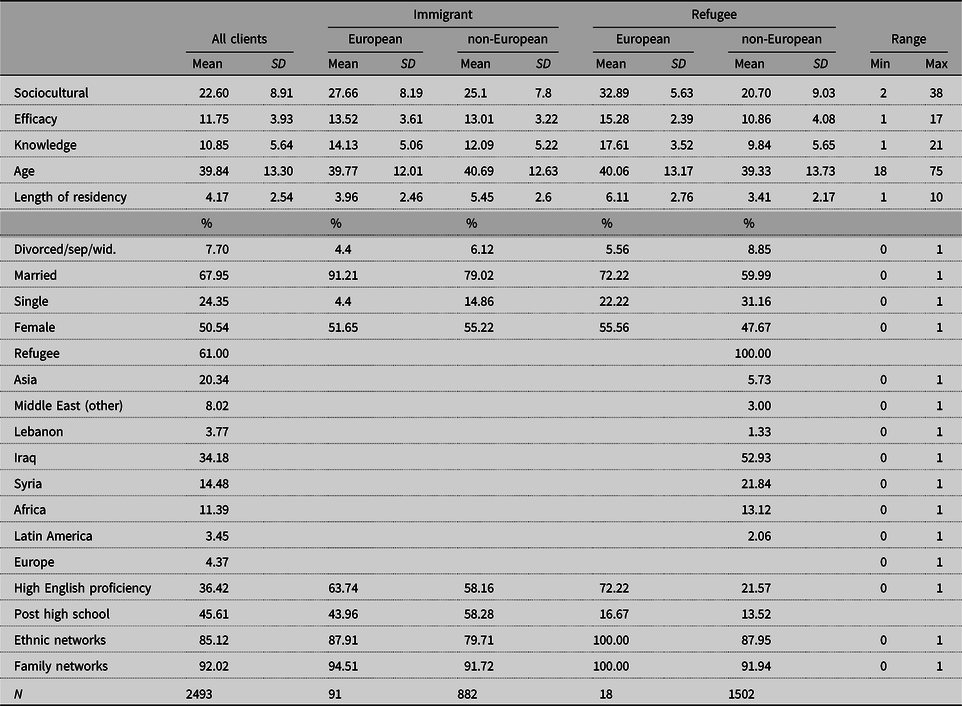
Table 1 provides descriptive statistics for five groups. The first two columns represent results for all clients of the YMCA. The next four columns distinguish Europeans and non-European immigrants. Similarly, refugee clients are subdivided into Europeans and non-Europeans. Overall, the average index of sociocultural integration was 22.6, the average index of efficacy was 11.8, and the average index of knowledge was 10.8, with high scores of 38, 17, and 21, respectively, pointing to a higher average level of efficacy than knowledge among this group of newcomers. These averages were higher for Europeans and immigrants and lower for non-Europeans and refugees, more so for non-European refugees. The average age was just under 40 years, and there was little difference among various groups. The average number of years of residency was just over 4 years. This average was higher for European refugees and non-European immigrants but lower for non-European refugees. About 68% were married, and 24% were single. The marriage rate was higher among European immigrants (91%) and lower among non-European refugees (60%). Most newcomers were from Iraq, Asia, and Syria, although most Iraqi and Syrians were refugees. Thirty-six percent scored a CLB 4 or higher, with non-European refugees scoring lower and European immigrants and refugees scoring higher. Just over 45% had postsecondary education. This percentage was higher among Europeans and lower among refugees, but non-European immigrants reported higher education that European immigrants. An overwhelming majority had family members in Canada and/or were aware of their own ethnic/cultural/language communities in Windsor; this proportion was greater for Europeans.
Descriptive statistics for All YMCA Clients including Europeans, non-Europeans, and refugees

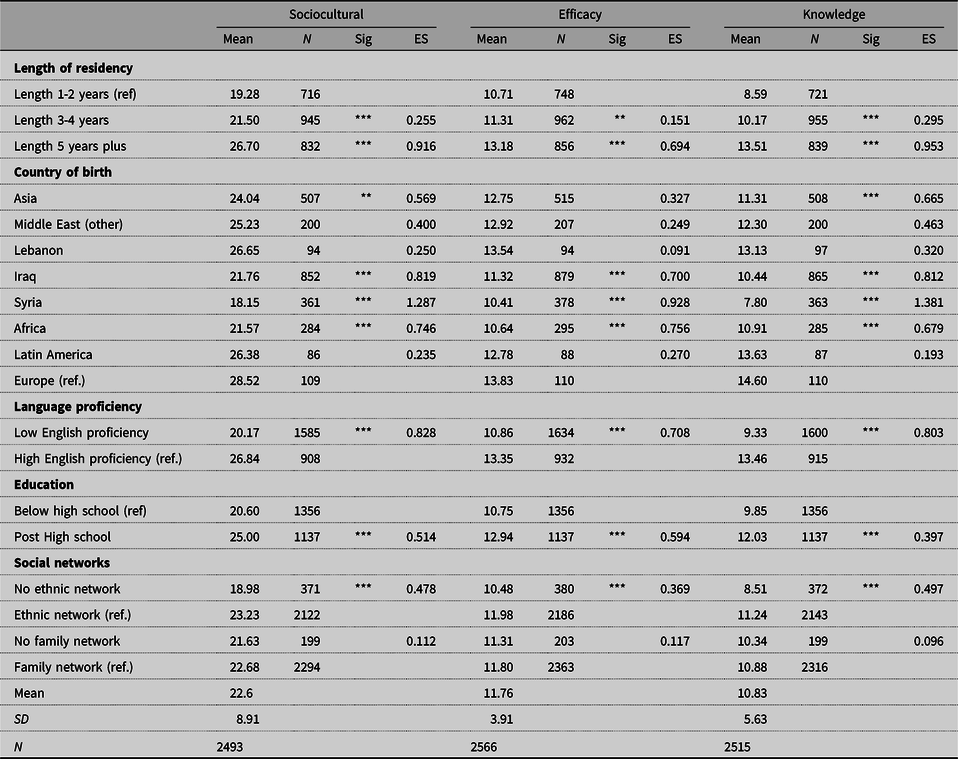
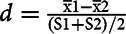
Table 2 displays the bivariate relationship between key predictors and sociocultural integration and its components. This table also displays the effect sizes. Effect sizes are calculated based on Cohen’s d formula (i.e.,
 $d = {{{\rm{\overline x}}1 - {\rm{\overline x}}2} \over {({\rm{S}}1 + {\rm{S}}2)/2}}$
), where
 ${\rm{\overline x}}1$
and
 ${\rm{\overline x}}2$
are the two groups’ means and S1 and S2 are their standard deviations. They are exactly the same as the Z-score of a standard normal distribution; they represent a group’s differences from the reference group in standard deviation and signify the strength of relationships. According to Cohen (Reference Cohen1969, Reference Cohen1994), a value of 0.2 is interpreted as a small, 0.5 as a medium, and 0.8 as large.
Mean of sociocultural integration, knowledge and efficacy by predictors

ES, effect size. *P < .05. **P < .01. *** P < .001.
Table 2 shows the gap in sociocultural integration. Those who had been in Canada for more than 5 years had 6 points higher level of integration compared to those who had been in Canada for 2 years or less. Thus, following the calculation method described above, the level of sociocultural integration of those who had been in Canada for more than 5 years was 0.92 SD above that of those who had been in Canada for less than 2 years. This evidence provides support for the assimilation and/or straight-line hypotheses. The evidence also tends to support the cultural fit hypothesis. Compared to Europeans, who had the highest level of sociocultural integration, Syrians, followed by Africans, Iraqis, and those from Asia, scored significantly lower in the sociocultural integration index in general and its components of knowledge and efficacy in particular.
When compared to Europeans, the effect size for Syrians was 1.29, which is quite large, supporting the cultural fit hypothesis. In contrast, the fact that Latin Americans, Lebanese people, and those from other Middle Eastern countries were not statistically different from the Europeans brings into question the cultural fit hypothesis. English proficiency also had a strong relationship with sociocultural integration. The table shows more than 6 points difference in sociocultural integration between those with high English proficiency and those with low proficiency. English proficiency also had a large effect size. Education was also related to sociocultural integration, although its effect size was smaller than language proficiency. Finally, ethnic connections, but not family connections, significantly increased sociocultural integration, with the former having close to a medium effect size. The results were generally the same for the two elements of sociocultural integration, except for Asians, who did not statistically differ from Europeans in terms of efficacy.
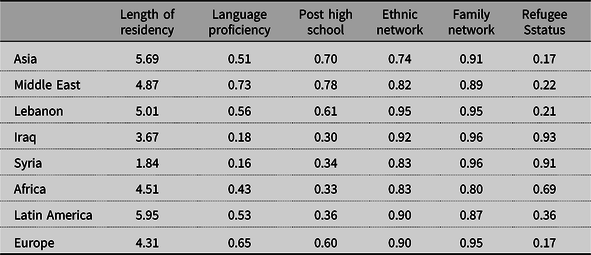
Table 3 displays average language proficiency, education, length of residency, and social networks by ethnic origins. It shows that Syrians, followed by Iraqis, had the lowest language proficiency. Iraqis, followed by Africans, Syrians, and Latin Americans, had the lowest education. As might be expected, Iraqis, Syrians, and Africans were mostly refugees. There was little social network difference among these groups, although Asians and Africans had the least ethnic and family networks, respectively.
Distribution of key variables by ethnic origins

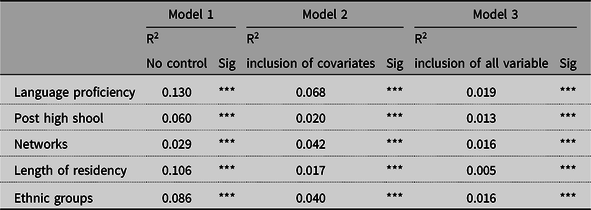
In order to ascertain the importance of key predictors for explaining sociocultural integration, I first introduced each by itself (Model 1), then controlled for the covariates (age, marital status, gender, and refugee status; Model 2), and finally included all variables (Model 3) and computed R 2 changes, using the ordinary least square method (see Table 4). The explained variance for language without controls was 13%, followed by length of residency at 10.6%, ethnic groups at 8.6%, education at 6%, and social networks at 2.9% (see Model 1). After I controlled for covariates, I checked for the change in R 2 . Figures in Model 1 decreased to 6.8, 1.7, 4, 2, and 4.2, respectively (Model 2). These figures were further decreased to 1.9, 0.5, 1.6, 1.3, and 1.6, respectively, when all other variables were included in the analysis (Model 3). Overall, language was shown to be the most important predictor of sociocultural integration when compared to other variables.
R2 and R2 change for models predicting sociocultural integration

Note: Covariates: age2, marital status, gender, and refugee. *p < .05. **p < .01. ***p < .001.
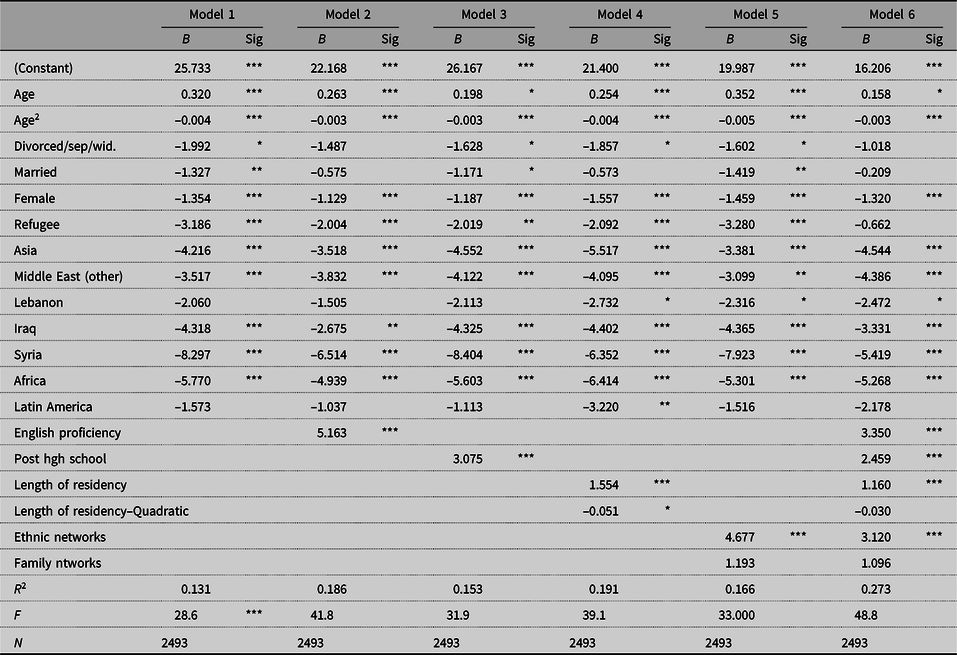
Table 5 evaluates the effect of various predictors in six models employing ordinary least square regression. Model 1 introduces sociodemographic controls, including gender, age, marital status, refugee status, and ethnicity. Model 2 adds language proficiency to Model 1. Model 3 includes education in addition to variables in Model 2. Model 4 adds length of residency, and Model 5 adds social network to previous models. Finally, Model 6 includes all variables. In building up these models, we can observe changes in the predictive power of each variable when compared to their effects in the previous model.
Unstandardized regression coefficients of models predicting sociocultural integration for all YMCA clients

*p < .05. **p< .01. ***p < .001.
Every year of age increased sociocultural integration by about one third of a point. In other words, sociocultural integration increased by just under 1 point every 3 years. Divorced, separated, and widowed newcomers reported lower knowledge and efficacy than single individuals, the latter being statistically similar to married newcomers. Females also scored significantly lower than males (see Model 1).
All ethnic groups scored lower than Europeans in the sociocultural integration index. Syrians scored over 8 points lower, followed by Africans, Iraqis, Asians, and Middle Easterners. Inclusion of language proficiency in Model 2 decreased sociocultural integration gaps compared to Europeans for all ethnic groups, with a minor exception for the other Middle Easterners (see Model 2). Those with high language proficiency had a 5.16 point advantage over those with low language proficiency when sociodemographic variables were controlled. The level of sociocultural integration of newcomers from Iraq, Syria, Asia, and Africa decreased when compared to those of European origins in Model 2 compared to Model 1 by 38%, 22%, 17%, and 14%, respectively. As displayed in Model 3, those with postsecondary education had a 3 point advantage compared to those with a high school diploma or less. The introduction of education in Model 3 did not result in substantial change in sociocultural integration of ethnic groups compared to Europeans, except for a slight increase in the gap between Europeans and Middle Easterners and/or Asians. Refugees benefited from language proficiency and education about equally.
Model 4 includes length of residency. It shows that length of residency increased sociocultural integration significantly. Every year of residency in Canada increased sociocultural integration by 1.6 points. As this measure has 10 categories, the level of sociocultural integration of those who had been in Canada 10 or more years was potentially substantial. Moreover, inclusion of length of residency resulted in increases in differences between Europeans with all ethnic groups, except for Syrians, where the difference decreased by 23%. This model also shows a significant relationship between the quadratic measures of length of residency and sociocultural integration, which suggests that the relationship between the two is not as straight as the straight-line hypothesis suggests. Nevertheless, the quadratic effect became insignificant in the final model, thus supporting the straight-line hypothesis.
Social networks, as measured by ethnic networks, also showed an independent effect in Model 5. Those with ethnic networks scored 4.7 points higher than those without. The effect of family networks was not significant. Nevertheless, inclusion of social networks decreased the sociocultural integration gaps between Europeans and Asians, Middle Easterners, Syrians, and Africans, suggesting its importance for the integration process. Model 6 includes all variables. Language proficiency, length of residency, education, and ethnic networks each had an independent effect on sociocultural integration. Inclusion of key variables together resulted in a substantial decrease in sociocultural integration gaps between Europeans and those of Syrian and Iraqi origins, at decreases of 37% and 22%, respectively. In contrast, the gap increased for groups who have been in Canada for a longer period. This model also shows that the effect of refugee status became insignificant when all key variables, particularly education, language, and length of residency, were included in estimating sociocultural integration.
Further analysis showed that inclusion of language proficiency to the model that included length of residency decreased the effect of the latter by about 24%, suggesting that length of residency is mediated by language proficiency in increasing sociocultural integration. Alternatively, the effect of language proficiency decreased from 5.163 to 4.432 (about 16%) when length of residency was included in the model, suggesting that length of residency suppresses the effect of language proficiency on sociocultural integration.
Protected block tests for interactions of ethnic groups with each of language proficiency, length of residency, and family and ethnic network resulted in significant positive interactions between length of residency and Middle Eastern origin (B = .863, p < .05), between language proficiency and individuals from Africa (B = 5.02, p < .01), and between education and Asian origin (B = 3.73, p <. 05) and African origin (B = 6.54, p < .001). These positive interactions suggest that language proficiency, length of residency, and education increase the sociocultural integration of these groups more than they do that of Europeans. However, family networks tended to decrease the sociocultural integration of individuals from Lebanon when compared to Europeans (B = –10.83, p < .05). This may be in part due to a large Lebanese community in Windsor where family interactions could play as “mobility trap” (Wiley, Reference Wiley1967), minimizing the need to learn about and interact with the Canadian cultural system. Moreover, the effect of language and ethnic networks on sociocultural integration decreased among individuals with postsecondary education (B = –2.631 p < .01; B = –2.727, p < .001, respectively). These findings suggest that language proficiency or ethnic networks are less effective in increasing the sociocultural integration of newcomers with postsecondary education than those with high school education or less. This is perhaps understandable because those with lower education have lower knowledge of Canada and lower perception of their abilities (efficacy) and thus benefit more from improving their language proficiency or increasing the stock of their ethnic networks. In contrast, those with higher education already have higher knowledge of Canada and perception of their own efficacy. As such, improvement in language proficiency among the more educated newcomers can have a relatively minimal effect on perception of their own ability or their knowledge of Canadian culture. There emerged no other significant interaction between language proficiency, length of residency, education, and social networks. Therefore, these variables, particularly language proficiency, education, and length of residency, tended to moderate and suppress each other, but they did not interact, pointing to their strong independent effect.
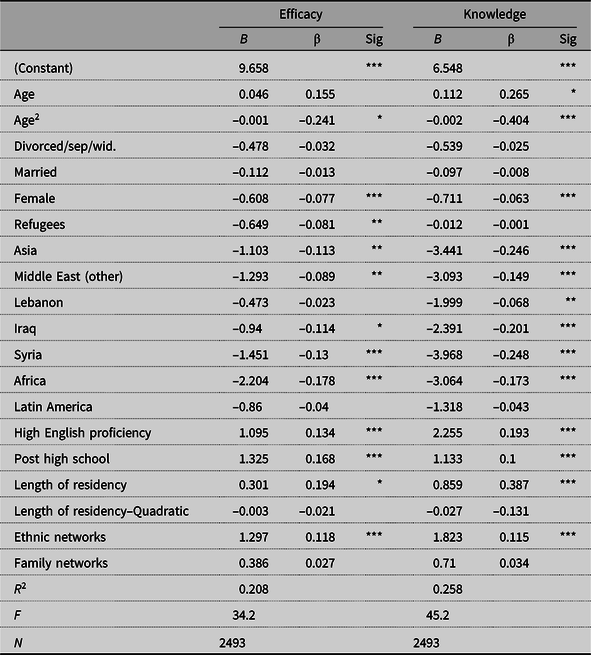
Finally, Table 6 shows the unstandardized and standardized regression coefficients for each of efficacy and knowledge along with their predictors. The results are generally similar to those in Model 6 of Table 5, with the exceptions of the results for Latin Americans and refugee status (see Table 6). Moreover, the models are better at explaining knowledge than efficacy (compare R 2 of .258 and .208, respectively). This is in part due to a higher explanatory power of language proficiency, length of residency, and ethnic networks for knowledge than efficacy and in part due to higher differences among ethnic groups when compared to Europeans in knowledge of Canada than their self-perceived abilities.
Unstandardized regression coefficients of models predicting efficacy and knowledge for al YMCA clients

*p < .05. **p < .01. ***p < .001.
Discussion and Conclusion
The first few years following migration are extremely important for newcomers’ integration. During these years, newcomers acquire the host society’s language, with which they interact with and develop knowledge about the society’s social institutions, find employment, and settle into their new environment. We have shown that length of residency had a significant effect on sociocultural integration and that its effect decreased by about 24% once language proficiency was included in the regression model. Consistent with this finding, there is ample evidence that mastery of the receiving society’s language increases with duration of residency and that language proficiency helps with successful integration (Beiser & Hou, Reference Beiser and Hou2001; Chiswick & Miller, Reference Chiswick and Miller1995; Dustmann & Fabbri, Reference Dustmann and Fabbri2003). Moreover, this process is contingent on immigrants’ and refugees’ own characteristics, education, and cultural similarities with the host. It is a truism that the more similar the migrant culture is to that of the host, the faster the immigrant will adapt to the dominant cultural groups, particularly for those whose migration is voluntary. Consistent with this expectation, we showed that ethnic dissimilarity with Europeans played an important role in sociocultural integration of newcomers. The sociocultural indices of integration for all non-European groups, particularly those of Syrians, Iraqis, Africans, were lower than those of Europeans. This study may have underestimated the effect of cultural similarity because most of the Europeans in this study were from East Europe, and that there are more cultural similarities between East and West Europeans than between West Europeans and non-European newcomers in general.
It is also well-established that the longer the newcomers reside in their new country, the more they interact with the host and consequently learn about and become familiar with its culture and institutions. This argument is informed by the assimilation theory that contact leads to a convergence between identity and characteristics of immigrants and those of the host society. In the process, the newcomers make connections, gain experience, enhance their efficacy, utilize their knowledge of the host, and improve their social position (Alba & Nee, Reference Alba and Nee2003; Banerjee & Phan, Reference Banerjee and Phan2015; Gans, Reference Gans1973; Gordon, Reference Gordon1964; Wong & Tezli, Reference Wong and Tezli2013). Consistent with this, Nakhaie (Reference Nakhaie2017) showed that among individuals who had resided in Canada for 3 or fewer years, Europeans scored the highest in knowledge of Canada when compared to all other ethnic groups who had been in Canada for the same duration. Moreover, the study showed that among those who had lived in Canada for 3 or fewer years, Lebanese immigrants scored higher than Iraqis or Syrians. This finding is attributed to the fact that the Lebanese, as a group, settled in Canada earlier than the other two groups. Their early settlement helped them establish communities that could help later Lebanese arrivals. Comparatively, Iraqis and particularly Syrians are recent arrivals with few established social networks and communities that could help with the settlement of more recent groups from these countries. This suggests that newcomers can adjust better with more support from the host society in general and from more established newcomers from their ethnic community in particular.
Consistent with previous findings, this study also points to the importance of ethnic connections. Zhou and Bankston’s (Reference Zhou and Bankston1994) study of Vietnamese in the United States showed that bonding ties played a positive role in their integration. Stewart et al. (Reference Stewart, Anderson, Beiser, Mwakarimba, Neufeld, Simich and Spitzer2008) showed that social connections smoothed Chinese and Somali refugees’ adjustment to the Canadian social environment. Simich et al. (Reference Simich, Beiser and Mawani2002) showed that ethnic connections enabled individuals to receive support from people of similar backgrounds in Canada who had “learned the ropes.” These social connections enable newcomers to take advantage of settlement services pertaining to the acquisition of language and cultural knowledge. However, our findings in Model 6 of Table 5 are not consistent with the previous research on the role of family networks (see Makwarimba et al., Reference Makwarimba, Stewart, Simich, Makumbe, Shizha and Anderson2013; Simich et al., Reference Simich, Beiser and Mawani2002). The insignificant effect of family networks is partly due to the operationalization of family networks in this study. Newcomers may have family members in Canada, as measured in this study, but are less likely to be in contact with them or access their resources due to geographical distance. Another possible explanation might involve the confidentiality and impartiality associated with reliance on family members (see Strang & Ager, Reference Strang and Ager2010). As well, family may be supportive, but role expectations and conflicting values within the family may be burdensome (Yeh, Reference Yeh2003). Nevertheless, given the significant effect of ethnic connections and the positive though insignificant effect of family, evidence suggests that social bonds can act as structural links, helping newcomers with resources needed for successful integration (Lamba, Reference Lamba2003; Nakhaie, Reference Nakhaie2007, Reference Nakhaie2008; Nakhaie & Kazemipur, Reference Nakhaie and Kazemipur2013; Stewart et al., Reference Stewart, Anderson, Beiser, Mwakarimba, Neufeld, Simich and Spitzer2008; Strang & Ager, Reference Strang and Ager2010).1
However, successful integration is not just due to cultural (dis)similarity, length of residency, or social capital. Chief among forces that help with knowledge about the host cultural milieu and that enhance the ability to “fit in” is the newcomers’ proficiency in the language of the host. As newcomers become progressively proficient in the language of the host, they tend to loosen their ethnic identity and connections and develop a new identity by attaching more significance to the host culture. As Laroche, Chankon, Hui, and Tomiuk (Reference Laroche, Chankon, Hui and Tomiuk1998) showed, there is a strong relationship between linguistic acculturation and ethnic identity decline. In this regard, language acts as a “facilitator” of integration (Strang & Ager, Reference Strang and Ager2010). The fact that language plays an important role for integration is consistent with much of the literature. It has been portrayed as the most potent challenge experienced by newcomers, compromising economic opportunities and social participation, straining communication with co-workers and employers, creating barriers in accessing community resources, and affecting well-being (Boyd & Cao, Reference Boyd and Cao2009; Hou & Beiser, Reference Hou and Beiser2006; Krahn, Derwing, Mulder, & Wilkinson, Reference Krahn, Derwing, Mulder and Wilkinson2000; Logan, Darrah, & Oh, Reference Logan, Darrah and Oh2012; Stewart et al., Reference Stewart, Anderson, Beiser, Mwakarimba, Neufeld, Simich and Spitzer2008; Wang & Handy, Reference Wang and Handy2014). Not surprising, newcomers themselves have identified language difficulties as the predominant challenge for their integration (Stewart et al., Reference Stewart, Anderson, Beiser, Mwakarimba, Neufeld, Simich and Spitzer2008).
The fact that language is shown to be an independent predictor of sociocultural integration and that it has a stronger effect than length of residency or cultural similarity (measured by ethnoregions when compared to the European ancestry) defies any theoretical argument that views ancestry or religion as fixed and rigid, such that some are seen as able to integrate and others are not. The integration anxiety about Muslim immigrants, Hamid’s (Reference Hamid2016) views on clashes of values between Islam and Christianity, Huntington’s (Reference Huntington1996, p. 151) assertion that “the underlying problem for the West … is Islam,” and President Trump’s ban on Muslim countries all view religious ancestry as fixed and unchanging. These views are reminiscent of Canada’s immigration policy up to the late 1960s that did “all in its power to keep out of the country … those belonging to nationalities unlikely to assimilate and who consequently [would] prevent the building up of a united nation of people of similar customs and ideals” (Manpower and Immigration Canada, 1974, p. 10). The term “unlikely to assimilate” was and is an intended code word for people who are perceived as racially and culturally different (Guo, Reference Guo2011).
However, once the Canadian immigration policy was changed to a “point system,” emphasizing language proficiency, education, skills, entrepreneurship, and investment, a large group of newcomers from Asia, Africa, Latin America, and the Middle East entered Canada. These newcomers were culturally different from the traditional European immigrants, diverse in origin, and most often did not speak or understand Canada’s official languages. Consequently, new language learning classes such as English as a Second Language, Settlement Language Training Program, Language Instruction for Newcomers to Canada, and Enhanced Language Training were created to ensure their adjustment abilities. Currently, there are numerous English as a Second Language programs in Canadian educational institutions, nongovernment organizations, and some private sector companies. These programs help newcomers learn Canada’s official languages and at the same time expose them to Canadian culture and the Canadian way of life. They prepare newcomers for the labor market, citizenship tests, and integration into Canadian society (Derwing & Thomson, Reference Derwing and Thomson2005). These are important policies that need to be safeguarded and enhanced.
Taken together, the data shows that perceptions about being able to understand and cope in the new environment is an important ingredient for successful integration, and language proficiency speeds up this process significantly. The evidence suggests that successful adjustment and integration of newcomers requires attention to, availability of, incentives for, exposure to, and free access to schooling in general, particularly in an official language. This helps with the development of cultural knowledge, confidence building, social skills, social connections, and access to social services. Language proficiency has also been shown to have negative effects on depression and positive effects on employability (Beiser & Hou, Reference Beiser and Hou2001). These benefits easily compensate the cost of making language classes available and subsidizing newcomers during their attendance of these classes. If Canada aims to be successful in integrating its most recent waves of refugees and immigrants, investing more in language training pre- and postarrival is well worth the cost. Although IRCC’s investment in the Enhanced Language Training program is necessary for skill training and employment, new language programs that build up newcomers’ efficacy and enhance knowledge about Canada are increasingly important for nation-building. Such interventions are necessary not just because they address an inalienable human right but also because they will equip newcomers to adapt and thus enhance their human, social, and cultural capital and so speed up the process of their integration into and contribution toward Canadian society. The results highlight the responsibility of receiving countries to provide opportunities and incentives to facilitate language acquisition by newcomers.
Newcomers to Canada are increasingly heterogenous. They are diverse with unique cultural backgrounds and integration needs (see Nakhaie, Reference Nakhaie2018a). Newcomers have access to different resources and are subject to differential treatment in the host society (Jackson & Bauder, Reference Jackson and Bauder2013, p. 264). For example, government-assisted and sponsored refugees in Canada have higher service needs than economic immigrants, with respect to Canadian life, language and skill training, and social networks (Nakhaie, Reference Nakhaie2018b). Independent immigrants tend to integrate more quickly than refugee class immigrants (Bevelander & Pendakur, Reference Bevelander and Pendakur2014; Hou & Beiser, Reference Hou and Beiser2006). Moreover, reception varies by ethnicity and religion. For example, Canadians are more receptive to immigrants from Europe than other countries (Mahtani, Reference Mahtani, Biles, Burstein and Frideres2008; Thobani, Reference Thobani2003), and attitudes are more negative toward Muslims than other religious groups, particularly in Quebec (Kazemipur, Reference Kazemipur2014; Nakhaie, Reference Nakhaie2018a; Wright et al., Reference Wright, Johnston, Citrin and Soroka2017). Such unfavourable conditions toward biocultural minorities makes it difficult for newcomers to take advantage of opportunities and speed up their integration process. Differential experiences of newcomers suggest that policies need to be group targeted, based on their differential conditions and experiences.
A welcoming society ensures that individuals, institutions, and the social structure of the host society enable and provide opportunities and remove barriers for the success of newcomers. Such a society focuses on tolerance and the institutionalization of diversity. Evidence suggests that when newcomers are given opportunities, such as subsidized access to language classes, they are better equipped to integrate, while those who are discriminated against or perceive discrimination have more health problems (Nakhaie & Wijesingha, Reference Nakhaie and Wijesingha2014), poor labor market outcomes (Henry & Tator, Reference Henry and Tator2005; Oreopoulos, Reference Oreopoulos2011), and a tendency to experience marginalization (Berry, Reference Berry1997; Nakhaie, Reference Nakhaie2018a).
Overall, this research suggests that sociocultural integration is a dynamic process and subject to change in the face of contextual forces. Sociocultural integration is intrinsically related to language acquisition, education, residency period, and social networks. No single factor by itself can fully account for sociocultural integration, although among those included in this paper’s model, language proficiency plays an important role.
Acknowledgments
I am indebted to The YMCA of South-Western Ontario’s management and coordinators Jacquie Rumiel, Hugo Vega, and Kamal Khaj for access to their administrative data.
Note
-
1. Unfortunately, the YMCA administrative data does not allow a deeper understanding of social connections. Social connection, as measured in this study, focuses on the participants having family members in Canada and being aware of their own ethnic/cultural/language communities in Windsor. These measures do not inform us about the quality and intensity of bonding social capital. Nevertheless, the very awareness of newcomers about their own ethnic/cultural/language communities in Canada seems to positively impact sociocultural integration. This positive impact suggests that these forms of connection provide a sense of belonging and are a potential source of support that can be used or actualized when needed.