





Introduction
Negation appears in natural language at relatively early stages of development and gradually takes on more and more diverse functions and forms, serving, for example, as the means to inform about an absence (Dimroth, Reference Dimroth and Horn2010; Pea, Reference Pea and Olson1980). In this paper, we refer to the distinction between explicit and implicit negation.
Explicit negation is contained in the morphological-syntactic layer of the statement and is constituted by words such as “no,” “not,” “never,” and “nobody” (the most common markers of negation; e.g., Clark, Reference Clark1976; Ilc, Reference Ilc2006; Xiang et al., Reference Xiang, Grove and Giannakidou2016). Implicit negation can be expressed using linguistic means that negate at the semantic but not at the syntactic level (e.g., “to forget,” which means “not to remember”) or using an affirmation that carries a negation when the context of the utterance is taken into account (e.g., “I wish I owned a house,” which implies “I don’t own a house”). Thus, there are many sources of implicit negation—it can be related to semantic and pragmatic mechanisms (Clark, Reference Clark1976; Fodor et al., Reference Fodor, Fodor and Garrett1975; Ilc, Reference Ilc2006; Just & Carpenter, Reference Just and Carpenter1971; Xiang et al., Reference Xiang, Grove and Giannakidou2016) and can involve different linguistic phenomena, such as antonyms, sentences, or discourse (e.g., Fraenkel & Schul, Reference Fraenkel and Schul2008; Giora, Reference Giora1995).
Previous research indicates that negation may be particularly challenging for memory (e.g., Anderson et al., Reference Anderson, Huette, Matlock, Spivey, Parrill, Tobin and Turner2010b; Hasson et al., Reference Hasson, Simmons and Todorov2005; Mayo et al., Reference Mayo, Schul and Burnstein2004; Mayo et al., Reference Mayo, Schul and Rosenthal2014; Weil et al., Reference Weil, Schul and Mayo2020). For example, expressing absence via negation may contribute to the occurrence of a negation-to-affirmation shift (Maciuszek & Polczyk, Reference Maciuszek and Polczyk2017)—when objects are mentioned in the source material as absent from a described place, they are later more likely to be misrecognized as present compared to objects that were not mentioned in the material at all. Furthermore, when it comes to expressing absence, explicit and implicit negation have very similar effects on recognition memory performance (Dudek & Polczyk, Reference Dudek and Polczyk2024; Maciuszek et al., Reference Maciuszek, Polak and Sekulak2019a, Reference Maciuszek, Polak and Sekulak2019b). The authors referred to this effect as “negation related false memories” (NRFM), suggesting that sometimes it is better not to mention an absence. Considering the information from previous research on this effect, we have decided to change the term NRFM to “negation to affirmation shift” (NAS), as it seems to capture the essence of the effect more accurately: negated items are recognized “as if” they were affirmed, more often than not mentioned items. This is one particular type of the many potential “false memories” that might appear, and we want to indicate this fact. Moreover, the term “false memories” has been used in a broad context of confabulations, intrusions, suggestibility, schema consistency effects, etc., all of which might relate to negation, making the term too general (e.g., Brainerd & Reyna, Reference Brainerd and Reyna2005).
The present study aims to further compare memory performance for explicit and implicit negation with respect to expressing the absence of objects. It seems important for at least the following reasons: (1) The previous investigation focused on the influence of explicit and implicit negation on recognition. However, there is no data on how they affect free recall. (2) There is insufficient evidence to determine which mechanisms are responsible for the false recognition of negated items as if they had been affirmed instead (hereafter referred to as the “negation to affirmation shift” or NAS). Therefore, we aim to extend the rather small body of research on the memory effects of implicit and explicit negation used to express the absence of objects.
Models of negation processing regarding the relations between explicit and implicit negation
There is ample evidence that sentences containing negation can be processed differently and often are more difficult to process than affirmative ones, e.g., require more time and cognitive effort and generate more errors (see Budiu & Anderson, Reference Budiu and Anderson2018; Dudschig & Kaup, Reference Dudschig and Kaup2021; Hasson & Glucksberg, Reference Hasson and Glucksberg2006; Huette et al., Reference Huette, Anderson, Matlock and Spivey2011; Kaup & Dudshig, Reference Kaup, Dudschig, Déprez and Espina2020; Orenes et al., Reference Orenes, Beltrán and Santamaria2014; Orenes et al., Reference Orenes, Moxey, Scheepers and Santamaría2016). The difficulty of processing negation is usually explained from a cognitive or pragmatic point of view (Beltrán et al., Reference Beltrán, Liu and de Vega2021; Brand et al., Reference Brand, Scholl and Meyerhoff2022). First, negated information is associated with greater cognitive complexity than its affirmative counterpart (e.g., Beltrán et al., Reference Beltrán, Liu and de Vega2021; Clark & Chase, Reference Clark and Chase1972; Dale & Duran, Reference Dale and Duran2011; Kaup et al., Reference Kaup, Lüdtke, Zwaan, Schmalhofer and Perfetti2007). Second, the pragmatic level is important in negation processing, as negative expressions are more context-dependent than their affirmative counterparts and are uttered in specific communicative situations. However, in a controlled laboratory environment, typical contexts of negation use tend to be ignored (e.g., Tian & Breheny, Reference Tian, Breheny, Larrivée and Lee2016).
Negation processing models have often been developed in the context of explaining the difficulty of negation processing. The models referred to below are discussed with respect to the distinction between processing explicit and implicit negation used to express an absence.
Propositional models assume that we perform operations on sentences when processing negation, i.e., negation is treated as an external truth-functional operator, and it is encoded as a marker of falsehood (“not true that”; Carpenter & Just, Reference Carpenter and Just1975; Clark & Chase, Reference Clark and Chase1972). The sentence “There is no umbrella” converts into the structure “No (there is umbrella).” We must first process the positive argument, and the meaning of negation is added in the second step.
Therefore, such models assume that negation processing takes more time, is sequential in nature, and largely involves operations performed on verbal representations. As explicit and implicit negation differ syntactically, they should be processed differently. In accordance with this assumption, some research shows that explicit negation (e.g., “The square is not there”) can be more difficult to process than implicit semantic negation (e.g., “The square is missing”; Clark, Reference Clark and Sebeok1974; see also, Clark, Reference Clark1976; Fodor et al., Reference Fodor, Fodor and Garrett1975).
According to propositional models, the negation-to-affirmation shift (i.e., the false recognition of negated items as affirmed ones) may be explained by the loss of the negation marker (see Kaup, Reference Kaup and Pishwa2006; Mayo et al., Reference Mayo, Schul and Burnstein2004). While explicit negation involves a usage of syntactic structures that can be encoded as a marker of falsehood (based on the Clark & Chase model, Reference Clark and Chase1972, Reference Clark and Chase1974), implicit negation is devoid of them. Thus, one could predict that explicit and implicit negation expressing absence should have different effects on the memory of presence/absence.
Another group of models is based on the idea that an important component of language comprehension is the creation of non-linguistic representations. Language comprehension is seen as the construction of a model of the situation (simulation), a mental representation of the described state of affairs. Such an approach is developed, for example, in the case of the two-step simulation hypothesis (highlighting the sequential nature of negation processing; Kaup et al., Reference Kaup, Lüdtke, Zwaan, Schmalhofer and Perfetti2007) or the dynamic pragmatic account of negation processing (assuming that the process may be rapid and single-step; e.g., Tian & Breheny, Reference Tian, Breheny, Larrivée and Lee2016; Tian et al., Reference Tian, Ferguson and Breheny2016).
The two-step simulation hypothesis (Kaup et al., Reference Kaup, Lüdtke, Zwaan, Schmalhofer and Perfetti2007) argues that while processing negation, firstly a mental simulation of the positive counterpart (the negated state of affairs) is created, followed by a simulation consistent with the sentence meaning (the actual state of affairs, including negation). To process the sentence “There is no umbrella,” we first simulate an umbrella and then the situation where the umbrella is absent. Negation is captured by the deviation of the two representations. It seems that this model largely decouples the processing of negation from its syntactic specificity (in particular, the presence of the negation marker in the sentence), placing more emphasis on the semantics and pragmatics of the utterance. Consistent with this issue, in some research, similarities in effects of processing explicit and implicit negation were noted (Kaup & Zwaan, Reference Kaup and Zwaan2003; Maciuszek et al., Reference Maciuszek, Polak and Sekulak2019b; Xiang et al., Reference Xiang, Grove and Giannakidou2016).
Referring to the issue of the specificity of processing explicit and implicit negation in the context of informing about absence, it can be assumed that both types of negation share similarities as they perform the same function, namely, removing the absent element from the model of the situation. When stating “That is a pity, I did not take my umbrella with me because I got terribly wet” (explicit negation), the situation model should be similar to that constituted as a result of the statement “I would have preferred to take an umbrella with me because I got terribly wet” (implicit negation). In both cases, the mental representation of the actual state of affairs will be devoid of the umbrella. Therefore, it can be assumed that the two-step simulation model enables the prediction of the absence of differences in memory effects between these types of negation.
Similarly, the dynamic pragmatic account of negation processing allows one to predict the lack of differences between the effects of explicit and implicit negation, as it emphasizes the pragmatic significance of an utterance, which can be independent of its syntactic form. The model posits that, when negation processing is supported by context, it can be rapid and may not require simulation of the negated state of affairs (e.g., Tian & Breheny, Reference Tian, Breheny, Larrivée and Lee2016). Thus, what makes explicit and implicit negation similar is the simulation of the actual state of affairs. However, a crucial feature of the model is that negation processing does not necessarily involve simulating the negated state.
We acknowledge that the distinction we introduced between sentence-based and simulation-based models of negation processing may appear somewhat simplified. However, since research on the effects of explicit and implicit negation (as well as the NAS effect) is still at a relatively early stage, we considered it useful to differentiate negation processing models based on a key feature—namely, their dependence or independence on the syntactic properties of utterances. Simulation-based models appear to be a good representative of an approach that allows one to predict the independence of memory effects of negation from its syntactic structure. At the same time, we recognize that other approaches are also compatible with such predictions, including hybrid or integrative models of comprehension (e.g., involving both linguistic and simulation-based processes; see Barsalou et al., Reference Barsalou, Santos, Simmons and Wilson2008). Importantly, the fact that the lack of differences between explicit and implicit negation effects is consistent with claims made by various simulation-based models does not invalidate the relevance of other theoretical accounts. We are also aware that simulation-involving models do not constitute a single unified approach but rather a heterogeneous group of concepts. The potential for differentiating their explanatory value is addressed in more detail in the sections discussing the results.
Memory effects of negation
The way negation is processed may be reflected in memory effects, as highlighted by researchers who consider them long-term consequences of negation processing; thus, these effects may be explained through negation processing models (e.g., Kaup, Reference Kaup and Pishwa2006; Mayo et al., Reference Mayo, Schul and Burnstein2004; Mayo et al., Reference Mayo, Schul and Rosenthal2014; Weil et al., Reference Weil, Schul and Mayo2020; Zang et al., Reference Zang, Beltrán, Wang, Rolán and de Vega2023). Research indicates that the memory for information associated with negation may be worse compared to affirmed information, and it may be related to both the inhibitory and paradoxical effects of negation.
Negated information may be more prone to forgetting and memory loss than affirmed information (e.g., Craik & Tulving, Reference Craik and Tulving1975; Mayo et al., Reference Mayo, Schul and Rosenthal2014; Weil et al., Reference Weil, Schul and Mayo2020; Zang et al., Reference Zang, Beltrán, Wang, Rolán and de Vega2023). It is commonly argued that negation can trigger inhibitory effects, making negated information less likely to be retrieved from memory than affirmed information (e.g., Mayo et al., Reference Mayo, Schul and Rosenthal2014; Zang et al., Reference Zang, Beltrán, Wang, Rolán and de Vega2023). Negation-related forgetting can be considered a side effect of the role negation plays in language, namely indicating the falsity of a statement, suppressing it, and shifting focus to the correct state of affairs (Mayo et al., Reference Mayo, Schul and Rosenthal2014; Weil et al., Reference Weil, Schul and Mayo2020). Therefore, it seems important to consider whether negation-related forgetting could be attributed to the syntactical specificity of negation. Propositional models of negation processing treat negation as a marker of falsehood (Carpenter & Just, Reference Carpenter and Just1975; Clark & Chase, Reference Clark and Chase1972), which suggests that negation-related forgetting should differ between explicit and implicit negation, as only explicit negation employs overt negation markers, which should suppress the concepts within their scopes. However, according to models that decouple negation effects from the syntactic structure, such as simulation models, there would be no difference in forgetting between explicit and implicit negation.
Additionally, as time passes, negated information may be retrieved from memory as if it were affirmed (i.e., with an opposite meaning), constituting a paradoxical memory effect (e.g., Dudek & Polczyk, Reference Dudek and Polczyk2024; Fiedler et al., Reference Fiedler, Walther, Armbruster, Fay and Naumann1996; Maciuszek & Polczyk, Reference Maciuszek and Polczyk2017; Maciuszek et al., Reference Maciuszek, Polak and Sekulak2019a). Such effects are usually measured by the difference in memory errors related to the negated information compared to the unmentioned information, as is the case with the NAS effect, which is defined by a higher frequency of misrecognizing negated objects as present compared to misrecognition of unmentioned items. In literature and research, such memory effects are usually referred to as false memories (Fiedler et al., Reference Fiedler, Walther, Armbruster, Fay and Naumann1996; Maciuszek & Polczyk, Reference Maciuszek and Polczyk2017, Maciuszek et al., Reference Maciuszek, Polak and Sekulak2019a) or memory intrusions (Zang et al., Reference Zang, Beltrán, Wang, Rolán and de Vega2023). Their occurrence can be explained by syntactic features of negation (following propositional models of negation processing) and the loss of the negation marker (see Kaup, Reference Kaup and Pishwa2006; Mayo et al., Reference Mayo, Schul and Burnstein2004). Alternatively, they are considered a result of the cognitive activation of the negated concept and the subsequent availability of this activated concept (e.g., Fiedler et al., Reference Fiedler, Walther, Armbruster, Fay and Naumann1996; Mayo et al., Reference Mayo, Schul and Burnstein2004; Zang et al., Reference Zang, Beltrán, Wang, Rolán and de Vega2023).
Please note that the issue of concept activation is addressed both in relation to the inhibitory memory effects of negation and the paradoxical effects. Inhibitory effects are considered to be caused by suppression of activation, while paradoxical effects are considered to be caused by increased activation. Understanding this apparent inconsistency seems to hinge on considering what the effects of negation are being compared to. When referring to inhibitory effects, they arise from differences in the level of activation between affirmed and negated information (where a lower level of activation is indicated for negated concepts compared to affirmed ones). When referring to effects associated with an increase in activation levels, a difference is assumed between negated objects and those that were not mentioned. As Zang and colleagues (Reference Zang, Beltrán, Wang, Rolán and de Vega2023) point out, the following order clarifies these differences: affirmed information has a higher level of activation than negated information, and negated information has a higher level of activation than not mentioned information.
Existing research on the memory for information on absence—explicit vs. implicit negation
Previous research on the memory effects of explicit negation shows that negating the presence of objects can contribute after some time to incorrectly recognizing the objects as present in a described place more often than in the case of not mentioning the items at all (Maciuszek & Polczyk, Reference Maciuszek and Polczyk2017), a phenomenon referred to as the NAS effect.
Looking for possible explanations for the NAS effect, one could consider the loss of the negation marker mechanism, which would be in line with the propositional models of negation processing (Clark & Chase, Reference Clark and Chase1972; see Kaup, Reference Kaup and Pishwa2006, Mayo et al., Reference Mayo, Schul and Burnstein2004). Having in mind the syntactic differences between explicit and implicit negation, previous studies investigated differences in recognition memory for explicit and implicit negation, used to communicate the absence of objects (Maciuszek et al., Reference Maciuszek, Polak and Sekulak2019a, Reference Maciuszek, Polak and Sekulak2019b). If false recognitions of negated items were triggered by the syntactic structure of negation, there should be more false recognitions when explicit than implicit negation was used. However, in both sets of studies, implicit and explicit negation led to almost identical false recognition of negated items after a short and a long delay of a memory test. In addition, the cognitive effort required to process explicit and implicit negation was compared, and the results indicated a lack of difference in processing difficulties between implicit and explicit negation (Maciuszek et al., Reference Maciuszek, Polak and Sekulak2019b).
Purpose and subject matter of the current research
Possible mechanisms of the NAS effect: Object name repetition vs. activation of its representation
The first aim of the current study was to investigate the possible mechanism of the NAS effect. Whereas differences in the syntactic structure of explicit and implicit negation do not affect memory recognition of absent objects, we chose to focus on aspects that appear independent of the syntactic structure of negation and could potentially explain the similarity of memory effects related to the NAS effect. Among others, Fiedler and colleagues claim that while denying information, its representation needs to be activated, and such activation may serve as a basis for constituting a false memory of the negated information (Fiedler et al., Reference Fiedler, Walther, Armbruster, Fay and Naumann1996; see also Mayo et al., Reference Mayo, Schul and Burnstein2004, Zang et al., Reference Zang, Beltrán, Wang, Rolán and de Vega2023). In line with the abovementioned approach, one may conclude that negating the presence of an object activates its representation, while simply not mentioning its absence prevents such activation; that is why there are more false recognitions of negated than not mentioned objects. Thus, the question whether the NAS effect (noted in previous research) appears due to the activation of the cognitive representation of objects during processing the information on their absence seems relevant.
Or could false recognitions of negated objects be explained by a sense of familiarity with the object’s name (treated as a cue to recognize it as present) rather than by activation of its cognitive representation? Please note that previous experiments relating to the NAS effect used a verbal memory test (Maciuszek & Polczyk, Reference Maciuszek and Polczyk2017; Maciuszek et al., Reference Maciuszek, Polak and Sekulak2019a, Reference Maciuszek, Polak and Sekulak2019b). First, the subjects were presented with source material in which the names of the objects affirmed or negated were stated. Then, they were given a memory test including the same object names that had previously appeared in the material and the names of objects not mentioned at all. Taking into account that it has been shown that repetition induces the sense of familiarity (e.g., Coane et al., Reference Coane, Balota, Dolan and Jacoby2011; Poppenk et al., Reference Poppenk, Köhler and Moscovitch2010), one may consider that, in the case of the NAS effect, misrecognitions of the negated objects could occur as a result of a mechanism similar to what the authors call a sense of lexical familiarity (see Jones et al., Reference Jones, Brown and Atchley2007; Reyna & Kiernan, Reference Reyna and Kiernan1994).
As research shows, a sense of familiarity can provide a bias to consider repeated information as true compared to non-repeated information (even if the information originally appeared in a negative, i.e., opposite, context); it also reinforces the memory of the information (e.g., Autry & Duarte, Reference Autry and Duarte2021; Ecker et al., Reference Ecker, Lewandowsky, Swire and Chang2011; Henkel & Mattson, Reference Henkel and Mattson2011; Lewandowsky et al., Reference Lewandowsky, Ecker, Seifert, Schwarz and Cook2012; Skurnik et al., Reference Skurnik, Yoon, Park and Schwarz2005; Taylor & Henson, Reference Taylor and Henson2012). Thus, it cannot be ruled out that, in the studies on the NAS effect cited above (Maciuszek & Polczyk, Reference Maciuszek and Polczyk2017; Maciuszek et al., Reference Maciuszek, Polak and Sekulak2019a), the repetition of the object name in the memory test provided a cue to recognize the object as present in the location. In other words, the object’s name in the memory test sounded familiar because it had occurred previously in the source material (whether in relation to presence or absence). This encouraged more frequent misrecognition of the presence of negated objects than of not mentioned objects (whose names did not appear in the source material). If responses constituting the NAS effect were driven primarily by familiarity with object names, the occurrence of the NAS effect should be considered as related to the verbal layer of the utterances and the repetition of specific words. It seems, therefore, that in such a situation, the responses given by the participants would be the result of a shallower processing of the material than the activation of the cognitive representation of the negated object considered above.
The potential mechanisms of the NAS effect (word-familiarity and concept-activation) can be considered in terms of the difference between the verbatim and gist memory traces, based on the fuzzy-trace theory by Reyna and Brainerd (Reference Reyna and Brainerd1995). The fuzzy-trace theory assumes that there are two separate memory traces, one containing the verbatim memory representation (in our case, a direct representation of an utterance) and another containing the gist of the sentence (what it generally means). Verbatim representations are reproductive and precise, while gist representations are reconstructive and general. If the name of an object is not repeated in the test, recognizing whether the object was present or absent requires deeper processing and is more likely to rely on the gist trace and not the verbatim trace.
To address the potential influence of repeating object names on the NAS effect, Experiment 1 employed a non-verbal recognition memory test. Instead of presenting names, we used pictures of the items, thereby eliminating the repetition of object names that had appeared in the source material (as present or absent). If the NAS effect were to occur under these conditions, it could not be attributed to just a simple recognition of previously seen object names in the memory test, indicating that there is deeper cognitive processing at play.
Memory effects of explicit and implicit negation other than recognition
The second aim of the current study was to compare the memory effects of explicit and implicit negation employed to inform about the absence of objects. However, we added a different measurement of memory effects than before. Existing research on implicit-explicit negation comparisons and the NAS effect has only used recognition tests, so using free recall seems like a valuable opportunity to gain better insight into negation-related memory effects.
In Experiment 2, we employed a free recall test instead of the usual recognition test. As research on memory shows, performance can differ with respect to the type of memory process involved; for example, free recall engages different cognitive and metamemory processes and can require more active scanning and retrieving information from memory than recognition does (e.g., Craik & Tulving, Reference Craik and Tulving1975; Koriat & Goldsmith, Reference Koriat and Goldsmith1994; Lau et al., Reference Lau, Goh and Yap2018; Raaijmakers & Shiffrin, Reference Raaijmakers and Shiffrin1992; Tulving, Reference Tulving1985). In psycholinguistics, task-specificity (recognition-recall) can influence both lexical and semantical variables (Lau et al., Reference Lau, Goh and Yap2018). Therefore, while comparing the memory effects of implicit and explicit negation, it seems important to also consider the negation effects in memory processes other than recognition. The free recall test allows us to measure a wide range of memory effects of negation, including omission errors (involving forgetting and failing to recall an object in a memory test) and false recall of negated objects (i.e., recalling negated objects as affirmed).
As a result, incorporating a free recall test provides an opportunity to further investigate whether the type of negation (explicit vs. implicit) influences memory effects, specifically, omission errors and false recall of negated objects. If the syntactic structure of negation played a role in inhibitory mechanisms, differences in omission rates for negated information should emerge, consistent with propositional models (e.g., Clark & Chase, Reference Clark and Chase1972). Conversely, if no such differences arise in free recall, this would further support models suggesting that negation processing operates independently of syntactic structure, as proposed by simulation models (e.g., Kaup et al., Reference Kaup, Lüdtke, Zwaan, Schmalhofer and Perfetti2007). Additionally, it seems important to examine whether the type of negation affects false recall rates of negated objects—a type of memory error that parallels false recognition and reflects retrieving negated information as if it were affirmed. Therefore, the free recall test provides an opportunity to further explore the potential mechanisms underlying the NAS effect, as well as the conditions under which it occurs.
Experiment 1
The aim of Experiment 1 was to investigate whether the NAS effect occurs when the recognition test is devoid of cues in the form of repetitions of the names of negated objects mentioned previously in the source material. In the original studies, the names of these objects appeared in the memory test for the second time, while the names of the not mentioned objects appeared in the memory test (obviously) for the first time. With the intention of avoiding the repetition of object names, in Experiment 1 we used a non-verbal recognition test.
We also investigated whether the similarity between implicit and explicit negation in memory effects would be replicated under conditions of using a recognition test with pictures instead of verbal object names.
We predicted that the NAS effect is independent from the wording familiarity and would also occur when the memory test did not include object names but illustrations of them. That is, in the long time delay condition, the level of misrecognitions of negated objects would be higher than that of objects not mentioned in the source material. Such results would rule out the possibility that the NAS effect stems from the repetition of object names during the memory test. At the same time, they would emphasize explanations suggesting that the NAS effect may be driven by deeper processing mechanisms, such as the activation of negated concepts, which has been proposed in relation to paradoxical memory effects of negation (Fiedler et al., Reference Fiedler, Walther, Armbruster, Fay and Naumann1996; see also Mayo et al., Reference Mayo, Schul and Burnstein2004; Zang et al., Reference Zang, Beltrán, Wang, Rolán and de Vega2023).
We also assumed that the result of no difference in memory effects between explicit and implicit negation at both short and long time delays of the memory test would be replicated. This would align with situational models of negation processing (e.g., Kaup et al., Reference Kaup, Lüdtke, Zwaan, Schmalhofer and Perfetti2007), but not with propositional models (e.g., Clark & Chase, Reference Clark and Chase1972). We took into account false recognition of negated objects and the rate of overall correctness of performance.
Participants
The experiment was conducted on 248 students from various fields of study (92 representatives of medical sciences, 43 of social sciences, and 37 of technological sciences) at Polish universities (all native Polish speakers). Subjects were invited by email or through student groups on social media. Seventy-six people were excluded from the sample due to dropout (they did not participate in the delayed part of the procedure). The final sample consisted of 172 people (131 females, 41 males, age M = 23.12 years, SD = 3.52). A priori power analysis for ANOVA with an assumed moderate effect size of 0.3 indicated that 126 participants are enough to achieve a power of 0.8, confirming that the sample size is appropriate. Participation was unpaid and voluntary.
Materials
Source material
The source material was a description of a newly built house that was not yet fully furnished. The narrator mentions objects that are already in the building, as well as those that are not. Some objects are described as [affirmed], some as [negated] (using explicit negation or implicit negation), and some as [not mentioned]. Depending on the version of the material, information about the absence of objects is provided by explicit negation (e.g., “There are no chairs in the house yet”) or implicit negation—by the narrator expressing the discrepancy between the desired state of affairs and reality (e.g., “I expected there to be chairs in the house”) or by mentioning plans related to the addition of the missing objects (e.g., “In the future I plan to build a garage”). Six pairs of parallel source material variants were prepared and used. In each case, the pair consisted of corresponding versions that employed either explicit negation or implicit negation to express the absence of the same objects. Please note that the information about the absence of the item appeared at the same point in the source material in its parallel versions. In all sentences expressing the absence of objects (implicitly or explicitly), the negation point preceded the name of the absent object. Moreover, all such statements were devoid of strong emotional emphasis, as emotions could constitute an additional unwanted memory cue.
Twelve versions of the description were created. In each version of the description, there were five affirmed key objects, five negated objects (implicitly or explicitly), and five not mentioned objects, all counterbalanced. We presented the description visually (as text on the screen), sentence by sentence. Participants could move to the next sentence by pressing a button but could not go back to previous statements. Reading time was recorded to check for outliers. The material consisted of 20 or 21 sentences (156–169 words). The average number of words for explicit negation was 162.50 and for implicit negation was 162.17.
Memory test
In order to avoid repetition of object names and the resulting lexical familiarity, crucial for distinguishing between word-familiarity and concept-activation accounts, we used a non-verbal recognition test. It contained color photographs of the 15 key objects (the same for all participants). The photographs were selected in two pilot studies to ensure that there was no ambiguity as to which object was depicted. They were presented on the screen one at a time and in random order. They were accompanied by a question about whether the object depicted in the photograph was present in the building (“Is the object in the house?”). Significantly, the question did not include the name of the object that appeared in the source material. Thus, the names of objects mentioned in the story were not repeated in the memory test. The respondents’ task was to place each object into one of two categories—objects present in the building at the time of the story (“PRESENT”) or objects absent from the building (“ABSENT”). The instructions clearly stated that only objects whose presence in the house was directly indicated by the narrator in the story should be categorized as present. Therefore, one could correctly report [affirmed] objects as PRESENT or correctly report [negated] and [not mentioned] objects as ABSENT, and all other possibilities constituted a memory error. Please note that the memory test always included questions about the same 15 key objects: five related to affirmed objects, five to negated objects (implicitly or explicitly), and five to objects that were not mentioned. However, since the key objects were counterbalanced across different versions of the source material, the same object could be presented as affirmed, absent, or not mentioned. Consequently, depending on the version of the source material provided, a correct response for the same object in the memory test could involve recognizing it as present (when its presence was affirmed) or as absent from the building (when its presence was negated or not mentioned). Response times were recorded to identify potential outliers.
Procedure
The experiment was conducted online. Participants were randomly assigned to one of two time delay conditions (short vs. long) and one of two negation conditions (explicit vs. implicit). They were given a random version of the source material to read. The material was presented sentence by sentence on the screen, and participants were allowed to read it at their own pace. They were then given an unrelated task to distract their attention (alphabetizing the names of the months) for an average of 4 minutes. In the short delay condition, the memory test followed immediately. In the long delay condition, subjects took the memory test six to eight days later (the period close to the seven-day delay considered in previous research on the NAS effect; see Maciuszek & Polczyk, Reference Maciuszek and Polczyk2017; Maciuszek et al., Reference Maciuszek, Polak and Sekulak2019a).
Results
Nine participants were excluded from the analyses, as their reading time of the source material was too long (more than one minute for a single sentence exposure) or their response time in the memory test was too long (more than one minute for answering a single question). Two additional participants were excluded due to incorrect performance in the filler task (alphabetizing the months incorrectly).
We analyzed the general performance in the memory test (the number of correct answers), as well as the number of objects recognized as being present in the building described in the source material. For each participant, three indicators reflecting the number of items recognized as present were calculated: affirmed items, negated items, and not mentioned items (as per the information about their presence in the building). While in the case of affirmed items, recognizing them as present was considered a correct response, in the case of negated and not mentioned items, recognizing them as present in the building was incorrect and categorized as a false recognition. Table 1 shows descriptive statistics for the items recognized as present in the building with respect to the information about their presence/absence/non-mentioning, the type of negation used in the source material, and the delay in the memory testFootnote 1 .
Descriptive statistics for items recognized as present in the building (max = 5) regarding the information on their presence, the type of negation, and the memory test delay

Table 1. Long description
The table presents descriptive statistics for items recognized as present in a building, categorized by delay, type of negation, and information on presence. It has 4 rows and 6 columns. The columns are labeled Delay, Type of negation, Information on presence, M, SD, and 95% CI. The rows are grouped by delay (Short and Long) and type of negation (Explicit and Implicit), with further subdivisions based on information on presence (Affirmed, Negated, Not mentioned). Each cell contains specific values for M, SD, and 95% CI. For example, under Short delay and Explicit negation, Affirmed items have M=4.08, SD=1.06, and 95% CI=[3.78, 4.37]. The table provides detailed statistics for each combination of delay, type of negation, and information on presence.
Effects of explicit negation and implicit negation
To compare the memory effects of explicit and implicit negation, a two-way ANOVA was performed: 2 (negation type: explicit vs. implicit) × 2 (memory test delay: short vs. long). Since the hypotheses postulated no differences between the memory effects of explicit and implicit negation, Bayesian probabilities were also calculated for the null and alternative hypotheses, following the procedure proposed by Masson (Reference Masson2011). In short, this Bayesian procedure uses BIC goodness-of-fit indicators for the null and alternative hypothesis models and then calculates the probability of the null and alternative hypotheses based on ΔBIC between these models, avoiding the need to assume priors despite its Bayesian nature. The explanation of Bayes factor (BF) in Masson’s approach is the same as in model fit analyses. BF compares the marginal likelihoods of both models, i.e., how probable the data is under the zero and alternative hypotheses. To gauge the meaning of BF statistics, one can use Jeffreys’ scale (Jeffreys, Reference Jeffreys1998), where BF01 (hypothesis 0 over hypothesis 1) > 100 is decisive evidence for H0, 10–100 is very strong, 3–10 is strong, 1–3 is moderate evidence for H0, 1/3–1 is moderate evidence for H1, and <1/10 is strong evidence for H1.
General performance
The general correctness of the recognition test did not differ significantly between explicit negation (M = 10.31, SE = 0.25) and implicit negation conditions (M = 10.22; SE = 0.27); F(1, 157) = 0.06, p = .80, η 2 p < .001. Bayesian probabilities support the no-difference hypothesis: ΔBIC = 5.017, p(H0|D) = .925, p(H1|D) = .075, BF 01 = 12.29. The general correctness was higher in the short delay (M = 11.92; SE = 0.22) than in the long delay condition (M = 8.61, SE = 0.29); F(1, 157) = 81.43; p < .001; η 2 p = .34.
The interaction effect between the type of negation and the memory test delay was not significant; F(1, 157) = 0.21; p = .65; η 2 p = .001.
Negated items
The type of negation did not influence false recognition rates for the negated items; F(1, 157) = 0.75, p = .39, η 2 p = .01. The number of negated items falsely recognized as present did not differ significantly between explicit negation (M = 1.66, SE = 0.12) and implicit negation conditions (M = 1.81, SE = 0.13), with Bayesian probabilities supporting the hypothesis of no difference: ΔBIC = 4.314, p(H0|D) = .896, p(H1|D) = .104, BF 01 = 8.64. In the short delay condition, there were fewer false recognitions of negated objects (M = 0.97, SE = 0.10) than in the long delay condition (M = 2.49, SE = 0.14); F(1, 157) = 75.85, p < .001, η 2 p = .33.
The interaction effect between the type of negation and the memory test delay was not significant; F(1, 157) = 0.10, p = .76, η 2 p = .001. The type of negation did not influence the false recognition rates, neither in the short delay condition (p = .65; ΔBIC = 4.412, p(H0|D) = .901, p(H1|D) = .099, BF 01 = 9.08), nor in the long delay condition (p = .46; ΔBIC = 3.527, p(H0|D) = .854, p(H1|D) = .146, BF 01 = 5.83).
Recognition of affirmed, negated, and not mentioned items
A mixed ANOVA was conducted to test the effect of information on the recognition of items as present in the building: 3 (presence/absence/non-mentioning information: affirmed vs. negated vs. not mentioned) × 2 (memory test delay: short vs. long) × 2 (type of negation: explicit vs. implicit). Pairwise comparisons were calculated with Bonferroni correction.
The main effect of the information on the presence (presence/absence/non-mentioning) was statistically significant; F(1.90; 298.74) = 145.95; p < .001, η 2 p = .48Footnote 2 . Affirmed objects (M = 3.57, SE = 0.09) were recognized as present in the building (correctly) more frequently than the negated items (M = 1.73; SE = 0.09) and not mentioned items (M = 1.57; SE = 0.10; both p < .001). The false recognition rates for the negated items and the not mentioned items did not differ (p = .53).
Importantly, the interaction effect between information on the presence of objects and the memory test delay was significant; F(1.90; 298.74) = 46.96, p < .001, η 2 p = .23. While, in the long delay condition, there were more false recognitions of negated items (M = 2.49, SE = 0.14) than of not mentioned items (M = 2.01, SE = 0.16; p = .03), in the short delay condition, false recognition rates for negated (M = 0.97, SE = 0.10) and not mentioned items (M = 1.14; SE = 0.12) did not differ (p = .71; ΔBIC = 3.376, p(H0|D) = .844, p(H1|D) = .156, BF 01 = 5.41). In the short delay condition, affirmed items were more often recognized as present in the building compared to negated and not mentioned items (in both cases p < .001). The same pattern was observed in the long delay condition—there were more correct recognitions of affirmed items than false recognitions of negated (p = .02) and not mentioned items (p < .001).
In the long delay condition, compared to the short delay condition, there were fewer correct recognitions of the affirmed items and more false recognitions of the negated items and not mentioned items (in each case, p < .001).
The interaction effect: information on the presence × memory test delay × type of negation was not significant; F(1.90; 298.74) = 0.622, p = .53, η 2 p = .004. Figure 1 shows the estimated marginal means for the number of objects recognized as present regarding the information on the presence, the memory test delay, and the type of negation.
Estimated marginal means of the number of objects recognized as present, according to information on their presence, memory test delay, and the type of negation.

Discussion
We aimed to (1) examine the influence of the type of negation on the number of false recognitions of negated items and (2) verify whether the NAS effect occurs when the recognition memory test is non-verbal.
In Experiment 1, the type of negation did not affect the number of false recognitions of negated objects or the general correctness of the memory test, similarly to studies that used a verbal recognition test (Maciuszek et al., Reference Maciuszek, Polak and Sekulak2019a, Reference Maciuszek, Polak and Sekulak2019b). These results strengthen the assumption that the memory effects of negation are independent of its syntactic structure. The absence of differences between explicit and implicit negation is consistent with simulation-based accounts of negation processing, as well as with other models that assume shared interpretative mechanisms across negation types (e.g., Anderson et al., Reference Anderson, Huette, Matlock and Spivey2010a, Reference Anderson, Huette, Matlock, Spivey, Parrill, Tobin and Turner2010b; Kaup et al., Reference Kaup, Lüdtke, Zwaan, Schmalhofer and Perfetti2007; Tian & Breheny, Reference Tian, Breheny, Larrivée and Lee2016). However, it is worth noting that, based on the results indicating similar effects for explicit and implicit negation, it is difficult to further discriminate between the explanatory power of these models. A more fine-grained differentiation may instead come from examining the NAS effect.
The NAS effect (more false recognitions of the negated items than not mentioned ones) occurred in the memory test completed with a long delay, as it earlier did in the verbal recognition memory tests (Maciuszek & Polczyk, Reference Maciuszek and Polczyk2017; Maciuszek et al., Reference Maciuszek, Polak and Sekulak2019a). Thus, the effect may appear not only in verbal recognition tests but also in non-verbal tests. Since the memory test in Experiment 1 was devoid of names of objects used in the source material, false recognitions of the negated items should not be a result of wording familiarity directly triggered by the wording in the test and treated as a cue to categorize objects as present. Therefore, other explanations for such paradoxical effects of negation should be considered, e.g., the mental activation of the negated information while it is processing (see Fiedler et al., Reference Fiedler, Walther, Armbruster, Fay and Naumann1996; Mayo et al., Reference Mayo, Schul and Burnstein2004). Possibly, one could consider such activation a side effect of negation processing, which includes simulation of both the negated and the actual state of affairs. Sequential negation processing, which comprises first a simulation of the negated state and then of the actual state, is postulated by the two-step hypothesis (Kaup et al., Reference Kaup, Lüdtke, Zwaan, Schmalhofer and Perfetti2007). And, in the model proposed by Anderson and colleagues (Reference Anderson, Huette, Matlock and Spivey2010a, Reference Anderson, Huette, Matlock, Spivey, Parrill, Tobin and Turner2010b), it is assumed that the representation of negation relies on dynamic changes in the situational model. This process may involve the gradual fading of the representation of the negated element (a phenomenon the authors refer to as the “ghostly presence” of the object). Together, these simulation-based models suggest that expressing absence generates highly similar simulations or variants, differing only in the presence or absence of the negated object. One may speculate that such processes are challenging for memory, an issue we discuss in greater detail in the General Discussion. In summary, the occurrence of the NAS effect can be explained by those models of negation processing that assume the formation of a representation of the negated object. However, this effect may be more difficult to reconcile with models that propose negation can be processed without forming a representation of the negated object, such as the dynamic pragmatic account (e.g., Tian & Breheny, Reference Tian, Breheny, Larrivée and Lee2016).
Moreover, it is worth highlighting that the effect of negation did not occur when the memory test was completed with a short delay (no difference between the number of false recognitions of negated items and those not mentioned). This result seems important for at least two reasons. First, it suggests that false recognitions occurring in the long delay condition are not a result of incorrect coding or processing source information (not noticing or missing the information about an absence). Second, since the effect occurs when the recognition is tested with a long but not a short delay, certain temporal dynamics of the negation effect on memory can be observed. Such temporal dynamics of the NAS effect seem to be in line with previous research on memory effects of negation, which indicates that in a short-delay memory test, negated information is remembered correctly, while negation-related memory errors emerge after a longer delay (e.g., Dudek & Polczyk, Reference Dudek and Polczyk2024; Fiedler et al., Reference Fiedler, Walther, Armbruster, Fay and Naumann1996). Therefore, this suggests that in the short term, people accurately remember the information being negated, possibly because their memory relies strongly on the exact content of the material (verbatim trace). Regarding the NAS effect, following the argument that the activation of the negated concept plays a role (see Fiedler et al., Reference Fiedler, Walther, Armbruster, Fay and Naumann1996; Zang et al., Reference Zang, Beltrán, Wang, Rolán and de Vega2023), one could speculate that the false recognition errors occurring in a long-delay memory test may result from the initial simulation of the negated state of affairs during the first stage of negation processing.
Experiment 2
The aim of Experiment 2 was to compare the memory effects of explicit and implicit negation under conditions of a free recall test. We considered the following memory effects: a) the overall correctness of the free recall test, b) the error rates of omitting objects that were negated or affirmed in the source material, and c) false recalls, i.e., retrieving objects negated in the source material as present in the building.
Following the results from previous research on recognition, we assumed that the memory effects in free recall would be independent of the syntactic structure of negation. Based on this assumption, we predicted that explicit and implicit negation would not differ in the level of memory effects.
Additionally, we assumed that the omission rates would be higher for the negated items compared to the affirmed items, i.e., participants would recall fewer of the negated items than affirmed ones. The prediction was based on the findings showing that negation is associated with inhibitory mechanisms, and memory performance for negation can be worse than for affirmation, e.g., people may recall less negated information than affirmed information (e.g., Craik & Tulving, Reference Craik and Tulving1975; Mayo et al., Reference Mayo, Schul and Rosenthal2014; Weil et al., Reference Weil, Schul and Mayo2020).
Participants
The experiment was conducted on 169 students from the Institute of Applied Psychology and the Institute of Economics, Finance, and Management of the Faculty of Management and Social Communication at the Jagiellonian University, all native Polish speakers. Twenty-three people were excluded from the sample due to dropout. The final sample consisted of 146 individuals (110 females, 36 males; age M = 20.47 years, SD = 1.26). A priori power analysis for ANOVA with an assumed effect size of 0.3 indicated that a sample size of 126 is enough to achieve the desired statistical power of 0.8. Students were invited to participate in the study by the instructors of the classes in which they were enrolled. Interested individuals were given additional information to help them decide whether to participate, and informed consent was obtained. Participation in the study was voluntary and unpaid.
Materials
Source material
The source material was an audio recording describing a newly purchased property that was not yet fully furnished (similar, but not identical to the material used in Experiment 1). Twelve versions of the recording were created (six with explicit negation and six with implicit negation)—in each, six objects were mentioned as [affirmed] and six as [negated]. Objects were counterbalanced to appear equally in each of these categories. The recordings contained 164-174 words, depending on the version (average 170 for explicit and 171 for implicit negation). The duration of the recordings ranged from 1 minute and 52 seconds to 2 minutes and 8 seconds. Recordings with implicit negation were on average 5 seconds longer than recordings with explicit negation due to grammatical requirements.
Memory test
The participants were given a blank table with two columns labeled with the headings of two categories of objects—“PRESENT” (for affirmed ones) and “ABSENT” (for negated ones) in the building described in the recording. The instructions for the task asked the respondents to write in the appropriate columns all the objects that, based on the content of the recording, they remembered as present or absent in the building (according to what was said by the narrator). The memory test measured recall of the presence or absence of 12 key objects (six objects mentioned as present in the building and six absent objects). Two types of correct responses were measured—correct recall of [affirmed] objects as PRESENT and correct recall of [negated] objects as ABSENT. Three types of possible memory errors included omitting [affirmed] objects, omitting [negated] objects, and incorrectly recalling [negated] objects as PRESENT.
Procedure
The experiment was conducted in a laboratory equipped with separate, independent computer stations. Subjects participated in groups of 6–12. The groups of participants were randomly assigned to one of the time delay conditions (short or long), and each participant was randomly assigned to the explicit or implicit negation treatment. Participants listened to the source material through headphones and were then asked to perform two unrelated tasks to distract their attention (completing a questionnaire evaluating the quality of the recording and then alphabetizing the names of the months), which took 5 minutes. In the short delay condition, the memory test followed immediately. In the long delay condition, participants were visited two days later and took the memory test at that time (participants were given individual IDs to match their tests with the treatments they received). Note that because of the greater difficulty of free recall as opposed to recognition tests, this time delay was shorter than the seven-day delay used in the existing researchFootnote 3 . There was a five-minute time limit for the memory test in both conditions.
Results
Taking into account the general performance in the memory test, the omission rates, and the false recall rates, we calculated the following four indicators for each person: (1) General recall correctness (sum of items correctly recalled as present and absent in the building in the memory test), (2) Affirmed item omissions (number of items mentioned in the material as present in the building that were not mentioned by a person in the memory test), (3) Negated item omissions (number of items mentioned in the material as absent in the building that were not mentioned by a person in the memory test), (4) False recalls of negated items (number of items mentioned in the material as absent in the building that were falsely recalled by a person as present in the building).
When a person used a synonymous name for an item mentioned in the source material in the memory test, the response was scored according to the Polish Dictionary of Synonyms (Dąbrówka et al., Reference Dąbrówka, Geller and Turczyn1995; [Słownik Synonimów])—if the wording from the source material and the memory test were synonymous, i.e., belonged to the same semantic category (e.g., “sofa” and “couch”), the person was considered to have indicated the item mentioned in the source material (which happened in 30 cases, i.e., 4.70% of the analyzed answers).
Effects of explicit negation and implicit negation
In order to compare the memory effects of explicit and implicit negation, a two-way ANOVA was performed: 2 (negation type: explicit vs. implicit) × 2 (memory test delay: short vs. long). Since the hypotheses were related to the lack of differences in the memory effects of explicit and implicit negation, Bayesian probabilities for the null and alternative hypotheses were also computed, the same as in Experiment 1.
General recall correctness
General correctness in the free recall test did not differ significantly between the explicit negation (M = 3.85, SE = 0.28) and implicit negation conditions (M = 4.18, SE = 0. 29; F(1, 142) = 0.67, p = .41; η 2 p = .01), with Bayesian probabilities supporting the hypothesis of no difference: ΔBIC = 4.296, p(H0|D) = .895, p(H1|D) = .105, BF 01 = 8.57.
General correctness was higher in the short delay condition (M = 5.35, SE = 0.26) compared to the long delay condition (M = 2.69, SE = 0.30); F(1, 142) = 43.81, p < .001, η 2 p = .24. The interaction effect between negation type and memory test delay was not significant; F(1, 142) = 0.33, p = .57, η 2 p = .002.
Negated item omissions
The type of negation did not influence the negated items’ omission rates; F(1, 142) < 0.001, p = .99, η 2 p < .001. The number of omitted negated items in the explicit negation condition (M = 3.58, SE = 0.16) did not differ significantly from the number of omitted negated items in the implicit negation condition (M = 3.58, SE = 0.17). Bayesian probabilities seem to support the hypothesis of no difference: ΔBIC = 4.984; p(H0|D) = .924, p(H1|D) = .076, BF 01 = 12.08. The interaction effect between negation type and memory test delay was not significant; F(1, 142) = 2.22, p = .14, η 2 p = .02.
When the memory test was completed with a short delay, there were fewer omissions of the negated objects (M = 3.05, SE = 0.15) than with a long delay (M = 4.11, SE = 0.17); F(1, 142) = 20.93, p < .001, η 2 p = .13. Table 2 presents the estimated marginal means, standard errors, and 95% confidence intervals for negated item omissions in the free recall test across negation type and memory test delay.
The estimated marginal means (max = 6), standard errors, and 95% confidence intervals for negated item omissions in the free recall test across the type of negation and memory test delay

Table 2. Long description
The table presents data on negated item omissions in a free recall test, organized by the type of negation (explicit and implicit) and the delay in the memory test (short and long). It consists of 4 rows and 6 columns. The columns are labeled Delay, Type of negation, n, M, SE, and 95% CI. The rows are grouped by the delay type (short and long), and within each delay type, there are two rows for explicit and implicit negation types. Each row provides the sample size (n), the estimated marginal mean (M), the standard error (SE), and the 95% confidence interval (95% CI) for negated item omissions. For the short delay, explicit negation has 43 samples with a mean of 2.88, a standard error of 0.21, and a 95% confidence interval of [2.47, 3.30]. Implicit negation has 40 samples with a mean of 3.23, a standard error of 0.22, and a 95% confidence interval of [2.79, 3.66]. For the long delay, explicit negation has 32 samples with a mean of 4.28, a standard error of 0.24, and a 95% confidence interval of [3.80, 4.76]. Implicit negation has 31 samples with a mean of 3.93, a standard error of 0.25, and a 95% confidence interval of [3.45, 4.43].
False recall of negated items
The type of negation did not influence the false recall rates for the negated items as well; F(1, 142) = 1.12, p = .29, η 2 p = .01. The number of negated items that were falsely recalled as present did not differ significantly between explicit negation (M = 0.22, SE = 0.05) and implicit negation conditions (M = 0.15, SE = 0.05), with Bayesian probabilities supporting the hypothesis of no difference: ΔBIC = 3.834, p(H0|D) = .872, p(H1|D) = .128, BF 01 = 6.80. The interaction effect between the type of negation and the memory test delay was not significant; F(1, 142) = 1.35, p = .25, η 2 p = .01. The type of negation did not influence the false recall rates, neither in the short delay condition (p = .94; ΔBIC = 4.407, p(H0|D) = .901, p(H1|D) = .099, BF 01 = 9.06), nor in the long delay condition (p = .14; ΔBIC = 2.765, p(H0|D) = .799, p(H1|D) = .201, BF 01 = 3.99).
When the memory test was completed with a short delay, there were fewer false recalls of the negated objects (M = 0.10, SE = 0.04) than in the case of a long delay (M = 0.27, SE = 0.05); F(1, 142) = 6.47, p = .01, η 2 p = .04. It is worth highlighting that in the short delay condition, the 95% CIs contain 0 (in the case of both explicit and implicit negation), which means that the false recall rate was close to 0. Table 3 presents the estimated marginal means, standard errors, and 95% confidence intervals for false recalls of negated items in the free recall test depending on the type of negation and the memory test delay.
The estimated marginal means (max = 6), standard errors, and 95% confidence intervals for negated items’ false recall in the free recall test across the type of negation and the memory test delay

Table 3. Long description
A table with four rows and five columns comparing false recall rates of negated items in a free recall test. The columns are labeled Delay, Type of negation, n, M, SE, and 95% CI. The rows are grouped by Short and Long delays, with explicit and implicit types of negation under each delay. Row 1: Short, Explicit, 43, 0.09, 0.06, [-0.03, 0.22]. Row 2: Short, Implicit, 40, 0.10, 0.06, [-0.03, 0.23]. Row 3: Long, Explicit, 32, 0.34, 0.07, [0.20, 0.49]. Row 4: Long, Implicit, 31, 0.19, 0.07, [0.05, 0.34]. The table shows estimated marginal means, standard errors, and 95% confidence intervals for false recalls of negated items depending on the type of negation and the memory test delay.
Negated item vs. affirmed item omissions
A two-way mixed ANOVA was performed to compare the omission rates for the negated items and the affirmed items: 2 (information on the presence/absence: affirmed item vs. negated item) × 2 (memory test delay: short vs. long).
The effect of the information on the presence was significant; F(1, 144) = 25.92, p < .001, η 2 p = 0.15. However, contrary to expectations, there were more omissions for affirmed items (M = 4.22, SE = 0.12) than for negated items (M = 3.58, SE = 0.12).
In the short delay condition, there were fewer omissions (M = 3.28, SE = 0.13) than in the long delay condition (M = 4.52, SE = 0.15); F(1, 144) = 39.53, p < .001, η 2 p = .22.
There was no interaction effect between the information on the presence and the memory test delay. More omissions of the affirmed items were observed than of the negated items, both in the short delay condition (M affirmed = 3.51, SE affirmed = 0.16; M negated = 3.05, SE negated = 0.15; p = .01) and in the long delay condition (M affirmed = 4.94, SE affirmed = 0.18; M negated = 4.11, SE negated = 0.17; p < .001). Figure 2 summarizes the rates of omission errors in the free recall test regarding the information on the presence and the memory test delay.
Estimated marginal means of omissions, according to the information on presence of objects and memory test delay.

Discussion
The results of Experiment 2 may be summarized in three main threads: (1) comparison of the memory effects of explicit and implicit negation, (2) the discrepancy between the omission rates for the negated and affirmed items, and (3) low rates of false recalls of the negated items.
Whereas in previous research, the memory effects of implicit and explicit negation were compared in the case of the recognition process, in Experiment 2 we aimed to examine them in free recall. The type of negation did not influence the general correctness of the responses in the memory test nor the rates of memory errors for the negated objects, that is, omissions and false recalls. It seems to be consistent with previous findings showing no effect of the type of negation on the number of errors in the recognition, i.e., false recognitions of negated items as being present (Maciuszek et al., Reference Maciuszek, Polak and Sekulak2019a, Reference Maciuszek, Polak and Sekulak2019b). Thus, considering the results as a whole, when it comes to expressing the absence of objects, the syntactic structure of negation does not appear to be crucial for the observed memory effects. To be more precise, it does not matter if the negation markers are employed to express the absence (as in the case of the explicit negation) or if the information on absence is devoid of them (as in the case of implicit negation). This finding seems to contradict those models of negation processing that highlight the syntactic specificity of negation (e.g., Clark & Chase, Reference Clark and Chase1972). However, this is consistent with models of negation processing, which posit that processing goes beyond propositional operations and, for example, relies on non-verbal mechanisms such as the simulation of the actual and negated state of affairs (Kaup et al., Reference Kaup, Lüdtke, Zwaan, Schmalhofer and Perfetti2007), as well as on pragmatic mechanisms (Tian & Breheny, Reference Tian, Breheny, Larrivée and Lee2016).
In Experiment 2, we also compared the forgetting rates for information on the presence and absence of objects. Contrary to our predictions, the current results show that in the free recall test, the affirmed items were more often omitted than the negated ones. Some previous studies have indicated that it can be less probable to recall information that contains a negation than information without it (e.g., Cornish & Wason, Reference Cornish and Wason1970; Mayo et al., Reference Mayo, Schul and Rosenthal2014; Weil et al., Reference Weil, Schul and Mayo2020). Therefore, the results of Experiment 2 seem to contradict the inhibitory effects of negation on memory.
It is possible that the discrepancy between the omission rates for the affirmed and the negated items reflects, more generally, a negativity effect involving the attention bias for the negative information (Peeters & Czapiński, Reference Peeters and Czapinski1990; Smith et al., Reference Smith, Larsen, Chartrand, Cacioppo, Katafiasz and Moran2006). In such a case, a mention of absence (as it fits into the broader category of negative information) would receive more attention than a mention of presence; this could contribute to fewer omissions of negated objects than affirmed ones. From a pragmatic perspective, the absence of an item in a described setting may be more salient and memorable than a typical affirmation of presence (see Maciuszek & Polczyk, Reference Maciuszek and Polczyk2017, for the role of furniture typicality). This increased salience could interact with the general negativity bias, which also directs attention to negative or absent information, potentially contributing to the lower omission rate observed for negated items in free recall.
One may also further speculate whether the smaller number of omissions of the negated items is associated with the more complex dynamics of negation processing. When processing a negated concept, first it may be cognitively suppressed, which is then followed by an increase in its activation (e.g., due to the search for a rationale for mentioning the negation) (Autry & Levine, Reference Autry and Levine2012, Reference Autry and Levine2014; Levine & Hagaman, Reference Levine and Hagaman2008). Moreover, it is worth mentioning that when processing negation, the level of cognitive activation of the information may depend on its usefulness. While non-useful information containing negation is suppressed, one that seems useful remains activated (enabling activities such as contrasting and comparing; Giora, Reference Giora, Kecskés and Horn2008). Thus, providing information on the absence of objects when describing building features may be considered useful and remain cognitively activated. As a result, it can facilitate remembering the absent objects and increase the probability of recalling them. Dynamics of the negation effects, both in its processing and in the case of memory, seem to be worth further attention and examination.
In previous research involving recognition tests, the NAS effect has been found—i.e., with a longer (one week) delay of a memory test, individuals are more likely to falsely recognize those objects as present whose absence was mentioned in the source material, compared to those that were not mentioned in the material at all (Maciuszek & Polczyk, Reference Maciuszek and Polczyk2017; Maciuszek et al., Reference Maciuszek, Polak and Sekulak2019a). In contrast, the present results indicate that, in the case of free recall, individuals rarely spontaneously recalled negated objects as being present. This raises the question of why the shift did not emerge in Experiment 2.
It should be noted that in the previous research on the NAS effect, the memory test was administered after a delay of approximately seven days (Experiment 1; see also Maciuszek & Polczyk, Reference Maciuszek and Polczyk2017, or Maciuszek et al., Reference Maciuszek, Polak and Sekulak2019a), whereas in Experiment 2 of the present study a two-day delay was used. One may speculate that, given the apparent importance of delay for the NAS effect, a two-day retention interval is insufficient to trigger a negation-to-affirmation shift. However, according to the model of the forgetting curve proposed by Radvansky et al. (Reference Radvansky, Doolen, Pettijohn and Ritchey2022), both a two-day delay and a seven-day delay fall within the same phase of the retention and forgetting curves (Period 3). This period is characterized by relatively stable memory and a slower rate of forgetting. Thus, although the difference in delay cannot be ruled out, it alone might not be sufficient to account for the absence of the effect.
Another thread worth considering seems to be whether the examined paradoxical effect of negating the presence can be unique to the recognition processes. Asking about a negated object may trigger a reactivation of the negated concept, which in turn can lead to false recognition of the object as present (Fiedler et al., Reference Fiedler, Walther, Armbruster, Fay and Naumann1996; see also Mayo et al., Reference Mayo, Schul and Burnstein2004). Such an explanation seems to be consistent with those negation processing models that posit that the processing requires the activation of the negated state of affairs (e.g., Anderson et al., Reference Anderson, Huette, Matlock and Spivey2010a, Reference Anderson, Huette, Matlock, Spivey, Parrill, Tobin and Turner2010b; Kaup et al., Reference Kaup, Lüdtke, Zwaan, Schmalhofer and Perfetti2007). If asking about objects triggered the reactivation of their concepts, the misidentification of absent objects as present might be particularly pronounced in recognition tests, because the formulation of recognition questions can readily induce the activation of negated concepts. Considering the results of Experiment 1, one might assume that such reactivation of a negated concept can be triggered by both verbal and non-verbal cues referring to the object in the question. In contrast, when memory is assessed using free recall, this type of question-induced reactivation does not occur, which may substantially reduce the likelihood of falsely recalling a negated object as present. Moreover, from the perspective of activation dynamics, retrieval may involve two competing simulations in negation processing—the negated and the actual state of affairs—which makes discrimination between them more difficult and increases the risk of misrecognition. This ambiguity may additionally reduce response confidence. As noted by Koriat and Goldsmith (Reference Koriat and Goldsmith1994), one of the key differences between recognition and free recall tests lies in the degree of control over whether to provide an answer. Recognition tests provide cues and encourage (or even compel) responding, whereas free recall tasks allow participants to withhold responses when they are uncertain. In the case of the free recall test used in Experiment 2, participants might have chosen not to respond when they were unsure whether the items had been present or absent in the building. This cautious response strategy is likely to have reduced the number of responses while increasing their accuracy, a pattern described by Koriat and Goldsmith (Reference Koriat and Goldsmith1994) in their comparison of recognition and free recall tasks.
The explanations outlined above warrant further investigation in future research, as they may provide additional insight into the mechanisms underlying the NAS effect and the conditions under which it emerges.
General discussion
In the study, we examined differences in the memory effects of explicit and implicit negation used to express the absence of objects (Experiments 1 and 2). Furthermore, we also aimed to verify whether the NAS effect occurs in a non-verbal recognition test (Experiment 1). Two threads in the General Discussion are (1) no influence of negation structure on its memory effects and (2) the possible explanations for the NAS effect.
None of the experiments revealed differences in the memory effects of explicit and implicit negation—regardless of the memory effects taken into account (false recognition, false recall, omission, or general correctness of completed tests), the form of the source material (recording or text), the delay of the memory test (short or long), or the form of the memory test (verbal or non-verbal; recognition or free recall). The memory effects of negation do not depend on its syntactic structure, in particular, the occurrence of the word “nie” [“not”/“no”]—the most common negation marker in the Polish language. Propositional models of comprehension argue that during processing, negation is coded as an operator taking the negated proposition into its scope (Kaup, Reference Kaup and Pishwa2006; Maciuszek, Reference Maciuszek2012). While such an operation is suitable in the case of an explicit negation expressing absence (e.g., “We do not have a shower” processed to “[not] we have a shower”), it seems not applicable to processing an implicit negation (e.g., “We wish we had a shower”). Despite the aforementioned difference, the memory effects of explicit and implicit negation expressing absence remain similar. Therefore, the explanation for the similarity of the effects should be considered regarding models postulating that processing of negation may be independent of its morphological or syntactic features.
In this context, it seems useful to relate the lack of differences between explicit and implicit negation effects to simulation- and pragmatics-based models of negation processing (e.g., Anderson et al., Reference Anderson, Huette, Matlock and Spivey2010a, Reference Anderson, Huette, Matlock, Spivey, Parrill, Tobin and Turner2010b; Kaup et al., Reference Kaup, Lüdtke, Zwaan, Schmalhofer and Perfetti2007; Tian et al., Reference Tian, Breheny and Ferguson2010), while acknowledging that this does not preclude the applicability of other models. For example, based on the Experiential Simulation Model (Kaup et al., Reference Kaup, Lüdtke, Zwaan, Schmalhofer and Perfetti2007), one may conclude that explicit and implicit negation expressing an absence are similar, as they perform the same function, i.e., they “remove” an absent item from the simulation of an actual state of affairs. It does not matter whether someone says “We do not have a shower” or “We wish, we had a shower”; during the processing, the shower is present in the simulation of a negated state of affairs, and it is absent in the simulation of an actual state of affairs. In this case, the syntactic structure of negation seems of less importance than it is postulated in the propositional models (e.g., Clark & Chase, Reference Clark and Chase1972, Reference Clark and Chase1974).
It remains uncertain precisely what form the cognitive representation of negation takes (e.g., Orenes et al., Reference Orenes, Beltrán and Santamaria2014). Although the current results suggest that the claims of propositional models may not fully account for memory effects related to information about the absence of objects, further research should examine alternative models more closely. Specifically, given the lack of differences between explicit and implicit negation effects, it is difficult to distinguish the explanatory power of models that propose that negation processing can occur independently of syntactic features. This pattern is consistent with sequential models that assume simulation of negated objects (e.g., Kaup et al., Reference Kaup, Lüdtke, Zwaan, Schmalhofer and Perfetti2007), as well as with pragmatics-based models that do not necessarily rely on the activation of negated concepts (e.g., Tian & Breheny, Reference Tian, Breheny, Larrivée and Lee2016; Tian et al., Reference Tian, Breheny and Ferguson2010; Tian et al., Reference Tian, Ferguson and Breheny2016). However, the occurrence of the NAS effect suggests that the formation of representations of negated objects may play a role. Consequently, this effect may be better accounted for by models that emphasize the creation of such representations. In future research, it would therefore be valuable to examine more directly how different models of negation processing account for the NAS effect. In particular, pragmatic models, such as the dynamic account proposed by Tian and colleagues (Tian & Breheny, Reference Tian, Breheny, Larrivée and Lee2016; Tian et al., Reference Tian, Breheny and Ferguson2010; Tian et al., Reference Tian, Ferguson and Breheny2016), highlight the importance of contextual information as a cue that facilitates negation processing. Since these models incorporate both simulation-based representations and pragmatic influences, explicitly contrasting them with alternative approaches offers a promising framework for evaluating the explanatory power of competing models with respect to both the lack of differences between implicit and explicit negation and the occurrence of the NAS effect.
When memory is tested in the recognition process and with a long delay, a NAS effect occurs—individuals more often falsely recognize negated objects as present, compared to those not mentioned (Maciuszek & Polczyk, Reference Maciuszek and Polczyk2017; Maciuszek et al., Reference Maciuszek, Polak and Sekulak2019a, Experiment 1). It seems of importance to consider what may be driving this effect. Since there is no difference between false recognition rates for items negated explicitly and implicitly (Maciuszek et al., Reference Maciuszek, Polak and Sekulak2019a, Reference Maciuszek, Polak and Sekulak2019b; Experiments 1 and 2), the morphological or syntactic features of negation should not be an issue. The effect appears when the memory test is completed with a long but not a short delay, so memory errors should not be associated with incorrect coding or processing of the source information (Maciuszek & Polczyk, Reference Maciuszek and Polczyk2017; Maciuszek et al., Reference Maciuszek, Polak and Sekulak2019a, Reference Maciuszek, Polak and Sekulak2019b, Experiment 1). The results from Experiment 1 in the current study indicate that the effect occurs when the memory test is non-verbal and it does not repeat the names of objects mentioned in the source material and is thus unlikely to be driven by lexical familiarity alone.
It seems worth noting that while in Experiment 1 the modality involved in the encoding was the same as the one engaged in the phase of testing (i.e., visual), in Experiment 2 there was an inconsistency in the modality involved (auditory during encoding and visual during memory testing). Taking into account that in Experiment 1 the NAS effect occurred, while false recalls of negated objects were relatively rare in Experiment 2, one may raise the issue that the consistency of the modality engaged in the phase of encoding and testing should be considered relevant. However, previous studies on the NAS effect using a verbal memory test utilized different variants in terms of the modalities involved, i.e., they included both the same modality in the encoding and memory test phases (e.g., Dudek & Polczyk, Reference Dudek and Polczyk2024; Maciuszek et al., Reference Maciuszek, Polak and Sekulak2019b) as well as a different modality (auditory during encoding and visual during memory testing; e.g., Maciuszek & Polczyk, Reference Maciuszek and Polczyk2017, Maciuszek et al., Reference Maciuszek, Polak and Sekulak2019a). The NAS effect occurred both when the modality was the same and when it was different.
An account pointing to activation of representation of negated information seems more relevant (see Anderson et al., Reference Anderson, Huette, Matlock and Spivey2010a, Reference Anderson, Huette, Matlock, Spivey, Parrill, Tobin and Turner2010b; Huette et al., Reference Huette, Anderson, Matlock and Spivey2011; Kaup, Reference Kaup and Pishwa2006; Mayo et al., Reference Mayo, Schul and Burnstein2004). In the case of negating presence, mental representations of absent objects are formed, which can be the basis for false memories (Fiedler et al., Reference Fiedler, Walther, Armbruster, Fay and Naumann1996). Thus, it could be assumed that mentioning the absence of an object involves a certain level of activation of its representation. This could result in a false recognition of the negated object with a higher probability than when the absent object is not mentioned at all. One may wonder to what extent the mechanism of concept activation can be related to simulation models of negation processing (which seems to provide a good explanation for memory effects related to information about the absence of objects, particularly in cases where no differences are observed between the effects of explicit and implicit negation). Such a mechanism could potentially fit into those simulation models that suggest negation processing involves the simulation of negated concepts. These concepts are considered part of the simulation of the negated state of affairs, as proposed by Kaup and colleagues (Reference Kaup, Lüdtke, Zwaan, Schmalhofer and Perfetti2007), or they represent a fading element within the simulation of the actual state of affairs, as argued by Anderson and colleagues (Reference Anderson, Huette, Matlock and Spivey2010a, Reference Anderson, Huette, Matlock, Spivey, Parrill, Tobin and Turner2010b).
The influence of the time delay on the NAS effect can be explained within the framework of fuzzy-trace theory, according to which verbatim traces decay relatively quickly over time, whereas gist traces persist (e.g., Brainerd & Reyna, Reference Brainerd and Reyna2002). When a short delay is introduced, the verbatim trace remains strong, allowing for direct recollection from memory, including effective differentiation between the negated and the actual state of affairs; consequently, no NAS effect is observed. Gist traces, however, are encoded primarily in terms of meaning, and one of the main factors driving gist retrieval is familiarity (Brainerd & Reyna, Reference Brainerd and Reyna2002). It is therefore possible that the gist trace that “an object was mentioned” is relatively easy to retrieve after a delay, while two highly similar traces, one related to the negated state of affairs and the other to the actual state of affairs, interfere with one another. This account is consistent with models of negation processing that assume simulation of the negated object (e.g., the two-step simulation hypothesis), as these models likewise let one posit that the object’s representation may be activated during the simulation process.
The question then arises whether the NAS effect is actually specific to negation. One may point out that an object may be mentioned in an utterance in a very different context than negating its presence, and, then, the activation of its representation also should increase the possibility of false recognition. This is an issue that we attempted to examine in another part of the project.
Limitations
Despite the fact that the project included different time delays of the memory test, forms of source material, and memory tests, the results obtained seem to be rather consistent when it comes to comparing memory effects of explicit and implicit negation. However, it is worth noting that the content of the material itself was quite homogeneous, referring largely to the property equipment (specifically examining the effects related to the absence of objects). Therefore, it seems important to investigate the memory effects of negation in other areas as well, including a broader and more social context. Maciuszek and Polczyk (Reference Maciuszek and Polczyk2017) showed, for example, that in the case of explicit negation, the NAS effect also occurs when reporting the presence and absence of behaviors. Additionally, Fiedler and colleagues (Fiedler et al., Reference Fiedler, Walther, Armbruster, Fay and Naumann1996) found that explicitly negated information about individuals paradoxically influences perceptions of those individuals anyway, causing social judgments to be shifted toward the negated information. Consequently, it would be interesting to explore potential differences between explicit and implicit negation concerning their effects on social judgments and other related factors.
A difference in the format of the source material between Experiments 1 and 2 may be considered a limitation, as it makes these two experiments not fully comparable. This issue is particularly relevant given that the NAS effect was observed in Experiment 1, but false recalls of negated objects were rather rare in Experiment 2. The inconsistency in source material format stems from several factors. Experiment 1 was conducted online, and for this purpose, the material was presented as text, displayed sentence by sentence. This method ensured greater control over the online experiment. In contrast, Experiment 2 was conducted in a laboratory setting and utilized a set of source material versions previously used in NAS effect research, presented in the form of an audio recording (see Maciuszek et al., Reference Maciuszek, Polak and Sekulak2019a). These methodological choices were made to maintain both experimental rigor and consistency with previous NAS effect studies. However, we would like to emphasize that in both cases, the materials were prepared according to exactly the same principles. Specifically, six parallel pairs of material versions were created (using explicit and implicit negation to express object absence), ensuring counterbalancing. Additionally, previous research on the NAS effect has employed both visual (Dudek & Polczyk, Reference Dudek and Polczyk2024; Maciuszek et al., Reference Maciuszek, Polak and Sekulak2019b) and auditory formats (Maciuszek & Polczyk, Reference Maciuszek and Polczyk2017; Maciuszek et al., Reference Maciuszek, Polak and Sekulak2019a). The NAS effect has been observed when the memory test was taken after a long delay, regardless of the source material format. One of the objectives was to test the robustness and replicability of memory effects across different presentation formats. Auditory stimuli impose a fixed pace of processing on participants, while visual stimuli allow for the measurement of reading time. Combining both types of stimuli provides deeper insight into when and why the NAS effect occurs.
By implementing a non-verbal memory test in Experiment 1, our primary goal was to eliminate direct verbal cues from the memory test itself. However, this does not mean that the recognition process on the participants’ side was entirely devoid of verbal cues. It should be considered that in tasks combining cognitive and linguistic processes, non-verbal stimulus processing may be accompanied by verbal mechanisms, such as subvocal verbalization or the activation of verbal labels for non-verbal stimuli (e.g., Montero-Melis & Bylund, Reference Montero-Melis and Bylund2017, Vanek & Selinker, Reference Vanek and Selinker2017). Thus, while using a non-verbal memory test removed the potential cue of repeating the object’s name within the test questions, it cannot be ruled out that the processes involved in object recognition during the test may have had a verbal component, relying on participants spontaneously recalling object names from the source material. However, it seems that such a mechanism of spontaneous verbalization would differ from simply recognizing repeated object names and would require participants to engage in a deeper level of processing (converting non-verbal stimuli into verbal representations). To gain a more comprehensive understanding of the factors related to the NAS effect, both regarding the characteristics of the memory test itself and the cognitive/linguistic strategies employed by individuals, an experiment could be conducted in which the memory test is verbal but uses synonyms for the object names mentioned in the source material. While such a test would still have a verbal component, it would not rely on the exact names from the source material (thus eliminating pure wording familiarity). At the same time, this approach would allow for better control over the linguistic processes involved in solving the memory test. This seems to be an interesting research direction that could provide a more in-depth understanding of the mechanisms underlying the NAS effect.
The sample consisted mainly of students and young adults, which could be viewed as another limitation of the project. The ability to understand and use negation is acquired over the course of development in different areas (e.g., Dimroth, Reference Dimroth and Horn2010); its processing may be specific to different populations and sensitive to different cognitive and linguistic difficulties (e.g., Atkinson et al., Reference Atkinson, Campbell, Marshall, Thacker and Woll2004; Dudschig et al., Reference Dudschig and Kaup2021). It would be important to verify the memory effects of explicit negation and implicit negation in other groups. Moreover, future research should consider examining individual factors, such as working memory capacity.
The drop-out of participants due to absence during the second part of the procedure is also a limitation of the research. The inclusion of a long delay for the memory test required dividing the procedure into two parts, resulting in some individuals missing the second part. However, such scheduling enabled observing more long-term memory effects of negation. This seems particularly important given that previous research on the NAS effect (Maciuszek, Polczyk, Reference Maciuszek and Polczyk2017; Maciuszek et al., Reference Maciuszek, Polak and Sekulak2019a) has indicated the dynamics and variability of memory effects of negation.
Despite the aforementioned limitations, the results obtained seem to have provided some important information about the mechanisms underlying the memory effects of explicit and implicit negation. They may serve as a good foundation for further research on the effects of negation in different content domains, populations, and conditions.
Replication package
All research materials and translated transcripts of the source material, memory tests, and data obtained regarding Experiments 1 & 2 are available at https://osf.io/4qmnw/.
Use of AI
The authors confirm that the manuscript was proofread and refined for grammar, clarity, and style using large language models, specifically OpenAI’s GPT-4 family of models.
Acknowledgements
The presented research is part of a doctoral project reviewed by Joanna Rączaszek-Leonardi and Grzegorz Sędek. The authors express their gratitude to the reviewers for their helpful comments.
Funding statement
This research did not receive any specific grant from funding agencies in the public, commercial, or not-for-profit sectors.
Competing interests
The authors declare none.
Appendix A: Description of the pilot studies conducted to select items for Experiment 1
A total of 96 native Polish speakers participated in the pilot studies (85 women, 11 men; M age = 22.96 years, SD age = 4.09). Participants were shown color photographs of objects presented in a random order, each accompanied by a question asking whether the photograph depicted a specific object (e.g., “Does the picture show curtains?”). Participants’ task was to indicate whether they saw the object referred to in the question. If their response was negative, they were additionally asked to type the name of the object visible in the photograph. The task included parallel versions such that, for the same photographs, different possible object names (both correct and incorrect) appeared in the questions. The aim of the pilot studies was to select objects that were correctly recognized in the photographs by the majority of participants and, at the same time, were not confused with other objects (either similar to them or closely related). For example, when a photograph depicted curtains, participants asked whether the picture showed curtains and responded affirmatively. In contrast, participants asked whether the picture showed a window responded negatively and typically indicated that the picture did not show a window but curtains.
Across the first two pilot studies, a total of 21 objects and their corresponding photographs were tested. Fifteen objects were selected for the main study; each of these was correctly identified by at least 90% of participants. As a result, source materials were prepared in which the presence of 15 key objects was manipulated, along with a memory test containing 15 color photographs selected in the pilot studies as corresponding to these objects.
The purpose of the third pilot study was to test the prepared procedure with respect to its validity and the clarity of the instructions provided to participants. Twelve individuals were asked to take part in this study and were subsequently asked whether the procedure and instructions were clear to them. All participants reported that the tasks were unambiguous. Moreover, participants’ responses in the memory test indicated that, consistent with their declarations, the tasks were clear and well understood.
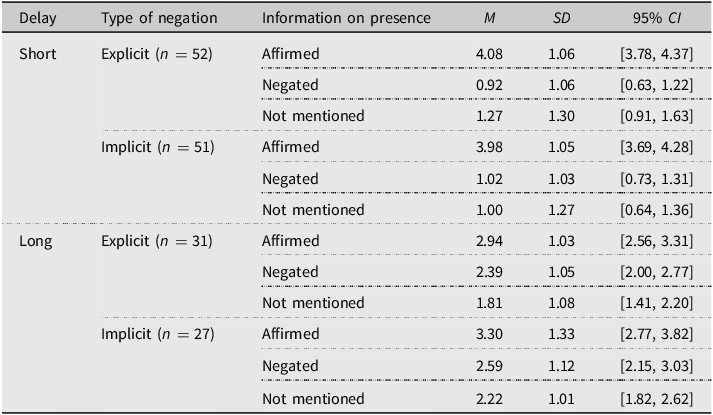

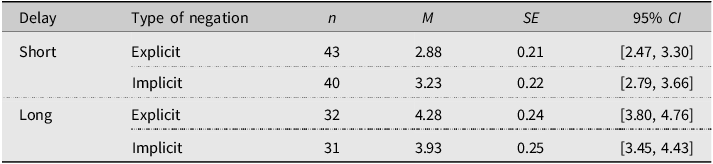
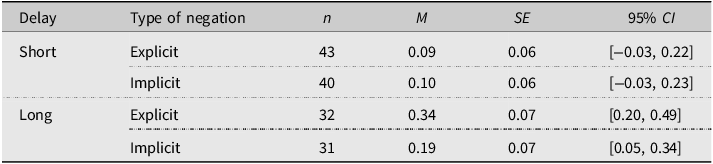


 Open access

