

Hostname: page-component-7b7567c8c-tnkh4 Total loading time: 0 Render date: 2026-11-16T12:19:08.034Z Has data issue: false hasContentIssue false

GÖDEL DIFFEOMORPHISMS

Published online by Cambridge University Press:  01 September 2020

MATTHEW FOREMAN*
Affiliation:
MATHEMATICS DEPARTMENT UNIVERSITY OF CALIFORNIA IRVINE, CA, USA E-mail: mforeman@math.uci.edu
Rights & Permissions [Opens in a new window]

Abstract

Core share and HTML view are not available for this content. However, as you have access to this content, a full PDF is available via the 'Save PDF' action button.

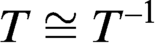
In 1932, von Neumann proposed classifying the statistical behavior of differentiable systems. Joint work of B. Weiss and the author proved that the classification problem is complete analytic. Based on techniques in that proof, one is able to show that the collection of recursive diffeomorphisms of the 2-torus that are isomorphic to their inverses is $\Pi ^0_1$-hard via a computable 1-1 reduction. As a corollary there is a diffeomorphism that is isomorphic to its inverse if and only if the Riemann Hypothesis holds, a different one that is isomorphic to its inverse if and only if Goldbach’s conjecture holds and so forth. Applying the reduction to the $\Pi ^0_1$-sentence expressing “ZFC is consistent” gives a diffeomorphism T of the 2-torus such that the question of whether $T\cong T^{-1}$ is independent of ZFC.

Information

Type
Articles
Copyright
© The Association for Symbolic Logic 2020