


At the end of her career, Mattel’s founder Ruth Handler described the creation of the Barbie doll as a quintessential American success story, embodying innovation, vision, and entrepreneurial spirit. She recalled thinking about the idea of a grown-up-doll by looking at her daughter Barbara and her friends playing with paper dolls: “I recognized that they were role playing their dreams of the future through these [paper] dolls,” adding that “so in the back of my head was this thought that ‘gee if we could take these paper dolls and turn these into real dolls and could in fact generate this play pattern, we’d have a hell of a doll concept.’” In Handler’s telling, Barbie’s breakthrough lay in imagination-made material: a new play pattern translated into a novel product, then propelled through superior design and marketing into a global phenomenon.Footnote 1
The commercial record supports the scale of that phenomenon. Since her debut at the New York Toy Fair in March 1959, the Barbie doll has become one of the best-selling products not only for its manufacturer, Mattel, but in the entire history of the toy industry, with about 1 billion Barbies sold.Footnote 2 Over time, Barbie also became a cultural icon, reshaping doll play and reflecting changing ideals of beauty, fashion, work, and femininity. For her part, Ruth Handler, Barbie’s “mother,” remains celebrated more than two decades after her death as one of the most imaginative and innovative female entrepreneurs in American history, despite her own bumpy entrepreneurial journey.Footnote 3 Often portrayed as a trailblazer and feminist entrepreneur, she contributed to building Mattel, the company she co-founded with her husband Elliot in 1948, into a dominant force in the global toy industry. By the 2020s, Mattel remains a major player in the market, worth over $6.5 billion in 2025, and continues to shape the toy industry through its global reach.Footnote 4
Recalling Mattel’s beginnings at the end of her career, in 1981, Ruth explained that they: “did, far in advance of the entire industry, get in an intensive effort and expenditure in research and development very early, because we knew that our growth and our success depended on being unique in both product and marketing, and we were very unique in both [. . .] we were pretty cocky kids and we were winners all the way,” casting Mattel as a classic American success story built on hard work, innovation, and risk-taking entrepreneurship.Footnote 5 This was largely true during the company’s early years, at least until 1955, when Mattel had grown into a medium-sized company with a significant share of the US toy market.
This article takes as its starting point the claim that Mattel’s “American success story,” while accurate in outcome, remains insufficient as an explanation. Although Barbie was central to Mattel’s success, the company had established itself as an underdog even before the doll’s launch, growing from a startup that Ruth and Elliot built out of a former Chinese laundromat on Olympic Boulevard, Los Angeles, in the 1940s, into a multinational dominating the industry. In Ruth Handler’s memoirs and retrospective interviews from the late 1970s onward, Mattel’s early ascent is narrated as the product of Elliot’s creative genius and her own marketing acumen; an almost seamless story of competitive merit, where product originality and bold promotion yield steady growth.Footnote 6
Yet a closer look at the toy industry of the 1950s and early 1960s, especially the emerging market for 3D “grown-up” fashion dolls, reveals a more nuanced path to dominance. Mattel did not rise only by innovating faster than rivals. It also learned to compete by changing the rules of the industry’s competitive game. It systematically used intellectual property (IP) claims, preliminary injunctions, and aggressive marketing to stabilize a market that was, by nature, volatile and easy to imitate. This paper therefore treats Barbie not simply as a brilliant product launch, but as a turning point in Mattel’s strategic repertoire: when a firm that had succeeded as a design and marketing pioneer and innovator began to rely more systematically on litigation as a competitive tool.
Our focus is not simply whether firms “weaponized” litigation, but how legal rights became part of the ordinary machinery of competition. Under what conditions did a manufacturer move from competing primarily through product cycles, distribution, and advertising to competing through litigation and legal claims over the boundaries of market conduct? Why IP in particular, rather than other routes to market control (i.e., acquiring rivals, vertical integration, doubling down on R&D, or waging price wars)? And how did legal doctrines and procedural tools available in US courts at the time make this strategy especially attractive in a low-tech, high-turnover industry, where designs could be copied quickly as overseas production blurred responsibility across manufacturers, importers, and distributors?
First, we argue that Mattel’s turn to IP enforcement in the early 1960s was not a generic “litigation strategy,” but a specific response to a specific problem: Barbie’s business model depended on rapid scaling, a complex array of adjacent products and accessories, and brand-managed differentiation, at the same moment that offshore manufacturing and a crowded fashion-doll segment made imitation cheap, fast, and hard to police through product innovation and bright marketing alone. Legal tools, particularly those that could operate quickly, threatened distribution channels, and targeted smaller firms and intermediaries, offered Mattel a way to convert brand investments into exclusionary power. This leads us to our second point. We contend that Mattel’s legal tactics worked as a force multiplier for marketing and R&D. In a fast-cycle, copy-prone market, litigation (especially IP claims aimed at distributors and rivals) could offer a comparatively cheaper, lower-risk, and faster way to protect returns on heavy but uncertain investments in design, research, and advertising. Legal threats also gained traction when paired with Mattel’s promotional storytelling: claims about Barbie’s uniqueness and Mattel’s entrepreneurial originality made legal assertions more persuasive to judges, retailers, and consumers, cast competitors as illegitimate copyists, and normalized a conception of “innovation” that encompassed the overall impression and identity of a product line rather than any single technical feature. In this sense, litigation, marketing, and ongoing product development worked together as a bundled strategy for market consolidation.
Business historians have long examined how firms secured market power through scale, managerial coordination, branding, distribution, and research capabilities. The Mattel case adds to this literature by showing how a consumer-goods firm in a low-tech, design-driven industry used IP and litigation to define the boundaries of legitimate competition. It therefore connects the history of the toy industry to broader debates on postwar capitalism, when intangible assets such as brands, designs, goodwill, and legal claims became increasingly central to corporate strategy.
Empirically, the article traces Mattel’s transformation from a mid-sized American toy company into a global powerhouse through the legal and commercial battles surrounding Barbie’s early years. As Mattel shifted production to Japan and later Hong Kong, it lowered costs but became more exposed to look-alike products and contested copying. In this context, the company sought both to establish Barbie’s dominance over its predecessor, the German doll Bild Lilli, and to manage a market increasingly crowded with similar 3D grown-up dolls. The 1962 settlement with Louis Marx over Lilli-related rights was only the most visible episode in a broader pattern of litigation. Across these disputes, Mattel increasingly relied on trademark and copyright claims, often paired with aggressive business tactics, to pressure competitors and distributors and to gain speed in fast-moving toy cycles.Footnote 7 As a consequence, Mattel is not treated as representative of postwar American business as a whole, but as a particularly revealing case. Barbie’s exceptional success, Mattel’s heavy investment in television advertising, and the toy industry’s seasonal rhythm made litigation especially powerful, showing how IP enforcement could become a competitive tool in design-driven sectors where imitation was rapid, and brands carried growing value.
Methodologically, the paper draws on extensive archival materials from the Ruth Handler collection (RH/MC501) held at the Schlesinger Library, Radcliffe Institute for Advanced Study, and cross-references these sources with a close reading of 19 public case records from federal and state courts (Eastern and Southern Districts of New York; Central and Southern Districts of California; and the Los Angeles Superior Court), totaling more than 3,500 pages (see Table 1A). These legal records, complaints, motions, injunction requests, depositions, exhibits, and judicial reasoning, are read alongside contemporaneous trade materials (some consulted at the Bamberg Public Library in Germany) and the specialized knowledge preserved by doll collectors and expert blogs, which helped reconstruct the crowded fashion-doll market in which Barbie emerged. This historical approach allows us not only to document litigation, but also to show how legal doctrine, procedural instruments, and market structure interacted and how, in a particular sector at a particular moment, IP became an offensive resource among competing strategic alternatives.
Mattel’s List of Legal Disputes (1960–1965)

Table 1A. Long description
Table with 18 rows and 5 columns detailing Mattel’s legal trials from 1960 to 1965. Columns are Case name, Company (plaintiff/defendant), Court, Cause of action, and Final outcome. Row 1: Mattel v. Cline Stewart Company 60 C-759275, TP/DS, Superior Court of California, Unfair competition, Judgment in favor of Mattel; No damages awarded; Delivery of defendant’s doll (Gina), accessories, mold, etc. to the Court; Each party bear its own costs. Row 2: Mattel v. The May Department Store 60 C-759790, TP/DS, Superior Court of California, Unfair competition, Dismissed without prejudice. Row 3: Mattel v. Buffums 60 C-1321, TP/DS, Central District of California, Unfair competition and trademark infringement, Stipulation of settlement; No damages awarded; Defendant permanently enjoined from selling and offering Babs Fashion Doll sets; Each party bear its own costs. Row 4: Louis Marx v. Mattel 61 C-341 WB, TP/TP, Central District of California, Patent infringement, Dismissed with prejudice; No damages awarded; Each party bear its own costs. Row 5: Mattel v. Goldberger 61 C-428, TP/DM, Eastern District of New York, Unfair competition and copyright infringement, Stipulation of settlement Defendant will not use the name Babette or Miss Babette to advertise its dolls. Row 6: Mattel v. Shillman 61 C-720, TP/DCM, Eastern District of New York, Unfair competition and trademark infringement, Stipulation of settlement; No damages awarded; Each party bear its own costs. Row 7: Mattel v. Louis Marx 61 C-1095, TP/TP, Southern District of New York, Unfair competition and copyright infringement, Dismissed with prejudice; No damages awarded; Each party bear its own costs. Row 8: Mattel v. Valentine 61 C-2062, TP/DM, Southern District of New York, Unfair competition and copyright infringement, Dismissed without prejudice; No damages awarded; Each party bear its own costs. Row 9: Mattel v. Fab-Lu 61 C-4135, TP/DM, Southern District of New York, Unfair competition and copyright infringement, Dismissed with prejudice; No damages awarded; Each party bear its own costs. Row 10: Mattel v. Sad Sack Stores 62 C-1593, TP/DS, Central District of California, Unfair competition and trademark infringement, Stipulation of settlement; No damages awarded; Defendant permanently enjoined from advertising Liza doll by using photographs of Barbie doll; Each party bear attorneys’ costs. Row 11: Mattel v. Consumer’s Mart of America 62 C-1594, TP/DS, Central District of California, Unfair competition and trademark infringement, Judgment in favor of Mattel; No damages awarded; Defendant permanently enjoined from using the word “Babs” or “Barbie” to sell and advertise clone dolls, clothing, and accessories; Each party bear attorneys’ costs. Row 12: Mattel v. F.W. Woolworth 62 C-1595, TP/DS, Central District of California, Unfair competition and trademark infringement, Dismissed without prejudice; No damages awarded; Each party bear its own costs. Row 13: Shillman v. Mattel 63 C-789, DCM/TP, Central District of California, Unfair competition and trademark infringement, Stipulation of settlement. Row 14: Mattel v. Me Too Sales 63 C-1023, TP/DS, Central District of California, Trademark infringement, Dismissed without prejudice. Row 15: Mattel v. Azrak-Hamway 63 C-1024, TP/DCM and distributor, Central District of California, Trademark infringement, Judgment in favor of Mattel; No damages awarded; Defendant permanently enjoined from using the trademark Barbie for purpose of sale of doll clothing and accessories; Each party bear attorneys’ costs. Row 16: Shillman v. Mattel 63 C-1170, DCM/TP, Eastern District of New York, Appeal to case 61 C-720 Mattel v. Shillman, Dismissed with prejudice; No damages awarded; Each party bear its own costs. Row 17: Mattel v. Original Toy 63 C-977, TP/DM, Eastern District of New York, Unfair competition and copyright infringement, Dismissed without prejudice; No damages awarded; Each party bear its own costs. Row 18: Mattel v. Premier Inc. 65 C-594, TP/DM, Eastern District of New York, Unfair competition and trademark infringement, Dismissed without prejudice; No damages awarded; Each party bear its own costs. Row 19: Mattel v. Shack Shapiro 65 C-1803, TP/DS, Eastern District of New York, Unfair competition and trademark infringement, Dismissed without prejudice; No damages awarded; Each party bear its own costs.
Source: Authors’ compilation. Note: * DCM = Doll Clothing Manufacturer; DM = Doll Manufacturer; DS = Department Store; TP = Toy Producer.
Toy Industry from Product to Legal Innovation
Toy making, like many other manufacturing industries, evolved alongside the rise of consumer society. By the nineteenth century, an international toy industry had taken shape, with British and German producers dominating the global market. However, after World War I, American firms such as Louis Marx began capturing market share from their European counterparts, taking advantage of the booming US consumer market in the 1920s. During the interwar period, the toy industry, once primarily composed of small businesses, began shifting toward mass production, supported by the expansion of larger distribution channels like malls and department stores.Footnote 8 By 1956, nearly half of supermarkets were selling toys, which had become increasingly attractive due to their high profit margins.Footnote 9
Before the 1950s, mainstream American toymaking was framed in parent-facing terms: toys were marketed as developmentally appropriate and often as miniature rehearsals for adult roles. Educational-toy firms built their appeal around safety, expert endorsement, and school readiness, treating novelty as a secondary concern. In a few years, however, that parent-facing model weakened, and the industry’s center of gravity moved toward “novelty toys” engineered to speak directly to children’s desires and imaginations rather than to parents’ needs and values. This transformation was propelled by several interconnected forces.
First, new materials, especially plastics, enabled the mass production of durable, brightly colored toys with increasingly tailored designs. Second, television made the new strategy scalable. Whereas early postwar toy retailing was highly seasonal and advertising largely targeted adults, TV gave toymakers continuous and direct access to children. Licensing ties with television programs expanded product lines and embedded toys more deeply in consumer culture and everyday social norms. With children’s programming addressing predictable young audiences, firms such as Mattel and Hasbro developed a distinctly televisual style of promotion: commercials that sold objects wrapped in convincing stories, providing “scripts” that taught children how to play and turning toys into props for make-believe dramas. The result was a new sales environment in which “the real authoritative voice was in the advertising,” and in which parents’ role increasingly shifted from active gatekeepers to the prime providers of funds.Footnote 10
Third, cultural change. In the early postwar decades, the United States shifted more markedly from a production-centered economy to one organized around consumption, reshaping women’s roles as managers of household shopping and recasting childhood as a distinct period of play, learning, and self-development. As historian Gary Cross showed, mid-twentieth-century America became “the age of the child,” as adults “heap[ed] endless goods on the young” and redefined innocence less as sheltering and more as cultivating wonder and desire, so much so that “childhood wonder and spending on kids became the same thing.”Footnote 11 In the same way, before Barbie, the doll market was still dominated by baby and companion dolls built around nurturing and friendship play, with only limited room for fashion-oriented alternatives such as paper dolls and a few 3D teen-doll variants (like Ginny’s older sister Jill). Barbie’s 1959 debut re-centered the segment on the fashion doll: a youthful, grown-up figure that did not invite girls to play “mommy,” but instead oriented play toward clothes, shopping, and accessories, namely toward an education in consumption. This was reinforced by the broader “Barbie universe,” an unusually elaborate combination of outfits, accessories, and companion dolls (initially Ken and Skipper), later expanded through friends, play environments, and even story cues printed on packaging.Footnote 12
This shift also dovetailed with Cold War geopolitical narratives that cast children’s creativity as a national resource, crucial to securing the United States’ future in technological competition. In this setting, American capitalism, exemplified by emerging brands like McDonald’s, Tupperware, and Whirlpool, packaged the “American Dream” as a lifestyle in which freedom and consumption were tightly intertwined, implicitly contrasted with the supposed uniformity of the communist model. “Americanness” thus came to signify fair competition and the self-made entrepreneurial myth: a level playing field promising endless opportunities to those who worked hard and dedicated themselves.Footnote 13 The toy industry played a crucial role in reinforcing this vision, offering children imaginative and ever-evolving toys that encouraged them to envision boundless futures. Companies like Mattel, Hasbro, and Remco positioned themselves as youthful, dynamic enterprises, embodying the era’s dominant political and cultural ideals. They framed their success as the product of relentless innovation in design, bold marketing strategies, and a deep commitment to creativity, narratives that reinforced their alignment with the broader ideological landscape of the time.Footnote 14
A fourth factor enabling this transition was the evolving regulation of unfair competition and IP in the United States. As the toy market grew, it became crowded and intensely competitive. Toys are seasonal and high-margin but not necessarily high-tech, so entry barriers are low, and imitation has always been easy. It became even easier once plastics enabled near-perfect copies at scale. Firms that invested heavily in advertising, particularly television, therefore had strong incentives to protect designs and brand identity through patents, trademarks, and copyright, both to secure returns on marketing and to limit fast knock-offs. Ruth Handler indeed recalled that one of her biggest rookie mistakes at Mattel was launching a product too early, leaving it vulnerable to copying by larger manufacturers with superior mass-production capacity: “(. . .) in the toy industry you need to be careful to observe seasonal timing problem. If you get something that someone can knock off…by the time you bring it to market, if you are not really in production and if you don’t control your marketing well and your manufacturing well, you can find yourself coming and going.…”Footnote 15
As a result, in design-dependent sectors like toys, litigation became an increasingly important competitive tool as IP doctrine expanded beyond patents. Up to the mid-1950s, courts generally demanded clear proof of patent infringement or other misconduct to sustain unfair-competition claims, making actions against copying slow and procedurally burdensome. The legal landscape shifted after the case Mazer v. Stein (1954) extended copyright protection beyond “fine art” to certain industrial objects and, by doing so, made it easier for firms to protect costly investments in marketing, styling, design, and brand identity. This doctrinal shift reflected a broader transformation in American capitalism: beyond physical assets and production capacity, competitive advantage started to rest increasingly on intangibles. Firms had long used patents strategically, but by the mid-twentieth century, this logic extended to consumer-goods design, with styling and brand recognition increasingly shaping competition.
The application of these principles to toys, in Rushton v. Vitale (1955), further encouraged a more assertive use of copyright and unfair-competition claims in the industry.Footnote 16 This doctrinal change also redirected legal attention from mechanical novelty and discrete technical features, traditionally guarded through the lengthy patent process, toward a product’s overall “look and feel,” including its design concept and general impression, which could be secured more quickly through copyright and trademark registration. As courts increasingly framed unfair competition around consumer protection and the safeguarding of goodwill, large firms with substantial advertising budgets were especially well positioned to benefit.Footnote 17
At the same time, when federal patent or copyright was uncertain, toy makers often used state unfair-competition law as a backstop, particularly to police “palming off” (i.e., trading on original producer’s reputation or confusing buyers) and other forms of deception. That option narrowed sharply in 1964 with the cases Sears, Roebuck v. Stiffel and Compco v. Day-Brite, which held that states could not prohibit the mere copying of unpatented product designs because unprotected designs belonged in the public domain; state law could still prevent deception and require proper labeling, but it could not create a de facto design monopoly. Initially seen as a crisis for design-driven industries, this shift paradoxically pushed firms toward systematic federal copyright registration and more aggressive, injunction-oriented legal strategies.Footnote 18
Litigation and Competition in the Literature
Mattel’s litigation strategy illuminates a broader transformation in the sources of competitive advantage in postwar American capitalism. Business historians have long shown that firms do not compete through markets alone but also shape the institutional environments in which they operate through managerial coordination, distribution systems, lobbying, standard-setting, and legal claims.Footnote 19 In the postwar United States, the expansion of consumer society, the rise of branded goods, and the growing enforceability of intangible assets created new arenas of competition beyond production, advertising, and distribution.Footnote 20 As Mira Wilkins has argued, trademarks and brand names operated as crucial intangible assets in the rise of the modern corporation; subsequent work on trademarks, brands, and competitiveness has similarly shown how law and business strategy evolved together.Footnote 21
This was especially visible in low-tech, high-turnover markets such as toys, where styling, brand recognition, and goodwill were valuable yet easily imitated. It became increasingly clear, however, that for firms with substantial resources, litigation could be more than a tool to defend large investments in branding: it allowed them to raise rivals’ costs, discipline distributors, and define the boundaries of legitimate competition.Footnote 22 William Baumol and Janusz Ordover showed how regulation designed to preserve a level playing field could instead be used by established firms to secure monopolistic positions and block more efficient or innovative competitors.Footnote 23 Thus, litigation can be understood as a strategic investment: a way for firms to allocate resources toward limiting competition and outpacing rivals. Baumol later framed this as a form of rent-seeking entrepreneurship, in which legal loopholes are used to preserve monopoly profits, yielding unproductive outcomes for society.Footnote 24
This perspective connects directly to business-history scholarship on patents, research, and corporate power, which illustrated that legal rights over knowledge and design have often served not only to reward invention, but also to structure markets and discipline rivals. In this sense, IP had a dual effect: while it could spur innovation by pushing firms to work around existing protections, it could also encourage systematic litigation, allowing companies to influence competitive conditions, enforce contractual positions, and discipline relationships across supply and distribution chains.Footnote 25 Strategic investment in R&D and patenting, used both defensively and offensively to shape market control, has been examined in classic studies of petroleum refining, electrical equipment, and the radio industry.Footnote 26
Leonard Reich’s seminal work, in particular, showed how corporations such as General Electric, Westinghouse, and AT&T (through Bell Labs) poured resources into industrial research on radio to amass patents that did more than reward invention. These portfolios helped drive technological progress while also enabling firms to secure monopoly positions or, at least, gain leverage over competitors and the broader dynamics of the market. The result was a familiar trade-off: rapid advances in radio technology alongside a competitive landscape that narrowed opportunities for smaller innovators.Footnote 27 Similarly, in tech and pharmaceuticals, companies frequently wielded patent litigation to delay the entry of generic drugs or block startups from bringing innovations to market, using IP laws as a tool for dominance.Footnote 28 When Napster, the pioneering peer-to-peer music-sharing platform threatened the traditional music industry in the late 1990s, the Recording Industry Association of America (RIAA) launched an aggressive legal battle, ultimately forcing its shutdown and preserving the industry’s control over distribution.Footnote 29
Thus, although IP protections were formally designed to encourage creativity, reduce consumer confusion, and protect distinctive market identifiers, firms increasingly used them to shape legal precedents and “make the rules” of the market, raising rivals’ costs and building a “litigation firewall” around their intangible assets.Footnote 30 This tension emerged in mid-century disputes over product design and unfair competition, as legal tools extended beyond patents to include copyright protection for creative works and trademark protection for brand identifiers. Manufacturers increasingly treated the courtroom as an extension of the marketplace, using IP and unfair competition claims to fight over imitation and copying. Mattel was no exception and as we argue in this article, its significance lies in how early and systematically it integrated litigation with branding, distribution, and product development in a low-tech consumer industry.
The legal dimension of both Mattel’s trajectory and the toy industry’s competitive dynamics is well recognized, but it is most often highlighted for later decades, particularly after the Handlers left the firm in the 1970s. Existing scholarship on the firm tends to fall into two camps. The first consists of commissioned or celebratory accounts that narrate Mattel’s rise through the charisma of its founders and the success of its flagship products, especially Barbie and Hot Wheels, presenting the doll as a cultural emblem of the “American way” and of the values and lifestyle the United States sought to project globally in the postwar era.Footnote 31 These works, by Ruth Handler herself, and then by Mary Lord, and Robin Gerber, generally credit Mattel’s success to innovative vision and disruptive entrepreneurship.Footnote 32 They depict the Handlers as transforming a small family startup into a global, “quintessentially American,” brand through creativity, hard work, and visionary marketing. Drawing largely from Ruth’s personal archives, these accounts reveal how she actively shaped her entrepreneurial narrative, strategically casting herself as Barbie’s creator and a pioneering female entrepreneur. This portrayal also served an “emancipatory” purpose, helping her rebuild her public image after a major reputational scandal in the 1970s.Footnote 33
The second camp, including particularly those publications examining Mattel’s development from the mid-1960s onward, highlights the darker side of the company’s growth. Oppenheimer’s Toy Monster presents the perspective of Jack Ryan, a former Mattel engineer, who was instrumental in developing Barbie and other key products, focusing on his fraught relationship with Ruth Handler and the company’s increasing reliance on litigation to stifle competition by the 1990s.Footnote 34 Miller’s Toy Wars similarly details Mattel’s decade-long patent battle with Hasbro in the 1980s and 1990s.Footnote 35 More recent journalistic reporting such as You Don’t Own Me and Barbie Land revisited a few of Mattel’s most prominent legal battles, from its early dispute over Barbie’s German precursor, Bild Lilli, to the prolonged war with MGA Entertainment over Bratz, framing these cases as windows onto the frictions between IP law, creativity, and competition in the modern toy industry.Footnote 36 These accounts support Bessen and Meurer’s theory of strategic litigation, showing how firms like Mattel used IP law to deter rivals by exploiting resource asymmetries.Footnote 37 The Bratz case, for example, imposed severe financial strain on MGA regardless of the verdict. Yet despite these insights, much of this work remains based on journalistic sources and isolated cases, lacking a systematic analysis of how Mattel shaped its competitive environment over time, or of the enduring role played by the Handlers in that process.
In this article, we propose that as early as the 1960s, Mattel maintained its dominant position in a creative industry (characterized by high margins, low-tech production, and low barriers to entry), by shifting from imaginative and emancipatory entrepreneurship to an integrated approach, which combined the use of traditional marketing and R&D with non-market strategies such as systematic litigation.
Ruth Handler and the Beginnings of Barbie
Examining the development of a specific segment of the toy market (3D grown-up-dolls that emerged through the 1950s and early 1960s) offers insight into the origins of Barbie and its role in Mattel’s growth strategy. In her autobiographical accounts, Ruth Handler narrated the genesis of Barbie as a slow process that started by looking at her daughter Barbara playing with grown-up paper dolls.
When Ruth Handler decided to pursue the Barbie project in 1956, she was at the helm of her toy company, Mattel, which was on an ascending trajectory of success. At that point, Mattel had moved beyond its startup phase and was a rapidly growing mid-sized family business quickly becoming one of the major US toy manufacturers. Mattel’s early momentum came from a line of innovative music toys (e.g., the Uke-A-Doodle), toy guns, and mass-market novelties like the Magic 8 Ball. By the late 1950s, the Handlers had mastered the industry’s rules and built Mattel’s reputation as an innovator, securing a strong position in the US market and cultivating deep ties across the toy supply chain, from manufacturers and distributors to advertisers. Additionally, they had taken an especially aggressive approach to TV advertising, directly targeting children’s programs. Handler was then looking for a new product, a potential cash-cow that would allow Mattel to scale by producing at low cost in the Far East and expand the firm’s international reach to the growing markets of Europe. According to Handler’s reconstruction, in the mid-1950s, there were no 3D grown-up-dolls in the market apart from some “junk [. . .] fashion doll.”Footnote 38 Ruth’s idea of a competing grown-up-doll raised some eyebrows among the industry’s (primarily male) insiders. By then, Mattel had no doll line in its product portfolio, and her husband Elliot Handler had been only starting to develop a talking baby-looking doll, the later famous Chatty-Cathy.
As Ruth’s story goes, in 1956, the Handlers took a family-work trip to Europe. While walking with her daughter Barbara along the shopping streets of Lucerne, she encountered Bild Lilli, a 3D grown-up-doll inspired by a popular comic strip character from Germany’s tabloid Bild Zeitung and manufactured by the German toy company Greiner and Hausser (G&H) (see Figure 1). Recognizing the product’s potential, Handler decided to adapt Lilli for the American market. Ruth envisioned a doll with a grown-up-like appearance that adhered to “American” beauty ideals: “A Lilli doll was too much of a caricature. And it wasn’t American. I wanted an American teenager, but I wanted a narrow waist, narrow ankles, and boobs [sic]. And she should look good, and be American, and she should wear a swimsuit because it’s the cheapest costume. Then we should sell toy costumes to begin with.”Footnote 39 Handler explained that she bought the Lilli doll in three versions, but that it was not possible to buy the clothes separately, which prompted her to create a Mattel version of the doll and launch a clothing line, which could be sold separately, through a razor-blade model. Mattel produced its first Barbie prototypes in 1958, drawing, without authorization, on three G&H patents associated with Bild Lilli. Then, the company moved quickly to secure formal protections of its own. It applied for the Barbie trademark, which was granted in 1959, and filed for copyright the same year, receiving registration in 1961.Footnote 40
Bild Lilli (left) and first Barbie (right). (Courtesy of Martha Glöckler, doll researcher.)

When Barbie was introduced at the New York Toy Fair in March 1959 (see Figure 1), initial reactions were mixed. Many parents expressed reservations about toys they viewed as trivial or potentially inappropriate. In the 1950s and ’60s toy industry, product innovation often faced resistance when diverging from prevailing norms. At the same time, firms increasingly framed new toys through emerging cultural concerns, especially creativity and educational value. Mattel responded by framing Barbie through narratives of aspiration and development and by backing that positioning with psychological research, promotional partnerships (including the Mickey Mouse Club), and an ambitious marketing and distribution program aimed at both children and parents.
In particular, the company drew on the motivational research of consumer psychologist Ernest Dichter, whose work helped tailor Barbie’s look and storyline to parental aspirations and shifting social norms, making the doll more acceptable and more desirable in a rapidly changing cultural landscape. An internal report by Dichter’s team noted that early parental reactions were lukewarm, largely because Barbie seemed too sexualized for children under the age of 10 and because “the doll makes the children grow up too fast and stimulate their interest in undesirable areas.” The proposed remedy, therefore, was to address the concern by reframing the product: “The doll should be promoted as a toy which helps develop desirable traits and habits in children. If this is done, the parents’ own attraction to the doll will become a motivating force in favor rather than against the purchase.”Footnote 41
Unlike German Lilli, Mattel’s Barbie was thus deliberately positioned as a role model, both in appearance and in consumer habits. Dichter’s agency helped refine this strategy, which in turn was increasingly embraced by mothers who came to see the doll’s “educational” potential. As the report observed: “The mothers admired the Barbie clothes just as much as the children did. Attention to the wardrobe seemed to break through the initial prejudicial impression. One mother, for instance, who had objected to the doll on the grounds of its being ‘too sexy’ changed her mind about the whole thing after she heard her eight-year-old girl comment: ‘She is so nicely groomed, Mommy.’ From that moment on she thought the doll might encourage good habits of self-grooming in her child.”Footnote 42
This psychological alignment was amplified by Mattel’s unprecedented marketing expenditure: over $4.2 million between March 1959 and June 1961, dwarfing the $500,000 allocated to R&D in 1959. The payoff was immediate: Barbie generated $8 million in sales over the same period and accounted for approximately 20% of Mattel’s total revenues by 1960.Footnote 43
In 1960, Mattel deepened Barbie’s brand identity by launching a “Barbie Magazine” sent quarterly to 110,000 Fan Club subscribers.Footnote 44 This early form of influencer marketing enveloped girls in Barbie’s world through personalized songs, recipes, fashion advice, and beauty tips. Barbie was now more than a doll: it had become a cultural phenomenon. The magazine reinforced the idea of Barbie as a singular, era-defining product, telling readers: “Never before has a doll drawn from the imagination of so large an age group.” Marketing materials echoed this sense of grandeur, hailing Barbie as “the one and only,” and even company leaders amplified the hype.Footnote 45 Ruth Handler, in a 1961 Women’s Wear Daily (WWD) quote, suggested customers’ insatiable demand and frustration over shortages: “[they] are constantly mad at us because we really do have a little trouble with deliveries.”Footnote 46 Mattel sales representative Alexander Frank called Barbie “the hottest and most sought-after doll item in the world.”Footnote 47
Through this orchestrated marketing and public-relations campaign, Mattel endowed Barbie with what trademark law calls “secondary meaning,” namely that the public came to associate the doll’s distinctive shape with its source (i.e., its producer). In doing so, the company turned Barbie into a symbolic shorthand not only for the Mattel brand but, increasingly, for the entire grown-up fashion-doll category. From the beginning, Mattel’s strategy was aiming beyond simply selling a toy; it was constructing a mythos of innovation, uniqueness, and cultural dominance that made Barbie the most coveted fashion doll in America. In 1959 alone, Mattel sold 351,000 Barbie dolls. As a point of comparison, in the decade from 1955 to 1964, only approximately 130,000 Lilli dolls were sold.Footnote 48
Bild Lilli and the Emergence of the 3D Grown-Up-Doll
In numerous publications celebrating Mattel’s legacy, the Lilli doll is predominantly characterized as a sort of call-girl: “Barbie was knocked off from the ‘Bild Lilli’ doll, a lascivious plaything for adult men that was based on a postwar comic character in the Bild Zeitung [. . .] Lilli was not merely a doxie, she was a German doxie: an ice-blond, pixie-nosed specimen of an Aryan ideal.”Footnote 49 Her transformation into Barbie, as envisioned by Ruth, is framed as an opportunity to fulfill her true potential of a doll designed for play. However, original historical sources reveal a more nuanced and divergent account.
Bild Lilli originated in 1952 in West Germany, when the tabloid Bild Zeitung, seeking to fill unused page space, commissioned the illustrator Reinhard Beuthien to create a cartoon character. Lilli was conceived as a young woman whose appearance and behavior reflected the economic, cultural, and social climate of the Wirtschaftswunder, aligning the character with emerging forms of postwar consumer modernity.Footnote 50 The cartoon quickly gained popularity among readers, presenting Lilli as an attractive and self-assured figure whose cheekiness was tempered by elements of youthful innocence. The archival evidence suggests that the concept of transforming the cartoon into a 3D doll had already taken shape within Bild Zeitung as early as 1953, marked by an initial contact between the newspaper and the toy manufacturer Steiff.Footnote 51 This preliminary project, however, did not come to fruition. Subsequently, in 1955, through the mediation of agent Heinz Frank,Footnote 52 the prominent German toy manufacturer G&H, known for its elastolin figures and wooden toys, was commissioned to produce a prototype for the doll.Footnote 53 Max Weißbrodt, the company’s chief designer, developed the Lilli doll as a 3D grown-up-doll, a format that had no direct precedent in contemporary doll production.Footnote 54
Lilli was first introduced to the public on the front pages of Bild Zeitung on August 13, 1955.Footnote 55 Marketed in a plastic cylinder bearing the newspaper’s logo and lacking any brand stamp on the doll’s body, Lilli was presented primarily as an extension of the media character. Production was split between G&H, which manufactured the doll’s body parts, and 3M-Puppenfabrik, which handled assembly, painting, hair styling, and outfits.Footnote 56 Lilli dolls were handcrafted by around 20 seamstresses and 6 painters, combining customization with unique stylistic touches. The level of manual labor involved contributed to their relatively high retail price: the tall version ranged from Deutschmarks (DM) 19.75 to 23.75 depending on the outfit, and the smaller one from DM 9.75 to 12.75. These prices were considered expensive at the time, as we know that in 1956 Lilli was sold in New York for $8.00. Barbie was instead launched for $3.00, three years later.Footnote 57
After its official presentation at the 7th German Toy Fair in Nuremberg in 1956, Lilli began circulating beyond Germany, reaching several European markets and entering the United States the same year.Footnote 58 In the United States, the doll was sold through major department stores and specialized toy shops, like Polk’s on New York City’s 5th Avenue or the prestigious Uncle Bernie Toy Menagerie in Los Angeles where the Handlers used to go to discover toy novelties from Germany.Footnote 59 In 1956, Lilli was also pictured in a photo with Paramount International president James E. Perkins. Despite Ruth’s well-crafted story, then, it is highly possible, albeit not granted, that she was able to see the Lilli doll in Los Angeles or elsewhere, in the same year she went to Europe.Footnote 60
From the outset, the sale of Lilli was accompanied by a catalog presenting the doll in a range of outfits, which could also be purchased separately (Figure 2). In several interviews, Ruth Handler later claimed that although Lilli was an innovative product, German manufacturers failed to understand the importance of selling outfits separately as part of an effective marketing strategy.Footnote 61 In the oral history notes prepared for her memoir, Ruth recalled that it was not possible to buy clothing as separate from the doll: “(. . .) I go in and I said to the woman: ‘can I buy that costume? Just the costume?’ And she said: ‘No, you buy the whole thing’ (. . .) so I bought the doll, by now I already made up my mind and I knew where I was going (. . .) by now I had it all figured out.”Footnote 62 However, Handler’s claim is contradicted by both the recovered Lilli catalogs and documents from her own personal archive, which include original receipts for multiple separate Lilli outfits, revealing a deliberately deceptive reconstruction (Figure 3).Footnote 63 Moreover, despite Handler’s official narrative that Mattel created an innovative wardrobe by hiring fashion student Charlotte Johnson, who moved to Japan to design and produce Barbie’s clothing in line with contemporary trends, the earliest Barbie outfits often bear a striking resemblance to items in earlier Bild Lilli catalogs.Footnote 64
Receipts of Ruth Handler’s order of Lilli Doll and separate dresses from German toy store Obletter (1956). (Courtesy of Schlesinger Library, Harvard Radcliffe Institute.)

Pages of Lilli Doll Catalog (no date indicated). (Courtesy of Lilli Fransen, doll collector.)

Although Lilli was a disruptive breakthrough that helped establish the 3D grown-up-doll category, the evidence points to limited capacity to sustain that innovation through broad diffusion and institutional consolidation.Footnote 65 The dolls were not mass-produced: production combined Coburg district artisanal traditions with design expertise from 3M, privileging refinement and craftsmanship over scale and cost efficiency. This model constrained Lilli’s ability to diffuse widely and to capture the value created by the category it helped to launch. Unlike Mattel, which later developed a systematic advertising strategy to construct Barbie’s symbolic identity and market durability, the German producers did not pursue a comparable approach.Footnote 66 This divergence can also be traced to Lilli’s origins as a newspaper-related novelty item, only secondarily adopted as a children’s toy, rather than being deliberately positioned within the children’s consumer market from the outset.
Mattel leveraged its market power and brand to position Barbie as exceptional and highlighted its commitment to innovation. In hindsight, this is evident in a 1993 oral history tape, where Ruth Handler downplayed mounting competition since the early 1960s: “They get in there [the market] and they [competitors] can’t make it because the Barbie name has become too important—also, from the beginning we stressed the high quality and attention to all kinds of details. Everybody has tried to knock off Barbie, and nobody has been successful. You know there have been anything from oriental [sic] people, who just make a cheap piece of junk [sic], to American manufacturers who make a major effort with a major advertising expenditure, and they all just don’t make it. The strength of Barbie is that children want Barbie and her friends. . . they want the real thing. . . and I think their mothers feel the same way and it’s fascinating!”Footnote 67
The next section investigates how this competition came about.
The 3D Grown-Up-Doll Boom: Asian Clones and the Delocalization of the Global Toy Industry
In the European market, Lilli’s product legitimacy did not pose significant challenges to its German manufacturers, as they were established names in the toy business and could leverage their brands. However, the United States presented a greater challenge for different reasons: it was a mass market (a larger scale unfamiliar to European firms) and Lilli was a foreign product deviating sharply from industry norms. Furthermore, her production was more artisanal and improvised than what was required for the American market where Lilli’s sales had not achieved significant success.Footnote 68 Thus, to accelerate progress overseas, G&H signed an agreement in June 1960 with the prominent toy tycoon Louis Marx, who was described in a 1955 profile on the Time magazine as the “Henry Ford of the toy industry.”Footnote 69 After learning about the agreement in 1960, Mattel approached G&H to acquire the rights to the doll, but received a negative response.Footnote 70
While G&H retained the rights to manufacture and distribute the doll under the name Lilli in other European markets, under the terms of the agreement, Marx acquired the rights to commercially use Lilli’s copyright in Britain, Hong Kong (HK), at the time still a British dominion, the United States, and Canada for 10 years.Footnote 71 Marx possessed substantial production capacity, control over distribution channels (major department stores), and had been one of the first American manufacturers to set up a facility in HK, where the plastics industry was booming. Yet he had never produced dolls and was skeptical of the power of marketing and advertising.Footnote 72
Following the 1960 agreement with G&H, Marx started the production of two dolls intended for the US market: Miss Seventeen (15 inches) and Miss Marlene (7½ inches) in its HK subsidiary’s facilities.Footnote 73 In HK, however, copies of the original molds had begun circulating within the city’s lax copyright environment already for a few years.Footnote 74 This sparked a wave of grown-up-doll clones (also known as “Lilli clones”) flooding the US market just as Barbie debuted on American shelves.Footnote 75 For instance, one of Marx’s former subcontractors produced an 11½-inch Lilli clone named Gina for the American Allison Corporation, retailing at a quarter of Barbie’s price since 1960.Footnote 76 By the early 1960s, at least 15 similar dolls were being produced for the global market (see Table 2 for details).Footnote 77 As evidenced in the affirmative defense of the manufacturer FabLu in 1961: “Long legged developed female figure of which plaintiff’s doll is exemplary and in which it is attempting to assert exclusive rights, have been in vogue in the American marketplace since the introduction of such female doll by the German company [G&H] at the Nuremberg Fair in 1956. Since that time dolls of this shape have been widely marketed by a variety of manufacturers and distributors who have applied a variety of supposedly chic names for the dolls.”Footnote 78
Selection of 3D Grown-Up-Dolls by Producer (1960s)

Table 2. Long description
A table listing various doll producers and their doll names from the 1960s. The table has 3 columns: Producer, Doll name, and Ideal or Guillem y Vicedo, Grets (Spain), EEgee (Golderger) (USA), Elite (USA), Peggy Ann Doll Clothes Inc. (USA), DavTex (L. Davis Textiles) (Canada, Europe), Allison Corp. (USA), Gina (Italy), Evergreen (USA), Camay (USA), Nasco (USA), Uneeda (USA), Valentine Doll Co. (USA, Canada), Plasti (France), GeGe (France), Cragstan (USA), American Character (USA), Bella (USA), Schildkrot (Germany), Waltershausen (GDR), Pedigree (license of Ideal to use the Tammy molds) (USA), Ross Products (USA), Nancy Ann Storybook Dolls (USA), Woolworth (Department store) (USA), Fab-Lu Ltd (USA), Frederick and Nelson (USA), American Doll and Toy Company (USA), Reliable (Canada), JC Penney (Department store) (USA), Ostolin (Italy), Fuller Brush Co. (USA), Topsey (Germany), Perfekta (Germany), Marx (USA), Joja (France), Famosa (Spain), Unique (USA), HEP (Europe), Ahlens (Sweden), Caprice (France), 3M Puppenfabrik (Germany), Wildesbrau (Netherlands), Juguetes Plaxon (Argentina), Remco (USA), Unknown maker (Japan), Fairy Like (USA), Convert (France), VM (USA), Linda Toys (EUROPE), Hans Postler (for Woolworth) (USA), Technicolor (USA), Playmates (USA), Kirat (France), ATC (USA), Chang-Ju SuCo (USA), No-name Lili clones (USA). The table lists the producers in the first column, the doll names in the second column, and the country of origin in the third column.
Source: Authors’ compilation with the support of doll collector Martha Glöckler.
Besides its strong branding, until the Hausser–Marx agreement, Mattel also held a competitive edge by producing Barbie in Japan under strict supervision. Alongside G&H, it was one of the few companies capable of achieving a refined, more appealing doll face, using rotating molding machines for doll heads and electric discharge machines for intricate facial details.Footnote 79 This technology only reached HK with the establishment of subcontractor HKI by Shanghai entrepreneur Loh Te-sing, who began working with Mattel around the 1960s.Footnote 80 HKI would later enter a joint venture with Mattel in 1966, the first in the HK toy industry.
On March 24, 1961, Louis Marx filed a civil lawsuit against Mattel in the Southern District of California-Central Division for patent infringement in the production of Barbie.Footnote 81 That same year Mattel responded by filing a lawsuit against Marx in April in the Southern District of New York to respond to Marx’s allegations.Footnote 82 In June 1962, Mattel and Marx signed a sub-license agreement “to produce, sell and distribute dolls under said US patent to Hausser et al. No. 2,925,684 embodying the invention thereof, for example, as incorporated in Mattel’s Barbie and like dolls.”Footnote 83 The matter was settled with a stipulation of dismissal in 1963 and the following year, in 1964, Mattel acquired Lilli’s rights from G&H for three lump-sum payments totaling DM 85,000, about $21,600 at the time (equivalent to about $226,000 in 2025, inflation adjusted).Footnote 84
Before acquiring the rights to Lilli, Ruth Handler made no official mention of the German doll, and, to our knowledge, before the late 1970s, acknowledgments that Barbie was based on Lilli appeared only in court documents. After the acquisition, however, Handler publicly admitted to having drawn inspiration from Lilli, while simultaneously reshaping the narrative to highlight that Barbie was the “real thing.” In contrast, Lilli was recast as fundamentally different: “un-American,” lacking the “razor blade” business model, and unsuitable for children. For instance, although Lilli was actually a carefully crafted, artisanal doll with changeable outfits strikingly similar to Barbie’s early lines, in the 1994 anniversary script Ruth described Lilli as: “made out of cheap plastic and her hair glued-on wig, [. . .] She had breasts and a narrow waist and shapely legs. She was almost risqué looking as cartoony as she was. She wasn’t meant for children’s play, but for collecting [. . .] There were six variations of this same doll each with a variation of a European ski outfit, totally unlike American clothes. [. . .] but she showed that an adult doll of the type I wanted could be made.”Footnote 85 This contrast was echoed repeatedly since the 1970s in Ruth’s oral histories and official company narratives until it became the dominant account.
In sum, Lilli never fully transitioned from novelty item to mass-market children’s toy, and it certainly never became a global product. Bound by its origins as a gadget rather than a scalable play system, it lacked the capacity for sustained diffusion; when Marx later tried to catch up with Mattel through Miss Seventeen, the effort exposed how quickly the segment had moved on and how late such responses had become. Thus, while delocalization fueled a wave of Lilli clones, it was Mattel, whose Barbie was itself a heavily branded adaptation of Bild Lilli, that ultimately felt the sharpest competitive pressure, more than Louis Marx or G&H. The shift of production to Asia reduced labor and manufacturing costs and standardized production technology, but it also introduced new challenges. Court files indicate that these cost savings were offset by rising legal expenses tied to protecting IP, enforcing trademarks, and navigating competition in an increasingly crowded market. While the Handlers argued that Barbie’s success was primarily due to her uniqueness and Mattel’s significant advertising efforts, the analysis of 19 lawsuits Mattel initiated between 1960 and 1965 tells a different story about the source of Barbie’s dominance over her competitors. Since 1961, navigating in and out of courts to defend Barbie from the Asian “Lilli clones” had become a true hallmark of Mattel’s competitive strategy.
Mattel’s Incumbency through Systematic Litigation
The delocalization of global value chains (GVCs) since the 1950s, particularly the shift of production to Asia, reallocated resources from specialized labor and technological facilities to services such as IP protection. This transition reflects the broader shift of advanced economies from manufacturing to services during the Third Industrial Revolution. Mattel’s trajectory mirrors this evolution, moving from an entrepreneurial, innovation-driven culture to one increasingly reliant on strategic litigation as it scaled through delocalization.
Between 1960 and 1965, Mattel initiated 16 of the 19 trials that saw it involved against competing toy manufacturers and distributors (see Table 1A). The company primarily pursued cases for trademark and copyright infringement and unfair competition, employing preliminary injunctions as a central tool. A preliminary injunction is an early court order meant to preserve the status quo and avert irreparable harm while a case is pending. Although formally a protective remedy, legal scholars have shown it can also function as leverage: by abruptly disrupting a rival’s sales and cash flow, it can push less-resourced defendants toward settlement simply to avoid mounting legal costs and operational paralysis.Footnote 86 Because settlements end disputes without a merits ruling or appeal, injunction-driven litigation tends to favor well-funded plaintiffs, making financial endurance in court a decisive competitive asset.Footnote 87 Complex industries like electronics and biotechnology have showcased similar outcomes, where large firms benefit more from IP and patent litigation, while small and medium-sized firms face greater risks and financial burdens.Footnote 88
In this legal setting, preliminary injunctions generally depended on four elements. (i) A likelihood of success on the merits, which, in practice, means showing a credible claim of copying (copyright) or likely consumer confusion about source (trademark/unfair competition). (ii) A risk of irreparable harm without the injunction, namely, the plaintiff must show that waiting for a full trial would cause damage that money later may not realistically fix, such as loss of control over reputation and goodwill, lasting consumer confusion, or the collapse of a seasonal market window. (iii) A balance of hardships favoring the plaintiff, which is more likely when the plaintiff’s threatened harm outweighs the defendant’s burden of pausing the challenged conduct. (iv) A public interest supporting the injunction, namely when the injunction serves broader social goals, typically by protecting consumers from deception and supporting a fair marketplace and lawful competition.
With the rise of consumer brands, preliminary injunctions became increasingly important in unfair-competition, copyright, and trademark litigation during the 1970s and 1980s. In the toy industry, however, this shift began earlier, after courts applied copyright to toy design in cases such as Rushton v. Vitale, helping to normalize injunction-driven litigation. Traditionally, plaintiffs had to prove “irreparable harm” beyond what money damages could remedy, but Rushton recognized the seasonal and fad-driven nature of the toy market: if cheap copies remained on shelves during the holiday window, the original seller could suffer irreparable damage before final judgment. After Rushton, toy litigation increasingly revolved around speed: securing interim relief quickly enough to remove copies from the market, pressure small importers and wholesalers into settlement, and force defendants to contest validity at the outset of the case. In practice, even a temporary injunction could be commercially lethal, freezing goods in ports and warehouses, prompting retailers to cancel orders, and leaving small copyists with unsellable inventory and escalating legal costs.Footnote 89
As a result, from the early 1960s, Mattel’s competitive strategy increasingly resembled a “search and destroy” model of rapid legal enforcement. Alongside other large toy firms such as Hasbro, Ideal, and Louis Marx, Mattel built legal capacity and relied on specialized outside counsel, especially Aberman and Greene in New York, to monitor the market. The routine became standardized: pre-emptive registration of new designs with the US Copyright Office as “sculpture” or applied art; systematic surveillance of trade fairs and retailers; and, once a look-alike appeared, a rapid move to court for a temporary restraining order or preliminary injunction before the selling season peaked.Footnote 90 Lawyers framed this logic in industry-specific terms: because toy demand was seasonal and fad-driven, damages awarded after years of litigation would come too late, while copying during the holiday window could saturate the market, depress prices, and inflict lasting harm on brand reputation.
Mattel refined this template into a repeatable playbook. Working closely with its legal team, it improved its chances of securing preliminary injunctions through “forum shopping,” concentrating filings in New York and Los Angeles, where the “either-or” clause lowered the burden for interim relief by allowing plaintiffs to show either irreparable harm or likelihood of success.Footnote 91 Mattel also used timing and settlement pressure as leverage, repeatedly pushing defendants toward quick stipulations that delivered practical victories without full adjudication. Its targets were not only makers of Barbie-like dolls, but also firms selling compatible clothes and accessories that followed Mattel’s designs or traded on the Barbie name.
Mattel’s Litigation Outcomes and Market Effects (1960s)

Table 1B. Long description
A table summarizing Mattel’s litigation outcomes and market effects in the 1960s. The table has five columns: Outcome, Number of cases, Key characteristics, and Impact on the market. Row 1: Outcome: Judgment/injunction, Number of cases: 3, Key characteristics: Court ruled directly in favor of Mattel, Impact on the market: Forced the removal of “clone” dolls and banned the use of the name “Barbie” by competitors. Row 2: Outcome: Settlement, Number of cases: (stipulation), Key characteristics: Mutual agreements reached before a final verdict, Competitors agreed to stop using confusingly similar names or using Barbie photos in ads, Impact on the market: 6. Row 3: Outcome: Dismissed with prejudice, Number of cases: 4, Key characteristics: Cases closed permanently; cannot be refiled, Impact on the market: Ended major disputes with competitors. Row 4: Outcome: Dismissed without prejudice, Number of cases: 6, Key characteristics: Cases closed but potentially open to refiling, Impact on the market: Often used against retailers as a “warning shot” to stop selling infringing goods.
Source: Authors’ compilation.
Across these cases, Mattel’s arguments followed a stable sequence. First, it claimed that copycats were free-riding on Barbie’s exceptional visibility and on Mattel’s heavy investments in advertising and promotion. Second, it emphasized Barbie’s “secondary meaning,” which was becoming increasingly central in unfair-competition jurisprudence. Mattel argued that intensive marketing and distinctive design had made consumers associate the doll’s look with a single source, so that Barbie signified both Mattel and, increasingly, the grown-up fashion-doll category. On that basis, the firm alleged trademark infringement and deception when competitors used labels such as “Barbie-type” or “Barbee-type” (practices framed as “palming off” that could confuse buyers), appropriate Barbie’s popularity, and tarnish Mattel’s reputation through lower-quality substitutes. Finally, it cast these acts as unfair competition that misled the public, including children as the primary users and households as purchasers, thereby linking its request for injunctive relief to the public-interest rationale of trademark and unfair-competition law: reducing confusion and lowering consumers’ search costs in a crowded market.Footnote 92
Overall, the cases show that Mattel deployed a layered enforcement strategy rather than relying on one single legal outcome (see Table 1B for details). In a small number of high-stakes suits, it pushed for judgments and injunctions that directly removed “clone” dolls from the market and barred competitors from using the name “Barbie,” establishing clear legal boundaries and signaling strength. More often, Mattel used settlements to secure quick behavioral changes, pressuring rivals to abandon confusingly similar names and to stop leveraging Barbie imagery in advertising, without the time and risk of a full trial. Dismissals with prejudice effectively closed major disputes with competitors, while dismissals without prejudice functioned as a more flexible tool, frequently aimed at retailers as a “warning shot” to deter sales of contested goods and keep distribution channels aligned with Mattel’s claims.
In a minority of cases, defendants pushed back and contested Mattel’s claim of producing the “queen of dolls”Footnote 93 and the most original product. They asserted instead that Lilli was the true original, weakening Mattel’s claims of originality: “Plaintiff is attempting to assert an exclusive right in the mannequin figure of a high fashion doll [. . .] The particular long-legged female form was introduced in Germany at the 1956 Toy Fair [. . .] Plaintiff [Mattel] without authorization copied the doll.”Footnote 94 Among the 16 lawsuits that Mattel initiated, the company faced significant challenges in two cases. In the first, against the Goldberger firm, the maker of the Babette doll, the court denied Mattel’s request for a preliminary injunction. In the second, against Shillman, a producer of doll clothes. In 1961, Mattel accused Shillman of using doll-name designations in marketing materials such as “Barbee, Bobbie, Chatty Cathy, Kathe, Shirley.” Although Shillman argued that this was a practice “widespread and accepted,” they were forced to settle to avoid a preliminary injunction.Footnote 95 Then, they countersued Mattel in 1963, accusing the company of misconduct after the agreement.
In the Goldberger case, Mattel argued that Babette’s similarity to Barbie could confuse consumers. Goldberger successfully countered, showing that halting Babette’s production would harm the market by reducing supply: “Demand for said Barbie products by the trade and public exceeded the ability and capacity of plaintiff’s staff and productive facilities [. . .] additional production capacity is scheduled to be completed by February 28, 1962, in the plaintiff’s continuing effort to meet and attempt to satisfy the market demands.”Footnote 96 This argument gained weight from Elliot Handler’s affidavit, also echoed in Ruth Handler’s comment to WWD later that same year, which revealed that Mattel’s production capacity was insufficient to meet the high demand for Barbie during the 1961 Christmas season. Goldberger contended: “A free competitive market [. . .] should not be destroyed without compelling reason. There is no compelling reason to grant preliminary injunction in favor of a plaintiff who has demonstrated that it was not and would not, suffer any harm.”Footnote 97 Goldberger also demonstrated that customers could clearly distinguish Babette from Barbie, and that Barbie already had a competitive advantage in the market. An affidavit from a distributor stated: “The Babette doll is a nice clean doll, but we are having a problem selling it. Our customers want the BARBIE DOLL and will not accept Babette until they are sure there are no more Barbie dolls in the area. Be assured that the consumer knows that he is buying Babette and NOT Barbie!!”Footnote 98
Producer defendants accused Mattel of disregarding industry etiquette and acting as though they were above the law. They cited violations of the 1934 Code of Fair Competition and the recent Special Bulletin No. 76 issued by the Toy Manufacturers of America, which addressed the labeling and marketing of toys and their origins. Interestingly, the bulletin had been issued by Mattel’s own law firm, Aberman and Green, serving as the association’s general counsel. Goldberger challenged Mattel’s claims of superior quality, accusing the company of “unfair and improper acts” by manufacturing most doll components in Japan, while misleadingly labeling them as “Made in USA,” violating regulations on product origin. In their defense, Goldberger’s lawyers argued that Babette was a more affordable alternative, made in the United States, unlike Barbie, which was manufactured in Asia. Defendants further highlighted consumer reluctance to buy imports from countries like Japan and noted that: “Plaintiff’s dolls’ clothing, both for the Barbie and Chatty Cathy dolls, is manufactured in Japan, yet no advertisement that I have seen put out by Mattel has indicated the Japanese origin thereof.”Footnote 99
Most importantly, in many cases, affidavits from defendants shed light on a series of practices that bordered on harassment and bullying. Defendants complained that Mattel strategically timed its requests for preliminary injunctions during peak sales seasons, close to the holidays, leaving competitors unable to continue operations or burdened with unsold inventory. By the early 1960s, the US toy industry was highly fragmented, with small family-run businesses operating on a much smaller scale than the Handlers’ enterprise and primarily manufacturing domestically. Even as Mattel acknowledged that its own production capacity could not fully meet Christmas demand, it deployed injunction-driven tactics that intensified pressure on competitors, threatening to freeze sales at the only moment they could recoup costs and often pushing them toward bankruptcy and layoffs. For instance, “Mattel wanted Allison [doll producer] to stop manufacturing and selling their doll in competition with plaintiff’s doll. Allison refused. Mattel waited until the height of Allison’s season and instituted a suit against The May Company, a department store customer of his in California and threatened suits against other California customers [. . .] plaintiff is using the same tactics here [. . .] namely, waiting till the height of the season and then ‘pouncing.’ Here plaintiff waited four months for the Christmas season.”Footnote 100
A further tactic involved “claim bundling,” namely consolidating multiple claims across various products into a single injunction, effectively targeting defendants’ entire operations. The use of “strategic timing” and “bundling” was evident in the case against Shillman, a company with a 40-year history spanning multiple generations. Mattel combined claims related to both Barbie and Chatty Cathy, effectively threatening to shut down Shillman’s entire product line.Footnote 101 Moreover, as in the case of Allison, Mattel timed the trial to coincide with the critical holiday season, maximizing the potential impact on the company. Irvin Shillman, the firm’s owner, accused Mattel of acting in bad faith. He noted that his company had communicated its intent to avoid questionable practices as early as March 1961 and again in June 1961, yet Mattel remained silent for months. As referenced in Shillman’s affidavit: “The plaintiff (Mattel) had stood by since June knowing full well that we intended to continue the use of certain catalogue material and package identification, without complaint. The plaintiff lulled us into the feeling that they had no further complaint throughout the summer and awaited the most critical moment in order to commence this action.”Footnote 102 He further argued that Mattel’s actions were not aimed at protecting its rights or market position but at undermining competition during its busiest season: “The plaintiff knows too well that a business such as ours depends to a large degree upon the holiday season and that [. . .] this is the point at which it is least able to devote time and effort to defensive litigation. [. . .] and at which an injunction, even of temporary nature, would have drastic consequences.”Footnote 103 Shillman concluded that the timing of the motion was designed to cripple his company, rather than to enforce Mattel’s rights in a fair manner.
Moreover, Mattel integrated this elaborate legal approach with aggressive non-market tactics, such as pressuring shared distributors of competing dolls and doll accessories while litigation with producers was ongoing. For instance, the conflict intensified when Shillman issued a flyer through a toy store where Mattel also sold products, Milwaukee Boston Store, advertising doll clothes compatible with Mattel’s dolls and, thus allegedly capitalizing on Barbie’s success. Following Mattel’s complaints, the head of Milwaukee Boston Store, William Binkelman, urged Shillman to stop using the flyers, writing: “I am pretty darn sure that unless you stop using them [flyers], we are going to be sued as well as you. It is my opinion that Mattel does not care whether they win or not, but they will make a big thing of this.”Footnote 104 Shillman responded, expressing both concern and frustration: “I do not consider my firm in the same league as Mattel. The last thing I would want is to become involved in a legal battle with them. [. . .] However, I cannot help but feel that there is something basically ‘un-American’ about a condition of this kind.”Footnote 105
In some cases, such as Sad Sack Store, The May Department, and others, Mattel sued toy shops and general retailers, threatening to withdraw its products unless they exclusively stocked Mattel’s dolls.Footnote 106 Faced with legal pressure and recognizing Mattel’s strong consumer demand, combined with distributors’ relative indifference to which doll occupied their shelves, many quickly capitulated and settled: “It is hereby stipulated that Buffums’ will not offer Bab’s Doll for sale, or advertise them for sale.”Footnote 107 This approach indirectly reinforced Mattel’s dominance over its competitors, solidifying its position in the market, as Shillman wrote to Binkelman in 1961: “It hurts me to see an increasing number of cases where otherwise aggressive merchants are being cowed into submission by the implied threat of not receiving the highly promoted TV items [Mattel’s products]. It would seem to me that here, if anywhere, is a breach of morality in business as well as an illegal restraint of trade.”Footnote 108
Taken in its entirety, this approach showcased that despite its evident advantage, Mattel’s primary objective was not merely to protect the firm’s IP but to dominate the market and manipulate the competitive landscape. Goldberger argued that “plaintiff is using litigation in bad faith to harm and eliminate competition.”Footnote 109 While Mattel pushed its claims based on its brand reputation and sizeable marketing investment, defendants pointed out that: “The fact that the plaintiff spends huge sums for advertising and had a huge success with its products does not entitle plaintiff to strangle competition. It does not entitle plaintiff to a monopoly. It does not entitle plaintiff to prevent the use by defendant of a name which is clearly different. Dolls have been manufactured for over 3,000 years [. . .].”Footnote 110
As litigation became central to Mattel’s competitive strategy, the company grew increasingly secretive about product design and R&D, testing toys on children in an “off-limits center” that required the Handlers’ approval to access. The Handlers were “highly defensive about parent complaints of breakage and defects,” while the company adopted an increasingly aggressive approach to marketing and customer loyalty initiatives. By 1968, Barbie fan club memberships had surged to 1.5 million members, and Mattel expanded the Barbie universe by introducing more licensed dolls and characters, along with related toys such as lavish Barbie homes, cars, and clothing lines. In the first decade after her launch, Barbie had grossed more than half a billion dollars and sold more than 103 million costume sets.Footnote 111
In litigation, Mattel was a pioneer in the toy industry’s use of copyright, trademark, and unfair-competition claims. Yet it also benefited from a transitional legal moment, when doctrine had not yet fully caught up with rapidly changing design competition. Just as Barbie entered the market, this gap created room to press expansive theories of protection and, in effect, clear the field around the new doll, reinforcing Barbie’s dominance and amplifying Mattel’s market power. Over the 1960s, however, courts became increasingly attentive to the boundary between protectable expression, such as specific sculptural features and surface details, and unprotectable ideas or generic design concepts, such as the mere notion of a doll with a ponytail.Footnote 112
Other manufacturers, including Ideal, one of Mattel’s major competitors, tried to adopt similar tactics, bringing suits for copyright infringement and unfair competition against rival doll makers with the immediate aim of securing a preliminary injunction. Early decisions such as Ideal v. Sayco still granted injunctions when the defendant’s product appeared to replicate the plaintiff’s overall “concept and feel,” but later rulings, such as against Faber-Luft (a firm that had already faced Mattel in litigation in 1961–62), showed judges becoming more reluctant when similarities could be attributed to standard, genre-wide features.Footnote 113 As a result, broad resemblance was no longer enough: to obtain swift injunctive relief, plaintiffs increasingly had to show close copying of distinctive, protectable sculptural details. This tightening of standards, combined with the post-1964 turn toward federal protection, helped turn IP enforcement into a competitive “arms race” within the toy industry.Footnote 114 Producers moved toward systematic federal copyright registration of new designs in order to sue quickly in federal court and seek preliminary injunctions. When copyright claims were uncertain, proving secondary meaning became increasingly important to treat a toy’s overall “look” as protectable trade dress.Footnote 115
Final Remarks and Conclusions
This article contributes to business history by revising accounts of postwar corporate growth, which privilege product innovation, advertising, managerial skill, or early offshore production as the main sources of competitive advantage in low value-added industries such as toy manufacturing. In the case of Mattel, those forces contributed to the company’s rise, but they did not completely explain how Mattel secured Barbie’s dominance. The introduction of plastics as the main product material, rapid design turnover, and the delocalization of production to Asia expanded GVCs and made imitation cheaper and more widespread than ever, both in the United States and in weaker regulatory environments abroad. In this setting, innovation and marketing remained essential but increasingly risky: high up-front expenditures in R&D and television advertising could be undermined quickly by look-alike products arriving during the same selling season. In postwar design-driven consumer industries, the result was that litigation became part of the infrastructure of competition. Copyright, trademark, unfair-competition claims, and preliminary injunctions enabled firms to protect and monetize investments in design, advertising, and brand identity, while also transforming them into exclusionary market power.
The Mattel case clarifies when and why this pivot occurred, and why IP became the preferred instrument over other routes to market control. Acquisitions, vertical integration, and price wars were costly, slow, and uncertain in a fragmented industry crowded with small producers and fast-moving product cycles. By contrast, IP enforcement, especially through preliminary injunctions, offered speed and leverage. It was relatively inexpensive compared to sustained R&D or advertising campaigns, it could be deployed at precisely timed moments, and it worked indirectly by pressuring distributors and retailers as much as manufacturers. Mattel became particularly adept at exploiting the regulatory reconfigurations of the 1950s and 1960s and pioneered what can be described as a predatory use of injunctions, not merely to defend its rights but to shape competitive conditions. These tactics were reinforced by aggressive practices such as forum shopping, strategic timing during peak sales periods, and bundling claims across products to maximize pressure on defendants, contributing to consolidation and helping normalize litigation as an industry-wide tool. Moreover, this intricate legal strategy was closely intertwined with a branding campaign, shaped above all by the firm’s founder, Ruth Handler, presenting Barbie as the product of continuous innovation and visionary entrepreneurship. It depicted Barbie’s business model as unprecedented and Mattel’s ascent as the result of creative daring and marketing mastery.
Over the decade between 1954 and 1964, the legal environment itself evolved. Courts tightened standards for injunctive relief, and, after 1964, doctrinal shifts narrowed some avenues of protection, yet the earlier pattern of legal activism did not disappear. Instead, it became part of the industry’s repertoire and, in Mattel’s case, part of the corporate playbook, reappearing in later decades when the company again used courts as a strategic arena alongside the marketplace. This continuity also helps resolve the apparent paradox raised by contemporary critics who described Mattel’s behavior as “un-American.” While such critiques invoked cultural ideals of fair play, open competition, and entrepreneurial risk-taking, the institutional trajectory of US regulation increasingly treated advertising, goodwill, and brand identity as protectable assets, creating a legal setting unusually conducive to rights-based competition anchored in intangibles.
Therefore, the Mattel case should be read neither as a universal model of postwar business practice nor as an isolated anomaly. It was distinctive because of Barbie’s extraordinary commercial success, Mattel’s bold advertising strategy, and the seasonal structure of the toy market. Yet it also shed light on a broader problem faced by design-driven industries, from toys, to fashion, housewares, and novelty goods: how to protect products whose value depended less and less on technical invention and increasingly on styling, brand identity, and rapid market recognition.
To conclude, Barbie’s story shows how postwar firms could turn IP into a competitive tool and how law, marketing, and corporate strategy became intertwined in the making of consumer capitalism. Mattel’s case reveals a broader shift in design-driven consumer industries, where market power increasingly depended not only on product innovation, advertising, and distribution, but also on the legal protection of styling, brand identity, and goodwill. IP enforcement became especially attractive when copying was fast, production was dispersed across GVCs, and speed-to-market made injunctions and pressure on distributors particularly powerful. In this sense, litigation did not simply protect specific innovations; it helped structure markets, shape the terms of competition, and define the boundaries between legitimate imitation and unfair copying.
Acknowledgements
This research would not have been possible without the generous assistance of the staff and librarians of the Schlesinger Library, Radcliffe Institute, Cambridge (MA); the Bamberg Public Library (Germany); the National Archives at Riverside (Andrew Hayt); the National Archives at Kansas City (Sarah LeRoy); and the Axel Springer Historical Archive (Lars-Broder Keil). We also thank Luca Antinori, Dennis Conrow, Martha Glöckler and Trevor Griffey for their assistance in archival research. We are grateful to Andrea Colli, Christina Lubinski, and Sandeep Pillai for comments on developing drafts, and to Marc Wilson for his thoughtful guidance as discussant in session 5(i) at the 2025 Business History Conference in Atlanta. We also thank the participants in session B3 at the 2025 European Business History Association (EBHA) in Brussels for valuable feedback. We are further grateful to the EBHA Best Paper Prize Committee for awarding a prize to an earlier version of this work at the 2025 meeting. We express our profound gratitude to Sabine Hausser for granting us access to previously unpublished historical materials belonging to her father, Rolf Hausser, and preserved in the family archive. We are also grateful to a dedicated community of collectors, including Carol Cameron, Adriano Carozzino, Lilli Fransen, Peter Isler, Silke Knaak, Patrick McGovern, Alicia McKibben, Alessandro Natale, Michelle Tuntland, and Dieter Warnecke. Much of the information on Bild Lilli is owed to the generous support of doll collector Robert Busch, whose extensive knowledge and historical documentation proved invaluable. We also benefited from insights into the doll and toy industry generously shared by Peter Albrecht, André and Philippe Guggenheim, Isolde Kalter, and Lutz Weißbrodt. Finally, we are indebted to the three anonymous referees for their careful and constructive reports.
Author biographies
Valeria Giacomin is Assistant Professor in Business and Economic History at Bocconi University in the Department of Social and Political Sciences. She holds a Ph.D. from Copenhagen Business School and has held fellowships at Harvard Business School and University of Southern California. Her research focuses on business ethics, entrepreneurial history, as well as industrial specialization and global value chains in the global economy.
Marina Nicoli is Tenured Lecturer in Economic History at Bocconi University in the Department of Social and Political Sciences. She holds a Ph.D. in Economic History from Bocconi University. She is the author of the book The Rise and Fall of the Italian Film Industry, published by Routledge. Her research focuses on the cultural legitimacy of creative industries, the relationship between industry development and public policies, and copyright issues in the toy industry.
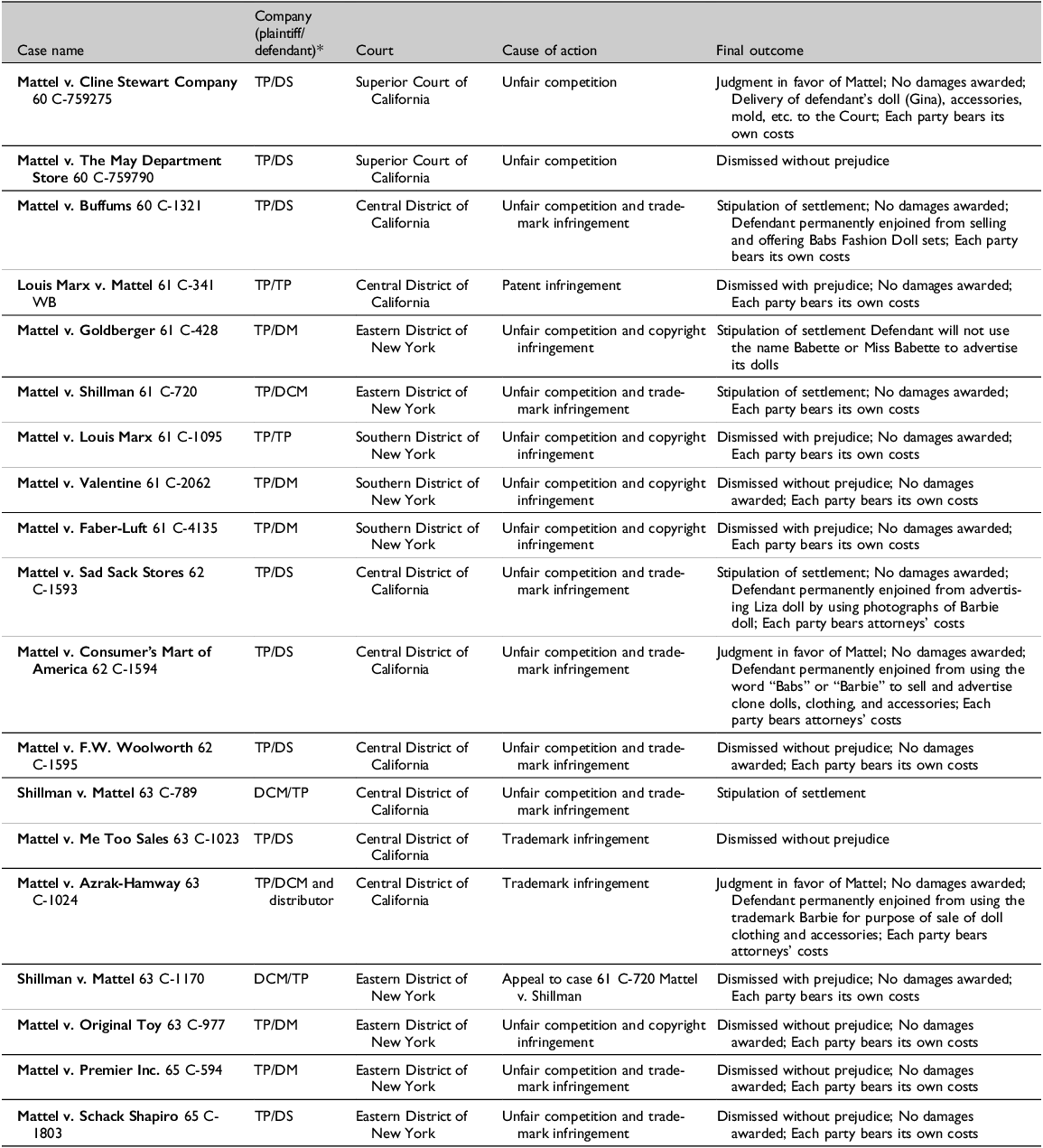


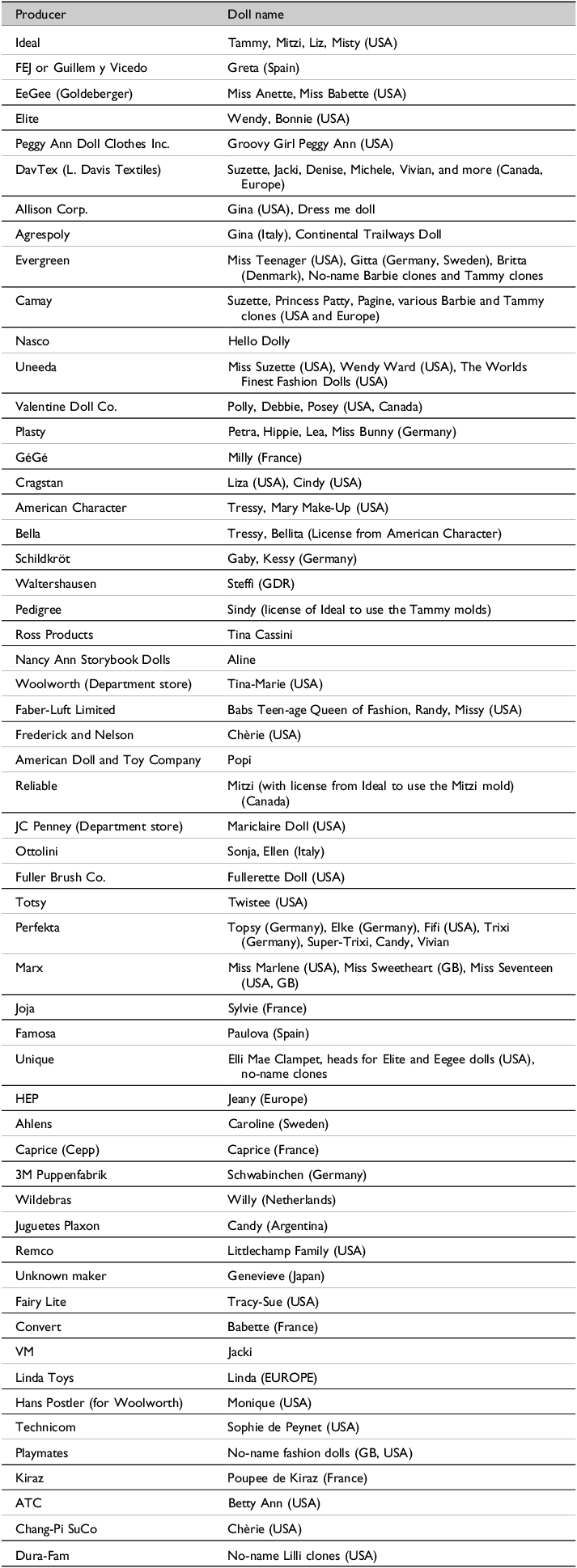
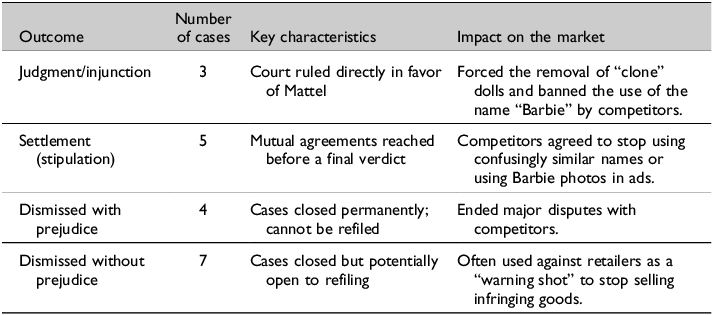

 Open access

