Introduction
Acheulean bifaces (handaxes and cleavers) are persistent, even dominant, tool forms throughout much of the Old World from 1.75 until 0.1 million years ago, with a distribution ranging from the Cape of Good Hope to Britain and from the Atlantic coast of Morocco to the Himalayan foothills (and perhaps even farther east) (Aldhouse-Green et al. Reference Aldhouse-Green, Peterson and Walker2012; Beyene et al. Reference Beyene, Katoh and WoldeGabriel2013; Corvinus Reference Corvinus, Goren-Inbar and Sharon2006; Cruz-Uribe et al. Reference Cruz-Uribe, Klein and Avery2003; Haslam et al. Reference Haslam, Roberts and Shipton2011; Petraglia & Shipton Reference Petraglia and Shipton2008; Raynal et al. Reference Raynal, Sbihi Alaoui, Geraads, Magoga and Mohi2001). The meaning of this ubiquitous and extremely long-lasting cultural tradition has puzzled archaeologists for more than a century, leading many to ponder its biological, cognitive, social and functional implications. Explanations for this phenomenon range from a genetic predisposition to make these artefacts (Corbey et al. Reference Corbey, Jagich, Vaesen and Collard2016) through strong social transmission among their makers (Shipton in press; Shipton & Nielsen Reference Shipton and Nielsen2015) to the ease of reinventing these forms (Tennie et al. Reference Tennie, Braun, Premo, McPherron, Haidle, Conard and Bolus2016).
Handaxe use experiments indicate they are effective in butchering large carcasses, with archaeological associations and residues demonstrating this was indeed one of their principal functions (Galán & Domínguez-Rodrigo Reference Galán and Domínguez-Rodrigo2014; Goren-Inbar et al. Reference Goren-Inbar, Lister, Werker and Chech1994; Jones Reference Jones1980; Mitchell Reference Mitchell1994; Piperno & Tagliacozzo Reference Piperno, Tagliacozzo, Cavaretta, Giola, Mussi and Palombo2001; Roberts & Parfitt Reference Roberts and Parfitt1999; Solodenko et al. Reference Solodenko, Zupancich, Nunziante Cesaro, Marder, Lemorini and Barkai2015; Toth and Schick Reference Toth, Schick, Schick and Toth2009). The function of cleavers is less well established, though a chopping or slicing mode of use and their application in woodworking is implied by their straight bitted cutting edges, as well as through experimental use and archaeological wear (Claud et al. Reference Claud, Deschamps, Colonge, Mourre and Thiébaut2015; Movius Reference Movius1948; Shipton Reference Shipton2016).
One of the most hotly debated issues surrounding Acheulean bifaces is the reason for their typically symmetrical shapes. Symmetry is a common, though not universal (McNabb & Cole Reference McNabb and Cole2015; White & Foulds Reference White and Foulds2018), feature of Acheulean bifaces that sets them apart from many other stone artefact categories. A butchery experiment, in which the influence of both plan and profile handaxe symmetry was measured, found only plan symmetry had an effect on efficiency and that this effect was weak (Machin et al. Reference Machin, Hosfield and Mithen2007). This apparent overdetermination in handaxe symmetry has led to suggestions that hominins derived intrinsic pleasure from the aesthetic quality of symmetry (White & Foulds Reference White and Foulds2018): an incipient artistic appreciation (Le Tensorer Reference Le Tensorer2006) based on ancient symmetry detecting neural pathways (Wynn & Gowlett Reference Wynn and Gowlett2018). Another popular interpretation is that symmetry was a display marker for trustworthiness as a co-operative partner (Spikins Reference Spikins2012), or suitability as a mate (Kohn & Mithen Reference Kohn and Mithen1999; Mithen Reference Mithen, Voland and Grammer2003). This latter theory has engendered a lively debate in the literature about whether or not handaxe symmetry is sexually appealing (Burriss Reference Burriss2009; Hodgson Reference Hodgson2009b; Reference Hodgson2010; Machin Reference Machin2008; Mithen Reference Mithen2008; Nowell & Chang Reference Nowell and Chang2009).
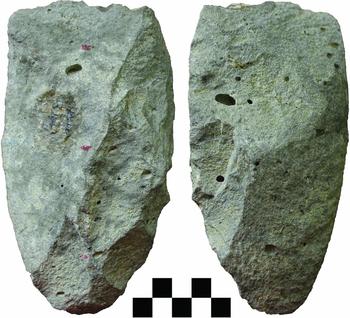
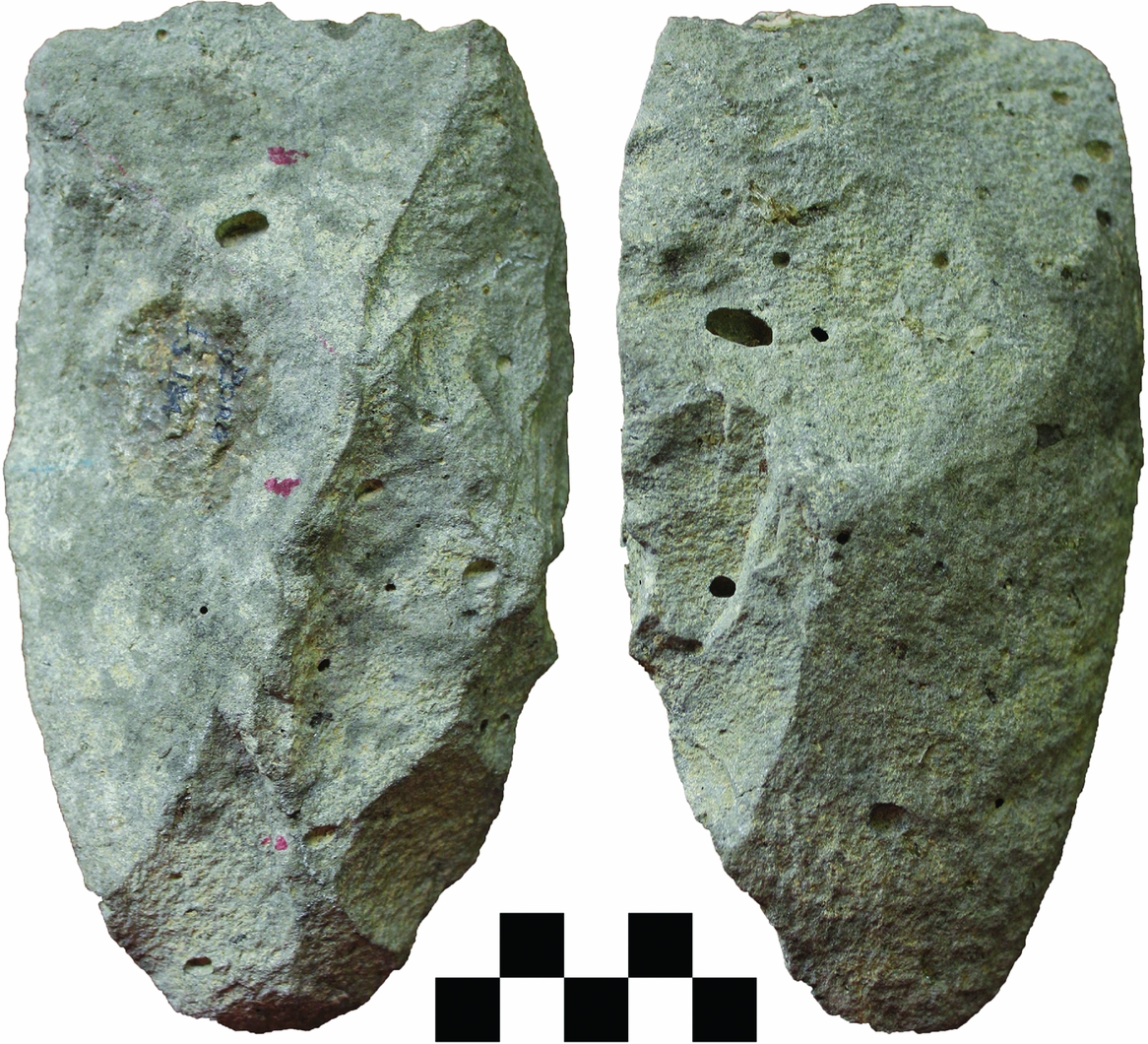
Other interpretations of Acheulean biface symmetry are that it is an epiphenomenon, either of a perceptual bias in the brain (Deregowski Reference Deregowski2002; Gurd et al. Reference Gurd, Fink and Marshall2002; Hodgson Reference Hodgson2009a; Reference Hodgson2011; Reference Hodgson2015; Silverman Reference Silverman2002), or of creating and maintaining a bifacial edge (Hayden & Villeneuve Reference Hayden and Villeneuve2009; McPherron Reference McPherron, Sanz, Call and Boesch2013). Thomas Wynn has noted than symmetry is a novel feature of the Acheulean with respect to the preceding Oldowan stone tools; he has argued that it must have been intentionally imposed, because it is often achieved with a minimum number of removals to mirror the existing opposite edge of a flake blank (Wynn Reference Wynn1995; Reference Wynn, Carruthers and Chamberlain2000; Reference Wynn2002) (Fig. 1).
An example of symmetry achieved with very few retouch scars on a flake blank cleaver from Olorgesailie. Scale in centimetres.
At the present state of research we are left with the question of whether symmetry is such a pervasive perceptual imperative that humans tend to impose it whenever they create shapes (unless they are explicitly asymmetrical)? And if, through self-correction and regularization, the imposition of symmetry on outline shapes is an inevitable consequence of flaking bifacially? The goal of this study is to test these hypotheses using transmission chain experiments of biface shapes; quantitative symmetry comparisons of Acheulean bifaces with other bifacial artefacts; the relationship between biface symmetry and measures of the extent of bifacial working; and technological studies of the imposition of symmetry on particular Acheulean bifaces. To capture something of the diversity of the Acheulean world, we look at bifaces from East Africa, Britain and India, and from sites over a million years old to those from the Acheulean to Middle Palaeolithic transition in the last 300,000 years.
Experimental transmission of symmetry
Method
This experiment used transmission chains of handaxe shapes to track changes in symmetry. The prior hypotheses were that if the imposition of symmetry is the result of a perceptual bias in the brain (Enquist & Arak Reference Enquist and Arak1994), symmetry would be maintained or increased along the transmission chain. Alternatively, visual misperception, whereby a reproduction of an image is altered by the individual's perception of that image (Ostrofsky et al. Reference Ostrofsky, Kozbelt and Cohen2015), might result in copying errors, creating asymmetries.
Once a bifacial edge has been established, it is relatively easy to remove further flakes from it to impose plan symmetry, but creating a continuous bifacial edge in the first place is beyond the ability of novice knappers. An experiment with modern subjects learning to knap bifaces found that, even after several bouts of learning and practice, they produced considerably less symmetrical handaxes than the archaeological examples reported below (mean FlipTest scores of 9.03 and 7.7 for the two groups) (Putt et al. Reference Putt, Woods and Franciscus2014). For this experiment, biface planforms were drawn on paper, thereby removing the element of knapping skill required to create bifaces in order that naïve subjects could participate. While reducing the complexity of the task in this way changes it from symmetry perception in a 3D object to a 2D drawing, human symmetry detection uses 2D projections even on 3D objects, and in fact the 3D form of a symmetrical object can be perceived when only partial 2D or skewed views are available (Li et al. Reference Li, Pizlo and Steinman2009; McBeath et al. Reference McBeath, Schiano and Tversky1997; Saunders & Knill Reference Saunders and Knill2001; Treder Reference Treder2010).
Experiment participants were recruited from the student cohort of the University of Queensland. They were comprised of 23 male and 21 female students with an average age of 22, drawn from various degree programmes (15 of the students were studying for an archaeology major) and with a range of self-assessed drawing abilities.
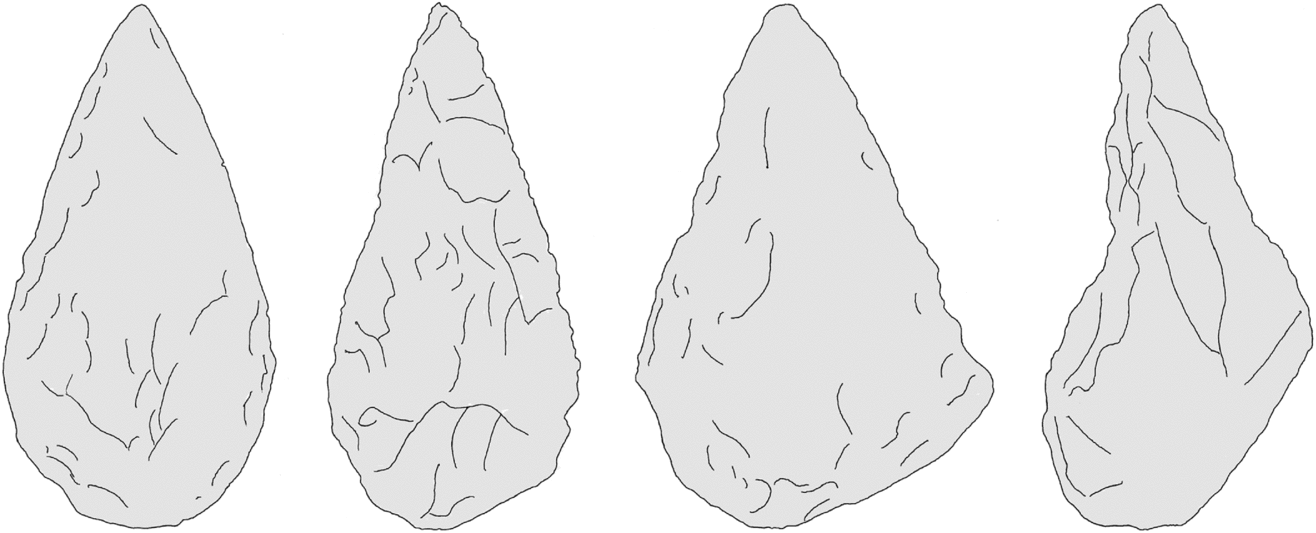
The first four participants were given stylized drawings of archaeological handaxes covering a range of planform symmetries (Fig. 2). The drawings included not only outline shapes, but also some lines reflecting internal morphology, though not full scar boundaries and shading. Internal details were included so the participants’ attention would not solely be focused on outline shape, as would be the case if they were actually knapping. The participants were asked to copy these images in pencil to the best of their ability. The drawing produced by each participant was then given to the next participant in the chain who was asked to copy this second-generation drawing. This continued to 12 generations, with each generation being completed by a different individual (Fig. 3). Each participant drew each of the four handaxes somewhere in the chain, with their position in each chain randomized to prevent a boredom effect. The experiment thus produced 16 different transmission chains.
Initial images that were copied by the first participants. Bilateral symmetry was measured using the FlipTest with the results ranging from highly symmetrical on the left (0.9) through intermediate levels (2.95 and 4.05) to highly asymmetrical on the right (11.94).

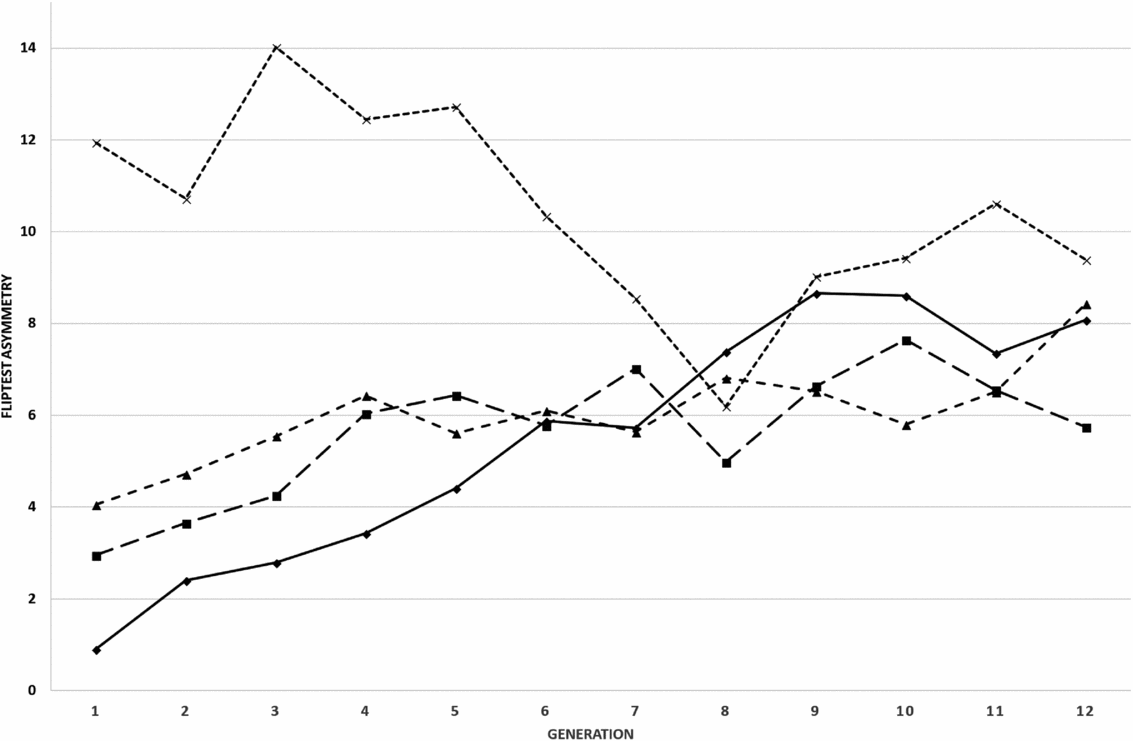
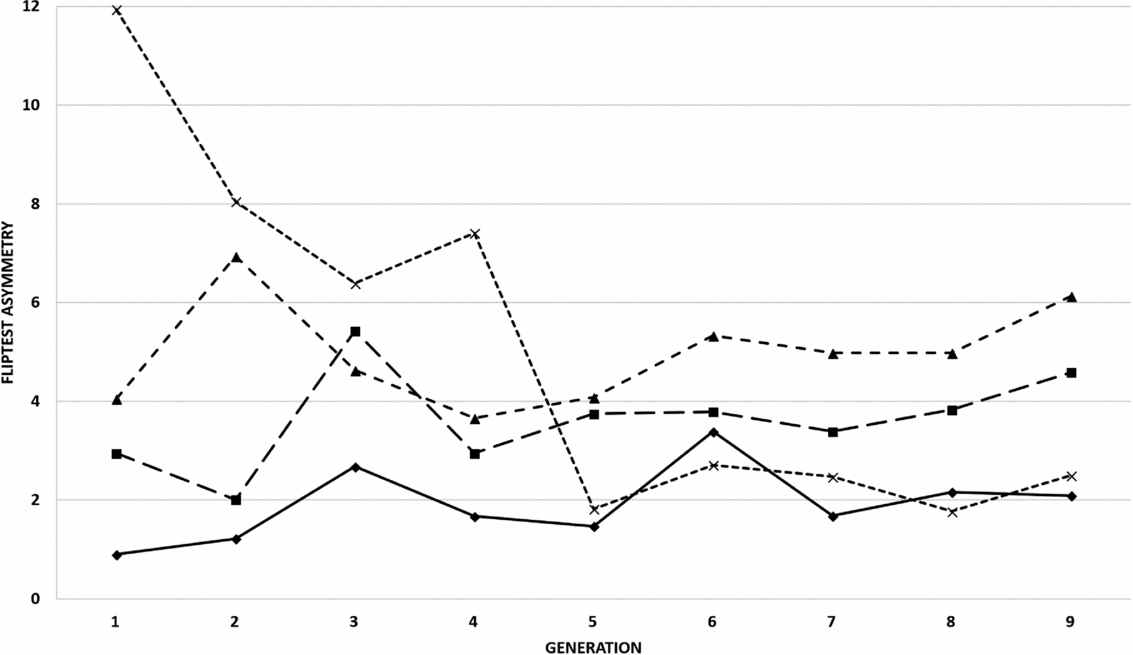
The mean generational trajectory in the index of asymmetry of the four handaxe drawings. Each line is the average of four transmission chains and each link in the chain was drawn by a different participant.

The four drawings were also used in a single participant repeat version of the experiment where the most accurate drawer reproduced her own images across 9 generations without access to any older generations beyond the one immediately prior. This produced another 4 transmission chains. Notably the drawer was an archaeologist, so was aware she was drawing handaxe outlines.
All images were then scanned and analysed using the FlipTest program (Hardaker & Dunn Reference Hardaker and Dunn2005) (Fig. 4). This program measures asymmetry in pixels for two halves of a digital image, generating a numerical value representing the overall asymmetry of the object.
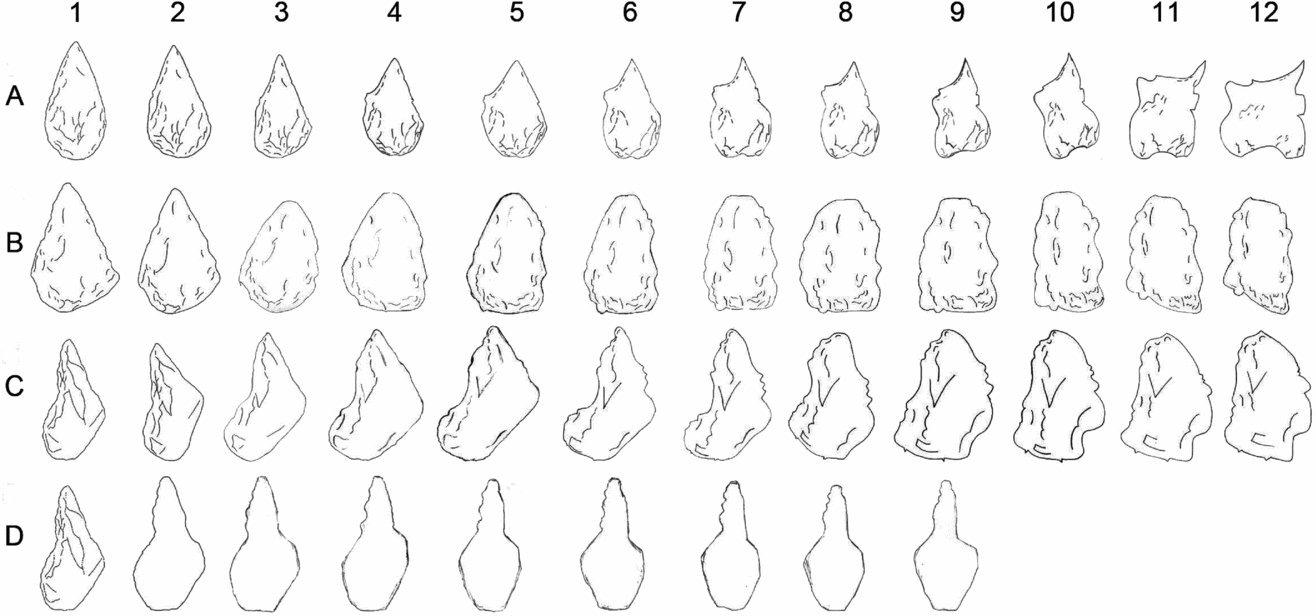
Examples of the 20 transmission chains. A and B show symmetrical handaxes becoming less symmetrical. C and D show the most asymmetrical handaxe becoming more symmetrical in both the main experiment (C) and the single participant repeat (D).

Results
Over the course of 12 generations in the group experiment, on average the three most symmetrical images became more asymmetrical, whereas the most asymmetrical image became more symmetrical (Figs 3 & 4). Likewise, over the course of the eight generations in the single participant repeat experiment, the three most symmetrical images became less symmetrical, and the most asymmetrical image became more symmetrical (Figs 4 & 5). Symmetry levels seem to converge in both experiments, but the main difference between them is that in the single participant experiment the convergence is more symmetrical (mean 3.83) than the group experiment (mean 7.91), likely explained by the fact that the single participant knew she was copying handaxes, which are typically thought to be symmetrical.
The mean trajectory in the index of asymmetry over eight generations of a single participant copying their own drawings.

Both prior hypotheses about symmetry change may be operating. For asymmetrical images, symmetry was increased along the transmission chains, perhaps as a result of a perceptual bias towards symmetry. However, misperception of symmetrical images introduced errors which were subsequently exaggerated (see the protrusions that were added to the handaxes in Figures 4A and 4B), resulting in the loss of symmetry along the transmission chain. Thus, when no correction mechanism is in place to reproduce symmetry over a chain of transmission (such as the intention to create symmetry), artefact symmetry will decrease. Symmetry levels may come to an equilibrium between perceptual bias and misperception, though longer chains would be necessary to determine if this had been reached. Notably, no image ever became as symmetrical as the most symmetrical handaxe or as asymmetrical as the least symmetrical handaxe.
There is the obvious limitation in this and other hominin social transmission experiments of using modern Homo sapiens subjects to test a phenomenon in extinct species. Symmetry processing in humans involves multiple brain regions with particular importance for Visual areas 3A, 4 and 7, and the Lateral Occipital Complex, all located in the occipital lobe (Sasaki et al. Reference Sasaki, Vanduffel, Knutsen, Tyler and Tootell2005; Treder Reference Treder2010). In macaques, homologous brain regions are involved, indicating a stable evolutionary basis (Sasaki et al. Reference Sasaki, Vanduffel, Knutsen, Tyler and Tootell2005). Regions such as Visual area 3A are relatively larger in humans (Van Essen et al. Reference Van Essen, Lewis, Drury, Hadjikhani, Tootell, Bakircioglu and Miller2001) and we elicit stronger responses to symmetry, so our perception has likely undergone some positive selection since the divergence of the apes (Sasaki et al. Reference Sasaki, Vanduffel, Knutsen, Tyler and Tootell2005). Our brains typically lack the distinctive lunate sulcus that demarcates the primary visual cortex from the rest of the occipital cortex (including the areas involved in symmetry processing) in other anthropoid primates (Allen et al. Reference Allen, Bruss and Damasio2006). But the endocranial record is not yet clear on when this difference arose (Falk et al. Reference Falk, Zollikofer, Ponce de León, Semendeferi, Alatorre Warren and Hopkins2018; Holloway et al. Reference Holloway, Clarke and Tobias2004). In comparison to chimpanzees, the occipital lobe of humans is relatively small (Avants et al. Reference Avants, Schoenemann and Gee2006), in particular the primary visual cortex (De Sousa et al. Reference De Sousa, Sherwood and Mohlberg2010). During the evolution of our genus, the occipital lobe has undergone a relative flattening and relative reduction in size, partly to accommodate the derived expansion of the parietal lobe (Bruner Reference Bruner2004; Bruner et al. Reference Bruner, Manzi and Arsuaga2003; Hill et al. Reference Hill, Inder, Neil, Dierker, Harwell and Van Essen2010). East Asian Homo erectus has a marked occipital projection, but this is not shared with hominins within the Acheulean occupied world sensu stricto to the west (Bruner Reference Bruner2004). The shared anthropoid substrates for symmetry processing and the conservative size of our occipital lobe in comparison to those of Acheulean hominins suggests symmetry perception is unlikely to have changed radically over the last 2 million years of human history. Homo sapiens should, if anything, have a stronger symmetry perception bias than Acheulean hominins, yet we do not see the automatic imposition of symmetry in the data from our modern subjects.
Symmetry in the archaeological record
Bifacial reduction and symmetry
The experimental evidence indicates that, in our own species at least, artefact symmetry is not simply the result of perceptual bias. To test whether symmetry is the inadvertent by-product of creating and maintaining a bifacial edge, we compared Acheulean bifaces with another category of bifacial artefact: Middle Palaeolithic cores. The FlipTest was performed on samples of bifaces from nine assemblages: Chirki, Morgaon and Bhimbetka in India (Shipton Reference Shipton2016); Olorgesailie CL1-1, Kariandusi and Isinya in East Africa (Shipton Reference Shipton2018; Shipton & Clarkson Reference Shipton and Clarkson2015); and Boxgrove, Hitchin and Swanscombe in Britain (Shipton & Clarkson Reference Shipton and Clarkson2015) (see references for more details on these samples). This sample contains assemblages that are a mixture of handaxes and cleavers (Isinya, Kariandusi, Chirki), as well as ones that are exclusively or nearly exclusively either handaxes (Boxgrove, Hitchin, Swanscombe) or cleavers (Olorgesailie CL1-1, Morgaon, Bhimbetka). The sample also covers assemblages with a mixture of blank types (Chirki, Hitchin), as well as ones that are dominated by flake (Olorgesailie CL1-1, Kariandusi, Isinya, Morgaon, Bhimbetka) or cobble blanks (Boxgrove, Swanscombe). Since post-depositional damage is known to affect biface symmetry (Grosman et al. Reference Grosman, Sharon, Goldman-Neuman, Smikt and Smilansky2011b), bifaces with more than minor damage were not included in this analysis.
We compared the Acheulean bifaces with FlipTest results for Middle Palaeolithic discoidal, hierarchical disc, and recurrent Levallois cores from four assemblages: Gorham's Cave in Iberia (Shipton et al. Reference Shipton, Clarkson and Bernal2013), JKF12 and JSM1 in Arabia (Groucutt et al. Reference Groucutt, Scerri and Amor2017; Petraglia et al. Reference Petraglia, Alsharekh and Breeze2012), and Dhaba in India (Haslam et al. Reference Haslam, Harris and Clarkson2012). These core types were chosen because they are typically bifacially flaked around most of their perimeter with an emphasis on maintaining the edge for future removals. Artefacts were oriented to maximize symmetry in plan view prior to running the FlipTest.
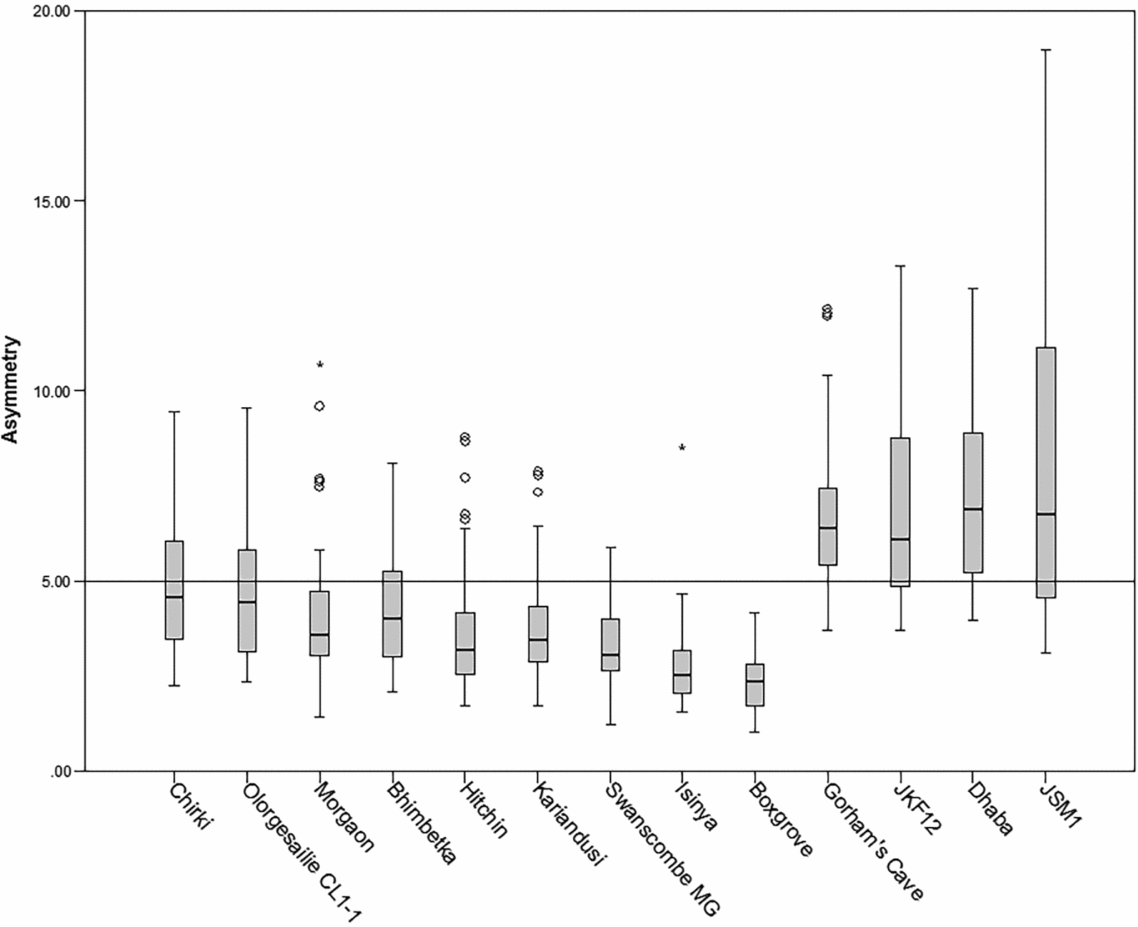
The results of this comparison are shown in Figure 6, with an ANOVA test confirming that there is significant heterogeneity in the sample (df = 436, F = 20.724, P < 0.001). An equal variances t-test showed that even the least symmetrical of the Acheulean assemblages (Chirki) was more symmetrical than the most symmetrical Middle Palaeolithic assemblage (Gorham's Cave) (df = 63, t = −3.294, P = 0.02). Figure 6 also shows there is more variance in the Middle Palaeolithic cores, which perhaps would be expected if symmetry was not a great concern to their knappers. Notably, the majority of Middle Palaeolithic cores fall in the same 5–10 range for FlipTest scores as the drawings in the final stage of the transmission experiment in which symmetry was not explicitly imposed. A sample of bifacial pressure-flaked arrowheads, made by prehistoric Homo sapiens, had a mean plan symmetry FlipTest score of 2.33 (Darmark Reference Darmark2010). This is comparable to the more symmetrical end of Acheulean variation shown in Figure 6, and the more symmetrical handaxes drawn by the archaeologist in the single participant repeat version of the experiment (Figure 5), suggesting Acheulean hominin sensitivity to symmetry was similar to our own species.
Boxplot comparing FlipTest scores of Acheulean biface assemblages (Chirki: N = 32; Olorgesialie CL1-1: N = 27; Morgaon: N = 30; Bhimbetka: N = 35; Hitchin: N = 42; Kariandusi: N = 76; Isinya: N = 37; Swanscombe Middle Gravels: N = 33; and Boxgrove: N = 37) with Middle Palaeolithic discoidal, hierarchical disc and recurrent Levallois core assemblages (Gorham's Cave: N = 33; JKF12: N = 20; JSM1; N = 17; Dhaba: N = 17).

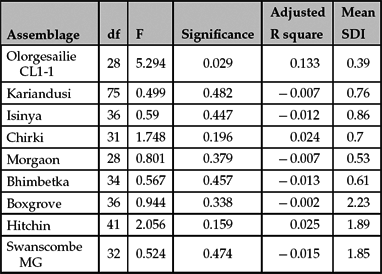
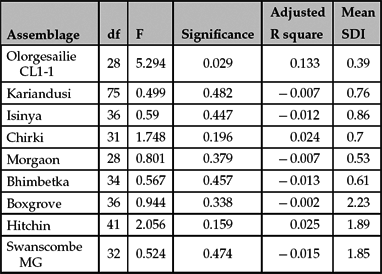
It has been suggested that reduction intensity might increase biface symmetry through the maintenance of a bifacial edge (Iovita et al. Reference Iovita, Tuvi-Arad, Moncel, Despriée, Voinchet and Bahain2017; Li et al. Reference Li, Kuman, Leader and Couzens2016; McNabb et al. Reference McNabb, Cole and Hoggard2018). To test this, we conducted regression analyses on the Acheulean biface assemblages of symmetry, as measured by the FlipTest, against reduction intensity, as measured by the scar density index (SDI) (Clarkson Reference Clarkson2013; Shipton & Clarkson Reference Shipton and Clarkson2015). Table 1 shows that only in one case, Olorgesailie CL1-1, was there a significant relationship between these two variables, and in this case it was weak. Olorgesailie CL1-1 is the oldest assemblage in the sample at over a million years old (Owen et al. Reference Owen, Potts, Behrensmeyer and Ditchfield2008), and has the lowest SDI score (Table 1). In very lightly reduced blanks, there may be an effect of more flake removals increasing symmetry (see also White & Foulds Reference White and Foulds2018). For most Acheulean assemblages, however, symmetry is a property independent of reduction intensity.
Results of regression analyses testing the relationship between flake scar density and bilateral symmetry for samples of handaxes and cleavers from various Acheulean assemblages.
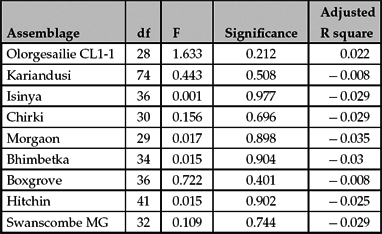
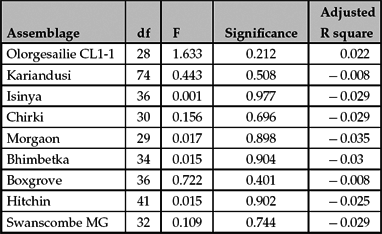
Another possibility is that the working of bifacial artefacts on both surfaces results in an unintended symmetry. To test this, we conducted regression analyses of symmetry as measured by the FlipTest, against the bifaciality index: the ratio of the number of scars on the more intensively flaked surface to the number of scars on the less intensively flaked surface. Table 2 shows that in none of the assemblages tested is there a significant relationship between these two variables, indicating symmetry is a property independent of the degree of bifaciality in Acheulean handaxes and cleavers.
Results of regression analyses testing the relationship between bifaciality and bilateral symmetry for samples of bifaces from various Acheulean assemblages.
The technology of Acheulean symmetry imposition
If artefact symmetry is neither the inevitable result of perceptual bias nor of bifacial flaking, we should expect to see it produced in a variety of ways. It has been noted that the final flake scars removed from handaxes sometimes appear to mirror either natural features of the stone, the unretouched blank, or earlier large flake removals (White & Foulds Reference White and Foulds2018; Wynn Reference Wynn1979; Reference Wynn1995). In most of these examples and other discussions of Acheulean biface symmetry, the focus is on handaxes, where the process of shaping the tool is bound up with the process of creating the cutting edge, so it is difficult to separate the intention behind the two. Cleavers, however, present a far simpler state of affairs in terms of the relationship between shaping and creating the cutting edge. Cleavers are almost invariably made on flake blanks, and, as flake blanks typically require less reduction to shape into bifaces than cores (Shipton & Clarkson Reference Shipton and Clarkson2015), there are fewer removals and they are easier to interpret. Use-wear damage and residues on the distal bits of cleavers indicates that this part of the tool was their principal cutting edge (de la Torre et al. Reference de la Torre, Mora, Arroyo and Benito-Calvo2014; de Lauriston Reference de Lauriston2015; Shipton Reference Shipton2016). Cleaver bits are unretouched, formed by the edge of the original flake blank, so retouch scars on cleavers were removed to affect the overall form of the biface, rather than to create the main cutting edge.
In this section we examine how symmetry was imposed on cleavers in practice. The reduction sequence by which bilateral cleaver symmetry was achieved was examined at five Acheulean sites: Olorgesailie CL1-1 (Owen et al. Reference Owen, Potts, Behrensmeyer and Ditchfield2008) and Isinya (Roche et al. Reference Roche, Brugal, Lefevre, Ploux and Texier1988) in East Africa, and Morgaon (Mishra et al. Reference Mishra, Deo, Abbas, Naik, Shete, Agrawal and Rajaguru2009), Chirki (Corvinus Reference Corvinus1983) and Bhimbetka (Shipton Reference Shipton2016) in India.
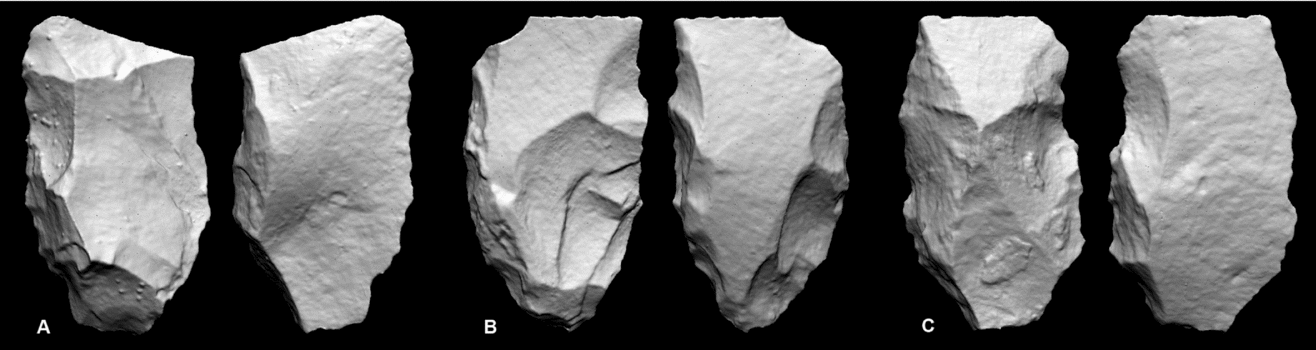
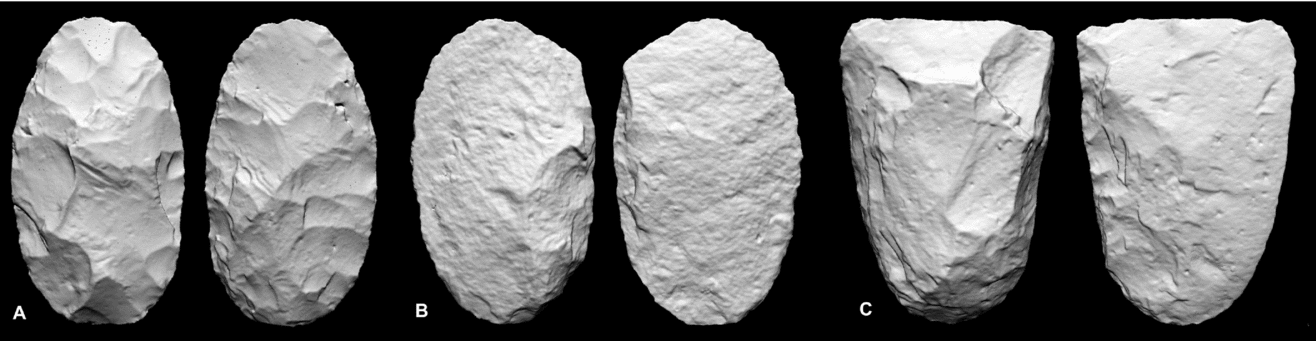
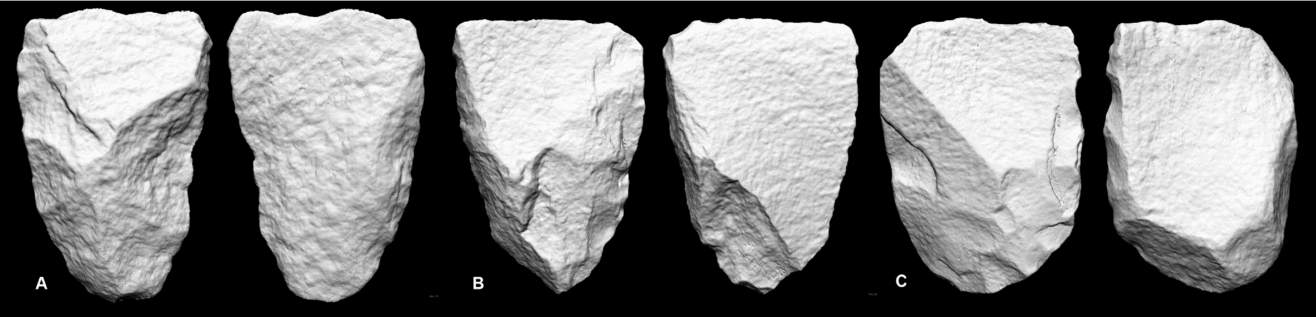
Figure 7 shows examples of three cleavers from Olorgesailie CL1-1 where symmetry was achieved through three different reduction sequences. Cleaver A was unifacially flaked on opposing surfaces and edges, cleaver B was bifacially flaked on both edges, and cleaver C was bifacially flaked on one edge and unifacially flaked on the other. Figure 8 shows examples of three cleavers from Isinya where different reduction sequences were used to create symmetry. Cleaver A has been carefully bifacially flaked around the entire perimeter except for the distal tip, with the removal of some very small flakes, leaving a particularly symmetrical biface. Cleaver B has been bifacially flaked on one edge to mirror a completely unretouched edge opposite, and Cleaver C has been unifacially flaked on opposing surfaces and edges.
Three cleavers from Olorgesailie CL1-1. Cleaver A has been unifacially flaked on opposing edges and surfaces (l. 145 mm, FlipTest score 2.64); cleaver B is bifacially flaked on both edges (l. 152 mm, FlipTest score 2.85); cleaver C is bifacially flaked on one edge (the left in dorsal view) and unifacially flaked on the other edge (l. 168 mm, FlipTest score 3.24).

Three cleavers from Isinya. Cleaver A has been bifacially flaked around most of the perimeter (l. 203 mm, FlipTest score 1.86); cleaver B has been bifacially flaked along one edge only (l. 203 mm, FlipTest score 1.76); cleaver C has been unifacially flaked on opposing edges and surfaces (l. 201 mm, FlipTest score 2.09).

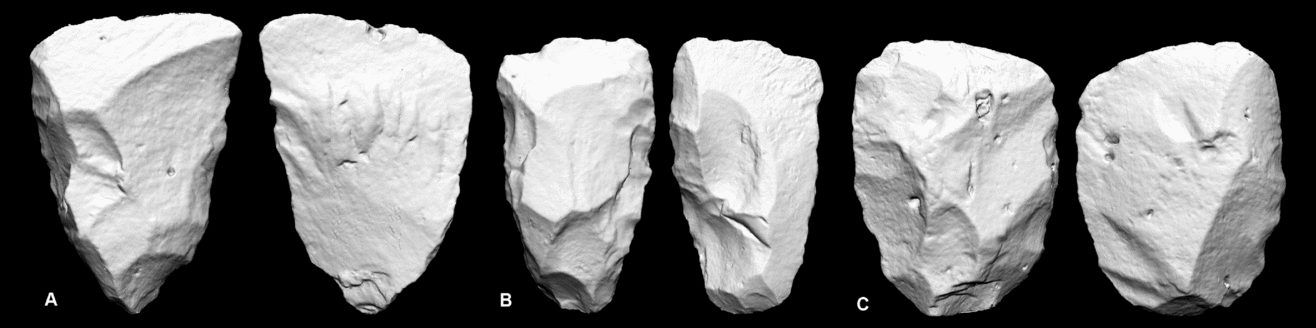
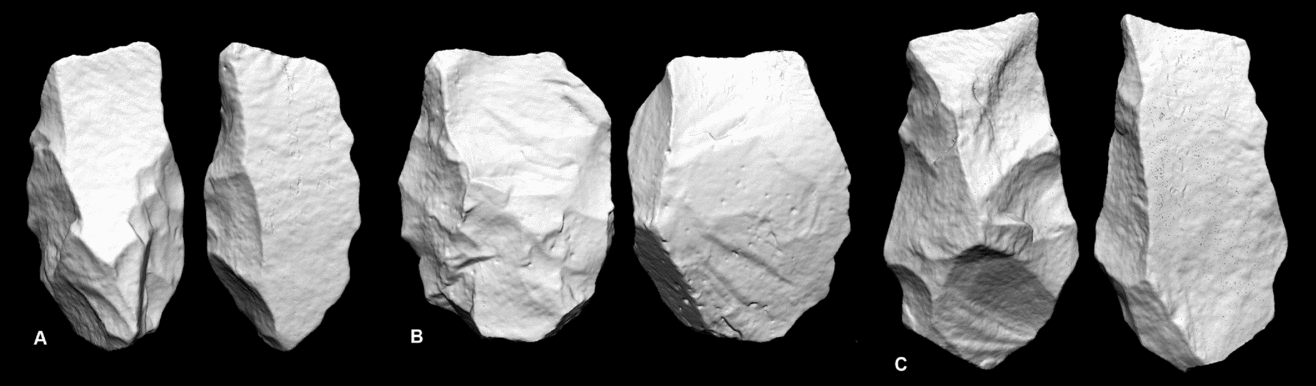
Figure 9 shows examples of different cleaver retouch methods from Morgaon. Except for a single scar on the most proximal part of the butt, cleaver A was only unifacially flaked. Cleaver B was bifacially flaked on one edge and unifacially flaked on the opposite edge. Cleaver C was again largely unifacially flaked except for two scars on the ventral surface. Figure 10 shows three cleavers from Chirki. Cleaver A was bifacially flaked on one edge and unifacially flaked on the opposing edge. Cleaver B was unifacially flaked except for a small scar on the ventral butt. Cleaver C was bifacially flaked on one edge and unifacially flaked on the opposing edge. Figure 11 shows three cleavers from Bhimbetka. Cleavers A and B were bifacially flaked on one edge and unifacially flaked on the opposing edge, while cleaver C has largely been bifacially flaked.
Three cleavers from Morgaon. Cleavers A (l. 132 mm, FlipTest score 4.15) and C (l. 121 mm, FlipTest score 3.24) were largely unifacially flaked, while cleaver B (l. 122 mm, FlipTest score 3.69) was bifacially flaked on one edge (the right in dorsal view) and unifacially flaked on the opposing edge.

Three cleavers from Chirki. Cleavers A (l. 113 mm, FlipTest score 3.44) and C (l. 131 mm, FlipTest score 4.01) were bifacially flaked on one edge (the right in dorsal view in both cases) and unifacially flaked on the opposing edge, while cleaver B (l. 135 mm, FlipTest score 5.16) was unifacially flaked on both edges.

Three cleavers from Bhimbetka. Cleavers A (l. 146mm, FlipTest score 3.45) and B (l. 123mm, FlipTest score 2.07) are bifacially flaked on one edge (in dorsal view the left edge for cleaver A and the right edge for cleaver B) and unifacially flaked on the opposing edge, while cleaver C (l. 125mm, FlipTest score 4.69) was bifacially flaked but with only a few removals.

These examples show that the imposition of symmetry on cleavers was not simply an outcome of bifacial flaking, as symmetry was also achieved with unifacial flaking of opposing edges, with bifacial flaking of one edge and unifacial flaking of the other, and even with unifacial flaking of opposing surfaces and edges. Rather, to be able to make the same broad bitted tools using a variety of different retouch methods suggests hominins were deliberately intending to produce these symmetrical objects.
Conclusion
Determining intention in the archaeological record is often challenging, particularly in as remote a period as the Acheulean. But in comparing artefact attributes, for example the symmetry of earlier and later Acheulean bifaces, it is necessary to assume the intention of hominins was to make symmetrical bifaces in both cases (Jordan Reference Jordan2002). We have approached the question of intention in Acheulean biface symmetry using both experimental and archaeological data. In transmission chains where symmetry is not deliberately imposed, less symmetrical forms are produced than are typical of archaeological handaxes, indicating perceptual bias does not result in the automatic creation of symmetry, or at least it is not strong enough to overcome misperception asymmetries. This finding is in agreement with a test of human facial preference that showed no effect of perceptual bias in the preference for symmetry (Little & Jones Reference Little and Jones2003). If perceptive bias was producing the symmetry in handaxes and cleavers, we should also expect to see it in other Acheulean artefact types, but we do not.
The archaeological comparison of Acheulean bifaces and Middle Palaeolithic bifacial cores indicated that the high symmetry levels in the former are not the inevitable result of bifacial flaking around the perimeter. The archaeological data also indicated that there is no relationship between symmetry and reduction intensity among Acheulean bifaces, so bifaces do not inevitably get more symmetrical as they are worked more. Symmetry was achieved on Acheulean cleavers using a variety of reduction methods, including unifacial reduction, and sometimes with different reduction methods on different sides and different surfaces of the bifaces. Symmetry is therefore not an epiphenomenon of knapping technique, but is an independent property of these tools.
In conjunction, these analyses show that symmetry was deliberately imposed on Acheulean bifaces. Similar patterns in biface symmetry are evident whether we are considering bifaces from Britain, East Africa, or India. Despite the diversity of hominin species producing Acheulean bifaces, symmetry appears to have been a consistent goal. Over the course of such a long-lived culture we should expect to see improvements in symmetry if it was a goal of hominin knappers, and enhanced knapping skills were afforded by traits such as increases in the size of brain regions involved in biface knapping; the invention of new knapping techniques; or the addition of adolescence as a life-history stage in which knapping could be mastered (Shipton Reference Shipton2018). On relatively short timescales there are not discernible improvements in Acheulean biface symmetry (White & Foulds Reference White and Foulds2018). However, when considering the overall duration of the Acheulean, symmetry in multiple planes and deliberately warped symmetry appear to emerge during its later stages (Wynn Reference Wynn1979; Reference Wynn, Carruthers and Chamberlain2000; Reference Wynn2002). Quantitative studies have found that, while there are several factors that can affect biface morphology, there are discernible improvements in symmetry over the course of the Acheulean in East Africa (Schick & Toth Reference Schick and Toth2017; Shipton Reference Shipton2018), the Levant (Grosman et al. Reference Grosman, Goldsmith and Smilansky2011a; Saragusti et al. Reference Saragusti, Sharon, Katzenelson and Avnir1998), northwestern Europe (Iovita et al. Reference Iovita, Tuvi-Arad, Moncel, Despriée, Voinchet and Bahain2017) and India (Shipton Reference Shipton2016).
The two most symmetrical assemblages in this sample were Boxgrove and Isinya (Fig. 6), with other studies also finding that Boxgrove is a particularly symmetrical assemblage for the British Acheulean (McNabb et al. Reference McNabb, Cole and Hoggard2018; White & Foulds Reference White and Foulds2018), and Isinya is a particularly symmetrical assemblage for the East African Acheulean (Shipton Reference Shipton2018). Boxgrove is generally regarded as one of the finest examples of Acheulean biface manufacture (Stout et al. Reference Stout, Apel, Commander and Roberts2014), having some of the thinnest bifaces in the Acheulean world (Shipton Reference Shipton2013); while comparison of Isinya with other biface assemblages from East Africa shows that its bifaces are also particularly thin and have particularly straight edges (Shipton Reference Shipton2018). The principal determinant of symmetry in Acheulean bifaces may then have been the skill of the knappers and the extent to which they applied their skill.
Whether Acheulean biface symmetry was to aid in cutting, was a source of aesthetic pleasure, or was for the purpose of display, is equivocal. What is apparent is that Acheulean bifaces were deliberately shaped to be symmetrical beyond natural biases, using a variety of methods of reduction and levels of reduction intensity. Their forms were thus not the result of a genetic predisposition to make handaxes and cleavers (contra Corbey et al. Reference Corbey, Jagich, Vaesen and Collard2016). Symmetry is neither an inevitable property of a biface, nor sufficient in isolation to define a biface as a handaxe or a cleaver; it is one of a suite of imposed attributes that cluster together to define these objects (Wynn & Gowlett Reference Wynn and Gowlett2018). This study forms part of a growing body of evidence demonstrating that the shapes of Acheulean bifaces are not epiphenomenal, but were intentionally created, and socially transmitted (Costa Reference Costa, Lycett and Chauhan2010; de la Torre and Mora Reference de la Torre and Mora2018; Eren et al. Reference Eren, Roos, Story, von Cramon-Taubadel and Lycett2014; García-Medrano et al. Reference García-Medrano, Ollé, Ashton and Roberts2018; Sharon et al. Reference Sharon, Alperson-Afil and Goren-Inbar2011; Shipton in press; Shipton & Clarkson Reference Shipton and Clarkson2015; Shipton & Nielsen Reference Shipton and Nielsen2015; White & Foulds Reference White and Foulds2018).
Acknowledgements
The authors declare no conflict of interest. The experiment was approved by the University of Queensland ethics committee. We would like to thank all the participants who volunteered their time to helping with this project, particularly Penelope Burrell, who was the single participant repeat subject. We would also like to thank Nadine Roseboom, Marcelle Appay and Daniel Paes Barretto for their assistance in data collection. We are grateful to The Archaeological Survey of India, Sheila Mishra and Sushma Deo for the access to the Indian Acheulean collections; to The National Museums of Kenya, Purity Kiura and Helene Roche for access to the East African Acheulean collections; and to The British Museum and Nick Ashton for access to the British Acheulean collections. This paper was improved by the comments of three anonymous reviewers.