




Hostname: page-component-7b7567c8c-p67k6 Total loading time: 0 Render date: 2026-11-19T18:54:31.331Z Has data issue: false hasContentIssue false

Densities in certain three-way prime number races

Published online by Cambridge University Press:  12 October 2020

Jiawei Lin
Affiliation:
Department of Mathematics, University of British Columbia Room 121, 1984 Mathematics Road, Vancouver, BC V6T 1Z2, Canada e-mail: jiawei.lin@alumni.ubc.ca
Greg Martin*
Affiliation:
Department of Mathematics, University of British Columbia Room 121, 1984 Mathematics Road, Vancouver, BC V6T 1Z2, Canada e-mail: jiawei.lin@alumni.ubc.ca
*
Rights & Permissions [Opens in a new window]

Abstract

Core share and HTML view are not available for this content. However, as you have access to this content, a full PDF is available via the 'Save PDF' action button.

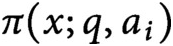
Let $a_1$, $a_2$, and $a_3$ be distinct reduced residues modulo q satisfying the congruences $a_1^2 \equiv a_2^2 \equiv a_3^2 \ (\mathrm{mod}\ q)$. We conditionally derive an asymptotic formula, with an error term that has a power savings in q, for the logarithmic density of the set of real numbers x for which $\pi (x;q,a_1)> \pi (x;q,a_2) > \pi (x;q,a_3)$. The relationship among the $a_i$ allows us to normalize the error terms for the $\pi (x;q,a_i)$ in an atypical way that creates mutual independence among their distributions, and also allows for a proof technique that uses only elementary tools from probability.

Information

Type
Article
Copyright
© Canadian Mathematical Society 2020