




Hostname: page-component-7b7567c8c-7pwfn Total loading time: 0 Render date: 2026-11-17T15:48:35.391Z Has data issue: false hasContentIssue false

Shortest paths in arbitrary plane domains

Published online by Cambridge University Press:  09 November 2020

L. C. Hoehn
Affiliation:
Department of Computer Science & Mathematics, Nipissing University, 100 College Drive, Box 5002, North Bay, ON P1B 8L7, Canada e-mail: loganh@nipissingu.ca
L. G. Oversteegen*
Affiliation:
Department of Mathematics, University of Alabama at Birmingham, Birmingham, AL 35294, USA
E. D. Tymchatyn
Affiliation:
Department of Mathematics and Statistics, University of Saskatchewan, 106 Wiggins Road, Saskatoon, SK S7N 5E6, Canada e-mail: tymchat@math.usask.ca
*
Rights & Permissions [Opens in a new window]

Abstract

Core share and HTML view are not available for this content. However, as you have access to this content, a full PDF is available via the 'Save PDF' action button.

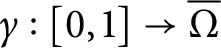
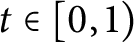
Let $\Omega $ be a connected open set in the plane and $\gamma : [0,1] \to \overline {\Omega }$ a path such that $\gamma ((0,1)) \subset \Omega $. We show that the path $\gamma $ can be “pulled tight” to a unique shortest path which is homotopic to $\gamma $, via a homotopy h with endpoints fixed whose intermediate paths $h_t$, for $t \in [0,1)$, satisfy $h_t((0,1)) \subset \Omega $. We prove this result even in the case when there is no path of finite Euclidean length homotopic to $\gamma $ under such a homotopy. For this purpose, we offer three other natural, equivalent notions of a “shortest” path. This work generalizes previous results for simply connected domains with simple closed curve boundaries.

Information

Type
Article
Copyright
© Canadian Mathematical Society 2020