Contents
Research Article
On Almost-Fixed-Point Theory
-
- Published online by Cambridge University Press:
- 20 November 2018, pp. 673-699
-
- Article
-
- You have access
- Export citation
-
Let X be a topological space,
 a finite covering of X (the words ‘covering’ and ‘cover’ are used interchangeably). We say that
 has the almost fixed point property for a class
 of continuous maps f : X → X if for all
 there is an x ∈ X and
 such that x ∈ U and f(x) ∈ U, or, equivalently, if there is a
 such that
 .
 a finite covering of X (the words ‘covering’ and ‘cover’ are used interchangeably). We say that
 has the almost fixed point property for a class
 of continuous maps f : X → X if for all
 there is an x ∈ X and
 such that x ∈ U and f(x) ∈ U, or, equivalently, if there is a
 such that
 .
Lie Action of Certain Skews in *-Rings
-
- Published online by Cambridge University Press:
- 20 November 2018, pp. 700-710
-
- Article
-
- You have access
- Export citation
Suites D'Interpolation Pour les Classes de Bergman de la Boule et du Polydisque de Cn
-
- Published online by Cambridge University Press:
- 20 November 2018, pp. 711-737
-
- Article
-
- You have access
- Export citation
-
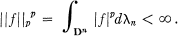
Soit Dn = ﹛z = (z1 , . . . , zn) ∈ Cn, |zi| <> 1﹜ le polydisque de Cn et ƛn la mesure de Lebesgue de Cn normalisée sur Dn. Pour b > 0, .on définit les espaces de Bergman Ap(ƛn) de la manière suivante:
Ap(ƛn) est l'espace des fonctions analytiques dans Dn telles que:
Lee Polynomials of Codes and Theta Functions of Lattices
-
- Published online by Cambridge University Press:
- 20 November 2018, pp. 738-747
-
- Article
-
- You have access
- Export citation
Discrete Copies of Rings of Sets in Groups and Orlicz-Pettis Theorems
-
- Published online by Cambridge University Press:
- 20 November 2018, pp. 748-755
-
- Article
-
- You have access
- Export citation
Combinatorial Matrices with Small Determinants
-
- Published online by Cambridge University Press:
- 20 November 2018, pp. 756-762
-
- Article
-
- You have access
- Export citation
Riemann Surfaces Over Regular Maps
-
- Published online by Cambridge University Press:
- 20 November 2018, pp. 763-782
-
- Article
-
- You have access
- Export citation
Additivity of the P n-Integral
-
- Published online by Cambridge University Press:
- 20 November 2018, pp. 783-796
-
- Article
-
- You have access
- Export citation
A Logarithmic Property for Exponents of Partially Ordered Sets
-
- Published online by Cambridge University Press:
- 20 November 2018, pp. 797-807
-
- Article
-
- You have access
- Export citation
Minimal Rates of Summability
-
- Published online by Cambridge University Press:
- 20 November 2018, pp. 808-816
-
- Article
-
- You have access
- Export citation
On Algebras Stably Equivalent to an Hereditary Artin Algebra
-
- Published online by Cambridge University Press:
- 20 November 2018, pp. 817-829
-
- Article
-
- You have access
- Export citation
-
Let Λ be an artin algebra, that is, an artin ring that is a finitely generated module over its center C which is also an artin ring. We denote by mod Λ the category of finitely generated left Λ-modules. We recall that the category
 of finitely generated modules modulo projectives is the category given by the following data: the objects are the finitely generated Λ-modules.
 of finitely generated modules modulo projectives is the category given by the following data: the objects are the finitely generated Λ-modules.
A Condition for Artinian Rings to be Noetherian
-
- Published online by Cambridge University Press:
- 20 November 2018, pp. 830-837
-
- Article
-
- You have access
- Export citation
Some Group Presentations
-
- Published online by Cambridge University Press:
- 20 November 2018, pp. 838-850
-
- Article
-
- You have access
- Export citation
-
Let the group
 be presented on three generators a, b, c with three defining relations


where p, q, r, s, t, u are integers, the “parameters” of the presentation.
 be presented on three generators a, b, c with three defining relations


On the Homology of the General Linear Groups Over Z/4
-
- Published online by Cambridge University Press:
- 20 November 2018, pp. 851-855
-
- Article
-
- You have access
- Export citation
Blocking Sets in Projective Spaces
-
- Published online by Cambridge University Press:
- 20 November 2018, pp. 856-862
-
- Article
-
- You have access
- Export citation
-
Blocking sets in projective spaces have been of interest for quite some time, having applications to game theory (see [6; 7]) as well as finite nets and partial spreads (see [5]). In [4] Bruen showed that if B is a blocking set in a projective plane of order n, then


Analytic Structures for H∞ of Certain Domains in Cn
-
- Published online by Cambridge University Press:
- 20 November 2018, pp. 863-871
-
- Article
-
- You have access
- Export citation
Signatures and Semi Signatures of Abstract Witt Rings and Witt Rings of Semilocal Rings
-
- Published online by Cambridge University Press:
- 20 November 2018, pp. 872-895
-
- Article
-
- You have access
- Export citation
Correction
Steiner Triple Systems Having a Prescribed Number of Triples in Common*: Corrigendum
-
- Published online by Cambridge University Press:
- 20 November 2018, p. 896
-
- Article
-
- You have access
- Export citation