





No CrossRef data available.
Article contents
On a rationality problem for fields of cross-ratios II
Published online by Cambridge University Press: 04 September 2020
Abstract
Core share and HTML view are not available for this content. However, as you have access to this content, a full PDF is available via the 'Save PDF' action button.
Let k be a field,  $x_1, \dots , x_n$ be independent variables and let
 $L_n = k(x_1, \dots , x_n)$. The symmetric group
 $\operatorname {\Sigma }_n$ acts on
 $L_n$ by permuting the variables, and the projective linear group
 $\operatorname {PGL}_2$ acts by $$ \begin{align*} \begin{pmatrix} a & b \\ c & d \end{pmatrix}\, \colon x_i \longmapsto \frac{a x_i + b}{c x_i + d} \end{align*} $$for each
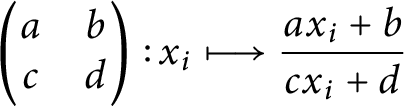
 $i = 1, \dots , n$. The fixed field
 $L_n^{\operatorname {PGL}_2}$ is called “the field of cross-ratios”. Given a subgroup
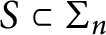 $S \subset \operatorname {\Sigma }_n$, H. Tsunogai asked whether
 $L_n^S$ rational over
 $K_n^S$. When
 $n \geqslant 5,$ the second author has shown that
 $L_n^S$ is rational over
 $K_n^S$ if and only if S has an orbit of odd order in
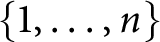 $\{ 1, \dots , n \}$. In this paper, we answer Tsunogai’s question for
 $n \leqslant 4$.
MSC classification
Primary:14E08: Rationality questions
Information
- Type
- Article
- Information
- Copyright
- © Canadian Mathematical Society 2020
Footnotes
Tran-Trung Nghiem was supported by a Fondation Hadamard Scholarship. Zinovy Reichstein was partially supported by National Sciences and Engineering Research Council of Canada Discovery grant 253424-2017.
References
Gille, P. and Szamuely, T., Central simple algebras and Galois cohomology. 2nd ed., Cambridge Studies in Advanced Mathematics, 165, Cambridge University Press, Cambridge, 2017.Google Scholar
Groupprops, The Group Properties Wiki, Subgroup structure of symmetric group
 ${S}_4$
. https://groupprops.subwiki.org/wiki/Subgroup_structure_of_symmetric_group:S4
Google Scholar
 ${S}_4$
. https://groupprops.subwiki.org/wiki/Subgroup_structure_of_symmetric_group:S4
Google Scholar
Hoshi, A., Kang, M., and Kitayama, H., Quasi-monomial actions and some 4-dimensional rationality problems. J. Algebra 403(2014), 363–400. http://dx.doi.org/10.1016/j.jalgebra.2014.01.019
CrossRefGoogle Scholar
Kang, M. and Wang, B., Rational invariants for subgroups of
${S}_5$
and
${S}_7$
. J. Algebra 413(2014), 345–363. http://dx.doi.org/10.1016/j.jalgebra.2014.05.015
CrossRefGoogle Scholar
 ${S}_5$
and
 ${S}_7$
. J. Algebra 413(2014), 345–363. http://dx.doi.org/10.1016/j.jalgebra.2014.05.015
CrossRefGoogle Scholar
Reichstein, Z., On a rationality problem for fields of cross-ratios. Tokyo J. Math. 43(2020), no. 1, 205–213. http://dx.doi.org/10.3836/tjm/1502179305
CrossRefGoogle Scholar
Reichstein, Z. and Scavia, F., The Noether problem for spinor groups of small rank. J. Algebra 548(2020), 134–152. MR4046156CrossRefGoogle Scholar
Serre, J.-P., Galois cohomology. Translated from the French by Patrick Ion and revised by the author. Springer-Verlag,
Berlin, 1997. http://dx.doi.org/10.1007/978-3-642-59141-9
Google Scholar
Tsunogai, H., Toward Noether’s problem for the fields of cross-ratios. Tokyo J. Math. 39(2017), no. 3, 901–922. http://dx.doi.org/10.3836/tjm/1491465735
CrossRefGoogle Scholar
van der Waerden, B. L., Algebra. Vol. II. Translated from the 5th German edition by Schulenberger, John R.. Springer-Verlag, New York, 1991.Google Scholar
 You have Access