



 at the same time there are some profoundly significant variants in the manuscripts, and it will be argued that the text of 405–12 has suffered from ancient garbling and interpolation. In the following discussion I am everywhere indebted to W. S. Barrett's commentary, whose detailed approach at least draws attention to numerous difficulties that have been hitherto neglected, but the conclusions reached differ radically from his.
 could mean nearly the same, but Phaedra will certainly have pre- ferred KCLKIOV, as it is less suggestive of wrong-doing; to insist that
 is right (Barrett) and to insist further that only ‘do wrong’ makes sense, is merely perverse, as it leads to the absurd conclusion that
 is the cause of Phaedra's ‘wrongdoing’.
 may sometimes mean ‘make sinful’, but there is no reason why
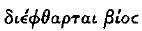 should be given such a specialized meaning;
 is ambivalent in 389 below.

 .

 .


 ‘… all with the same expectation; but for some their
 is untimely / excessive in respect of wealth, for others it attains the golden mean/bull's-eye’. Both
 and
 have at least two meanings, yet the sententia as a whole is clear enough without any necessity to choose between them. Many have emended the lines, and Platnauer actually accepts
 (Elmsley), though it is evidently inconsistent with the subdivision that follows (‘unsuccessful/successful’; ‘immoderate/proper’).
 is often nothing like as strong as English ‘hate’, and that Phaedra's point may be ‘everyone’ (i.e. every male) ‘blames a woman’. I cannot believe that this is here an appropriate use of either
 is it likely that Phaedra is here using a variable word at the mild end of its range of meaning, immediately before a curse (and cf.
 certainly ‘hate’, in 413) ?
 is acc. sing, and
 in apposition to
 alone, the first re being equivalent to ‘not only’. The syntax of An. 672–4 is similar:



 The argument here is ‘You may argue that a woman, as much as a man, has a strong case when wronged by a man: but so, equally, has a man a strong case when he has an immoral woman in the house … (677)have I not there-fore a right to help my own kin?’ This comes in a stigmatized passage (668–77 del. Hirzel, Murray), which I believe to be mostly genuine, but obscured by the intrusion of 675–6; the latter couplet was quoted from some other play as a well-meant but ruinous ‘clarification’ of what was wrongly taken to be a discussion of the relative. ‘strengths’ of husband and wife (Menelaus, of course, is thinking of ‘father’ and ‘son-in-law's con-cubine’, but uses ‘man’ and ‘woman’ because the argument is generalized). The destructive intrusion of a borrowed sententious distich must be more probable than the ad hoc composition and insertion of a tenline passage which is virtually unintelligible as things stand.
 in 197 for
 Andromache's first point is that she is a helpless slave, her second that she cannot be accused of using the physical assets of youth to supplant Hermione (the rhetorical obverse of Hp. 1009 ff.). As things stand the alternatives are confused and she appears to say the same thing twice. Another case, perhaps, is A. Ag. 6–7 where some notorious difficulties disappear if we read …
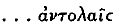

 .
 (407) and
 (422).
 was written to precede
 .
 (Page); Medea, like Phaedra, is explaining her desire for death (227, followed by
 ), and the gibe against Jason is thus slightly out of place, and the subject, perhaps, a little obscure. Better is Canter's
 , but I prefer the imperfect after
 especially in the light of Hp. 406.
 is preferred
 to (SO Barrett). Cf. also Ar. Nu. 6 for the asyndeton.
 to
 on the authority of Flor., supported by one medieval MS. (G, for whose independent value see Barrett, p. 72). The difference in meaning is slight, often negligible, but in favour of
 with the restored text, whereas the generalizing plural more naturally suits the later false text, with its ancestral sinner who first brought marriage(s) into disrepute. If we reject
 we presumably do so in the belief that Flor. and C made the same accidental slip; this seems slightly less likely than that
 were both widespread variants in antiquity, in which case the choice is open. For the singular, cf. 835, 1003, in both of which the original connotation ‘marriage-bed’ is still felt (cf. also Med. 380).
 this also will be discussed in conjunction with 625–6.
 has ousted
 (II) in 101 (the identical gloss in 1403). We do not need to be told the goddess's name here, especially after the caution in 100, and
 so soon after Aphrodite's departure is an effective stroke of irony, intensified by
 102.
 may be right, but I doubt whether the reading of D (a fortiori B2) against all the rest can be more than a lucky guess. If
 281, and the corrupt word could alternatively be the second, having ousted something like
 at the end of the line. Cf. 1052 below.
 659 is answered by
 661, not by
 660 (which would be a feeble antithesis and ruinous to the period as a whole): if so, it seems better to write
 This incorrect
 is associable with a false interpretation which made Hippolytus drop his voice at the end of 660: unsubtle critics, such as those who inveighed against 612, will have assumed without thought that Hippolytus was explicitly promising to keep his oath; misquotation would thus be easy and soon universal.
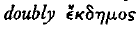 (37 and 281), so that when one hears 659–60 for the first time, without hindsight, Hippolytus’ expressed intention is so far consistent with a long absence until Theseus finally leaves Trozen (i.e. ‘while Theseus is away from his land’)—an intelligible course if the keeping of the oath is to be all-important; note also that iary dv means (in the abstract) either ‘while’ or ‘until’, the distinction depending on the tense of the subjunctive, which is here conspicuous by its absence. It may be that
 is a deliberate syntactical ambiguity; but the ambiguity is still there if we read

 . The effect, I think, is to raise a false hope
 that Hippolytus proposes to avoid his father completely (also perhaps to alert the audience to the ambiguity of the sequel): when Hippolytus continues
 to announce his intention of returning with his father after all, the shock of disappointment makes the ladies all the more certain that his word is not to be relied on. But this may be fanciful, and is not integral to the interpretation here put forward.
 38, and cf. 135 ff., 275). His subsequent plans have not been made public, and his temporary absence was unknown to the Chorus (278–81). The natural inference is that Theseus’ household will be established at Trozen for the full year, though he himself may fit in some unannounced trips elsewhere.
 ’ is prima facie relevant, and if an actor (?) knew such a line in another play he could have thought it worth adding (interpolation by quotation, as distinct from ad hoc composition, may be relatively motiveless and even destructive). Instead Barrett judges that 663 was composed as a substitute for 661 in a revised version, somehow being preserved out of place. Dittography is a fashionable justification for deleting awkward lines, but a true dittograph (e.g. IA 635–7, A. ScT 804–5 = 820–1) is a more or less synonymous variant making no attempt to alter the dramatist's meaning; and some at least of the repetitive intrusions in our texts will have derived from quotations of parallel loci, whether written first in the margin or deliberately (or unconsciously, by actors’ bad memory ?) added to the text (so, for example, I should explain 871–3). One may doubt whether deliberate rewriting (or total replacement) of lines known to be genuine can have been at all common in the evergreen masterpieces of the Greek theatre; it can be put forward as a legitimate hypothesis only if one can show clearly how a text which satisfied the poet was later found intolerable in circles which seem to have had less, not more, exacting standards of tolerance. To suppose that a mere ‘stickler for accuracy’ would have re- placed so straightforward a line as 661 seems most improbable. If someone intended 663 to replace 661, he can have had only one motiveto alter Hippolytus’ intention radically in order to make the oath-keeping absolute: Hippolytus will stay away until his father leaves the country, but ‘will know …’ in absentia. We might visualize a variant (e.g.) ear’
 Butsuch a hypothesis seems both complicated and unnecessary, since transposition of 662/3 suffices

 (the actions being exactly contemporaneous);
 ought to mean ‘how you propose to look’ (indepen-dently future with reference to the present moment).
 (‘the way you propose to look [at me, but also at the world in general] from now on’); cf.
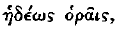 IA 1122, for such an absolute use.
 with the future in this sense is neglected by LSJ but authentic, e.g.

 El. 975: the future is equivalent to inf.
 would be impossible after
 but makes sense after
 , since the ‘looking’ (absolute, in the general sense of ‘attitude’) begins here and now and is independent of Hippolytus’ presence (cf. last note).
 was exploited in 277, 382, 386.
 in parenthesi: cf. IA 66.

 will naturally be heard (by symmetry) as ‘I shall know, having tasted.
 then prematurely indicates that Phaedra is already in Hippolytus’ mind. I do not understand this: she certainly is in his mind, and it is appropriate enough for Phaedra to understand him so; but in fact the emphasis lies rather in the forceful sibilants, and any mental antithesis of persons need only be between ‘you’ and ‘me’.
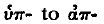 Or. 45, also Ax. Ec. 15 (
 , otherwise only in Th. 425). A similarly ingenious locution is to be found in HF 1118

 where the verb appears to be used in a double sense: (a) ‘outline’ (cf. 1120); (b) ‘make underhand accusation against’ (LSJ); the latter meaning suits the dialogue well and accounts for the dative
 .
 early misquotation might easily have dropped such a metrically optional word (cf. on 866). For the rhythm cf.
 coheres with
 and Euripides was liberal in his interpretation of Porson’s Law where monosyllables were concerned (cf. Dodds on Ba. 246).
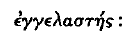 he supposes it to refer to the triumphant scoffing of the seducer at the cuckolded husband. But this will not do (apart from its total inapplicability to any feature of Phaedra's misconduct): (a) no one has suggested that Hippolytus is a scoffer; (b) if Hippolytus meant ‘scoffer at those I have injured’, why did he use the colour-less expression ran
 (c) ‘I'm no scoffer at a cuckolded husband’ admits the cuckolding; (d) iooi is an impossible sequel to any such sentiment: on any interpretation 1000 must describe some treatment of ‘associates’ that can only be performed in their absence.
 S. Ph. 417 (‘bartered’ in a pejorative sense), and
 Rh. 296
 cf. als537. Such a corruption for
 at IA
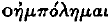 (Kirchhoff) could be transcriptional (EMIIOOA/EIIEA), but is more likely to derive from histrionic misquotation, comparable with the variants in Shakespearean texts.
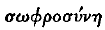 is the wrong plea to persuade you (so that I must try something else)’;
 you are not persuaded that I am
 never mind’ The Greek is unambiguous, the stress being on
 .

 I have moved the colon forward, meeting Barrett's argument that
 (Denniston, p. 253) and
 (‘perhaps’) are incompatible (note also that
 is a weak sentence-opening after
 ). It now seems right to accent
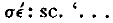 as for my

 to prove that I was not’.
 (not merely =
 pace LSJ): the
 is (a) intensive, (b) suggests a ridiculous hope (cf.
 1012); perhaps also ‘in addition (to Phaedra's egregious charms)’. Compound verbs nearly always have their full value in Euripides, even to the point of strain (so too
 , and cf. on 998, 1046).
 (both ‘vain’ and ‘foolish’): not because the hope was unjustified on obscure legal grounds, but because (a) Phaedra is no Helen; (b) Hippolytus has all the money he needs; (c) his father is still alive. The
 is self-evident, and only needs further consideration of the special case where the father is a king,
 (Denniston, pp. 44 ff.):
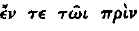
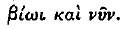 .

 (evidently a paraphrase of ioi4 only). He has mistaken the sense badly, but he evidently did not take
 as the subject of
 , and may well have had
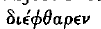 (passive, with a personal subject); at the same time his 3rd pers. sing, active verb may have later inspired mistaken correction.
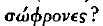 Of course ‹it is› not, ‹since› monarchy corrupts the wits of all who enjoy it’. This is certainly wrong: (a) it is both untrue and illogical; (b) where does the
 come from in 1013? (c) why should Hippolytus go out of his way to insult Theseus? (d) the emendations of
 are all arbitrary.
 after 1007.
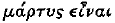 can, no doubt, take an indirect question, but hardly one introduced by olos; moreover
 must refer primarily to character or current situation, and only through that, if at all, to deeds in the past.
 (L et ?alii), not
 Barrett admits the logical superiority of the former (note also
 = ‘if indeed’), which is also palaeographically likely, but doubts
 acc./inf. ‘think that’. S. OC 579 and E. HF 1343 provide sufficient support, and
 is here not quite =
 . ‘thought-fit- to-say-that’ suggests, appropriately enough, mistaken opinion.
 has ousted /ih

 at the end of the line, in an elliptical sentence, ‘but not like that’. A long pause, justifying the asyndeton, is appropriate enough, but the two consecutive asyndeta are perhaps unwelcome. Also in favour of
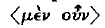 is that one then more naturally supplies
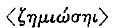 (cf. 1043), which is subtler and more in keeping with the numerous ambiguities in the play.
 now look forward,
 back, as we may expect.
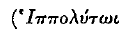 codd.): the early date of the papyrus (c. 250 B.C.) and exactly contemporary epigraphic evidence (429/8 B.C.: Barrett, p. 5) justify restoration of the less obvious genitive. Aphrodite is evidently quoting a cult-title, and it is dangerous to assert that ‘only the dative makes sense in Euripides’ (and v. LSJ
 A.). The genitive is especially common in cult-names, often apparently involving an ellipse (e.g. inl
 Barrett takes an unnecessarily pessimistic view of the value of this very early papyrus. Its variants deserve close attention, and one (
 in 101, considered in a note on 422) is probably right. Those in 40
 and 42—?
 —are interesting, and suggest histrionic ‘improvement’ (cf. Barrett on the complex implications of
 which may well have puzzled actors). In 7 and 41 we have casual variants, admittedly inferior. In 57
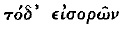 elooptuv could be right (codd. are divided between

 with the former reading hitherto unexplained): cf. Alc. 18, where also
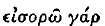 occurs six lines away. In 80
 is wrong, but supports
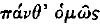 (v. Dodds on Ba. 316, of whose arguments Barrett takes no account).
 to
 would be easy;
 may derive from an intermediate
 (intrusive μ, as in
 and ojoi confusion).
 Nauck (
 codd.): certainly better than
 (so Barrett). This
 can be associated with the false
 in 143, 141 having been mistaken for a complete sentence (sc.
 An alternative might be

 (apprehensive) as more liable to corruption; cf. IT 804
 (Herwerden) and (I think)

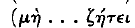 codd.) in An. 229–30-an error which inspired the erroneous
 in the sequel.
 seems defensible: we do not need a strong ‘or’ here (even ‘and’ makes sense if we allow that ‘Pan’ etc. may be mere colourful personifications of
 ). But the sense is probably ‘but (perhaps) …?’ with which
 is comparable (so Denniston, rebuked by Barrett); there may be a touch of ‘in your case’ to justify the pronoun, though the repeated subject need have no great significance.
 ‘I know not how to find out.’
 certainly an improvement on
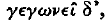 but we still have
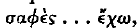 and a negative use of
 seems more to the point.
 (Pierson), making an explicit mention (if we want one) of the wedding-feast. This could be right, but does little to save the lines in situ: the repetition of
 is more than suspicious.
 (Wecklein).
 is at stake, and fear of
 will overcome
 (see on 373–430 passim; also 998).
 in 792. This is certainly an improvement on
 but with asyndeton in 790/1 we now need a clear connective.
 seems worth considering also in S. OT 220.
 unnecessary, and it spoils, to my mind, the vividness and elegance of the Greek.
 as pejorative, in conjunction with
 .
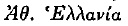 may be an unrecorded cult-title at Trozen. But this remains a very surprising goddess for Hippolytus to be called the lsquo;star’ of, rather than Artemis.
 be a plain accusative of respect with
 (Ll.-J.)? Not unimaginable, perhaps, but one would welcome a clear parallel.

Crossref Citations

This article has been cited by the following publications. This list is generated based on data provided by Crossref.
Craik, E. M.
1993.
ΑΙΔΩΕ in Euripides'Hippolytos373-430: review and reinterpretation.
The Journal of Hellenic Studies,
Vol. 113,
Issue. ,
p.
45.
Mills, Sophie
2012.
Oxford Bibliographies in Classics.
2013.
The Encyclopedia of Greek Tragedy.
p.
408.
Finglass, P. J.
and
Coo, Lyndsay
2020.
Female Characters in Fragmentary Greek Tragedy.