




No CrossRef data available.
Article contents
Ethical Analysis in Plato's Earlier Dialogues
Published online by Cambridge University Press: 11 February 2009
Extract
In the dialogues earlier than the Republic, Plato indicates in many ways his lack of confidence that any method of ethical analysis will lead to a discovery of the truth. The doubts which he expresses or implies have not always been given the attention which they deserve, and there has often been a reluctance to accept them as an expression of Plato's genuine conviction. There is, admittedly, some justification for this reluctance. Plato does not always seem to be consistent. In his attitude towards the results attainable by the use of a method of joint inquiry, he is sometimes extremely optimistic, at other times sceptical; and it seems a not unreasonable explanation of his scepticism to ascribe it to his desire to preserve a consistent portrait of the ‘ignorant’ Socrates. Thus the hesitation and reserve with which Plato immediately qualifies his dogmatic presentation of the theory of ⋯ν⋯μνησις in the Meno is explicable as a concession to dramatic realism. His reference to the method discussed in the Phaedo as a δε⋯τερος πλο⋯ς may be dismissed as ‘ironical’, as ‘the habitual playful selfdepreciation of Socrates’. The purpose of this paper is to suggest that the development of Plato's views on method in the dialogues as far as the Republic can be traced more consistently if we accept Plato's doubts, as well as his optimism, about ethical analysis, as the expression of his genuine conviction.
Information
- Type
- Research Article
- Information
- Copyright
- Copyright © The Classical Association 1952
References
page 74 note 1 A paper-here presented in an amended form-read to the Classical Association at its General Meeting in Bristol in April 1950.
page 74 note 2 Cf. Stenzel, , Plato's Method of Dialectic (trans. Allan, D.J.), p. 6.Google Scholar
page 74 note 3 Burnet, in his note on Ph. 99 c 9.
page 74 note 4 Taylor, A.E., Mind, xlvi. 232.Google Scholar
page 74 note 5 Rep. 30.4. d.
page 74 note 6 Euth. II d; cf. Hip. Min. 373 b.
page 74 note 7 Euth. II d.
page 74 note 8 On this point see Robinson, Richard, Plato's Earlier Dialectic (1941), pp. 82–83, where full references are given.Google Scholar
page 74 note 9 Rep. 487 b-d; cf. Hip. Mai. 304 a-b. Socrates occasionally seems to suggest that the criteria are sufficient: e.g. Rep. 348 a-b.
page 75 note 1 From Aristophanes, Aeschines, Xeno-phon, and Aristotle I can think of only two passages which might give such an impression. The first is Xen. Mem. 4. 4. 9, which is curiously inconsistent with the tone of the rest of the work. Socrates′ dogmatic method of argument in the rest of the chapter almost suggests that Xen. introduced the preliminary remarks to enable him to correct an impression of Socratic method given by Plato. E. C. Marchant (Loeb, Introd., p. xx), in commenting on the awkwardness of the chapter as a whole, suggests as an explanation of the content of the argument that it is designed as a corrective to Plato. Cf. Mem. 1.4. 1, which seems to be pointed against the influence of Plato's presentation of Socrates. The second is Arist. Soph. El. 183 b 7. This is so exactly a description of Socrates′ attitude as presented by Plato that it is most naturally explained as a reference to the Platonic Socrates. Taylor, A.E. (Varia Socratica, p. 63) considered it ‘a plain allusion to the complaint of Thrasymachus (Rep. 337 e)’.Google Scholar
page 75 note 2 169 a-b.
page 75 note 3 210 d.
page 75 note 4 216 d.
page 76 note 1 219 c-d.
page 76 note 2 220 b.
page 76 note 3 505 e.
page 76 note 4 506 a.
page 76 note 5 64 a; cf. 67 b. In Ph. (84 e, 85 b) Socrates professes to have, like the swans, a gift of divination ( ) from Apollo, which allows him, in his swan-song, to speak of the nature of the soul and of its immortility. Cf.Apol. 39 d, Tht. 142 c.
page 76 note 6 Meno 99 c; Apol. 22 c; Ion 533 e, 534 b-d, 542 a.
page 76 note 7  (Phdr. 249 d), of the philosopher, and in Meno 99C etc., of the poet.Cf. Cornford, F.M., F.H.S. lxii. 4–5.Google Scholar
page 76 note 8 Phdr. 248 d-e; cf. 265 b (the madness of the ‘philosophic-lover’ is the best kind of madness).
page 76 note 9 80 d.
page 76 note 10 In Grote, 's words (Plato, 1865, ii, p. 16).Google Scholar
page 76 note 11 81 a ff.
page 76 note 12 98 a.
page 76 note 13 Cf.Wild, K.W., Philosophy, xiv. 332–4.Google Scholar
page 76 note 14 99 a ff.
page 77 note 1 81 c-d.
page 77 note 2 85 e.
page 75 note 3 75 c-d.
page 77 note 4 Plato does suggest (Phdr. 248 d-e) that their souls never had an adequate knowledge of reality before incarnation, and thus can never adequately recollect it!
page 77 note 5 86 b.
page 77 note 6 98 b.
page 77 note 7 The question is an important one, as Stenzel, insists (op. cit., p. 6)Google Scholar. Cornford, (Plato's Theory of Knowledge, p.3Google Scholar) thought that ‘owing to Plato's dramatic method we cannot fix the extent of Socrates′ reservation’. His own view was that the reservation extended only to ‘the details of re-incarnation, purgatory, and so forth’ (ibid.).
page 78 note 1 86 e.
page 78 note 2 Farquharson, , C. Q. xvii. 21Google Scholar; Cornford, , Mind, N.s. xli. 40, 43.Google Scholar
page 78 note 3 7 Introd.; quoted and translated by Cornford, , Mind, N.s. xli. 46.Google Scholar
page 78 note 4 86 d-e.
page 78 note 5 Cf.Goldschmidt, V., Les Dialogues de Platan (Paris, 1947), pp. 124–7.Google Scholar
page 78 note 6 For the meaning of see Burnet's note on Ph. 99 c 9; Goodrich, W.J.,C.R. xvii. 381–2Google Scholar; Murphy, N.R., C.Q. xxx.41–44Google Scholar; and the references to Kock given by Greene, W.C., Scholia Platonica, p. 14Google Scholar. It is not suggested that the method of the 
 is inferior to the method of physical observation. The method is ‘second-best’ in the sense that its limitations are acknowledged as far as realizing the hopes of the

 is concerned.
page 78 note 7 85 c-d.
page 79 note 1 99 c.
page 79 note 2 99 c-d.
page 79 note 3 For a full and valuable discussion of the details see Robinson, Richard, op. cit., pp.28–47.Google Scholar
page 79 note 4  (100 a, 101 d), (100 b).
page 79 note 5 JOI e.
page 79 note 6 101 d; cf. 76 b, where the distinctive ability of the to ‘give an account’ 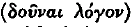 is associated, as in the Meno, with
 .
page 80 note 1 107 b.
page 80 note 2 107 b 8.
page 80 note 3 Op. cit., pp. 12–14.Google Scholar
page 80 note 4 Ibid., pp. 10–11.
page 80 note 5 Ibid, pp. 10–12.
page 80 note 6 Rep. 517 c; cf. Stenzel, , op. cit., p. 46.Google Scholar
page 80 note 7 538 d-e.
page 80 note 8 539 c.
page 80 note 9 537 c-d.
page 81 note 1 533 c  .There has been considerable discussion of this ahrase. The main reasons for interpreting t in the sense of ‘destroying as ultimate arinciples’, by showing the
 to be merely derivative, are (a) the object to be inderstood after
 (533 d 1) must:clearly be
 , and it is inconsistent to; pcak of confirming the
 by ‘overthrowing them like bad definitions of justice' (cf. the use of
 in Phil. 14 c, Lach. 194 c, 200 b, Soph. 250 c); (b) this interpretation is more consistent with the previous discussion of method, particularly 511 a-b. rhe context itself supports this interpretation. The distinctive power of dialectic is its ibility to give an account of its
 in contrast to tne aeaucuve metnoa 01 matne-matics which leaves its
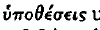 unexplained (533 c I_3)- And
 explained in Ph. 101 d as confirming an original postulate by deriving it from some higher principle: cf.
 in Rep. 510c. It should be noted that 533 c is the only instance in Plato of
 used in reference to method, and that the word does not seem to have acquired a strictly logical meaning before Aristotle. It is not safe to argue from Aristotle's use of the word, especially when we remember that Plato suits his vocabulary to the needs of familiar conversation.
page 81 note 2 i.e. in the Divided Line.
page 81 note 3 Robin, L., Platon, p. 332.Google Scholar
page 81 note 4 534 b-c.
page 81 note 5 Mind. N.s., xli. 167–83.Google Scholar
page 82 note 1 505 a. 506 d-e.
page 82 note 2 533 a.
page 82 note 3 Stenzel, , op. cit, p. 15.Google Scholar