



No CrossRef data available.
Article contents
Husked and ‘Naked’ Grain
Published online by Cambridge University Press: 11 February 2009
Extract
When classical scholars use the term ‘spelt’ to translate such words as  and
 in Greek, and far, odor, semen (adoreum), arinca, and the like in Latin, they seldom realize that all these words denote grains which are nowadays included in the genus wheat. Within this genus a distinction is made between ‘husked’ and ‘naked’ species: naked wheat can be ‘threshed out’ on the threshing-floor, the grain being separated from the chaff and left ready for milling; husked wheat has before milling to undergo a separate hulling operation to free the grain from the husks, or cover glumes, by which it is enclosed and which so tightly adhere to it that the rachis (i.e. stem of the ear) breaks before the grain is freed. The term ‘spelt’, when used in the way described, denotes the husked wheats, while ‘wheat’ is reserved for the translation of the names (
 , triticum, siligo) of the naked species.
Information
- Type
- Research Article
- Information
- Copyright
- Copyright © The Classical Association 1955
References
page 129 note 1 Cf. exteruntur in No. 14 of the passages listed below: this does not imply (pace Jasny, N., The Wheats of Classical Antiquity, p. 156Google Scholar) that husked grains were not threshed at all.
page 129 note 2 The very name triticum denotes ‘threshable’, i.e. naked, grain.
page 129 note 3 Because the ear may shatter before the grain is ripe; cf., for instance, Colum. 2.9.18.
page 129 note 4 Cf, for instance, passages No. 9, 14, and 16 below. There must, however, have been some exceptions since Diocletian's, Edict on Maximum Prices of A.D. 301 (1. 4–8Google Scholar) gives two prices each for most husked grains, according to whether they were marketed before or after hulling. On the whole subject cf. Jasny, , ‘Competition among Grains in Classical Antiquity’, Am. Hist. Rev. xlvii (1941–1942), 747 ff.Google Scholar
page 129 note 5 This is not usually recognized. To prove it would require an argument too long for the present article. It can be proved (as passage No. 14 suggests), and I hope to do so soon elsewhere.
page 129 note 6 Triticum and zea: Linnaeus was the first to combine them in one genus.
page 131 note 1 By Guiraud, , La Propriété foncière en Grècs jusqu' à la conquête romaine (Paris, 1893) p. 493Google Scholar; cf. Jardé, , Les Céréales dans l'antiquité grecque, I (Paris, 1925), p. 4, n. 5.Google Scholar
page 132 note 1 Cf. Schulz, A., Geschichte der kultivierten Getreide (Halle a. d. Saale, 1913), pp. 97 ffGoogle Scholar. They are found both among the two-rowed and among the six-rowed species, both of which are normally husked: Columella's hexastichum does not help.
page 132 note 2 Schulz (p. 101) mentions a 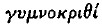 which, according to Sprengel, was grown in the late eighteenth century on the island of Zante.
page 133 note 1 Schulz, , op. cit., p. 101.Google Scholar
page 133 note 2 In the sentence preceding passage No. 12.
page 133 note 3 In 18. 73–74 the Greek barley must be husked, but the Italian might be either husked or naked.
page 133 note 4 Yet it is very probable that barley was not an important cereal in Italy at that time. (The detailed argument on this point cannot be given here.) This makes the belief that only naked varieties were grown a little easier.
page 133 note 5 Jardé, (op. cit., p. 8Google Scholar) thought it could.
page 133 note 6 Cf. here Theophrastus' statement (H.P. 2. 4. 1) that  in three years
 This shows that with
 a separate hulling operation (which could be emitted before sowing) was known. The statement itself must be mistaken, but it can be explained if the seed-bag contained a percentage of naked-wheat kernels each year. Hulling would damage some of the
 kernels each time, and the genuine naked wheat would therefore preponderate in the course of a few years.
page 134 note 1 This article, like an earlier one in C.Q. xliii (1949), 113 ffGoogle Scholar., is connected with a study on Milling and Breadmaking in Classical Antiquity which is being undertaken for the National Association of British and Irish Millers and will, it is hoped, be published before long in book form. The writer is indebted to the Editors of the C.Q,. for the opportunity of publishing here one part of his argument which is contained in his Oxford D.Phil, thesis on die subject, but would be out of place in the more general book that is contemplated.
- 4
- Cited by