
Article contents
A Note on Aristophanes, Lysistrata 665–70
Published online by Cambridge University Press: 11 February 2009


Extract
The possibility that the Greeks used heraldic symbols or blazons was first explored a long time ago. The question has been revived recently by a French scholar in an article entitled ‘Les “blazons” des villes grecques’. It is of wide general interest, and of particular interest to numismatists who are concerned with the curious group of coins of Euboic standard bearing various simple devices (horse, horse protome and hindquarters, wheel, triskeles, beetle, gorgoneion, etc.), sometimes placed within what appears to be the circle of a shield. Various scholars, including C. T. Seltman, ascribed these coins to sixth-century Athens; Seltman's particular contribution to the problem of their identification consisted in the explanation of the diverse anepigraphic types of this group of coins as the ‘heraldic’ devices or blazons of the great gene or noble houses of early Athens. In particular he pointed out that the same devices appeared also in Attic black-figured vases on the shields of deities, heroes, and unidentified hoplites, and proposed the theory that the vase-painters were copying what they saw in the streets of Athens, namely the shield-devices of the men-at-arms of Athens' leading families.
Information
- Type
- Research Article
- Information
- Copyright
- Copyright © The Classical Association 1960
References
page 242 note 1 Chace, G. H., ‘The Shield Devices of the Greeks’, Harvard Studies in Classical Philology, xiii (1902), 61 ff.CrossRefGoogle Scholar
page 242 note 2 Lacroix, Leon, Études d'archéologie classique I (1955–1956),Google ScholarFac. des lettres, Univ. de Nancy (Paris, 1958), pp. 89–115.Google Scholar The article contains an excellent collection of references to ‘blazons ’.
page 242 note 3 Seltman, C. T., Athens, Its History and Coinage (Cambridge, 1924).Google Scholar
page 242 note 4 Ibid., pp. 18 ff.
page 242 note 5 Ibid., pp. 19–84 passim for the parallels on Attic black-figured vases.
page 242 note 6 References most conveniently gathered by Lacroix, , op. cit., pp. 98–103.Google Scholar
page 242 note 7 Cf. Lacroix, p. 101, n. 2.
page 242 note 8 Ibid., pp. 100–102.
page 242 note 9 Op. cit., pp. 20–22.
page 242 note 10 In fact (op. cit., p. 21) he hedges: ‘Fortunately it is known what were the arms—or at least one of the coats-of-arms—which the Alcmeonidae bore in the sixth century B.C… Thus … the episemon, or device, on the shields of the Alcmeonidae was a design of bent white legs or of a white leg. ’ The idea of bent legs connected with the Alcmeonidae Seltman appears to get from Hesychius, s.v. 
 , and the suggestion that Alcmeon may have got this nickname because he had crooked legs. This is no less nonsense, one suspects, than the observations set down by Hesychius, s.v.
 .
page 243 note 1 On which subject I have to thank Professor Winnington-Ingram for his advice.
page 243 note 2 Mr. D. M. Jones, of Exeter College, Oxford, very kindly provided me with a version of the text and apparatus based on Stein's edition. See also Suda (ed. Adler), s.v., and Dübner, , Schol. 257.Google Scholar
page 243 note 3 For the alternatives  of
 . (Sandys),
 of the Scholiast, and
 of Hdt. 5. 62, see Jacoby, , F.Gr.H. 328 F 115, n. 1Google Scholar (Notes, p. 357), Wilamowitz-Moellen-dorff, , Aristoteles und Athen, p. 38, n. 21.Google Scholar On the site, Leake, , Topography of Athens, ii. 39,Google Scholar How and Wells, , Commentary on Herodotus, ii. 29.Google Scholar
page 243 note 4 Omitted by the Suda, , Adler, iii. 295, 812. See also Dübner, Scholia.Google Scholar
page 243 note 5  19. 3. The other main source is Hdt. 5. 62. Indeed they may not be inde pendent sources, cf.
 in both. Wilamowitz was certain they were not, Aristoteles und Athen, p. 34 and n. 10. Boui make clear that there were other exiles than the Alcmeonidae (cf. possibly the great-grandfather of Andocides, de Myst. 106 and de Reditu 26), though they were the leaders according to
 . Cf. Jacoby, , Atthis, p. 339,Google Scholar n. 53. If, as the Scholiast on 666 seems to infer, the Old Men were
 , why need they carry the ‘Alcmeonid blazon’, or any?
page 244 note 1 Op. cit., p. 21, n. 5: ‘Emended the com mentary runs …’ It is implied in Hesychius, 
 See Wilamowitz-Moellendorff, Aristophanes' Lysistrate, note ad loc.
page 244 note 2 Particularly the cup British Museum, B 426 (Seltman, op. cit., fig. 50, also mentioned and commented on by Jacoby, , F.Gr.H. 328 F 115, n. 15,Google Scholar Notes, bottom of p. 361), ascribed by Beazley, (Attic Black-figure Vase-Painters, p. 256,Google Scholar no. 20) to the Lysippides Painter (see ibid., p. 254). Seltman (and Jacoby following him) took a series of warriors (with triskeles and boucranion as shield signs) and other men in barbarous dress to represent (in the words of Jacoby) ‘Athenian hoplites bearing on their shields the badges of the Alcmeonidae and the Eteobutadae, and barbarous mercenaries’. The date claimed for die cup was 510–500 B.C., and so the scene was taken to represent or to be suggested by the army of Cleomenes and his associates which expelled Hippias. The date of the cup is in fact probably earlier, apart from the dubious interpretation of the shield-signs.
page 244 note 3 Seltman himself gives an example of foot and leg as episemon on a shield on a black-figured vase, op. cit., p. 82 fig. 49; cf. C.V.A. Mainz Univ. i, pi. 34.Google Scholar Cf. the coin, Seltman, op. cit., fig. 48. He credits this ‘Blazon ’ also to the Alcmeonidae, without making quite clear that C. Goettling had suggested this many years before; cf. Seltman, , op. cit., p. 21 n. 7,Google Scholar and Lacroix, , op. cit., p. 101, n. 4, for references.Google Scholar
page 244 note 4 The same foot and leg appear on some small electrum coins which Seltman (op. cit., pp. 79 ff.) would ascribe to the Alcmeonids at Delphi; there is also the silver coin with triskeles and Φ (usually ascribed to Phlius) which Seltman would put in this context, op. cit., pp. 82 ff., cf. Jacoby, , F.Gr.H. 328 F 115, n. 15Google Scholar (Notes, p. 361). For Jacoby's views in general on this subject, see F.Gr.H. 328 F 200, Commentary, p. 566, and Notes pp. 454 ff. Jacoby seems inclined to accept Seltman 's theory of the triskeles; so does Ehrenberg, , Aspects of the Ancient World, p. 108.Google Scholar It is a pity that non-archaeologists and non– numismatists sometimes take archaeologists and numismatists too seriously.
page 244 note 5 But see Hesychius, n. 1 above.
page 245 note 1 Though by no means always. Some are incised (cf. Beazley, , The Development of Attic Black-figure, p. 23,Google Scholar on the C Painter) and some are in red paint or drawn in black outline. It might be added that in red-figured vases the triskeles appears in black.
page 245 note 2 The Scholiast on Ran. 928 f. seems to have thought they were: 

page 245 note 3 Ausgrabungen in Olympia, Bericht i, pls. 11–13, ii,Google Scholar pls. 23–26, iii, pls. 24–28, v, pls. 28–33; cf.  of Ran. 929.
page 245 note 4 I.G. ii 2. 1426.372:Google Scholar four 
 1445.61: shields
 having a
 .
page 245 note 5 See Lacroix, , op. cit., p. 92;Google ScholarAristophanes, , Lys. 560;Google ScholarRan. 929; Acharn. 582, 964, 1181. Not many, but enough to give the Scholiast ideas.
page 245 note 6 Cf. Aves 358, 369, Nubes 373, Eccl. 196, Lys. 103 (?) and the scholia on them.
page 245 note 7 Thus Wilamowitz-Moellendorf, Aristo phanes ’ Lysistrate, ad loc, feels a little unhappy: ‘Hier klingt es so, als wäre der Chor gegen Leipsydrion gezogen. Genaue Kenntnis darf man bei Aristophanes nicht verlangen: dies Abenteuer lag mehr als 100 Jahre zuriick.' Alas for oral tradition!
page 245 note 8  19. 3,
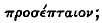 cf. Hdt. 5. 62.
page 245 note 9 For such a discreditable suggestion did the Scholiast have in mind the Sausage Seller's charge that the grandfather of Paphlagon was 
 , Equ. 448–9?
page 246 note 1 Cf. Vesp. 345, 483, 953 (conspiracy); 417, 464–5, 470, 487, 502 (tyranny); 474–5 (philolaconism); Pax 640 (
 ); Aves 1074–5; Thesm. 338, 339.
page 246 note 2 On which see Wilamowitz-Moellendorff, , Aristoteles und Athen, p. 34, n. 10;Google ScholarJacoby, , F.Gr.H. 328 F 115, Notes, pp. 358 ff.Google Scholar
page 246 note 3 Marathon, , Acharn. 677 (and fighters at sea), 698; Nubes 986; Vespae 1076; Thesm. 806.Google Scholar
page 246 note 4 Though this appears too in Lys. 285.
page 246 note 5 See n. 1 above.
page 246 note 6 Cf. Socrates after the battle of Delium, Plato, , Symp. 221 a–b.Google Scholar
page 246 note 7 For other suggestions, cf. Wilamowit-Moellendorf, Aristophanes' Lysistrate, ad loc, where the view is expressed that this refers to young men's feet: ‘also die junge feine Kerle. Jetzt werden die Füβe der Greise ganz anders aussehen, die übrigens nicht barfuβ getanzt haben’.
page 246 note 8 Cf. Hesychius, p. 244, n. 1 above.
page 246 note 9 Cf. Lys. 802 and Rogers's note ad loc.
page 246 note 10 For foot-washing (? despite the use of shoes), cf. Vesp. 608. See also LS, s.v. 

page 247 note 1 Note ad loc.
page 247 note 2 For example, perhaps, , Pax 289Google Scholar (see in Schauenburg, K., Charites, Raubit-schek, A. E., ‘Das Datislied’, pp. 234–42), 699.Google Scholar On the other hand, some cases of word-play may not be such: cf. Pax 1176,  may have no suggestion of
 but refer rather to the pale and greenish colour of some Cyzicene electrum coins with a low gold content.
page 247 note 3 Consonants: Lys. 110,  Vesp. 895,
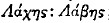 ; Acharn. 234,

 ; Equ. 448–49,
 . Compounds: Lys. 397,
 ; Nubes 296,
 . Consonants and vowels: Aves 1179,

 (see Rogers); Nubes 859,

 , Pax 1270,

 Vowels: Ranae 184
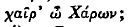 ; Ases 299–300,
 ; Pax 454,
 .
page 247 note 4 To which the Athenians seem to have been very sensitive, cf. Aeschines, , in Tim. 80, 83, 84.Google Scholar
page 247 note 5 Vesp. 389 (Lycus,  ), with Rogers's note; ibid. 819 and 1223. On his animal form, see The Athenian Agora III 148.Google Scholar
page 247 note 6 All manuscripts except B,  . Cobet,
 Play on words intended? They are
 such as those to whom Paphlagon (Cleon) appeals in Equ. 255 ff.; cf. Vesp. 473 ff.
page 247 note 7 It is worth noting that the Alcmeonids are referred to in a very different fashion (the Spartan attitude ?) in Equ. 445–6, where Paphlagon suggests that the Sausage Seller is descended 
 Cf. Thuc. i. 126. There is no suggestion of democracy in connexion with the horse-loving Alcmeonids of Nubes 124. The Cleisthenes of Lys. 621, where fears are expressed of Laconian intrigue, probably belonged to another family.

