





Policy Significance Statement
This study aims to guide the ethical use of generative artificial intelligence (GenAI) in academia, contributing to the transition of governance from top-down rules to a virtue-based regime to better adapt to the rapid change of GenAI and its impact on academia. The study identifies moral and intellectual virtues as the basis of governance, encompassing beliefs about GenAI, technical skills, and judgments on when and how to use GenAI in specific settings. The findings also reveal how peer norms, usage policies, and GenAI technical skills interact to shape ethical use behavior. For policymakers, this study offers a blueprint and actionable policy suggestions for cultivating GenAI virtues, incentivizing ethical use to build a “GenAI-user-friendly” community, and evaluating both the processes and outcomes of learners’ GenAI engagement.
1. Introduction
The prevalence of generative artificial intelligence (GenAI) has brought about a revolution in academia, from teaching and assessments to the scientific production of knowledge (Lu, Reference Lu2024; Kusumegi et al., Reference Kusumegi, Yang, Ginsparg, de Vaan, Stuart and Yin2025). Yet, it has also raised ethical concerns and governance issues and associated risks (Zhai et al., Reference Zhai, Chu, Chai, Jong, Istenic, Spector, Liu, Yuan and Li2021; Bearman et al., Reference Bearman, Ryan and Ajjawi2023). GenAI is a powerful knowledge resource and a driver of pedagogical innovation (Bearman et al., Reference Bearman, Ryan and Ajjawi2023; Peres et al., Reference Peres, Schreier, Schweidel and Sorescu2023). However, there are also concerns that GenAI causes a decline in academic integrity and originality, the loss of competence among learners, and a lack of autonomy for academics (Williamson et al., Reference Williamson, Bayne and Shay2020; Ivanov, Reference Ivanov2023). Other cited issues include algorithmic bias, hallucinations, and opacity risks (Bommasani et al., Reference Bommasani, Hudson, Adeli, Altman, Arora, von Arx, Bernstein, Bohg, Bosselut and Brunskill2021; Chatterjee and Dethlefs, Reference Chatterjee and Dethlefs2023; Popenici, Reference Popenici2023; Taeihagh, Reference Taeihagh2025).
As gatekeepers of knowledge production and dissemination, the university plays a strategic policy role in monitoring learners’ standards of conduct to ensure responsible scholarship (Bleiklie, Reference Bleiklie1998; Stoesz and Eaton, Reference Stoesz and Eaton2022). This pertains not only to setting GenAI policies to protect learners from the harms of AI but also to cultivating norms for future workers and leaders who will live in a world with GenAI. Universities worldwide are struggling to keep up with and develop policies to govern the use of GenAI, which is constantly in flux and remains uncertain (Korseberg and Elken, Reference Korseberg and Elken2024; Wong et al., Reference Wong, Aristidou and Scheuermann2025) as they are torn between enthusiasm and prohibition (McDonald et al., Reference McDonald, Johri, Ali and Collier2025). The enthusiasts widely welcome the use of GenAI as a learning and discovery tool for learners and even for scholarly research among academics. Their nemesis calls for the prohibition of GenAI and support for investment in AI-detection tools and AI-resistant assessments (McDonald et al., Reference McDonald, Johri, Ali and Collier2025).
In academia, responsible AI emerges as a focal “conversation” in response to these ethical dilemmas, amidst the wisdom of “being responsible for the power that AI brings” (Dignum, Reference Dignum2019, p. 2). Determining who bears this responsibility lies at the core of the debate on AI governance in academia. Ethicists argue that AI should not be considered a moral agent, with responsibility instead falling on human stakeholders such as engineers (designing AI), policymakers (regulating AI), and users (using AI) (Dignum, Reference Dignum2019; Chrisley, Reference Chrisley, Dubber, Pasquale and Das2020; Fu and Weng, Reference Fu and Weng2024). Although scholarship on the principles of responsible algorithm design and the deployment of GenAI in academia has emerged (Fu and Weng, Reference Fu and Weng2024), the perspective of GenAI users remains scarce. Instead, current governance principles often treat GenAI users, particularly learners, as passive recipients, overlooking their (un)ethical views and (ir)responsible use of GenAI (Barman et al., Reference Barman, Wood and Pawlowski2024; Fu and Weng, Reference Fu and Weng2024; Lin, Reference Lin2024).
The uncertainty brought about by GenAI in academia calls for better regulation and governance (Korseberg and Elken, Reference Korseberg and Elken2024), yet global academia is still exposed to (almost outdated) pre-GenAI governance policies and principles (Dabis and Csáki, Reference Dabis and Csáki2024). We argue that it is risky to develop new governance frameworks on GenAI without knowing its ethical issues from the users’ perspective. An urgent goal should be to understand the ethical perception and behavior of learners toward GenAI and seek ways to encourage its responsible use (Smith and Vickers, Reference Smith and Vickers2024).
Accordingly, we asked two questions: (1) How do learners perceive the ethicality—that is, the state of being moral in accordance with the standards of right and wrong—of GenAI usage? and (2) What ethical considerations underlie learners’ use or non-use of GenAI? Drawing upon Aristotelian virtue ethics theory (Smith and Vickers, Reference Smith and Vickers2024) and a user-centered approach to the ethics of GenAI use in academia (Lin, Reference Lin2024), and using focus group interviews with learners in Hong Kong (n = 33) as data, we developed a contextually grounded “Five-Rights” Framework and propose a virtue-based governance blueprint for adaptation in higher education.
2. Literature review
2.1. Overview of AI governance and ethics in education
Reviews of the literature on the governance principles and ethical issues of AI in academia have emerged (An et al., Reference An, Yang, Xu, Zhang and Zhang2024; Fu and Weng, Reference Fu and Weng2024; Gouseti et al., Reference Gouseti, James, Fallin and Burden2025). Results reveal a striking pattern: a homogeneous, top-down catalog of principles, mainly specifying how AI should be responsibly designed or governed, rather than how it can be responsibly used (Fu and Weng, Reference Fu and Weng2024). Several principles were repeatedly mentioned, including equity, transparency, security, autonomy, and non-maleficence and beneficence, which AI designers and deployers should adhere to (Fu and Weng, Reference Fu and Weng2024). For example, non-maleficence requires considering the potential harms to learners, and autonomy entails awareness of the inappropriate delegation of AI decision-making (Schiff, Reference Schiff2022). Although using principles (i.e., principlism) is a dominant approach in AI ethics, “principles alone cannot guarantee ethical AI” (Mittelstadt, Reference Mittelstadt2019, p. 501). Top-down principles may remain abstract and practically meaningless unless they are translated into context-sensitive practices and governance arrangements (Mittelstadt, Reference Mittelstadt2019; Bleher and Braun, Reference Bleher and Braun2023).
Other reviews suggest that scholars heavily emphasize the ethical risks and challenges that AI will bring (Gouseti et al., Reference Gouseti, James, Fallin and Burden2025). For instance, academics are concerned about laziness and plagiarism among learners, driven by AI use (An et al., Reference An, Yang, Xu, Zhang and Zhang2024; Gouseti et al., Reference Gouseti, James, Fallin and Burden2025). There is a tension between the “promise and precarity” of GenAI use, where educators and students face ethical ambiguity without clear guidance (Hamamra et al., Reference Hamamra, Khlaif and Mayaleh2025a, Reference Hamamra, Khlaif, Mayaleh and Baker2025b). An overemphasis on risks may deter users from utilizing AI, as they shun GenAI to avoid risks (Lin, Reference Lin2024). In response to this, a small number of scholars have begun to adopt the “user’s perspective” in understanding AI governance and ethics in academia. Alas, this effort focuses on the technical aspects of AI or governance issues, rather than users’ own ethical reasoning and practice. For example, scholars focus on what moral values robot tutors are associated with (e.g., happiness, deception, friendship; Smakman et al., Reference Smakman, Vogt and Konijn2021), whether learners can opt in or out of AI systems and whether AI supports or displaces users’ decision-making in learning (Holmes et al., Reference Holmes, Iniesto, Anastopoulou and Boticario2023), or the ethics of algorithms (e.g., auditability, data confidentiality, and choice of pedagogy; An et al., Reference An, Yang, Xu, Zhang and Zhang2024).
The dominant AI-ethics conversation still functions as a “self-reflection of computer and engineering science” (Daly et al., Reference Daly, Hagendorff, Hui, Mann, Marda, Wagner, Wang and Witteborn2019, p. 6) but lacks reflection on users’ (ir)responsible actions. More research on the everyday use of AI, from the users’ ethical perspective, is essential.
2.2. Ethical use of AI in academia
We probe into AI governance with a focus on the ethical use of GenAI among learners in the higher education context. Key to this literature (n = 15 articles) are their focus on: (1) specific ethical ways (or users’ permissible ways) and considerations of using GenAI, (2) recommendations for facilitating ethical use, and (3) factors affecting the ethical use (see Appendix A).
The ethical ways of using GenAI for learners include generating ideas and brainstorming, finding and synthesizing information, self-learning (e.g., explaining concepts), and dealing with repeated work (Chan and Hu, Reference Chan and Hu2023; Chan and Lee, Reference Chan and Lee2023; Mumtaz et al., Reference Mumtaz, Carmichael, Weiss and Nimon-Peters2024). The literature emphasizes the necessity to employ critical thinking, collaboratively utilizing GenAI rather than relying solely on it, and declaring AI use (Chan, Reference Chan2023; Gonsalves, Reference Gonsalves2025).
The unethical use includes overreliance on GenAI, cheating, and plagiarism (Chan and Lee, Reference Chan and Lee2023; Hasanein and Sobaih, Reference Hasanein and Sobaih2023). For academics, the ethical use involves integrating AI into specific courses such as language learning (e.g., L2 writing) and as a tool for learning support and customized strategies to motivate and diagnose students, rather than replacing traditional pedagogy (Chan, Reference Chan2023; Zou and Huang, Reference Zou and Huang2024; Hamamra et al., Reference Hamamra, Khlaif and Mayaleh2025a). A study revealed that young learners deliberated when deciding whether to use GenAI, considering both benefits (e.g., efficiency) and risks (e.g., damage to academic integrity) (Higgs and Stornaiuolo, Reference Higgs and Stornaiuolo2024).
These studies suggested several ways to promote ethical GenAI use among users, which comprise three aspects. First, developing formal guidelines to support ethical use (Chan, Reference Chan2023; Chan and Lee, Reference Chan and Lee2023; Zou and Huang, Reference Zou and Huang2024; Gonsalves, Reference Gonsalves2025). Second, training on GenAI and developing ethical awareness of AI (Singh et al., Reference Singh, Tayarani-Najaran and Yaqoob2023; Barus et al., Reference Barus, Hidayanto, Handri, Sensuse and Yaiprasert2025) to encourage its responsible use (Barus et al., Reference Barus, Hidayanto, Handri, Sensuse and Yaiprasert2025). Lastly, redesigning methods for assessing learners’ performance to detect the (unethical) use of AI and give sanctions for misconduct (Chan, Reference Chan2023; Hasanein and Sobaih, Reference Hasanein and Sobaih2023; Barus et al., Reference Barus, Hidayanto, Handri, Sensuse and Yaiprasert2025).
Enablers and obstacles for GenAI use for learning purposes are also identified. Firstly, GenAI’s powerful functionality and user-friendly interface were cited as strong enablers (Chan and Hu, Reference Chan and Hu2023; Hasanein and Sobaih, Reference Hasanein and Sobaih2023; Jo, Reference Jo2024). Obstacles include beliefs (among academics) that GenAI is overhyped, simply repackaging existing information (Chan and Lee, Reference Chan and Lee2023). Other obstacles include privacy concerns and the degradation of personal abilities (e.g., Singh et al., Reference Singh, Tayarani-Najaran and Yaqoob2023; Tlili et al., Reference Tlili, Shehata, Adarkwah, Bozkurt, Hickey, Huang and Agyemang2023; Jo, Reference Jo2024). Individual characteristics and motives, such as technophobia and feelings of guilt, weaken the intention to use GenAI (Jo, Reference Jo2024). Using GenAI for assessments is common, yet learners view it as damaging to their self-image when they discuss the matter (Gonsalves, Reference Gonsalves2025). Students’ attitudes (e.g., skepticism and apathy) toward GenAI do not necessarily translate into actual ChatGPT use (Acosta-Enriquez et al., Reference Acosta-Enriquez, Arbulú Ballesteros, Perez Vargas, Orellana Ulloa, Gutiérrez Ulloa, Pizarro Romero, Gutiérrez Jaramillo, Cuenca Orellana, Ayala Anzoátegui and López Roca2024), while AI ethical anxiety (i.e., unease arising from perceived ethical issues of using AI) inhibits learners’ actual use of GenAI (Zhu et al., Reference Zhu, Huang, Zhou, Li, Shi, Ying and Wang2025). All the above reflect inconsistencies in users’ feelings and beliefs toward AI amid the rapid development of GenAI technologies.
We observe a lack of understanding of users’ perceptions of the ethicality of GenAI use from an ethical lens. Normative ethical theory is promising in this space as it offers guidance on which AI-related practices are moral or immoral, and how judgments arise in particular situations (Väyrynen, Reference Väyrynen2006; Kagan, Reference Kagan2018). As shown next, we bring forth an agent-centered virtue theory from Aristotle as a theoretical sensitizing tool in our empirical work.
3. Theoretical sensitivity
Aristotelian virtue ethics, originating from the Nicomachean Ethics (NE) (the version of Nicomachean Ethics used here is Ross and Brown’s translation [Reference Ross and Brown2009]) (Ross and Brown, Reference Ross and Brown2009), centers on the moral character of the individual rather than primarily on the rightness of acts (e.g., deontology) or the outcomes of actions (e.g., utilitarianism) (Mintz, Reference Mintz2006). In addition to asking, What should I do?, virtue ethics also foregrounds the question, What kind of person should I be? (Crisp, Reference Crisp2010). This shift in the locus of ethics centers on people’s characters and inner traits to understand why actions are virtuous and why people undertake actions rather than simply avoiding unethical actions (Whetstone, Reference Whetstone2001; Mintz, Reference Mintz2006). Not only is doing the right action important, but virtuous people know the action they are doing is “noble” and do it “knowingly” (Svensson, Reference Svensson2011; Constantinescu and Crisp, Reference Constantinescu and Crisp2022).
Aristotle believed that each human activity aims to achieve a certain good (NE 1094a1–3). To Aristotle, the “good” has multiple hierarchies, with the ultimate end being happiness (eudaimonia) (this article uses the word happiness as the English translation of eudaimonia, aligning with Ross and Brown [Reference Ross and Brown2009]. This term is also usually translated as human flourishing. Later, in the term phronesis is translated as practical wisdom in English) (NE 1097a25-1097b6), and “happiness is an activity of soul in accordance with perfect virtue” (NE 1102a5-6). Aristotle introduces the concept of moral virtue, such as courage and temperance, as excellences of character connected to the non-rational part of the soul insofar as it can be trained to obey reason (Müller, Reference Müller2019). In virtue ethics, emotions, feelings, and desires collectively contribute to the moral reasoning of the agent (Vallor, Reference Vallor2016). The core for defining moral virtue is the mean (i.e., an intermediate state between excess and deficiency in passions and actions) (NE 1106b36–1107a8). A classic example is courage (the mean), which lies between two extremes—rashness (excess) and cowardice (deficiency) (NE 1107a33-b4).
Moral virtues are stable traits deeply rooted in an individual’s disposition and are enduring across contexts and over time (Crisp, Reference Crisp2010). This stability contrasts with mere rule-following or situational compliance (e.g., plagiarism is not allowed in the university), as a person who has truly cultivated a virtue will consistently act in alignment with that virtue even when external rules or incentives change (e.g., act with honesty even when honesty is not externally rewarded) (Lin, Reference Lin2024; Smith and Vickers, Reference Smith and Vickers2024). Vallor (Reference Vallor2016) asserted that moral virtues need to be given new meaning in the 21st-century technology to adapt effectively to “increasingly rapid, transformative, global, unpredictable, and interdependent technosocial change” (p. 120). While giving credence to human character, virtue ethics treats actions as evidence of virtue—an action is considered right “iff [if and only if] it is what a virtuous agent would characteristically (i.e., acting in character) do in the circumstances” (Hursthouse, Reference Hursthouse1999, p. 28). Aristotle believed that just as archery requires hitting the right target, a virtuous agent, like an excellent archer, develops the skill to hit the mean in passions and actions (Yu, Reference Yu2010).
However, determining what the mean is in any given situation, and translating that into action, requires not only moral virtue but also intellectual virtue (i.e., excellence in thinking within a particular domain), belonging to the rational part of the human soul (Kotzee et al., Reference Kotzee, Carter and Siegel2021). For instance, the intellectual virtue of art ( techne ) is the excellence of thinking in the craftsmanship domain (Kotzee et al., Reference Kotzee, Carter and Siegel2021). Among these, practical wisdom (phronesis), as the excellence of thinking in morality, is essential for discerning the mean. It refers to “holistic, integrative, contextual, practical reflection and adjudication about moral issues, leading to moral action” (Kristjánsson et al., Reference Kristjánsson, Fowers, Darnell and Pollard2021, pp. 240–241), which helps agents identify the right means toward morally appropriate ends in particular settings (NE 1144a7–9).
Practical wisdom and moral virtue must co-exist for virtuous action. When being virtuous in a strict sense, any moral virtue is inseparable from practical wisdom (NE 1144b30–33). A metaphor can explain this concept better. Compared with morally mature adults, kind-hearted children often still act wrongly even with good intentions, underscoring their absence of practical wisdom (Hursthouse and Pettigrove, Reference Hursthouse, Pettigrove, Zalta and Nodelman2023). Thus, practical wisdom is a form of knowledge that ensures agents correctly practice their intentions of doing the right things. Yet, practical wisdom is more complex and dilemmatic with AI, as the lure of AI makes it increasingly opaque to predict human actions (Vallor, Reference Vallor2016).
Aristotelian virtue ethics is relevant in our study as it emphasizes personal character, feelings, motives, and practical wisdom beyond actions (Crisp, Reference Crisp2015). As current GenAI policies and governance will be “perpetually” outdated as AI technology changes, human virtues exhibit greater stability in coping with rapid changes in socio-technical environments (Vallor, Reference Vallor2016).
4. Methodology
We conducted an inductive, qualitative study using focus group discussions with undergraduate students in a public university in Hong Kong (this study was reviewed and approved by the Ethics Committee of City University of Hong Kong [Reference number HU-STA-00001241; 29 October 2024]) (n = 33). We selected Hong Kong as a study context for two reasons. First, the Hong Kong government has placed AI as a strategic initiative in driving its future economy. Second, the universities in Hong Kong have all adopted GenAI guidelines since 2023, with varying degrees of discretion. Thus, no students are blind to GenAI, allowing the research team to have deeper exchanges with participants. The contextual features of GenAI and Hong Kong academia are shown in Appendix B. We treat Hong Kong as a context where its universities have actively promoted GenAI guidance, and students face relatively strong study pressures, which may shape learners’ attitudes, perceived risks, and AI disclosure practices.
Calls for participants were made via poster advertisements on the campus and university email announcements. As part of the online registration, we collected information on the frequency of GenAI use to identify users and non-users of GenAI. Consent forms were signed prior to the focus groups. Nine focus groups were conducted between 9 May and 19 August 2024—four groups were from STEM and five were non-STEM majors. We offered a small incentive to each participant to enhance the quality of participation. The basic participant profiles are shown in Table 1.
Summary of focus group participants

Table 1. Long description
The table is organized into two columns: Segmentation and Numbers.
* Gender: Male 22, Female 11.
* Year of study: Year 1 has 8, Year 2 has 8, Year 3 has 9, and Year 4 has 8.
* Major type: S T E M major total 17 (Computer science 5, Engineering 12). Non-S T E M major total 16 (Social science and arts 8, Business, finance, accountancy 8).
* Frequency of using A I: Never 2, Occasionally 13, Regularly 18.
* Ways of using A I:
- Writing and editing: 28 (S T E M: 15; non-S T E M: 13).
- Reading and information searching: 26 (S T E M: 13; non-S T E M: 13).
- Data analysis and coding: 24 (S T E M: 15; non-S T E M: 9).
- Learning knowledge and skills: 15 (S T E M: 11; non-S T E M: 4).
The focus groups explored the following issues: (1) use cases of GenAI, (2) motives, purpose, and justifications for (not) using GenAI, (3) strategies used when interacting with GenAI, (4) perceived versus actual benefits of GenAI, (5) awareness of the limits of GenAI, and (6) GenAI use policies. Each focus group lasted 1.5 to 2 hours, allowing everyone the opportunity to speak.
We acknowledge that enrolling participants via email and posters can introduce self-selection bias, because those with strong beliefs about GenAI or strong interests tend to participate. The focus group may also create demand characteristics and conformity pressures, especially when discussing ethical issues. To mitigate these risks, we sought to create a supportive environment for participants and emphasized the full anonymity of their answers. In particular, the moderators (a senior professor and a well-trained research assistant with a master’s degree) clearly stressed that there are no right or wrong answers, that any perspective is acceptable, and that diverse and genuine views are appreciated.
Using best practices in data coding and analyses a la Gioia methodology (Gioia et al., Reference Gioia, Corley and Hamilton2013) and NVivo 15 software, two research team members (a senior professor and a PhD-trained researcher) independently coded the interview transcripts to form first-order codes, using short phrases. After 10 rounds of discussions, discrepancies in codes were resolved, and interpretations converged. The initial codes by the two coders formed 683 first-order codes.
Next, the team aggregated the first-order codes into second-order codes. This involves juxtaposing the codes against the Aristotelian virtue ethics literature (e.g., moral virtue, intellectual virtue, practical wisdom, and the good). For instance, regarding moral virtue, we aggregated first-order codes on the “fear of losing creativity” and “AI encourage laziness” into second-order codes representing specific beliefs that “AI hinders personal skills.” Some new second-order codes also emerged such as “contextualized adjudication of technology” and “peers’ experience and attitudes influence GenAI use,” adding new and contemporary insights beyond the initial virtue ethics theory used.
Lastly, by juxtaposing the second-order codes and theory, we articulated the aggregate conceptual dimensions. Overall, we identified five dimensions of the ethicality of using GenAI as perceived by learners (see Figures 1, 2), grounded in the Aristotelian virtue ethics theory.
Gioia data structure (Part 1).

Figure 1. Long description
Figure 1 shows the first part of the Gioia data structure. First-level codes are grouped into second-level codes, which form three aggregate dimensions. “Right actions of AI use” covers using AI for self-study, productivity, norm-compliant use, and rejecting copy-and-paste AI output. “Right outcome of AI use” covers positive outcomes, negative outcomes, and the context-dependent nature of AI outcomes. “Right beliefs of AI” covers beliefs about the proper role of AI and users, the need to judge AI output with human intelligence, concerns that AI may hinder skill development, and views that AI may support personal and social growth.
Gioia data structure (Part 2).

Figure 2. Long description
Figure 2 shows the second part of the Gioia data structure. First-level codes are grouped into second-level codes, which form two aggregate dimensions. “Right approach of AI use” covers reflection on circumstances, contextual judgment of technology, prompt-engineering skills, assessment of AI output, and sources for acquiring AI-use skills. “Right community of AI use” covers peer influence and stigma, declaration policies, fairness in AI access, calls for more flexible AI-use policy, and redesign of courses and assignments to integrate AI appropriately.
5. Results
5.1. The right actions
The right actions pertain to observable, concrete behaviors that participants identified as ethically (in)appropriate when using GenAI. These comprise four main types of (un)ethical uses of GenAI:
First, participants believed that using GenAI to foster self-directed learning is ethical. Examples include using GenAI to simulate exam questions, learning programming (e.g., Python), and exploring concepts to enrich learning (e.g., teachers’ blind spots or what one did not understand in lectures). Second, using GenAI to enhance efficiency and productivity is ethical, particularly for repetitive and time-consuming tasks such as reading the literature or non-academic tasks (e.g., sending emails to professors), and gaining quick insights into the coursework. Third, they felt that the use of GenAI must comply with social norms and must not cause harm to society. This includes prohibiting GenAI in exams, in manipulating lab experiments or falsifying research data, while adhering to the university’s AI policies and declaring the extent of GenAI use in assignments. Fourth, they felt that copying-and-pasting GenAI’s output directly and thoughtlessly into assessment work was unethical, hurting academic integrity and innovation. From virtue ethics, these are the external expressions of moral character in practice.
5.2. The right outcomes
The right outcomes refer to the perceived consequences (positive or negative) gained from using GenAI. Some participants reported achieving positive outcomes after using GenAI, including improved academic grades, time saved on information retrieval, constructive ideas, and effective assistance with programming learning. However, others mentioned the exact opposite: experiencing negative outcomes, such as GenAI not helping them improve their grades, generating incorrect, irrelevant, confusing, or inaccurate information, or even wrong programming code.
Additionally, some reported that the negative outcomes or ineffectiveness of GenAI led them to discontinue its use. For example, Yuner (an ex-user, who claimed he had never used GenAI) mentioned:
“The reason why I don’t use it is because I think it’s ineffective in terms of a writing tool. It does things very averagely… that is below my standards. I don’t think it’s effective at all.” [Yuner_Non-STEM]
Some participants offered more nuanced responses on the outcomes of using GenAI, arguing that GenAI outcomes were highly context-dependent. This stems from their understanding that the nature of the course or task influences the GenAI outcomes. Participants from STEM added that GenAI excelled in programming tasks, but less so for non-technical ones that require “writing” (e.g., history or policy analysis), where its performance was questionable. As one participant stated:
“Sometimes, I was fighting for the deadline, so I didn’t care about how the code came, and I just copied it, and then it could successfully output. But in the exam, I don’t know where the code comes from [adversely affecting her exam], so it mainly depends on how the user uses it.” [Chon_STEM]
Chon’s experience demonstrates that a lack of understanding of the knowledge behind GenAI will make it impossible to excel in exams. This suggests that different actions of using GenAI (i.e., blindly copying-and-pasting versus having a detailed understanding of where answers came from) can lead to success or failure in achieving desired outcomes.
5.3. The right beliefs
The right beliefs refer to participants’ subjective attitudes about GenAI and its ethical use. We found two clusters of beliefs that emerged and unpacked two new virtues: open-minded caution and intellectual autonomy.
5.3.1. Open-minded caution
The first cluster of beliefs stems from the tensions of participants’ beliefs about this technology. On the one hand, some had a very positive attitude toward GenAI, firmly believing that it can benefit both social and personal growth. First, some emphasized the positive impact that GenAI has had on them, including enabling them to complete tasks more efficiently and encouraging them to “explore new possibilities but tread with caution” as follows:
“I feel like sometimes AI encourages you to think more because when you ask some questions, it gives you something beyond the answers, such as examples. Usually, if something is too complicated, I might give up on the topic. But if I have the AI, I’ll continue doing my research or thinking through AI.” [Angle_STEM]
Second, some participants took a longer-term view of the impact of GenAI, having foresight that this technology would later be ubiquitous and thus an indispensable skill in their future work. As a participant with multiple internships at IT companies suggested: learners should use GenAI because employers have higher demands for AI-related skills:
“Every [IT] company was asking me if I was familiar with generative AI and used it… and they kept on emphasizing that you should use it. You should use generative AI when you work, because it’s more effective.” [Philo_STEM]
Moreover, some believed that GenAI could bring about positive social change, including its potential to alter social values (i.e., respect people’s subjective opinions rather than relying on objective knowledge) and enrich educational resources in underdeveloped regions. For example:
“In some developing countries, that will be a benefit for many people, that they can learn without [in the absence of] very high-quality educational resources because of AI.” [Pete_STEM]
On the other hand, many participants had a skeptical attitude toward GenAI, believing that it posed risks to learners’ capability development. This includes concerns about the loss of innovative and thinking ability, as GenAI would dampen their own creative, problem-solving, and critical thinking skills. As one participant claimed about the adverse impact of using GenAI:
“I think it’s definitely overall a damage to human creativity.” [Yuner_Non-STEM]
Participants also mentioned that GenAI can trigger laziness and cause plagiarism:
“In school, [the risk is] plagiarism and people using it really lazily.” [Zeta_STEM]
“I think being lazy and relying on AI could be a problem. It’s made some of our abilities to do stuff weaker.” [Lucas_STEM]
Finally, some believe that GenAI can simplify and enhance the learning process, but it also poses the risk of not encountering failures or mistakes. They were concerned about losing the opportunity to learn from failures as valuable knowledge in the learning process. For instance:
“One of the biggest risks is that it can help you avoid failing. And as much as not failing is good, some failing is like the process of understanding stuff that makes you understand the process better.” [eKayson_STEM]
The mix of mostly negative and some positive stances toward GenAI above suggests a cautious attitude among participants in the face of new technologies. These were akin to considering the extremes of excess and deficiency when seeking virtues. Altogether, we can formulate a new virtue in this analysis: open-minded caution, which refers to recognizing the potential benefits that GenAI will bring for short-term learning and long-term personal and societal development, while maintaining caution regarding its risks and limitations.
5.3.2. Intellectual autonomy
The second cluster of beliefs was derived from participants’ perceived roles, capabilities, and responsibilities when using GenAI ethically. It first manifests in their rationalization of the GenAI–human relationships, where GenAI was seen as a neutral tool and required human-in-the-loop intelligence to operate it. For example:
“AI is a tool, and the tool is neutral; you can decide how to use it. If the information is not processed by the human brain, the result will not be that good.” [Lucas_STEM]
Humans, as controllers of such neutral tools, have their own attributes, such as creativity and critical thinking, which cannot be replaced by GenAI and will be even more important as ubiquitous GenAI can be controlled better by humans, as they mentioned:
“It cannot give you that originality or creative flair in you. I feel that should come from your brain… which is very important because when you take an exam, you have control, not the AI.” [Sam_Non-STEM]
“You have to develop yourself and your critical thinking skills … as a human being, beyond academics, to live prosperously.” [Yuner_Non-STEM]
Some argued that humans should be the controllers when using GenAI. Therefore, any intellectual output should be dominated by humans, not GenAI, reflecting the participant’s deep belief in intellectual autonomy or agentic humans (instead of “agentic AI”). As controllers, humans are directly responsible for what GenAI produces. As one nicely summarized it:
“AI cannot be responsible. They can give you a lot of answers very quickly, but they cannot be responsible. We still need people to be responsible, though.” [Jerry_Non-STEM]
By rationalizing “division of expertise and responsibility” between GenAI and humans, participants recognized their distinct strengths and responsibilities to maintain such intellectual autonomy. They were convinced that humans should use their intelligence to discern GenAI to ensure intellectual autonomy. Participants outlined four ways of implementing this virtue, namely, (1) tracing the process behind the AI output (e.g., “I would still force myself to do the work again.”), (2) exploring the reasoning behind the AI output (e.g., “Finding the reasoning behind answers can maximize your potential with GPT”), (3) combining AI output with human ideas (e.g., “I’m thinking by myself about which aspect I can analyze this topic better.”), and (4) questioning AI output rather than blindly accepting it (e.g., “Think critically about the result of the AI so as not to just blindly believe it.”)
These four types of virtue-based approaches toward the “right beliefs” demonstrated participants’ attitudes regarding the ethical use of GenAI: not abandoning GenAI entirely but using it to maximize human intellectual capacity to control AI output. Hence, by critically controlling GenAI, humans can mitigate its risks, such as opacity risks and hallucinations. Thus, a new virtue, intellectual autonomy, is identified, defined here as recognizing the roles, responsibilities, and intellectual dominance of human beings over GenAI, and being aware of the need to carefully incorporate human intelligence when using GenAI.
5.4. The right approaches
The right approaches are two expanded intellectual virtues in the GenAI era (i.e., technical skills of GenAI use and techno-practical wisdom) that were inferred from the data, corresponding to Aristotle’s intellectual virtues of arts and practical wisdom, respectively.
5.4.1. Technical skills of GenAI use
The technical skills refer to the knowledge that a user needs to operate the GenAI and “craft” output. Participants highlighted two types of technical skills of GenAI use: (1) skills of asking questions (input craftsmanship) and (2) skills of assessing AI output (output discernment). These two types of skills (the right approaches) were essential in determining outcomes, as emphasized by participants. Regarding skills for asking questions, they believed that using GenAI was similar to interacting with humans. Hence, the clarity of questioning was necessary, and the lack of this skill may lead to undesired outcomes. For instance:
“You need to make the prompts as if you’re asking a question to a normal person…it will not generate any result if you treat it kind of rudely… You need to clarify the things that you want to ask.” [Lucas_STEM]
Furthermore, participants listed some specific forms of asking questions to GenAI, including (1) breaking down the questions into smaller steps (‘iterative prompting’), (2) asking GenAI to explain the concepts or entire process (akin to “chain of thought prompting”), (3) asking further questions to gain desired answers, and (4) selectively adding examples and details in prompts (‘few shot prompting’). None of the participants, except one, who was an intern at an IT company, understood these concepts in prompt engineering.
The second technical skill was identifying GenAI mistakes and carefully assessing its output, which was a key human-side skill, in addition to interacting with the technology. Due to the technical limitations in GenAI models, such as hallucinations, some believe that this human skill, including an awareness of the need to cross-check for accuracy in findings, should be prioritized:
“AI still has so much room to do. So, I think the most important skills in this situation are human skills that you double-check with other AI.” [Ken_Non-STEM]
Finally, participants shared how they acquired these technical skills. The primary sources were (1) social media (e.g., YouTube), (2) learning from peers, and (3) daily practices via trial and error (e.g., “mainly from my own experience, I never learned from social media”). However, some felt that current sources for acquiring GenAI skills were inadequate, and they were unsure if relevant resources were available (e.g., “I did not find an article that teaches us how to use AI better. Is there such a thing?”).
5.4.2. Techno-practical wisdom
In addition to the technical skills, participants reflected on the importance of techno-practical wisdom when facing various circumstances and technologies. The first component of this wisdom was awareness of the circumstances. Several participants emphasized the necessity to utilize GenAI in specific situations, having reflected on the task they were working on.
“There are some things [in the task] that I don’t need to understand, because they’re very small details, with or without [them], what I’m doing still works. So, the AI helps you avoid wasting time on those small details and focus on the important stuff.” [Kayson_STEM]
As this participant stated, his reasoning for using GenAI began by distinguishing the essential (i.e., those that were worth focusing on) and peripheral (i.e., those that would not affect the outcome) aspects of one task. By outsourcing these peripheral tasks to GenAI, he saved time and energy for the essential tasks.
This component also includes reflection on one’s capabilities and desired outcomes. Through this thoughtfulness, participants can realize whether they can use GenAI or totally rely on themselves to achieve better outcomes:
“Following my general flow of thought is actually more productive and generates more original and honest ideas when it comes to writing my assignments.” [Maggy_Non-STEM]
“If you really have the ability and want to create something new, you’re going to do it yourself, and then you won’t rely on AI; you don’t need their help.” [Lany_Non-STEM]
For example, through her daily experiences, Maggy (a non-user of GenAI) reflected on ways to effectively complete her coursework, that is, foregoing the use of AI and relying on her ability and originality to generate ideas. Lany (who claimed that he occasionally uses GenAI), on the other hand, makes it clear that not relying on GenAI might be a more ideal option if one wishes to create something new (the desired outcome).
The second component of techno-practical wisdom was the contextualized adjudication of technology. Some participants pointed out their judgments of the adaptability of the technology in the given settings. These judgments begin with understanding the underlying logic of how GenAI works and then attempt to utilize GenAI more effectively to complete tasks more efficiently.
“AI collects information from the Internet. This means that if a certain topic has much traction, they will try to take the one with a more positive outlook or response. If we rely solely on objectivity, I think we cannot beat arguments.” [Alix_Non-STEM]
This participant argued that the logic of the AI-generated answers depends on which information received more attention or more widespread exposure on the Internet, so that they represented an objective point of view. Hence, humans cannot be empowered by GenAI to devise new arguments.
“If you join the case competition, they will give you pages of data, many paragraphs, essays, and other things. So, you couldn’t upload it to the AI. They couldn’t analyse the data for us. It’s only for idea generation.” [Mony_Non-STEM]
The above quote shows a specific scenario where large amounts of text and data need to be analyzed. Due to technological limitations, using GenAI to process the data directly is unrealistic. When the task is complex, a pragmatic approach is to decompose the task and identify the subtasks that are best suited for GenAI, which no participants mentioned at all.
Adjudication between different types of technologies based on the task’s needs is also important. Participants were aware that comparing the results of different technologies when dealing with the task allows them to select better results. As a participant stated, she would use other tools to find information before using AI, but in some cases, more customized content needs to be generated, so AI would be her best option:
“If I put it on ChatGPT, it can tell you in an easy way. It won’t be my first result because I would try to look it up on Google or YouTube first. Sometimes the explanation could be very long or not fit my subject…I want specific things for me, and then I think AI could tailor to my needs.” [Angle_STEM]
The above evidence suggests that students used their techno-practical wisdom—reflection on the circumstances (i.e., the nature of the task, their abilities and the desired outcome), and adjudication of technologies (i.e., the applicability of the GenAI for the task and the judgments between the technologies) to decide if and how they would use GenAI, and eventually, to lead to virtuous actions.
5.5. Right community
A key external factor, the right community (i.e., social environments and policies), influences the actions of individuals in terms of using GenAI. Many participants perceived the presence of social evaluation (e.g., perceived stigma, stereotyping, and peer influence) of GenAI use in the current university environment. Some perceived that the use of AI in their studies brought some stigma and stereotyping from their peers and professors. For example:
“I think there’s this stigmatisation, maybe, if you use it, you’re not actually doing your own work. It is that impression.” [Money_Non-STEM]
Such stigmatization and stereotyping can affect learners’ behavior toward the ethical use of GenAI, particularly the declaration of AI use:
“Maybe people think that you’re good, but if they find out that you’re using generative AI, it is different. So, even if I am doing good [things] using generative AI, I’ll shut my mouth down.” [Philo_Non-STEM]
As shown in 5.1, participants defined declaring GenAI use as a right action. However, as other participants stated, they abandoned this practice due to the potential stigma in the current community. This was also because using GenAI led to students falling into self-doubt and guilt, then refusing to declare the use of GenAI, as follows
“They [AI users] may feel that they are less smart than the other person who did it on their own…That’s why people don’t want to declare they use.” [Mary_Non-STEM]
In addition, participants emphasized that advice from peers and teachers would either encourage or discourage their willingness to use GenAI. If peers’ experiences were negative, they may abandon GenAI use. For instance, Freddy (who claimed he occasionally used AI) stated:
“My roommate, who is a CS student, suggested I not rely on AI for those kinds of assignments because he had one big problem…Since then, I have never used AI for assignments.” [Freddy_STEM]
Conversely, if participants perceived their peers’ using experience as positive, or their peers recommended them to use GenAI, they were more willing to start using it:
“Our friends, using their experiences, encouraged us to use it. If they use it, maybe there might be something good about it. I think that is why I started using. My friend asked me to use it.” [Jerry_Non-STEM]
The above statements emphasize the importance of social influence in the environment in shaping individuals’ feelings and actions, which can either encourage or discourage them from taking “the right actions” when using GenAI.
Another factor that influences participants’ ethical actions in GenAI is the AI usage policy. Some noted that they were not required to declare AI in their assignments due to the lack of a policy and corresponding tools to detect GenAI use:
“I was able to bypass the indicator of Turnitin…even if the teacher asks me to prove, I could just say I didn’t use the AI, and the indicator will show it as zero.” [Alix_Non-STEM]
As one participant (e.g., Alix_Non-STEM) stated, GenAI use was difficult to detect in assignments, so he argued that declaring GenAI use would not benefit users, but rather would affect their grades:
“If you use GPT, then okay, you will have a 10% reduction [in grades].” [Iksan_STEM]
Also, because there was no standardized policy to regulate the learners’ responsible actions effectively, the participants felt this would be unfair to those who declared, as follows:
“If you do declare, but others don’t, it puts you at a disadvantage…it seems that others can write the same or even better essays without the help of AI. Why would I declare it if everyone else doesn’t declare it?” [Angle_STEM]
This reflects a “prisoner’s dilemma of GenAI declaration”: although learners believe declaring is an ethical practice in principle (i.e., they hold a good belief), the lack of trusted community norms or reliable policies will place those who honestly declare their use of GenAI at a disadvantage. Finally, participants offered some of their own views on ideal AI policies that (1) ensure fairness in AI access to all (e.g., “It would be nice if they could ensure fairness since some individuals have access to more tools than others”), (2) make the usage policy more flexible (e.g., “university could just give a freedom for students to use AI because we could see the one that really knows what he is doing or just copy AI”), and (3) redesign the courses and assignments to adapt to the AI era (e.g., “professors should ask for a more in-depth questions face-to-face, ask students’ own perspective”).
6. Discussion and conclusion
To address the questions: How do learners perceive the ethicality of GenAI use, and what considerations shape their decision to use GenAI ethically, we sensitized ourselves to Aristotelian Virtue Ethics theory and conducted focus group discussions with learners (n = 33) from STEM and non-STEM majors in a large public university in Hong Kong to explore their ethical perceptions and behavior toward GenAI. Overall, our study surfaced the Five Rights to Ethical AI Use in Academia (see Figure 3). We summarized our key findings as follows.
The Five-Rights framework of ethical use of GenAI in academia. Note: Our new contributions from this study are marked with the letter “new” in Figure 3.

Figure 3. Long description
The flowchart consists of five main boxes and one large encompassing container at the bottom.
At the top center is a box labeled Right communities new, which includes bullet points for A I-user friendly environment and Gen A I usage policy. Arrows point from this box down to Right beliefs new on the left and Right actions in the center.
On the middle-left, the box Right beliefs new contains bullet points for Open-minded caution and Intellectual autonomy. An arrow points from here to the central box.
In the center is the Right actions box, which includes examples like self-directed learning and non-violation of norms and policy. This box has a bidirectional arrow relationship with Right outcomes on its right.
On the middle-right, the Right outcomes box is labeled with Positive vs. Negative. An arrow from this box loops back to the Right communities box at the top.
At the bottom, a large shaded rectangle labeled Right Approaches new contains two sub-boxes. The first is Techno-practical wisdom, with bullet points for Assessing circumstances and Contextualized adjudication of technologies. The second is Technical Skills, with bullet points for Asking questions and Evaluating outputs. Arrows point upward from both sub-boxes to Right actions and Right outcomes respectively.
First, participants identified several right actions; referring to actions that were considered ethically sound in the academic use of GenAI, such as employing it for self-directed learning, enhancing efficiency, and avoiding harmful or thoughtless practices. Second, these right actions lead to right outcomes (i.e., the “good” gained from using GenAI), highlighting that GenAI can yield both benefits (e.g., improved efficiency) and drawbacks (e.g., reduced human capability). Third, the right actions were grounded in the right beliefs (e.g., subjective attitudes about GenAI and its use), reflecting two moral virtues: open-minded caution and intellectual autonomy. Fourth, participants identified the right approaches to using GenAI, which we interpret as two expanded intellectual virtues of GenAI use: technical skills (input craftsmanship and output discernment) and techno-practical wisdom (the capacity to judge when, how, and whether to use GenAI in specific contexts). Finally, the right community (comprising peers, professors, and institutional policies) shaped participants’ beliefs and actions regarding GenAI use.
This study makes several contributions by being one of the earliest studies that focuses on the user’s perspective of the ethical use of GenAI in academia. The first theoretical contribution is that we enrich the definitions of virtue-based ethical constructs in the context of GenAI. Prior studies that discussed the virtues of GenAI use (see Neubert and Montañez, Reference Neubert and Montañez2020) illustrated the adaptability of the traditional virtue list (e.g., courage, temperance) but lacked empirical richness. Our two newly defined moral virtues offer a more nuanced meaning of virtue beyond the traditional ones. The first moral virtue, open-minded caution, corresponds to the general technomoral courage as broadly defined by Vallor (Reference Vallor2016), the intelligent fear and hope in the face of the moral and material risks and opportunities brought about by technology. In a specific context of GenAI use in academia, it reflects learners’ intelligent hope for the social and personal benefits of GenAI (e.g., learning opportunities) and their cautiousness about its risks (e.g., laziness). Since the nature of moral virtue lies in the mean, we can define this virtue as recognizing the potential benefits that GenAI will bring for short-term learning and long-term personal and societal development, while maintaining caution regarding its risks and limitations. This is the mean between “uncritical optimism and trust about GenAI” (excess) and “uncritical pessimism, distrust, and fear about GenAI” (deficiency).
The second moral virtue, intellectual autonomy, refers to recognizing the roles, responsibilities, and intellectual dominance of human beings over GenAI, and to being aware of the need to carefully incorporate human intelligence when using GenAI. The closest virtue in the literature is humility, where humans know what their limits are, keep reverence and wonder, but also refuse to have blind faith in technology (Vallor, Reference Vallor2016). It is worth noting that this virtue is not synonymous with autonomy in “autonomous learning” literature, which refers to learners’ ability to control and independence in their learning process (Benson, Reference Benson2013). We do not assert that a learner is not “intellectually autonomous” if he/she seeks GenAI’s help; rather, the core is that they remain consistently aware that they should intellectually pilot GenAI tools. The relationship here between learners and GenAI is a “symbiotic division of epistemic labour” (Ramoglou et al., Reference Ramoglou, Chandra and Jin2025, p. 1), where GenAI provides the “quantity” of information or efficiency (expansion) while humans provide the judgments (contractions) based on their experience in realism. Even under certain conditions, such as repetitive work, human cognition can be largely offloaded to GenAI, but human intelligence should not be discarded. As intellectually autonomous GenAI users, learners must remain aware of the output’s quality, remain alert, and assume responsibility. We define this virtue as the mean between “deficient autonomy” (i.e., deferential to GenAI, or intellectually lazy) and “excessive autonomy” (i.e., arrogant about human ability and belittling the capability of GenAI).
For the two intellectual virtues in the “right approaches,” our findings first revealed the significance of technical skills in using GenAI. This is the intellectual virtue of the art proposed by Aristotle, and in the GenAI context, which refers to craftsmanship in producing (quality) AI outputs. Art involves a “true course of reasoning” when crafting (NE 1140a10–16); therefore, GenAI users involve understanding the task, applying prompt engineering strategies, evaluating the outputs, and iterating the prompting process (Lo, Reference Lo2023), which is close to metacognition (i.e., thinking about thinking) in prompting (Tankelevitch et al., Reference Tankelevitch, Kewenig, Simkute, Scott, Sarkar, Sellen and Rintel2024).
Furthermore, we proposed the concept of techno-practical wisdom as a “meta-virtue” of learners that guides their ethical use of GenAI. In virtue ethics, practical wisdom guides agents (e.g., learners) to translate their moral virtues into virtuous actions in a given setting through a holistic deliberation. Particularly, it guides in what circumstances learners should hold what kinds of beliefs between optimism and pessimism, as well as to what extent they can rely on GenAI. Although prior philosophical works (e.g., Neubert and Montañez, Reference Neubert and Montañez2020; Smith and Vickers, Reference Smith and Vickers2024) acknowledge its importance and empirical work identified similar deliberations in using (e.g., Higgs and Stornaiuolo, Reference Higgs and Stornaiuolo2024), they have yet to provide an operationalization of this concept. Our findings showed that there are two types of deliberation within the context of GenAI use: (1) a reflection on the circumstance (i.e., task, personal abilities, and desired outcomes), and (2) an adjudication of technology (i.e., operating logics and contextual adaptability of GenAI and other technologies).
The second theoretical contribution is that our empirical data revealed relationships among the ethical constructs in the use of GenAI. The findings resonated with the underlying relationships in Aristotelian virtue ethics in which the right belief (moral virtues) leads to right actions (virtuous actions), aiming at right outcomes (good); techno-practical wisdom (practical wisdom) guides right actions; and technical skills (art, one of the intellectual virtues) also contribute to the right outcomes.
Other relationships (see the bold lines in Figure 3) highlight how our study extends Aristotelian virtue ethics. Our findings showed that the right outcomes can have an adverse influence on the right actions of GenAI use; that is, the perceived negative outcomes can undermine the future use of GenAI. This finding aligns with other studies (e.g., Jo, Reference Jo2024), which show that the perceived personal impact brought by GenAI can significantly reinforce the intention to keep using it.
The framework also introduced external factors, that is, the right communities, and revealed their impact on right beliefs (e.g., community norms lead to self-doubt and guilt), right actions (e.g., peers’ influence on GenAI use; GenAI usage policy affects declaration practice), and right approaches (e.g., learning technical skills from peers). The influence of peers’ experience and suggestions on learners’ use of GenAI (Ayyoub et al., Reference Ayyoub, Khlaif, Hamamra, Bensalem, Mitwally and Sanmugam2025), as well as the influence of stigmatization on compliance with declaration practices (Gonsalves, Reference Gonsalves2025), resonates with other studies.
7. Implications: Toward a virtue-based governance of GenAI use
Although current rule-based governance regimes for GenAI use in academia can help set minimum standards and manage immediate risks, they can fail to adapt to techno-social changes if not managed carefully (Vallor, Reference Vallor2016; Smith and Vickers, Reference Smith and Vickers2024). Thus, greater emphasis on virtues (from the user’s own desire and responsibility) should take a more prominent role in governance, amid no (or never will be) one-size-fits-all or stable ethical rules or principles with regard to GenAI use.
Based on our Five-Rights Framework, we proposed a blueprint of a virtue-based ethical framework to aid academia in shifting toward virtue-based governance, comprising three core pillars, namely (1) cultivation, (2) incentivization, and (3) evaluation. Universities beyond Hong Kong can adapt this framework to their own institutional, disciplinary, and cultural contexts. The governance pillars and their implications for policy and future research are summarized in Table 2.
An empirical summary of the pillars of virtue-based governance of generative AI

Table 2. Long description
The table consists of four columns: Governance pillar, Five-Rights construct, Actionable plans, and Future research. It is divided into three primary rows.
* Row 1: Cultivation. Focuses on cultivating right beliefs and approaches through habituation and teaching. The Five-Rights construct includes Right beliefs and Right approaches. Actionable plans involve scenario-based assignments, pedagogy for Gen A I risks, prompt engineering training, and user subsidies. Future research aims to identify additional virtues and test pedagogical designs.
* Row 2: Incentivization. Focuses on non-economic incentives to foster a Gen A I-user-friendly community. The Five-Rights construct includes Right community and Right actions. Actionable plans include micro-credentials, public showcases of workflows, and social media praise for responsible practices. Future research focuses on experimental methods for moral nudges and reducing Gen A I stigma.
* Row 3: Evaluation. Focuses on assessing learning outcomes and Gen A I use processes. The Five-Rights construct includes Right outcomes, Right actions, and Right approaches. Actionable plans include pen-and-paper assessments, course-specific rubrics for Gen A I outputs, learner surveys, reflective memos, and A I-enabled platforms for digital trace data. Future research aims to develop minimally intrusive evaluation methods and address privacy concerns.
Within the cultivation pillar, governing entities should focus on developing learners’ “right beliefs” and “right approaches,” including both moral virtues and intellectual virtues (technical skills and techno-practical wisdom). In Aristotle’s view, acquiring moral virtues requires habituation, that is, repeatedly and massively exercising virtuous actions in real life (NE 1103a31–b2), while intellectual virtues (except practical wisdom) could be taught or acquired through imitating exemplars (NE 1103a14–18; Kotzee et al., Reference Kotzee, Carter and Siegel2021). The acquisition of practical wisdom may be more complex and cannot be obtained simply from learning general rules, but requires much experience and practice in deliberating about particular situations (Kraut, Reference Kraut, Zalta and Nodelman2001). This involves exploring pedagogy and curricular design (Wong et al., Reference Wong, Aristidou and Scheuermann2025), such as requiring learners to repeatedly use GenAI to solve problems in specific scenarios in their homework to exercise their deliberations about whether, when, and how to use GenAI.
Meanwhile, in developing learners’ prompting skills, apart from imparting specific techniques (e.g., one-shot, chain-of-thought, and role-play prompts), the emphasis can lie in reasoning about tasks (Aristotle’s art), that is, the metacognitive ability (e.g., flexibility in selecting prompt techniques and task decomposition) in the prompt engineering process (e.g., prompt formulation, output evaluation, and prompt iteration) (see Tankelevitch et al., Reference Tankelevitch, Kewenig, Simkute, Scott, Sarkar, Sellen and Rintel2024), which is the nature of the art. The two moral virtues (i.e., open-minded caution and intellectual autonomy) and the operationalization of techno-practical wisdom we offer in 5.4.2 can serve as the foundation for virtue cultivation. For instance, institutions can inform learners about the risks and opportunities of GenAI, the (dis)advantages of GenAI and human users, as well as the responsibilities they need to undertake. Equitable access to GenAI for all learners is a prerequisite for developing GenAI-related virtues, as intensive exercise is necessary. Universities must consider eliminating the socioeconomic disparities among learners. This includes subsidizing users or partnering with GenAI platforms to ensure free access for all university members (e.g., Gemini for Education), as the Singaporean government is doing now by providing free premium AI subscriptions to citizens who take certain AI training courses (Lee, Reference Lee2026). The virtues related to GenAI use are not exhaustive. Future research can continue to explore what these virtues are and how to cultivate them to develop this pillar.
The incentivization pillar aims to design instruments to motivate the “right actions.” Scholars warned that rule-based governance instruments, such as surveillance (e.g., detecting GenAI use) and punishment, can erode individuals’ intrinsic motivation because they are associated with self-interest in avoiding penalties (e.g., Enzle and Anderson, Reference Enzle and Anderson1993; Gneezy and Rustichini, Reference Gneezy and Rustichini2000). Economic incentives can also crowd out altruistic intentions and undermine the development of civic virtue for similar reasons (see Bowles, Reference Bowles2016; Grant, Reference Grant2019). By contrast, in virtue-based governance, “praise” conveys a message that validates an individual’s contribution to the collective and fosters a deeper sense of membership within the community (Moore, Reference Moore2012; Grant, Reference Grant2019). Therefore, the incentive design should consider how to foster learners’ sense of belonging to a community where responsible GenAI use is normalized.
In particular, universities can create micro-credentials and badges to “praise” learners who demonstrate responsible use of and high-quality GenAI disclosures (what was used, why, and evidence). These certificates can be bound to students’ online portals or blockchain systems as a marker of a “responsible GenAI-user community.” Furthermore, universities can regularly organize peer-led clinics and sharing sessions to provide opportunities for learners to share and showcase their (positive and negative) experiences with GenAI, reproducible workflows, or failure cases with peers. “Right actions” in the use of GenAI and high-quality sharing will be publicly recognized in seminars or on social media to establish a collaborative learning environment and reduce the stigma associated with GenAI use. Future research can employ experimental methods to examine the effects of “moral nudges” (Thaler, Reference Thaler2018; Gråd et al., Reference Gråd, Erlandsson and Tinghög2024) and various non-economic rewards in promoting learners’ ethical behavior or eliciting stigma-related feelings.
Evaluation , as the third pillar, is built upon “right outcomes,” “right actions,” and “right approaches.” It consists of two complementary forms: outcome evaluation and process evaluation. Outcome evaluation concerns whether learners can achieve the intended educational outcomes, including both formal course/program-level outcomes (e.g., academic writing, critical thinking, and substantive disciplinary knowledge) and learners’ perceived GenAI-use outcomes (e.g., efficient information retrieval, creative idea generation, and the accuracy of GenAI output), as shown in our findings. Together, these two forms of evidence allow educators to assess formal educational goals while also understanding how GenAI shapes learners’ study practices and experiences.
Specifically, instructors should consider whether the coursework is intended to assess students’ independent knowledge acquisition (i.e., filtering out the impact of GenAI) or their problem-solving skills with GenAI assistance. In the former, instructors can use traditional pen-and-paper assessments, in-class tasks, or oral exams. In the latter, they can extend the assessment rubrics for existing courses to GenAI-use outcomes. For instance, when assessing the learning outcome of “critical thinking,” evaluation criteria may include whether students can critically assess the quality of GenAI outputs. When assessing discipline-specific knowledge (e.g., developing a policy proposal), the evaluation criteria can include whether students can effectively leverage GenAI to consolidate policy solutions and find reliable evidence. Instructors may also survey learners to understand their experience of GenAI use, allowing them to report whether they perceive GenAI as useful, how (un)useful it is, and the issues they encountered.
Process evaluation, by contrast, primarily assesses whether learners employ “right actions” and “right approaches” when using GenAI, including disclosure, prompting skills, and reasoning about when to use GenAI. However, if the process evaluation relies too heavily on continuous monitoring, it may cause learners’ anxiety and reactance. Thus, universities and instructors should prioritize formative evaluation with “minimally intrusive indicators.” Universities can first develop rubrics to guide students’ prompt engineering, particularly the metacognitive processes (e.g., designing the task flow, crafting and adjusting the prompt, and evaluating the output). Learners may be encouraged to voluntarily submit selected prompt histories, along with a reflective memo on their work process. One potential solution is to follow the logic of “stealth assessment” (Shute et al., Reference Shute, Wang, Greiff, Zhao and Moore2016): identifying the performance indicators of responsible GenAI use and embedding them into learning activities on AI-enabled learning platforms. For example, learners can interact with GenAI when programming in Python or R to do data analysis, while teachers can collect “digital traces” on the platform, such as prompt histories/revisions, different tools used, and annotations, to understand their processes. Such digital traces should be collected only when pedagogically necessary and with ethical safeguards, including informed consent, transparency, and privacy protection (see Hakimi et al., Reference Hakimi, Eynon and Murphy2021). Finally, these learners’ outcome surveys and formative process data serve as diagnostic evidence and should be aggregated at the course/program level to help educators identify where GenAI supports or hinders learning and how teaching, assessment, and GenAI-use policies, incentives, and guidance may need to be refined. Going forward, research within this pillar can focus on developing minimally intrusive evaluation methods and rubrics and on implementing them to help learners feel less monitored and less burdened, while addressing privacy concerns.
Lastly, although this study aims to promote virtue-based governance for GenAI in academia, we do not mean that rule-based governance should be utterly discarded or that the two governance paradigms are incompatible. Rules and punishments regarding GenAI use should be established simultaneously (a la “carrots and sticks”) to serve as a baseline for behavior when learners’ virtues have not yet been fully developed. Aristotle also argued that legislators should design appropriate laws to foster citizens’ habituation toward virtue (NE 1103b3–6, 1179b31–1180a5).
In the foreseeable future, plagiarism or forms of irresponsible use of GenAI in learning will become more difficult to detect as technology advances; the truly reliable GenAI detectors may never be invented (Eaton, Reference Eaton2023). This poses a new but tricky question: “What constitutes plagiarism or unethical acts in the age of AI?” In that scenario, virtue-based governance might be the best option in academia. To ensure due process, punishment should be imposed only when there is direct evidence (e.g., plagiarism caught during an exam), excessively similar materials submitted for assessment across different courses, or a “smoking gun” (e.g., fake content identified, such as fabricated references, or manufactured “concepts” or “theories”). Otherwise, even if students honestly disclose their own misuse, punishment should still be the least preferred instrument. Instead, disclosure can be treated as a formative learning opportunity in how to improve the use of GenAI. More research is needed on how to better design the “rules of the game” in this post-plagiarism era and infuse virtue-based governance that promotes learners’ right beliefs, actions, and outcomes. It will be sooner rather than later to know if GenAI will become a badly behaving monster or a friendly monster.
8. Limitations
Besides the self-selection bias and demand characteristics mentioned in Section 4, the generalizability of this exploratory qualitative study is limited. The contextual features of Hong Kong (see Appendix B) may influence users’ beliefs and behaviors regarding the use of GenAI, thereby limiting what we can claim about the broader learner population across national and cultural contexts. This does not mean that our identified virtues are culturally arbitrary. Rather, they may be analytically portable to other countries, institutions, and cultural contexts. Moral virtue is a stable disposition oriented toward the mean, while practical wisdom helps agents to deliberate about what the mean requires in given circumstances. Thus, these virtues can extend beyond our study context (e.g., Hong Kong) to analyze similar recurring ethical dilemmas and practical deliberations regarding the use of GenAI. However, how these virtues manifest in practice and how they can be translated into governance practices require contextual diagnosis. Our Five-Rights Framework is normative in its ethical orientation but diagnostic in its governance application: it identifies virtues that responsible use of GenAI should cultivate, while helping institutions examine the beliefs, practices, skills, and community environments that support or hinder such use in specific contexts.
We suggest that future studies focus on cross-cultural/institutional and cross-disciplinary validation of virtues and explore the role of institutions in shaping virtues. As an initial philosophical invitation, our study applied only Aristotelian virtue ethics; however, MacIntyre’s extension (MacIntyre, Reference MacIntyre2013) may help to foreground how institutional incentives can shape the translation of virtues into action among learners and even academic researchers across various contexts. Based on the moral and intellectual virtues operationalized in our study, measurement instruments can be developed for cross-country surveys, and experimental methods can be employed to examine how learners’ beliefs differ across cultures when presented with various ethical scenarios.
“Five Rights” framework showing how right communities, right beliefs, right approaches, right actions, and right outcomes shape ethical GenAI use in academia.
Figure 3 shows a “Five Rights” framework of ethical GenAI use. Right beliefs, including open-minded caution and intellectual autonomy, influence right actions. Right actions include self-directed learning and non-violation of norms and policy. Right actions and right outcomes influence each other, with outcomes described as positive versus negative. Right Approaches include techno-practical wisdom and technical skills. Techno-practical wisdom, including assessing circumstances and contextualized adjudication of technologies, influences right actions. Technical skills, including asking questions and evaluating outputs, influence right outcomes. Right communities, including an AI-user-friendly environment and GenAI usage policy, influence right beliefs, right actions, and right approaches.
Data availability statement
The data are not publicly available as their release could compromise the privacy of research participants.
Author contribution
Conceptualization: YC; Data curation: YC and GL; Data visualization: GL and YC; Editing: YC and GL; Methodology: YC; Original draft: GL and YC. All authors approved the final submitted draft.
Funding statement
The work described in this paper was fully supported by a grant from the Fund for Innovative Technology-in-Education (FITE) of the University Grants Committee of the Hong Kong Special Administrative Region, China (Project No. 6460008). The funder had no role in study design, data collection and analysis, the decision to publish, or preparation of the manuscript.
Competing interests
The authors declare none.
A. Appendix
Research on the ethical use of generative AI in academia

Table A1 Long description
The table consists of six columns: Authors and years, Perspectives, Research Questions or Objectives, Research methods, Theories applied, and Insights related to the responsible use of A I.
- Chan and Hu 2023: Studied undergraduate and postgraduate students using mixed methods and Biggs’ 3 P model. Insights include benefits like personalized learning support and concerns regarding accuracy, privacy, and human values.
- Chan 2023: Focused on students and teachers to develop A I education policy. Identified policy fields including A I ethics, data privacy, and accountability.
- Chan and Lee 2023: Compared Gen Z students with Gen X and Y teachers. Found willingness to use ChatGPT for information consolidation but high concern for unethical uses like plagiarism.
- Mumtaz et al. 2024: Investigated graduate business students using Hofstede’s cultural dimensions. Found that cultural clusters influence perceptions of ethical A I use.
- Tlili et al. 2023: Surveyed students, educators, and developers. Highlighted concerns that G e n A I encourages laziness and reduces critical thinking.
- Zou and Huang 2024: Qualitative study on doctoral students’ L 2 writing. Identified benefits in efficiency but drawbacks in learning loss and compromised authorial voice.
- Acosta-Enriquez et al. 2024: Quantitative study of Gen Z students in Peru using the Technology Acceptance Model. Found that usage significantly influences ethical concerns and perceptions.
- Barus et al. 2025: Explored undergraduate perspectives on governance. Emphasized the need for institutional mechanisms to detect misuse and provide training.
- Singh et al. 2023: Quantitative study of computer science postgraduates. Suggested that assessments should be redesigned to prevent harm to learning.
- Jo 2024: Applied multiple theories including Self-determination and Privacy theory. Identified barriers like technophobia and guilt feelings.
- Hasanein and Sobaih 2023: Qualitative study using Constructivism theory. Noted that over-dependence on ChatGPT can hinder the development of critical lifelong learning skills.
- Gonsalves 2025: Used the Theory of Planned Behavior to study non-compliance with A I use declarations, focusing on transparency and academic integrity.
B. Appendix
Contextual features of Hong Kong
First, all of Hong Kong’s public universities issued ethical guidelines and requirements to declare or attribute GenAI contributions in assignments. Additionally, universities in Hong Kong generally hold a positive attitude toward the use of GenAI in learning. For example, City University of Hong Kong features a comprehensive website that contains documents on ethical guidance for GenAI use, recommends tools and practices, and provides example prompts (https://www.cityu.edu.hk/GenAI/guidelines.htm).
Second, Hong Kong’s university students have a high usage rate of GenAI, which is higher than the global average; Chinese people in general also have a more positive attitude toward new technologies, including GenAI, possibly because of their desire to “catch up with Westerners”. The above features may influence the sample’s attitudes toward GenAI and lead to greater reliance on it.
Hong Kong’s university students attach great importance to academic assessments, and the results of academic evaluation are perceived as a determination of personal value and worth and are related to the individual’s and family’s reputation and respect. Additionally, according to a study in Hong Kong, such high pressure in an examination-oriented context can create stress and a sense of being under the spotlight. This may influence their willingness to rely on GenAI and the stigmatization of using/declaring GenAI.
We believe the empirical results and our virtue-based governance framework can be adapted in regions that share contextual features with Hong Kong, such as active institutional GenAI guidance, strong assessment pressures, and a strong focus on academic performance and reputation, including some Greater China (e.g., Mainland China, Taiwan) and East Asian (e.g., Singapore, Japan, South Korea) territories.
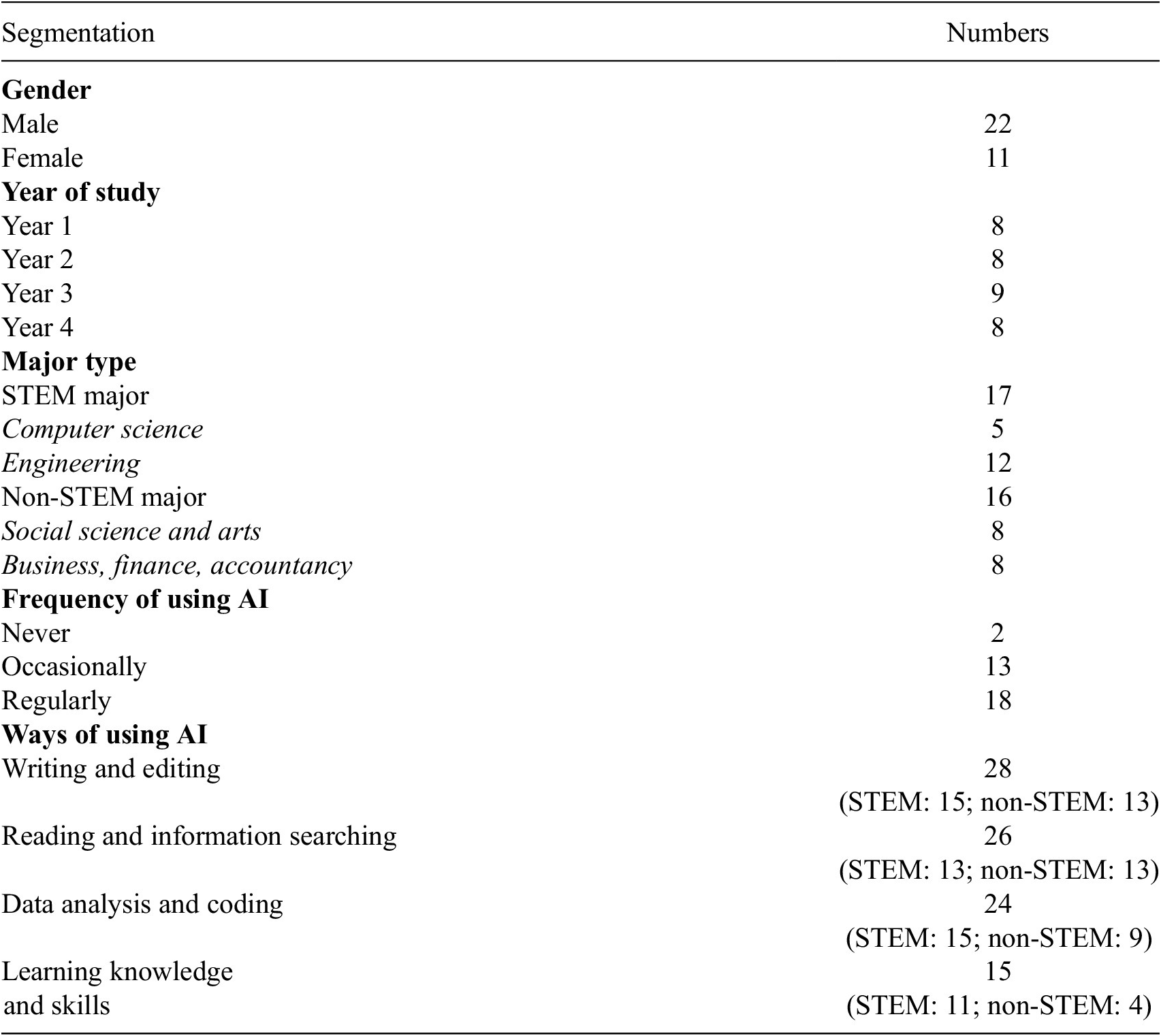


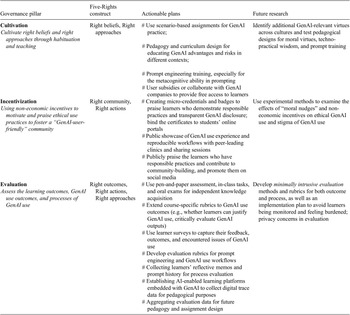


 Open access


Comments
No Comments have been published for this article.