



Introduction
English has a prominent role in South Korea, including in education, where English has been a mandatory subject since 1997 (Park Reference Park2009) and is currently taught at both primary and secondary levels. Approaches to teaching and assessing English have generated considerable controversy in Korean society (e.g. Shin and Cho Reference Shin and Cho2020), leading to numerous curricular changes and reform efforts (Shin and Lee Reference Shin, Lee, Voogt, Knezek, Christensen and Lai2019). Along these lines, documenting and investigating changes in English education as seen in textbooks (e.g. Shim Reference Shim1999), assessment (e.g. Goto Butler et al. 2020), and curriculum documents (e.g. Oh and Johnson Reference Oh and Johnson2017) can provide an interesting perspective on the evolving orientation to English and English education in South Korea.
When a language is taught using varying curricula across different settings, it becomes challenging to compare and align the different language courses and assessments. The Common European Framework of Reference for Languages (CEFR) was formulated to tackle the problems of coherence and transparency to make feasible the relatability of language courses and assessments in Europe. After development and piloting in the 1990s, the CEFR was officially published in 2001 and is now accessible in over 20 languages (Council of Europe 2001). The influence of CEFR has grown, expanding beyond Europe to other regions of the world, including East Asia.
The present study illustrates a practical application of CEFR for English curriculum revision and highlights CEFR’s growing influence in English education in South Korea by providing a behind-the-scenes account of efforts to revise the grammar portion of South Korea’s 2015 National English Curriculum (NEC). The first and third authors of this study were directly involved in the revision process, with the first author assisting with the analysis of the curriculum materials and the EGP and the third author overseeing the full revision of the grammar portion. The resulting revisions were implemented in the 2022 Korean National English Curriculum, which began being applied nationwide to English education in 2024.
The Common European Framework of Reference for Languages (CEFR) and the English Grammar Profile (EGP)
The CEFR provides a standardised framework for the learning, teaching, and assessment of foreign languages, with six proficiency levels (A1, A2, B1, B2, C1, and C2) represented vertically, and skill categories (reception, interaction, production, and mediation) represented horizontally. Within ten years of its introduction, the CEFR emerged as the predominant language proficiency framework globally, influencing language policies, curricula, and assessments worldwide (Figueras Reference Figueras2012). This has led countries outside of Europe, such as Japan and Vietnam, to adopt (or adapt) CEFR when seeking to enhance the coherence and transparency in language curricula and assessment (See Lee et al. Reference Lee, Kassim and Bakar2022, for further information).
There has been emerging consensus in Korea, too, regarding the need to develop a more coherent, unified approach to English teaching, learning, and assessment (Oh and Johnson Reference Oh and Johnson2017), with CEFR commonly referred to as a suitable framework to guide such efforts (Lee and Shin 2019). As a result, it has been used as one of the bases for revising the Korean National English Curriculum (NEC) in 2022, predominantly affecting its achievement standard description (Joo et al. Reference Joo, Kim, Kim, Bae, Kang, Kim, Kim, Kim, Kim, Kim, Kim, Kim, Kim, Kim, Moon, Park, Shim, Kyeongja, Yang, Yoon, Yoon, Lee, Lee, Lee, Lee, Lee, Lee, Lee, Lee, Lim, Jang, Jang, Jeong, Youngwoo and Choi2022). The present study focuses on the Appendix 4 section of the 2022 Korean NEC that consists of example sentences of language forms for communication (e.g. Kate is from London). The example sentences are organised according to school levels at which they are recommended to be taught, thereby informing national textbooks and curricular documents as well as classroom activities at the school level. The Appendix 4 section of language forms for communication was revised from the 2015 Korean NEC based in large part on alignment with CEFR.
To carry out the revision, we drew on the CEFR-based English Grammar Profile (EGP). The EGP is a sub-project of English Profile, an effort led by Cambridge University Press and Assessment that aimed to empirically describe the English capabilities of learners at different CEFR levels from a linguistic perspective through the creation and analysis of a large learner corpus (O’Keeffe and Mark Reference O’Keeffe and Mark2017). According to O’Keeffe and Mark, the EGP focused on profiling learner competence in grammar for each distinct CEFR level based on what learners ‘can-do’ in terms of the application of grammatical elements with specific forms and/or usages. For example, the can-do statement ‘USE: Can use the past perfect simple to talk about a time before another time in the past’ is linked to the B1 level, where it was observed in productions from B1-level and above learners (e.g. ‘Actually I’d arranged an appointment with my doctor before calling you’, O’Keefe and Mark 2017, 476). The EGP is available on the web as a resource for educators and researchers.
Table 1 illustrates an example of the EGP resource for the grammatical element ‘FORM: COMBINING TWO ADJECTIVES WITH “AND”’ listed together with its grammatical supercategory, subcategory, CEFR level, and ‘can-do’ statement (English Grammar Profile n.d.). Additionally, in the Example column, users can access real learner examples from the learner corpus, providing empirical evidence of how these forms are used in learner language. For further details, the full resource is available online at https://www.englishprofile.org/english-grammar-profile/egp-online.
An example of the EGP resource for ‘FORM: COMBINING TWO ADJECTIVES WITH “AND”’ (English Grammar Profile n.d.)

Table 1 Long description
Resource entry describes an A1 grammar skill in the ADJECTIVES supercategory, subcategory combining. It measures the ability to use “and” to link a limited range of common adjectives in a single description. The can-do statement specifies joining adjectives with “and” at beginner level. One example illustrates the pattern: “The teachers are very nice and friendly.” Only one row is provided, so no comparisons across levels or categories are available.
The 2015 Korean NEC
Implemented in South Korea since 1997, the National Common Basic Curriculum mandates an eight-year English education program from 3rd grade of elementary school to 10th grade of high school, followed by elective English courses for 11th and 12th graders. In the 2015 Korean NEC, grammatical elements recommended for teaching in elementary, middle, and high schools were listed in a reference titled Language Forms for Communication (Ministry of Education of Korea 2015). These grammatical elements inform national-level textbooks and curricular documents as well as classroom activities at the school level.
The present article is focused on this reference, found in Appendix 4 of the 2015 Korean NEC, which consisted of example sentences of language forms for communication (e.g. Kate is from London). There are 350 example sentences grouped under 40 unlabelled supercategories. Table 2 provides an excerpt from Appendix 4 (see Ministry of Education of Korea 2015, 189 for the full list of example sentences). The first column lists example sentences corresponding to each supercategory, while the second, third, and fourth columns indicate the required school level of instruction. In this system, the numbers represent grammatical supercategories, which are used to categorize related grammatical structures based on shared features, such as tense. Note that the specific category is not explicitly mentioned, only the number assigned to each supercategory. For instance, ‘He walks to school every day’ in grammatical supercategory 7 illustrated a grammatical form to be taught at the elementary school level and ‘She will be coming soon’ in grammatical supercategory 8 was to be taught at the high school level.
An excerpt of Appendix 4 section of the 2015 Korean NEC (Ministry of Education of Korea 2015, 189)

Table 2 Long description
School levels are mapped to example sentences illustrating simple tenses and progressive forms, with dots marking where each sentence applies. For item 7, all five sentences appear only at the elementary level: walking to school every day, usually meeting after lunch, playing soccer yesterday, going to visit grandparents next week, and visiting America next year. For item 8, the present progressive sentence “He is sleeping now” appears at the elementary level. Middle school includes two progressive examples: past progressive “I was studying when John called me” and present progressive “I’m thinking about the problem.” High school includes four examples: future progressive “She will be coming soon,” present progressive “He’s being very rude,” and “We are hoping you will be with us,” plus no middle or elementary marking for those. Overall, simple tense examples are concentrated in elementary, while progressive forms are distributed, with the greatest number assigned to high school. Dots indicate inclusion by level only and do not show frequency, difficulty ratings, or performance outcomes.
Changes made from 2015 to 2022 on grammar components of the NEC
The 2022 update to the Korean National English Curriculum (NEC) involved a comprehensive revision of the grammar components, which was part of a larger effort to carry out a research-based revision of the 2015 Korean NEC (Joo et al. Reference Joo, Kim, Kim, Bae, Kang, Kim, Kim, Kim, Kim, Kim, Kim, Kim, Kim, Kim, Moon, Park, Shim, Kyeongja, Yang, Yoon, Yoon, Lee, Lee, Lee, Lee, Lee, Lee, Lee, Lee, Lim, Jang, Jang, Jeong, Youngwoo and Choi2022). While Joo et al. (Reference Joo, Kim, Kim, Bae, Kang, Kim, Kim, Kim, Kim, Kim, Kim, Kim, Kim, Kim, Moon, Park, Shim, Kyeongja, Yang, Yoon, Yoon, Lee, Lee, Lee, Lee, Lee, Lee, Lee, Lee, Lim, Jang, Jang, Jeong, Youngwoo and Choi2022) features a high-level summary of changes made in the 2022 Korean NEC’s Appendix 4 pertaining to grammar, the present article provides a detailed account of the procedure and basis for revising the grammar portion of the curriculum based on the CEFR and EGP. The revision process involved two distinct steps: 1) providing specific, descriptive grammatical categories for the example sentences, and 2) rearranging the school levels (elementary, middle, and high school) recommended for teaching elements of grammatical forms and associated example sentences to be aligned with CEFR levels listed in the EGP.
As seen in Table 2, supercategories of the 2015 Korean NEC featured example sentences labeled only with numbers, like 7 and 8, which likely made it difficult for language educators to pinpoint the grammatical elements that the sentences are trying to depict. Thus, our first step was to provide descriptive labels for the grammatical features highlighted in each supercategory. Usefully, the online EGP resource (Table 1) provides grammatical supercategories and subcategories for grammatical elements. Therefore, we added labels for grammatical elements associated with the clusters of example sentences in the Appendix 4 section of the 2015 Korean NEC as Table 3 below, in line with the structure of EGP.
A revised excerpt of Appendix 4 section of the 2015 Korean NEC (Ministry of Education of Korea 2015, 189)

Table 3 Long description
School-level coverage is indicated for example sentences about English tenses and progressive forms, with dots marking where each sentence is taught. For tenses, all five examples are assigned to elementary level: simple present, habitual present, simple past, going to future, and will future. For progressives, elementary includes only the present progressive example “He is sleeping now.” Middle school includes the past progressive “I was studying when John called me” and the progressive with “I’m thinking about the problem.” High school includes “She will be coming soon,” “He’s being very rude,” and “We are hoping you will be with us.” Overall, tense examples are concentrated in elementary, while progressive constructions become more varied and are distributed across middle and high school. The table lists selected example sentences and does not indicate frequency, mastery expectations, or whether other examples are also taught.
A total of 40 supercategories were provided for the 350 example sentences (see Ministry of Education of Korea 2022, 291 for the full list of example sentences with grammatical supercategories added). We initially tried to provide both grammatical supercategories and subcategories in line with the EGP, but not all sentences had both supercategories and clearly identifiable subcategories. For example, the sentence Mathematics is my favorite subject has only a supercategory (nouns), but no subcategory (mathematics is just a noun that ends with an -s). Therefore, we only provided supercategories for the clusters of example sentences, referring to the EGP and three grammar books for English teachers to come up with suitable labels: Aarts et al. (Reference Aarts, Chalker and Weiner2014), Carter and McCarthy (Reference Carter and McCarthy2006), and Celce–Murcia and Larsen–Freeman (Reference Celce–Murcia and Larsen–Freeman1999).
For the second step of reorganizing the school level of instruction, we matched the 350 example sentences in Appendix 4 with grammatical elements in the EGP, focusing on CEFR level classifications. Table 4 provides some examples. The left three columns contain the original numbered supercategory, example sentences, and school level of instruction of the 2015 Korean NEC, and the right five columns pertain to the grammatical supercategory, grammatical subcategory, grammatical form, ‘can-do’ statements, and finally the CEFR level of the form in the EGP.
The matching procedure of the Appendix 4 section of the 2015 Korean NEC and the grammatical elements in the EGP (Ministry of Education of Korea 2015, 189; EGP n.d.)

Table 4 Long description
Rows link Korean NEC example sentences to EGP grammar categories, giving the tense, specific form or use label, a can-do statement, and an EGP level, alongside the Korean school level. NEC item 7 focuses on simple tenses: present simple habits and general facts at A1, past simple affirmative at A2, and future forms using “be going to” at A2 and “will” at A1. NEC item 8 focuses on continuous tenses: present continuous for events in progress at A1, past continuous for actions in progress in the past at A2, and future continuous with “will” at A2. Higher-level continuous uses appear later, including present continuous for temporary situations at B1, present continuous with adverbs of indefinite frequency for surprising or undesirable situations at B2, and a politeness use with verbs not usually in continuous form at C2. School levels generally progress from elementary examples at A1 and A2 toward middle and high school examples at B1 through C2, though some elementary examples still map to A2. Levels reflect EGP proficiency descriptors rather than student performance, so the mapping should be read as alignment of grammatical targets, not as achievement data.
The matching process of example sentences in the 2015 Korean NEC with grammatical elements in the EGP revealed the following: 1) the example sentences for elementary school instruction predominantly fell within the A1 and A2 levels, 2) those for middle school instruction mostly fell within the A2 and B1 levels, and 3) those for high school instruction ranged from B1 to C2 levels. The distribution of example sentences according to CEFR levels in the 2015 Korean NEC, organised by intended school level of instruction and aligned with grammatical elements in the EGP, is illustrated in Figure 1 below. The NA category pertains to examples sentences that could not be directly matched with the grammatical elements in the EGP; a total of 56 sentences from the 2015 Korean NEC could not be matched with any specific grammar element (structure) described in the EGP (Middle School n = 33, High School n = 23).
Example sentences in the 2015 Korean NEC identified as outliers when aligned with grammatical elements in the EGP.

Figure 1 Long description
Three bar graphs titled Elementary, Middle and High. Elementary: Horizontal axis labels A1, A2, B1, B2, C1, C2, N A. Vertical axis range 0 to 40. Bar values: A1 equals 29, A2 equals 38, B1 equals 5, B2 equals 1, C1 equals 0, C2 equals 0, N A equals 0. Middle: Horizontal axis labels A1, A2, B1, B2, C1, C2, N A. Vertical axis range 0 to 80. Bar values: A1 equals 4, A2 equals 54, B1 equals 74, B2 equals 20, C1 equals 7, C2 equals 1, N A equals 33. High: Horizontal axis labels A1, A2, B1, B2, C1, C2, N A. Vertical axis range 0 to 25. Bar values: A1 equals 2, A2 equals 0, B1 equals 21, B2 equals 18, C1 equals 11, C2 equals 9, N A equals 23.
Based on the analysis of example sentences in the 2015 Korean NEC, their corresponding grammatical components from the EGP and associated CEFR levels, we changed the school level of five example sentences that were identified as deviating from expectations (i.e. a sentence for which the grammatical element was too elementary or too advanced for an instructional level). Since the example sentences in the 2015 Korean NEC provide input, whereas the EGP is derived from learner-produced data, we approached the reorganization of school-level for instruction conservatively. This is because we recognised that grammatical elements slightly above the learners’ current competence level in production could still serve as comprehensible input for language learners (Krashen Reference Krashen1982). Figure 1 presents the distribution and count of example sentences that were reassigned to a different school level due to being identified as outliers in their CEFR-level distribution when aligned with grammatical elements in the EGP. Red boxes have been included to highlight sentences which were deemed to be incommensurate with the school level.
For the elementary school level, one example sentence was identified as the outlier because it is classified as a B2 element in the EGP. That is, the example sentence ‘Playing baseball is fun’, listed in the 2015 Korean NEC to be taught at the elementary school level was identified in the EGP as the criterial feature of B2 level learners with the ‘can-do’ statement of ‘Can use the “-ing” form of verbs as nouns in subject position’. Therefore, the sentence was releveled to the middle school level in the 2022 Korean NEC.
At the middle school level, one example sentence was identified as an outlier because it was identified as a C2 element from the EGP. The example sentence ‘It was Justin who/that told me the truth’ was designated for middle school instruction in the 2015 Korean NEC but was identified in the EGP as a feature typical of learners at the C2 level. The associated ‘can-do’ statement for this sentence structure in the EGP was ‘Can use “It” + “be” + noun + “that” clause for focus’. Therefore, we releveled the sentence so that it is recommended to be taught at the high school level in the 2022 Korean NEC. In doing so, we releveled the related example sentence of ‘It was by train that we traveled to London’ together with the sentence, which can be identified as the ‘“It” + “be” + prepositional phrase + “that” clause for focus’. Although it could not be directly matched with the grammatical element in the EGP with the ‘can-do’ statement of ‘Can use “It” + “be” + noun + “that” clause for focus’ and thus was classified as NA level, we considered the example sentence to be highly related and thus releveled the two sentences together to the high school instruction in the 2022 Korean NEC.
Finally, at the high school level, two example sentences were identified as outliers because they were identified as A1 level structures according to the EGP. The first example sentence was ‘She will be coming soon’, which was matched with the EGP ‘can-do’ statement of ‘Can use the future continuous with “will” to talk about an event or action in progress at a specified time in the future’. The second example sentence was ‘Yellow tomatoes are less sour than red ones’, which was matched with the EGP ‘can-do’ statement of ‘Can form irregular comparative adjectives’. The two sentences were both listed in the EGP as the grammatical element characteristic of A1 level learners. Therefore, the sentences were releveled to the middle school level of instruction in the 2022 Korean NEC.
Conclusion
This article outlined the rationale and procedure behind the revision of the Korean NEC’s grammar reference, demonstrating how the CEFR and related resources (i.e. EGP) can be used in curriculum development. The changes have already been implemented and can be found in the Appendix 4 section of the 2022 Korean NEC (Ministry of Education of Korea 2022, 291) and began to be applied nationwide in 2024. It is hoped that these efforts, which provided useful grammatical labels and more appropriate sequencing with respect to the development of communicative competence, will yield improvements to teaching and learning of English in Korean schools, though any benefits remain to be documented empirically. More broadly, South Korea’s use of CEFR and the EGP in curriculum revision efforts constitutes yet another example of CEFR’s reach beyond Europe (see Lee et al. Reference Lee, Kassim and Bakar2022). It also suggests that South Korea has both an international orientation to English education and continued openness to external norms for the English language, this time drawing on developmental norms of external origin.
Acknowledgement
This publication has made use of the English Grammar Profile. This resource is based on extensive research using the Cambridge Learner Corpus and is part of the English Profile programme, which aims to provide evidence about language use that helps to produce better language teaching materials. See http://www.englishprofile.org for more information.
 JOONHEE KIM (corresponding author) is a second-year PhD student in the Department of Second Language Studies at the University of Hawai‘i at Mānoa. She earned her BA and MA in the Department of English Language Education at Seoul National University. Her research focuses on psycholinguistics, language acquisition, and bilingualism, specifically examining the acquisition and processing of grammatical properties using experimental methods like eye-tracking for bilingual populations. In addition to her research, she has experience teaching Korean and English and hopes to apply her findings to real-world teaching contexts. Born in Seoul, South Korea, Joonhee spent most of her life there, but she has also studied and lived in various countries, including Japan, Austria, and the United States. Email: joonheek@hawaii.edu
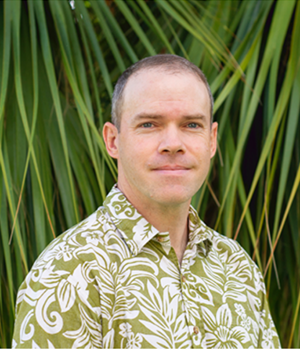 DANIEL R. ISBELL is an Assistant Professor in the Department of Second Language Studies at University of Hawaiʻi at Mānoa where he supervises graduate students and teaches courses in language assessment and quantitative research methods. He earned an MA in Teaching English as a Second Language at Northern Arizona University and a PhD in Second Language Studies at Michigan State University. His research interests include language testing and assessment, second language speaking, technology- assisted language learning, and language proficiency frameworks. In addition to conducting academic research, he has consulted on private and public projects related to language assessment and proficiency standards. Email: disbell@hawaii.edu
 KITAEK KIM is a professor in the Department of English Language Education at Seoul National University, where he teaches courses in second language acquisition and introductory linguistics. He earned his BA and MA in English Language Education from Seoul National University and a PhD in Second Language Studies from the University of Hawai‘i at Mānoa. His research focuses on two main areas. The first examines linguistic factors influencing non-target-like performance in nonnative language learners, including dominant language transfer, language attrition, lexical bottlenecks, and perceptibility. The second explores ways to facilitate language acquisition and processing, such as effective input processing and curriculum development. Email: kitaek@snu.ac.kr



