





Hostname: page-component-7b7567c8c-wxvwp Total loading time: 0 Render date: 2026-11-15T18:30:15.310Z Has data issue: false hasContentIssue false

On the specification property and synchronization of unique q-expansions

Published online by Cambridge University Press:  28 September 2020

RAFAEL ALCARAZ BARRERA*
Affiliation:
Instituto de Física, Universidad Autónoma de San Luis Potosí, Av. Manuel Nava 6, Zona Universitaria, C.P. 78290. San Luis Potosí, S.L.P. México (e-mail: ralcaraz@ifisica.uaslp.mx)
Rights & Permissions [Opens in a new window]

Abstract

Core share and HTML view are not available for this content. However, as you have access to this content, a full PDF is available via the 'Save PDF' action button.

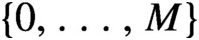
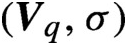
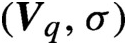
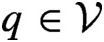
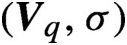
Given a positive integer M and $q \in (1, M+1]$ we consider expansions in base q for real numbers $x \in [0, {M}/{q-1}]$ over the alphabet $\{0, \ldots , M\}$. In particular, we study some dynamical properties of the natural occurring subshift $(\boldsymbol{{V}}_q, \sigma )$ related to unique expansions in such base q. We characterize the set of $q \in \mathcal {V} \subset (1,M+1]$ such that $(\boldsymbol{{V}}_q, \sigma )$ has the specification property and the set of $q \in \mathcal {V}$ such that $(\boldsymbol{{V}}_q, \sigma )$ is a synchronized subshift. Such properties are studied by analysing the combinatorial and dynamical properties of the quasi-greedy expansion of q. We also calculate the size of such classes as subsets of $\mathcal {V}$ giving similar results to those shown by Blanchard [10] and Schmeling in [36] in the context of $\beta $-transformations.

Information

Type
Original Article
Copyright
© The Author(s), 2020. Published by Cambridge University Press