


Hostname: page-component-7b7567c8c-7pwfn Total loading time: 0 Render date: 2026-11-15T14:24:15.113Z Has data issue: false hasContentIssue false

Rigidity of joinings for some measure-preserving systems

Published online by Cambridge University Press:  30 April 2021

CHANGGUANG DONG
Affiliation:
Department of Mathematics, University of Maryland, College Park, MD 20742, USA (e-mail: dongchg@math.umd.edu, adkanigowski@gmail.com)
ADAM KANIGOWSKI
Affiliation:
Department of Mathematics, University of Maryland, College Park, MD 20742, USA (e-mail: dongchg@math.umd.edu, adkanigowski@gmail.com)
DAREN WEI*
Affiliation:
Einstein Institute of Mathematics, Edmond J. Safra Campus, The Hebrew University of Jerusalem, Givat Ram, Jerusalem, 9190401, Israel
Rights & Permissions [Opens in a new window]

Abstract

Core share and HTML view are not available for this content. However, as you have access to this content, a full PDF is available via the 'Save PDF' action button.

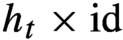
We introduce two properties: strong R-property and $C(q)$-property, describing a special way of divergence of nearby trajectories for an abstract measure-preserving system. We show that systems satisfying the strong R-property are disjoint (in the sense of Furstenberg) with systems satisfying the $C(q)$-property. Moreover, we show that if $u_t$ is a unipotent flow on $G/\Gamma $ with $\Gamma $ irreducible, then $u_t$ satisfies the $C(q)$-property provided that $u_t$ is not of the form $h_t\times \operatorname {id}$, where $h_t$ is the classical horocycle flow. Finally, we show that the strong R-property holds for all (smooth) time changes of horocycle flows and non-trivial time changes of bounded-type Heisenberg nilflows.

Information

Type
Original Article
Copyright
© The Author(s), 2021. Published by Cambridge University Press