








Crossref Citations

This article has been cited by the following publications. This list is generated based on data provided by Crossref.
Lech, Krzysztof
and
Zdunik, Anna
2024.
Equilibrium measures on Julia sets of random quadratic polynomials.
Nonlinearity,
Vol. 37,
Issue. 12,
p.
125021.
Benini, Anna Miriam
Evdoridou, Vasiliki
Fagella, Núria
Rippon, Philip J.
and
Stallard, Gwyneth M.
2024.
Boundary dynamics for holomorphic sequences, non-autonomous dynamical systems and wandering domains.
Advances in Mathematics,
Vol. 446,
Issue. ,
p.
109673.
WATANABE, TAKAYUKI
2024.
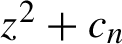
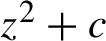
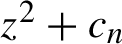
On the stochastic bifurcations regarding random iterations of polynomials of the form
$z^{2} + c_{n}$
.
Ergodic Theory and Dynamical Systems,
Vol. 44,
Issue. 11,
p.
3358.
Kosek, Marta
and
Stawiska, Małgorzata
2025.
Non‐autonomous iteration of polynomials in the complex plane.
Mathematika,
Vol. 71,
Issue. 3,