


Hostname: page-component-74656f9884-npj9w Total loading time: 0 Render date: 2026-11-11T02:32:14.517Z Has data issue: false hasContentIssue false

Uniformly factoring weakly compact operators and parametrised dualisation

Published online by Cambridge University Press:  08 March 2021

L. Antunes*
Affiliation:
Departamento de Matemática, Universidade Tecnológica Federal do Paraná, Campus Toledo, 85902-490 Toledo, PR Brazil; E-mail: leandroantunes@utfpr.edu.br
K. Beanland
Affiliation:
Department of Mathematics, Washington & Lee University, 204 W. Washington St. Lexington, VA, 24450; E-mail: beanlandk@wlu.edu
B. M. Braga
Affiliation:
Department of Mathematics, University of Virginia, 141 Cabell Drive, Kerchof Hall P.O. Box 400137 Charlottesville, VA 22904; E-mail: demendoncabraga@gmail.com

Abstract

Core share and HTML view are not available for this content. However, as you have access to this content, a full PDF is available via the 'Save PDF' action button.

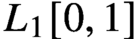
This article deals with the problem of when, given a collection $\mathcal {C}$ of weakly compact operators between separable Banach spaces, there exists a separable reflexive Banach space Z with a Schauder basis so that every element in $\mathcal {C}$ factors through Z (or through a subspace of Z). In particular, we show that there exists a reflexive space Z with a Schauder basis so that for each separable Banach space X, each weakly compact operator from X to $L_1[0,1]$ factors through Z.

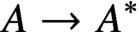
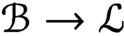
We also prove the following descriptive set theoretical result: Let $\mathcal {L}$ be the standard Borel space of bounded operators between separable Banach spaces. We show that if $\mathcal {B}$ is a Borel subset of weakly compact operators between Banach spaces with separable duals, then for $A \in \mathcal {B}$, the assignment $A \to A^*$ can be realised by a Borel map $\mathcal {B}\to \mathcal {L}$.

Information

Type
Analysis
Creative Commons
Creative Common License - CCCreative Common License - BY
This is an Open Access article, distributed under the terms of the Creative Commons Attribution licence (http://creativecommons.org/licenses/by/4.0/), which permits unrestricted re-use, distribution, and reproduction in any medium, provided the original work is properly cited.
Copyright
© The Author(s), 2021. Published by Cambridge University Press
