




No CrossRef data available.
Article contents
A variance method in combinatorial number theory
Published online by Cambridge University Press: 18 May 2009
Extract
Core share and HTML view are not available for this content. However, as you have access to this content, a full PDF is available via the 'Save PDF' action button.
Let s = s(a1, a2,...., ar) denote the number of integer solutions of the equation
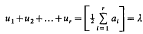
subject to the conditions

the ai being given positive integers, and square brackets denoting the integral part. Clearly s (a1,..., ar) is also the number s = s(m) of divisors of  which contain exactly λ prime factors counted according to multiplicity, and is therefore, as is proved in [1], the cardinality of the largest possible set of divisors of m, no one of which divides another.
Information
- Type
- Research Article
- Information
- Copyright
- Copyright © Glasgow Mathematical Journal Trust 1969
References
REFERENCES
1.Bruijn, N. G. de, van, C.Tengbergen, E. and Kruyswijk, D., On the set of divisors of a number Nieuw Arch. Wiskunde (2) 23 (1951), 191–193.Google Scholar
2.Anderson, I., On primitive sequences, J. London Math. Soc. 42 (1967), 137–148.CrossRefGoogle Scholar
3.Anderson, I., On the divisors of a number, J. London Math. Soc. 43 (1968), 410–418.CrossRefGoogle Scholar
 You have
Access
- 7
- Cited by