Contents
Research Article
The Structure of Normal Inverse Semigroups
-
- Published online by Cambridge University Press:
- 18 May 2009, pp. 1-9
-
- Article
-
- You have access
- Export citation
The minimum discriminants of quintic fields
-
- Published online by Cambridge University Press:
- 18 May 2009, pp. 57-67
-
- Article
-
- You have access
- Export citation
Asymptotic formulae for linear oscillations
-
- Published online by Cambridge University Press:
- 18 May 2009, pp. 105-111
-
- Article
-
- You have access
- Export citation
-
A number of formulae are known which exhibit the asymptotic behaviour as t→∞ of the solutions of

The aim of thisnote is to unify a group of such formulae, relating to the case in which F(t) iS on the whole positive, and suitably continuous though not necessarily analytic.
The dynamical stresses produced in a thick plate by the action of surface forces
-
- Published online by Cambridge University Press:
- 18 May 2009, pp. 153-163
-
- Article
-
- You have access
- Export citation
On The Closed Graph Theorem
-
- Published online by Cambridge University Press:
- 18 May 2009, pp. 9-12
-
- Article
-
- You have access
- Export citation
A note on semi-special permutations
-
- Published online by Cambridge University Press:
- 18 May 2009, pp. 164-169
-
- Article
-
- You have access
- Export citation
Solution of the word problem for certain types of groups II
-
- Published online by Cambridge University Press:
- 18 May 2009, pp. 68-90
-
- Article
-
- You have access
- Export citation
Infinite integrals involving products of Legendre functions
-
- Published online by Cambridge University Press:
- 18 May 2009, pp. 111-118
-
- Article
-
- You have access
- Export citation
On stratifications of Mittag-Leffler's transcendents
-
- Published online by Cambridge University Press:
- 18 May 2009, pp. 170-172
-
- Article
-
- You have access
- Export citation
-
Guided by an observation of Hausdorff ([4]; reproduced by Whittaker and Robinson [6, pp. 177–178]), I pointed out a long time ago [7] that his “Fourier“ treatment of certain products can be systematized so as to apply to an inclusive class of infinite convolutions. Recently I noticed [8] that an appropriate application of this method supplies the following curious result on gamma-quotients:
Corresponding to every index θ on the range 0 < θ < 1, there exists on the line - ∞ < t < ∞ a monotone function μ = μθ = μθ(t) in terms of which the identity

holds on the half-plane Re z > -1 and so, in particular, on the half-line z ≧0.
Integrals allied to Airy's integrals
-
- Published online by Cambridge University Press:
- 18 May 2009, pp. 91-93
-
- Article
-
- You have access
- Export citation
-
Airy's integrals

can be expressed ([1], [2]) in terms of Bessel functions. In this paper integrals of the types
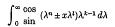
are discussed. Various subsidiary formulae are given in § 2, some integrals of the type
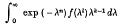
are evaluated in § 3, and from these the integrals of the Airy type are derived in § 4.

On a Conjecture of Hanna Neumann
-
- Published online by Cambridge University Press:
- 18 May 2009, pp. 13-17
-
- Article
-
- You have access
- Export citation
-
In what follows, groups are written additively, and commutators are denoted by brackets:

A group is metabelian if it satisfies the law

It is conceivable, though not plausible, that this law is equivalent to a law, or a set of laws, in only three variables, or even two. The present note shows that this is not the case.


Certain expansions involving E-functions
-
- Published online by Cambridge University Press:
- 18 May 2009, pp. 119-122
-
- Article
-
- You have access
- Export citation
-
The E-functions were defined by MacRobert [3] in 1937; they are denoted by E (p; αr: q; ps. z).
In § 3 of this paper, I prove a new expansion for E(p; αr: q; ps: z) which is similar to an expansion due to MacRobert [2], viz.,

where

On Semi-Special Permutations I
-
- Published online by Cambridge University Press:
- 18 May 2009, pp. 18-35
-
- Article
-
- You have access
- Export citation
-
In an earlier paper [1] on groups which are the products of two finite cyclic groups with trivial intersection, certain permutations, called “semi-special”, played a certain role. The permutation π of the numbers 1, 2,…, n is semi-special if† πn=n, and if, for every y ε [n],

is again a permutation, namely a power (depending on y) of π.
On strong Rieszian summability
-
- Published online by Cambridge University Press:
- 18 May 2009, pp. 123-131
-
- Article
-
- You have access
- Export citation
Integration of E-Functions with regard to their parameters
-
- Published online by Cambridge University Press:
- 18 May 2009, pp. 94-98
-
- Article
-
- You have access
- Export citation
A note on positive definite matrices
-
- Published online by Cambridge University Press:
- 18 May 2009, pp. 173-175
-
- Article
-
- You have access
- Export citation
A note on Mathieu functions
-
- Published online by Cambridge University Press:
- 18 May 2009, pp. 132-134
-
- Article
-
- You have access
- Export citation
-
The Mathieu functions of integral order [1] are the solutions with period π or 2π of the equation

The eigenvalues associated with the functions ceN and seN, where N is a positive integer, denoted by aN and bN respectively, reduce to
aN = bN = N2
when q is zero. The quantities aN and bN can be expanded in powers of q, but the explicit construction of high order coefficients is very tedious. In some applications the quantity of most interest is aN – bN, which may be called the “width of the unstable zone“. It is the object of this note to derive a general formula for the leading term in the expansion of this quantity, namely

Suppose first that N is an odd integer. Then there is an expansion

where

These functions π satisfy

and

On Substituting (3) in (1), one obtains the algebraic equation

where

Explicitly,
{11} = q

{lm} = 0 otherwise.
On Tauberian theorems for Abel-Cesàro summability
-
- Published online by Cambridge University Press:
- 18 May 2009, pp. 176-181
-
- Article
-
- You have access
- Export citation
-
For a series Σan with partial sums An=a0 + a1 + … + an(n ≥ 0), supposed to be real in this note, we define, in a generally accepted notation ([2], pp. 7, 9, 94–98), the following transforms:
(C, α) sequence-transform,


(H, k)sequence-transform (k = 0, 1, 2, …):

(A: C, α)fnunction-transform,


A formula of Bateman
-
- Published online by Cambridge University Press:
- 18 May 2009, pp. 99-101
-
- Article
-
- You have access
- Export citation
-
The formula

was stated by Bateman ([2], p. 457); a proof is sketched in [3], p. 144. Here

the Laguerre polynomial of degree


On Recurrence Formulae
-
- Published online by Cambridge University Press:
- 18 May 2009, pp. 36-37
-
- Article
-
- You have access
- Export citation