





Impact Statements
The rapidly growing scale of humanitarian crises worldwide requires new response capabilities that address populations with prolonged vulnerability to mental health problems and little to no access to formal mental health services. Family-based approaches for refugee families are especially needed because both adults and children in families often experience distress. A focus on strengthening family protective processes and emotional regulation skills can have a two-generational impact, alleviating mental health symptoms for parents and children alike. This study developed a novel, low-intensity family support model for urban Syrian refugee families in Istanbul that combined problem-management plus with an evidence-based family prevention intervention called Coffee and Family Education and Support. The intervention was determined feasible and acceptable by refugee families and non-specialist providers and had high rates of engagement and retention. Psychological distress and symptoms of post-traumatic stress disorder decreased significantly for adults and adolescents, and parents indicated improvements in attitudes regarding mental health and satisfaction with parenting at all follow-up time points. Family communication was found to mediate mental health outcomes. Given the small sample size and lack of a control condition, these results should be interpreted cautiously. Nonetheless, they indicate the potential value of low-intensity family-based approaches for displaced families and the role that improved family processes can play in ameliorating mental health and psychosocial problems due to war and displacement.
Introduction
The war in Syria displaced over 11 million persons to neighboring low- and middle-income countries (LMICs). 3.3 million Syrian refugees live in Türkiye, now one of the world’s largest refugee host countries (UNHCR 2025), of which 47% are under the age of 18 and a third are in school grades 5 to 7 (Kırdar et al., Reference Kırdar, Koç and Dayıoğlu2023; UNHCR 2025). Most live in urban areas (Adalı and Türkyılmaz, Reference Adalı and Türkyılmaz2020) and less than 8% in refugee camps. Syrian refugees are “guests” in Türkiye as defined by the Temporary Protection Regulation, which assumes that most refugees will return to Syria after the prolonged conflict ends (Şahin-Mencütek et al., Reference Şahin-Mencütek, Gökalp-Aras, Kaya and Rottmann2023). As a result of their status, they are especially vulnerable given limited access to housing, work, information, food, education and health and mental health care (Karaman and Ricard, Reference Karaman and Ricard2016). Differences in language and cultural norms and practices make adaptation and integration a challenge (Orhan and Gundogar, Reference Orhan and Gundogar2015). Syrians often perform low-wage work with no benefits and are accused by some locals of stealing their jobs and causing crime (Aslan, Reference Aslan2015; Kaya and Kıraç, Reference Kaya and Kıraç2016). 40% of school-aged children are not enrolled in Turkish schools (UNICEF, 2017) with child labor a driving factor (Pitel, Reference Pitel2017). Both adults and children report stigmatization from host communities (Demir and Ozgul, Reference Demir and Ozgul2019; Kocak et al., Reference Kocak, Arifoglu and Younis2021). Although Türkiye’s mental health system has undergone important reforms by moving toward more community oriented mental health services, these services are not geared to addressing Syrian refugee mental health (Doğan et al., Reference Doğan, Dikeç and Uygun2019; Fuhr et al., Reference Fuhr, Acarturk, McGrath, Ilkkursun, Sondorp, Sijbrandij, Ventevogel, Cuijpers, McKee and Roberts2020; Bilir-Uslu, Reference Uslu2022).
Mental health of Syrian refugees
Several prior studies assessed the mental health of adult Syrian refugees in Türkiye and found rates of common mental disorders in adults between 23% and 55% (Jefee-Bahloul et al., Reference Jefee-Bahloul, Moustafa, Shebl and Barkil-Oteo2014; Alpak et al., Reference Alpak, Unal, Bulbul, Sagaltici, Bez, Altindag, Dalkilic and Savas2015; Acarturk et al., Reference Acarturk, McGrath, Roberts, Ilkkursun, Cuijpers, Sijbrandij, Sondorp, Ventevogel, McKee and Fuhr2021; Yilmaz et al., Reference Yilmaz, Tamam and Cengisiz2024). Syrian refugee children have high exposure to severe traumatic events, and previous studies found nearly half met criteria for PTSD (Gormez et al., Reference Gormez, Kılıç, Orengul, Demir, Demirlikan, Demirbaş, Babacan, Kınık and Semerci2018; Yektaş et al., Reference Yektaş, Erman and Tufan2021). In addition, most Syrian refugees have limited familiarity or awareness of mental illness, self-care strategies, or clinical treatment and express high stigma associated with engaging in services (Bawadi et al., Reference Bawadi, Al-Hamdan, Khader and Aldalaykeh2022), with only 1.4% having contacted local mental health services (Kiliç et al., Reference Kiliç, Kaya, Karadağ and Üner2024).
Family-level consequences of war and forced migration
Experiences of war, forced migration and displacement also rupture social systems of care and connection (Bunn et al., Reference Bunn, Samuels and Higson-Smith2023). This includes negative impacts to the family system and family functioning in the form of family conflict, role disruptions and transformations, parenting problems and losses of supportive social networks that families relied upon for daily survival (Bunn et al., Reference Bunn, Zolman, Smith, Khanna, Hanneke, Betancourt and Weine2022). In displacement settings, Syrian families face economic problems, which often leads to other cascading vulnerabilities such as interruptions in schooling for children who need to work to support the family or caregivers taking on multiple low-paying jobs to meet daily needs (Eltanamly et al., Reference Eltanamly, Leijten, van Rooij and Overbeek2022). While these adaptations are necessary, they can lead to unwanted changes within the family system such as fathers being less present in the family’s daily life. In the context of past experiences and chronic displacement stressors, Syrian parents, naturally also struggle with their own psychological health and wellbeing, which negatively impacts parenting, including harsh parenting styles, avoidant and detached parenting or overly controlled parenting (El-Khani et al., Reference El-Khani, Ulph, Peters and Calam2018; Sim et al., Reference Sim, Fazel, Bowes and Gardner2018).
The family can also be an important source of strength and support in displacement and refugee families demonstrate resilience and strength (Walsh, Reference Walsh2003). Our research with Syrian refugees identified multiple resilience properties among the families across multiple domains of family functioning (Arenliu et al., Reference Arenliu, Bertelsen, Saad, Abdulaziz and Weine2020). Families could benefit from low-intensity family prevention approaches that bolster those protective processes and aim to strengthen families further and to reduce the risk of developing mental health problems.
Family-based mental health interventions
There are major gaps in research focused on development and testing of such models for refugees (Giusto et al., Reference Giusto, Waller, Bunn, Jaguga, Dos Santos and Mootz2025). The current research base is very limited with most pilot level studies and need for additional development and testing of models to further develop the evidence base (Slobodin and de Jong, Reference Slobodin and de Jong2015; Bunn et al., Reference Bunn, Zolman, Smith, Khanna, Hanneke, Betancourt and Weine2022). The literature on parenting interventions is the most well-developed (Gillespie et al., Reference Gillespie, Banegas, Maxwell, Chan, Darawshy, Wasil, Marsalis and Gewirtz2022). However, these interventions often focus primarily on the development of positive parenting behaviors and often do not address related challenges in child and caregiver mental health and wellbeing or other important family processes such as communication skills, family (re)organization and beliefs about life experiences (Walsh, Reference Walsh2007). Recently, one of few large trials of a caregiver support intervention showed reductions in harsh parenting and caregiver distress among Syrian refugees in Jordan (Miller et al., Reference Miller, Chen, Koppenol-Gonzalez, Bakolis, Arnous, Tossyeh, El Hassan, Saleh, Saade, Nahas, Abboud, Jawad and Jordans2023). There are also research gaps in the area of whole family strengthening approaches that aim to improve emotional regulation and mental health of children and caregivers and the overall family context and functioning (Bunn et al., Reference Bunn, Zolman, Smith, Khanna, Hanneke, Betancourt and Weine2022).
There is an urgent need for research to develop brief, evidence-based interventions for families that can be scaled up during humanitarian crises. The World Health Organization’s Department of Mental Health and Substance Abuse has developed low-intensity cognitive behavior therapy (LICBT) to help address refugees’ mental health needs. They developed Problem-Management Plus (PM+), a brief, transdiagnostic version of LICBT for adults in communities affected by adversity and who are experiencing common mental health problems (Bennett-Levy et al., Reference Bennett-Levy, Richards, Farrand, Christensen, Griffiths, Kavanagh, Klein, Lau, Proudfoot, Ritterband, White and Williams2010; WHO, 2016). The model is designed to be delivered by non-specialist providers and addresses four core strategies including stress management, problem management, behavioral activation and strengthening social support (Hamdani et al., Reference Hamdani, Ahmed, Sijbrandij, Nazir, Masood, Akhtar, Amin, Bryant, Dawson, van Ommeren, Rahman and Minhas2018). Results from a recent systematic review of 23 randomized controlled trials (RCT) of individual and group formats of PM+ found that it was effective in reducing distress and promoting positive mental health in populations exposed to adversities (Schäfer et al., Reference Schäfer, Thomas, Lindner and Lieb2023). Specific to Syrian refugee communities, randomized controlled trials have found PM+ to be acceptable, feasible and positive for mental health outcomes. A pilot RCT conducted with Syrian refugee adults in the Netherlands indicated that PM+ was potentially beneficial for mental health and psychosocial functioning (de Graaff et al., Reference de Graaff, Cuijpers, McDaid, Park, Woodward, Bryant, Fuhr, Kieft, Minkenberg and Sijbrandij2020). A larger RCT in Jordan showed effectiveness of brief intervention for common mental health disorders among Syrian refugees (Bryant et al., Reference Bryant, Bawaneh, Awwad, Al-Hayek, Giardinelli, Whitney, Jordans, Cuijpers, Sijbrandij, Ventevogel, Dawson and Akhtar2022). Given the evidence base for PM+, an important future direction is integrating these low-intensity models into family-based approaches.
We previously developed and evaluated a prevention-oriented multiple family group model for resettled Bosnian refugees called Coffee and Families Education and Support (CAFES) (Weine et al., Reference Weine, Feetham, Kulauzovic, Knafl, Besic, Klebic, Mujagic, Muzurovic, Spahovic and Pavkovic2006, Reference Weine, Kulauzovic, Klebic, Besic, Mujagic, Muzurovic, Spahovic, Sclove, Pavkovic, Feetham and Rolland2008). The model is based on family resilience theory which explains family protective processes that ameliorate the negative consequences of hardships and challenges and enable healing and growth in families including family communication, flexibility, identity and help-seeking practices (Walsh Reference Walsh2003). Through a focus on key family processes, relationships and skill building, the model aims to reduce further escalation of mental health and psychosocial distress, promote family wellbeing and encourage referral and access to additional help-seeking resources.
CAFES brings together caregivers and children from six to eight families who are experiencing similar family stressors such as trauma survival, displacement and/or resettlement. Key components of the intervention include inter-familial discussion of stressors affecting family relationships; psychoeducation on the effects of war and forced displacement on individuals and families, identification and activation of family strengths and linkage to care to increase access to community-based mental health services (Weine et al., Reference Weine, Feetham, Kulauzovic, Besic, Lezic, Mujagic, Pavkovic, Miller and Rasco2004). Results from an NIMH-funded RCT demonstrated high uptake and improvements in mental health help-seeking, with depression and family comfort discussing distress mediating the intervention effect (Weine et al., Reference Weine, Kulauzovic, Klebic, Besic, Mujagic, Muzurovic, Spahovic, Sclove, Pavkovic, Feetham and Rolland2008). Based on our community engagement and previous research with Syrian refugees in Jordan, we concluded that the multiple-family approach could be well-suited to Syrian culture.
Study aims
This study aimed to utilize a collaborative approach to develop a low intensity family support intervention suitable for delivery in displacement settings which combined PM+ with CAFES for Syrian families in Turkey. Using a quasi-experimental pilot trial design, the study aimed to assess several research questions: (1) Is the low-intensity family support (LIFS) intervention feasible and acceptable? (2) Does the LIFS intervention result in changes in psychological distress or PTSD over time? (3) Does the LIFS intervention result in improvements in family comfort discussing distress, satisfaction with parenting, or attitudes regarding mental health, and do these mediate the LIFS effects over time? 4) What were the families’ and facilitators’ experiences and perspectives of LIFS concerning especially questions 1 to 3?
Methods
Human subjects
Study procedures were approved by the University of Illinois at Chicago and the Medeniyet University Institutional Review Boards.
Designing the low-intensity family support model
To design the LIFS intervention, we convened a family support design team that included academicians, service delivery professionals, and Syrian refugee women and men. The FSDT was co-led by authors (Weine, Arenliu, and Gormez) and included other LMIC researchers, community advocates, nurses and physicians. The FSDT met face-to-face in Istanbul for 3 days, followed by regular Skype calls and emails, and a follow-up meeting after 6 months. The process was facilitated by simultaneous translation from Arabic and English. The goal was to create a brief LIFS model for community workers and nurses. Draft materials were prepared in English and Arabic. The process began with an in-depth review of the PM+ and CAFES manuals to assess areas of appropriateness and areas where modifications were needed to address the needs of Syrian refugees in Turkey. Findings from Arenliu and Weine’s study of Syrian refugee families were also used to guide modifications (Weine et al., Reference Weine, Arënliu, Görmez, Lagenecker and Demirtas2021). The model included recruitment scripts to help achieve high engagement and retention, incorporating local idioms and contextual issues. Following the initial development of the LIFS model, eight families were invited to a whole-day run-through, followed by an immediate individual feedback session which was used to gather their input into the model and additional areas for modification. Participants anticipated challenges due to Syrian cultural and gender norms including gathering in mixed gender groups and engaging fathers. Key adaptations included arranging families in banquet-style seating to maintain gender-sensitive boundaries [and due to COVID-19] and developing brief videotapes for each session that adolescents could watch with their fathers as homework.
The low-intensity family support model
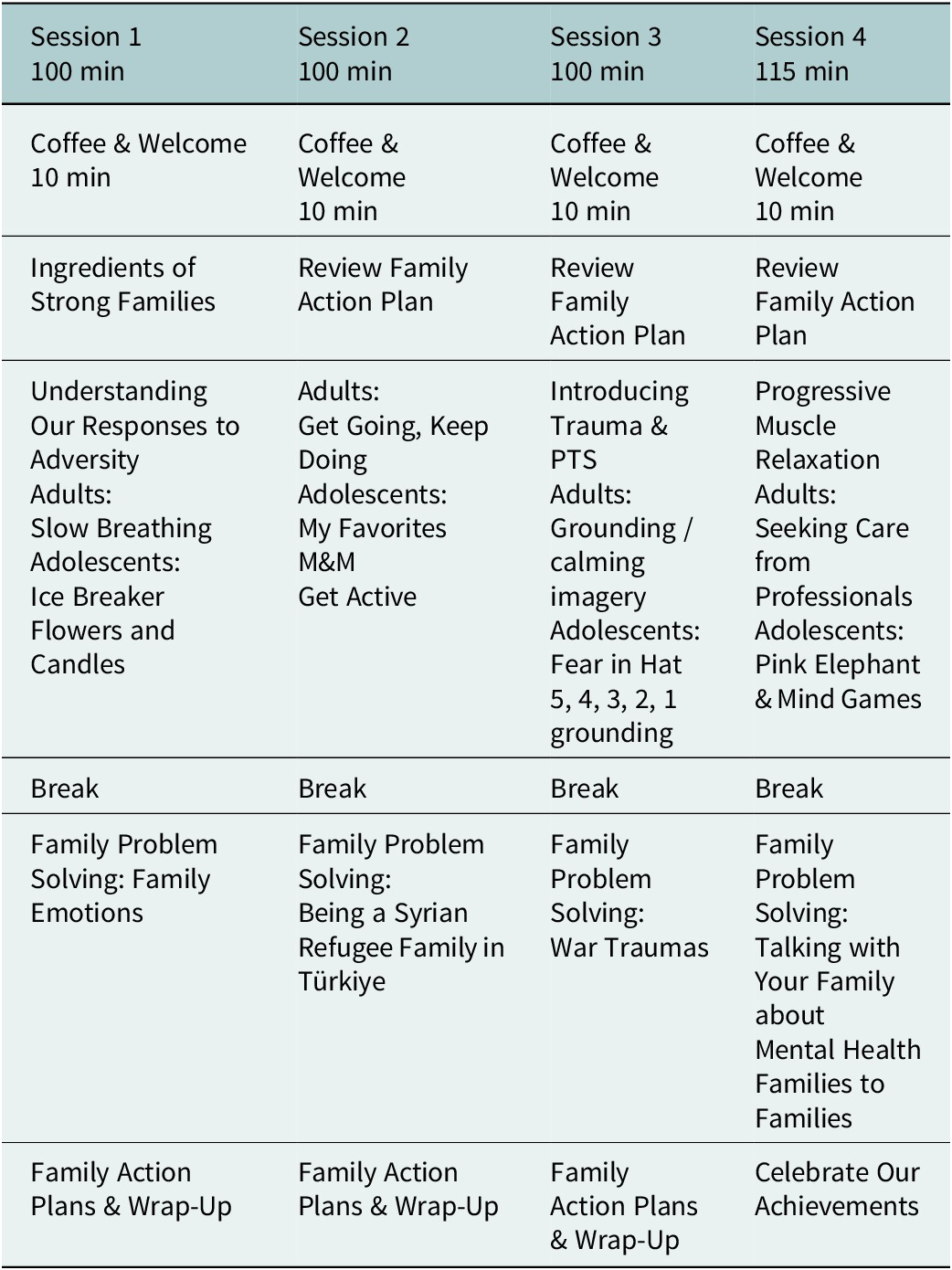
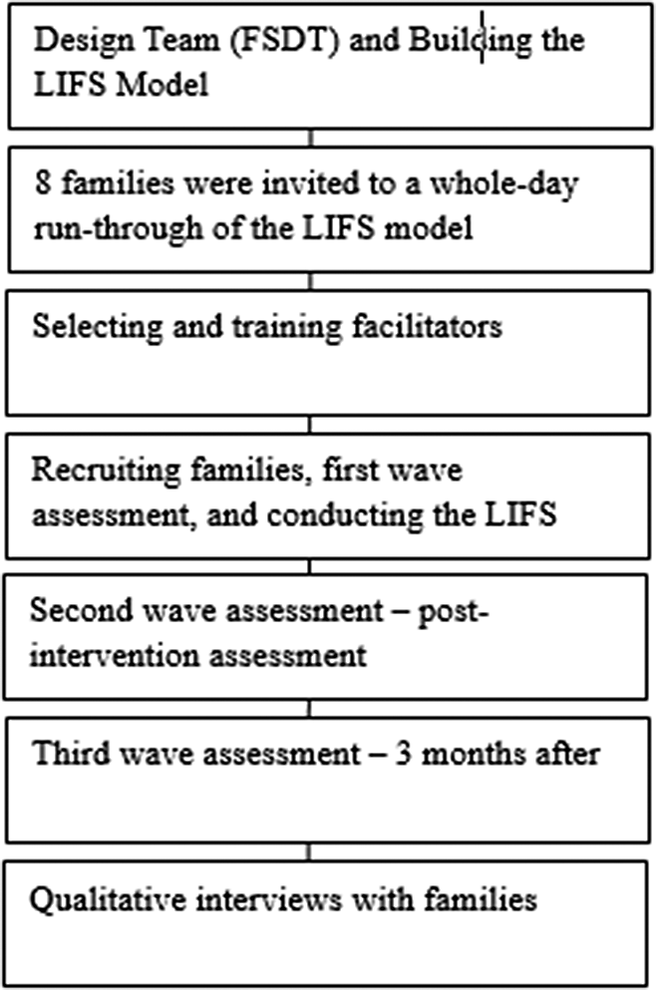
The resulting four session model combined and adapted components from PM+ and CAFES to address mental health and family functioning and to align with the cultural and relational dynamics of Syrian refugee families. Each 2-h session included psychoeducation to improve knowledge and attitudes regarding mental health, especially related to trauma and PTSD and stress management strategies (drawn directly from PM+; e.g., slow breathing and grounding) to support self-management of symptoms and emotional regulation. This was followed by family-based activities (drawn from CAFES; e.g., talking with your family about mental health) which aimed to improve family communication and support. Each session incorporated didactic talks, family discussions and separate breakout groups for adolescents and adults to enable whole group and age and family role-specific conversations and relationships. The emphasis on strengthening social support was reinforced through PM+ social network mapping exercises and the CAFES group format, which encourages inter-family bonding and shared learning. Linkage to care strategies aimed to expand family members’ access to community-based mental health services and promote positive help-seeking behaviors. Table 1 summarizes the content and structure of the LIFS sessions. Additionally, Figure 1 summarizes the implementation and evaluation processes of LIFS, including the waves of assessment.
Description of the LIFS sessions in terms of content and structure

Implementation and evaluation process of the LIFS Model.

LIFS facilitators
We recruited 12 Arabic-speaking community workers and nurses from six community-based organizations (2 from each) to facilitate the LIFS model with Syrian families. Based upon our experiences implementing multiple preventive interventions (Weine et al., Reference Weine, Feetham, Kulauzovic, Knafl, Besic, Klebic, Mujagic, Muzurovic, Spahovic and Pavkovic2006, Reference Weine, Kulauzovic, Klebic, Besic, Mujagic, Muzurovic, Spahovic, Sclove, Pavkovic, Feetham and Rolland2008), we selected facilitators based on the following criteria: (1) knowledgeable about family and mental health issues; (2) experienced health educators and group leaders; (3) open to task-sharing principles and practices and (4) willing to participate in training and intervention delivery for 1 year.
Training and supervision of the LIFS facilitators
LIFS facilitators received 25 h of initial training in the LIFS model provided by the study authors (Weine, Arenliu and Gormez), including post-training observation of one practice group, followed by corrective feedback. This included a CBT-trained therapist and psychiatrist (third author), a second psychiatrist with expertise in trauma and refugee mental health (first author) and a psychologist experienced in refugee mental health (second author); The facilitators also received ongoing weekly supervision from the two psychiatrists. In addition, the facilitators were trained to identify family violence and acute mental health risks, to escalate concerns to the supervisor (third author) for risk assessment, and when indicated to activate organizational referrals to health and protection services. Adverse events were reviewed in weekly supervision. Intervention fidelity (Power et al., Reference Power, Blom-Hoffman, Clarke, Riley-Tillman, Kelleher and Manz2005; Schoenwald et al., Reference Schoenwald, Garland, Chapman, Frazier, Sheidow and Southam-Gerow2011) was monitored during the pilot and included completion of fidelity checklists to ensure that all model components were delivered as intended, as well as in vivo observation of all training sessions and observations of two of four randomly selected LIFS intervention sessions. The quality of intervention delivery was also ensured through weekly review and feedback of fidelity measures in the supervision meetings.
Characteristics of intervention recipients
The intervention population included 70 Syrian refugee families with at least one adult or adolescent with moderate psychological distress. Inclusion criteria were: (1) Syrian refugee family living in Istanbul for at least 1 year; (2) contains at least one parent (18–55) and at least one of their adolescents (12–18 years) living in one household; (3) one adult or adolescent with >3 on the GHQ-12, indicating elevated psychological distress; (4) willing to participate in the intervention and research procedures and (5) able to give written informed consent.
Recruiting and enrolling participants
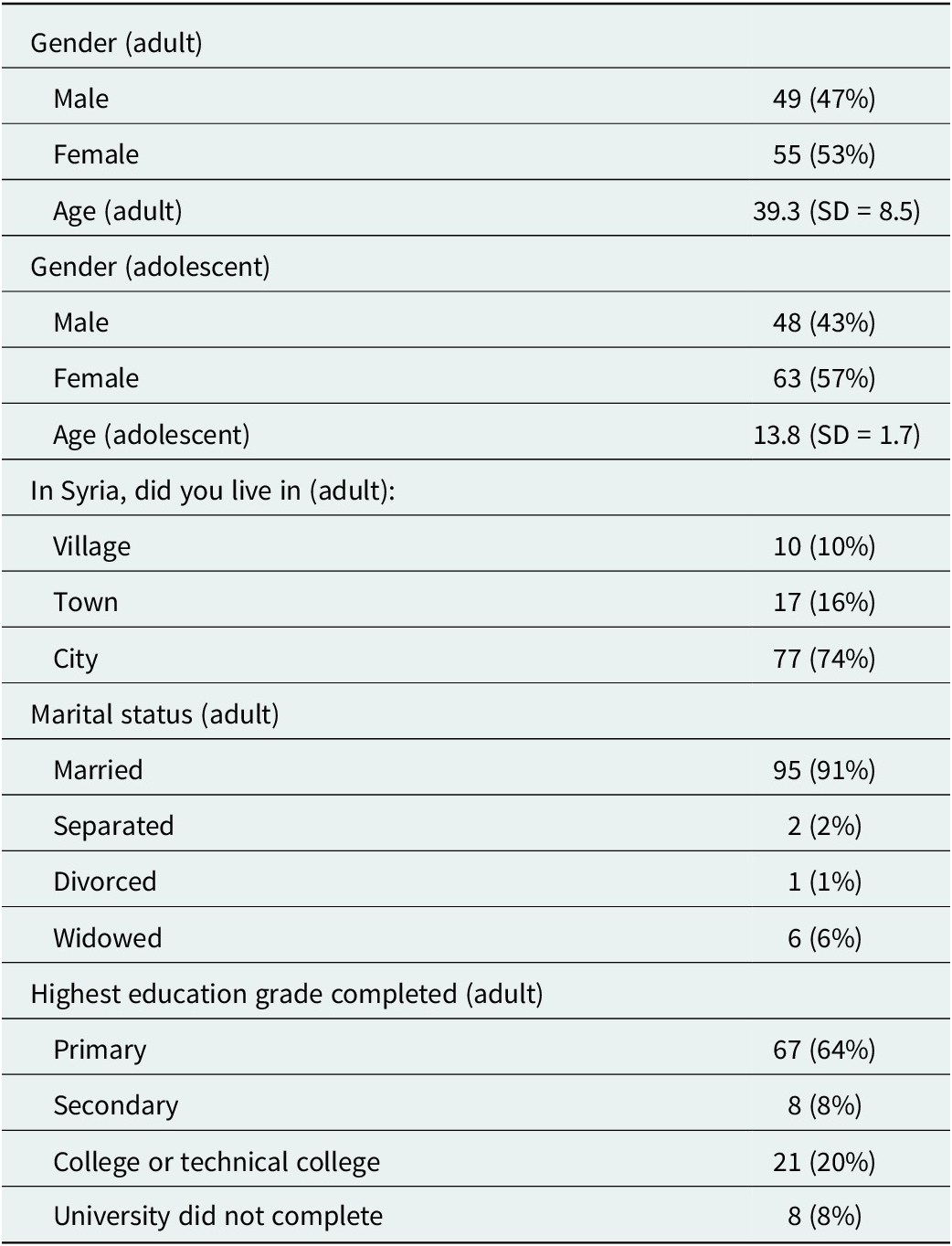
Each LIFS facilitator recruited families from their organization on a rolling basis. For each family, one or more persons aged 12 and over with GHQ > 3 were enrolled as the primary participant(s). All other family members 12 years and older were enrolled as family members (see Table 2 for sociodemographic characteristics). This inclusive approach was designed to reflect real-world family dynamics within the Syrian refugee community. Facilitators encouraged the participation of both mothers and fathers to enhance family engagement, though participation varied depending on each family’s availability and willingness. In each family, the measures were completed by the primary participant(s) and at least one other family member.
Sociodemographic characteristics of the participants

Conducting the family support group
Each LIFS group consisted of six to eight families meeting for four weekly 2-h sessions and was co-led by two facilitators. The groups were held at one of the CBOs on weekends when families were available and took place in meeting rooms that could accommodate 20–30 people. Childcare was provided for younger children to reduce barriers to attending.
Survey assessments
All primary participants and other adult and adolescent family members completed a baseline survey (Wave 1) and two follow-up assessments post-intervention, at 1 month post baseline (Wave 2), and at 3 months post baseline (Wave 3). Each family received $10 per assessment. These assessments were administered by the LIFS facilitators at each point, either at the family’s home or in a private space at the organization. In addition to LIFS training, facilitators were trained on confidentiality, and standardized data collection, including mock data collection practice aiming to minimize bias and ensure consistent data gathering. Most assessments were conducted individually and in private. When this was not possible, we ensured that each participant felt safe, and their responses were not overheard by others. As mentioned earlier, weekly supervision meetings ensured both fidelity and reduction of potential bias.
Measures
The primary mental health outcome measures used were previously translated and validated in Arabic, with good Cronbach alphas, and no changes were made to the item wording. These included (1) the General Health Questionnaire – 12 item version (GHQ-12; El-Rufaie and Daradkeh, Reference El-Rufaie and Daradkeh1996) with a Cronbach alpha of .86 (for both adults and adolescents). The GHQ-12 is a screening measure of general psychological distress (e.g., anxiety/depressive symptoms, social dysfunction, reduced coping and well-beings) over the past 2 weeks; higher scores indicate greater psychological distress. The Arabic translation used in this study was based on prior translated and validated versions, and no changes were made to the item wording. Response options followed the standard 4-point Likert scale; (2) for Post-Traumatic Stress Disorder (PTSD) in adults, the PTSD Checklist for DSM-5 (PCL-5) with a Cronbach alpha of .92 and with solid factors structure validity in Arabic version (Ibrahim et al., Reference Ibrahim, Ertl, Catani, Ismail and Neuner2018; Ibrahim et al., Reference Ibrahim, Catani, Ismail and Neuner2019), the measure has 20 items assessing the presence and severity of PTSD symptoms based on Diagnostic and Statistical Manual of Mental Disorders, Fifth Edition (DSM-5) criteria on 5 point Likert scale from 0 “not at all” to 4 “extremely” (3) for PTSD in adolescents, The Child and Adolescent Trauma Scale (Sachser et al., Reference Sachser, Berliner, Holt, Jensen, Jungbluth, Risch, Rosner and Goldbeck2017) with a Cronbach alpha of .92. The measure consists of 20 items assessing symptoms across the four DSM-5-defined clusters: re-experiencing, avoidance, negative mood and cognitive changes, and hyperarousal. Each item is rated on a four-point scale reflecting both symptom frequency and intensity. For participants aged 7 to 17, a composite symptom score is derived by adding the scores of all items, resulting in a total score range 0 to 60.
The remaining four instruments described below underwent a translation and adaptation processes, including forward and back translation by bilingual team members, this was followed by discussion among two translators who resolved a few discrepancies. All measures were previously piloted with Syrian refugee adults (5) and children (5) to ensure that items are understood and clear. The Kansas Parental Satisfaction Scale is a 3-item instrument designed to measure an individual’s satisfaction with themselves as a parent (Schumm et al., Reference Schumm, Hall, Fischer and Corcoran2007; Nitsch et al., Reference Nitsch, Hannon, Rickard, Houghton and Sharry2015). Respondents rate each item example “How satisfied are you with yourself as a parent?,” using a 7-point Likert type scale, ranging from 1 “extremely dissatisfied” to 7 “extremely satisfied,” higher scores indicating higher satisfaction. Family Comfort Discussing Mental Health is a three-item scale constructed for a family member to assess the level of comfort in his or her family talking together about trauma mental health and mental health services (McKay et al., Reference McKay, Harrison, Gonzales, Kim and Quintana2002). Each item was rated using a 5-point Likert-type scale. For example, participants were first asked, “How often do you talk with your family about emotional troubles of family members?” with response options ranging from 0 “We don’t talk about this” to 3 “A lot.” A follow-up question assessed comfort discussing the same topic, with responses ranging from 1 “Not at all comfortable” to 5 “Extremely comfortable.” Higher scores indicated greater openness and comfort in discussing emotional topics within the family. Attitudes Regarding Mental Health were assessed via a 13-item questionnaire that presented items with varying levels of difficulty to address the degree to which the subject was informed about the conditions and treatments of PTSD (Weine et al., Reference Weine, Kulauzovic, Klebic, Besic, Mujagic, Muzurovic, Spahovic, Sclove, Pavkovic, Feetham and Rolland2008). Items such as “If you are having emotional problems, that means that you are a weak person.” were rated on a 4-point Likert-type scale ranging from 0 “Strongly agree” to 3 “Strongly disagree,” with higher scores reflecting greater stigmatizing attitudes or lower perceived self-efficacy. The Help Seeking Measure was designed to assess the utilization of various health and support services (general hospitals, refugee health programs, psychiatric or mental health services, etc.) by Syrian refugee families over the past 6 months. Responses were coded with 1 “yes” and 0 “no.”
Quantitative analytic strategy
Research question one, concerned feasibility and acceptability. Intervention feasibility is defined as the extent to which a new treatment, or innovation, can be successfully used or carried out within a given setting (Proctor et al., Reference Proctor, Silmere, Raghavan, Hovmand, Aarons, Bunger, Griffey and Hensley2011). In this study, feasibility was assessed by indicators of engagement, retention, safety for participants and providers. Intervention feasibility was also assessed qualitatively during endline interviews with LIFS facilitators and a sample of participating families.
In this study, engagement was defined as the initiation and active participation in the LIFS intervention for those who were enrolled and intended to participate, consistent with prior family psychosocial intervention literature (Staudt, Reference Staudt2007; Becker et al., Reference Becker, Lee, Daleiden, Lindsey, Brandt and Chorpita2015). Retention was defined as sustained participation through the intended course of services and completion of follow-up assessments (Ingoldsby, Reference Ingoldsby2010).
Intervention acceptability is defined as whether recipients found the intervention to be agreeable and satisfactory and a good fit for needs and their context (Dyer et al., Reference Dyer, Owens and Robinson2016). This was assessed via a satisfaction survey with participating families. We also assessed the experiences of both beneficiaries and facilitators were assessed through qualitative interviews, as described below.
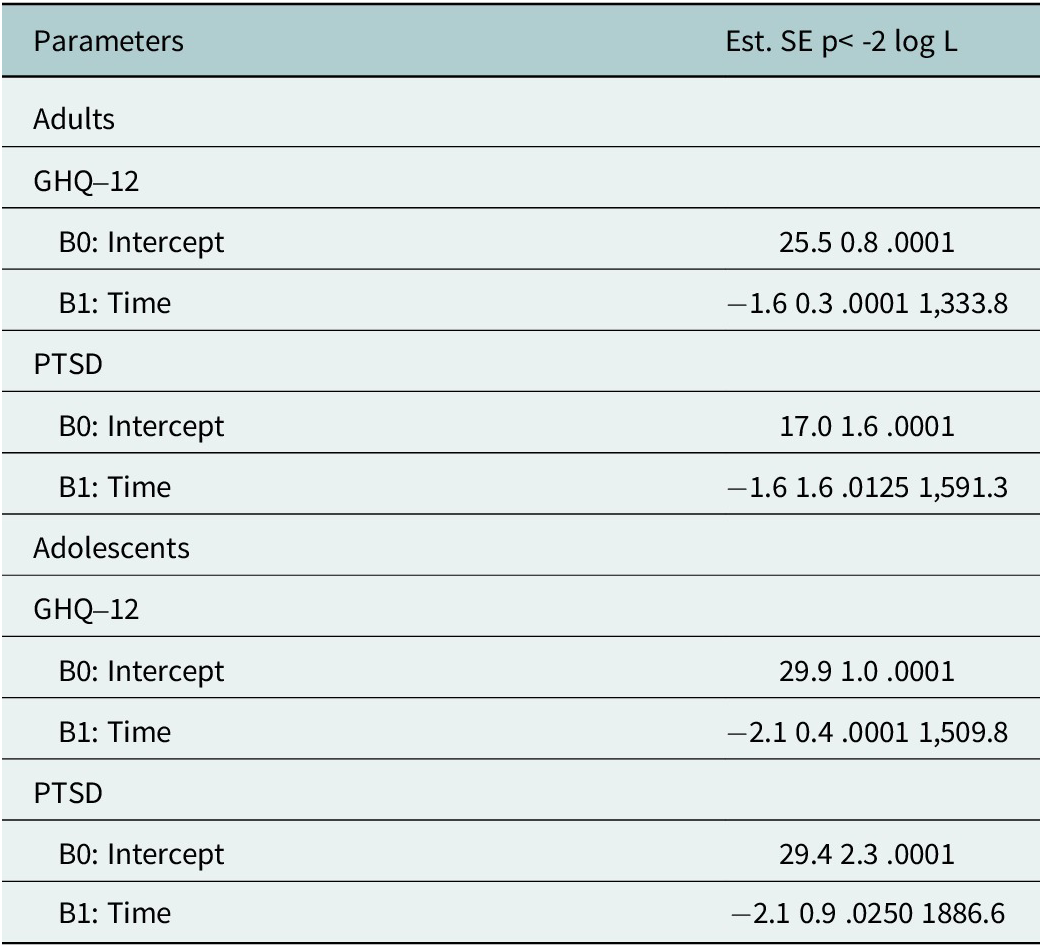
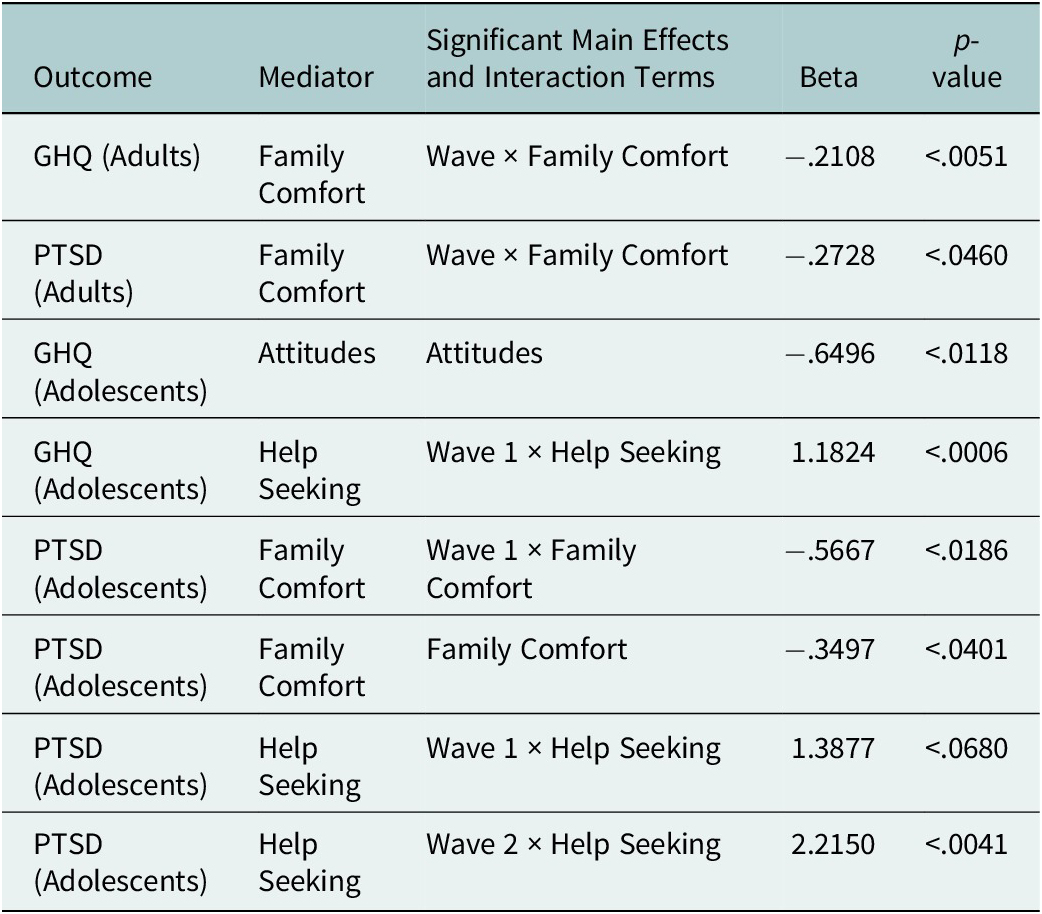
To address research question two, we conducted a longitudinal analysis of GHQ-12 and PTSD at the two post-intervention time points (post-intervention and 3 months) with a linear mixed-effects model using SAS PROC MIXED, with GHQ-12 and PTSD as the dependent variables. Our hypothesis was that LIFS primary participants would report fewer symptoms of depression, anxiety and traumatic stress from baseline to post-intervention and 3 months post. Correlations, which were calculated on the baseline data, indicated the direction of associations, and their magnitude provided insight into the significance of terms that emerged through related model-based evaluations. Our hypothesis was that LIFS primary participants would report improved attitudes regarding mental health, family comfort discussing distress, parenting and help seeking and that these would explain improvements in mental health outcomes (GHQ-12 and PTSD). For the mediation analysis, we used all three time points. The dependent variables were either GHQ-12 or PTSD. Our independent variable is time or Wave, and the timeframes were baseline (Wave 1), 1 month after baseline (Wave 2) and 3 months after baseline (Wave 3). Mediators encompassed attitudes regarding mental health, family comfort discussing distress, parenting satisfaction and help-seeking behavior. The results are represented in Table 5.
In the statistical analysis, two linear mixed-effects models were employed. One of them treats Wave (time) as a linear predictor, designed to assess the linear time trend. The other, which is more realistic, categorizes time nominally, meaning that each wave is coded as 1 or 0, depending on whether observation or measurement is available at a given time. This model is designed to assess different trends at various times. This approach to constructing the model involves creating two dummy variables, where the (0,0) pair corresponds to the reference point (Wave 3), and the (1,0) and (0,1) pairs correspond to (Wave 1) and (Wave 2), respectively. This formulation is obviously arbitrary, but creating three dummies here would lead to a deficient rank, resulting in inestimable coefficients. Our choice of reference point was Wave 3, which represents the latest time point at which the status of variables is recorded.
The p-values that are less than 0.05 were considered significant, and p-values that are between 0.05 and 0.10 were considered borderline (marginally) significant throughout the analysis.
Analyzing feasibility and acceptability
Intervention feasibility is defined as the extent to which a new treatment, or innovation, can be successfully used or carried out within a given setting (Proctor et al., Reference Proctor, Silmere, Raghavan, Hovmand, Aarons, Bunger, Griffey and Hensley2011). In this study, feasibility was assessed by indicators of engagement, retention, safety for participants and providers. Intervention feasibility was also assessed qualitatively during endline interviews with LIFS facilitators and a sample of participating families.
In this study, engagement was defined as the initiation and active participation in the LIFS intervention for those who were enrolled and intended to participate, consistent with prior family psychosocial intervention literature (Staudt, Reference Staudt2007; Becker et al., Reference Becker, Lee, Daleiden, Lindsey, Brandt and Chorpita2015). Retention was defined as sustained participation through the intended course of services and completion of follow-up assessments (Ingoldsby, Reference Ingoldsby2010).
Intervention acceptability is defined as whether recipients found the intervention to be agreeable and satisfactory and a good fit for needs and their context (Dyer et al., Reference Dyer, Owens and Robinson2016). This was assessed via a satisfaction survey with participating families. We also assessed the experiences of both beneficiaries and facilitators were assessed through qualitative interviews, as described below.
Qualitative data collection
Following the final 3-month survey assessment, we purposely sampled 9 of the 70 intervention participant families to participate in a 60-min qualitative family interview to explore experiences in the LIFS intervention, including perceived benefits, challenges, and suggestions for improvement. These included (1) families who were screened but did not participate in FS (n = 3); (2) families who came to only 1 or 2 group sessions (n = 3); (3) families who came to three or four group sessions (n = 3). We also conducted qualitative interviews with a subgroup of the LIFS intervention staff: community workers (n = 3) and nurses (n = 3). Interviews were digitally recorded and transcribed in both Arabic and English. All participants received $10 per family or individual interview. The semi-structured topic guides focused on participants’ experience with the intervention including perceived benefits, challenges to participate and suggestions for improvement of the intervention. The topic guides were developed by the research team (first author, second, and third author) informed by the study aims and objectives, including questions on reviewing cultural feasibility and acceptability. The interviews were conducted by the second author who had previous experience in interviewing Syrian refugees in family context with help of a translator.
Qualitative data analysis
Our qualitative analysis approach drew on thematic and content analysis approaches (Hsieh and Shannon, Reference Hsieh and Shannon2005; Braun and Clarke, Reference Braun and Clarke2022) to interpret participants’ experiences and perceived changes following the LIFS intervention. The multi-stage analysis was led by the first and second author (PI and Co-PI, respectively) who designed the study and oversaw implementation of the LIFS intervention. The process began with transcription and translation of the recorded interviews to English. We used open coding of transcripts to produce initial categories. Following this, the second author applied these codes to the remaining data set, during which time we modified existing categories and incorporated newly identified codes. The first, second, and fourth author, a collaborator not directly involved in study implementation, but who has expertise in qualitative methods and area expertise in and with displaced communities from the Middle East, worked collaboratively to organize findings into main categories and facilitate a broader level of abstraction. The team coded the data using Atlas/ti 7 software. In the results section, we report on the themes derived from the inductive approach.
Results
Quantitative findings
Feasibility and acceptability
87% of families attended all four meetings and 95% attended three meetings. All caregivers brought one or more adolescents to each meeting. 49% of fathers participated in all four meetings and 62% attended three or more meetings. 100% of all adult and adolescent participants who were enrolled and assessed at Wave 1 completed assessments at Wave 2 and Wave 3.
Group participants were asked how they feel now compared with when they started the group, and the mean was 1.7 (on a scale of 1 = much better to 5 = much worse).
Changes in psychological distress and PTSD
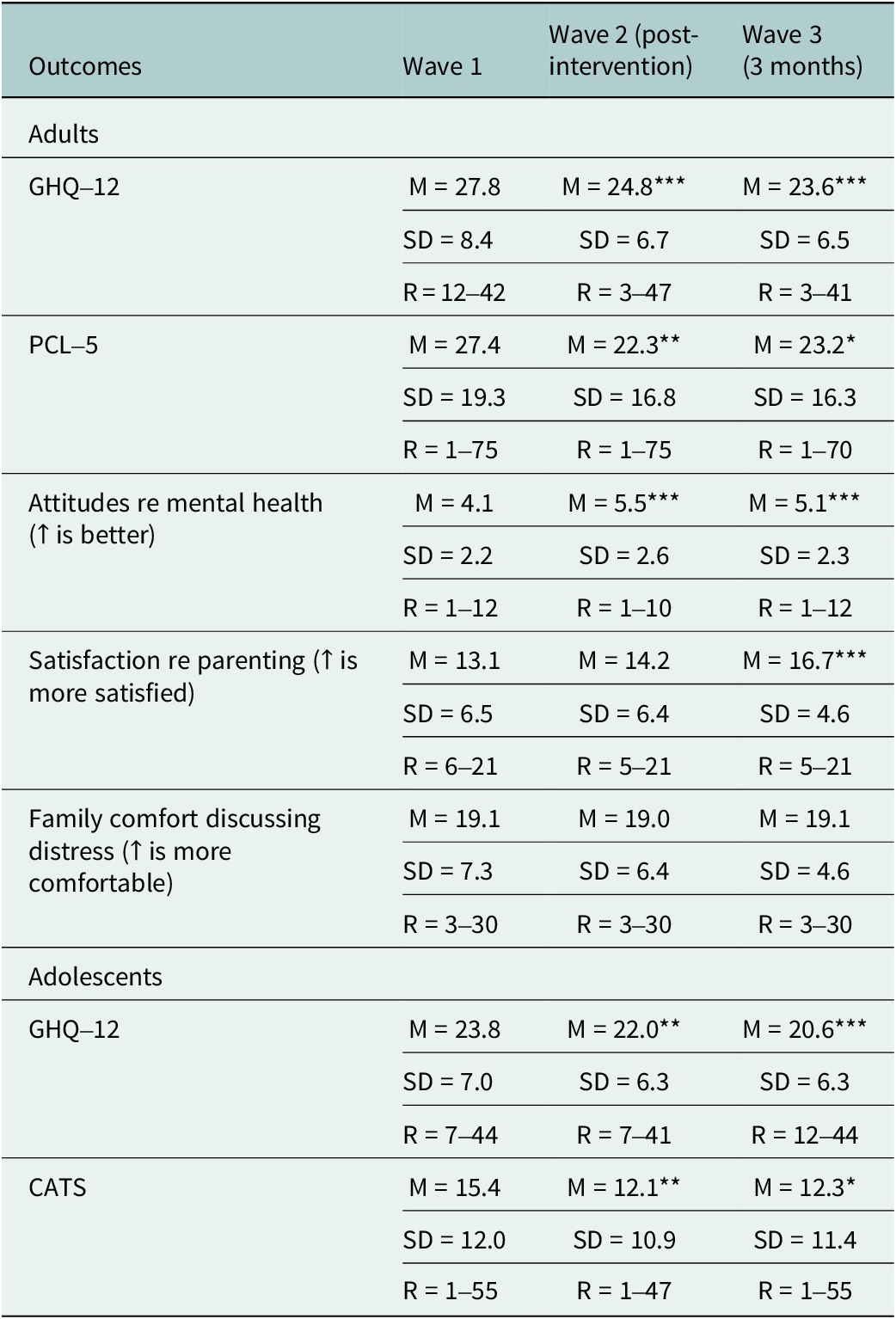
Among adults, GHQ-12 decreased from 27.8 (Wave 1) to 24.8 (Wave 2) to 23.6 (Wave 3), and PTSD decreased from 27.3 (Wave 1) to 22.3 (Wave 2) to 23.2 (Wave 3) (see Table 3). Among adults, a linear mixed-effects model with the dependent variable of GHQ and fixed effects of time of measurement was significant for Wave 1 (p < .0001) and Wave 2 (p < .0180) (see Table 4). A linear mixed-effects model with the dependent variable of PTSD and fixed effects of time of measurement was significant for Wave 1 (p < .0053).
Changes in symptoms and mediators for adults

Note: M = mean. SD = standard deviation R = range.
*p < 0.05, **p < 0.01, and ***p < 0.001.
Linear mixed-effects models for GHQ-12 and PTSD for adults and adolescents

Among adolescents, GHQ-12 decreased from 23.8 (Wave 1) to 22.2 (Wave 2) to 20.6 (Wave 3), and PTSD decreased from 15.5 (Wave 1) to 12.2 (Wave 2) to 12.3 (Wave 3) (see Table 3). Among adolescents, a linear mixed-effects model with the dependent variable of GHQ and fixed effects of time of measurement was significant for Wave 1 (p < .0001). A linear mixed-effects model with the dependent variable of PTSD and fixed effects of time of measurement was significant for Wave 1 (p < .0116)(see Table 4).
Changes in family processes
Among adults, attitudes regarding mental health improved from 4.0 (Wave 1) to 4.9 (Wave 2) to 4.6 (Wave 3). Satisfaction with parenting improved from 13.1 (Wave 1) to 14.2 (Wave 2) to 16.7 (Wave 3). There was no significant change in family comfort discussing distress from Waves 1 to Wave 2 and Wave 3. Among adults, linear mixed-effects models with the fixed effect of time of measurement were significant for satisfaction with parenting (p < .0079 at Wave 1 and p < .0296 at Wave 2, for help-seeking (p < .0001 at Wave 1 and p < .0001 at Wave 2), and for family comfort discussing distress (p < .0410 at Wave 1).
Among adolescents, linear mixed-effects models with the fixed effect of time of measurement were significant for attitudes regarding mental health (p < .0003 at Wave 1) and parenting satisfaction (p < .0001 at Wave 1 and Wave 2), and non-significant for help-seeking (p < .0776 at Wave 2).
Correlations
Among adults, GHQ-12 was significantly correlated with PTSD (r = .64; p < .0001), attitudes regarding mental health (r = −.14; p < .03), family comfort discussing distress (r = −.38; p < .0001) and satisfaction with parenting (r = .17; p < .001). PTSD was also significantly correlated with family comfort discussing distress (r = −.32; p < .0001) and satisfaction with parenting (r = .023; p < .005).
Among adolescents, GHQ-12 was significantly correlated with PTSD (r = .73; p < .0001) and family comfort discussing distress (r = −.44; p < .0001). PTSD was also significantly correlated with family comfort discussing distress (r = −.31; p < .0015).
Mediation analysis of family process variables
Among adults and adolescents, several family process variables were found to mediate the LIFS outcomes (See Table 5). Among adults, higher family comfort discussing distress mediated decreases in both GHQ-12 and PTSD (Beta = −.2108 with p-value = 0.0051 and Beta = −.1728 with p-value 0.046, respectively). Among adolescents, higher family comfort discussing distress also mediated decreases in PTSD (Beta = −.3497 with p-value = .0401), where most of the effect is due to Wave1. Additionally, among adolescents, improved attitudes regarding mental health mediated decreases in GHQ-12 (Beta = −.6496 with p-value = .0118). On the other hand, among adolescents, increased help-seeking mediated increases in PTSD and GHQ-12 (Beta = 2.2150 with p-value = .0041 and Beta = 1.1824 with p-value = 0.0006, respectively).
Mediation effects: Family processes predicting mental health outcomes

Qualitative findings
Intervention feasibility and acceptability
Overall, the facilitators described the LIFS program as easy to implement. Through training and ongoing support, the facilitators reported a good understanding of the intervention concepts and components and over time felt increasingly confident delivering the sessions. They identified the benefits of ongoing support and supervision, especially when challenging situations arose with families.
The facilitators also indicated the intervention was well-received by families and addressed important real-world challenges. They shared that access to childcare for young children was an important resource for families which enabled mothers and adolescents to more readily attend.
The facilitators and participants also identified feasibility challenges related to male attendance, youth participation, stigma, misinformation and guardedness between families.
Father’s attendance
Overall, it was challenging to consistently engage fathers in the LIFS intervention. The facilitators reported that when fathers did not attend a session, the elder sons or male adolescents also would not attend.
Youth participation
Some adolescents said at times they were bored during joint sessions with adults and the content often felt more relevant to adults than to youth. As one teen shared, “It was boring when adults were discussing their things.” Another added, “We need more topics that are relevant to us like how to cope with bullying.”
Stigma and misinformation
One family which declined to participate in LIFS reported concerns about fear of deportation. Other respondents reported that rumors circulated within the community said that participating in family meetings might put them at risk for deportation.
Guardedness between families
Pre-existing relationships between some families created discomfort around sharing personal issues due to confidentiality concerns. As one facilitator noted, “When families know each other, they refrain from sharing problems, worrying about confidentiality.” One participant not participating in all the sessions added, “In future interventions, it might be better to include families that don’t know one another.”
Individual and family benefits
Parents, youth and facilitators described individual and family benefits resulting from participation in the LIFS intervention, especially increased emotional regulation, knowledge of mental health, mental health help-seeking and family communication. These findings were identified among families who attended the program both fully and partially.
Emotional regulation
The LIFS program teaches emotional regulation skills for coping with personal stress and family problems resulting from trauma and displacement. Adult and adolescent participants recalled these skills during interviews, particularly slow breathing, muscle relaxation skills and grounding skills, and described that they continued to use these skills after the intervention concluded. As one participant indicated, “I use the breathing exercise and the one that relaxes the muscles when under stress.” One LIFS facilitator described a mother who integrated new grounding skills with regular walks to the beach. Part of the LIFS trial coincided with the COVID-19 lockdown, and many participants described finding the new skills particularly useful for coping with the stress and uncertainty accompanying the pandemic. As one participant explained, “During lockdown, we were not able to go out. It was difficult and sometimes when [I was] worried. I used slow breathing.” Another mother described how she continued to draw upon emotional regulation strategies learned in the group to defuse frustration and manage conflict with her children. She said, “Before attending the session, I would argue with my daughter. Now, when disagreements occur, I leave the house and talk after I calm down.”
Knowledge of mental health
Participants described increased knowledge of mental health as a result of the LIFS intervention and the benefits of being able to name feelings and experiences. As one mother expressed, “When depression was explained, I understood what I have felt over time.” Families described that new knowledge of mental health also improved understanding of their family members and enabled them to support themselves and their loved ones better. As described by one LIFS facilitator, “In one family, the sons improved their communication with their father after understanding that he was depressed. They took small steps to exercise and to get out of the house [to improve his mental health]. One woman, for example, had a husband who was ill from cancer. She described coming to understand how his illness had impacted each of them emotionally.
Family communication
Participants described different communication practices following the LIFS intervention that they perceived as strengthening their family relationships, including improved listening skills, and more open discussion of needs and wants. One mother described positive changes she saw in the relationship between her husband and her daughter. She said, “My husband, before the training [referring to LIFS], after work, he did not talk to his daughter. Now, after the training, he does.” Another mother, for example, observed parenting changes in her husband and described him as “talking with less anger” with their children.
Mental health help-seeking
Participants reported seeking out additional mental health support for themselves and family members due to increased knowledge of mental health and diminished stigma. One mother, for example, described coming to recognize her struggles as symptoms of depression following imprisonment in Syria and seeking additional professional help the group ended. Several participants also described accessing mental health services for their children. One participant developed a better understanding of the challenges that her son was facing and reached out for additional help. As she said, “I realized that my son is depressed. He does not go out, and his friends take advantage of him. I got the phone number of a psychiatrist.”
Discussion
This study developed and tested a low intensity family support model for refugee families in Istanbul, Türkiye. Here, we reflect on the findings and implications for future research.
First, we found the collaborative and participatory approach a useful and practical way to develop a low intensity intervention well-suited to the needs of families and the community context. Key components of this approach included convening a diverse family support design team including refugee family members, meeting over 6 months with both in person and virtual meetings, leveraging previous ethnographic and qualitative research conducted by the study team related to key war and displacement stressors and coping mechanisms (Arenliu et al., Reference Arenliu, Bertelsen, Saad, Abdulaziz and Weine2020). We also drew on previous research conducted by our study team and other research conducted with Syrian refugee families and incorporated strategies for managing stress, anxiety and trauma symptoms that were found to be acceptable and effective (Vastine et al., Reference Vastine, Gittelsohn, Ethelbah, Anliker and Caballero2005; Sijbrandij et al., Reference Sijbrandij, Farooq, Bryant, Dawson, Hamdani, Chiumento, Minhas, Saeed, Rahman and Van Ommeren2015; Weine et al., Reference Weine, Arënliu, Görmez, Lagenecker and Demirtas2021).
The LIFS facilitators and participants found the intervention to be feasible and acceptable. This was indicated by the team’s ability to train the facilitators to successfully implement LIFS, the high attendance and retention rates in the intervention and the high satisfaction rates among the participants. Facilitators found the intervention feasible to implement and reported growing their facilitation skills with time, practice and supervision by study team members experienced in mental health interventions for refugees. Facilitators found conducting a practice group with families to be especially useful and important before launching the trial. This method follows current thinking and best practice approaches to increase non-specialist competency by integrating role plays and simulation into training activities (Kohrt et al., Reference Kohrt, Schafer, Willhoite, van’t Hof, Pedersen, Watts, Ottman, Carswell and van Ommeren2020). We partnered with several community-based organizations who delivered health and social services to refugees. Long-term, LIFS training and supervision could be integrated into these organizations.
The high degree of engagement and retention is notable and significant, particularly compared to the low intervention uptake and high drop-out commonly observed in mental health research (Fernández Capriles et al., Reference Fernández Capriles, Armijos, Angulo, Schojan, Wainberg, Bonz, Tol and Greene2024). We took deliberate steps to reduce common participation barriers by hosting the sessions at convenient locations, offering on-site childcare for younger children and by developing scripts for recruiting families. Our success in engaging families in the intervention also reflects the strengths of our local partners and their relationships with the families and the relevance of a family-based approach for Syrian refugee families. In the future, these partners could incorporate the LIFS intervention into their suite of supportive services offered to refugee families. Future research can build on these initial findings and have more of a focus on assessing implementation in community-based organizations, including evaluating barriers and facilitators to implementation and designing and testing implementation strategies that can promote long-term sustainment (Curran et al., Reference Curran, Landes, McBain, Pyne, Smith, Fernandez, Chambers and Mittman2022).
Compared to women, we encountered challenges engaging fathers in the LIFS intervention. With few exceptions, engaging fathers in family-based interventions is consistently indicated as a challenge in work with refugee communities (Bunn et al., Reference Bunn, Zolman, Smith, Khanna, Hanneke, Betancourt and Weine2022). In this study, challenges were due to norms related to masculinity, conflicting work schedules and work burdens for men and cultural expectations related to female responsibility for the household and children. To engage fathers in the intervention even if they could not attend, we had their adolescents go over the meeting content with the fathers including watching videos of the exercises such as slow breathing. These strategies were an innovative way to overcome well-known barriers to father participation and consistent with an increased focus on promoting father engagement in global mental health interventions (Pfitzner et al., Reference Pfitzner, Humphreys and Hegarty2020). Other family-based mental health research in LMICs have incorporated motivational interviewing strategies (Panter-Brick et al., Reference Panter-Brick, Burgess, Eggerman, Mcallister, Pruett and Leckman2014), tailored recruitment messaging specific to fathers (Miller et al., Reference Miller, Ghalayini, Arnous, Tossyeh, Chen, van den Broek, Koppenol-Gonzalez, Saade and Jordans2020; Giusto et al., Reference Giusto, Ayuku and Puffer2022) and included topics of high interest to fathers such as employment and job seeking (Brown et al., Reference Brown, Yousef, Bleile, Mansour, Barrett, Ghatasheh, Puffer, Mansour, Hayef, Kurdi, Ali, Tol, El-Khani, Calam, Abu Hassan and Jordans2024).
Another key study finding was significant and positive changes in psychological distress and PTSD over time post-intervention. These are very encouraging findings, particularly given the brief nature of the intervention and the utilization of non-specialist providers. These findings are similar to other studies of PM+, which showed significant improvements in depression, anxiety, PTSD and self-identified problems compared to care as usual (de Graaf et al., Reference de Graaff, Cuijpers, McDaid, Park, Woodward, Bryant, Fuhr, Kieft, Minkenberg and Sijbrandij2020). Our findings differ, however, from a study of group-based PM+ in eastern Nepal, which modestly reduced psychological distress and depression symptoms at 3 months post treatment (PHQ-9 mean difference = −1.0, 95% CI: −1.8, −0.1, p = 0.028) but did not significantly affect PTSD (PTSD Check List [PCL] mean difference = −1.0, 95% CI: −2.2, 0.1, p = 0.084) (Jordans et al., Reference Jordans, Kohrt, Sangraula, Turner, Wang, Shrestha and van Ommeren2021). The findings are notable and distinct compared to other family-based interventions tested with refugee families. These more commonly result in positive changes to parenting or other domains of family functioning but rarely have seen significant changes in mental health outcomes for both adults and adolescents (Bunn et al., Reference Bunn, Zolman, Smith, Khanna, Hanneke, Betancourt and Weine2022; Mak and Wieling, Reference Mak and Wieling2022). Thus, the incorporation of PM+ stress reduction strategies to address psychological distress and PTSD appears to be a significant advancement over the initial CAFES model (Weine et al. Reference Weine, Feetham, Kulauzovic, Knafl, Besic, Klebic, Mujagic, Muzurovic, Spahovic and Pavkovic2006, Reference Weine, Kulauzovic, Klebic, Besic, Mujagic, Muzurovic, Spahovic, Sclove, Pavkovic, Feetham and Rolland2008), which was focused on prevention and service access rather than psychological distress outcomes and warrants further investigation as a low intensity model with multi-level benefits.
We identified several family processes variables that significantly mediated the effect of the LIFS intervention on mental health over time for adults and adolescents. Family comfort discussing distress was a significant mediator of decreases in both psychological distress among adults and PTSD among adults and adolescents. Help-seeking was also a significant mediator of increases in both psychological distress and PTSD among adolescents. Attitudes regarding mental health was a significant mediator of decreases in psychological distress among adults. These findings indicate the possible value of intervention components that target family comfort discussing distress, help-seeking practices and attitudes regarding mental health and expand theoretical understanding of the active ingredients and mechanisms of change that are operating in family-based models (Bosqui and Marshoud, Reference Bosqui and Marshoud2018; Whitson and Kaufman Reference Whitson and Kaufman2017).
Qualitative findings both highlighted and expanded upon the quantitative findings regarding the benefits of the LIFS model, including improved emotional regulation capacities, knowledge of mental health, mental health help-seeking, family communication and family interactions. Our quantitative findings of family processes mediating psychological distress and PTSD outcomes were consistent with these qualitative findings. Educational components within refugee interventions can help foster positive mental health attitudes and proactive help-seeking by informing them on where to get help and helping them reduce perceived barriers to mental health help-seeking (Byrow et al. Reference Byrow, Pajak, McMahon, Rajouria and Nickerson2019).
Qualitative findings also identified feasibility challenges that can inform future adaptations to the LIFS model and implementation strategies. In this study, youth participation was sometimes limited in whole group discussion indicating a need to augment activities for adolescents.
Limitations
The study design also had several limitations that warrant consideration. One important limitation was the lack of a control group which limits our ability to draw conclusions if the observed changes were due to the LIFS intervention or other factors. In the case of refugee families, some of the improvements may be due to the passage of time or related to other supportive services they received in Turkey. This seems unlikely, particularly for the family-level outcomes observed. However, we are not able to rule this out with the current study design. The study was also limited by lacking blind assessors (Boutron et al., Reference Boutron, Guittet, Estellat, Moher, Hróbjartsson and Ravaud2007), given that the facilitators conducted the assessments. This introduces potential bias whereby facilitators’ beliefs about the LIFS intervention and their investment in demonstrating positive benefits could have influenced data collection. Future studies should use independent, blinded assessors; when not feasible, non-facilitator research staff can conduct standardized interviews using oral/low-literacy formats (e.g., interviewer-administered questionnaires with visual aids) to reduce bias. Additionally, the post-LIFS qualitative interviews were conducted in a family format, which may have limited the expression of individual or opposing views. Following on the promising findings from this trial, additional research using a randomized controlled trial design (with blind assessment), and long-term follow-up would help to overcome these limitations and further establish the evidence base for LIFS.
Conclusion
This research developed and evaluated a low intensity family support intervention and preliminary outcome data indicated significant reductions in psychological distress and PTSD symptoms and improved family functioning. These findings indicate the potential value of multi-family group interventions in other types of humanitarian emergencies in low resource settings. This LIFS intervention can be provided by community workers and contribute to task sharing in humanitarian emergencies. LIFS should be explored and tested in the aftermath of other emergencies, such as natural disasters, where LIFS services can emphasize rebuilding disrupted family processes. Of course, further research is needed to examine and validate the effectiveness and scale-up of LIFS following disasters and their suitability for particular humanitarian emergency settings.
Open peer review
To view the open peer review materials for this article, please visit http://doi.org/10.1017/gmh.2026.10166.
Data availability statement
The data that support the findings of this study are available from the corresponding author, SW, upon reasonable request.
Acknowledgements
We sincerely thank our field coordinator, Bilal Makhlouta, for his dedication and efforts. Special thanks go to the Turkish Red Crescent Psychosocial Team and Esra Bakir for their support in implementing the sessions. We are also grateful to the community-based organizations Insan for Psychosocial Support, Yusra Community Center, Hiraeth Dernek, Al Noor Organization, Can Association, and the facilitators for their contributions to successfully implementing the sessions. A special thanks to Dr. Alperen Bikmazer for his valuable contributions.
Author contribution
Conceptualization: S.W.; Data Curation: S.W.; Formal Analysis: S.W., A.A., V.G., M.B.; Funding Acquisition: S.W.; Investigation: S.W., A.A., V.G.; Methodology: S.W.; Project Administration: S.W., A.A., C.P.S.; Statistical Analysis: S.W., H.D.; Supervision: S.W.; Writing: H.D.; Writing – Original Draft Preparation: S.W., A.A., M.B.; Writing – Review and Editing: S.W., M.B., C.P.S.
Financial support
This work was supported by the National Institute of Mental Health (grant number R21MH117759, K01MH128524-01A1).
Competing interests
The authors declare none.
Ethics statement
This study was reviewed and approved by the University of Illinois Chicago, Institutional Review Board (#IRB00000116) study #2018–0547. This study was also reviewed and approved by the local review board at the Medeniyet University in Istanbul, Türkiye.

 Open access


Comments
No accompanying comment.