Ottoman labor history and historiography is entering a new phase characterized by studies that focus on time periods that go beyond the “classical” labor history period of the nineteenth and twentieth centuries, when in various parts of the world industrialization took off and the number of wage workers increased. Recent publications go further back in time and also look at non-industrialized parts of the world. In these studies, not only wage work but also slavery, corvée labor, and other forms of forced labor as well as previously understudied forms of work, such as household and agricultural labor, are included. Finally, a recent trend has been to look at specific regions, covering not only towns but also provinces following them over time.Footnote 1 This article wants to add to this historiography by looking at tax registers to see how they may be used to reconstruct labor relations, varying from slave labor to self-employment, as formulated by the Global Collaboratory on the History of Labour Relations, taking the province of Bursa, its towns, and surrounding villages in the late-fifteenth and sixteenth centuries as a case study.Footnote 2
The Ottoman government periodically organized tax registers, or tahrirs, especially in the fifteenth and sixteenth centuries, to receive information on taxpaying subjects and taxable resources. Tahrir defterleri, or survey registers, contain data on three types of taxes: personal taxes levied on households or people; production taxes on various farming and manufacturing activities; and trade taxes on the goods and services brought to the market. Many of these tahrirs are well preserved and cover an area ranging from Anatolia and the Balkans to Syria and Palestine in the south, Georgia in the east, and Hungary in the north.Footnote 3 These tax registers are rich and important serial sources for historical research, and the study of these registers is an important sub-field in Ottoman historiography.Footnote 4 So far, the tahrirs have been used mainly for demographic and local studies, though several scholars have also used them for more quantitative economic and social research.Footnote 5 By way of experiment, we propose to use the tahrirs of one particular province to determine its labor relations.
After a brief motivation for the selection of Bursa as case study, we explain our methodology and present our interpretation of the data from the registers of 1487, 1521, and 1573, both for the city of Bursa as well as for the villages in Bursa province. We place the developments in labor relations we signal within the socio- and economic context of Bursa and give possible explanations for the shifts we notice. Finally, based on the literature, we try to sketch the developments of labor relations in Bursa from within the period from the seventeenth century to the beginning of the twentieth century, as far as existing studies allow us. In the concluding remarks, we will review the usability of tax registers as a source to reconstruct labor relations, resume their development in the longue durée in Bursa, and discuss how representative these developments are for the rest of Anatolia and the Ottoman Empire.
Selection of case studies
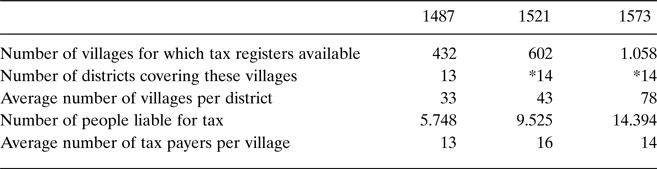
Because of the excellent quality of the data, previous attempts to process them, and because of the extensive literature available for this purpose, we have selected the province of Hudavendigar (Bursa) for the years 1487, 1521, and 1573.Footnote 6 These tahrirs contain data for ten administrative towns, out of which we selected Bursa. Fortunately, these sources enable us also to study the countryside whereby far the majority of Ottoman subjects lived. Over time, the tahrirs now still extant cover more villages and more tax payers (see Table 1). The average numbers of taxpayers per village indicate that in the years between 1487 and 1521 wealth, and therefore possibly also population figures may have increased, whereas in the half century thereafter the growth of tax payers per village decreased.Footnote 7
Rural tax data Bursa province 1487, 1521, and 1573

* Including the District of rural Bursa
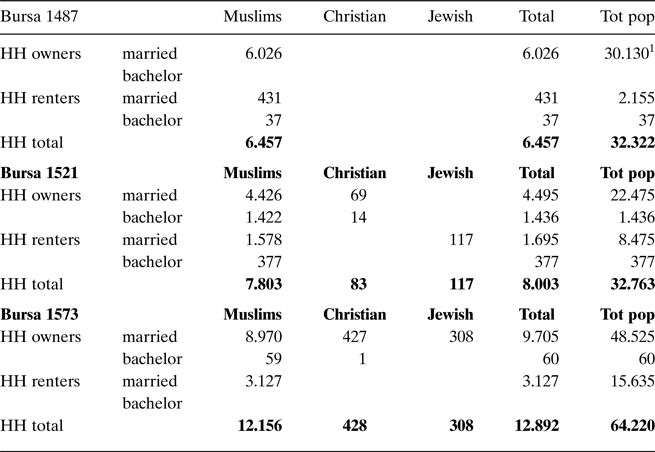
The households listed in the tahrirs are subdivided by religious background: Muslim, Christian, Jewish, and for the villages, separate entries are made for landless heads of households (married men) and bachelor landless men, subdivided by the same religious categories. The landholding households are subdivided by the size of the farm: workable by one pair of oxen needed to pull one plow (çift), by a half çift, or less than a half çift.Footnote 8 For the town of Bursa—but not for the other nine towns—a distinction was also made between households and bachelors (again subdivided by religious background) that owned property (usually a house) or rented property.
Methodological considerations
Before we continue explaining how we interpreted these data to determine labor relations, we first have to provide some qualifications for these sources.
First—as is the case with tax registers everywhere else in the world—tax surveys do not include everybody, they only include the heads of households, not the other members, and they do not even include all heads of households. In particular, the military and other state servants, who were exempted from taxation (the so-called askeri, who benefitted from its proceeds), migratory people and slaves are not registered in these surveys.Footnote 9 The well-known scholar Ömer Lüfti Barkan supposes that in the sixteenth century, ten percent of the population was not subjected to tax, and therefore has to be added to the number of the enumerated households, after which the total has to be multiplied by an estimated average of five persons per household. Other scholars hold that the missing figures are higher.Footnote 10 Since various scholars suggest various percentages of a tax exempt population, this also implies various multipliers to calculate the total population based on the tahrirs. For the villages in the countryside, population estimates sometimes are even more distorted since widowed heads of households are not systematically included in the tax registers. The various percentages of tax exempt in literature also seem to point to a growth of these groups. For Bursa Hülya Canbakal and Alpay Filiztekin show that a growing part of the Bursa population belongs to this group of tax exempt, a suggestion we followed in our calculations.Footnote 11
Secondly, the tax burden was not everywhere the same, which poses problems for representation. Whereas in the sixteenth century the yoke tax (resm-i ҫift) was 50 akçe in Malatya and Jerusalem, and 40 in Antep, it was only 33 in Bursa. On the other hand, the bachelor tax (resm-i mücerred) was higher in Bursa than in the other towns mentioned.Footnote 12 For the attribution of labor relations, this is not a problem, but this trend makes it difficult to calculate income and property levels. For that reason, we have refrained from using this data for an analysis of actual tax sums paid.
Thirdly, it is not always obvious how to translate tax categories into the categories of the taxonomy of labor relations as developed by the Global Collaboratory on the History of Labor Relations and presented and explained in the general introduction to this special section.Footnote 13 Sometimes this may be done in a rather straightforward way, as, e.g., a carpenter paying low taxes most probably may be interpreted as a small independent producer for the market. Apart from the universal problem of how to distinguish between wage earners, small independent producers, and employers, a particular difficulty arises in how to distinguish between free and unfree labor in the Ottoman context. This pertains both to the Janissaries and the slaves. In the sixteenth century, recruitment methods of the elite corps of the Janissaries changed and “janissaries passed progressively from forced recruits to volunteers,” but before the law they remained slaves, although “there was not a more honorable position than to be slave of the sultan” and they were paid well in silver by the treasury in regular quarterly instalments, plus extraordinary grants and apart from their income out of craft and commercial activities.Footnote 14 We have not found how many infantry janissaries or other soldiers lived at the Bursa fortress and barracks during the centuries under discussion, so we have to apply the rough percentages of tax exempt subjects, i.e.—as explained at length below—12 percent in the first two cross sections and 15 percent in the last one. As to their labor relation, we consider the Janissaries—notwithstanding their special legal status—as state employees (labor relation 18 in our taxonomy).
Finally, the growing numbers of taxpayers, transmitted through the still extant registers for the Bursa countryside, raise questions as to the comparability of the three sets. This is a question we cannot answer, but we trust that the large number of cases (villages, households, bachelors, etc.), even for the earliest cross-section, add enough empirical solidity to our sketch of main developments in rural labor relations.
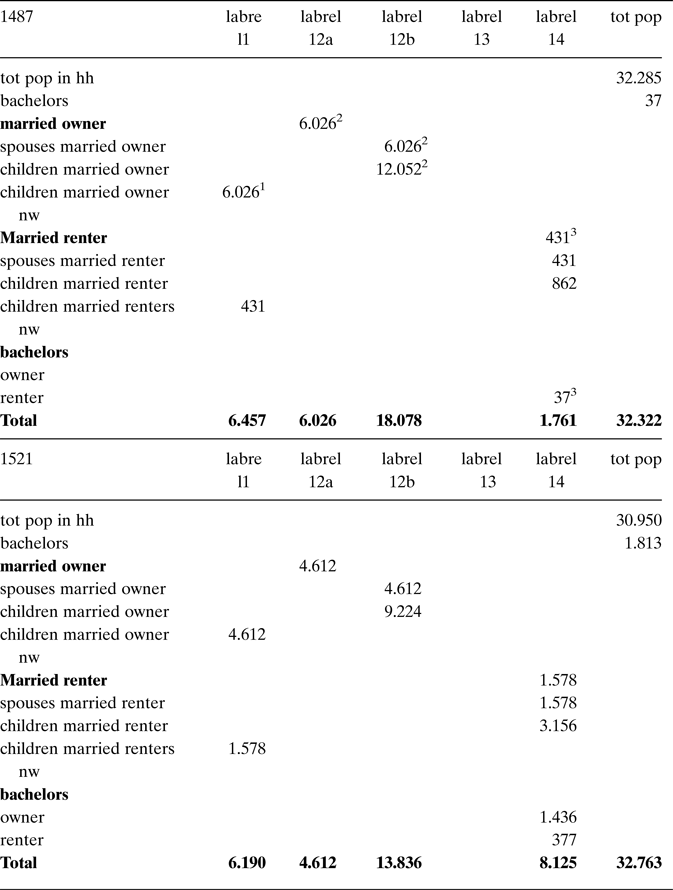
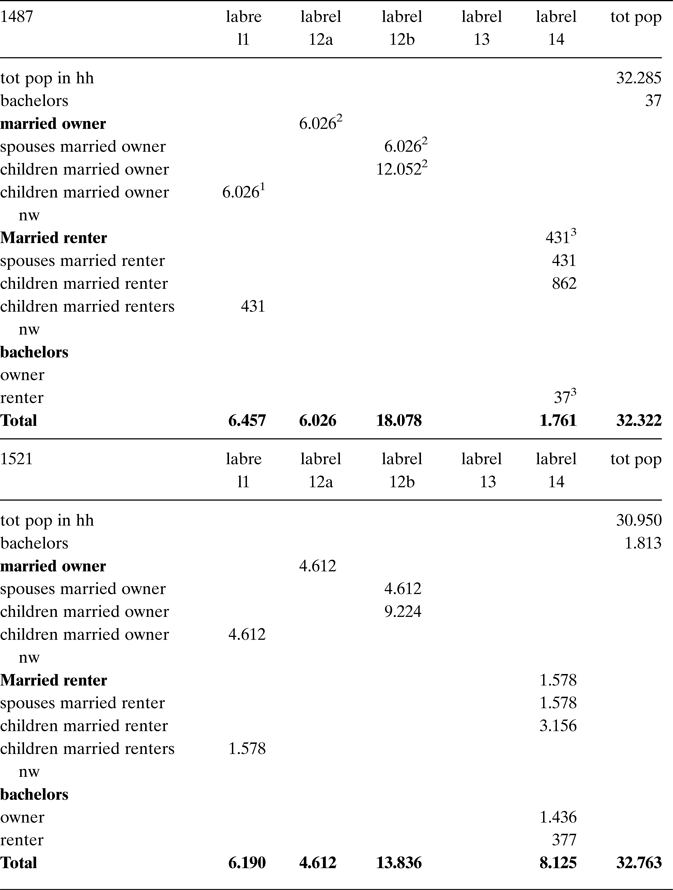
Keeping all these restrictions in mind, we will now explain how we applied our taxonomy of labor relations on the data found in the tahrirs. We departed from the assumption that every household on average would have counted five members. We are fully aware of the fact that this is a debatable assumption as household size may have varied over time and space. Still, since five has become the more or less standard multiplier, we decided to follow the convention started by Barkan.Footnote 15 We also supposed that an average household would consist of man and wife and three children, and that two of the three children would work.Footnote 16 Consequently, for each household, one member, likely a child, is considered to be unable to work and therefore is assigned labrel 1. Departing from a lower multiplier would lead to different outcomes in labor relations: if families were to be smaller, the number of children in dependent positions labrel 1, 4b (kin producers for the household), and 12b (kin producers for the market) would be smaller.
More in particular for the towns of Bursa, we take the rich information on real estate ownership into consideration. In the tahrirs, owners (both heads of households and bachelors) were subdivided by religion, whereas renters were not. Here, we assume that house owners were self-employed (labrel 12a), running a small firm or shop, together with their dependents (labrel 12b). However, we considered the bachelors in the town of Bursa as living on their own, assuming that town houses were generally too small to house large families. These urban bachelors we classify as wage workers (labrel 14). Household renters were considered to be wage workers, too, just like their dependents (labrel 14).
Labor relations for the tax payers of the town of Bursa and their dependents, 1487–1573
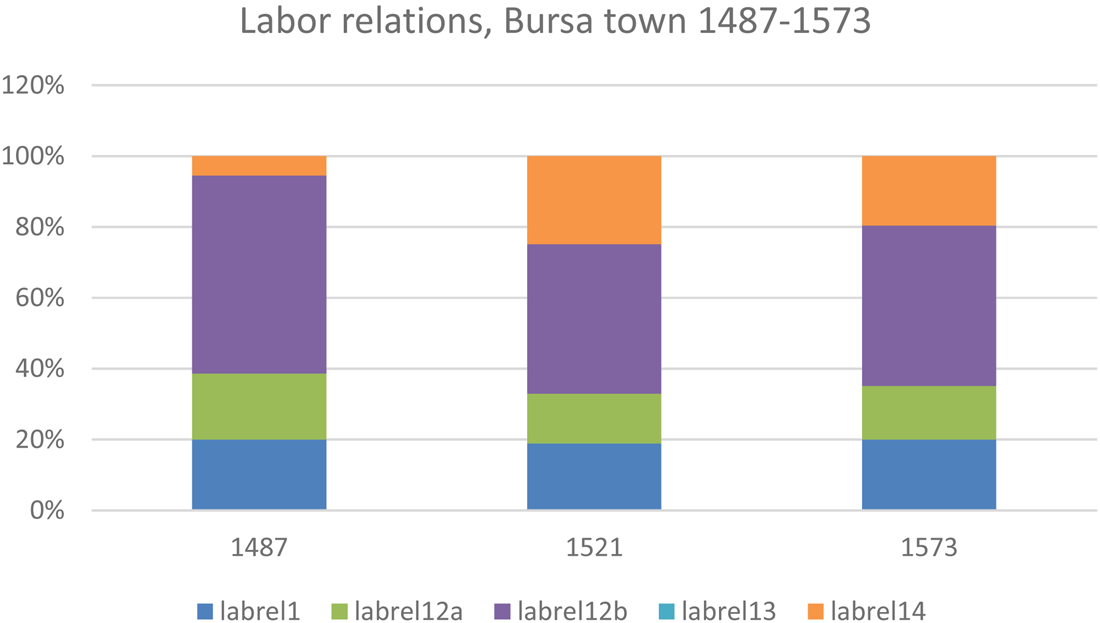
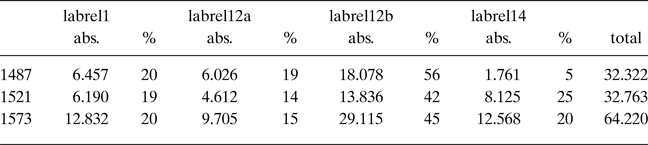
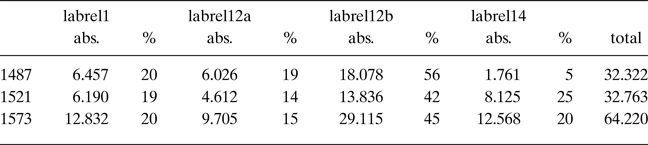
Taking all methodological considerations into account and applying all these rules to the town of Bursa in the sixteenth century, we now reach the following results for those registered in the tahrirs and their household members (see Table 2 and Figure 1).
Labor relations for tax payers and their family members in the town of Bursa 1487, 1521, and 1573 (percentages)

Labor relations for tax payers and their family members in the town of Bursa 1487, 1521, and 1573 (absolute and relative figures)
For the calculations, see Appendix 1, Table 2.
According to our attribution of labor relations to tax payers and their family members, a shift seems to take place between 1487 and 1521, characterized by a decrease in the number of self-employed people and the increase in the share of wage workers. This is caused by an increase in the number of renter households as part of the total number of households: in 1487, 7 percent of all households were headed by renters; in 1521, this percentage had increased to 21 percent; and in 1573, it was 26 percent. This went hand in hand with a decrease of the number of owner households. Perhaps this could be explained by the crisis in silk manufacturing and trading as a consequence of the war between the Ottoman Empire and Persia. From 1512 to 1520, the silk trade with Persia was interrupted and tax income from the silk industry also decreased dramatically, as we will see in the next section.Footnote 17
Labor relations for all inhabitants of the town of Bursa, 1487–1573
As stated above, the tahrirs do not contain data on certain groups and, especially for the town, the lack of data on the tax exempt askeri and of the slaves distorts the general picture of labor relations. To be able to complement the data and possibly extend the data in time, we first need to know more about the socio-economic development of Bursa.
Bursa was an important provincial town, once the first capital of the nascent Ottoman state (1326–1402) owing much of its wealth to the trade in and production of silk cloth (initially, all raw silk was imported by caravans from Persia). In return for the silk that was exported, woolen cloth was imported from Italy, and from 1400 until 1630 “Bursa was the international market for raw silk from Iran and also the emporium of western fine woolen cloth for the whole of Asia.”Footnote 18 Of course many more products, including Indian spices like pepper, passed through this important gateway between East and West. Finally, Bursa was an important administrative and scholarly center, providing lots of opportunities for civil servants, bureaucrats, scribes, educational teachers and students, and all those serving them, including the seventy-five coffee houses around 1650.Footnote 19 Since they were exempt from paying taxes, they do not appear in the tahrirs, and in an administrative center like Bursa they were well represented.
Regarding the organization of the silk industry, we know that around 1500, some 1,000 looms in the home industry processed 36 tons of raw silk. We should not imagine all loom owners as independent weavers, as big weavers owned thirty, forty, or sixty looms, so a sizeable part of the weavers must have been working as journeymen for their masters or—outside the guilds—for merchants. These wage workers were provided with raw materials by the merchants and worked from home in the town or in the villages for a wage per piece or measure.Footnote 20 The Bursa textile industry had a substantive female labor participation, as women worked for merchants by bleaching and spinning silk. In 1678, 150 out of 300 silk-spinning wheels were owned by women (according to our classification, labrel 12a) or operated by waged women (labrel 14). We also encounter women working at home and selling the product in public and even on in special “women's market.” They could be active as well in other crafts, as tradeswomen, and the rich among them as providers of loans.Footnote 21
Next to wage workers, when profits were high in the fifteenth and later sixteenth century textile industry, manufacturers used to engage slave labor to a considerable extent.Footnote 22 Most of the slaves were war captives, and some had been trained before as textile workers at home in Greece, the Balkans, Hungary, and Russia. Most of them, however, had peasant or soldier backgrounds and had to be trained intensively in order to become skilled silk workers.Footnote 23 As these skilled slaves were often promised manumission after ten years, Surayia Faroqhi writes that they “can be classed somewhere between indentured labour and ‘ordinary’ slavery.”Footnote 24 For clarity's sake, we gave these slaves labrel 17 and tried to make an estimated guess about their proportion of the total population. Next to slaves working in manufacture and trade, we also find domestic slaves in the households of the better-off.Footnote 25
Taking into account that Bursa was an important scholarly and administrative city with a growing population and—at least until 1550—a booming silk industry that employed slaves, we tried to add data on the askeri and the slaves to the data deducted from the tahrirs in the following way. We assume that the percentage of tax exempt (including askeri but perhaps also those unable to work) in Bursa between 1487 and 1521 was 12 percent. This is in accordance with the number of askeri as presented by Canbakal and Filiztekin, who found 15 percent askeri in their sources for the fifteenth and sixteenth century, and 25 percent for the seventeenth century.Footnote 26 This increase has to do with migration to the city, an increasing bureaucratization of the administration of the Ottoman Empire, and thus a growing number of civil servants.Footnote 27 So for the years 1487 and 1521 we used the 12 percent askeri ratio, for 1573 the 15 percent askeri ratio.
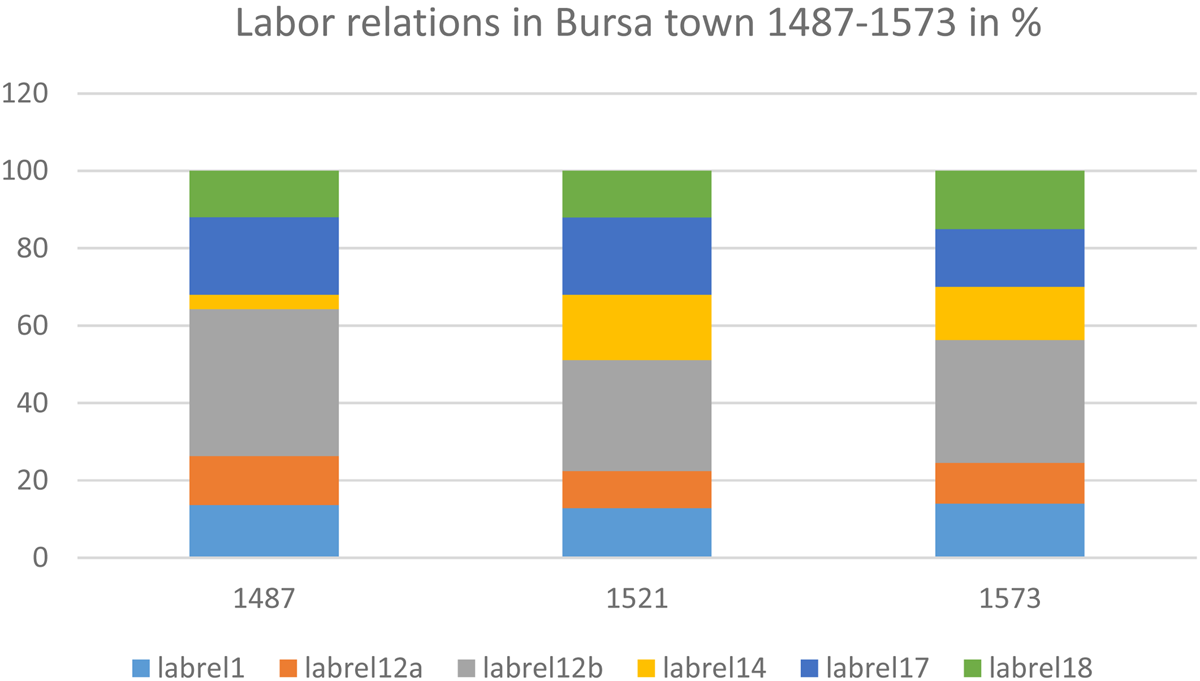
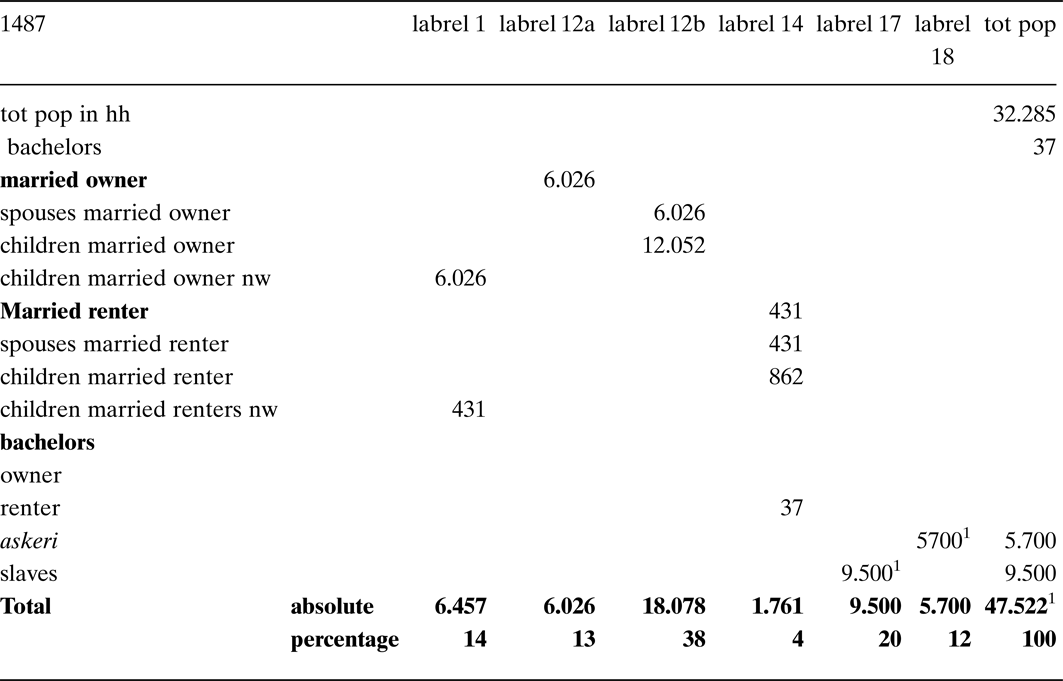
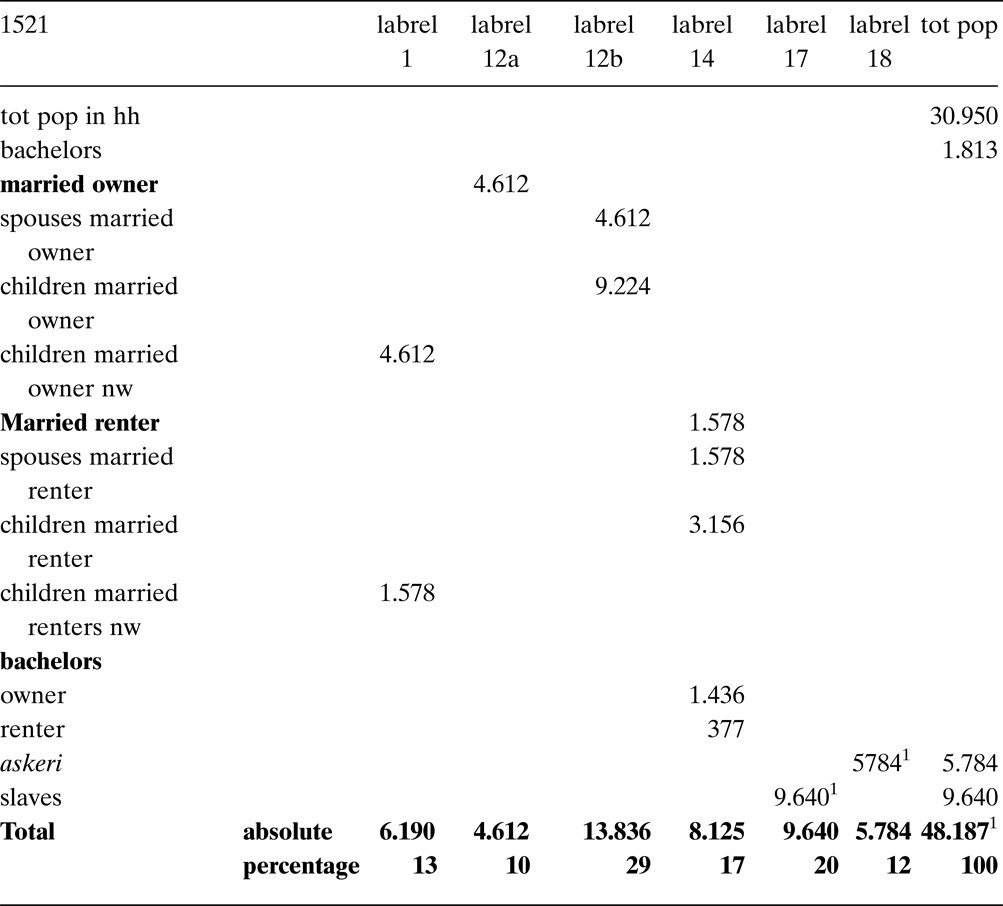
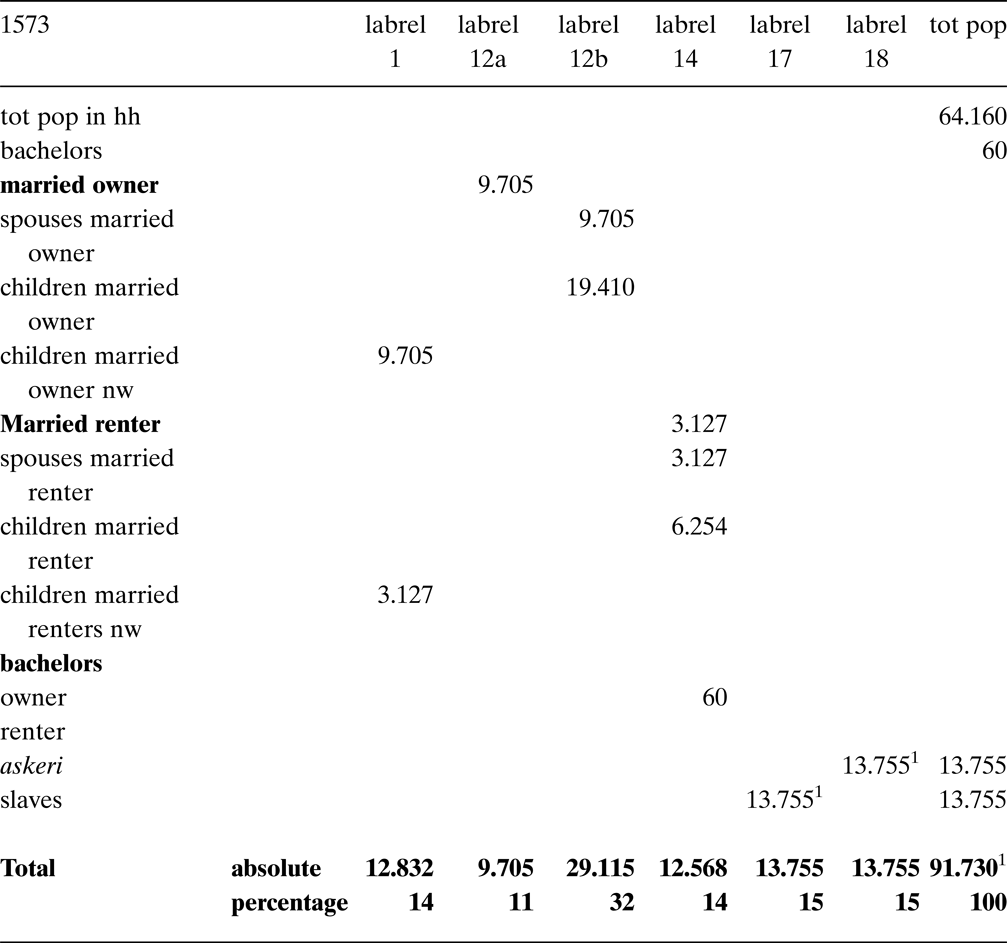
For the number of slaves as percentage of the total population, we departed from H. Sahillioğlu's estimate that in Bursa in 1492/3 there was one slave for every five free or freed people.Footnote 28 Therefore, we departed both for 1487 and for 1521 from the idea that slaves formed 20 percent of the total population. This is more or less in accordance with the data Canbakal and Filiztekin established for slave ownership: for the periods 1460–1480 and 1500–1520, they found respective slave ownership percentages of 18.8 percent and 15.1 percent. For the period 1580–1600, Canbakal and Filiztekin found a 13.7 percentage of slave ownership. Following their downward trend and keeping the decline of the silk industry in mind, we decided for 1573 to acknowledge a 15 percent slave ratio.Footnote 29 These adjustments lead to the following correction of the development of labor relations of the total population (see Table 3 on pg. 8 and Figure 2).
Labor relations for all inhabitants of the town of Bursa 1487, 1521, and 1573 (percentages)
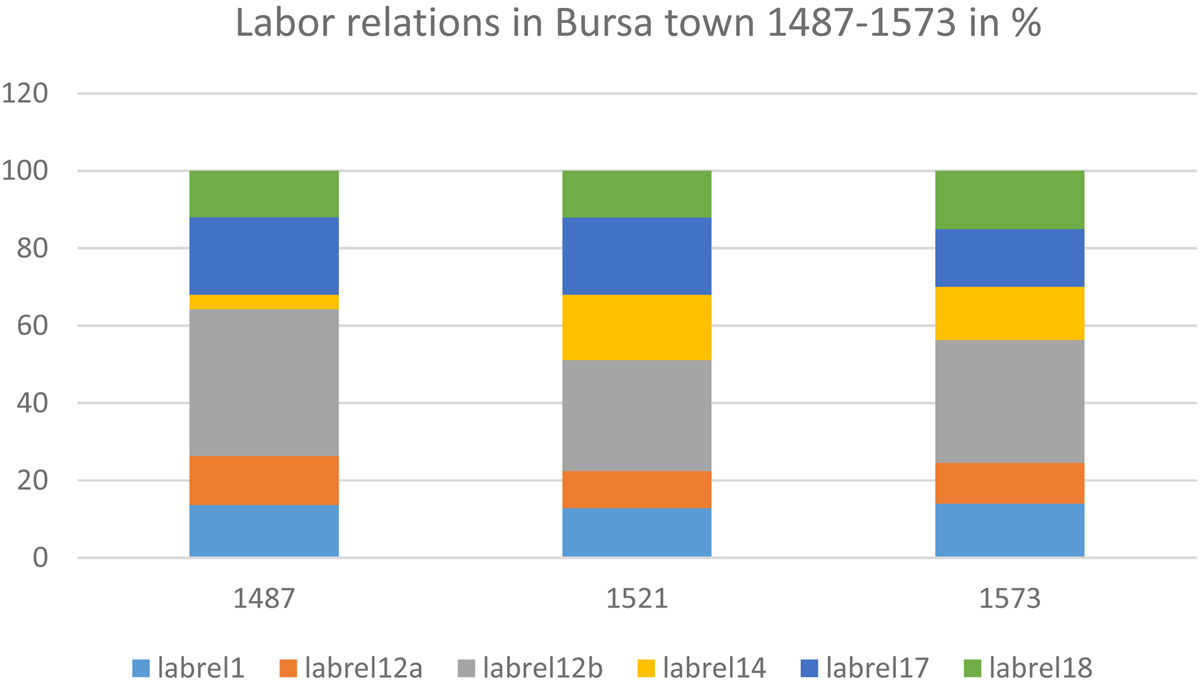
Labor relations for all inhabitants of the town of Bursa 1487, 1521, and 1573 (absolute and relative figures)

For the calculations, see Appendix 1, Table 4.
These adjusted ratios for the town of Bursa show again shifts from small independent producers to wage laborers between 1487 and 1521, as we had to conclude on the basis of the tax registers alone, but now the share of slave labor is much clearer. At the same time, we have to conclude that the period 1521–1573 was also more dynamic than might have been visible from Figure 1 (only based on taxpayers). The new (though relatively small) growth of small independent producers was possible at the cost of both wage labor in the commercial sector and of slavery, whereas wage labor for the state increased.
Rural Bursa in the long sixteenth century
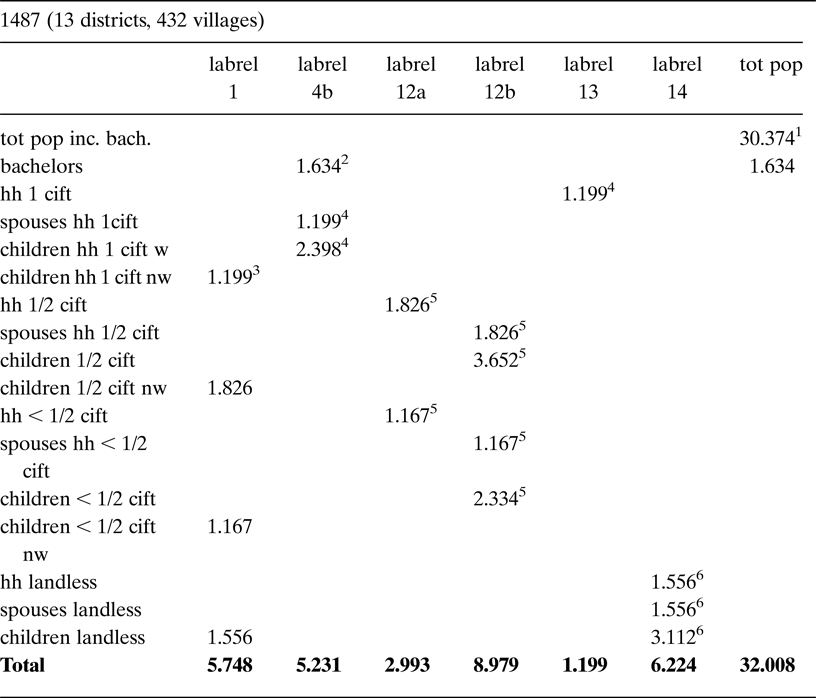
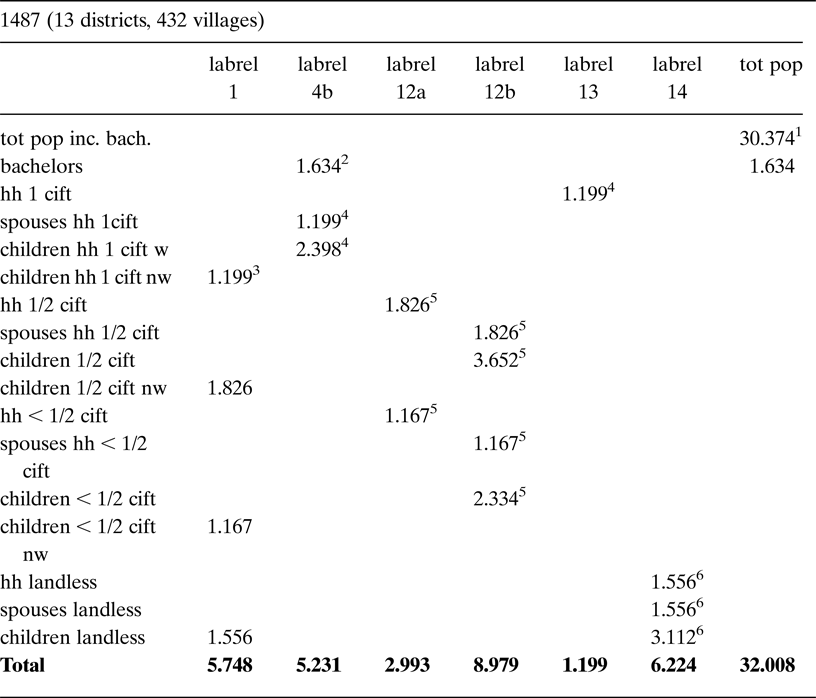
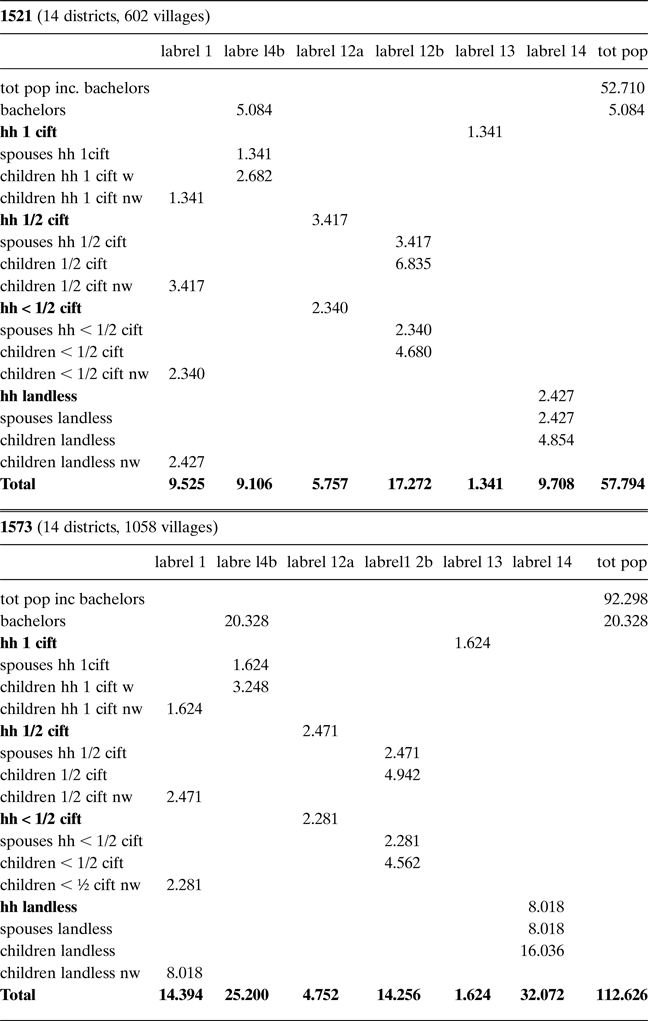
The town of Bursa in the long sixteenth century was fully commercialized, and as a consequence the majority of the population was engaged in small independent enterprises for the market, in wage labor, in the private sector or for the state, or in slave labor. The question to be answered now is to what extent also the countryside around Bursa showed similar characteristics. There are no indications that we are missing substantial sections of the population that were exempted from tax paying because slaves as well as askeri were mainly urban.Footnote 30 By applying first the principles explained before of the multiplier used to reconstruct household size, we then propose for the villages that every head of household owning one çift or more has to be categorized as an employer, i.e., paying three or more wage laborers (our labrel 13). However, we do not consider them automatically to be affluent. Instead we assumed that the far majority of them as well as the other adult household members would have done productive work within the household as well. We therefore attribute to their working spouses and children labor relation 4b. Household heads with properties of ½ çift or less as well as their dependents we consider as self-employed (labrel 12a and 12b). Landless rurals are all seen by us as wage workers (labrel 14). Rural bachelors we also consider as 4b because they would usually be young men still living at home, working for the family. Though they probably did not live in separate households, they were listed separately in the tax registers because they were potential full-time workers on the family farm in addition to the head of the household. We do not hide that we are inclined to interpret nearly all of the rural work (except, as we have seen, that of the adult members of the big farmers with one or more çift) as work mainly for the market. Our main argument is that many of the households in the villages paid some form of trade tax (including market tax (bac-ı bazar) based on the type and amount of goods to be sold), so that at least part of their production was for the market. Besides, the nearness of a populous center like Bursa adds to this.Footnote 31 All of this leads to the following reconstruction of labor relations for the cross sections 1487, 1521, and 1573 (see Table 4 on pg. 10, Figure 3).
Labor relations for all inhabitants of the rural district of Bursa, based on the tax registers 1487, 1521, and 1573 (absolute figures)

Labor relations for all inhabitants of the rural district of Bursa, based on the tax registers 1487, 1521, and 1573 (absolute and relative figures)

For the calculations, see Appendix 1, Table 3.
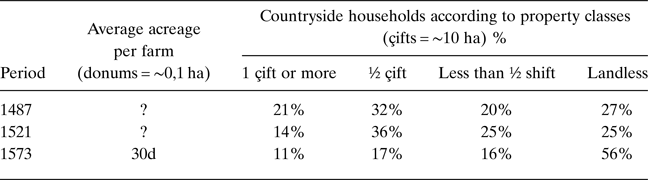
In contrast to urban Bursa, in the countryside we see more important shifts in the second period (1521–1573) than in the first (1487–1572). This may be related to the strong demographic growth of the town (as in so many regions of the Ottoman Empire), via migration and increased pressure in the country side, which led to a phased process of migration to Bursa town, its surrounding village hinterland, the surrounding cities and their hinterland.Footnote 32 The increasing population of the villages led to an increase of the number of landless households, especially in the period from 1521 to 1573 (remember that the average number of taxpayers per village in the first period grew with one quarter, but declined slightly in the second period; see Table 1). The percentage of owners of one çift or more declined steadily in the period from 1487 to 1573; the number of owners of a half çift or less increased slightly from 1487 to 1521, and then declined. So we see (Table 5) a shift from larger estates to smaller estates from 1487 to 1521 and after 1521 a decline in all categories of farms and an increase of landless tax payers, corresponding—according to our interpretation—with an increase in the number of wage laborers.Footnote 33
Proportions of farm size in the district of Bursa, 1487, 1521 and 1573 (Calculation made by Metin Çosgel); average acreage for 1573 based on Haim Gerber, Social Origins of the Modern Middle East, 30

If the average amount of arable land did not decrease, then the average size of the farms of one çift or more should have increased, leading to a growing demand for wage laborers. Since one half çift of land was barely sufficient to sustain a small family farmers must have opted for intensified production and/or supplementary income from employment in manufacture.Footnote 34
Bursa labor relations from the end of the sixteenth century till the nineteenth century: a preliminary sketch
So far, this article is based on our rather experimental, but systematic interpretation of the tahrirs as a source of information on labor relations. For later centuries, tax registers with sufficient detailed information, as is available for the sixteenth century, do not exist. That does not mean that, based on the insights gained so far, we have to be silent about the development of labor relations in later centuries. Luckily other sources may fill the gap to a certain extent. In what follows, we give a very preliminary and “open for debate” interpretation of secondary literature on the seventeenth, eighteenth, and nineteenth centuries that is based on different kinds of sources, often more scanty court records that are difficult to compare with the more systematically available tahrir data for 1487, 1521, and 1573.
Against an older historiography—which contrasted the economic and demographic expansion until the 1580s with fiscal and monetary instability from the 1580s and 1640s, seamlessly followed by centuries of decline, culmination in severe debasements and inflation of the early nineteenth century—a much more nuanced consensus has become available since.Footnote 35 According to Sevket Pamuk, especially in Anatolia, agriculture and industry did not start to decline irreversibly after 1600. If the seventeenth century may have been problematic, the eighteenth century certainly showed economic expansion, fiscal stability, and renewed integration of the different parts of the empire. Nevertheless, for certain parts of Anatolia, especially the first decades of the seventeenth century were very tough as they were suffering from the so-called Celali rebellions, when large groups of dismissed soldiers, originally landless and unmarried men, roamed the country.Footnote 36 In 1607–1609, also Bursa had been sacked and burned down half, apart from the inner fortress. The short-term consequences were grave, but the city recovered and this terrible episode had no long-lasting impact on the town or its countryside.Footnote 37 What might this general picture imply for labor relations in the Bursa region between our points of observation in the late sixteenth and early/mid-nineteenth century? We will try to formulate preliminary answers, as before first for the town and then for the countryside.
Bursa town ca. 1600–1900
As we have seen in the previous section, labor relations at the end of the sixteenth century reflected the preceding period of strong economic development and monetization when—according to the literature—the town grew from an estimated 35,000 in habitants around 1525 to over 70,000 fifty years later. Afterward, with ups and downs, this figure remained stable. In 1802, its population stood at 60,000 to grow steadily to 70,000 ca. 1835, 76,000 in 1890 and 80,000 in 1912.Footnote 38
To what extent has the reversal of commercial fortune in the seventeenth century had an impact on the labor relations of Bursa? No doubt the golden days of the international silk trade had gone because of fierce competition (but only that late) from Europeans who from now on imported silk cloth directly by the sea routes and eventually started silk production themselves. Silk weaving continued though, now by local laborers who produced not only expensive but also cheaper silk cloth in a putting-out system.Footnote 39
Bursa also looked for alternative forms of income. This was found in successfully weaving imitations of Indian cotton fabrics, probably originating from mixtures of silk and cotton, already known from the sixteenth century.Footnote 40 Cotton-cloth weaving thrived until about 1770, but declined thereafter.Footnote 41 On the other hand, silk cloth production remained steady between 1750 and 1810 and reached peak levels in the 1810–1820s by adopting an improved cloth-finishing technique—to fall 90 percent until 1860 before a new recovery started, now from the adoption of mechanized looms.Footnote 42 Raw silk production, after a decline from the 1570s till the 1620s, started to flourish, probably due to demand in the European market. After a second decline in the first decades of the eighteenth century, raw silk production was able to revive only in the 1830s when the silk weaving industry was mechanized in France. Consequently, mechanization in the reeling industry in the Bursa region was stimulated by the French.Footnote 43
In sum, also after 1600 with ups and downs, Bursa stayed a silk town, whether acting as an entrepot of Persian silk cloth, or spinning, weaving, and dying Persian or local raw silk. This apparent continuity, however, conceals an important shift in labor relations in the silk industry between the sixteenth and the seventeenth century, probably parallel to the shift from imported Persian silk to home-grown silk around the turn of the century.
Bursa's sixteenth-century silk sector was highly concentrated in relatively few hands. In 1586, twenty-five of the richest owners together possessed 483 looms, while other data on loom property tell us that at least half of the silk weavers did not own the looms they worked.Footnote 44 Part of them were slaves as we have seen.Footnote 45 When in the seventeenth century cheaper silk was being produced via the putting-out system, slave labor in the silk industry was replaced by cheap free labor—including women's work—recruited via the putting-out system.
According to Faroqhi, most of the artisans in the seventeenth century worked from their own houses or had small workshops using their own loom. They are therefore not employees of the merchants but should be seen as independent producers.Footnote 46 Those artisans who worked their own looms needed quite a lot of capital as the price of a loom—about 80 ducats—was in the order of magnitude of the price of a slave.Footnote 47 We suppose that the artisans in the important silk industry were predominantly self-employed (like in other sectors where surely the small family enterprise dominated).
For several reasons we believe that most big employers had left the weaving industry before the start of the seventeenth century. First, Hilal İnalcık found not only that at the end of the sixteenth century, out of the twenty-five biggest employers five died, four went bankrupt, and five just disappeared, leaving only eleven, each of whom had only five looms. Second, according to the same author, in the sixteenth century, many weaver estates were worth over 1,000 ducats, whereas thereafter few exceeded 500 ducats.Footnote 48 Third, Gerber produces the following ownership figures: for 1560–1630, 55 loom owners and 175 looms, indicating that already most silk weavers must have worked their own loom, possibly a number of them also worked two looms, with the help of sons or in-living relatives or journeymen. And this was certainly true for the next two periods: for 1631–1670, he counted 43 loom owners and 78 looms, and for 1671–1700, he found 105 loom owners and 191 looms.Footnote 49
If we try to fit the position of the weavers into the larger picture of Bursa's occupational and labor relation structure, we have to rely on the data gathered by Gerber. For the seventeenth century, he has estimated the occupations of Bursa townsmen on the basis of a number of post mortem estate registrations by the kadi of Bursa. Many of the artisans, merchants, moneylenders, and people working in services he encountered—including most of the weavers—could be interpreted as self-employed people, together making up 36 percent, 44 percent, and 45 percent, respectively, in the periods 1600–1630, 1631–1670, and 1671–1700, of the total number of occupations counted: in the first period n = 601, in the second n = 756, and in the last n = 1149. However, the interpretation of the largest group, “the poor” where probably the wage workers could be found, is very difficult.Footnote 50 According to Gerber the poor were probably working for public endowments or drafted as oarsmen for the Imperial Navy. Obviously, this category does not appear in the tax registers of the previous period, which makes comparisons difficult, but it certainly was not created in 1600. They may be categorized as wage laborers for non-market institutions, including the state, though part of them will also have been employed as wage laborers producing for the market.
To conclude, the urban industrial sector stayed as vibrant after 1600 as before. The most important shifts in labor relations were the demise of industrial slaves and the continued importance of the small industrial producers, without, however, making wage labor insignificant and it certainly will have increased again over the course of the nineteenth century. Unfortunately, it is impossible at this moment to provide approximate proportions as we were able to do for the sixteenth century.
The countryside after ca. 1600
The countryside around Bursa produced agricultural but also industrial products for the urban markets, not only for Bursa town but also for other cities, including Istanbul, the metropolis right across the water of the Marmara Sea. Most important was the highly specialized agricultural sector. The older and prosperous Greek villages of the southern Marmara coast specialized in wine and olive production as well as fresh fruits, whereas the Turkish-Yörük (originally nomads) villages more inland and south of the town depended predominantly on wheat and barley productionFootnote 51 as well as on their flocks of sheep, especially around mount Ulu Dagh (Olympos).Footnote 52 Also dairy products were exported from the villages to the city.Footnote 53 To this were added mulberry trees in the seventeenth century, and sericulture in the Bursa countryside boomed after rising European demand after 1650. Apart from the care for the trees, the plucking of the leaves and feeding of the worms, it also meant an extension of industrial work, including the local spinning of warp for weavers locally and in towns like Istanbul and Aleppo who imported the yarn from the Bursa countryside.Footnote 54
This cottage industry in the villages surrounding Bursa coordinated by urban merchants was already significant, even around 1600.Footnote 55 In the seventeenth century, the urban domination of the countryside most likely also entailed growing urban property of agricultural lands in the neighborhood of the town.Footnote 56 This may be related to the substantial rising average farm size from ca. 1600 onward and by the shift from small peasant property to larger farms.
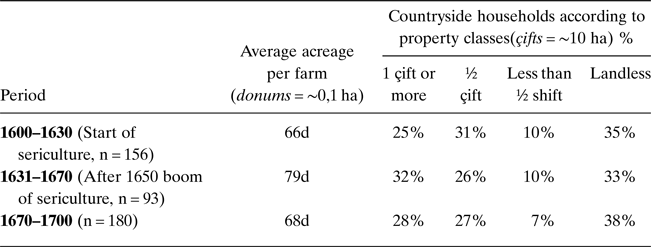
Based on the farm size as can be derived from the tahrirs for the late fifteenth and sixteenth century, we concluded before that the general trend was towards an increase of smaller farms (see Table 5). This trend seems to have been reversed in the seventeenth century if we look at the results obtained by Gerber from the post mortem estates registered by the kadi of Bursa (Table 6).Footnote 57
Proportions of farm size in the district of Bursa, 1600–1700
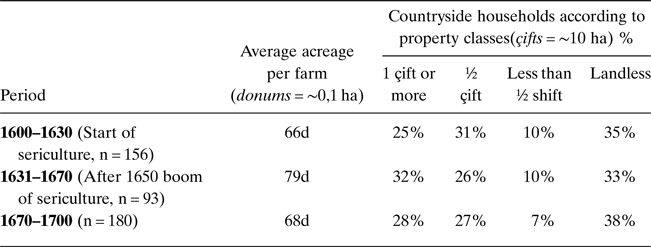
The interpretation of these figures, however, is complicated for several reasons. First, the tax registers of the period 1487–1573 do not contain the largest land owners (the elite and clerics who, as a rule, are exempt from taxesFootnote 58) and therefore tend to underestimate this specific (but small) part of the one çift and above category. Conversely, the post mortem estate registers (that are not sampled but are still very small in number) do underestimate the poor. Third, most of the time it is not known to what extent the “çift ”-class encompassed real big property. Only for 1696 we do have such figures, which show that the “çiftlik” called farms of one çift and over on average had an acreage of some 40 hectares.Footnote 59 We certainly do not want to overstretch this argument as we have no information for that year about the farms that do not qualify as “çiftlik,” but this overview demonstrates at least the direction of possible deviations. Fourth and finally, we do not know to what extent local variations in the two data sets might play a disruptive role in the comparison over time. Still, we tentatively would like to suggest that there seems to be a tendency of ownership shifting from small to medium rural proprietors to medium and above medium urban ones who invested in the promising countryside.
The urban investors in mainly orchards and the extension of sericulture must have had a certain impact on rural labor relations. Gerber emphasizes that the urban investors organized production by themselves, not by intermediate renters or share-croppers. This implies that their rural workforce consisted of wage earners, not small independent producers who rented their lands or who engaged in a share cropping contract.Footnote 60 This is very well feasible: as about one quarter of the peasants were landless, such a workforce was available at the spot.Footnote 61 During peak periods, mountain dwellers will have been necessary for the wine and olive harvest and other necessary work.Footnote 62 Only very few owners of very large estates used slaves, possibly also for farm work.Footnote 63 Having said this, the overwhelming majority of the grown-up rural population must have been independent producers for the market. Both the average farm size of 6.5 to 8 hectares as well as the distribution of farm sizes (nearly half of the peasants held farms of some 8 hectares) points clearly in that direction. In a very general way, we may conclude that in the seventeenth and perhaps also in the eighteenth centuries about three quarters of all households may be characterized as independently producing for the market and one quarter as wage earning, whereas hardly any rurals were employers (these lived in the town) or slaves.
How labor relations developed between the seventeenth and nineteenth centuries is hard to tell. Gerber—again, basing his argument on relatively small numbers of court records—signals changing conditions for urban investors in the countryside from about the mid-seventeenth century.Footnote 64 Whether this means, as he thinks, that their investments deteriorated is to be questioned. Their property shifted clearly from “estates” (including cattle) to “orchards” and at the same time they became more indebted, which also might mean that they borrowed money in order to invest in these orchards. Later on, but possibly only from the early nineteenth century onward, farm size diminished. Around 1,900 small farms dominated in Bursa: 60 percent of all land belonged to farms of 1–5 hectares, 15 percent to less, and 25 percent to more.Footnote 65 This low average size—by no way excluding wage labor, especially at seasonal peaks—suggests a return to the situation in the sixteenth century, although the available figures certainly cannot be compared in a straightforward way.Footnote 66 In the intermediate centuries, rural spinning had been important but this came to an end in the third quarter of the nineteenth century. Agriculture became dominant again and silk worm eggs or cocoons were now exported instead of processed locally. Spinning moved from the farms to European-type reeling factories. In 1913, there were forty-one reeling factories using steam power and the production of rough silk increased eight times between 1876 and 1912. At the same time, there were only five weaving workshops using steam power; the rest of the looms were still hand driven. Local silk cloth production was so insignificant by 1913 that the local cloth producers only used 6 percent of the raw silk production.Footnote 67
To conclude, the countryside around Bursa, which was already commercialized from at least the late Middle Ages, continued to be so after 1600. The main shift in labor relations seems to be a new increase of big farms, and consequently an increase of the proportion of wage laborers. This may have been even more important if we think of the household income supplemented by way of cottage industries, which seems to increase from the seventeenth century onward. Before and after productive slave labor seems to have been insignificant in the rural sector. Like with the town of Bursa, also for the countryside more precise quantifications from 1572 onward are not possible for the time being.
Concluding remarks
Can Ottoman tax registers be used to reconstruct labor relations in Bursa province in the fifteenth and sixteenth century? We believe they can, though our interpretations can and hopefully will lead to new discussions and reinterpretations, as well as to better and more data. Based on our interpretation of the number of renter households in Bursa that we considered as wage-earners and the number of owner households we labeled as self-employed people, we see a decrease of self-employment and an increase of wage labor for the market in the period 1487–1521. Perhaps this shift could be explained by the 1512–1520 crisis in silk manufacturing and trading. The tax registers do not give us information on the number of tax exempt nor on the number of slaves. Therefore we used additional sources that suggest that in the period 1487–1521, Bursa housed a steady percentage of slaves and wage workers for the state. From 1522 to 1573, a new (though relatively small) growth of small independent producers was possible at the cost of both slavery and wage labor in the commercial sector. Developments in the important silk industry may again be the explanation for this shift. After 1550, the boom in this industry diminished and larger manufacturers may have started to leave the industry, leading to a smaller number of wage earners and leaving room for self-employed producers. At the same time the growing population of the city went hand in hand with an increasing bureaucratization of the administration of the Ottoman Empire, and thus a growing number of civil servants working for wages for the state. For later periods we lack such systematic sources as the tax registers, though based on our interpretation of data presented in the literature on various economic developments we perceive some general trends. After 1600, a shift took place in the silk industry when next to Persian silk local raw silk was used in manufacturing. This cheaper silk cloth was being produced via the putting-out system, and slave labor in the silk industry was replaced by cheap free labor, including women's work. Wage work would increase again over the course of the nineteenth century because of the establishment of reeling factories.
In contrast to urban Bursa, the countryside shows more important shifts in the second period (1521–1573) than in the first period (1487–1521) we studied. This may be related to the strong demographic growth of the town and its surrounding village hinterland in this period, leading to an increase of landless households and of wage earners accompanied by a decrease of the self-employed and their dependents. For the seventeenth century, we tentatively would like to suggest—based on the literature—that there seems to be a tendency of ownership shifting from small to medium proprietors and above medium urban ones who invested in the promising countryside. This would then lead to an increase of rural wage workers. At the same time, the overwhelming majority of the grown-up rural population must have been independent producers for the market. In a very general way we may conclude that in the seventeenth and perhaps also in the eighteenth centuries about three quarters of all households may be characterized as independently producing for the market and one quarter as wage earning, whereas hardly any rurals were employers (these lived in the town) or slaves. Later on, but possibly only from the early nineteenth century onward, farm size has diminished. This low average size—by no way excluding wage labor especially at seasonal peaks—suggests a return to the situation in the sixteenth century, although the available figures certainly cannot be compared in a straightforward way.
There is one final question that needs to be addressed to stimulate the discussion on the usefulness of our experiment: how representative is Bursa district for Anatolia or even for the Ottoman Empire? Can the shifts in labor relations we signaled between the late Middle Ages and ca. 1900 be seen as a proxy for other parts of Anatolia? As one of the main economic centers of the Empire until around 1600, Bursa, though with ups-and-downs, maintained a high economic profile for centuries to come. At the same time, it increasingly fell not only behind the capital but also behind cities like Izmir and Salonica. The structure of its labor relations may have been rather exceptional because of widespread industrial slavery until 1600, and afterward because of its extensive artisanal proletariat (both male and female), turning into an industrial proletariat after 1860. In the end, Bursa may have become more representative for the bigger Anatolian administrative centers, at least those with substantial industries. Its highly commercialized countrysideFootnote 68 dotted with small specialized farms, however, may have been rather different from the rest of Anatolia until the end of the Empire and perhaps only similar to other maritime regions bordering the Aegean Sea coast. Further research, possibly based on tax records will shed more light on the long term developments of labor and labor relations in other parts of the Ottoman Empire.
Appendix 1: Sources and calculations
We worked with the tahrirs of the province of Bursa for the years 1487, 1521 and 1573. We used the data kindly provided by Metin Coşgel who – with his student assistants – standardized, translated and entered the data as published by Ömer Lütfi Barkan, and Enver Meriçli, Hüdavendigâr Livası Tahrir Defterleri. I. (Ankara, 1988). These tahrirs contain data for ten administrative towns including Bursa and for respectively 432, 602 and 1058 villages.Footnote 69 For 1487 data on the villages in the district of Bursa are lacking. For 1521 for some villages the administrators just entered the total of çift and half-çift instead of giving the breakdown. Metin Coşgel corrected this by identifying all the entries for which we have figures for both çift and half-çift. He then took the average ratio of half-çift to çift in this sample, which turned out to be 1.757. He then used this ratio to reconstruct the çift and half-çift figures in all entries for which çift was given but no half-çift.
- HH=
household
- Tot pop=
total population
- NW=
not working
- W=
working
Data based on tahrirs
Calculations for Bursa town of number and type of households/persons and total population
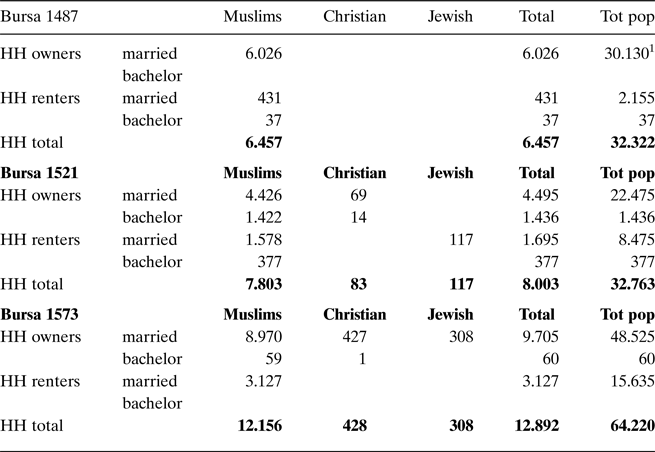
Calculations Bursa town labor relations

Calculations labor relations villages, province Bursa
Data based on tahrirs complemented for Bursa town
Since the tahrirs do not include slaves (labrel17) and askeris (labrel18) we added them to the Bursa town data.